Meng Xu is a Visiting Professor at the School of Electronic Engineering and Computer Science, Queen Mary University of London. Her research focuses on computer vision, deep learning, and biomedical imaging applications within robotics and healthcare domains. She contributes to advancing localization systems, image processing techniques, and neural network architectures for real-world challenges. Her work bridges theoretical advancements with practical implementations, such as end-to-end visual localization networks (e.g., Bev-locator) and unsupervised methods for biomedical image enhancement. She also explores multi-modal fusion strategies (e.g., MCAPR) and optimization techniques for efficient deep learning models. Key research directions include improving camera pose estimation accuracy, developing robust feature matching algorithms, and applying deep learning to body shape classification and human pose estimation. Her publications reflect a strong emphasis on solving technical challenges in both robotics and medical imaging through innovative computational approaches.
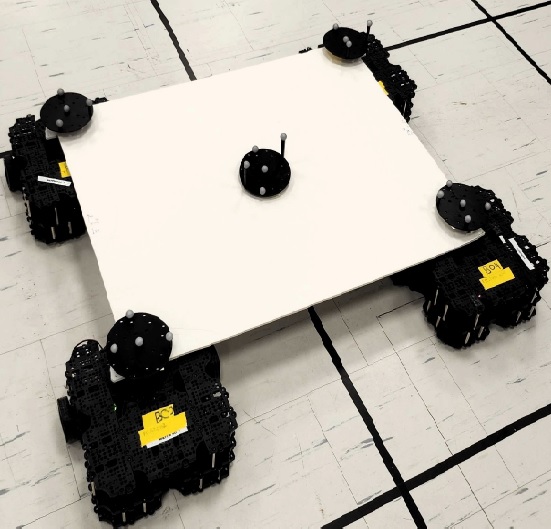
Sajad Saeedi Gharahbolagh is an Assistant Professor in the Department of Mechanical, Industrial, and Mechatronics Engineering at Toronto Metropolitan University and an Honorary Research Fellow at Imperial College London's Department of Computing. His research spans robotics, SLAM, focal-plane sensor-processor arrays (FPSP), and deep learning for autonomous systems. Education : PhD in Electrical and Computer Engineering (2014) from the University of New Brunswick. Prior Roles : Dyson Research Fellow (2018-2019) at Imperial College London; Postdoctoral Fellow at University of New Brunswick (2014); R&D Engineer at 2G Robotics (2015). His research focuses on Simultaneous Localization and Mapping (SLAM) for single/multi-robot systems Focal-plane Sensor-Processor Arrays (FPSP) for high-speed, low-power vision processing Autonomous aerial/underwater robotics Deep learning integration with traditional robotics algorithms Control systems for heterogeneous robotic platforms His work addresses challenges in computational efficiency, robustness in GPS-denied environments, and real-time multi-sensor data fusion. Recent publications highlight advancements in Distributed NeRF for collaborative mapping MR.CAP multi-robot control/planning BIT-VIO visual-inertial odometry WiFi-based geometric mapping FPSP-optimized CNNs PathBench benchmarking framework Scientific Awards : Dyson Research Fellowship (2018-2019) Best Robotics Paper (CRV 2021) Best Student Presentation (IROS 2023) Research Team : PhD Students: Christopher Kolios, Navid Zarrabi, Messiah Esfahani, Ishaan Mehta, Mahboubeh Asadi, Jack Saunders MASc Students: Georgia Jovanovic, Hussein Ali Jaafar, Austin Vuong, Roni Sherman, Matthew Lisondra, Glenn Shimoda, Ali Babaei, Robel Efrem, Messiah Ataey, Christopher Kolios, Nikolas Kourtzanidis Laboratory Facilities : Robotics and Computer Vision Lab (RCVL) with Vicon motion capture system 14 TurtleBot 3 platforms (Waffle Pi/Burger variants) Germicidal UVC-equipped G-Robots Jetbots with onboard GPU processing OpenMANIPULATOR robotic arms
Miguel Gutiérrez Gaitán is an Assistant Professor in the Electrical Engineering Department at Pontificia Universidad Católica de Chile since March 2024. Previously, he served as an Assistant Professor at the Faculty of Engineering, Universidad Andrés Bello, Chile (2023–2024) while collaborating with CISTER/ISEP as an Associate Researcher. He holds a Ph.D. in Electrical and Computer Engineering from the University of Porto, Portugal (2023). Affiliations: IEEE Senior Member, Chair of IEEE ComSoc Chile Chapter (2023–2024), Member of IEEE ComSoc Latin America Board (2024–2025). Research Interests: Real-time wireless systems, IoT, channel modeling, network design, with applications in industrial, vehicular, and maritime domains. Funding: FCT-Portugal (2020–2023), ANID-Chile Fondecyt Iniciación (2024–2026). His research has been recognized with awards such as the Best Paper Award at RAGE Workshop/DAC 2022 and the Best Work-in-Progress Paper Award at IEEE WFCS 2021. He has authored/co-authored over 30 peer-reviewed publications in top venues like IEEE Sensors Journal, ACM TECS, and IEEE GLOBECOM.
Paul S. Blaer is a Senior Lecturer in Discipline at Columbia University's Computer Science Department, with adjunct roles in the Robotics Laboratory. He directs computing research facilities and teaches courses in data structures, robotics, and computer programming. His research develops autonomous systems for 3D site modeling and robotic navigation. Key projects include view planning algorithms for large-scale environments (e.g., Governors Island), hybrid topological localization using vision and WiFi, and educational tools for Java/MATLAB programming. His AVENUE robot platform enabled automated urban mapping. Teaching awards include the Columbia Engineering Alumni Distinguished Teaching Award (2018) and multiple Outstanding Teaching Assistant awards. Grants support robotics curriculum development and NSF-funded research in geometric computation.
Murat Torlak is a Professor in the Department of Electrical Engineering at the University of Texas at Dallas (UTD), affiliated with the Erik Jonsson School of Engineering and Computer Science. He holds a Ph.D. in Electrical Engineering from the University of Texas at Austin (1999), an M.S. from The University of Texas at Austin (1995), and a B.S. from Hacettepe University (1992). His research focuses on wireless communications, signal processing, MIMO systems, and automotive radar technologies. He has led projects on 4G/5G network optimization, spectrum sensing, and RF interference mitigation. Research interests include optimizing radio link protocols, cognitive radio networks, and antenna array design. Notable contributions include advancements in beamforming, MIMO testbed development, and real-time implementation of wireless systems. He has received grants totaling over $2M, including funding from NIH, NSF, and Texas Instruments. His work on automotive radar signal processing and mmWave imaging has been highlighted in news articles, emphasizing innovations in multi-user MIMO and global roaming technologies. Awards include the 2004 IEEE Outstanding Service Award and a 2001 Best Paper Award. His lab collaborates on projects like the 'Generic Autonomous Platform for Sensor Systems' (GAP4S) and cochlear implant stimulation systems. Grants: Over 15 funded projects, including NIH grants for cochlear implant research and Texas Instruments grants for OFDM systems. Awards: IEEE honors, NSF fellowships, and industry accolades. Projects: Developed MIMO-SAR mmWave imaging testbeds and advanced interference mitigation techniques.
Kevin Jiokeng is an Assistant Professor in Computer Science at Ecole Polytechnique, working in the Epizeuxis team (Networks research team of LIX laboratory). His research focuses on wireless networks, ubiquitous computing, and their applications in localization technologies, mobile healthcare, and smart environments. Current affiliations: Ecole Polytechnique (since 09/2024), INRIA Lille (03/2022-08/2022), Toulouse INP (PhD, 10/2018-01/2022) Research interests: Wireless networks, ubiquitous computing, localization, mobile healthcare, and smart environments. His recent work involves AI-based network intrusion detection, wireless sensing generalizability, and machine learning applications in smart networking. Scientific achievements: Best student paper award at CoRes 2020 Second prize (ex æquo) of PhD Dissertation Award (GDR RSD & ASF, 2023) 200k€ ANR Young Researcher Program grant (2024) Advising and service: Co-advises two PhD students (Stanislas Lucinski and Lucien Dikla) and serves as reviewer/committee member for IEEE INFOCOM, ACM IMWUT, IEEE WiMob, IEEE CSCN, IEEE SMARTCOMP, ACM SIGCOMM, ACM CoNEXT, and AlgoTel/CoRes conferences.
Chorng Hwa Chang is an Associate Professor in the Department of Electrical and Computer Engineering at Tufts University. He joined the faculty in 1987 and currently directs the Computer Engineering Program and the Tufts Wireless Lab (TWL). His research focuses on computer architecture, wireless communications, IoT protocols, and engineering education. Education: Ph.D., Electrical and Computer Engineering, Drexel University (1987) M.S., Computer Science, Montana State University (1983) B.S., Engineering Science, National Cheng Kung University (1977) Research Interests: Dr. Chang’s work spans wireless sensor networks, 6LoWPAN protocols, WiFi backtracking, and IoT implementations. His projects include the TWL Lab’s initiatives in smart healthcare systems and autonomous robotic networks. Recent publications highlight innovations in GPU-accelerated algorithms, cloud shape classification, and interferometric positioning systems. Grants & Advising: He advises numerous graduate and undergraduate students on projects like motion detection systems, IoT platforms, and sensor network optimization. His lab collaborates on military and civilian applications, including border surveillance and healthcare monitoring. Labs/Teams: Director of the Tufts Wireless Lab (TWL), leading cross-disciplinary research in wireless communication and embedded systems.
Spilios Giannoulis is a postdoctoral researcher at Ghent University's Faculty of Engineering and Architecture , Department of Information Technology (EA05). He actively contributes to wireless networking research through collaborations with IMEC and leadership in projects like 6G-SHINE and CODYSUN. Current Position: IMEC Postdoctoral Researcher University: Ghent University (UGent) Department: Information Technology (EA05) His research focuses on wireless communications and network protocol development , particularly addressing: Spectrum Sharing in heterogeneous networks MAC Protocol Design for IoT and LPWAN Wireless Testbed Development (WiSHFUL, LoRa) Dynamic Resource Allocation in ad hoc systems Recent publications highlight advancements in: 6G short-range wireless architectures Energy-efficient OTA software updates Cross-technology synchronization mechanisms Distributed spectrum sharing paradigms Protocol portability across radio platforms He serves as PhD supervisor and copromotor in funded research initiatives like the 2024-2026 Better than Wired Reloaded project focused on industrial wireless control systems.
Huacheng Zeng is an Associate Professor in the Department of Computer Science and Engineering (CSE) at Michigan State University (MSU), part of the College of Engineering. His research focuses on computer networking, wireless communication systems, and sensing technologies with applications in IoT security, signal processing, and machine learning. He received his Ph.D. in Computer Engineering from Virginia Tech in 2015 and was awarded the NSF CAREER Award in 2019. Dr. Zeng’s work spans innovative areas such as radar-based human motion tracking (e.g., RadEye), acoustic emotion decoding, and mmWave network optimization. His recent publications address challenges in device localization, vehicular communication, and secure RFID systems. His research often integrates machine learning techniques with traditional signal processing to enhance system performance and security. Education: Ph.D., Computer Engineering, Virginia Tech (2015) Awards: NSF CAREER Award (2019) His contributions to interference management, jamming-resilient communications, and distributed inference frameworks have advanced both theoretical and applied aspects of wireless networks. While no specific grants or advising details are listed, his extensive publication record reflects active collaboration in cutting-edge research domains.
Bruce DENBY is a Professor at Sorbonne University specializing in speech processing, telecommunications, and indoor localization. His research spans multiple disciplines including computer science, physics, and environmental science with significant contributions across these fields. His primary research interests include: Silent Speech Interfaces and speech restoration technologies Indoor localization using wireless networks and GSM fingerprints Telecommunications and signal processing Environmental modeling of road dust and air pollution Machine learning applications in speech recognition Dr. DENBY's research trajectory shows evolution from early work in high energy physics to speech processing and wireless communications, with recent publications (2022-2025) demonstrating continued innovation in WiFi analytics, client density mapping, and future speech interfaces. His work increasingly integrates deep learning techniques while maintaining focus on practical applications, particularly for speech restoration and privacy-preserving network analysis. Notable scientific achievements: Chester Sall Award Paper (2012) for work on FPGA-based FM broadcast receivers Significant contributions to the Silent Speech Challenge benchmark with deep learning approaches Development of the NORTRIP model for road dust emissions Highly cited work on Silent Speech Interfaces (over 500 citations) Dr. DENBY has secured research funding across multiple domains, collaborating with institutions across Europe. His work demonstrates strong interdisciplinary connections between speech technology, wireless communications, and environmental science, with applications ranging from assistive technologies to urban air quality management.
Dr. Elans Grabs is an Associate Professor at Riga Technical University's Institute of Information Technology, specializing in machine learning, network traffic analysis, and telecommunications. His work bridges digital signal processing and unmanned aerial vehicle navigation. Current research focuses on AI-driven network optimization Expertise in sensor fusion for autonomous systems Active in open RAN and wireless communication protocols His publications span topics from IoT performance modeling to laser communication algorithms for moving platforms. Recent works emphasize real-time signal processing, video traffic classification, and drone cooperation systems. While no formal awards are listed, his contributions to network traffic simulation and embedded systems design demonstrate technical depth. Articles show specialization in convolutional neural networks for streaming video analysis and wireless sensor network optimization.
California State University, Los AngelesUnited States
Fereydoun Daneshgaran is a Professor and Chairman of the Electrical & Computer Engineering Department at California State University, Los Angeles, where he has served since 2006. He also directs the fiber and nonlinear optics research laboratory and has held various academic leadership positions including chairman of the Communications group and acting chairman of the ECE Department. Dr. Daneshgaran's educational background includes: Ph.D. in Communications, VLSI, and Optimization from UCLA (1992) M.S. (Magna Cum Laude) in Communications, Solid State Electronics, and Control Systems from Cal State LA (1985) B.S. (Magna Cum Laude) in Electrical and Mechanical Engineering from Cal State LA (1983) Dr. Daneshgaran's primary research interests focus on wireless communications, digital communications, and information theory. His work spans multiple specialized areas including coding theory (particularly Turbo Codes and LDPC codes), quantum key distribution, cognitive radio, and network localization. His research has significant applications in wireless networking protocols, particularly IEEE 802.11 standards, with numerous publications analyzing throughput performance under various network conditions. He has also made substantial contributions to optical communications and signal processing techniques. Dr. Daneshgaran's publication record shows a progression from foundational work in Viterbi decoding and turbo codes to more recent applications in quantum communications and advanced wireless network protocols. His research consistently bridges theoretical communications theory with practical implementations, as evidenced by both his extensive journal publications and industry experience. His scientific achievements include: Best Paper Award at First International Conference on Advances in Satellite and Space Communications (SPACOMM 2009) U.S. Patent No. US 2007/0079223 A1 for "A method and system for Information processing" Dr. Daneshgaran has supervised numerous Ph.D. students and visiting scholars, primarily from Politecnico University of Turin (POLITO), Italy, fostering international research collaborations. His academic leadership extends to developing and teaching the entire graduate sequence in digital communications at Cal State LA, along with specialized courses in wireless communications, cognitive radio, and optical communication systems. He has also maintained industry connections through various consulting roles and entrepreneurial ventures in communications technology. As director of the fiber and nonlinear optics research laboratory from 1994 to 2015, Dr. Daneshgaran led research in optical communications and related technologies. His work has bridged theoretical communications research with practical implementations, as evidenced by both his academic publications and industry experience founding companies like EuroConcepts S.r.l. and Quantum Bit Communications, LLC.