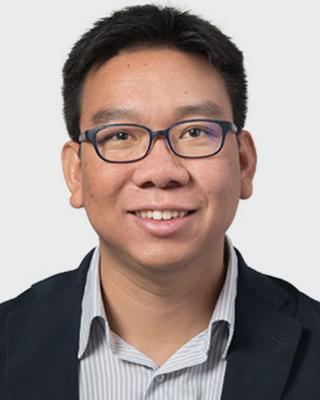
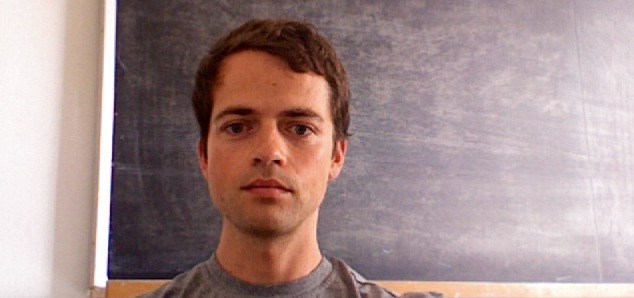
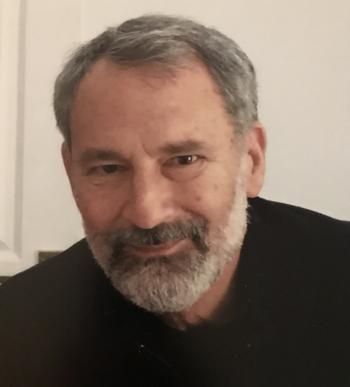
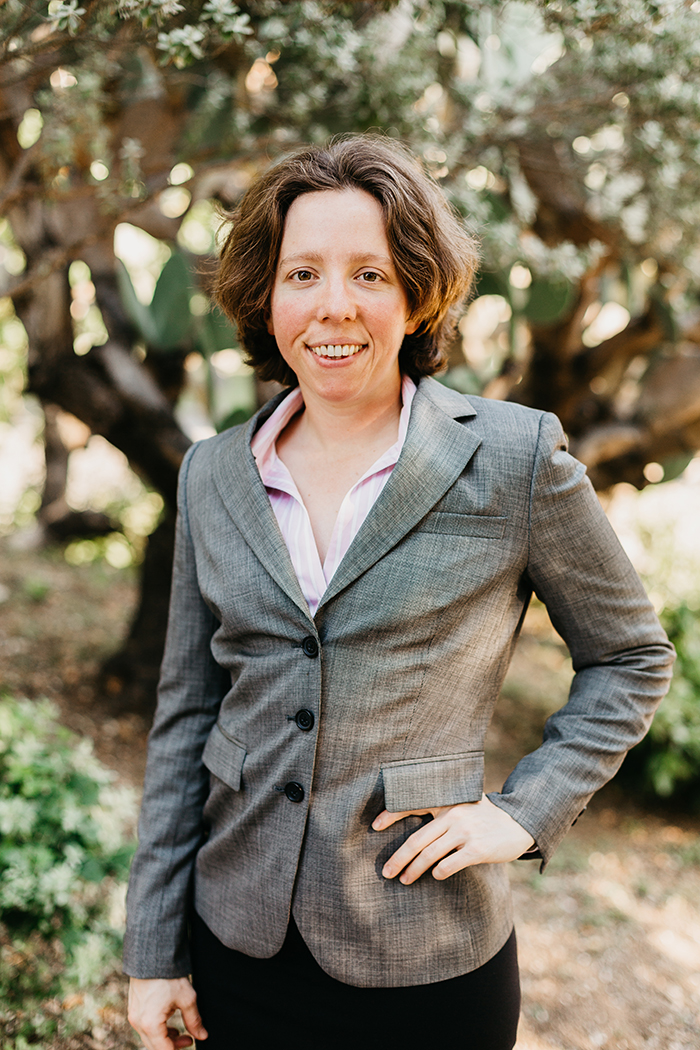
Andrea Pinamonti is an Associate Professor at the University of Trento. His research focuses on geometric analysis, partial differential equations, calculus of variations, and functional analysis in metric measure spaces, particularly in sub-Riemannian and Carnot group settings. He frequently collaborates with researchers from institutions such as the Universities of Pisa, Jyväskylä, and others, addressing topics like geometric measure theory, regularity of solutions, and nonlocal functionals. His recent work examines structures in Heisenberg groups, such as perimeter minimization, CR geometry, and differentiability theorems. He has also explored equations involving the p-Laplacian, fractional operators, and universal differentiability sets in non-Euclidean spaces. These studies reflect a sustained engagement with the interplay between geometry and analysis in sub-Riemannian frameworks. Events and Contributions: Speaker at Warsaw Analysis Days Event WADE25 (2025), Summer school in fluid dynamics (2024), and Workshop on Synthetic Curvature Bounds (2024). Organizer of Three days between Analysis and Geometry in Trento (2025, 2024) and EUregio School on Control Theory and Applications (2024). He has maintained a prolific publication record across high-impact journals such as Journal of Geometric Analysis , Advances in Mathematics , and Communications in Contemporary Mathematics . His academic activities include promoting collaborative research through workshops and open positions at his institution.
Matthias Aschenbrenner is a Professor at the Faculty of Mathematics, Department of Mathematics, with expertise in model theory, differential algebra, and asymptotic analysis. His research spans valued fields, transseries, and low-dimensional topology. PhD in Mathematics from the University of Illinois at Urbana-Champaign His work focuses on the intersection of mathematical logic, differential equations, and algebraic structures. Key contributions include foundational studies on transseries, Hardy fields, and applications to topology. Recent publications address analytic Nullstellensätze, distality in valued fields, and approximation theorems in o-minimal contexts. He serves as a peer reviewer and collaborates on geometric properties of transcendental functions and valued differential fields. Scientific awards include Fellow of the American Mathematical Society (2012) and the Karp Prize (2018). His research is funded by grants on model theory and geometric transcendental functions.
Ryan J. Alvarado is an Associate Professor of Mathematics at Amherst College, where he holds a position in the Department of Mathematics. His research focuses on Harmonic Analysis, Partial Differential Equations (PDEs), and Geometric Analysis, particularly exploring the interplay between geometry and analysis in nonsmooth environments. He has contributed significantly to the study of Analysis on Metric Spaces, extending classical results from Euclidean settings to more general spaces. Alvarado has also organized conferences, such as the 2017 Analysis on Metric Spaces conference at the University of Pittsburgh, showcasing his leadership in the field. Alvarado earned his Ph.D. in Mathematics from the University of Missouri (2015), following an M.A. (2011) and B.A. (2008) from the same university and William Jewell College, respectively. His teaching spans a wide range of mathematics courses, from introductory calculus to advanced proof-based subjects, emphasizing interactive learning and pedagogy. His scientific awards include the Project NExT Fellowship, teaching grants like the Provost’s Personalized Education Seed Funding, and the Excellence in Teaching Award from the University of Missouri. Alvarado’s work is published in prestigious journals, with recent contributions focusing on embedding theorems, functional analysis, and geometric PDEs.
Gareth Speight is an Associate Professor in the Department of Mathematical Sciences at the University of Cincinnati. His research focuses on geometric measure theory, analysis on metric spaces, and sub-Riemannian geometry. He co-organizes the UC Analysis and PDE Seminar and the Ohio River Analysis Meeting. His work has been supported by grants from the National Science Foundation and the Simons Foundation. Speight holds a PhD from the University of Warwick (2013) and was a postdoctoral researcher at the Scuola Normale Superiore di Pisa (2013–2015). Education: PhD in Mathematics, University of Warwick, 2013 MMath (Master of Mathematics), University of Warwick, 2009 Research Interests: Speight’s work blends geometric analysis with metric space theory, particularly studying differentiability properties of Lipschitz functions, porosity, and universal differentiability sets in non-Euclidean settings like Carnot groups. His recent focus includes applications to fractional Poisson kernels and regularity theory for PDEs in metric spaces. Grants & Awards: NSF Grant #2348715 (2024–2027): $263,078 for 'Differentiability in Carnot Groups and Metric Measure Spaces' Simons Collaboration Grant #576219 (2018–2024): $50,400 for 'Geometry of Lipschitz Maps and Carnot Groups' 2013 Warwick Faculty of Science Doctoral Thesis Award Students & Service: Speight co-supervised Marco Capolli’s PhD (University of Trento, 2020) and is advisor to Hyogo Shibahara (PhD candidate at UC). He serves on editorial boards, conference organizing committees, and peer-review panels for journals like Journal de Mathématiques Pures et Appliquées and Annali di Matematica Pura ed Applicata .
Jacob Carruth is a Postdoctoral Research Associate in the Department of Mathematics at Princeton University. His academic focus includes adaptive control theory, Whitney extension problems, and Fourier analysis. He earned his PhD in 2019 from the University of Texas at Austin under the advisement of Arie Israel. His research explores theoretical control systems and mathematical analysis, with notable contributions to adaptive control strategies for unknown linear dynamics and extensions of Whitney's theorem in functional spaces. Education: PhD in Mathematics, 2019, University of Texas at Austin (Advisor: Arie Israel) Research Interests: Adaptive control theory with applications to uncertain linear systems Whitney extension problems in Sobolev spaces and geometric analysis Fourier analysis methods in extremal problems and approximation theory His work bridges pure mathematics and applied control theory, addressing fundamental questions in system dynamics and function extensions. Recent Research Trends: His publications emphasize regret minimization strategies, optimal control under parameter uncertainty, and functional analysis techniques. Key themes include developing bounded-regret algorithms for linear systems and advancing understanding of extension operators for function spaces. Lab/Team Affiliations: Currently affiliated with Princeton University Mathematics Department's research groups in analysis and control theory.
Alan Chang is an Assistant Professor of Mathematics at Washington University in St. Louis. His research focuses on geometric measure theory and harmonic analysis, exploring topics such as Nikodym sets, maximal functions, and fractal structures. He holds a Ph.D. in Mathematics from the University of Chicago (2020) and a B.A. from Princeton University (2014). Previously, he was an Instructor at Princeton University under Assaf Naor. Chang has been awarded the NSF Graduate Research Fellowship (2014) and the NSF Mathematical Sciences Postdoctoral Fellowship (2020, declined). His work includes grants like NSF Grant DMS-2247233 (2023–2026). His research interests span geometric measure theory, harmonic analysis, and fractal geometry. Notable contributions include studies on Besicovitch sets, decoupling theory, and the Whitney extension theorem. Chang’s publications address diverse areas such as analytic capacity, Minkowski sums, and Kakeya needle problems, reflecting his expertise in geometric and analytic methods. Grants: NSF Grant DMS-2247233 (2023–2026) Awards: NSF Graduate Research Fellowship (2014), NSF Postdoctoral Fellowship (2020, declined) Chang advises no listed students but has contributed to mentoring through his roles as an instructor and researcher. His work intersects with labs and teams focused on geometric analysis and harmonic functions.
Whitney Botsford Morgan is Professor of Management at the University of Houston-Downtown's Marilyn Davies College of Business, Department of Management. Her research focuses on critical workplace dynamics including work-family conflict, diversity issues (particularly gender and parental status), bias reduction, and incivility. Her educational background includes a Ph.D. in Psychology with Industrial-Organizational emphasis from George Mason University (dissertation: Psychological Contracts of Mothers: Does Breach Explain Intention to Leave the Workforce? ), an M.A. in Psychology from George Mason University, and a B.A. in Psychology from Rice University. Morgan's research examines systemic workplace challenges through multiple lenses: Work-family interface dynamics including guilt, resentment, and spillover effects Pregnancy discrimination and identity management strategies across pregnancy stages Benevolent and hostile sexism in organizational contexts Incivility interventions and social support systems Mega-threat responses for prejudice reduction Her publications reveal consistent focus on vulnerable employee populations and evidence-based interventions. Her scientific contributions have been recognized through awards including the Mason IO Distinguished Ph.D. Alumni Award and multiple UHD faculty distinctions. Notable publications span high-impact journals like Journal of Applied Psychology , Personnel Psychology , and Organizational Research Methods . Morgan actively mentors through research collaborations and serves as Associate Editor for Industrial and Organizational Psychology: Perspectives on Science and Practice . She has secured significant research funding including a $600,000 US Department of Education grant for MBA research fellowships and leads university-wide strategic planning initiatives. Her professional service includes extensive committee leadership across university, college, and department levels, with notable roles in AACSB accreditation maintenance, faculty development, and diversity task forces. She serves on the Editorial Review Board of the Journal of Business and Psychology and chairs SIOP conference committees.
Christopher Davis is an Associate Professor in the Department of Mathematics at the University of Wisconsin-Eau Claire , affiliated with the College of Arts and Sciences. He holds a Ph.D. from Rice University and a B.A. from Westminster College of Salt Lake City . Education: Ph.D. in Mathematics, Rice University B.A. in Mathematics, Westminster College of Salt Lake City His research focuses on low-dimensional topology , including knot and link theory in 3- and 4-manifolds, homotopy , S-equivalence , concordance , and homology cobordism . He has collaborated extensively with undergraduate students on topics like C-complexes and Milnor's triple linking number. Recent publications address problems such as the relative Whitney trick , satellite operations in knot concordance , and counterexamples to Kauffman's conjecture . His work often intersects geometric topology with algebraic and analytic methods. Scientific Awards: None listed Davis advises graduate and undergraduate students, including collaborators like Jonah Amundsen , Eric Anderson , and JungHwan Park . He has taught courses ranging from Precalculus to advanced Real Analysis and Algebraic Topology , with active involvement in math retreats and colloquia.
Mary Whitney serves as Assistant Professor of Practice of Sustainability at Chatham University's Falk School of Sustainability & Environment, where she concurrently directs campus sustainability initiatives and teaches environmental studies and civic engagement courses. Her leadership focuses on achieving Chatham's carbon neutrality goals through cross-campus collaboration and community partnerships. Her educational credentials include: PhD in Sustainability Education from Prescott College (2013) Master of Public Policy and Management from University of Pittsburgh (2003) Undergraduate degree from Chatham University Whitney's research centers on organizational transformation within sustainability frameworks, with particular expertise in renewable energy policy implementation and informal environmental education methodologies. Her work bridges academic theory and practical application through community collaboratives, emphasizing how institutional change agents can drive environmental initiatives in educational and civic contexts. Though her publication record shows limited formal articles, her 2001 work 'Energy Champions' established foundational approaches later expanded in conference presentations addressing carbon accounting, campus sustainability metrics, and youth-led environmental problem-solving. This trajectory demonstrates consistent focus on practical sustainability education tools and institutional carbon reduction strategies. No scientific awards are documented in available materials. Her professional impact manifests through extensive organizational leadership rather than formal prizes. Whitney actively mentors through community projects and professional networks, co-founding Pittsburgh's Green Education Movement (GEM) to support environmental educators. Her grant-related work focuses on campus sustainability implementation, including carbon benefit calculations for campus trees and high-performance school initiatives. She directs Chatham's Climate Committee (Chair since 2009) and co-founded the Green Education Movement, while maintaining leadership roles in the Urban Ecology Collaborative's Education Working Group and multiple conference planning committees focused on advancing sustainability education practices.
Roles & Affiliations: Professor of Mathematics at Lund University's Faculty of Science since at least 1992. Active in research and teaching within differential geometry, riemannian geometry, and algebraic topology. Organizer of annual Differential Geometry Days and international workshops since 2002. Education & Academic Lineage: PhD in Mathematics from the University of Leeds (1992) under John C. Wood. Academic lineage traces back to Hassler Whitney and James Eells, forming a direct lineage to prominent figures like George David Birkhoff and Eliakim Moore. Research Interests: Focuses on harmonic morphisms, minimal submanifolds, and p-harmonic functions across geometric spaces. Specializes in applications to lie groups, symmetric spaces, and conformal foliations. Develops methods like eigenfamilies to construct explicit geometric solutions. Explores connections between complex analysis and geometric structures in riemannian and semi-riemannian geometries. Teaching: Currently teaches Differential Geometry (MATM33), Riemannian Geometry (MATM43), and Algebraic Topology (MATM44). Maintains comprehensive lecture notes including An Introduction to Gaussian Geometry and An Introduction to Riemannian Geometry . Grants & Students: Supervised over 30 students (Master's, Bachelor's, and PhD candidates) since 1998. Notable advisees include Martin Svensson (now associate professor at SDU Odense) and Adam Lindström. Active in promoting academic mobility through Nordic-Math-Job and Euro-Math-Job initiatives. Awards & Recognition: While no specific awards listed, contributions to the field are recognized through extensive publications, invited lectures at top institutions (e.g., MIT, University of Paris), and authoritative bibliographies like The Bibliography of Harmonic Morphisms .
Yossiri Adulyasak is a Full Professor in the Department of Operations and Logistics Management at HEC Montréal, where he was promoted to this position effective June 1, 2025. He also holds an appointment as Associate Professor in the Department of Computer Science and Operational Research at the University of Montreal since May 2022. Adulyasak is a member of the GERAD research center since February 2017 and holds the Canada Research Chair in Supply Chain Analytics. His educational background includes a Ph.D. in Operations and Logistics Management from HEC Montréal, where his doctoral research focused on planning systems in supply chains, and a Master of Civil Engineering in Transportation Engineering from Chulalongkorn University. Professor Adulyasak's research centers on supply chain analytics, with particular emphasis on stochastic and robust optimization under uncertainty. His work bridges operations research, artificial intelligence, and supply chain management, focusing on real-world applications in logistics, inventory management, and sequential decision-making processes. He investigates how to integrate demand forecasting with optimization frameworks and develops algorithms that can predict disruptions and recommend mitigation measures in supply chain operations. His recent publications demonstrate a strong trend toward integrating AI and machine learning techniques with traditional optimization methods to address complex supply chain challenges. The research spans multiple domains including electric vehicle routing, drone delivery, facility location under uncertainty, and pandemic response strategies. His work frequently appears in top-tier journals across operations research, transportation science, and management science. Canada Research Chair in Supply Chain Analytics (2018-present) Prix d'impact en recherche (HEC Montréal, 2024) Prix du meilleur cas de gestion (2024) 1st place for Prix de la pratique (Société canadienne de recherche opérationnelle, 2024) Best Paper Award for 2021 ('The value of aggregate service levels in stochastic lot sizing problems') Professor Adulyasak has supervised numerous doctoral and master's students, with 3 doctoral theses completed or in progress, 5 master's theses, and 37 supervised master's projects. His students have worked on diverse topics including inventory management, demand forecasting, supply chain network design, and optimization of logistics systems. He has collaborated extensively with industry partners including Bombardier, Pratt & Whitney Canada, and Hydro-Québec on research projects addressing real-world supply chain challenges. As an active member of GERAD and holding the Canada Research Chair in Supply Chain Analytics, Adulyasak leads a research group focused on developing advanced optimization techniques for supply chain applications. His team works at the intersection of operations research, artificial intelligence, and business analytics to create innovative solutions for complex decision-making problems under uncertainty.
Armin Rainer is a Senior Lecturer at the Faculty of Mathematics and Geoinformation , TU Wien , Austria. His research focuses on real algebraic and analytic geometry, tame geometry, differential analysis, and singularity theory. University: TU Wien (since August 2025) Department: Institute for Statistics and Mathematical Methods in Economics Research Grants: Principal Investigator for FWF projects P32905 (2020-2024), P26735 (2014-2019), P22218 (2010-2014) Erwin Schrödinger Fellowship J2771 (2008-2010) Scientific Contributions: Developed extension theorems for ultradifferentiable functions Advanced perturbation theory for polynomials and operators Analyzed regularity of roots/eigenvalues in tame settings Studied Hölder-Zygmund classes on manifolds Collaborators : Adam Parusiński, Gerhard Schindl, David Nenning, Peter Michor, and others.
Charles Fefferman is the Herbert E. Jones, Jr. '43 University Professor of Mathematics at Princeton University, affiliated with the School of Arts and Sciences and the Department of Mathematics. His research focuses on analysis, with a particular emphasis on smooth function extensions, interpolation theory, and the Whitney extension theorem. Fefferman’s work bridges pure mathematics and computational methods, addressing how functions can be smoothly interpolated or extended under minimal constraints. He has authored numerous influential papers on these topics, advancing foundational understanding in functional analysis and approximation theory. Despite no awards listed in the provided text, he is widely recognized for his contributions to mathematics. His research involves developing algorithms for fitting smooth functions to data while maintaining rigorous mathematical guarantees. Fefferman’s academic contributions include pioneering results on linear operators in function spaces and the theoretical underpinnings of interpolation problems. He holds a distinguished position at Princeton, reflecting his status as a leading figure in modern mathematical analysis.
Marjorie K. Drake is currently a C.L.E. Moore Instructor and NSF Postdoctoral Fellow at the Massachusetts Institute of Technology (MIT), with a future appointment as Assistant Professor at The Ohio State University's Department of Mathematics starting August 2025. Her research focuses on theoretical mathematics, particularly Whitney-type extension problems, convexity, and Sobolev spaces. Education: B.S. from the U.S. Naval Academy, Ph.D. in Mathematics from the University of Texas at Austin. Previous Affiliations: NSF Postdoctoral Fellow at MIT and the University of Pittsburgh; U.S. Navy Surface Warfare Officer (2007–2013). Marjorie's work bridges geometric function theory and classical analysis, exploring how data interpolation challenges inform broader mathematical frameworks. Her research investigates minimal total-length interpolants, function space properties, and domain decompositions to analyze local/global function behavior. She has received the NSF Postdoctoral Fellowship and advocates for inclusivity in mathematics, emphasizing mentorship and mental health. Marjorie is also an avid cyclist and occasionally solves mathematical problems during walks with her dog.
Gareth Speight is an Associate Professor in the Department of Mathematical Sciences at the University of Cincinnati. His research focuses on mathematical analysis with geometric applications, particularly real analysis, geometric measure theory, analysis on metric spaces, and sub-Riemannian geometry. He has been supported by a National Science Foundation grant (#2348715) from 2024-2027, investigating differentiability in Carnot groups and metric measure spaces. He co-organizes the Ohio River Analysis Meeting and leads the UC Analysis Seminar. Speight's educational background includes a PhD from the University of Warwick (2013), supervised by David Preiss, and a postdoctoral fellowship at the Scuola Normale Superiore di Pisa under Luigi Ambrosio. His work explores porosity, differentiability, and functional analytic structures in non-Euclidean settings. He has advised PhD students Marco Capolli (2020) and Hyogo Shibahara (2024). His research highlights include studies on universal differentiability sets, Lusin approximation, and Whitney extension theorems in Carnot groups. He has organized major conferences like the 11th Ohio River Analysis Meeting (2022) and contributed to journals like Inventiones Mathematicae and Advances in Mathematics .