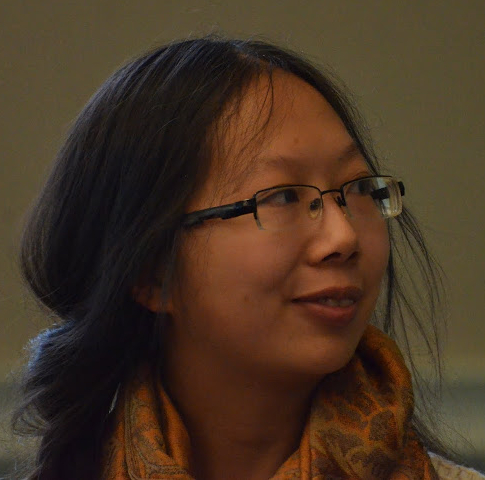
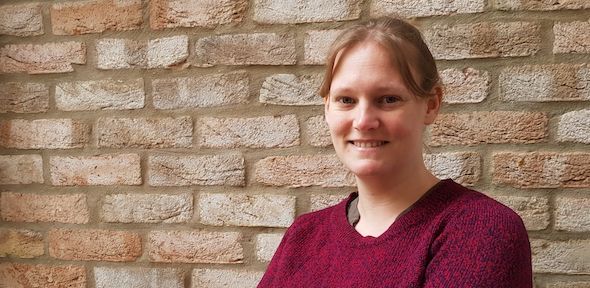
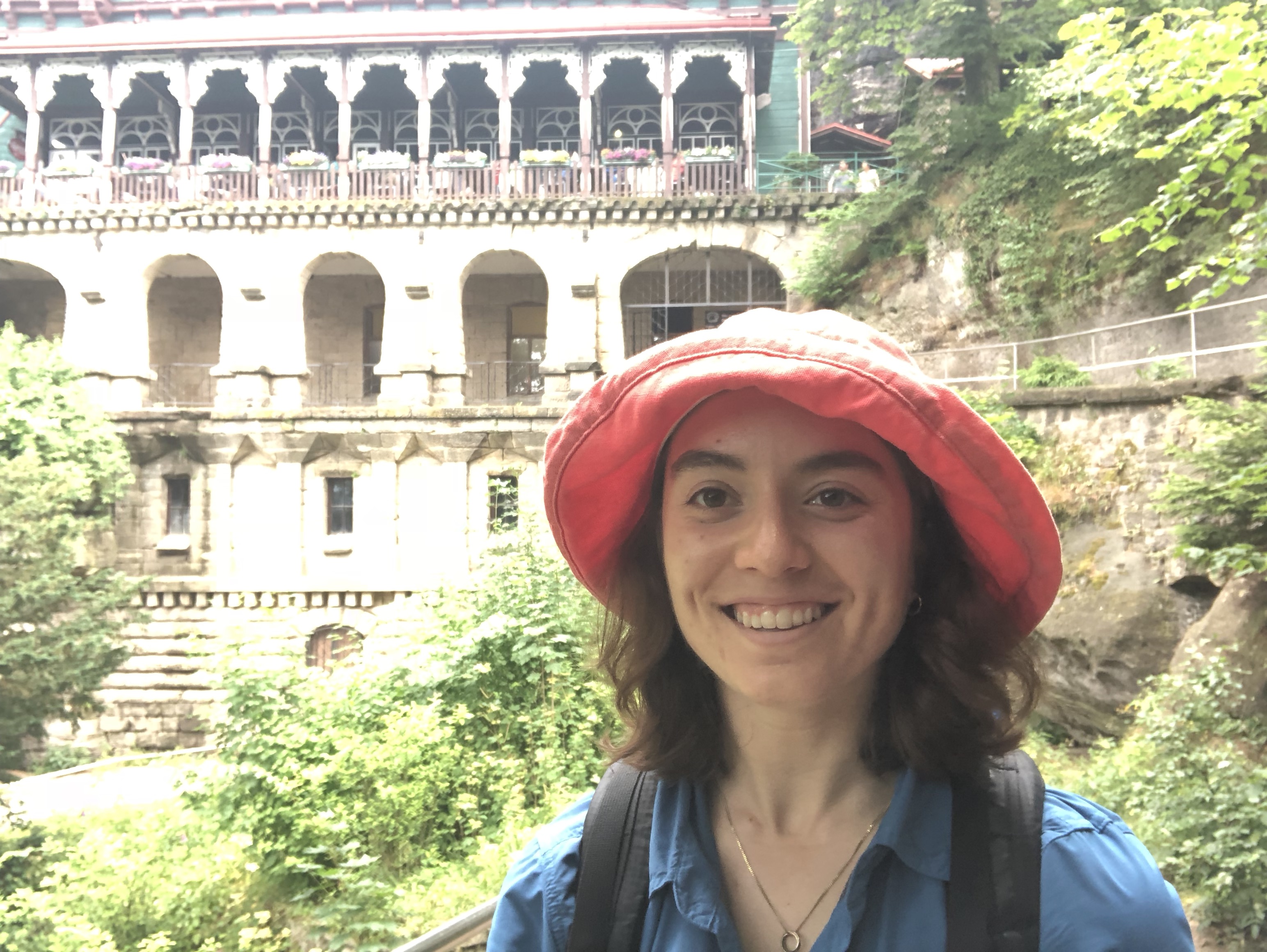
Jiayi Lu is a PostDoc Researcher at the University of Pennsylvania School of Arts & Sciences, working under the supervision of Dr. Julie Anne Legate. Her research focuses on syntax, psycholinguistics, and Chinese linguistics, with a particular emphasis on grammaticality judgments, satiation effects, and island phenomena. She has contributed to understanding how sentence processing and discourse factors influence syntactic structures. Her research interests encompass syntax, psycholinguistics, and formal semantics, with a focus on exploring grammaticality illusions, the role of discourse in syntactic constraints, and cross-linguistic variations in Chinese. Key areas include the study of extraction islands, coordination effects, and the cognitive mechanisms underlying sentence processing. Her recent work (2020-2024) demonstrates a strong focus on syntactic satiation, island effects, and experimental methods in syntax. Publications analyze both English and Chinese data, investigating how linguistic structures are processed and judged by speakers. Trends include exploring the generalizability of satiation across island types and the interplay between discourse and syntactic constraints. Dr. Lu has not listed any scientific awards or grants in the provided information. Dr. Lu has not listed any advisees or grants in the provided information.
Jiwon Yun is an Associate Professor in the Department of Linguistics at Stony Brook University. She holds a Ph.D. in Linguistics from Cornell University (2013) and a B.S.E. in Computer Science & Engineering from Seoul National University (cum laude with honors). Her research focuses on speech prosody, syntax-semantics interfaces, and computational modeling of sentence processing, with special attention to East Asian languages like Korean, Mandarin, and Japanese. Dr. Yun teaches undergraduate and graduate courses in computational linguistics, semantics, pragmatics, and experimental phonetics. Her work bridges theoretical linguistics and experimental methods, examining how prosody interacts with syntactic and semantic structures. Recent publications investigate prosodic disambiguation of syntactic ambiguities, computational models of relative clause processing, and intonation patterns in Korean and Mandarin. She has developed tools for automated speech corpus analysis and maintains a Hangul-Yale Romanization Converter for linguistic research. Her research has been published in journals like Humanities and Social Sciences Communications , Linguistic Inquiry , and Journal of East Asian Linguistics . Teaching responsibilities include courses such as LIN 335 (Computational Linguistics) and LIN 627 (Computational Semantics).
Satoshi Tomioka is a Professor in the Department of Linguistics and Cognitive Science at the University of Delaware, affiliated with the College of Arts & Sciences. He holds a B.A. from International Christian University (Tokyo) and a Ph.D. from the University of Massachusetts Amherst. His expertise spans semantics, pragmatics, syntax, and prosody, with a focus on Japanese and comparative East Asian linguistics. Education: B.A. in Liberal Arts (1987), International Christian University; Ph.D. in Linguistics (1997), University of Massachusetts Amherst. Research interests include ellipsis, anaphora, wh-interrogatives, distributivity, and contrastiveness. He investigates how prosody interacts with syntax and semantics in Japanese, exploring topics like focus marking, intervention effects, and scalar implicatures. Recent work examines associative plurals and pragmatic disambiguation in embedded questions. Publications analyze theoretical and empirical questions in linguistic interfaces, such as Bare quotatives as embedded speech acts (2024) and Focus without pitch boost (2022). His work bridges formal semantics and experimental approaches, addressing challenges in cross-linguistic typology and cognitive aspects of language processing.
Gabrielle Hodge is a Senior Lecturer in Sign Language Linguistics at the University of Edinburgh's School of Philosophy, Psychology and Language Sciences. A deaf researcher, she specializes in sociolinguistics related to deaf communities, sign languages, and multimodal communication. Her work incorporates corpus linguistics, applied linguistics, and semiotics methodologies. Education: PhD in Linguistics (Macquarie University, 2014), BA (Hons) in Linguistics (La Trobe University, 2008). Teaching includes undergraduate and postgraduate courses in sign language linguistics and sociolinguistics. She chairs the University BSL Plan Implementation Group (2024-2030) and actively supervises PhD and MSc students in deaf community research. Research focuses on accessibility, sign language corpus methods, and inclusive language theory. Notable projects include the Accessibility & Inclusion Toolkit for deaf Australians and Signing to Know & Survive , exploring deaf communication resilience. She develops training for educators and interpreters, emphasizing direct access without relay systems. Key contributions include advancing corpus-driven sign language research, analyzing deaf professionals' trust in interpreters, and creating climate change resilience resources in Auslan. Her work challenges traditional linguistic frameworks to better incorporate deaf perspectives and embodied communication practices.
Nicholas Henriksen is an Arthur F. Thurnau Professor and Professor of Spanish & Linguistics at the University of Michigan, where he has held faculty positions since 2012. His research focuses on laboratory phonology, experimental phonetics, sociophonetics, and intonational grammar in Spanish and other Romance languages. Notable projects include studies on sound change in Andalusian and Patagonian Spanish, bilingualism (Afrikaans-Spanish), and second language speech learning. He directs the Michigan Speech Production Lab and co-leads initiatives integrating gender-diverse language into Romance curricula. Henriksen earned a PhD in Linguistics from Indiana University (2010), MA in Hispanic Linguistics (2006), and BA in Spanish/Mathematics from Rutgers (2003). His teaching spans undergraduate and graduate courses in Spanish linguistics, sociolinguistics, and phonetics, emphasizing applied research and pedagogical innovation. He has received prestigious awards, including the LSA Early Career Award (2021) and the Class of 1923 Teaching Award (2018). His research has been funded by grants from the University of Michigan ADVANCE Program and the Humanities Collaboratory, supporting projects like From Africa to Patagonia: Voices of Displacement . Collaborations include work with scholars in Argentina, South Africa, and Spain, examining language contact, heritage language maintenance, and sociolinguistic identity. Publications span over 30 peer-reviewed articles and book chapters, with a focus on phonetic variation, intonation, and bilingualism. He mentors graduate students in experimental phonetics and sociolinguistics, with advisees contributing to studies on Andalusian Spanish, heritage language acquisition, and voice quality.
Lisa Lai-Shen Cheng is a Professor of General Linguistics at the Leiden University Centre for Linguistics, with a focus on comparative syntax and its interactions with semantics, prosody, and processing. She co-founded the Leiden Institute for Brain and Cognition (LIBC) and is a member of KNAW, Academia Europaea, and LSA Fellow. PhD in Linguistics from MIT (1991) Assistant/Associate Professor at UC Irvine (1991-2000) Her research explores language variation through comparative syntax , wh-questions , and interdisciplinary approaches involving the brain. Key projects include Ellipsis Licensing Beyond Syntax (NWO), Understanding Questions (NWO), and Advancing the European Multilingual Experience (FP7 EU). Her work spans Chinese , Bantu , and other languages, addressing phenomena like intervention effects and scope fixation . Her publications include studies on wh-in-situ in Chinese, French, and Bantu languages, emphasizing the role of interfaces and cognitive processes. Awards include membership in KNAW (2017), Academia Europaea, and LSA Fellow status. She has supervised over 20 PhD students and teaches syntax and syntax-semantics interface courses at Leiden University. Her affiliations include the Theoretical Linguistics and Experimental Linguistics groups.
Wolfgang Lorenzon is a Professor of Physics at the University of Michigan, specializing in experimental particle physics, nuclear physics, and astrophysics. His research spans three major experimental programs: the LUX-ZEPLIN (LZ) dark matter experiment at SURF, the MUSE experiment at PSI for proton radius measurements, and the SpinQuest collaboration at Fermilab studying hadronic physics. He has held significant roles in major collaborations including SeaQuest and HERMES, where he served as Deputy Spokesman from 1997-1998. His educational background includes a Ph.D. (1988) and Diploma (1984), both from the University of Basel. Lorenzon has built a distinguished research career focusing on precision measurements in particle and nuclear physics, with particular expertise in detector development and experimental techniques. Lorenzon's research interests center on fundamental questions in particle physics. His work on the LZ experiment involves developing the in-line radon removal system for the central time-projection chamber, crucial for enhancing the detector's sensitivity to WIMPs. At PSI, he leads the development of liquid hydrogen targets for the MUSE experiment, which aims to resolve discrepancies in proton charge radius measurements. His hadronic physics work with SeaQuest and SpinQuest focuses on understanding nucleon structure through antiquark distributions and polarized Drell-Yan processes. His research bridges theoretical questions with cutting-edge experimental techniques, often requiring innovative detector solutions. Analysis of his recent publications (2023-2025) reveals a strong focus on dark matter detection using liquid xenon technology, precision measurements of nucleon structure, and development of next-generation detectors. His work spans theoretical interpretation of experimental results, detector development, and analysis of fundamental particle interactions. The research shows increasing collaboration across international boundaries, with significant contributions to multiple major experiments simultaneously. Scientific Awards: Fellow of the American Physical Society Lorenzon has mentored numerous graduate students through completion of their Ph.D. degrees, with recent graduates including Haley Reid (2024), Noah Wuerfel and Chami Amarasinghe (2023), Maris Arthurs (2022), Marshall Scott (2020), and Daniel Morton (2019). His current research group includes postdocs, graduate students, and undergraduate researchers. His research is supported by multiple grants from the National Science Foundation (Grant 2110229) and the Department of Energy (Grant SC0019193 and Subcontract 734299), as well as University of Michigan funding. Lorenzon leads a research group with active laboratories at both the Homer A. Neal Laboratory (3265 HANL) and West Hall (357 WH) at the University of Michigan. His team collaborates with international groups at Fermilab, SURF in South Dakota, and the Paul Scherrer Institute in Switzerland. The group maintains strong connections with the LZ collaboration, MUSE experiment, and SpinQuest collaboration, contributing both technical expertise and physics analysis capabilities to these major international efforts.
Mai Ha Vu is an Assistant Professor at the University of Toronto Mississauga , split between the Department of Language Studies and the Department of Mathematics, Computer Science, and Statistics . Her work bridges theoretical linguistics, computational methods, and biological data modeling. Ph.D. in Linguistics, University of Delaware (2020) M.A. in Linguistics, University of Delaware (2014) B.A. in Psychology and Linguistics, Grinnell College (2013) Research focuses on applying formal language theory to understand human language patterns and train biologically reliable language models . Recent work includes antibody language modeling (Nature Computational Sciences 2022) and syntax-prosody mapping via logical transductions (SIGMORPHON 2022). Key research trends in publications: interdisciplinary applications of computational linguistics to immunology, psycholinguistic modeling of neural language models, and formal syntactic analysis of negation and wh-questions across languages.
Jennifer L. Smith is a Professor and Associate Chair in the Department of Linguistics at the University of North Carolina, Chapel Hill. Her research focuses on phonology, particularly the interplay between phonological constraints, morphosyntactic categories, and experimental methods. Key areas include lexical-category effects (e.g., noun/verb phonological privilege), loanword adaptation, blend phonology, and intonation patterns in Fukuoka Japanese. She has pioneered experimental approaches using artificial-language learning and surfeit-of-the-stimulus experiments to test hypotheses about constraint interaction and phonological universals. Smith’s work bridges formal phonology and phonetics, addressing questions like how phonetic naturalness influences phonological constraints and whether category-specific phonology reflects innate biases. Recent projects include investigating positional effects in phonology (e.g., salient positions) and the role of core-periphery structures in loanword nativization. She has collaborated extensively with researchers like Elliott Moreton and Katya Pertsova on blend phonology and experimental phonology. Her teaching includes foundational courses like Linguistics 60: How Reading Works , emphasizing interdisciplinary connections between language, cognition, and literacy. Smith maintains key resources for the field, including a widely referenced Phonetics resources page with curated materials for teaching and research. Her office is located in Smith Building 309, and she holds regular office hours via Zoom.
Dr. Margreet Vogelzang is a Lecturer in Psychology at Newcastle University and an affiliated researcher at Theoretical and Applied Linguistics within the Faculty of Modern and Medieval Languages and Linguistics at the University of Cambridge. Based at the English Faculty Building, 9 West Road, Cambridge, CB3 9DP, and affiliated with Trinity College at Cambridge, she maintains a dual institutional presence that reflects the interdisciplinary nature of her work. Her research program combines neuroscientific, psychological, linguistic, and statistical methodologies to investigate language and cognitive processing across the lifespan. She specializes in multilingual syntactic and semantic processing, employing both written and spoken language paradigms with offline (comprehension, judgments) and online (eye-tracking, EEG, fMRI) measures. Her work examines how hearing loss, socio-linguistic variables, and developmental conditions like autism spectrum disorder influence language processing mechanisms. Analysis of her recent publication record reveals three dominant research trajectories: (1) bilingualism effects on cognitive flexibility in autistic children, (2) neural and cognitive mechanisms of sentence processing in individuals with hearing loss, and (3) computational modeling of pronoun interpretation across diverse populations. These strands demonstrate her consistent focus on bridging theoretical linguistics with cognitive neuroscience to address practical questions about language processing variability. Dr. Vogelzang actively supervises several graduate students including Alexander Cairncross, Andromachi Tsoukala, and Chara Triantafyllidou, and serves as course contact for Li16: Psychology of language processing and learning at Cambridge. Her teaching portfolio includes psycholinguistics, neurolinguistics, cognitive science, and research methods, reflecting her methodological expertise across experimental and computational approaches.
Prof. Dr. Anke Holler is a Professor of German Linguistics at the University of Göttingen , specializing in formal grammar, discourse analysis, and computational linguistics. Her career spans roles in academic administration, including Vice President for Appointments since 2021, and leadership in DFG and Leibniz Association committees. Education : University of Tübingen, University of Leipzig, and University of Massachusetts, Amherst Current Projects : GRK 2636 'Form-Meaning Mismatches', DFG 'Structuring Literature' (SPP 2207), VW Foundation 'Uncertain Attribution' Research Interests focus on the intersection of grammar theory, experimental linguistics, and computational modeling. She explores discourse structures, narrative perspective, and constraint-based parsing, with applications in digital humanities and text mining. Her recent work involves neural networks for speaker attribution and computational analysis of literary reflexivity. Collaborations include the Carl Friedrich Lehmann-Haupt Doctoral Program and the 'Textstrukturen' center. She serves as editor for the Zeitschrift für Sprachwissenschaft and coordinates interdisciplinary initiatives.
Dr Mary Baltazani is a Postdoctoral Researcher in Phonetics at the University of Oxford's Faculty of Linguistics, Philology & Phonetics, affiliated with the Phonetics Lab and Language & Brain Lab. Her research focuses on the interface between phonetics, phonology, and pragmatics, with special attention to intonation, Greek dialects, and sociophonetics. She leads and collaborates on projects examining language contact effects on intonation (e.g., Greek in Cyprus, Cretan Greek under Venetian influence) and the compositional nature of intonational meaning. Education: PhD in Linguistics from UCLA (2002), M.A. in Linguistics (UCLA), and academic positions at institutions including UCL, University College London, and the University of Ioannina. She has organized major conferences like BAAP 2014 and contributed to the creation of educational materials on Greek dialects through projects like VOCALECT. Research Interests : Intonation and pragmatics in Greek Historical and dialectal phonetics Language contact in the Eastern Mediterranean Prosodic typology and socioprosodic variation Current/Recent Projects: Greek in Contact (ESRC-funded): Examines Turkish and Italian influences on Greek intonation. Components of Intonation (British Academy): Investigates whether intonation's meaning is holistic or compositional. Grants include ESRC, British Academy, and NSRF European Regional Development Fund awards. Publications span encyclopedic entries, journal articles, and conference proceedings on topics like Cypriot Arabic prosody, Greek dialectal vowel systems, and historical phonetic change.
Elise Newman is an Assistant Professor in the Department of Linguistics and Philosophy at MIT. Her research focuses on syntax, with additional interests in semantics/pragmatics and first language acquisition. She completed her PhD at MIT in 2021 and held a postdoctoral position at the University of Edinburgh, collaborating on projects about syntactic locality effects. Her work bridges formal syntax with experimental approaches, exploring topics like argument structure, syntactic locality, and cross-linguistic variation. Education: PhD in Linguistics (MIT, 2021); Postdoctoral Research at University of Edinburgh (2021-2022). Research themes include syntactic derivation processes, feature-driven movement, and the interface between syntax and semantics. Recent publications analyze DP movement, A/A-bar interactions, and the role of features in syntactic pathways. Her work often employs theoretical frameworks from the minimalist program while engaging with empirical data from diverse languages like Wolof and Shanghainese. Publications showcase contributions to core syntax questions, including subcategorization restrictions, pied-piping phenomena, and adjunct island effects. Though no specific awards are noted, her work demonstrates significant engagement with foundational linguistic theory. Advising and grants details are not explicitly stated in the provided information. Active in academic networks, she collaborates with institutions globally and participates in MIT's Linguistics Program, contributing to the vibrant theoretical linguistics community there.
Stefano Quaglia is an Assistant Professor at the Institute of Romance Studies , University of Graz. His research focuses on syntax and its interfaces with morphology and semantics , using Italian as a comparative framework within and beyond Romance languages. Email: stefano.quaglia@uni-graz.at Office: Room 003303056, Merangasse 70/III, Graz, Austria Consultation Hours: Wednesday, 3:30-4:30 p.m. Research interests include: Spatial expressions and functional sentence structure Long-distance dependencies Language contact phenomena Particle verbs and clausal organization Wh-movement and information structure Cross-linguistic syntactic analysis Recent publications highlight empirical and theoretical work on verbal theme vowels , Slavic prefix ordering , and L3 transfer dynamics . His studies integrate synchronic analysis with diachronic and contact linguistics frameworks. Articles demonstrate trends in: Syntax-morphology interfaces : Allomorphy, prefix stacking, particle systems Comparative Romance-Slavic analysis : Extraction patterns, convergence phenomena Language acquisition : CLI effects in bilingual/multilingual contexts Prosodic constraints : Stress and phrasing in particle verbs Information structure : Wh-questions in Romance
Grant Goodall is a Professor of Linguistics and Director of the Linguistics Language Program at the University of California San Diego. He holds a B.A. from UCLA and a Ph.D. from UC San Diego, with additional studies at MIT and UNAM. His research focuses on syntax, particularly syntactic representations, their interaction with cognitive processes, and language acquisition across lifespans. He directs the Experimental Syntax Lab and has pioneered experimental techniques for studying sentence acceptability, with work on English, Spanish, Chinese, and constructed languages like Esperanto. Before joining UC San Diego, he taught at the University of Texas at El Paso and held visiting positions in Switzerland and Argentina. His work emphasizes applying linguistic research to improve second language learning. Key areas include experimental syntax, language pedagogy, and cross-linguistic variation in island phenomena. Recent research trends in his articles emphasize coordination structures, L2 syntax processing, and the application of experimental methods to syntactic theory. He has contributed to debates on wh-movement, D-linking, and the universality of island constraints across languages. His experimental studies often compare methodologies like magnitude estimation with traditional acceptability judgments. Scientific Awards: None explicitly listed in provided texts. Lab Affiliations: Director of UC San Diego's Experimental Syntax Lab and Linguistics Language Program. Teaching Contributions: Developed materials for introductory Spanish (e.g., 'Conéctate') and advocates for evidence-based language pedagogy.