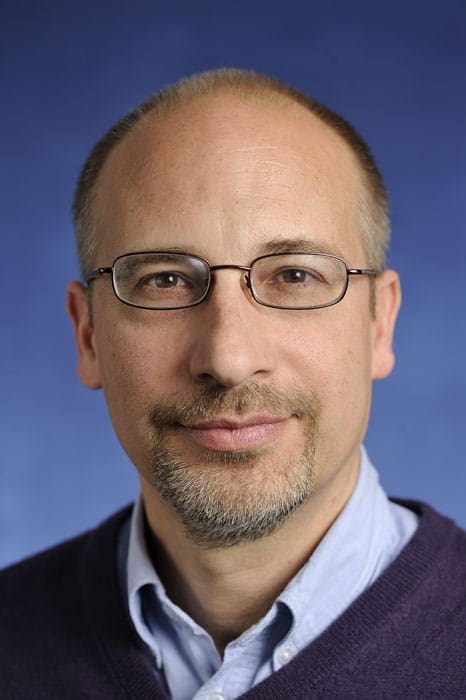
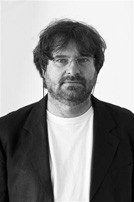
Joel Andreas is a Professor of Sociology at Johns Hopkins University since 2003, serving as Program Director of the East Asian Studies Program. His research focuses on political contention, social inequality, and social change in contemporary China. He holds a PhD in Sociology from UCLA and teaches social theory, political sociology, and courses on Chinese society. He has held visiting positions at universities including the University of Sydney, Hong Kong University, and Ningxia University. His work examines labor movements, rural land policies, and class dynamics in China. Recent research includes analyses of staff-worker congresses, rural land dispossession, and the persistence of militarism in U.S. policy. He critiques market reforms and explores the legacy of the Cultural Revolution. Andreas has contributed to debates on China’s transition to capitalism and the decline of socialist systems. His publications span topics from urbanization to state coercion in rural development. He maintains an active role in academic exchanges and policy-relevant research on China’s socio-political landscape.
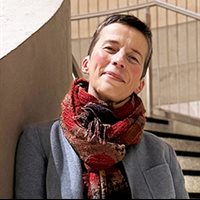
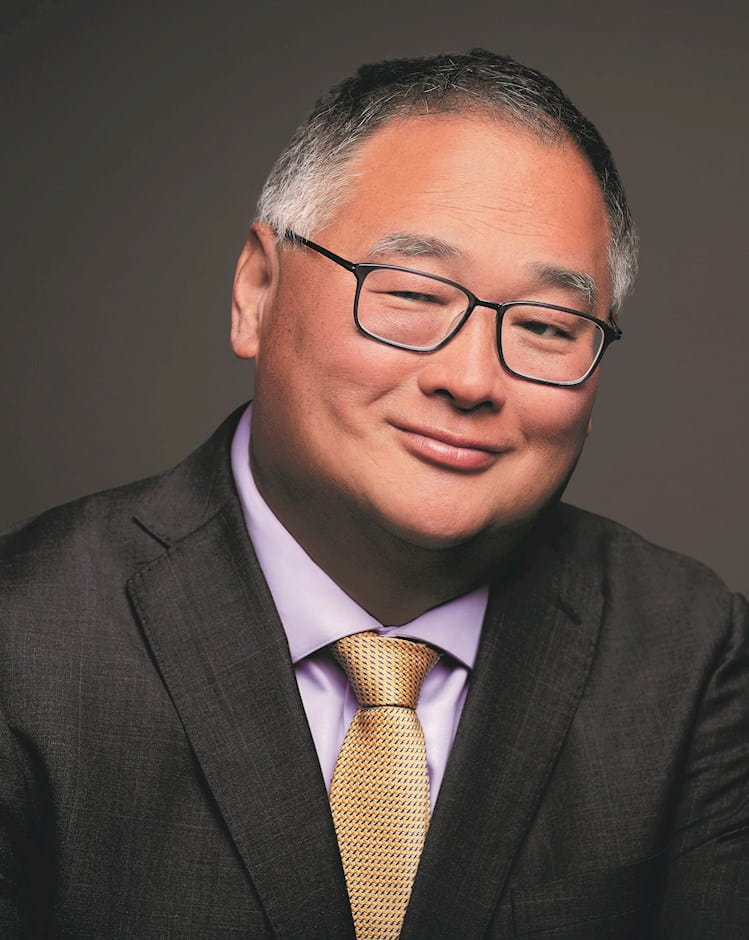
Janet Chen is Professor of History and East Asian Studies at Princeton University, serving as Director of the East Asian Studies Program. Based in 302 Dickinson Hall, she maintains regular office hours on Thursdays from 9:30 am to 11:30 am and is contactable via jychen@princeton.edu. Her academic credentials include: Ph.D. in History, Yale University M. Phil in History, Yale University M.A. in History, Yale University B.A. in History and Asian Studies with highest honors, Williams College Chen specializes in twentieth-century Chinese social and urban history, examining marginalized populations during periods of war and revolution. Her research explores intersections of poverty, state formation, and cultural identity, with current work focused on Mandarin language standardization in China and Taiwan. This scholarship bridges historical analysis with sociological frameworks to understand how ordinary people navigate systemic upheaval. Her publication 'Guilty of Indigence: The Urban Poor in China, 1900-1953' (2012) exemplifies her methodological approach, revealing how destitution became criminalized amid political transformation. Collectively, her work demonstrates consistent focus on urban marginality, state-society relations, and historical memory in modern East Asia, establishing her as a significant voice in social history methodologies.
Albrecht Fuess is a Professor of Islamic Studies at Philipps University of Marburg since 2010, specializing in Middle Eastern History (13th–17th centuries), Mamluk socio-cultural dynamics, and contemporary European Islamic discourses. His research spans historical continuity in Ottoman-Mamluk-Safavid interactions, Islamic youth cultures, and Mediterranean geopolitics. Research Focus: Medieval Islamic history, Transottomanica mobility studies, Islam in Europe, and cultural integration of Muslim migrants. Awards: Le Studium Fellowship (2007–2009) at Université de Tours. His publications emphasize military-economy interplay, legitimacy through religious narratives, and resource management in empires, with a focus on Mamluk and Ottoman transformations. He has advised on doctoral projects covering topics like Islamic welfare, Arabic ʾAmālī literature, and Cypriot-Ottoman relations. Leadership: Co-coordinator of Transottomanica (DFG-SPP 1981), member of ANR and DAAD committees, and liaison professor for the German National Academic Foundation. Editorial Roles: Co-editor of 'Transottomanica' and 'Muslim Worlds' series, and advisory board member for journals in Cairo, Paris, and Leuven.
Dr. Soohyun Lee is a Senior Lecturer in Korean and East Asian Political Economy at King's College London, based in the Department of European & International Studies within the School of Politics & Economics. She holds a BSc from Ewha Womans University (South Korea), an MSc from the London School of Economics, and a DPhil from the University of Oxford. Affiliations: European Politics and Society Research Group King’s Korea Initiative Her research focuses on the comparative political economy of welfare states, particularly in East Asia and Europe, with an emphasis on labor market dualization, social policy reforms, and family policies. She has explored how countries address welfare challenges and the conditions for successful welfare state reforms. Her work has been published in leading journals such as World Politics , Comparative Political Studies , and Journal of Contemporary Asia . Dr. Lee teaches courses on the political economy of East Asian development, welfare state models, and capitalism. She supervises PhD students on topics related to welfare states, labor markets, and East Asian political economy. Grants & Projects: Learning to Reform the Welfare State and Labour Market: Korean Labour Market and Social Policy-Making in Comparative Perspective (Korea Foundation, 2020–2022) Welfare Reform and Social Progress in South Korea: Effective Social Policies for a Low-Fertility and Ageing Society (Korea Foundation, 2019–2020) Welfare States in Transition: International Policy Lessons for South Korea (Korea Foundation, 2018–2019) Recent News & Events: Her work on economic insecurity and right-wing populism was highlighted in news outlets (2024). Contributed to discussions on fertility and job security (2023). Presented at the SASE Annual Conference (2022).
London School of Economics and Political Science (LSE)United Kingdom
Abby Innes is an Associate Professor of Political Economy at the European Institute, London School of Economics , where she has been a faculty member since 1997. Her academic career includes a Visiting Fellowship at MIT (1995–1997) and a Jean Monet Fellowship at the European University Institute (2001–2002) . She has received multiple teaching awards , including the LSE Teaching Prize and European Institute Departmental Teaching Prize, and currently serves as the Teaching Chair of her institute. Research Interests : Dr. Innes specializes in the political economy of Central Europe , neoliberalism , and materialist utopias . Her work explores state capture , systemic transitions , and comparative capitalism , with a focus on the UK’s neoliberal transformation. Recent research addresses the political economy of the green transition and neoliberal institutional failures . British Academy Mid-Career Fellowship (2017-2018) LSE Teaching Prize (2002) LSE/ASRC Excellence in Education Award (2020) European Institute Departmental Teaching Prize (2011, 2013, 2015) Nominee for LSE Student-Led Teaching Excellence Awards (2014, 2020) Publications : Her 2023 book Late Soviet Britain: Why Materialist Utopias Fail argues that UK neoliberalism parallels Soviet economic dogma, leading to institutional rigidity , democratic erosion , and governance crises . She has published in journals such as The Review of International Political Economy and Comparative Politics , alongside frequent contributions to LSE Blogs and The London Review of Books .
Jean C. Oi serves as the William Haas Professor of Chinese Politics in Stanford University's Department of Political Science and holds multiple leadership positions including Senior Fellow at the Freeman Spogli Institute for International Studies, Director of the China Program, and Lee Shau Kee Director of the Stanford Center at Peking University. Professor Oi earned her PhD from the University of Michigan and previously taught at Lehigh University and Harvard University before joining Stanford in 1997. Her research centers on comparative politics with specialized expertise in Chinese political economy and reform processes in transitional systems. She has made seminal contributions to understanding rural politics in China, introducing the influential concept of 'local state corporatism' to describe China's development model in her award-winning book Rural China Takes Off (1999). Her current research examines China's Belt and Road Initiative, fiscal politics and central-local relations, and structural change in China. Professor Oi maintains an active publication record with works spanning four decades, including her most recent 2025 article 'A Perfect Storm: Fiscal Discipline, COVID, and Local Government Debt in China' which analyzes how pandemic-era policies exposed China's fiscal vulnerabilities. Choice Outstanding Academic Title (1999) for Rural China Takes Off Professor Oi leads significant collaborative research initiatives, including directing the Stanford China Program at the Walter H. Shorenstein Asia-Pacific Research Center. Her fieldwork with Chinese scholars has examined rural community organization, public goods provision, and fiscal pressures from rapid urbanization, culminating in works like Challenges in the Process of China's Urbanization (2017).
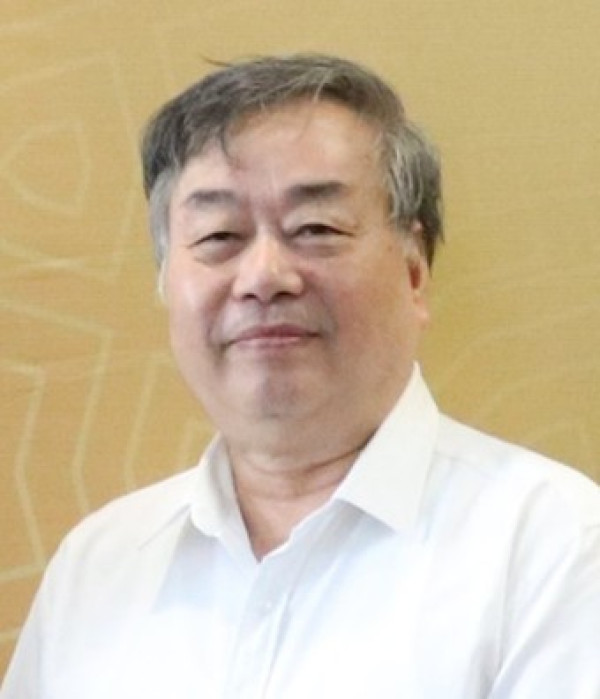
Professor Nguyen Van Chinh is a distinguished scholar in anthropology at the University of Social Sciences and Humanities, Vietnam National University (VNU-USSH), specializing in the Department of Anthropology and Religious Studies. With a PhD from the University of Amsterdam and extensive international research experience including a postdoctoral fellowship at the National University of Singapore, he has established himself as a leading expert in Southeast Asian anthropology, migration studies, and ethnic relations. His academic career spanning over four decades includes numerous visiting professorships at prestigious institutions worldwide. Professor Chinh's research interests encompass Anthropology Research Methods , History of Anthropology , Migration and Poverty Studies , Ethnic Identity , and Cross-border Ethnic Groups in Southeast Asia. His scholarly work demonstrates a particular focus on the intersection of economic development, cultural preservation, and social transformation in Vietnamese and Southeast Asian contexts. Through extensive fieldwork and theoretical contributions, he has shaped contemporary understanding of ethnic minorities, migration patterns, and socio-economic changes in the region. His extensive publication record shows a clear evolution toward contemporary issues including China's growing influence in the Mekong region, ethnic Chinese migration, and the challenges of poverty reduction in Vietnam. The research demonstrates increasing engagement with transnational phenomena, border studies, and the impact of China's economic expansion on Southeast Asian societies. His most recent work addresses pressing contemporary issues such as disability rights, academic publishing challenges, and urban migration dynamics. Distinguished PhD dissertation awarded by NVMC (Netherlands Association of Social Sciences and Cultural Sciences), 2000 Certificate of Merit from the President of National University for outstanding achievements, 2007 Asian Leadership Fellow (ALFP) awarded by the Japan Foundation, 2004 Asian Public Intellectual Fellow (API) awarded by the Nippon Foundation, 2010 Multiple research grants from prestigious foundations including Toyota, Rockefeller, and Japan Foundation Professor Chinh has served as an independent consultant for numerous national and international development projects implemented in Vietnam. His advisory work spans multiple sectors including labor, health, agriculture, and ethnic minority affairs, working with organizations such as WHO, World Bank, Asian Development Bank, UNDP, DFID, IUCN, UNICEF, and UNESCO. His expertise in ethnographic research methods and understanding of Vietnamese society has made him a valuable resource for policy development and implementation across multiple domains.
Carolina Alves is an Associate Professor in Economics at University College London's Institute for Innovation and Public Purpose (IIPP). She holds a distinguished position as a Fellow in Economics at Girton College, University of Cambridge, and serves on the Leadership Team of the UCL Centre for Capitalism Studies. Her academic journey spans prestigious institutions including SOAS, University of London for her PhD, and Unesp and Unicamp in Brazil for her undergraduate and master's degrees. BSc in Economic Science from Unesp (Brazil) MPhil in Sociology of Labour from Unicamp (Brazil) PhD in Economics from SOAS, University of London Joan Robinson Research Fellow in Heterodox Economics at Girton College, University of Cambridge Dr. Alves' research spans critical areas including Critical Macro-Finance, Structuralist Macroeconomics, and the Decolonisation of Economics, with influences rooted in Classical Political Economy, Latin American Structuralism, Dependency Theory, and Marxian economics. Her work critically examines the international monetary system, power relations in economic systems, and Eurocentric limitations in economic theory. Her recent publications demonstrate a strong focus on heterodox economic approaches, with particular attention to government bonds, international financial subordination, and the historical development of economic thought. Her eight most recent publications reveal a consistent research trajectory examining the intersections of political economy, financial systems, and economic theory development, with increasing attention to decolonial perspectives in economics. This work has garnered significant attention across academic and policy circles, with multiple citations and social media engagement. Joan Robinson Research Fellowship in Heterodox Economics at Girton College, University of Cambridge Co-founder of Diversifying and Decolonising Economics initiative Co-editor of The Developing Economics blog Trustee for Cambridge Trust for New Thinking in Economics As an educator, Dr. Alves serves as module leader for 'New Economic Thinking and Public Value' and co-leader for 'Rethinking Capitalism' at UCL. She is deeply engaged in initiatives aimed at transforming economics education, particularly through the Diversifying and Decolonising Economics movement which she co-founded. Her leadership extends to multiple advisory roles including the Rebuilding Macroeconomics Advisory Board, Progressive Economy Forum Council, and Positive Money Advisory Panel.
Andreas Eckert is Professor and Chair of African History at Humboldt University Berlin, where he also serves as Director of the International Research Centre "Work and Human Life Cycle in Global History" since 2009. Previously, he was Head of Department at the Institute of Asian and African Studies (2008-2009) and Dean of the Faculty of History and Philosophy at the University of Hamburg (2004-2006). His academic career includes visiting professorships at Harvard University, Maison des Sciences de l'Homme in Paris, and Indiana University. Professor Eckert's research focuses on African history in the 19th and 20th century , with particular emphasis on the history of the state, urbanization, and historiography. His scholarly work extends to comparative history of colonialism , history of work/labour history , and global history . His approach combines deep regional expertise in African contexts with transnational and comparative perspectives that challenge traditional historical narratives. Eckert's publication record demonstrates a consistent engagement with themes of state formation, labor relations, urban development, and historical methodology in African contexts. His work spans from detailed case studies of specific regions like Douala and Tanzania to broader conceptual explorations of how Africa fits into world historical narratives. A notable trend in his scholarship is the examination of entangled histories that connect local African experiences with global processes of colonialism, decolonization, and postcolonial state formation. His notable achievements include: 2012 Guest Fellowship at Freiburg Institute of Advanced Study Election as chairperson of "Forum Transregionale Studien" (2011) Major Grant from the German Ministry for Research and Education for the Institute "Work and Human Life Cycle in Global History" (2009) Election as chairperson of "Arbeitskreis für Moderne Sozialgeschichte" (2007) Managing Editor of the Journal of African History (2004-2011) Fellowship in the Royal Historical Society (2000) As Director of the International Research Centre "Work and Human Life Cycle in Global History," Eckert has secured significant funding including a major grant from the German Ministry for Research and Education (2009-2015). He has also served on the Board of the International African Institute in London and has been actively involved in scholarly organizations including the "Forum Transregionale Studien" and "Arbeitskreis für Moderne Sozialgeschichte." Under Eckert's leadership, the International Research Centre "Work and Human Life Cycle in Global History" brings together scholars from multiple disciplines and countries to examine the historical dimensions of work and human life cycles from a global perspective. The center serves as a hub for innovative research that transcends traditional geographic and disciplinary boundaries.
Sarah Curtis is a Professor and Graduate Coordinator in the Department of History at San Francisco State University. She specializes in 19th-century France, focusing on social, cultural, religious, and gender history, including the French empire. Her work explores the roles of religious orders and women in education and mission work, emphasizing their agency within societal structures. She currently researches the 'culture of childhood' in 19th-century France. Her research has been recognized with prestigious awards, including the National Endowment for the Humanities Summer Stipend (2018) and the Frances Richardson Keller-Sierra Prize (2011). She has published extensively, including Civilizing Habits (2010) and Educating the Faithful (2000), which highlight the transformative role of religious institutions in education and colonial contexts. Awards: National Endowment for the Humanities Summer Stipend (2018) Frances Richardson Keller-Sierra Prize (2011) Fulbright Research Fellowship (2001-02) As Graduate Coordinator, Dr. Curtis oversees the History M.A. program. Her courses cover European social history, gender studies, and imperialism. She has contributed to academic service, including editorial roles and conference leadership in French and colonial history.
Max Koch is a Professor at Lund University's School of Social Work, specializing in the intersection of social policy, ecological sustainability, and postgrowth theories. His research explores how capitalist restructuring impacts welfare, inequality, and climate action, with a focus on sustainable welfare systems and degrowth. Current projects: 'Economic Elites in the Climate Change Transformation' (PI, 2023-2028), 'Regulating the Polluter Elite' (2024-2027), 'FLYWELL' (2023-2026). Former projects: 'Postgrowth Welfare Systems' (2021-2025), 'Sustainable Welfare for a New Generation' (2020-2023). He teaches political economy, social inequality, and ecological sustainability at Lund University, directing the 'Social Policy in Europe' course. As a Visiting Scholar, he has collaborated with institutions in Spain, the Netherlands, Scotland, and Chile. His work contributes to UN Sustainable Development Goals (SDGs) related to climate action and reduced inequalities. Scientific award: Atlas Prize (2019) for degrowth research. Editorial roles: Environmental Values, advisory boards for ORSI and Collorative Future Making. Recent publications analyze planetary boundaries, postgrowth welfare models, and climate policy synergies. His research emphasizes interdisciplinary approaches combining social practices with policy innovation.
Aaron Chatterji is the Mark Burgess & Lisa Benson-Burgess Distinguished Professor at Duke University's Fuqua School of Business and Chief Economist at OpenAI. His work bridges academia, public policy, and business, focusing on AI's societal impacts, innovation, entrepreneurship, and economic growth. He has held senior roles in the Biden Administration, including White House CHIPS coordinator and Acting Deputy Director of the National Economic Council, overseeing U.S. competitiveness and supply chain resilience. Previously, he served as Chief Economist at the U.S. Department of Commerce and worked at the White House Council of Economic Advisers under President Obama. Chatterji also holds a secondary appointment at Duke's Sanford School of Public Policy and is a Research Associate at the National Bureau of Economic Research. Education: Ph.D. in Business Administration, Haas School of Business, UC Berkeley B.A. in Economics, Cornell University Research Interests: Chatterji examines the intersection of business and public policy, with expertise in entrepreneurship, innovation policy, AI ethics, and economic development. His work addresses critical issues like global supply chains, technology competition, and the role of corporate activism in societal challenges. He has authored over 30 peer-reviewed articles and two influential books: Can Business Save the Earth? and The Role of Innovation and Entrepreneurship in Economic Growth . Teaching & Advising: A屡屡 award-winning educator, Chatterji created a popular course on business and politics at Duke. He advises top firms across industries, including finance, healthcare, and technology, and leads OpenAI's research team exploring AI's economic implications. Honors: Kauffman Prize Medal for Entrepreneurship Research Aspen Institute Rising Star Award Strategic Management Society Emerging Scholar Award Public Engagement: Chatterji has written for Harvard Business Review , Wall Street Journal , and Brookings Institution. He previously ran for North Carolina State Treasurer and served on state policy commissions under Governor Roy Cooper.
Chang-Tai Hsieh is the Phyllis and Irwin Winkelried Distinguished Service Professor of Economics at the University of Chicago Booth School of Business. He is also a PCL Faculty Scholar with the university. His academic appointments include being a Research Associate for the National Bureau of Economic Research, a Senior Fellow at the Bureau for Research in Economic Analysis of Development, and a member of the Steering Group of the International Growth Center in London. His research interests focus on economic development, growth in Asia and Latin America, and applied economics, with particular expertise in macroeconomics. He has conducted extensive research on growth and development patterns across different regions, with special attention to China's economic transformation. His work examines resource allocation, innovation dynamics, trade policy impacts, and structural economic changes. Hsieh's recent publications reveal a strong focus on US-China economic relations, Chinese economic development, and the dynamics of innovation and growth. His research spans multiple subfields including trade policy, resource allocation, economic measurement, and the political economy of development. He has made significant contributions to understanding the economic transformation in East Asia, particularly regarding China's growth model and its implications for global trade. Alfred P. Sloan Foundation Research Fellowship Elected Member of Academia Sinica Two-time recipient of the Sun Ye-Fang Prize Fellow of the American Academy of Arts and Sciences Fellow of the Econometric Society Hsieh has been a visiting scholar at multiple Federal Reserve Banks (San Francisco, New York, and Minneapolis), the World Bank's Development Economics Group, and the Economic Planning Agency in Japan. He is also an active commentator on economic policy, with numerous opinion pieces published in Commonwealth Magazine, Project Syndicate, and other major outlets, particularly focusing on US-Taiwan-China economic relations and trade policy.
Marianne Nordli Hansen is a Professor at the Department of Sociology and Human Geography , University of Oslo. With a career spanning decades, her research focuses on social stratification , class and inequality , labor market conditions , economic inequality , and elites . She has taught courses like Sociological Theory (SOS4001), Theory Specialization in Sociology (SOS4011), and Inequality: Class, Gender and Ethnicity (SOS4100). Education: MA in Sociology (University of Oslo, 1984), Dr. philos in Sociology (University of Oslo, 1996) Positions: Associate Professor (ISS, UiO, 1996), Professor (ISS, UiO, 1999) Her research explores wealth accumulation , intergenerational mobility , social networks , and educational policy . Key collaborators include Professor Olav Korsnes and Associate Professor Johannes Hjellbrekke at the University of Bergen. Current projects focus on social inequality in Norway , with publications analyzing elite professions, wealth distribution, and class-based educational disparities. She has contributed to significant works on Nordic welfare models and public sector impacts on segregation and equality.
Peo Hansen is a Professor of Political Science at Linköping University's REMESO research institute, part of the Department of Culture and Society (IKOS) within the Faculty of Arts and Sciences (FILFAK). He serves as Director of the PhD Programme in Ethnic and Migration Studies and the Swedish Research Council’s Graduate School in Migration and Integration. His work critically examines European integration, colonialism, and EU migration policy through a geopolitical lens. Research Interests: Hansen specializes in the colonial origins of EU integration, modern migration theory, and the political economy of migration. He challenges orthodox economic assumptions about migration's fiscal impact, advocating for Modern Monetary Theory (MMT) as a transformative framework. Key themes include Eurafrica's historical role in shaping post-war European expansion and the EU's current 'geopolitical turn' amid declining global influence. Awards: Received the 2023 EUSA Honorable Mention for his book *A Modern Migration Theory*, which redefines migration's economic contributions to welfare states. His work has been published in journals such as *Journal of Common Market Studies*, *European Political Science*, and *History of the Present*. Visiting Roles: Senior Fellow at NYU's Remarque Institute (2006), Visiting Professor at the Max Planck Sciences Po Center (2018), and Simone Veil Fellow at the European University Institute (2023, 2025). He co-authored *Eurafrica: The Untold History of European Integration and Colonialism* with Stefan Jonsson. Labs/Teams: Active in the Institute for Research on Migration, Ethnicity and Society (REMESO), focusing on transnational migration, ethnicity, and citizenship. His research integrates historical analysis with contemporary policy critique, emphasizing decolonial perspectives in EU studies.