Joseph Tao-yi Wang is a Distinguished Professor in the Department of Economics at National Taiwan University (NTU). He holds a PhD from UCLA and previously served as a Postdoctoral Scholar and Visiting Associate at Caltech. His research spans experimental economics, neuroeconomics, game theory, and behavioral economics, with a focus on strategic decision-making, market design, and learning in games. Wang directs the Taiwan Social Sciences Experimental Laboratory (TASSEL), which hosts large-scale experimental research and conferences like the 2017 APESA. His work integrates eye-tracking, pupillometry, and machine learning to study cognitive processes in economic decisions. Wang is also active in educational innovation, developing flipped classroom models with experiments for economics courses. His publications consistently explore behavioral deviations from game-theoretic predictions, such as overcommunication in sender-receiver games and learning patterns in auctions. Recent work emphasizes reproducibility in management science and AI applications in education. Wang’s research uses diverse methodologies—from neuroimaging to field experiments—to test economic theories in real-world contexts. Wang mentors through NTU’s Berkeley Economics Student Assistant Program (BESAP) and organizes mini-courses for high school students. He has not received scientific awards per the available data.
Caroline Andre is an Associate Professor of Law at NEOMA Business School, specializing in private law with a focus on labor law, marketing law, and cooperative law. She teaches undergraduate and graduate students in both initial and continuing education programs, and has practiced law professionally. Her research bridges legal and management disciplines, addressing topics like social and solidarity economy (SSE), circular economy intersections, CSR policies, and entrepreneurial values. Her academic contributions span legal journals and management science publications, including monographs like Creating the Circular Economy (2024). She actively participates in national/international communities like EURAM and ACfas. Recent work examines SSE's role in ecological transition, pandemic crisis adaptation, and labor law compliance in SMEs. Key research outputs include analyses of social audits in SME acquisitions (2022), employer pooling models (2019-2020), and legal frameworks for SSE organizations. Her work frequently explores regulatory pressures and ethical governance in business environments. Caroline has no listed scientific awards but has contributed to numerous regionally funded research projects. Her teaching extends to professionals via continuing education, emphasizing practical legal applications in business contexts.
Don Kulick is a Professor and Research Director at the Department of Cultural Anthropology and Ethnology, Uppsala University, Sweden. His academic career spans decades of anthropological fieldwork in Papua New Guinea, Brazil, and Scandinavia, with a focus on linguistic anthropology, sexuality studies, and disability studies. Dr. Kulick's research interests encompass linguistic anthropology, sexuality studies, disability studies, language death, vulnerability studies, and human-animal communication. His work challenges conventional views on vulnerability, arguing that it can be a resource rather than a lack. His fieldwork with adults with significant disabilities in Denmark and Sweden informed his influential book "Loneliness and its Opposite: sex, disability, and the ethics of engagement". Kulick has also made significant contributions to the understanding of transgender communities, particularly through his early ethnographic work with Brazilian travesti prostitutes documented in "Travesti: Sex, Gender and Culture among Brazilian Transgendered Prostitutes". His recent scholarly output demonstrates a trajectory from linguistic anthropology and sexuality studies toward broader questions of vulnerability, ethics, and human-animal relations. Kulick's work consistently engages with marginalized communities and challenges disciplinary boundaries, connecting linguistic anthropology with disability studies, queer theory, and ethical frameworks for engagement with vulnerable others. ERC Advanced Grant for a 5-year research project on people who are treated as though they aren't really there Dr. Kulick has received significant research funding, most notably an ERC Advanced Grant for a 5-year project examining people who are treated as though they aren't really there, including courtroom interpreters and peer reviewers. His mentorship extends through his extensive publications and edited volumes that have shaped multiple generations of anthropological scholarship, particularly in the areas of linguistic anthropology and sexuality studies. While specific lab structures aren't mentioned in the provided text, Kulick's research program on vulnerability appears to be an organized research initiative (referred to as the "EV program" in the text), suggesting a research team or collaborative network focused on vulnerability as a productive resource.
Alberto Brugnoli is a Full Professor in Applied Economics at the University of Bergamo, Italy, where he has served since 2020. He holds the UNESCO Chair on Human Rights, International Cooperation and Sustainable Development and serves as Delegate for International Cooperation in Developing Countries at the University of Bergamo. His academic career spans over 30 years with progressive appointments from Researcher to Full Professor. Brugnoli's research focuses on International Development Cooperation, Sustainable Development, Local Development, Regional Governance and Policy, Migration, Municipal Financing, and Trade. His work demonstrates a strong international dimension through collaborations with institutions like Fundação Getulio Vargas (Brazil), McGill University (Canada), OECD, and the European Commission. His recent publications show a clear trajectory toward sustainability, decarbonization, and economic transition topics. His research output reveals a progression from traditional economic policy topics toward contemporary challenges of sustainability, climate change, and social development. The most recent publications (2022-2025) predominantly address decarbonization, sustainable economic transitions, and regional development strategies, reflecting current global economic policy priorities. Award by the Scientific Committee of the First Report on Finance of the Rosselli Foundation (2012) Award by the NATO Assistant Secretary General for Public Diplomacy (2009) Recognition from Università Bocconi for editorial contributions (1999) Brugnoli has advised numerous international research projects and has extensive teaching experience in Development Economics, Regional Economics, and International Cooperation. His leadership extends to serving as President of the Master's Degree Program in Human Rights, Migration and International Cooperation (2018-2022) and various delegate roles at the University of Bergamo.
Ian Wilson is the Deputy Director of the Centre for Regional Economic and Social Research (CRESR) and a Professor of Policy Research and Evaluation at Sheffield Hallam University. He holds BA and MSc degrees, with over 20 years of expertise in applied policy research and evaluation, securing £15M+ in research funding. His work spans housing policy, urban regeneration, and social welfare, collaborating with government agencies like DLUHC, DWP, and Welsh Government. Education: BA, MSc (institutions unspecified) Roles: Deputy Director (CRESR), Professor of Policy Research and Evaluation Affiliations: Social and Economic Research Institute, College of Social Sciences and Arts Research Focus: Wilson's work centers on measuring policy impacts, housing affordability, and place-based interventions addressing social inequities. He pioneered methods like shadow pricing for regeneration outcomes and developed frameworks for valuing policy effects on communities. His expertise includes econometric analysis, cost-benefit evaluation, and innovative solutions for complex societal challenges. Grants & Projects: Key projects include evaluations of the Affordable Homes Programme (£10M agreement with DLUHC), Warm Home Prescription project, and Community Renewal’s Lifting Neighbourhoods Together initiative. He has led over 100 research outputs, including studies on housing benefit reforms, urban regeneration, and third-sector subcontractor roles in EU programs. Labs/Teams: Core affiliations with CRESR and the Social and Economic Research Institute, collaborating with interdisciplinary teams on national and international projects.
Prof. Claudio J. Tessone is a Professor of Blockchain and Distributed Ledger Technologies at the Department of Informatics, University of Zurich. He serves as Head of the Blockchain and Distributed Ledger Technologies group, Chairman of the UZH Blockchain Center, and is incharge of the NetSci Society. His academic background includes a PhD in Physics (Complex Systems) and an Habilitation in Complex Socio-Economic Systems from ETH Zurich. Education: PhD in Physics (2006): Thesis on synchronization in stochastic systems, Universitat de les Illes Balears, Spain Habilitation (2015): Thesis on agent-based modeling of socio-economic systems, ETH Zurich Master in Physics (1999): Thesis on stochastic resonance, Instituto Balseiro, Argentina Research Interests: Prof. Tessone specializes in modeling complex socio-economic and socio-technical systems, with a focus on blockchain-based systems. His work explores crypto-economics, blockchain scalability, decentralized finance (DeFi), and the interplay between micro-level agent behavior and macro-level emergent properties. Notable areas include transaction network analysis in Bitcoin/Ethereum, consensus mechanisms (Proof-of-Stake/Work), and blockchain governance models. Publications Trends: Recent articles emphasize empirical blockchain analysis (e.g., Ethereum microvelocity, Bitcoin mesoscopic structure), DeFi arbitrage strategies, and privacy-preserving blockchain applications in healthcare. His work bridges theoretical agent-based models with real-world blockchain datasets, addressing both technical and socio-economic dimensions of distributed ledger technologies. Grants & Labs: Director of the UZH Summer School on Blockchain and Certificate of Advanced Studies program. Active in interdisciplinary collaborations through the URPP Social Networks (2015–2021) and ETH Zurich’s Systems Design group (2007–2014). Labs/Initiatives: Leads the UZH Blockchain Center, a hub for academic-industry research on blockchain applications in finance, governance, and digital transformation.
Pamela A. Morris-Perez is a Professor of Applied Psychology at the NYU Steinhardt School of Culture, Education, and Human Development and an Affiliated Professor at the NYU School of Global Public Health. She is an elected member of the National Academy of Education. Her research bridges developmental psychology, suicidology, education, and policy, with over $75M in research funding. She holds a BA from Columbia University and a PhD in Developmental Psychology from Cornell University. Her research focuses on early childhood interventions, adolescent suicide prevention (through ARCADIA), and policy impacts. Notable projects include a $5M IES-funded NYC Universal Pre-K initiative and a $10M NIH trial on parenting interventions. She has also led institutional roles as Vice Dean/Interim Dean of NYU Steinhardt, overseeing significant research growth and diversity initiatives. Research Themes: Suicidology, early childhood development, policy evaluation, pediatric health interventions. Key Projects: ARCADIA suicide prevention, NYC Pre-K expansion, pediatric primary care interventions. Her articles highlight interdisciplinary approaches to child development and policy, with recent work emphasizing adolescent mental health and pandemic impacts on early childhood programs. Awards include the National Academy of Education membership and a 2017 Best Paper Award. Leadership Achievements: 44% increase in research expenditures, tripling of faculty of color hires, pandemic response coordination. Grants & Funding: William T. Grant Foundation, NIMH, NIH, IES. Morris-Perez collaborates across academia and public agencies to translate research into scalable interventions, particularly in under-resourced communities.
Nicolò Cesa-Bianchi is a Professor of Computer Science at the University of Milan, where he serves as head of the Computer Science programs. He is also associated with the Department of Electronics, Information and Bioengineering (DEIB) at Politecnico di Milano. Cesa-Bianchi holds significant leadership roles including Board member, Fellow and co-director of the Milan unit of the European Laboratory for Learning and Intelligent Systems (ELLIS), and membership in the prestigious Accademia Nazionale dei Lincei. He is also involved with The European Lighthouse on Secure and Safe AI (ELSA), The European Lighthouse of AI for Sustainability (ELIAS), and The FAIR foundation. Professor Cesa-Bianchi's research focuses on the theoretical foundations of machine learning, with special emphasis on sequential decision making and online learning algorithms. His work spans multiple areas including multi-armed bandit problems, regret analysis, prediction with expert advice, and learning on graphs. He has made significant contributions to understanding the theoretical limits of learning algorithms and developing efficient methods for various learning scenarios. His research has important applications in online markets, social networks, and bioinformatics. His monographs 'Prediction, Learning, and Games' and 'Regret Analysis of Stochastic and Nonstochastic Multi-armed Bandit Problems' are considered seminal works in the field. His recent publications demonstrate continued leadership in advancing the theoretical understanding of machine learning, with 2024-2025 papers covering cooperative online learning, multitask learning, fair trade mechanisms, and refined analyses of bandit algorithms. The research shows increasing focus on practical economic applications while maintaining strong theoretical foundations. Google Research Award Xerox Foundation UAC Award Member of the Accademia Nazionale dei Lincei ELLIS Fellow Cesa-Bianchi has been deeply involved in academic service, having served as action editor for the Machine Learning Journal, IEEE Transactions on Information Theory, and the Journal of Machine Learning Research. He currently serves as associate editor for the Journal of Information and Inference and TheoretiCS. He has held leadership positions including President of the Association for Computational Learning and member of the steering committee for the EC-funded Network of Excellence PASCAL2. He was program chair of the 13th Annual Conference on Computational Learning Theory and the 13th International Conference on Algorithmic Learning Theory. He leads the Laboratory for AI and Learning Algorithms (ALGA) at the University of Milan, which focuses on theoretical and applied research in machine learning. His international collaborations are extensive, with visiting positions at UC Santa Cruz, Graz Technical University, Ecole Normale Supérieure in Paris, Google, and Microsoft Research. As an educator, he teaches advanced courses including Reinforcement Learning and Statistical Methods for Machine Learning, and has supervised numerous students through the years.
Hedvig Kjellström is a Professor at the Division of Robotics, Perception and Learning within the School of Electrical Engineering and Computer Science at KTH Royal Institute of Technology. She holds significant affiliations with the Swedish e-Science Research Centre and the Max Planck Institute for Intelligent Systems in Germany. Her work spans multiple interdisciplinary domains and she serves as Editor-in-Chief for CVIU and was Program Chair for CVPR 2025. Her research centers on Computer Vision as a sub-field of AI, with three interconnected themes: Computational Aesthetics (exploring aesthetic aspects of human communicative behavior), Communicative Behavior (developing models of how humans and animals perceive and produce non-verbal communication), and Embodied Artificial Intelligence (creating methodologies for robots and autonomous agents to perceive the world through sensors, primarily vision). Her work has significant applications in medical diagnostics, animal welfare, human-robot interaction, and creative arts. Analysis of her recent publications reveals a strong trend toward multimodal AI systems that integrate vision, language, and action understanding. Her research increasingly focuses on animal-centered applications, particularly equine pain detection and behavior analysis, while maintaining strong foundations in human communication modeling, gesture recognition, and 3D reconstruction techniques. The interdisciplinary nature of her work bridges computer science with veterinary medicine, neuroscience, and performing arts. Hedvig Kjellström actively supervises numerous PhD and Master's students across various projects and maintains extensive collaborations with institutions including Karolinska Institutet, Swedish University of Agricultural Sciences, and international partners. Her research is supported by major funding bodies including WASP, VR, and SeRC. She leads or participates in several notable projects including OrchestrAI (communication between conductor and orchestra), ANITA (Animal Translator), MARTHA (3D horse motion analysis), and STING (synthesis and analysis with transducers and invertible neural generators). Her work with ACAI (Animal Centered Artificial Intelligence), which she co-founded and directs, demonstrates her commitment to applying AI for animal welfare.
Prof. M. Danish Shakeel is a Professor and Director of the E. G. West Centre for Education Policy at The University of Buckingham, UK. He is also a Research Fellow at Harvard University's Program on Education Policy and Governance. His research focuses on K-12 education policy, particularly in the U.S., with expertise in systematic reviews, meta-analyses, and the political economy of education. Key areas include civic outcomes of private schooling, social capital, charter schools, and non-cognitive traits. His work has been featured in prestigious journals like Journal of School Choice and Education Next , and widely cited in media outlets such as Wall Street Journal and Washington Post . He collaborates globally, presenting at conferences like the American Political Science Association and Association for Education Finance and Policy. Prof. Shakeel advises prospective doctoral students on rigorous quantitative methods and policy-oriented research. His guidance includes structured abstracts, empirical methodology focus, and policy implications. Students pursuing a PhD must demonstrate advanced econometric skills and secure their own funding. His research has influenced philanthropic investments and policy discourse, highlighting gains in U.S. student achievement and the role of charter schools in improving outcomes for marginalized groups.
Susanne Iwarsson is a Professor in Gerontology and Care for Older People at Lund University's Faculty of Medicine, holding the Mary and Seved Ribbing Professorship since 2005. She also serves as Director of the Centre for Ageing and Supportive Environments (CASE) and Coordinator of the Swedish National Graduate School for Competitive Science on Ageing and Health (SWEAH). Her academic journey includes a PhD in Medical Science (1997) and promotions to Associate Professor (1999) and Professor (2003). She has held leadership roles such as Pro-dean of the Faculty of Medicine (2006-2011) and Coordinator of the strategic research area MultiPark (2012-2014). Her research focuses on environmental gerontology, housing accessibility, and proactive ageing strategies. Key contributions include the Housing Enabler assessment tool and studies on ageing populations' participation in society. She has supervised 18 PhD students and 6 licentiates, with ongoing supervision of 4 current PhD candidates. Major projects include the Home, Health and Disability longitudinal study (2002-present) and the UserAge program exploring user participation in ageing research. Awards include the Excellent Teaching Practitioner title (2010) and Doctor Honoris Causa. Her work addresses UN Sustainable Development Goals related to health, sustainable cities, and reduced inequalities. Collaborations span universities in Sweden, Finland, Latvia, and the U.S., with partnerships in healthcare and municipal sectors.
Krishna Gummadi is a Scientific Director and Professor at the Max Planck Institute for Software Systems (MPI-SWS) in Germany, where he leads the Networked Systems Research Group. He also holds a professorship at the University of Saarland, demonstrating his dual commitment to research and academic instruction in computer science. His educational background includes: Ph.D. in Computer Science and Engineering from the University of Washington (2005) B.Tech. in Computer Science and Engineering from the Indian Institute of Technology, Madras (2000) Gummadi's research spans networked and distributed computer systems with a current focus on social computing systems. His work addresses critical challenges in algorithmic fairness, privacy in social media, trustworthiness of online identities, and information dissemination in social networks. He approaches these problems through interdisciplinary methods combining user-centric studies, data-centric analysis, and systems-centric design to create practical solutions that enhance fairness, transparency, and user control in online platforms. His methodology integrates large-scale observational studies, computational modeling, and system implementation to tackle complex human-computer interaction challenges at societal scale. His recent publications reveal a strong emphasis on fairness in algorithmic decision making, with significant contributions to quantifying and addressing discrimination in machine learning systems. His work bridges computer science, social science, and ethics, creating frameworks for fair classification, understanding media bias, and developing privacy-preserving techniques that maintain functionality while protecting user data. The research demonstrates a progression from technical system design to addressing societal implications of computing systems. Among his notable scientific achievements: ERC Advanced Grant in 2017 for 'Foundations for Fair Social Computing' Test of Time Awards at ACM SIGCOMM and AAAI ICWSM Casper Bowden Privacy Enhancing Technologies (PET) and CNIL-INRIA Privacy Runners-Up Awards IW3C2 WWW Best Paper Honorable Mention Multiple Best Paper awards across prestigious conferences Gummadi has advised numerous PhD students and postdoctoral researchers who have gone on to prominent positions in academia and industry. His ERC Advanced Grant has supported extensive research into fair social computing, while his leadership in major conferences (including serving as General Chair for ICWSM 2016 and Program Chair for WWW 2015) has shaped research directions in the field. His teaching portfolio includes courses on Distributed Systems, Human-Centered Machine Learning, and Social Media Analysis. He leads the Networked Systems Research Group at MPI-SWS, which has developed several publicly available systems including tools for fair classification, privacy risk assessment, trust evaluation in social media, and information diet management. The group's work bridges theoretical advances with practical implementations that address real-world challenges in social computing, with numerous software releases and datasets made available to the research community.
Mattias Tydén is a Senior Lecturer at Stockholm University's Department of History, where he received his doctorate in 2002. He previously served as an associate professor at Uppsala University's Hugo Valentin Center (formerly the Center for Multiethnic Research) and has been a researcher at the Institute for Futures Studies in Stockholm and Linköping University's Department of History. His research focuses on key aspects of Swedish modern history including: Racism as an idea and policy, particularly examining eugenics and sterilization programs Evolution of the welfare state and its early challenges Migrant and refugee issues in historical perspective Sweden's response to the Holocaust Post-war international aid development His most recent major publication, En svindlande uppgift. Sverige och biståndet 1945-1975 (2021), explores Sweden's role in international development assistance during the formative post-war decades, co-authored with Annika Berg and Urban Lundberg.
Guy David is the Alan B. Miller Professor of Health Care Management at the Wharton School and Professor of Medical Ethics and Health Policy at the Perelman School of Medicine, University of Pennsylvania. He chairs the Health Care Management Department and serves as a Research Associate at the National Bureau of Economic Research and Senior Fellow at the Leonard Davis Institute of Health Economics. Education: PhD in Business Economics, University of Chicago (2004) MA in Economics, Tel-Aviv University (1997) BA in Economics, Tel-Aviv University (1995) Research Interests: Applied microeconomics in healthcare markets Industrial organization and regulation of post-acute care Dynamics of mixed-ownership competition in healthcare Patient-centered medical care and welfare effects Emergency medical services economics Direct-to-consumer advertising and drug safety Division of labor in care continuum Publication Trends: His research focuses on antitrust implications in nonprofit hospitals, schedule volatility in healthcare workforce, performance pay incentives in Medicare, and pandemic-related healthcare disruptions. Recent work examines telemedicine adoption, preventive care disruptions, and provider-patient engagement length in home health care. Scientific Awards: National Bureau of Economic Research Dissertation Fellowship (2003-04) University of Pennsylvania Research Foundation Awards (2006, 2009) Leonard Davis Institute Pilot Project Awards (2007, 2009) NIH Grant (2008) Multiple Wharton Teaching Excellence Awards (2014, 2017, 2018) Leadership & Grants: He leads the Wharton-Anthem Research Initiative, co-edits the International Journal of Health Economics and Management , and was former director of the Health Care Management and Economics PhD program. His work has been funded by NIH, NBER, Leonard Davis Institute, and University of Pennsylvania.
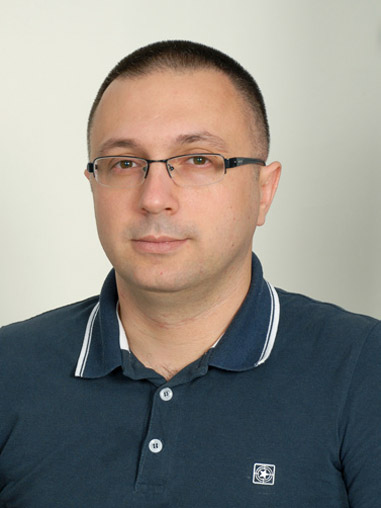
Prof. Dr. Dimitrije Ćeranić is an Associate Professor of Civil Law at the Faculty of Law, University of East Sarajevo. He has been a faculty member since 2005 and was promoted to Associate Professor in 2021. His primary teaching focuses on Inheritance Law, Family Law, Property Relations of Spouses, Children's Rights, and Notarial Law across undergraduate and graduate programs. He also guest lectures at the University of Belgrade and teaches Social Work at the Faculty of Philosophy in East Sarajevo. Education: LL.B. (2005) from University of East Sarajevo. Master’s (2008): University of Belgrade on will validity. PhD (2016): University of Kragujevac on inheritance effects of adoption. Research Interests: Civil Law with emphasis on family law, inheritance rights, adoption law, property rights, and legal conventions. He has published 42 articles, a monograph on inheritance legal consequences of adoption (2020), and a co-authored handbook on domestic violence protection (2021). Administrative Roles: Vice Dean for Research (since 2018), Head of Civil Law Department (since 2022), Editorial Secretary of the Faculty Yearbook, and former Library Board President. He actively contributes to legal reforms in Republika Srpska, including drafting family law and higher education legislation. Professional Activities: Member of national/international legal associations, trade unions, and supervisory boards. Serves as a reviewer for legal journals and proceedings. Fluent in English and Russian.