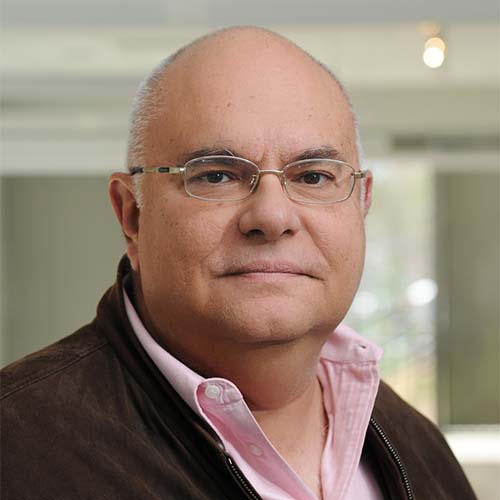
Milan Markovicمشاهده پروفایل
پژوهشگر ارشد
Dr. Milan Markovic is an Interdisciplinary Fellow at the School of Natural and Computing Sciences, University of Aberdeen, where he conducts research at the intersection of computing, sustainability, and societal impact. He is actively involved in teaching, supervising PhD students, and leading interdisciplinary research projects focused on transparency, accountability, and trust in intelligent systems. His research spans several key domains, including accountable AI, data provenance, IoT governance, and sustainable agri-food systems. He investigates how technologies like AI, blockchains, and semantic web can support transparent and ethical digital infrastructures. His work emphasizes real-world applications in healthcare data governance, smart cities, and environmental sustainability. The recent publications highlight a strong trend toward developing tools and frameworks for transparency and accountability, such as the Transparent Emissions Calculation (TEC) Toolkit, Farm Explorer, and semi-automated provenance tracking in Trusted Research Environments. These works integrate knowledge graphs, federated learning, and blockchain to ensure verifiable, auditable, and sustainable digital systems. Dr. Markovic has contributed to numerous collaborative research initiatives, including EATS (Enhancing Agri-Food Transparent Sustainability) and SARA (Semi-Automated Risk Assessment), which aim to improve data governance and sustainability in complex socio-technical systems. He supervises PhD students in computing science and collaborates with interdisciplinary teams across academia and industry. His leadership in projects like RAInS, TrustLens, and PROoFD-IT demonstrates a long-standing commitment to building trustworthy IoT and AI ecosystems. These projects explore user empowerment, data transparency, and compliance in digital systems, particularly in food safety, healthcare, and urban environments. He is affiliated with the Department of Computing Science and contributes to both theoretical and applied research, with a strong emphasis on open, reproducible, and socially responsible computing.