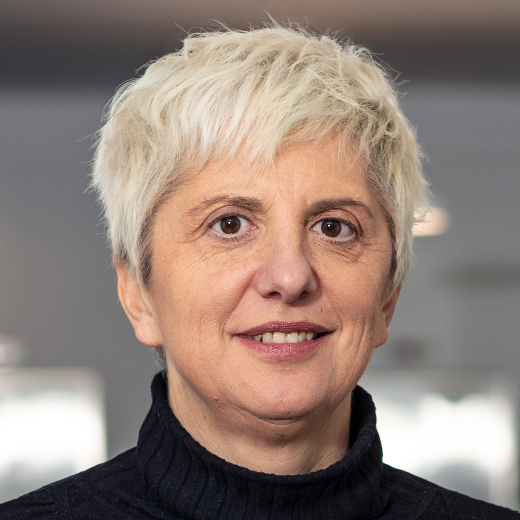
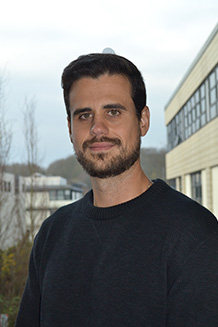
Dr Tracey Bowden is a Senior Lecturer in Cardiac Care and Adult Nursing at City, University of London (School of Health and Psychological Sciences, Department of Health Sciences) since 2005. She completed her PhD in 2023 on cognitive health after cardiac surgery, funded by the prestigious Barts Charity Clinical Research Fellowship (2019-2023). Additionally, she holds the Fellow of the Higher Education Academy (2014-present). Education : PhD (Health, 2023), Postgraduate Diploma in Academic Practice (2008), MSc in Cardiology (2002), BSc in Health Studies (2005), and DipHE in Nursing (1997). Her research focuses on postoperative cognitive dysfunction and cardiovascular care , with 15 recent publications exploring topics like multimodal analgesia , ABCDE assessment , and cognitive interventions after cardiac surgery. She has secured grants from Barts Charity for her cognitive health research (2019-2022). She serves as Deputy Programme Director for the Advanced Clinical Practice programme and Consultant Editor for the British Journal of Cardiac Nursing. Her clinical background includes roles at Barts Health NHS Trust as a cardiac research coordinator and senior sister in interventional cardiology.
Babangida Tiyatiye serves as an Adjunct Senior Lecturer in the Department of Psychiatry at the UWA Medical School, The University of Western Australia. Their academic role combines clinical psychiatry expertise with research focused on mental health disparities and evidence-based interventions. Research interests include: Mental Health Policy and Advocacy Substance Abuse and Obsessive-Compulsive Disorder Comorbidity Perinatal Mental Health Interventions Cardiovascular-Psychiatric Interactions Media Influence on Mental Health During Pandemics Public Health Impacts of Racial Discrimination Analysis of recent publications reveals a strong emphasis on systematic reviews to address critical gaps in psychiatric comorbidities and treatment efficacy. Tiyatiye's work consistently bridges clinical practice and public health, with recurring themes of health equity, evidence synthesis for complex conditions, and policy reform—particularly in youth mental health services and pandemic-related mental health impacts. Collaborative research demonstrates significant engagement with co-authors across Australia and international institutions, with publications showing notable citation impact (including 22 Web of Science citations for the coronary artery disease review) and social media dissemination.
Georgios Meditskos is an Assistant Professor at the Department of Informatics, Aristotle University of Thessaloniki , where he has worked since 2021. Previously, he was a postdoctoral researcher at the Information Technologies Institute (ITI), CERTH (2012–2021) and a lecturer at multiple Greek institutions. Education: PhD (2009), MSc (2007), and BSc (2004) in Informatics from Aristotle University of Thessaloniki. His research focuses on Symbolic AI and Semantic Web technologies, including: Knowledge representation and reasoning (RDF/OWL, rule-based ontology reasoning) Combination of Description Logic and rule paradigms for scalable reasoning Semantic Web services (discovery, composition) Context-based multi-sensor reasoning and data fusion in pervasive environments His publications (over 100) span topics like: Rule-based OWL reasoning systems (e.g., O-DEVICE, DLEJena) Semantic data fusion for healthcare monitoring Hybrid frameworks combining ontologies with production rules Contact details: Office: New Building of School of Sciences, Office 4.18, Aristotle University of Thessaloniki Email: gmeditsk@csd.auth.gr Phone: +30 2310998896
Thrasyvoulos-Konstantinos Tsiatsos is an Associate Professor in the Department of Informatics at Aristotle University of Thessaloniki, Greece. He holds a PhD (2003), MSc (2000), and BSc (1998) in Computer Engineering and Informatics from the University of Patras. His professional progression includes Lecturer (2006–2011), Assistant Professor (2011–2020), and Associate Professor (2020–present) roles at Aristotle University. Research interests span: Game-Based Learning and Serious Games for cognitive training and education Collaborative Virtual Environments and 3D learning spaces Bio-feedback systems for anxiety detection and physiological monitoring Adaptive educational technologies and MOOC analytics Sports science applications using exergames and reaction-time training His publications emphasize educational technology innovations, particularly in virtual learning, game design, and sports performance. Recent work focuses on affective computing, anti-doping education, and remote laboratories. He leads extensive research projects including: Gamified online activities for athlete dual careers (GOAL) Anti-doping education through serious games Bio-feedback interfaces for Alzheimer's caregivers EU-funded initiatives on digital physical education and cognitive training Administratively, he coordinates conferences (EDUCON, IMCL) and supervises student projects in game development, virtual learning, and HCI. He directs the 'Internet Technologies in Education' research group and collaborates with EU institutions on digital education frameworks.
Chiara Ghidini is a Full Professor in Computer Science at the Faculty of Engineering of the Free University of Bozen-Bolzano (UNIBZ) in Italy. Her research focuses on symbolic and subsymbolic AI techniques related to Semantic Web, Knowledge Engineering and Representation, and Process Mining. Prior to joining UNIBZ, she worked at Fondazione Bruno Kessler (FBK) in Trento, Italy for over 20 years, where she headed the Process & Data Intelligence (PDI) research unit. Professor Ghidini's research interests span across several areas of Artificial Intelligence with a particular focus on: Artificial Intelligence and its applications in business processes Knowledge Representation and Semantic Web technologies Business Process Management and Mining Explainable AI for process monitoring and decision support Integration of machine learning and simulation for business processes Her recent scholarly output reveals a strong emphasis on developing explainable predictive process monitoring systems, with particular attention to counterfactual reasoning and temporal constraints. The Nirdizati toolkit series represents a significant contribution to the field, evolving from foundational work to the more recent Nirdizati Light framework. Her research bridges theoretical aspects of process mining with practical healthcare applications, as evidenced by projects like the Arianna solution for breast cancer care paths. Professor Ghidini has demonstrated significant academic leadership, serving as program co-chair for major conferences including EKAW 2018, ISWC 2019, and BPM 2020. She currently holds the position of vice-president of AIxIA, the Italian Association for Artificial Intelligence, contributing to national AI strategy development. At UNIBZ, Professor Ghidini teaches programming courses across multiple degree programs: Basics of Programming for the Vocational Bachelor in Wood Technology Introduction to Programming for the Bachelor in Computer Science Introduction to Programming for the Bachelor in Business Information Systems Laboratory for Fundamentals of Programming for the Vocational Bachelor in Wood Technology Her research has substantial practical applications, particularly in healthcare optimization and resource scheduling, with several collaborations involving industrial partners in the Trentino region of Italy. The integration of process mining with machine learning and simulation techniques represents a hallmark of her methodological approach to solving complex business process challenges.
Tove Stjern Frønes serves as a Researcher at the Department of Teacher Education and School Research within the Faculty of Educational Sciences at the University of Oslo. She functions as the Reading Expert for PISA Norway and the National Assessment of Reading Literacy since 2018, with prior advisory roles in these programs dating back to 2015. Her educational foundation includes a 2017 PhD dissertation from the University of Oslo titled Reading and navigating the web. A study of students' navigation strategies , which established her expertise in digital reading comprehension. Earlier professional milestones include serving on Norway's reading expert group (2007-2009) and conducting doctoral research on online reading strategies (2009-2015). Frønes' research centers on critical reading comprehension across physical and digital environments, with particular emphasis on students' navigation strategies in complex online texts, assessment methodologies for reading literacy, and equity issues in educational outcomes. Her work bridges cognitive psychology and educational practice through innovative methodologies including eye-tracking and logfile analysis to examine metacognitive processes during reading tasks. Her publication trajectory from 2020-2025 reveals evolving focus areas: initial concentration on PISA assessment frameworks has expanded into critical digital literacy, multilingual reading contexts, and Nordic educational equity models. Recent works demonstrate growing attention to practical classroom applications, particularly in developing assessment frameworks for critical reading and analyzing how socioeconomic factors influence reading comprehension trajectories across international contexts. No scientific awards were documented in the source materials. Her professional activities indicate no formal student advising roles but significant contributions to national testing frameworks and international large-scale assessments. Frønes operates within the Large-scale Educational Assessment (LEA) research group, where she contributes to Norway's participation in PISA and TIMSS surveys. Her current projects focus on strengthening reading culture in schools through evidence-based interventions that address both traditional literacy and emerging digital competencies required for critical engagement with online information.
Prof. Dr. Maximilian Altmeyer serves as Professor of Web Development and Mobile Applications Engineering at Saarland University of Applied Sciences within the School of Engineering. He leads the interaction experience group and holds key administrative roles including Member of the Faculty Council, Member of the University Library Advisory Board, and Deputy Head of Production Informatics. His work bridges academic research with practical application in digital systems. Altmeyer's research centers on Human-Computer Interaction with specialized focus on User Experience (UX), Player Experience (PX), Gamification, and Persuasive Technology. His investigations span Digital Health applications, gameful design principles, and interactive system development. Recent work examines voice interfaces, music effects in gaming, and sustainable behavior change through gamified eco-feedback systems. He employs rigorous empirical methods including instrument validation, comparative studies, and large-scale literature reviews. His publication trajectory reveals consistent contributions to top venues like CHI and CHI PLAY, with growing emphasis on user typology validation (Hexad scale), multimodal feedback systems, and cross-cultural adaptation of research instruments. The work demonstrates strong methodological diversity spanning controlled experiments, content analysis of 280+ papers, and longitudinal behavior change studies. Altmeyer actively shapes the research community through leadership roles including Work In Progress Co-Chair for CHI Play 2024/2023, Associate Chair for CHI 2026-2024, and extensive reviewing for premier HCI conferences. He teaches across bachelor's and master's programs covering Web Development, Gamification, Theoretical Computer Science, and Empirical Evaluation of Interactive Systems. The interaction experience group under his direction focuses on designing, implementing, and evaluating interactive systems with particular attention to user-centered gamification techniques and persuasive health technologies. Current projects include voice experience measurement tools, office wellness interventions, and game-based learning frameworks.
Annalotta Dessen Jankell is a part-time lecturer at Stockholm University’s Department of Teaching and Learning , where she focuses on geography education. She recently completed her PhD in November 2023 with the thesis Understand reality as systems , exploring systems thinking in geography education and its role in developing students' understanding of complex sustainability issues such as climate change and global consumption patterns. Currently, she teaches geography, biology, and science at a Stockholm upper secondary school while dedicating half her time to university projects and teacher training. Education: PhD in Geography Education (2023, Stockholm University) Research Interests: Systems thinking, sustainability education, didactic modeling, and integration of Learning Activity frameworks in geography teaching Her work has produced several publications and didactic models, including the connection web methodology for analyzing human-nature systems. She emphasizes the importance of making abstract sustainability concepts tangible through educational design, aligning with UN recommendations for systems thinking as a key competence. Key Publications: System Geographical Webbing (2021), Tankaredskap som stöd för geografiundervisning (2020), and Organising concepts in geography education: a model (2020).
Catharina Gustavsson is an active researcher at Uppsala University's Department of Public Health and Care Sciences within the Public Health, Working Life and Rehabilitation division, and also serves as a Researcher at the Center for Clinical Research Dalarna. Her work bridges academic research with practical healthcare implementation, focusing on making healthcare services accessible to all populations, particularly those with disabilities. She maintains dual institutional affiliations that enable her to conduct both theoretical research and practical implementation studies in the Swedish healthcare system. Her research interests primarily center on healthcare accessibility, with particular emphasis on digital health services and eHealth platforms. She investigates how people with disabilities interact with digital healthcare systems, identifies barriers to access, and develops strategies for more inclusive design. Her work extends to examining healthcare policy implementation, particularly regarding EU accessibility directives, and she has made significant contributions to understanding the digital divide in healthcare contexts. Her research methodology often incorporates mixed methods approaches, combining quantitative data with rich qualitative insights from user experiences. Analysis of her recent publications (2022-2025) reveals a strong thematic focus on accessibility in digital health services, with particular attention to vulnerable populations including people with disabilities, elderly patients, and those experiencing socioeconomic disadvantages. Her work spans multiple disciplines including public health, human-computer interaction, rehabilitation science, and healthcare policy. The publications demonstrate a consistent pattern of examining real-world implementation challenges while developing practical solutions for more inclusive healthcare systems. While no specific scientific awards are mentioned in the available information, her extensive publication record in high-impact journals indicates recognition within her field. Her collaborative approach is evident through numerous co-authored publications with researchers across different institutions and disciplines, suggesting strong networking and interdisciplinary collaboration skills. Her advising and grant work appears focused on implementation research projects, particularly those examining how healthcare policies translate into practice. Her publications frequently address practical implementation challenges of healthcare interventions in real-world settings, suggesting involvement in research that bridges academic findings with practical healthcare delivery. Her work on the Swedish Physical Activity on Prescription program demonstrates attention to how evidence-based interventions can be effectively integrated into primary care settings. Though specific laboratory affiliations aren't detailed in the provided information, her research suggests involvement with teams focused on accessibility testing, user experience research with diverse populations, and healthcare implementation science. Her work with the Center for Clinical Research Dalarna indicates regional healthcare research collaboration, while her Uppsala University affiliation connects her to broader national and international research networks.
Laura K. Frye, MD, is a Clinical Associate Professor in the Department of Internal Medicine at the University of Utah, affiliated with the Huntsman Cancer Institute. Her clinical expertise spans Lung Transplantation , Interventional Pulmonology , and Pulmonary and Critical Care Medicine , with a research focus on medical simulation education outcomes and health-related quality of life assessments in lung transplant patients . Education: M.D., University of Kansas School of Medicine B.A., New York University Fellowship, Pulmonary and Critical Care Medicine - Hospital of the University of Pennsylvania Fellowship, Advanced Lung Disease - University of Pennsylvania Fellowship, Interventional Pulmonary - Cleveland Clinic Certificate, Clinical Research - University of Pennsylvania M.A., Bioethics (in progress) - Ohio State University Dr. Frye's research combines clinical investigation with bioethics , particularly examining endoscopic interventions and ECMO integration . Her work bridges Lung Cancer diagnostics, Lung Transplantation outcomes, and Medical Education innovations. Laboratory and team affiliations include the Division of Pulmonary and Critical Care Medicine at the University of Utah, with collaborative ties to the American Thoracic Society , American College of Chest Physicians , and American Association for Bronchology and Interventional Pulmonology .
Alice Ammerman is the Mildred Kaufman Distinguished Professor in the Department of Nutrition at the Gillings School of Global Public Health , University of North Carolina at Chapel Hill. She serves as Director of the Center for Health Promotion and Disease Prevention , part of the CDC Prevention Research Centers network. B.A., Comparative Area Studies in Africa, Duke University (1976) M.P.H., Nutrition, UNC Chapel Hill (1981) Dr.P.H., Nutrition, UNC Chapel Hill (1990) Registered Dietitian (2007) Dr. Ammerman's research focuses on nutrition and physical activity interventions for chronic disease prevention in low-income populations. Key themes include health equity , sustainable food systems , social entrepreneurship , and implementation science . She developed the Med-South Diet (Mediterranean diet adapted for the U.S. Southeast) and investigates intersections between agriculture, nutrition, and public health policy. Her recent publications examine rural food access policies, digital health interventions for cardiovascular disease, obesity prevention training frameworks, and neighborhood-level influences on health behaviors. These works emphasize community engagement , policy translation , and evidence-based dissemination . 2014 Academic Researcher Award, North Carolina Public Health Association 2011 Ned Brooks Award for Public Service, UNC-CH 2006 Excellence in Dietary Guidance Award, APHA 2000 Greenberg Award, UNC Chapel Hill 1981 Delta Omega Honor Society, UNC Chapel Hill 1976 Magna Cum Laude, Duke University Dr. Ammerman teaches courses in Nutrition Policy and Public Health Entrepreneurship , including NUTR 245 (Sustainable Food Systems), NUTR 780 (Entrepreneurship), and NUTR 875 (Nutrition Policy Seminar). She leads the Center of Excellence for Training and Research Translation , focusing on obesity and cardiovascular disease interventions, and contributes to SNAP policy research and NIH-funded community health initiatives.
Dr. Laura Alston is a Senior Research Fellow at Deakin University's Faculty of Health, School of Medicine, and serves as the Director of Research at Colac Area Health. Her work bridges academic research with practical healthcare applications in rural settings, focusing on health disparities and dietary interventions. Her educational background includes: Doctor of Philosophy from Deakin University Bachelor of Nutrition & Dietetics from Deakin University Masters of Business Administration from Kaplan Business School, Australia (2020-2024) Graduate Certificate of Diabetes Education from Mayfield Education, Australia (2012-2013) Dr. Alston's research centers on investigating rural health disparities in Australia and globally, with particular emphasis on the role of dietary intake in these differences. Her work employs systems thinking approaches to understand complex health issues in rural communities, addressing cardiovascular diseases, food environments, and prevention strategies. She has developed expertise in co-design methodologies, working closely with rural communities to create effective health interventions that address local needs and contexts. Analysis of Dr. Alston's extensive publication record reveals a strong focus on rural health challenges, particularly in food environments, dietary interventions, and healthcare access. Her recent work demonstrates a consistent application of co-design and systems thinking methodologies to address complex health issues in rural communities. The publications span multiple disciplines including public health, nutrition science, implementation science, and health services research, with particular emphasis on practical solutions for improving health outcomes in underserved rural populations. Dr. Alston has received numerous prestigious awards and fellowships, including: National Heart Foundation Post-Doctoral Fellowship (2020) World Heart Federation Emerging Leader (2019) Western Alliance Associate Research Fellowship (2019-2021) Graduate Women's Victoria Research award (2018) National Heart Foundation Collaboration and Exchange Award (2021) As an active mentor and supervisor, Dr. Alston currently oversees four doctoral students working on projects related to emergency department visits, systems thinking in health services, health geography tools, and dysphagia quality of life. Her research program is supported by substantial funding, with involvement in over $14 million in research grants, including major projects funded by the National Health and Medical Research Council (NHMRC), Medical Research Future Fund (MRFF), and National Heart Foundation. She serves as a mentor for various programs including the Dietitians Australia mentor program for provisional Accredited Practising Dietitians and the Department of Health and Human Services Allied Health Research Framework scheme. Dr. Alston leads the Colac Area Health Research Unit, establishing research infrastructure in this medium-sized rural town. She also contributes to the Global Obesity Centre and Deakin Rural Health initiatives, creating networks that connect academic research with rural healthcare delivery. Her work demonstrates how research can be embedded within smaller rural hospitals to build sustainable research capacity and directly benefit rural health services, with her paper on establishing the Colac research unit providing guidance for similar initiatives nationwide.
Kate Morton is a Research Fellow in the Department of Health Sciences at the University of York . She plays a pivotal role in the Best Start program of the Yorkshire and Humber Applied Research Collaboration , focusing on mental and physical health interventions for parents and families. Her work spans nature-based therapies, infant mental health, and healthcare logic models. Coordinates the Best Start Shaping Family Wellbeing group (23 parents/caregivers in Hull) Collaborates with partners from the Bradford Institute for Health , University of Huddersfield , NHS trusts, and community organizations Her research emphasizes inclusive patient and public involvement , creative co-production methods , and reducing health inequalities . She specializes in qualitative and mixed-methods approaches to intervention development and implementation. Recent publications highlight her work in asthma decision support systems , cancer recovery interventions , and genetic cancer risk PtDAs . Kate is a registered Health Psychologist with the Health and Care Professions Council . Her supervision interests include self-management interventions for long-term conditions and behavior change, particularly through qualitative/mixed-methods research.
Andre Bedendo de Souza is a Research Fellow at the Department of Health Sciences , University of York, working within the Epidemiology and Cancer Statistics Group since 2023. Previously, he served as Research Associate (2021-2024) in the Public Health and Society group and held a Visiting Research Fellow position (2019) at the same department. Education : BSc in Psychology, Federal University of Juiz de Fora (Brazil) MSc in Psychobiology, Federal University of Sao Paulo (UNIFESP, Brazil) PhD in Psychobiology, Federal University of Sao Paulo (UNIFESP, Brazil) His research focuses on epidemiology, causal inference, mediation/moderation analysis , and machine learning , with applications to substance use, mental health, and digital interventions. He has contributed to studies on multimorbidity-environmental determinants, gastrostomy-fed children's nutrition, and mindfulness-based substance abuse therapies. Andre specializes in advanced quantitative methods and has led multiple funded projects on alcohol intervention efficacy, including mobile/web-based brief interventions for college students. He actively participates in academic service through: Editorial roles at Scientific Reports , Frontiers in Psychology , and Frontiers in Digital Health Co-supervision of postgraduate students at UNIFESP Teaching postgraduate modules in advanced regression analysis and evidence-based psychology His work engages with interdisciplinary collaborations across the UK, Brazil, and Argentina, focusing on population health and behavior change mechanisms.
Seth Poulsen is an Assistant Professor in the Department of Computer Science at Utah State University. His research focuses on developing and evaluating software tools for computer science education, particularly in algorithms and computing theory. He created Proof Blocks, an interactive tool to teach mathematical proofs, and conducts educational data analysis projects. Previously, he completed a Ph.D. in Computer Science at the University of Illinois and worked as a Software Engineer at Amazon, contributing to Kindle-related projects. Education: Ph.D. in Computer Science, University of Illinois Software Engineering Experience at Amazon (Kindle Web Rendering & Kindle Lite Android App) Research Interests: Computing Education Tools (e.g., Proof Blocks) Algorithm and Theory Pedagogy Autograded Educational Assessments Educational Data Analysis His work emphasizes bridging theoretical computing concepts with practical learning tools, aiming to enhance student engagement and understanding in core computer science areas.