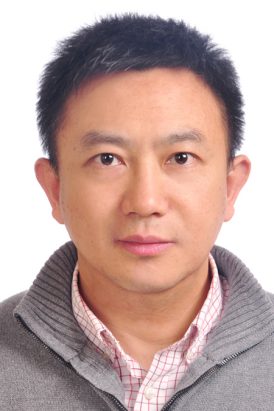
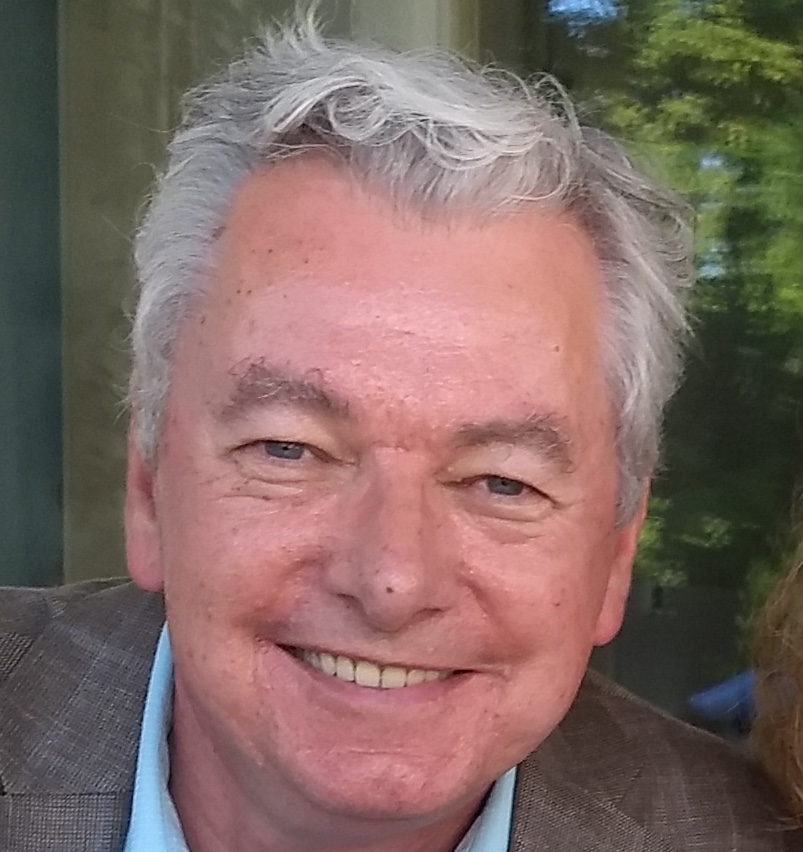
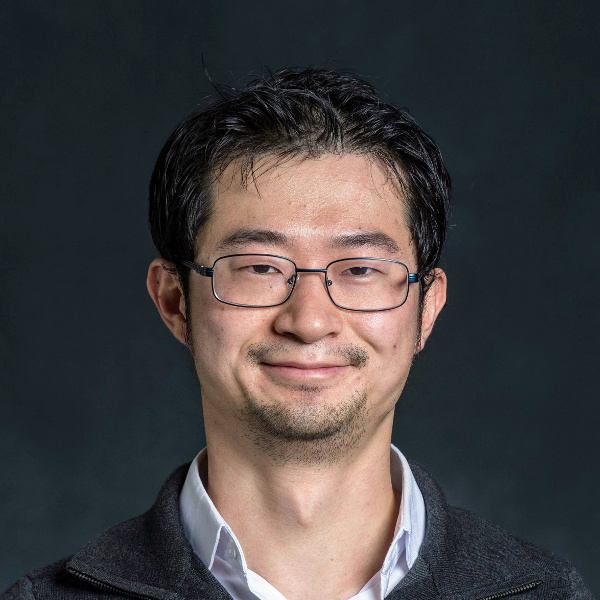
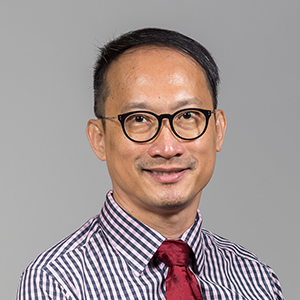
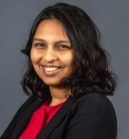
Professor Ihab Ilyas is a leading figure in data management and machine learning at the Cheriton School of Computer Science , University of Waterloo , where he holds the Thomson Reuters Research Chair in Data Quality . He is currently on leave from the university, serving as a Distinguished Engineer, Proactive Intelligence at Apple Inc . His research focuses on data cleaning , large-scale data integration , knowledge graphs , and machine learning applications in data quality . He has pioneered systems like HoloClean and Saga , with commercial impacts through co-founded startups Inductiv (acquired by Apple) and Tamr . PhD in Computer Science from Purdue University Co-founder of Inductiv (acquired by Apple) Co-founder of Tamr Research Interests include: Probabilistic and uncertain data management Machine learning for data quality and enrichment Big data systems and information extraction Knowledge graph construction and optimization Scientific Awards and Recognitions include: Fellow of the Royal Society of Canada (2024) C.C. Gotlieb Computer Award (2024) IEEE Fellow (2021) ACM Fellow (2020) Cheriton Faculty Fellowship (2013-2016) Ontario Early Researcher Award
Panos Ipeirotis is a Professor at the Leonard N. Stern School of Business at New York University, affiliated with the Department of Technology, Operations, and Statistics. He also serves as the George A. Kellner Faculty Fellow and is associated with the Center for Data Science and Computer Science departments at NYU. PhD in Computer Science (Columbia University, 2004) MSc in Computer Science (Columbia University, 2001) BSc in Computer Engineering & Informatics (University of Patras, 1999) His research spans crowdsourcing, machine learning, human-AI collaboration, online labor markets, and social media analytics. He pioneered human-machine loop systems that combine human and machine intelligence to achieve superior outcomes. His work has applications in data quality assurance, visual media search (e.g., Google Project Glass), and economic valuation of user-generated content. Recent publications focus on algorithmic fairness in hiring systems, occupational segregation analysis, and theoretical advancements in crowdsourcing consensus mechanisms. Earlier work includes foundational studies on data quality in crowdsourcing platforms, economic impacts of product reviews, and query optimization for text-centric tasks. 2015 Lagrange Prize in Complex Systems NSF CAREER Award SIGKDD Test of Time Award (2020) Multiple Best Paper awards (WWW 2011, KDD 2008, SIGMOD 2006) He has received significant grants, including a $1.5 million Google Research Grant (2013) for integrating crowdsourcing with machine learning algorithms. His work bridges computer science, economics, and social psychology, with implications for policy-making and business strategy.
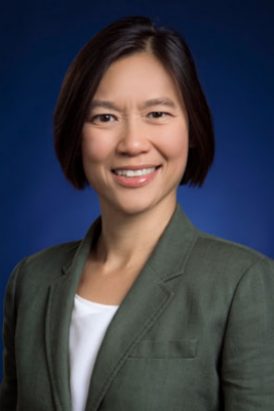
Kamalika Chaudhuri is a Professor in the Department of Computer Science and Engineering at the University of California, San Diego (UCSD), and also serves as a Director and Research Scientist with the FAIR team at Meta AI. Her research focuses on the foundations of trustworthy machine learning, including robust machine learning, learning with privacy, and out-of-distribution generalization. Dr. Chaudhuri has earned her PhD from UC Berkeley in 2007 with a dissertation on "Learning Mixtures of Distributions." Her academic journey has led her to become a leading researcher in machine learning theory with a particular emphasis on privacy and robustness. Her research interests span machine learning foundations with a strong focus on trustworthy AI . She investigates problems at the intersection of differential privacy , adversarial robustness , and out-of-distribution generalization . Her work addresses critical challenges in developing machine learning systems that maintain privacy while preserving utility, resist adversarial attacks, and generalize effectively beyond training data distributions. She has pioneered approaches in privacy-preserving machine learning, robust learning theory, and methods for detecting and mitigating data memorization in models. An analysis of her recent publications (2024-2025) reveals a strong focus on the intersection of privacy, security, and machine learning. Her work spans differential privacy mechanisms, membership inference attacks, memorization detection, and fairness certification. She has been particularly active in developing methods for privacy-preserving foundation models, with several papers on differentially private computer vision and language models. Her research demonstrates a consistent thread of addressing fundamental challenges in trustworthy AI while developing practical solutions that balance privacy, accuracy, and utility. Best Award at the ICLR 2024 Workshop on Privacy Regulation and Protection in Machine Learning Distinguished Paper Award at IEEE Conference on Secure and Trustworthy Machine Learning (SaTML), 2024 Dr. Chaudhuri has advised numerous PhD students who have gone on to prominent positions at Google, DeepMind, Microsoft Research, and other leading AI institutions. Her group maintains an active research blog with guest posts from UCSD researchers. She has served in significant leadership roles including General Chair for ICML 2022 and Program Co-Chair for both ICML 2019 and AISTATS 2019, where she pioneered initiatives to improve reproducibility in machine learning research. Her research group at UCSD focuses on trustworthy machine learning, with current projects spanning privacy-preserving AI, robustness against adversarial attacks, and methods for ensuring reliable out-of-distribution generalization. The group collaborates closely with the FAIR team at Meta AI, where Dr. Chaudhuri serves as a Research Scientist.
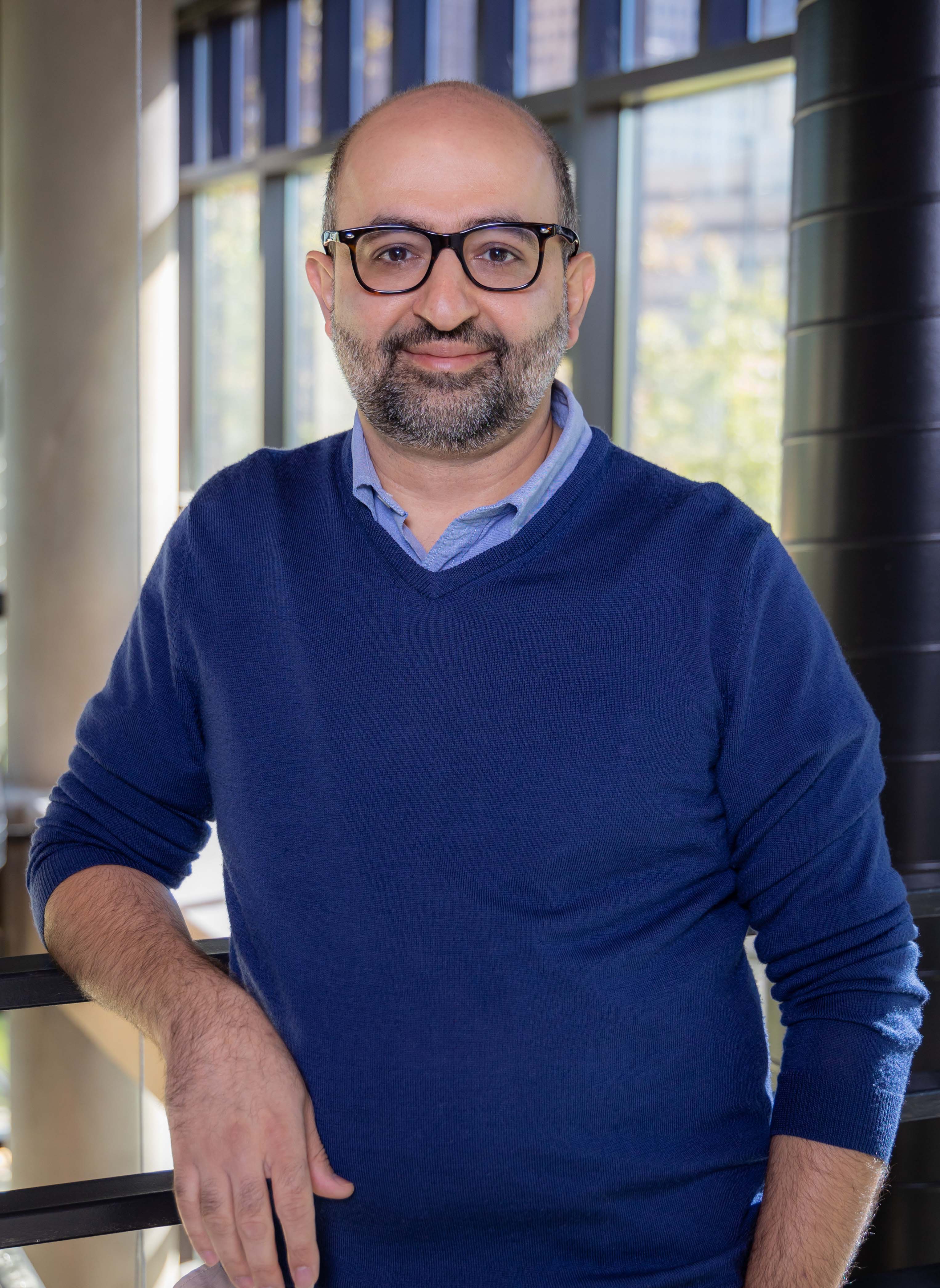
Lexing Xie is a Professor in Computer Science at the Australian National University. He leads the ANU Computational Media Lab ( http://cm.cecs.anu.edu.au ) and the ANU Integrated AI Network. His work focuses on the intersection of machine learning, social media analysis, and multimedia understanding. Dr. Xie's research broadly focuses on innovative design and use of machine learning algorithms, especially on large-scale graph data and collective behaviour. His recent work spans several key areas: Popularity in social media -- understanding, predicting, and optimization Multimedia knowledge graphs, vision and language integration Humanising machine intelligence through better understanding of social dynamics His publications reveal a strong trend toward understanding information diffusion patterns in social media, particularly through visual content. He has made significant contributions to the study of visual memes, popularity prediction using point processes, and multimodal learning that connects vision with language. His work often bridges theoretical machine learning with practical applications in social media analysis. Dr. Xie has received recognition for his research, including an Honourable Mention at CSCW 2019 for his work on attention flow in online video networks. His research has been supported by collaborations with major institutions including IBM Research and Columbia University. As an advisor, Dr. Xie has mentored numerous students who have gone on to contribute significantly to publications in top-tier conferences. His lab, the ANU Computational Media Lab, serves as a hub for interdisciplinary research connecting computer science with social sciences.
Ji Zhu is the Susan A. Murphy Collegiate Professor of Statistics at the University of Michigan, Department of Statistics. He holds affiliations with the Michigan Institute for Data Science (MIDAS) and the Michigan Integrated Center for Health Analytics and Medical Prediction (MiCHAMP). His research focuses on statistical machine learning, network analysis, and health science applications. Education: B.Sc. in Physics (Peking University, 1996), M.Sc. and Ph.D. in Statistics (Stanford University, 2000 and 2003). Notable awards include the NSF CAREER Award (2008), Fellowships from the ASA (2013) and IMS (2015), and recognition as a Web of Science Highly Cited Researcher (2014–2020). Research interests span statistical methodologies for networks, survival analysis, and high-dimensional data. He co-authored influential papers on community detection, network cross-validation, and latent space models. Current editorial roles include Editor-in-Chief of the Annals of Applied Statistics and Action Editor for the Journal of Machine Learning Research. Advising: Supervised over 50 students and postdocs, many now in academia and industry. Notable former advisees include Tianxi Li (University of Minnesota), Yuan Zhang (Ohio State University), and Weijing Tang (Carnegie Mellon University). Labs/Teams: Active in interdisciplinary projects at MIDAS and MiCHAMP, focusing on healthcare analytics and predictive modeling for diseases like hepatitis and cardiovascular outcomes.
Prof. Senthold Asseng is a Professor of Digital Agriculture at the Technical University of Munich (TUM), leading the Hans Eisenmann Forum for Agricultural Sciences since 2021. His research focuses on climate-plant-soil systems modeling, addressing global food security, sustainable agriculture, and digital technologies like vertical farming and autonomous robotics. He holds a PhD from Humboldt University Berlin and habilitation from TUM, with prior roles at CSIRO Australia and the University of Florida (as Full Professor and Director of the Florida Climate Institute). His honors include AAAS Fellow, Web of Science Highly Cited Researcher, and multiple teaching/mentorship awards. Education: BSc/MSc in Agronomy & Horticulture, Humboldt University Berlin (1989-1990) PhD in Agronomy, Humboldt University Berlin (1994) Habilitation in Agronomy, TUM (2004) Research Interests: Climate change impacts on crops, digital agriculture technologies, systems analysis for autonomous farming, and vertical farming sustainability. His work integrates modeling, robotics, and environmental control to enhance agricultural resilience and productivity. Awards: AAAS Fellow (2019) Highly Cited Researcher (2019) UF Research Foundation Professor (2016-2019) Grants & Leadership: Led interdisciplinary projects like AgMIP-Wheat, SECC, and FAO advisory roles. Active in editorial roles for journals like Global Change Biology and Environmental Research Letters . Labs/Teams: Chair of Digital Agriculture at TUM, collaborating on projects like Smartfield and Proteins4Singapore , focusing on automation, controlled environment agriculture, and climate-smart solutions.
Anocha Aribarg is a Professor of Marketing and Area Chair of Marketing at the Ross School of Business, University of Michigan, with additional faculty affiliation at the Center for Southeast Asian Studies (CSEAS). Her interdisciplinary research bridges psychological theory, consumer behavior, and advanced statistical modeling to address complex marketing challenges. Education: PhD in Marketing, University of Wisconsin, 2004 MBA, University of Wisconsin-Milwaukee, 1998 BS in Statistics, Chulalongkorn University, Thailand, 1994 Research Focus: Prof. Aribarg investigates cognitive processes in consumer decision-making, specializing in individual/joint choice dynamics, product search behaviors, and responses to marketing stimuli. Her methodology integrates Bayesian econometrics with physiological measures (eye tracking, skin conductance) and multi-method experimental designs to uncover hidden decision mechanisms. Publication Trends: Her 14 recent publications (2009-2024) reveal consistent innovation in choice modeling, with increasing emphasis on attention dynamics (2020), moral psychology in aesthetics (2022), and high-frequency service data integration (2023). Work appears predominantly in Marketing Science Journal of Marketing Research, and Psychological Science, demonstrating methodological rigor across consumer behavior, advertising, and service contexts. Academic Service: She serves as Associate Editor for Marketing Science, Journal of Marketing, and Journal of Marketing Research, while contributing to the Journal of Retailing editorial board. Teaching: Prof. Aribarg delivers graduate-level courses in Marketing Research and Analytics and Predictive Analytics at Ross, emphasizing data-driven decision frameworks.
Farnoush Banaei-Kashani is an Associate Professor (Tenured) in the Department of Computer Science and Engineering at the University of Colorado Denver. She also holds an Adjunct Associate Professor position in the Department of Mathematical and Statistical Sciences. As the founder and director of the Big Data Management and Mining Lab (BDLab), she leads multiple GAANN Fellowship Programs, including BDSE (Big Data Science and Engineering), DDC (Data-Driven Cybersecurity), and II (Infrastructure Informatics). She directs the 'Data Science in Biomedicine' MS Track and focuses on data-driven decision systems (DDSs), integrating machine learning and big data analytics into healthcare, energy, transportation, and environmental applications. Education: Details not explicitly provided in the text. Her research spans data management cycles for DDSs, addressing challenges like big data volume, velocity, and variety. Key projects include iWatch (crime surveillance), POCM (mobility monitoring), and GeoSIM (urban texture documentation). She teaches courses such as Machine Learning Systems, Big Data Science, and Data Mining. Publications highlight advancements in sea ice classification, federated learning, proteomic networks, and privacy-preserving AI. Her work is funded by NSF, NIH, DOT, and industry partners like Google and IBM. She has advised numerous students and contributes to academic leadership as editor, conference chair (ACM SIGSPATIAL 2018/2019), and program committee member for venues like SIGMOD and KDD.
Padhraic Smyth is a Distinguished Professor and Hasso Plattner Endowed Chair in Artificial Intelligence at the University of California, Irvine (UCI), holding joint appointments in the Department of Computer Science and Department of Statistics. He leads the DataLab research group, focusing on machine learning, AI, and their applications in climate science, healthcare, and education. His research spans probabilistic modeling, deep learning, and human-AI collaboration. Education: PhD in Electrical Engineering from the California Institute of Technology (1988), MSEE (1985), and BEng (1984). Prior to UCI, he worked at NASA's Jet Propulsion Laboratory (1988–1996). Research Interests: Machine learning, AI, pattern recognition, Bayesian methods, climate science applications, algorithmic fairness, and human-AI interaction. He has published over 200 papers and co-authored textbooks like Modeling the Internet and the Web . Awards: ACM Fellow, IEEE Fellow, AAAI Fellow, AAAS Fellow, and ACM SIGKDD Innovation Award recipient. He has held leadership roles in UCI's Center for Machine Learning and Data Science. Key Projects: Human-AI collaboration frameworks, robustness in deep learning, climate modeling using spatio-temporal data, and AI fairness with missing attributes. Collaborates with institutions like NASA and industry partners (e.g., Google, eBay). Labs/Teams: Director of UCI’s Data Science Initiative and HPI Research Center in Machine Learning. Supervises a vibrant PhD program with over 30 alumni in academia and industry.
George H. Chen is an Associate Professor at Carnegie Mellon University , with dual affiliations in the Heinz College of Information Systems and Public Policy and the Machine Learning Department . His research focuses on trustworthy machine learning methods for temporal reasoning , particularly in health applications such as time-to-event prediction (survival analysis) and electronic health records analysis . He has extensive experience in nonparametric methods requiring minimal data assumptions. Educational Background PhD in Electrical Engineering and Computer Science, MIT (2015) SM in Electrical Engineering and Computer Science, MIT (2012) BS in Electrical Engineering and Computer Sciences & Engineering Mathematics and Statistics, UC Berkeley (2010) His work spans survival analysis , deep learning , and time series modeling , with applications in neurological prognostication , medical adherence , and health equity . He has developed self-contained educational resources including a 2024 monograph on deep survival analysis and tutorials at CHIL and SIGMETRICS. His 2025 course 95-865: Unstructured Data Analytics focuses on practical unstructured data analysis techniques. Notable projects include advising the AgriTech startup CoolCrop , which provides cold storage and market forecasts for Indian farmers serving 9,000+ farmers across 7 states. His Google Scholar publications reveal a strong focus on temporal modeling in healthcare, with recent advancements in neural survival analysis and fairness-aware temporal prediction.
Aditya Prakash is an Associate Professor and Associate Chair for Academic Affairs in the School of Computational Science and Engineering at Georgia Tech. He holds a PhD from Carnegie Mellon University (2012) and a B.Tech from IIT Bombay (2007). His research focuses on data science, machine learning, and AI applied to epidemiology, healthcare, security, and urban computing. His work has led to impactful tools used by organizations like CDC, ORNL, and Walmart. Notable awards include the NSF CAREER Award (2018) and IEEE's 'AI Ten to Watch' (2017). Education: PhD (Computer Science, CMU, 2012), B.Tech (IIT Bombay, 2007) Research Interests: Epidemic forecasting, network analysis, healthcare informatics, and large-scale data-driven solutions for societal challenges. He has authored over 80 papers and holds two patents. His lab develops methods for disease modeling, urban infrastructure analysis, and cybersecurity. Key projects include the NSF-funded BEHIVE initiative for pandemic prediction and collaborations with MIDAS network for infectious disease modeling. Awards: NSF CAREER, Facebook Faculty Award, IEEE AI Recognition, and multiple best-paper awards. His group advises students across PhD, MS, and undergraduate levels, with notable alumni in academia and industry. Labs & Affiliations: Core faculty at ML@GT (Machine Learning Center) and IDEaS (Institute for Data Engineering and Science). Active in organizing conferences like AAAI, KDD, and SIGMOD.
Dr. Arnab Bhattacharya is a Professor in the Department of Computer Science and Engineering at the Indian Institute of Technology (IIT) Kanpur since December 2020. He previously served as Associate Professor (2014–2020) and Assistant Professor (2007–2014) at IIT Kanpur. Education: PhD in Computer Science (2007), University of California, Santa Barbara MS in Computer Science (2007), University of California, Santa Barbara Bachelor of Computer Science and Engineering (2001), Jadavpur University Research Focus spans Databases , Data Mining , Information Retrieval , and Artificial Intelligence . His work emphasizes graph analytics , skyline queries , probabilistic data , and knowledge graph management . Article Trends reveal expertise in graph neural networks , trajectory-aware systems , statistical significance in databases , and legal/medical data mining . His methodologies often integrate chi-square statistics , approximate indexing , and provenance tracking . Scientific Awards: IBM Faculty Research Award Yahoo! Faculty Research and Engagement Program Award Best Paper at COMAD 2011 Best Student Paper at COMAD 2010 Top-Five Student Paper at ICDM 2005 ICDM Student Travel Award sponsored by IBM Contact: Office RM 409, Department of Computer Science and Engineering, IIT Kanpur Email: arnabb@iitk.ac.in | Phone: +91-512-259-7650
See Kiong Ng serves as Professor of Practice in the Department of Computer Science at the School of Computing, National University of Singapore (NUS), while concurrently holding leadership roles as Director of AI Technology at AI Singapore and Deputy Director of NUS's Institute of Data Science (IDS). His work focuses on translational data science research and developing integrated capabilities for Singapore's Smart Nation initiative through industry and public agency collaborations. His academic credentials include a B.S. in Applied Mathematics (Computer Science Track) from Carnegie Mellon University (1989), an M.S.E. in Computer & Information Science (Artificial Intelligence) from the University of Pennsylvania (1990), and a Ph.D. in Computer Science from Carnegie Mellon University (1998), supported by Singapore's National Computer Board overseas scholarship. Professor Ng's research bridges artificial intelligence with real-world applications across diverse domains. His primary interests span Data Mining, Machine Learning, Natural Language Processing, Smart Cities, and Computational Biology, with emphasis on extracting value from big data through interdisciplinary approaches. He actively pioneers applications in urban systems and bioinformatics, demonstrating data science's transformative potential beyond traditional boundaries. His publication record reveals consistent innovation in algorithm development for complex data challenges, with recent work focusing on taxonomy construction, single-cell genomics analysis, urban transportation systems, and imbalanced time series classification. These contributions demonstrate his commitment to solving practical problems through cutting-edge data science techniques. His major recognitions include: MTI Borderless Award (2014) as Green Growth Working Group project member Minister for National Development's R&D Award 2017 (Distinguished Award) for city-level analytics platform innovation A*STAR Borderless Award (2014) as Urban Systems Initiative team leader MTI Innovation Award (2013) for Strategic Technology Translation in Business Analytics Professor Ng has established significant research infrastructure including founding A*STAR's Data Analytics Department and leading the Urban Systems Initiative. His translational research model emphasizes industry partnerships and practical implementation, particularly in smart city development where he connects data science with urban planning challenges across Singapore's government agencies.
Hamsa Bastani is an Associate Professor of Operations, Information and Decisions at the Wharton School, University of Pennsylvania, with a secondary appointment in Statistics and Data Science. She co-directs the Wharton Healthcare Analytics Lab and serves as an Associate Editor for Operations Research, M&SOM and OR Letters. Her academic journey began with summa cum laude graduation from Harvard in 2012 with an A.M. in physics and A.B. in physics and mathematics. She completed her PhD in Stanford's Electrical Engineering department under Mohsen Bayati, followed by a Herman Goldstine postdoctoral fellowship at IBM Research. Professor Bastani's research focuses on developing novel machine learning algorithms for data-driven decision-making, with applications spanning healthcare operations, social good, and revenue management. Her work demonstrates particular expertise in sequential decision-making (bandits, reinforcement learning), learning from auxiliary data sources (transfer learning, meta-learning), and designing effective human-AI interfaces (interpretability, fairness). She has made significant contributions to understanding how AI systems affect and augment human behavior, with the goal of designing AI tools that help humans thrive. Her publications reveal a strong trend toward high-impact applications of machine learning in critical societal domains. A significant portion of her recent work focuses on healthcare applications, including optimizing health supply chains in low- and middle-income countries, designing clinical trial protocols, and creating targeted public health interventions. Another major theme examines the complex relationship between humans and AI systems, particularly how AI affects learning outcomes and decision-making processes. Her work frequently bridges theoretical advances with practical implementation, as evidenced by country-scale deployments in Greece and Sierra Leone. Wagner Prize for Excellence in Operations Research Practice (2021) Pierskalla Award for Best Paper in Healthcare (2021, 2019, 2016) Behavioral OM Best Paper Award (2021) Public Sector in OR Best Paper Award (2024) INFORMS Data Mining Best Paper Award (2022) Wharton Teaching Excellence Award (2019, 2020, 2021) Professor Bastani has advised numerous PhD students who have gone on to prominent positions, including Pia Ramchandani (Director of Responsible AI at PwC), Arielle Anderer (Assistant Professor at Cornell Johnson), and Kan Xu (Assistant Professor at ASU Carey). Her research has been supported by collaborations with national governments, including the Greek government where she co-designed Eva, the national-scale reinforcement learning system for targeted COVID-19 testing, and the Government of Sierra Leone where she improved patient access to essential medicines by nearly 20% via decision-aware learning. She has also conducted the first large field study deploying generative AI tutors in high school math classes. She leads the Wharton Healthcare Analytics Lab and serves on the Steering Committee for the Penn Center for Health Incentives and Behavioral Economics and on the statistics advisory committee for the AHA Food is Medicine Initiative. Outside academia, she serves on the Workday AI Advisory Board, demonstrating her commitment to translating academic research into practical applications.
Marcia C. Linn is the Evelyn Lois Corey Professor of Instructional Science in the Berkeley School of Education at the University of California, Berkeley. She serves as Chair of the Graduate Group in Science and Mathematics Education (SESAME) and has made significant contributions to the field of science education for over five decades. Dr. Linn is a member of the National Academy of Education and a Fellow of multiple prestigious organizations including the American Association for the Advancement of Science (AAAS), the American Psychological Association (APA), the Association for Psychological Science (APS), the American Educational Research Association (AERA), and the International Society of the Learning Sciences (ISLS). Dr. Linn earned her B.A. in Psychology and Statistics (1965), M.A. in Educational Psychology (1967), and Ph.D. in Educational Psychology (1970) from Stanford University, where she worked under Lee Cronbach. Her early career included working with Jean Piaget at the Institute Jean Jacques Rousseau in Geneva, Switzerland (1967-68), serving as a Fulbright Professor at the Weizmann Institute of Science in Israel (1983), and conducting research at University College in London. She has been a fellow at the Center for Advanced Study in Behavioral Sciences three times and a Writing Resident at the Rockefeller Foundation Bellagio Center twice. Dr. Linn's research focuses on how students learn science and how technology can be used to improve science education. She developed the Knowledge Integration framework, which has become widely used in science education. Her work explores the intersection of cognitive science and educational practice, with particular attention to how students develop understanding of complex scientific concepts. She has pioneered the use of technology in science education, developing the Web-based Inquiry Science Environment (WISE) and directing the NSF-funded Technology-Enhanced Learning in Science (TELS) center. Dr. Linn's recent publications demonstrate a clear trajectory toward integrating artificial intelligence with science education. Her work increasingly focuses on how AI can support knowledge integration, facilitate science learning opportunities, and promote equitable educational experiences. She examines how technology can help students develop deeper understandings of scientific concepts through inquiry-based learning while addressing issues of social justice in science education. Scientific Awards and Honors National Association for Research in Science Teaching Award for Lifelong Distinguished Contributions to Science Education American Educational Research Association Willystine Goodsell Award Council of Scientific Society Presidents first award for Excellence in Educational Research Fulbright Professor (1983) Apple Wheels for the Mind grant (1985) National Institute of Education grant (1983) Throughout her career, Dr. Linn has secured significant funding for educational research, including multiple National Science Foundation grants. She directed the NSF-funded Technology-Enhanced Learning in Science (TELS) center and has led numerous projects investigating the cognitive consequences of computer environments for learning. She has advised countless students and researchers in the field of science education, shaping the next generation of educational researchers and practitioners. Dr. Linn directs the Web-based Inquiry Science Environment (WISE) project and has been instrumental in developing technology-enhanced learning environments for science education. Her laboratory has been at the forefront of creating and testing innovative learning technologies that support students in developing deep understanding of scientific concepts through inquiry-based approaches.