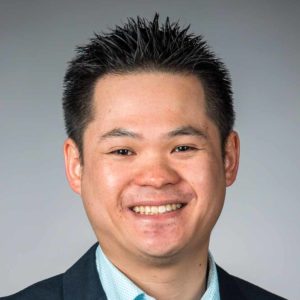
Peter Bui is a Teaching Professor in the Computer Science and Engineering department at the University of Notre Dame , located within the College of Engineering. He teaches courses such as Data Structures, Systems Programming, and Ethical and Professional Issues, while also managing the core Elements of Computing programming sequence for the Computing & Digital Technologies minor. Education: Ph.D. in Computer Science and Engineering from University of Notre Dame (2012) His research interests span systems programming, operating systems, parallel computing, cloud computing, distributed computing, programming languages, compilers, and web services . He actively integrates these domains into his teaching and extracurricular work with the Linux Users Group. Recent publications highlight his work in distributed computing frameworks , including the development of tools like WorkQueue and Madeup for scalable scientific workflows and 3D printing integration. Projects such as ROARS and Weaver demonstrate his focus on robust data management and workflow automation. Outside academia, he stewards the Linux Users Group , engages with open-source communities, and balances personal interests like gaming in RuneScape with family time.
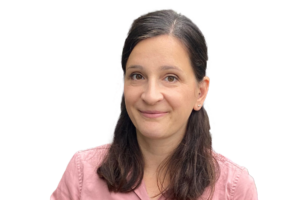
PD Dr. habil. Anna Schnauber-Stockmann is a prominent researcher in media and communication science at Johannes Gutenberg University Mainz, where she has been a member of the Media Structure and Media Effects research group since 2010. She completed her habilitation in October 2024 with the thesis 'The Importance of the Situation in Media Use and Media Effects Research' and was awarded Venia Legendi in Communication Science. Previously, she served as an interim professor at IJK (HMTM Hannover) from April to September 2021. Her academic journey includes earning a Dr. phil. in Communication Research in May 2016 with a dissertation on 'Day-to-day Media Selection. The Role of Habits in the Selection Process' and completing her Master's degree at the University of Mainz in 2007. Dr. Schnauber-Stockmann's research focuses on media use and effects, particularly examining how situational factors influence media selection and consumption patterns. Her work explores media habits, mobile communication behaviors, self- and feedback-effects in media contexts, and the application of quantitative research methods, especially in situ methodologies. She investigates how daily routines shape media platform usage and how these patterns affect individual behavior and social interactions. Her research bridges theoretical frameworks with practical applications in digital media environments, with particular attention to how time, context, and personal characteristics interact in media consumption. Her recent publications reveal a strong emphasis on situational media research, with significant contributions to understanding phubbing behavior, mobile media habit formation, and the distinction between person-specific and situation-specific variations in media use. Through meta-analyses and longitudinal studies, she has advanced methodological approaches for measuring media habits and examining real-time media effects. Her work consistently applies sophisticated quantitative methods to capture the dynamic nature of contemporary media consumption. Top Faculty Paper 2023 of ICA's Mobile Communication Division Top Student-led Paper 2023 of ICA's Mobile Communication Division Best Proposal Award 2017 of the DGPuK division Methods Research grant from the 'Friends of the University of Mainz' for outstanding dissertation (2017) Award for best dissertation on media convergence, University of Mainz (2016) As an active member of the academic community, Dr. Schnauber-Stockmann serves as treasurer of the German Communication Association (DGPuK) since May 2020 and previously served as spokesperson for the Media Reception and Effects division (2019-2021). She is an editorial board member for 'Media Psychology' and 'Mobile Media & Communication' and regularly reviews for leading communication journals. Her work demonstrates significant influence through numerous invited presentations and collaborations with international researchers across multiple institutions.
Dr. Amal Zouaq is a Full Professor in the Department of Computer Engineering and Software Engineering at Polytechnique Montréal. She holds the FRQS (Dual) Chair in AI and Digital Health, serves as Director of the LAMA-WeST research laboratory, and is an Associate Member of MILA. Her work bridges artificial intelligence with applications in digital health, cultural heritage, and educational technologies, positioning her at the forefront of interdisciplinary AI research in Canada. Her research focuses on Artificial Intelligence , particularly Natural Language Processing and the Semantic Web . Specific interests include knowledge representation, ontology learning, SPARQL query generation, bias mitigation in language models, and clinical text processing. Her work spans multiple domains including healthcare, cultural heritage, and educational technology, with emphasis on developing practical AI solutions that address real-world challenges in knowledge management and information extraction. Analysis of her recent publications reveals a strong trajectory in advancing NLP techniques for knowledge-intensive applications. Her work increasingly focuses on domain-specific applications in healthcare and cultural heritage, with growing emphasis on ethical AI considerations like bias mitigation. The research demonstrates progression from foundational semantic web technologies toward more sophisticated neural approaches while maintaining strong theoretical grounding in knowledge representation. Scientific Recognition: Holder of the FRQS (Dual) Chair in AI and Digital Health Dr. Zouaq has supervised 23 graduate students to completion, including 1 PhD and 22 Master's theses, with research spanning ontology learning, knowledge representation, and NLP applications. Her supervision record demonstrates consistent mentorship in cutting-edge AI research with practical applications across multiple domains. She actively serves on program committees for major conferences in knowledge engineering, data mining, and semantic web technologies. She directs the LAMA-WeST (Web, Semantics and Text) laboratory , which specializes in natural language processing and artificial intelligence research. The lab focuses on knowledge representation, semantic technologies, and their applications in healthcare, cultural heritage, and educational contexts. As a member of IVADO and MILA, she collaborates with leading AI researchers across Montreal's vibrant AI ecosystem.
Luís Moreira de Sousa is an Assistant Professor at the Department of Computer Engineering, Higher Technical Institute (Instituto Superior Técnico), University of Lisbon. His academic work bridges computer science and geography, with a focus on Geoinformatics rather than traditional GIS. He is affiliated with the Information and Decision Support Systems research unit and teaches Data Administration and Information Systems. His research spans several interconnected domains: spatial simulation, semantic web technologies for geospatial data, hexagonal grid systems, and resource depletion studies. Dr. de Sousa has developed innovative approaches to spatial simulation through his DSL3S (Domain Specific Language for Spatial Simulation Scenarios) and has contributed significantly to the Semantic Web through the GloSIS web ontology for soil data. His current major project is the book Spatial Linked Data Infrastructures , which bridges geospatial science and semantic web technologies. His publication record shows consistent contributions to spatial simulation tools, semantic web applications in geospatial domains, and resource depletion analysis. His work demonstrates a clear trajectory from practical spatial simulation tools toward more sophisticated semantic web applications for geospatial data. The recent focus on spatial linked data infrastructures represents the culmination of his interdisciplinary approach, combining computer science rigor with geospatial domain knowledge. Dr. de Sousa is a strong advocate for open source tools and maintains an active presence in the FOSS4G (Free and Open Source Software for Geospatial) community. His professional digital footprint includes Codeberg, Mastodon, ORCID, Google Scholar, LinkedIn, ResearchGate, and StackExchange. Outside his academic work, he maintains interests in resource depletion (having created the Portuguese Peak Oil website PicoDoPetroleo.net in 2005 and contributed to TheOilDrum), cycling (covering thousands of kilometers annually), music, and literature. His Goodreads profile shows an active engagement with science fiction, history, and science literature.
Emilia Mendes is a Full Professor in the Department of Electrical and Computer Engineering at Aarhus University . Her research focuses on Empirical Software Engineering , particularly human-centric approaches, evidence-based decision-making, and the application of machine learning and statistical techniques in software development. Current research themes: Human-Centric Software Engineering, Evidence-Based Research, Statistical/Machine-Learning Techniques, and Value-Based Software Engineering. Developed tools for team climate forecasting, capability measurement, and value-based decision-making. Research Trends: Her work bridges software engineering with psychology (personality traits, team dynamics), machine learning (effort estimation, dementia prognosis), and value-based frameworks for decision-making. She emphasizes industrial applications, including agile methodologies, cross-company predictions, and Bayesian network modeling. Scientific Impact & Awards: 10,018 citations, h-index 58. Ranked #32 in Empirical Software Engineering Scholars (Google Scholar). Ranked #20 in Top Computer Science Scientists in Sweden (2023). Top 2% scientist in the world (2019, 2020, 2022; only female in Sweden for SE in 2022. Nine best paper awards at international conferences. Editorial board member: Information and Software Technology , ACM Computing Surveys , former roles at IEEE Transactions on Software Engineering and others. Grants & Leadership: Awarded €11.921.603 in research grants. Held leadership roles as General Chair (EASE 2017), PC Co-Chair (EASE 2012, ESEM 2012), and active participant in 200+ academic events.
Daniele Apiletti is an Associate Professor at the Polytechnic University of Turin , affiliated with the Department of Control and Computer Engineering (DAUIN). He serves as a member of the Interdepartmental Center SmartData@PoliTO and acts as Academic Advisor for the Master's degree program in Data Science and Engineering. Research Groups: DBDM - Database and Data Mining Group (DAUIN) ERC Sectors: Algorithms, Artificial Intelligence, Machine Learning, Web and Information Systems Research Interests span Big Data Analytics, Data Science, Machine Learning, Computer Vision, and Quantum Computing. His work focuses on integrating data-driven and theory-guided approaches for heterogeneous data querying, cloud continuum machine learning, and spatio-temporal models for crisis management. Recent Publications highlight trends in medical image segmentation, predictive industrial modeling, and fault-tolerant data systems. Key subfields include AI in healthcare, scalable manufacturing analytics, and vision-language models for game tutorials. Teaching roles include course ownership of Big Data: Architectures and Data Analytics and Internships across multiple academic years. He has collaborated on courses in Data Science, Database Technologies, and Data Management. PhD Students Supervised: Etibar Vazirov (Cloud Continuum Machine Learning) Gabriele Scaffidi Militone (Cloud Storage Microservices) Daniele Rege Cambrin (Spatio-Temporal Ecology Models) Simone Monaco (Theory-Guided Data Science) Research Projects include commercial contracts on: - Natural language querying of corporate research archives - National tourism ecosystem platforms - AI for thermotechnical system design - Machine Learning in clinical trials and supply chains
FH-Prof. Mag. Dr. Tassilo Pellegrini is a Professor at the University of Applied Sciences St. Pölten , leading the Institute for Innovation Systems within the Department of Digital Business and Innovation . His work bridges semantic technologies with digital business strategies. Education : Business Economics, Communication Studies, Political Science Research Focus : Semantic Web, Linked Data, Digital Media Economics, Network Neutrality, Data Licensing His publications highlight trends in Semantic Metadata for news production, Linked Data Integration , and Cloud-based Business Models under network neutrality constraints. Recent work explores thesaurus-driven knowledge organization and the economic implications of Big Data. Scientific Awards : Best Paper Award at I-Semantics 2012 Key Projects : ECO-TCO (Digital Data for Sustainability), Corporate Semantic Web initiatives Contact: tassilo.pellegrini@fhstp.ac.at
Dr. Pascal Reuss is a Researcher at the Intelligent Information Systems (IIS) Division within the Institute of Computer Science , University of Hildesheim . His work focuses on Case-Based Reasoning (CBR) systems, Multi-Agent Systems , and Knowledge Management applications. Active in CBR framework development and game-based AI research Teaching Computer Science III (Databases) for winter 2025/26 Participating in university sustainability initiatives like Stadtradeln 2024/25 Reuss contributes to AI education through practical implementations in gaming environments and has developed visualization tools for CBR agent behavior. His research spans multi-agent collaboration , dynamic case bases , and domain-specific language implementations for knowledge maintenance. Notable contributions include: Co-developing the FEATURE-TAK framework for knowledge extraction Designing case factories for distributed CBR systems Implementing finite state machines for tactical game agents Creating CBR-based fitness planning systems His work appears in various CBR and Game Development publications from 2011-2024. The research demonstrates practical applications of CBR in aircraft maintenance diagnostics , training plan generation , and educational technology contexts.
Stefan Decker is a full University Professor (Universitätsprofessor) at RWTH Aachen University, Germany, where he heads the Chair of Information Systems and Databases (Informatik 5) within the Faculty of Mathematics, Computer Science and Natural Sciences. He is actively involved in teaching, research, and the supervision of numerous ongoing and completed doctoral, master’s, and bachelor theses. Education & Academic Background Doctorate (Dr. rer. pol.) – field of Information Systems or related (exact institution/year not stated in text). Appointed as University Professor and Chair of Information Systems and Databases at RWTH Aachen University. Research Interests Prof. Decker’s work lies at the intersection of databases, knowledge graphs, semantic web technologies, data science, and cybersecurity . He investigates architectures and algorithms for large-scale, privacy-preserving, decentralized data analytics , develops ontology-driven information systems , and explores the use of large language models (LLMs) for educational technology, anomaly detection, and incident-response playbooks. Additional focal areas include smart energy systems, mixed-reality learning environments, FAIR data principles, and federated machine learning . Scientific Contributions & Trends His recent publications (2022-2025) demonstrate a clear trend toward explainable AI, LLM-enhanced systems, secure data spaces, and semantic interoperability . Key contributions include novel anomaly-detection frameworks for encrypted power-grid communications, knowledge-graph-driven chatbots for higher-education support, and methodological advances in decentralized analytics and FAIR data sharing. These works are disseminated in top-tier venues such as AAAI, IEEE ISGT Europe, ESWC, IDEAL, and various Springer LNCS and IEEE Transactions. Supervision & Grants Doctoral Theses Advised: A. T. Neumann – “Chatbots as professional companions in large-scale community information systems” (2024) S. M. Welten – “Methods for practical data sharing and decentralized analytics” (2025) Master’s Theses Co-Advised: A. R. Küsters – “Object-centric process constraints using variable bindings” (2025) Additionally supervising more than 30 ongoing bachelor, master, and doctoral projects covering topics such as LLM-driven cybersecurity playbooks, knowledge-graph construction for German law, privacy-preserving analytics in smart grids, and mixed-reality learning agents. Principal investigator or senior researcher in large collaborative projects including NFDI4DS, WestAI, champI4.0ns and several EU/national initiatives on sovereign data spaces and AI services. Labs & Teams Prof. Decker leads the Information Systems & Databases (DBIS) Research Group . The group operates well-equipped laboratories for knowledge-graph engineering, mixed-reality applications, privacy-enhancing technologies, and secure distributed analytics . Current team size exceeds 30 researchers including PhD candidates, postdocs, and scientific programmers, supported by national and EU funding streams.
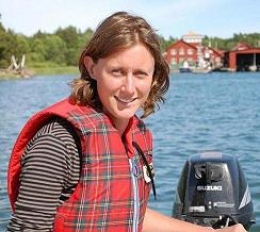
Clare Bradshaw is a Professor in the Department of Ecology, Environment and Botany at Stockholm University. She is a marine ecologist and ecotoxicologist specializing in human impacts on marine ecosystems, with expertise in radioactive contaminants and bottom trawling effects. Her research focuses on how ecological processes determine the overall effects of disturbance, particularly in the Baltic Sea and Kattegat regions. Dr. Bradshaw's research interests span marine ecology, ecotoxicology, and sediment biogeochemistry, with a strong emphasis on understanding how bottom trawling affects seabed processes, sediment dynamics, and contaminant suspension. She has extensive experience studying marine pollution, particularly radioactive contaminants, and has evolved from earlier work on coral bleaching in the Indian Ocean and bottom trawling effects in the Irish Sea to her current focus on Baltic Sea ecosystems. Her recent publications reveal a strong focus on carbon cycling in marine environments, sediment biogeochemistry, and the cumulative impacts of human activities on seabed integrity. The research shows increasing attention to policy implications, with several publications addressing how scientific findings can inform marine conservation and fisheries management practices, particularly regarding carbon storage capacity in marine environments and the long-term recovery of benthic ecosystems. Member of the Bradshaw Research Group at Stockholm University Course organizer for the Marine Biology summer course Actively seeking Master's students for research on Baltic benthic macrofauna (as of Sept 2023) Dr. Bradshaw collaborates extensively with multiple institutions including SLU Aqua, DHI, Aquabiota, University of Cagliari, Edith Cowan University, IAEA Marine Lab Monaco, and NIVA. Her research has significant implications for marine conservation policy, fisheries management, and understanding the role of marine ecosystems in global carbon cycling.
Meghan Balk is a Postdoctoral Fellow with the Evolution and Paleobiology Group at the Natural History Museum, University of Oslo. Her work combines museum collections and trait databases to investigate how inter- and intra-specific traits change across time and space. She is passionate about digitizing museum data and enabling FAIR data principles for continued exploration of data-driven science across evolutionary biology and ecology. Balk received her Ph.D. from the University of New Mexico in 2017 with a concentration in Interdisciplinary Science through the Department of Biology. She earned her B.S. from the University of California, Davis in 2010 in the Department of Evolution, Ecology, & Biodiversity, with a minor in Paleobiology through the Department of Geology. Her academic journey reflects a strong foundation in both biological sciences and geological perspectives on evolutionary processes. Her research employs both micro- and macroscopic approaches to understand abiotic and biotic drivers of phenotypic evolution. She investigates within and among lineage phenotypic evolution using fossil and modern records of organisms like bryozoans. Her work on abiotic drivers examines body size changes in species like the bushy-tailed woodrat across geological time, while her research on biotic drivers explores predator-prey relationships in the fossil record, particularly focusing on species like Otodus megalodon. She utilizes machine learning and computational approaches to extract morphological trait data from specimen images. Balk's publication record demonstrates expertise across evolutionary biology, paleontology, ecology, and computational approaches. Her recent work focuses on developing FAIR and modular workflows for image-based knowledge discovery in the emerging field of imageomics. She has made significant contributions to understanding body size evolution across geological time, predator-prey relationships in the fossil record, and promoting open science principles for trait-based research. Her work bridges traditional paleontological methods with cutting-edge computational techniques. Balk is actively involved in several research projects including ROCKS PARADOX (Dissecting the paradox of stasis in evolutionary biology) and Machine-readable Nature (MaNa). She collaborates with researchers across institutions to create ontologies and workflows for trait data, such as the Functional Trait Resource for Environmental Studies (FuTRES) project and the Biology-Guided Neural Networks project. She teaches courses including Foundational Open Science Skills workshop, Git for Mere Mortals webinar, and R Basics Crash course, emphasizing the importance of reproducible research practices.
Prof. Dr. Valentina Dagienė serves as a Professor and Senior Researcher at the Educational Systems Group within the Institute of Data Science and Digital Technologies at Vilnius University, Lithuania. Her academic career spans several decades with significant contributions to informatics education globally, particularly through her leadership in the international Bebras contest initiative. Her research focuses on computational thinking education through constructionist learning approaches, with particular emphasis on task design that promotes deep conceptual understanding in K-12 settings. Prof. Dagienė has pioneered methods for integrating computational thinking into primary education curricula while addressing cultural differences in learning approaches. Her work bridges theoretical frameworks with practical classroom implementations, making complex informatics concepts accessible to young learners through engaging short tasks. Analysis of her recent publications reveals a clear progression toward interdisciplinary integration of computational thinking with STEAM education and digital competence frameworks. Her research increasingly addresses assessment methodologies for computational thinking skills and explores the connections between computational and algebraic thinking. The Bebras contest serves as both a research platform and practical implementation vehicle for her educational theories. Prof. Dagienė has established herself as a key figure in international informatics education through her editorial work, conference organization, and cross-national collaborations. She has fostered partnerships between educators and researchers across Europe and beyond, creating sustainable communities around computational thinking education. Her leadership in the Bebras International Contest has engaged millions of students worldwide in computational problem-solving activities. Through her work with the Educational Systems Group, Prof. Dagienė has developed comprehensive teacher training programs that support educators in implementing computational thinking concepts in diverse classroom settings. Her research on student approaches to problem-solving has informed the design of learning environments that accommodate different learning styles and cultural backgrounds.
Matteo Dal Peraro is an Associate Professor at École polytechnique fédérale de Lausanne (EPFL) in the School of Life Sciences, where he leads the Laboratory for Biomolecular Modeling (LBM) within the Interfaculty Institute of Bioengineering (IBI). He also holds significant administrative roles as Head of IBI-SV Administration and Co-Director of IBI-STI Administration, demonstrating his leadership across both the School of Life Sciences and School of Engineering. His research bridges computational approaches with experimental validation to understand complex biological systems at multiple scales. His educational background includes a B.S. and M.S. in Physics from the University of Padua (2000), followed by a Ph.D. in Biophysics from the International School for Advanced Studies (SISSA) in Trieste (2004). He then completed postdoctoral training at the University of Pennsylvania under Professor M. L. Klein before joining EPFL as a Tenure Track Assistant Professor in late 2007. Dal Peraro's research focuses on computational biophysics and multiscale modeling of biological systems, with particular emphasis on membrane-protein interactions, nanopore sensing technologies, and structural biology. His work spans fundamental molecular mechanisms to applied educational technologies, demonstrating a commitment to both scientific discovery and knowledge dissemination. He has made significant contributions to understanding protein-membrane interactions, antibiotic resistance mechanisms, mitochondrial disorders, and viral pathogenesis through advanced computational approaches. His publication record shows a strong trend toward integrating augmented and virtual reality technologies with molecular modeling, exemplified by his development of the moleculARweb platform for chemistry and structural biology education. His research spans computational methods development, structural characterization of biomolecules, membrane biophysics, and applications to medically relevant problems including antibiotic resistance and neurodegenerative disorders. This interdisciplinary approach connects fundamental biophysical principles with practical applications in medicine and education. Dal Peraro has mentored numerous doctoral students through EPFL's PhD programs, particularly in Computational and Quantitative Biology. His leadership extends to serving on PhD program committees and directing research groups focused on computational molecular biology. He has established collaborations across multiple disciplines, facilitating integrative approaches to complex biological problems. He leads the Laboratory for Biomolecular Modeling (LBM), which develops and applies computational methods to study biological systems at multiple scales. The lab bridges molecular simulations with experimental validation, creating a synergistic approach to understanding complex biological phenomena. Dal Peraro's team has made significant contributions to membrane biophysics, protein folding, and the development of educational technologies that make structural biology accessible through augmented reality platforms.
Professor Peter Asaro is an Associate Professor at The New School's School of Media Studies, specializing in the philosophy of science, technology, and media. His work focuses on artificial intelligence, robotics, and the ethical, legal, and social implications of autonomous systems. He serves as Co-Founder and Co-Chair of the International Committee for Robot Arms Control (ICRAC) and has held research positions at Princeton University, Rutgers University, Umeå University, and the Austrian Academy of Sciences. Education: PhD, MCS, MA, BA His research spans military robotics, AI ethics, surveillance, and the societal impacts of automation. He has contributed to influential publications in journals like IEEE Technology & Society and Robot Law , with a focus on lethal robotics, legal liability, and privacy. Recent work includes critiques of predictive policing algorithms and autonomous weapons systems. Notable awards include the 2010 SXSW Web Interactive Awards for Technical Achievement and Best of Show for his contributions to Apple’s Siri and Microsoft’s Bing math query interfaces. He is currently writing a book on robotics and ethical intersections. Scientific Awards: 2010 SXSW Web Interactive Award for Technical Achievement 2010 SXSW Web Interactive Award for Best of Show Asaro leads funded projects like the Oral History of Robotics (IEEE & NEH) and Regulating Autonomous Artificial Agents (Future of Life Institute). He also contributes to public discourse on technology through his blog and affiliation with 4TU.Ethics and ICRAC.
Guandong Xu is a Professor in the School of Computer Science at the University of Technology Sydney (UTS), where he has been employed since 2012. He also serves as the Director of the UTS-Providence Smart Future Research Centre, which focuses on disruptive technology for sustainability, and leads the Data Science and Machine Intelligence Lab dedicated to research excellence and industry innovation in data science and artificial intelligence. Dr. Xu holds a PhD in Computer Science from Victoria University, Australia, along with MSc and BSc degrees in Computer Science and Engineering. After holding various research positions at European and Australian universities, he joined UTS in 2012 and was promoted to Associate Professor in January 2017, then to Professor in January 2019. His research spans data mining, machine learning, social computing, recommender systems, text mining, predictive analytics, and user behavior modeling. He has published over 240 papers in these areas with increasing citations from academia. His recent work demonstrates a strong focus on integrating large language models with recommendation systems, causal inference in recommendation, multimodal learning, and fairness in AI systems. His publications reveal sophisticated graph-based approaches and addressing challenges in dynamic recommendation scenarios, particularly through temporal modeling and hypergraph structures. Dr. Xu has received numerous prestigious awards including the Digital Disruptors Winner for ICT Research Project of the Year (2021), eBay's Leaders' Choice Award (2021), and was elected Fellow of Institution of Engineering and Technology (IET), UK (2021) and Fellow of Australian Computer Society (ACS) (2022). He has shown strong academic leadership as founding Editor-in-Chief of Human-centric Intelligent Systems Journal, Assistant Editor-in-Chief of World Wide Web Journal, and founding Steering Committee Chair of the International Conference of Behavioural and Social Computing Conference. He has supervised over 25 high degree research students and secured over $8 million in research funding from ARC, government, and industry sources, including projects like 'Smart Personalized Privacy Preserved Information Sharing in Social Networks' and 'A Secured Smart Sensing and Industry Analytics Facility for Industry 4.0.' Dr. Xu directs the Data Science and Machine Intelligence Lab at UTS, which aligns with UTS research priority areas in data science and artificial intelligence. The lab focuses on research excellence and industry innovation across academia and industry, with particular emphasis on developing advanced techniques for recommendation systems, knowledge graphs, and multimodal learning applications.