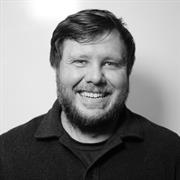
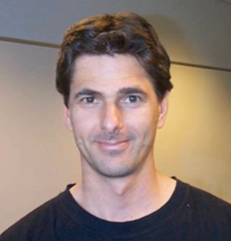
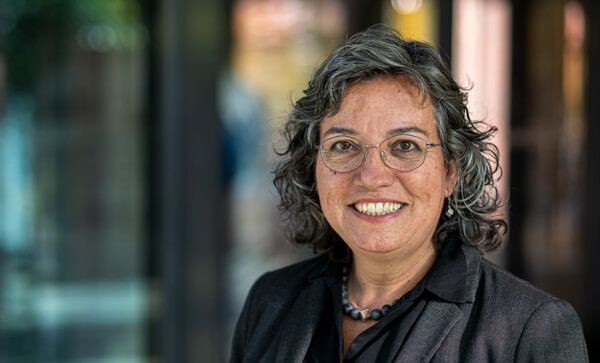
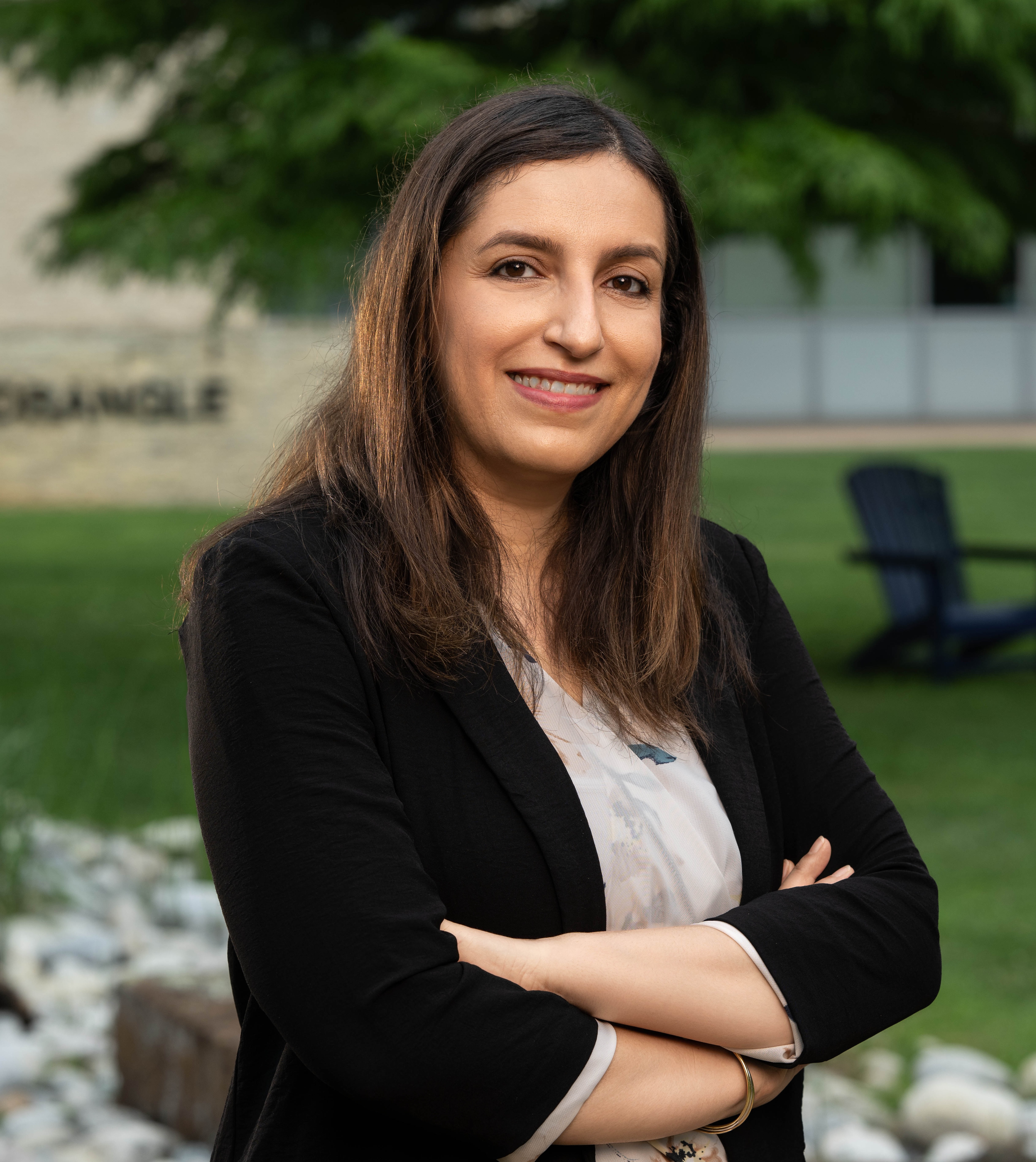
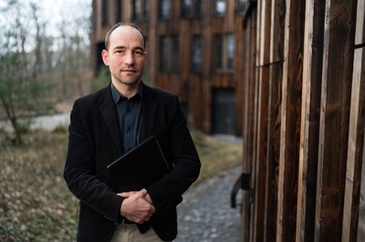
Dr. Michael (Miek) Dunbar is a Lecturer in Communication Design at RMIT University's School of Design , specializing in interaction and service design for regenerative futures. He co-leads the Greater Melbourne City Portrait initiative with Regen Melbourne, focusing on creating safe social and ecological urban frameworks. His work challenges anthropocentric data practices while developing digital public tools for urban decision-making. Key research areas include: Regenerative Design, More-than-human Data Sets, Collaborative Design Teams Teaching: Master of Communication Design program, Service Design, Work Integrated Learning His publications address urban data infrastructures, collaborative design methods, and regenerative practices. Projects like Australia's first Housing Monitor demonstrate his focus on civic data systems and urban sustainability. Current research explores: Relational ontologies in data visualization Multi-species sensing apparatuses Expanded participatory data governance
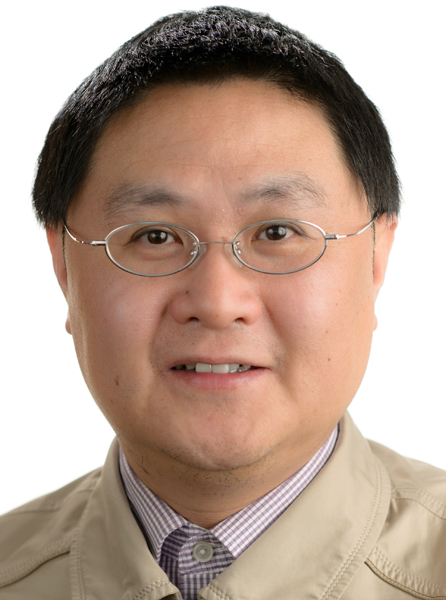
Professor Dong Xu is a Tenured Professor in the Department of Computer Science at the University of Hong Kong (HKU), part of the School of Computing and Data Science. He holds a B.Eng. and Ph.D. from the University of Science and Technology of China (USTC). His career includes tenured roles at Nanyang Technological University and the University of Sydney, alongside postdoctoral research at Columbia University. His research focuses on Artificial Intelligence, Computer Vision, Multimedia, and Machine Learning , with applications in autonomous driving, AR/VR, medical image analysis, and video surveillance. Xu has authored over 150 papers in top journals and conferences, including CVPR, ICCV, and IEEE Transactions. He actively contributes to the academic community as an editorial board member for journals like ACM Computing Surveys and IEEE Transactions, and through leadership roles in conferences such as ACM Multimedia and ICME. Notable awards include Fellowships from IEEE and IAPR, and the IEEE Signal Processing Society Distinguished Lecturer title (2021–2022). Education: B.Eng. (USTC, 2001), Ph.D. (USTC, 2005) Professional Service: Program Coordinator of ACM Multimedia 2024, Guest Editor of over ten special issues.
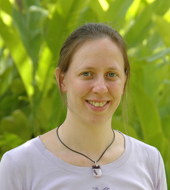
Dr. Sabine Graf is a Full Professor at the School of Computing and Information Systems, Athabasca University. She holds a PhD in Computing and Information Systems from Vienna University of Technology (2007) and has been a faculty member since 2009. Her research focuses on user adaptive systems, learning/academic analytics, personalization, and game-based learning, with over $2.3M in external funding and 130+ peer-reviewed publications (cited 8,200+ times). She leads the OMEGA+ educational game project and the User Adaptive Systems (UAS) research cluster. Education: PhD in Computing and Information Systems, Vienna University of Technology, 2007 MSc in Computing and Information Systems, University of Vienna, 2003 Research Interests: Dr. Graf specializes in making learning systems more intelligent through adaptive interfaces, AI-driven recommendations, and data analytics. Her work bridges educational technology, artificial intelligence, and collaborative learning. Recent projects include developing OMEGA+, analyzing student behavior in online courses, and enhancing adaptive learning systems with context-aware features. Grants & Funding: NSERC Discovery Grant ($205,000), 2020 CFI John R. Evans Leaders Fund ($164,573), 2020 AU IDEA Lab Grant ($5,000), 2021 Multiple Mitacs Globalink Internships, NSERC awards, and AU-funded projects. Advising & Team: Dr. Graf has mentored over 30 students, including PhD, MSc, and postdoctoral fellows. Notable advisees include Moustafa Mahmoud (NSERC Scholar) and Mohammad Belghis-Zadeh (3MT Competition winner). The research team collaborates globally, with members from Brazil, Taiwan, Spain, and beyond. Labs & Initiatives: The Academic Analytics Tool (AAT) project and the OMEGA+ game platform are central to her work. The UAS cluster connects researchers worldwide to advance adaptive systems research.
Ali Kılıç is an Associate Professor at the Department of Textile Engineering, Istanbul Technical University. His research focuses on nanofiber materials, air filtration technologies, and composite materials. He leads multiple projects on high-performance air filters, wound dressings, and sustainable materials. Key research areas include solution-blown nanofibers, biodegradable composites, and electrostatic filtration mechanisms. Education: Unspecified in available texts. Research Interests: Nanofiber fabrication, polymer composites, biomaterials, and sustainable filtration systems. Recent work emphasizes enhancing filtration efficiency through layered nanofiber structures and developing eco-friendly materials. His team has produced innovative solutions for aerosol filtration, biomedical scaffolds, and energy storage applications. Projects (Selected): Cellofil: Cellulose-based air filters (TUBITAK-funded). Bionanofiber Gun for wound dressings (TUSEB-funded). Optimization of nanofiber wound dressings (BAP-funded). Awards: Received prizes including ITU Publication Incentive (2023), Newton Katip Çelebi Fund (2015), and 3rd Furniture R&D Project Competition (2015). Lab/Labs: Active in nanofiber production and characterization labs at ITU, focusing on textiles and material innovation.
Dr. Sharon O'Rourke is an Assistant Professor and Ad Astra Fellow at the University College Dublin (UCD) School of Biosystems and Food Engineering since 2019. Previously, she held roles at the University of Sydney and UCD's School of Agriculture and Food Science, focusing on soil science and environmental protection. She holds a BAgrSc from UCD and a PhD in Soil Nutrient Management from Queen's University Belfast. Research Interests: Her work centers on sustainable soil management, soil carbon sequestration, and environmental protection. She employs spectral techniques (e.g., mid-infrared, hyperspectral imaging) and modeling to study soil geochemistry, carbon dynamics, and climate change mitigation. Current projects include ClimateCropping (EU-wide soil carbon management), PRISM (in-field soil sensors), and CFunction (carbon-nutrient stoichiometry). Grants & Projects: Key grants include funding from Teagasc, the Department of Agriculture, and the Sustainable Energy Authority of Ireland. Notable projects include proximal soil sensing for carbon monitoring and bio-based product development via pyrolysis. Teaching: She coordinates modules such as 'Carbon & Sustainability,' 'Soil Technology,' and 'Research Skills,' emphasizing agricultural systems and climate-smart practices. Awards: Recognized as an Ad Astra Fellow, highlighting her contributions to innovative soil science research.
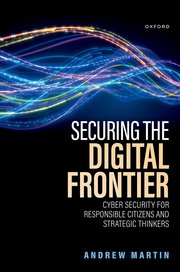
Professor Andrew Martin is a leading academic in Systems Security at the Department of Computer Science, University of Oxford, and a Governing Body Fellow at Kellogg College. His research focuses on trusted computing, cybersecurity, and secure distributed systems, with applications in cloud computing, IoT, and smart grids. He has been instrumental in advancing secure architectures using hardware-based trust mechanisms such as Intel SGX and Trusted Platform Modules. Research Interests: His work spans Systems Security , Trusted Computing , Confidential Computing , Secure Multi-Party Computation , and Privacy in Distributed Systems . He investigates how hardware-enforced security can mitigate risks in large-scale environments, particularly where privacy and trust are paramount. Publication Trends: His recent publications reveal a strong focus on Trusted Execution Environments (TEEs), remote attestation, and secure cloud architectures. He critically examines the feasibility of using hardware enclaves for both defensive and offensive security, emphasizing architectural soundness and real-world applicability. Scientific Awards: No specific awards mentioned in the provided text. Advising and Grants: Professor Martin has supervised numerous PhD and Master’s students in cybersecurity and systems research. His projects include CRANE , Trustworthy Logging , webinos , TCLOUDS , and Secure Networking by Design (SNbD) . He has secured funding for research in trusted computing and secure distributed systems, contributing to both theoretical foundations and practical implementations. Labs and Teams: He leads a research group focused on systems security and trusted computing, collaborating with industry and academic partners on large-scale security challenges. His team works on developing secure middleware, analyzing vulnerabilities in consumer devices, and designing privacy-preserving protocols for smart infrastructure.
Professor Brett Harris is a faculty member at Curtin University, affiliated with the School of Earth and Planetary Sciences (EPS) within the Faculty of Science and Engineering. He holds a prominent role in the Office of the Provost. His research focuses on subsurface resource technologies, including mineral exploration, CO2 sequestration, and geothermal energy. He has led major initiatives like the DET CRC and MinEx CRC projects, advancing in-hole electromagnetic sensing and distributed acoustic sensing techniques. His expertise spans hydrogeology, geophysics, and environmental geoscience, with notable contributions to aquifer characterization, fault zone dynamics, and CO2 storage monitoring. He coordinates undergraduate courses in electromagnetism, potential fields, and environmental geophysics, while supervising multiple PhD students. Key collaborations include work with government agencies on fractured aquifer detection and geothermal systems. Recent research emphasizes innovative sensor technologies for subsurface imaging, CO2 leakage monitoring, and groundwater sustainability. His work bridges geophysics with applied engineering solutions for resource exploration and environmental stewardship.
Alexander Refsum Jensenius is a Professor of Music Technology and Director of the RITMO Centre for Interdisciplinary Studies in Rhythm, Time and Motion at the University of Oslo. He also leads the fourMs Lab and co-founded the MishMash Centre for AI and Creativity. His work bridges musicology, psychology, and technology, focusing on embodied music cognition, human motion analysis, and creative applications of AI. Notably, he pioneered research on air guitar motion and human micromotion through projects like the Oslo Standstill Database . Educated at the University of Oslo (BA in Music and Mathematics, MA in Musicology) and Chalmers University of Technology (MSc in Applied IT), Jensenius holds a PhD in Music Technology from UiO. He has held visiting researcher roles at UC Berkeley, McGill University, and KTH. Leadership roles include Department of Musicology Head (2013–2016) and Steering Committee Chair for the International Conference on New Interfaces for Musical Expression (NIME, 2011–2022). Research interests span music-related body motion, AI in creative contexts, and open research practices. Key contributions include the Music Moves and Motion Capture MOOCs, the Musical Gestures Toolbox software, and monographs like Sound Actions and Sonic Design . His work emphasizes interdisciplinary collaboration, with projects addressing ventilation systems' acoustic properties and cell culture vibrational effects. Awards include the European Open Data Champion recognition. He advocates for open science and maintains extensive digital archives of research materials, emphasizing institutional web pages as critical research infrastructure.
Prof. Dr. Beate Escher is Head of the Department of Cell Toxicology at the Helmholtz Centre for Environmental Research (UFZ) in Leipzig, Germany. She holds professorial positions at Eberhard Karls University of Tübingen , is a Privatdozent at ETH Zurich , and is affiliated with the University of Queensland and Griffith University in Australia. Her research program focuses on advancing in vitro bioassays and New Approach Methods (NAMs) for environmental and human health risk assessment of micropollutants. Her research interests lie at the intersection of environmental toxicology , molecular toxicology , and exposure science . She develops and applies bioanalytical tools for water quality assessment, with a focus on pharmaceuticals, pesticides, and transformation products. Her work includes mechanism-based toxicity assessment , toxicokinetic-toxicodynamic (TKTD) modeling , and the development of the CITEPro robotic bioassay platform for high-throughput screening. She integrates omics data , computational modeling , and machine learning to improve chemical hazard characterization. Recent publications highlight trends in chemical mixture toxicity , safe-by-design chemicals , ionic compound assessment , and machine learning applications in toxicology. Her work increasingly leverages data-driven approaches to prioritize contaminants and predict biological effects across species. Scientific Awards: Highly Cited Researcher (Web of Science/Clarivate, Top 0.1%, 2020) Outstanding Achievements in Environmental Science and Technology (ES&T & ACS ENVR, 2023) Advising and Grants: She supervises multiple doctoral students and leads major collaborative projects such as InCeTo, MibiTox, nanoINHALE, and SafePol. She received an Australian Research Council grant (2011–2014) and leads Swiss National Science Foundation-funded initiatives. She was a member of the German Science Council (2017–2024) and serves on the Board of Reviewing Editors of SCIENCE . Labs and Teams: She leads the Cell Toxicology team at UFZ, which includes researchers such as Dr. Luise Henneberger, Dr. Julia Huchthausen, and Dr. Haotian Wang. The team operates the CITEPro platform and contributes to international consortia focused on exposome research and chemical safety.
Márton Karsai is an Associate Professor and Head of the Department of Network and Data Science at the Central European University in Vienna, and a Research Professor at the HUN-REN Alfréd Rényi Institute of Mathematics in Budapest. He leads the Computational Human Dynamics Lab, focusing on data-driven modeling of social and biological systems. He is also the Editor-in-Chief of the journal Advances in Complex Systems . His research interests lie at the intersection of network science, human dynamics, and socioeconomic systems. He specializes in temporal and spatial networks, modeling contagion processes (both social and biological), and analyzing large-scale human behavioral datasets. His work integrates computational methods with real-world data to understand complex social phenomena such as mobility patterns, migration, segregation, and epidemic spread. He is particularly known for using remote sensing and digital trace data to infer poverty and socioeconomic conditions in urban areas. The recent publications highlight a strong trend in applying network science and machine learning to societal challenges. His work spans high-impact journals in complex systems, data science, and computational social science, with recurring themes in epidemic modeling, urban analytics, socioeconomic inference, and the structure of temporal and spatial networks. The research is highly interdisciplinary, combining physics, computer science, and social science methodologies. He has been invited to speak at major events such as the Conference on Complex Systems, the Lake Como School on Complex Networks, and workshops on data for vulnerability assessment. He served as general co-chair of CCS 2021 in Lyon, demonstrating leadership in the complexity science community. General Co-Chair, Conference on Complex Systems (CCS) 2021, Lyon Invited speaker, 4th Workshop on Data for the Wellbeing of the Most Vulnerable @ ICWSM'23 Invited speaker, Complexity72h Workshop Invited lecturer, Lake Como School on Complex Networks Invited talk, Hungarian Academy of Sciences on COVID-19 modeling While specific grant details are not listed, his coordination of projects on segregation, migration, and poverty inference—often in collaboration with the Complexity Science Hub—suggests active involvement in externally funded interdisciplinary research. He advises students through the Department of Network and Data Science at CEU, though specific advisees are not named. His lab, the Computational Human Dynamics Lab, serves as a hub for data-driven research on social systems.
Thaier Hayajneh , Ph.D., is a University Professor at Fordham University's Department of Computer and Information Sciences. He serves as Founder Director of the Fordham Center for Cybersecurity and Program Director for the MS in Cybersecurity program. Previously, he held academic roles at New York Institute of Technology and Hashemite University in Jordan. Specializes in cybersecurity, networking, and applied cryptography Focus areas include blockchain, IoT security, and wireless network vulnerabilities Active in NSF cybersecurity review panels and as a CAE reviewer for NSA Recipient of peer-review awards from Publons His research spans secure protocols for medical IoT systems, lightweight cryptographic algorithms, and smart contract implementations in healthcare. Publications in IEEE IoT Journal, IEEE Systems Journal, and Journals like Future Generation Computer Systems demonstrate his expertise in securing emerging technologies. Dr. Hayajneh has received research funding from federal agencies including NSA, Department of Defense, and NSF. He has published over 80 papers and maintains active editorial roles in prestigious journals. Scientific Awards: Peer-review awards from Publons
Dr. Shirin Nilizadeh is an Associate Professor in the Department of Computer Science and Engineering at The University of Texas at Arlington's College of Engineering. She leads the Security and Privacy Research Lab, conducting interdisciplinary research at the intersection of cybersecurity, privacy, machine learning, and social media analysis. Her work addresses critical societal issues related to online security, privacy, and safety through data-driven approaches. Dr. Nilizadeh received her PhD in Computer Science from Indiana University in 2014, followed by MS in Computer Science from Amirkabir University (2007) and BS in Computer Engineering from Islamic Azad University (2004). Her research focuses on security and privacy in systems and social networks, employing techniques from machine learning and big data analytics. She takes a highly interdisciplinary approach, integrating AI, NLP, social sciences, and public health to address societal issues in cybersecurity and privacy. Her research objectives include: (1) detecting and characterizing emerging threats in online social networks like social engineering attacks, misinformation, and online hate speech; (2) advancing the adversarial robustness and fairness of ML and NLG systems; and (3) studying humans' online behaviors through data-driven interdisciplinary research. Analysis of her recent publications reveals a strong focus on AI-generated security threats, particularly phishing scams using LLMs, NFT fraud detection, social media toxicity analysis, and content moderation systems. Her work bridges theoretical security research with practical applications, often addressing real-world security challenges through innovative technical solutions. Among her notable scientific achievements are the prestigious NSF CAREER award (2023), Comcast Innovation Awards (2022 and 2024), College of Engineering Outstanding Early Career Research award (2024), and IEEE SP 2024 Distinguished Paper Award. Her work has also received best paper and technical poster awards at eCrime 2021 and NDSS 2022. Dr. Nilizadeh has successfully mentored numerous doctoral and master's students while securing significant research funding, including multiple NSF grants and Comcast Innovation Fund awards. She leads a vibrant research group that has produced impactful work cited in official reports submitted to The Supreme Court and the EU Committee on Civil Liberties, Justice, and Home Affairs. Her lab has also received coverage from WIRED, MIT Technology Review, Orange's Hello Future, and Communications of the ACM. She serves on numerous program committees for top international conferences including ACM CCS, USENIX Security, and POPETS, and has organized outreach programs like OurCS@DFW to broaden participation of underrepresented students in computing.
Professor Xiaodong Liu is a faculty member at Edinburgh Napier University, affiliated with the School of Computing, Engineering and the Built Environment . His research spans Internet of Things , Edge Computing , Artificial Intelligence , and Cybersecurity , with a focus on decentralized systems and data-driven decision-making. Research Themes : IoT orchestration, federated learning, smart city infrastructure, building maintenance optimization, and automotive cybersecurity. Current Projects : Leading Swarmchestrate (EU-funded), Long-range Perceptive Autonomous Vehicles (Royal Society), and Met-Bot for Disaster Surveillance (Royal Society). His recent publications emphasize privacy-preserving edge learning , semantic IoT data validation , and deep learning for weather prediction . As a supervisor, he has guided PhD students in areas like federated learning, smart building systems, and IoT security. Collaborations include partnerships with institutions in Scotland, China, and Italy, alongside funding from European Commission , Royal Society , and Scottish Funding Council . He contributes to international conferences and journals, with notable work in IEEE Transactions , ACM TAAS , and MDPI publications.
Professor Gunnar Luderer leads the Energy Transition Lab at the Potsdam Institute for Climate Impact Research (PIK) and serves as Deputy Head of Research Department 3 - Transformation Pathways. He is also Professor of Global Energy Systems Analysis at the Technical University of Berlin and Deputy Project Leader of the BMBF-funded Kopernikus-Projekt Ariadne. University of Heidelberg (Physics, Economics, Atmospheric Sciences) Oregon State University (Physics, Economics, Atmospheric Sciences) PhD at Max Planck Institute for Chemistry in Mainz His research focuses on energy system transformations , climate change mitigation pathways , and economic modeling using the REMIND model. Recent work explores hydrogen futures , bioenergy sustainability , and policy interactions across sectors. Selected article trends reveal expertise in multi-model intercomparisons , sectoral decarbonization , and techno-economic analysis of energy transitions across EU, China, and global contexts. World's Most Highly Cited Researcher (Web of Science Group, 2019-2024) Lead Author, UNEP Emissions Gap Reports (2013, 2018) Contributing author to multiple IPCC reports Lead Author, IPCC Special Report on Climate Change and Cities (2025) Luderer teaches Energy and Climate Change at TU Berlin, covering climate physics, energy technologies, and policy frameworks. His team's research appears in Nature Energy , Nature Communications , and other high-impact journals.
Professor David Millard is a Professor of Computer Science at the University of Southampton's Electronics and Computer Science department. He serves as Head of the ECS Education Group, leading a team of 15 Teaching Fellows and Senior Fellows to improve teaching and learning across the department. Previously, he was Director of Admissions for ECS from 2012 to 2022. David is a founding member of the Web and Internet Science research group and has been active in the international hypermedia community for over twenty-five years. His professional affiliations include: Chair of the ACM Hypertext steering committee SIGWEB Liaison for ACM Web Science Former vice-chair of ACM SIGWEB (2015-2019) Editorial board member of the New Review of Hypermedia David Millard's research focuses on the intersection of hypertext, digital narratives, and mixed reality games, with particular emphasis on locative literature. His work has helped define 'Sculptural Hypertext' - hypertext governed by rules and constraints rather than navigational links - which is highly suitable for designing narrative structures within digital games. He has been a pioneer in locative narratives, interactive digital narrative games experienced on location-aware smart devices, with work dating back to 2002 at Chawton House. His recent research focuses on understanding the locative narrative design space and proposing the 'Balance of Attention' as the primary poetic of locative narrative. His research has been recognized with multiple awards including the Engelbart Award in 2013 and 2016 for his work on location-based storytelling and sculptural hypertext. His interdisciplinary StoryPlaces project explores the poetics of location-based narratives through digital storytelling deployments in Southampton, Bournemouth, and Crystal Palace. David has authored more than 230 peer-reviewed articles across Technology Enhanced Learning, Web Science, and Hypertext and Narrative, with over 4800 citations and an h-index of 35. His work has been published in prestigious journals including Springer Multimedia Tools and Applications, Elsevier Computers in Education, IEEE Intelligent Systems, PloS one, ACM Transactions on Information Systems, and ACM Transactions on Learning Technologies. He leads a team of PhD students focused on Interactive Narratives and Mixed Reality Spaces and has graduated 34 postgraduate students. His students have pursued careers in academia at institutions like Oxford, Winchester, Bournemouth, and East Anglia, as well as in industry at major technology firms including IBM and Google. David has been instrumental in Open Educational Resources development, creating EdShare in 2010 - an OER platform based on EPrints that now hosts over 20,000 learning items. He has also developed innovative teaching approaches, including modules on Multimedia Systems (which won the Vice-Chancellor's Teaching award), Programming 1, Social Media and Network Science, and Games Design and Development.