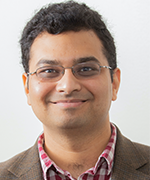
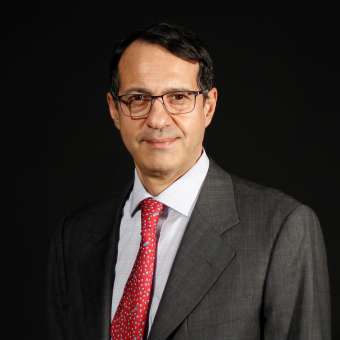
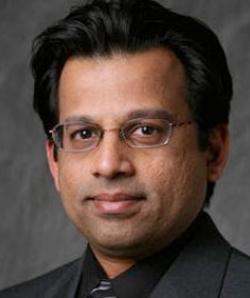
Aditya Prakash is an Associate Professor and Associate Chair for Academic Affairs in the School of Computational Science and Engineering at Georgia Tech. He holds a PhD from Carnegie Mellon University (2012) and a B.Tech from IIT Bombay (2007). His research focuses on data science, machine learning, and AI applied to epidemiology, healthcare, security, and urban computing. His work has led to impactful tools used by organizations like CDC, ORNL, and Walmart. Notable awards include the NSF CAREER Award (2018) and IEEE's 'AI Ten to Watch' (2017). Education: PhD (Computer Science, CMU, 2012), B.Tech (IIT Bombay, 2007) Research Interests: Epidemic forecasting, network analysis, healthcare informatics, and large-scale data-driven solutions for societal challenges. He has authored over 80 papers and holds two patents. His lab develops methods for disease modeling, urban infrastructure analysis, and cybersecurity. Key projects include the NSF-funded BEHIVE initiative for pandemic prediction and collaborations with MIDAS network for infectious disease modeling. Awards: NSF CAREER, Facebook Faculty Award, IEEE AI Recognition, and multiple best-paper awards. His group advises students across PhD, MS, and undergraduate levels, with notable alumni in academia and industry. Labs & Affiliations: Core faculty at ML@GT (Machine Learning Center) and IDEaS (Institute for Data Engineering and Science). Active in organizing conferences like AAAI, KDD, and SIGMOD.
Mazdak Nik-Bakht is an Associate Professor at Concordia University's School of Building, Civil, and Environmental Engineering. His work bridges construction engineering with digital innovation, focusing on smart infrastructure and sustainable development. PhD, Construction Engineering & Mgmt., University of Toronto PhD, Structural Engineering, Iran University of Science & Technology MASc & BASc, Structural and Civil Engineering, Iran University of Science & Technology His research integrates Artificial Intelligence and Social Network Analysis into construction management systems. Key areas include: Smart infrastructure and urban computing Deconstruction and circular economy principles Building Information Modeling (BIM) and digital twinning Process mining in Architecture, Engineering, and Construction (AEC) industry Decision models in construction project management Semantic computing and computational linguistics applications Recent publications show a focus on BIM analytics , urban resilience , and social media's role in infrastructure planning . Papers often combine AI and network theory to solve complex construction challenges. 2015 Outstanding paper award - Built Environment Project and Asset Management journal He teaches courses on: Big Data Analytics for Smart City Infrastructure Building Information Modeling (BIM) for Construction Building Economics Project Cost Estimating
Natalie T. Wood, PhD (Auburn University, 2002), is a Professor of Marketing and Associate Dean at Saint Joseph’s University’s Haub School of Business. Her expertise spans consumer behavior and social media marketing, with a focus on digital engagement and virtual environments. PhD, Auburn University (2002) GradDip in Marketing, Edith Cowan University (1999) BBus in Marketing, Edith Cowan University (1996) Her research explores social media’s influence on consumer trends, political marketing, themed hospitality authenticity, and virtual education. Key journals include Journal of Consumer Behaviour and Business Horizons . Recent publications analyze microblogging’s role in customer service and brand promotion. Notable awards: Saint Joseph’s University Faculty Merit Award for Teaching (2013) and Research (2007). Grants from Arrupe Center (2019) and Direct Selling Education Foundation (2010-2011) highlight her funded work. Professional roles include Assistant Director, Center for Consumer Research (2007-2011).
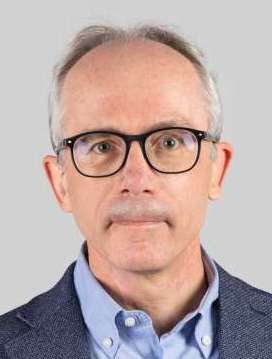
Paolo Tonella is a Full Professor and Director of the Software Institute at the Faculty of Informatics, Università della Svizzera italiana (USI) in Lugano, Switzerland. He also holds an Honorary Professorship at University College London (UK) and previously led the Software Engineering group at Fondazione Bruno Kessler (Italy). His research focuses on software testing, analysis, and AI-driven systems. He has authored over 200 peer-reviewed papers and 100 journal articles, with an H-index of 72. He teaches courses in Data and Software Engineering and Informatics, including Information Modeling, Probability & Statistics, and Knowledge Search. Key contributions include foundational work on web application testing (ICSE MIP award), evolutionary testing techniques (eToc/EvoSuite tools), and reverse engineering of object-oriented systems. He led the ERC-funded PRECRIME project on anticipatory testing. His recent work addresses AI dependability, autonomous systems testing, and deep learning fault analysis. Scientific awards include the ICSE MIP Award (2001) and ERC Advanced Grant (2018). He has served on editorial boards for major journals like IEEE Transactions on Software Engineering and ACM TOSEM. Current roles include leadership in the Software Institute and organizing the SIESTA summer school.
Staffan Kjelleberg is a Distinguished University Professor at Nanyang Technological University (NTU), Singapore, and Director of the Singapore National Biofilm Consortium (SNBC) and Singapore Centre for Environmental Life Sciences Engineering (SCELSE). He holds previous positions as Scientia Professor at the University of New South Wales (UNSW), Australia, and has led major research initiatives globally. His academic career spans over four decades, with roles including Head of School at UNSW and Professorships at the University of Gothenburg, Sweden. Education: BSc (Chemistry and Biology, 1975), PhD (Microbiology, 1981), and Docent (Microbiology, 1983) from the University of Gothenburg. He has authored over 384 journal papers with significant citations, reflecting his leadership in microbial biofilm research. Research focuses on microbial biofilms and microbiomes, addressing environmental sustainability, public health, and industrial applications. He employs an interdisciplinary approach to study biofilm community dynamics, matrix properties, and translational technologies for biofilm control. Key contributions include discoveries on quorum sensing inhibitors, biofilm dispersal mechanisms, and eDNA roles in biofilm structure. Honours include Fellowships from the Australian and American Academies of Microbiology, Web of Science Highly Cited Researcher status, and Editor roles for 15 international journals. He leads major programs like the Marine Climate Change Science initiative and has co-directed global research centers such as the Centre for Marine Bio-Innovation. Advising and grants: While specific student names are not listed, his extensive leadership in research programs indicates mentorship of numerous scholars. His work bridges fundamental and applied microbiology, impacting environmental and biomedical fields. Labs/Teams: Directs SCELSE and SNBC, co-founded the Centre for Marine Bio-Innovation, and collaborates internationally on biofilm and microbiome research.
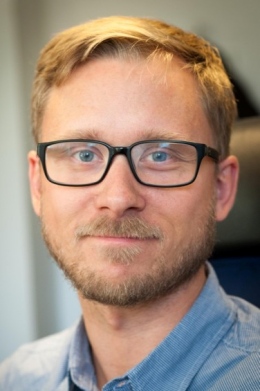
Johan Eklöf is a Professor at Stockholm University within the Department of Ecology, Environment and Plant Sciences . His research emphasizes marine ecology , focusing on interactions between marine biodiversity, environmental conditions (including climate), and societal impacts . He teaches courses such as Management of Aquatic Resources in the Tropics , Marine Ecology for the Biogeo Program , and Ecology II . Research Focus: Causal relationships between biodiversity and ecosystem resilience Foundation species as drivers of ecosystem services Optimizing resource management under climate change Projects: Principal Investigator for FORCE (2023-present), a transdisciplinary Baltic Sea recovery project Contributor to NordSalt (climate impacts on Nordic salt marshes) and PlantFish (Baltic Sea vegetation-fish interactions) Scientific Leadership : Supervises 2 current PhD students and co-supervises 6 additional PhD/postdocs Formerly mentored 4 PhD graduates and >40 MSc students Environmental Context: His work spans Baltic Sea and Western Indian Ocean ecosystems, using seagrass beds , mussel beds , and coastal benthic systems as primary models. Recent publications highlight climate change impacts on trophic cascades , habitat connectivity , and policy frameworks for marine conservation .
Prof. Dr. Ulrich Rebstock is a former full professor of Islamic Studies at the Albert Ludwig University of Freiburg, holding the position from 1993 to 2017. He specializes in Islamic history, Arabic studies, and African Islamic contexts, with a focus on Mauritania and North African intellectual traditions. His work bridges historical documentation, manuscript studies, and the analysis of administrative and legal practices in Islamic societies. Rebstock earned his doctorate in 1983 on Ibadi movements in the Maghrib and completed his habilitation in 1990 on computational practices in the Islamic Orient. Research interests include Islam in Africa, usul al-fiqh (Islamic legal theory), and Arabic mathematical history. He has led major projects such as the publication of the Mauritanian historical encyclopedia Kitāb Ḥayāt mūrītāniyā and the Moorish Literary History series. Current projects involve developing a collaborative web-based system for annotating Arabic texts to create complex indices. Key contributions include critical editions of historical manuscripts, studies on Moorish legal opinions, and analyses of reformist movements in Sudan. His work often emphasizes the intersection of textual analysis with socio-political contexts in Muslim-majority regions.
Yiyu Yao is a Professor in the Department of Computer Science at the University of Regina, Faculty of Science. He holds a B.Eng. from Xi'an Jiaotong University and earned both his M.Sc. and Ph.D. from the University of Regina. His office is located in College West 308.6, and he can be reached at Yiyu.Yao@uregina.ca or by phone at (306) 585-5226. Dr. Yao's research spans multiple interconnected domains in intelligent systems. His primary focus is on three-way decisions, which serves as a unifying framework for his work in granular computing, rough sets, and decision-theoretic models. He has developed significant theoretical contributions to decision-theoretic rough sets (DTRS) and probabilistic rough sets, creating bridges between uncertainty management and practical decision-making applications. His work extends to web intelligence, information retrieval systems, and multiview data analysis, where he applies his theoretical frameworks to real-world problems in data science and artificial intelligence. Analysis of Dr. Yao's recent publications reveals a strong continuing focus on three-way decision theory, with increasing applications across diverse domains. His work demonstrates evolution from foundational theoretical contributions to sophisticated applications in multi-criteria decision making, conflict analysis, and explainable AI. The research shows integration of granular computing principles with modern machine learning techniques, particularly in handling uncertainty and developing interpretable models. Recent publications indicate growing interest in the intersection of three-way decisions with fuzzy sets, shadowed sets, and cognitive approaches to data analysis. Dr. Yao has mentored numerous graduate students and has hosted many visiting scholars, primarily from Chinese institutions including Nanjing University Posts and Telecommunication, Harbin Normal University, Shaanxi Normal University, and others. He serves as Area Editor on Rough Sets for the International Journal of Approximate Reasoning and as Associate Editor for Information Sciences. He is also Associate Editor-in-Chief for the Journal of Emerging Technologies in Web Intelligence and serves on multiple editorial boards including LNCS Transactions on Rough Sets and Web Intelligence and Agent Systems. He has organized significant conferences including the International Joint Conference on Rough Sets (IJCRS 2017) and served on the Steering Committee for the International Symposium on Fuzzy and Rough Sets.
Hamsa Bastani is an Associate Professor of Operations, Information and Decisions at the Wharton School, University of Pennsylvania, with a secondary appointment in Statistics and Data Science. She co-directs the Wharton Healthcare Analytics Lab and serves as an Associate Editor for Operations Research, M&SOM and OR Letters. Her academic journey began with summa cum laude graduation from Harvard in 2012 with an A.M. in physics and A.B. in physics and mathematics. She completed her PhD in Stanford's Electrical Engineering department under Mohsen Bayati, followed by a Herman Goldstine postdoctoral fellowship at IBM Research. Professor Bastani's research focuses on developing novel machine learning algorithms for data-driven decision-making, with applications spanning healthcare operations, social good, and revenue management. Her work demonstrates particular expertise in sequential decision-making (bandits, reinforcement learning), learning from auxiliary data sources (transfer learning, meta-learning), and designing effective human-AI interfaces (interpretability, fairness). She has made significant contributions to understanding how AI systems affect and augment human behavior, with the goal of designing AI tools that help humans thrive. Her publications reveal a strong trend toward high-impact applications of machine learning in critical societal domains. A significant portion of her recent work focuses on healthcare applications, including optimizing health supply chains in low- and middle-income countries, designing clinical trial protocols, and creating targeted public health interventions. Another major theme examines the complex relationship between humans and AI systems, particularly how AI affects learning outcomes and decision-making processes. Her work frequently bridges theoretical advances with practical implementation, as evidenced by country-scale deployments in Greece and Sierra Leone. Wagner Prize for Excellence in Operations Research Practice (2021) Pierskalla Award for Best Paper in Healthcare (2021, 2019, 2016) Behavioral OM Best Paper Award (2021) Public Sector in OR Best Paper Award (2024) INFORMS Data Mining Best Paper Award (2022) Wharton Teaching Excellence Award (2019, 2020, 2021) Professor Bastani has advised numerous PhD students who have gone on to prominent positions, including Pia Ramchandani (Director of Responsible AI at PwC), Arielle Anderer (Assistant Professor at Cornell Johnson), and Kan Xu (Assistant Professor at ASU Carey). Her research has been supported by collaborations with national governments, including the Greek government where she co-designed Eva, the national-scale reinforcement learning system for targeted COVID-19 testing, and the Government of Sierra Leone where she improved patient access to essential medicines by nearly 20% via decision-aware learning. She has also conducted the first large field study deploying generative AI tutors in high school math classes. She leads the Wharton Healthcare Analytics Lab and serves on the Steering Committee for the Penn Center for Health Incentives and Behavioral Economics and on the statistics advisory committee for the AHA Food is Medicine Initiative. Outside academia, she serves on the Workday AI Advisory Board, demonstrating her commitment to translating academic research into practical applications.
Michael Goldsmith is a Senior Research Fellow at the Department of Computer Science and Worcester College, University of Oxford. He holds multiple leadership positions including Director of the Oxford Martin Programme on AI Threat Detection, Associate Director of the Cyber Security Centre, and Co-Director of the Centre for Doctoral Training in Cybersecurity. His research bridges formal methods, concurrency theory, and practical cybersecurity applications. Goldsmith's research focuses on cybersecurity analytics including threat detection, risk management, and trust frameworks. He pioneered automated cryptoprotocol analysis and investigates multidisciplinary projects spanning mathematical models to socio-technical systems. His core interests include formal verification, AI threat landscapes, privacy architectures, and security protocol design. Analysis of his recent publications reveals strong emphasis on practical cybersecurity challenges: 63% focus on threat detection (especially insider threats), 22% on trust/risk frameworks, and 15% on formal methods applications. His work consistently integrates technical security mechanisms with human factors and organizational contexts. He currently advises Ahmed Salman and has supervised 10+ students including Mary Bispham, Rodrigo Carvalho, and Elizabeth Phillips. His research teams collaborate on projects funded by Technology Strategy Board, government agencies, and industry partners. Goldsmith leads the Oxford Martin Programme on AI Threat Detection and co-directs the Centre for Doctoral Training in Cybersecurity. His research group develops tools for security visualization (CyberVis), trust metrics, and identity management frameworks.
Susanne Iwarsson is a Professor in Gerontology and Care for Older People at Lund University's Faculty of Medicine, holding the Mary and Seved Ribbing Professorship since 2005. She also serves as Director of the Centre for Ageing and Supportive Environments (CASE) and Coordinator of the Swedish National Graduate School for Competitive Science on Ageing and Health (SWEAH). Her academic journey includes a PhD in Medical Science (1997) and promotions to Associate Professor (1999) and Professor (2003). She has held leadership roles such as Pro-dean of the Faculty of Medicine (2006-2011) and Coordinator of the strategic research area MultiPark (2012-2014). Her research focuses on environmental gerontology, housing accessibility, and proactive ageing strategies. Key contributions include the Housing Enabler assessment tool and studies on ageing populations' participation in society. She has supervised 18 PhD students and 6 licentiates, with ongoing supervision of 4 current PhD candidates. Major projects include the Home, Health and Disability longitudinal study (2002-present) and the UserAge program exploring user participation in ageing research. Awards include the Excellent Teaching Practitioner title (2010) and Doctor Honoris Causa. Her work addresses UN Sustainable Development Goals related to health, sustainable cities, and reduced inequalities. Collaborations span universities in Sweden, Finland, Latvia, and the U.S., with partnerships in healthcare and municipal sectors.
Professor Tolga Akçura is a distinguished faculty member at Özyeğin University's Faculty of Business, Department of Business Administration. With over 25 years of academic experience, he has developed and taught courses on marketing strategy, marketing analytics, and marketing research at prestigious institutions including Carnegie Mellon University, Purdue University, and Long Island University. At Özyeğin University, he teaches Marketing Strategy, Integrated Marketing Communication Strategies, Innovation, Business Model Development, and Advanced Topics in Marketing for undergraduate, graduate, and executive students. Professor Akçura holds a B.Sc. in Industrial Engineering from Boğaziçi University (1990), an MA in Business Administration from Boğaziçi University (1996), an MBA from Carnegie Mellon University (1998), and a Ph.D. in Quantitative Marketing from Carnegie Mellon University (2000). Before joining academia, he worked for Procter & Gamble across multiple European locations including Brussels, London, Manchester, and Istanbul. His research focuses on the intersection of Information Technology and Marketing, Brand Valuation, Consumer Learning Behavior, Structural Choice Models, Brand Equity dynamics, and Competitive Pricing Strategies. Professor Akçura has made significant contributions to marketing science through his extensive publication record in top-tier journals. His recent scholarly work demonstrates a strong trend toward digital marketing, AI applications in marketing analytics, healthcare marketing, and the strategic implications of data-driven decision making. His publications span from foundational work on brand equity to cutting-edge research on patient-generated health data and deep learning applications in campaign participation prediction. William W. Cooper Award (awarded twice for publications in Management Science and Marketing Science) Professor Akçura has successfully bridged academic research with practical business applications through his role as founder of eBrandValue A.Ş. and as a Y-Combinator alum (YCW15). He is an active member of professional organizations including the Institute for Operations Research and Management Science, American Marketing Association, and Direct Marketing Institute. His industry experience complements his academic work, providing students with valuable real-world insights into marketing strategy and implementation.
Satish Nambisan is the Nancy and Joseph Keithley Professor of Technology Management at the Weatherhead School of Management, Case Western Reserve University, where he also serves as Faculty Director of the Online MBA in Product Management. His academic leadership spans innovation management, entrepreneurship, and digital globalization research. Doctor of Philosophy, Syracuse University (1997) Master of Business Administration, XLRI - Xavier School of Management (1989) Bachelor of Technology, Calicut University (1987) Nambisan's research focuses on how digital technologies shape innovation and value creation in global business contexts. His work examines digital entrepreneurship, innovation ecosystems, and the transformation of multinational corporations in the digital age. He investigates how AI and other digital technologies are reshaping global innovation processes and value creation mechanisms across diverse organizational settings. His recent publications reveal a strong emphasis on digital globalization, AI's role in innovation, entrepreneurial ecosystems, and the strategic challenges facing multinational corporations in a digitally connected world. The research demonstrates interdisciplinary connections between technology management, international business, and entrepreneurship literature. Scientific Awards: Axiom 2023 Business Book Award (Gold Medal) for 'The Digital Multinational: Navigating the New Normal in Global Business' Web of Science-Clarivate Highly Cited Researcher for cross-field impact (2022) Web of Science-Clarivate Highly Cited Researcher for economics & business (2023) Martin J. Whitman Distinguished Ph.D. Alumni Award from Syracuse University (2006) Nambisan actively engages with the business community as a sought-after speaker and consultant, having advised major organizations including Microsoft, 3M, P&G, SAP, and the Federal Reserve Bank of St. Louis. His editorial leadership includes serving as Field Editor at the Journal of Business Venturing and Department Editor at Management and Business Review, reflecting his significant influence in academic publishing.
Ki-Woong Park is a tenure-track full Professor in the Department of Computer and Information Security at Sejong University. He leads the System Security and Computer Engineering Research (SysCore) Lab, which focuses on system security research with numerous ongoing projects funded by major Korean research institutions including IITP, NRF, and KRIT. Sejong University, Department of Computer and Information Security System Security and Computer Engineering Research (SysCore) Lab Leader Member of IEEE, IEEE Computer Society, and ACM Education: Ph.D. in Electrical Engineering & Computer Science, KAIST (Advisor: Prof. Kyu-Ho Park) M.S. in Electrical Engineering & Computer Science, KAIST (Advisor: Prof. Kyu-Ho Park) B.S. in Computer Science, Yonsei University (Summa Cum Laude) Exchange Student at University of California, Los Angeles (UCLA) Professor Park's research focuses on designing, building, and analyzing secure systems, particularly for cloud computing, networked systems, and embedded systems. His work often involves reevaluating existing security mechanisms and actual system implementations with subsequent evaluation in real computing environments. He has made significant contributions to areas including cloud security, IoT security, ransomware detection, moving target defense, and metaverse security. His research approach emphasizes both theoretical foundations and practical implementation, with numerous publications in top-tier security and systems venues. His recent publications (2023-2024) demonstrate a strong focus on emerging security challenges in modern computing environments, particularly in metaverse platforms, UAV systems, and edge computing. These works span both theoretical security frameworks and practical implementations, with an emphasis on visualization techniques, hardware-based security mechanisms, and AI-enhanced security analysis. His research shows a clear progression from traditional cloud and network security toward next-generation security challenges in immersive virtual environments and cyber-physical systems. Scientific Awards: Microsoft Research Fellowship (2009-2010) Best Poster Gold Award at WISA 2020 Best Paper Award at MobiSec'18 Professor Park actively mentors numerous graduate and undergraduate students through the SysCore Lab, with current members including Ph.D. students, MS students, and undergraduate researchers. His research is supported by multiple significant grants, including the NRF Outstanding Researcher-Mid-career Researcher project, IITP Information Security Core Source Technology Development, and Defense Technology Advancement Research Institute projects. These grants total tens of billions of Korean won and address critical national security challenges in cyber defense, cloud security, and metaverse technologies. The SysCore Lab, under Professor Park's leadership, maintains a strong industry and government collaboration network, with part-time researchers from organizations including Hyundai Duty Free, Astron Security, Korea University, and various military cyber commands. This unique structure enables the lab to address both theoretical security challenges and practical implementation issues in real-world systems.
Dr. Anett Hoppe is a research staff member at the Leibniz Information Centre for Science and Technology (TIB) in Hannover, Germany, where she works in the Visual Analytics research group. Her research focuses on the intersection of artificial intelligence, education technology, and information science, with particular emphasis on how people learn through search processes and educational video consumption. Dr. Hoppe completed her academic journey with: Ph.D. in Semantic Web technologies for online user profiles from the University of Burgundy, Dijon, France Her primary research interests span Search as Learning, software-based support for scientific reproducibility, and ethical considerations in computer-based decision making. She investigates how visual elements, reading sequences, and AI technologies impact knowledge acquisition during web search and educational video consumption. Her work bridges human-computer interaction, educational psychology, and information retrieval to create more effective learning experiences, with recent publications examining the role of large language models, vision-language models, and visual complexity in educational contexts. Analysis of her recent publications (2024-2025) reveals a strong interdisciplinary focus combining computer science, educational psychology, and information science. Her research examines video-based learning effectiveness, knowledge gain prediction, educational resource discovery, and the impact of visual elements on learning outcomes. She consistently explores how AI technologies can be leveraged to enhance educational experiences while maintaining attention to ethical considerations and scientific reproducibility. Dr. Hoppe maintains active collaborations with researchers across multiple institutions, with frequent co-authorship patterns indicating strong research partnerships, particularly with Ralph Ewerth and other members of the Visual Analytics group at TIB. Her work supports TIB's mission to advance knowledge infrastructure and scholarly communication through innovative technological solutions while directly addressing practical challenges in educational technology and information retrieval.