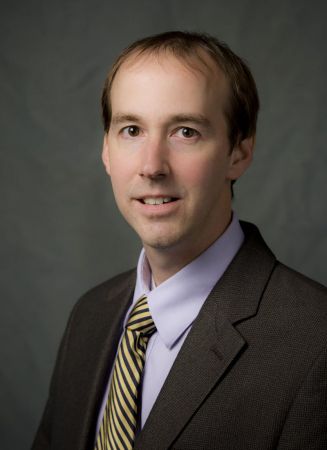
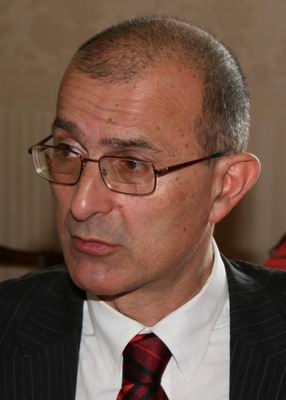
Matthias Hagen is Professor of Databases and Information Systems at Friedrich-Schiller-Universität Jena. His research focuses on information retrieval (query understanding, conversational search, comparative questions, known-item search, user simulation), natural language processing (clickbait, argumentation), and web data mining. He earned his Ph.D. from Friedrich-Schiller-Universität Jena with a thesis on algorithmic complexity, and previously led research groups at Bauhaus-Universität Weimar and Martin-Luther-Universität Halle-Wittenberg. His current work develops novel methods for retrieval-augmented generation evaluation, neural information retrieval efficiency, and user-centered search systems. Recent publications examine crowdsourcing for RAG evaluation, LLM-based relevance assessment, corpus subsampling techniques, and child-friendly web search evaluation frameworks. He contributes to open web search initiatives and develops tools like the TIREx Tracker for experimental reproducibility in IR research. Dr. Hagen serves on program committees for major conferences including SIGIR, ECIR, and ACL. His research group participates in competitive evaluations such as TREC, CLEF, and Touché. Recent projects explore axiomatic approaches to retrieval, argumentation systems, and the impact of search result quality on decision-making.
Andrei Popescu-Belis is a Professor of Computer Science at the Haute-École d'Ingénierie et de Gestion du Canton de Vaud (HEIG-VD / HES-SO) and an external Senior Lecturer and Researcher at EPFL's EDEE-ENS unit. His work focuses on human language technology and its applications to information access, with a strong emphasis on natural language processing and machine translation. His research addresses barriers to information access through technologies like: Quantity barrier: Information retrieval, web search, document classification, topic models, learning to rank, question answering, recommender systems Crosslingual barrier: Machine translation (history of the field, rule-based systems, statistical systems including phrase-based models) He has supervised numerous doctoral theses at EPFL, including students such as Li Yiming, Habibi Maryam, and Meyer Thomas. At EPFL, he teaches the doctoral course Human Language Technology: Applications to Information Access (EE-724), focusing on advanced techniques in this domain. Contact: andrei.popescu-belis@epfl.ch
Simone Bianco is an Associate Professor at the Department of Informatics, Systems and Communication (DISCo) of the University of Milano-Bicocca, Italy. His academic and research contributions span computer vision, artificial intelligence, machine learning, and optimization algorithms applied to multimodal and multimedia systems. His educational background includes a PhD in Computer Science (2010) and BSc/MSc degrees in Mathematics (2003/2006), both from the University of Milano-Bicocca. Bianco’s research focuses on color constancy, deep learning for video restoration, neural architecture search, and computational color imaging, with a strong emphasis on practical applications like biometric recognition, medical imaging, and environmental monitoring. The 15 most recent articles (2025–2020) highlight trends in computer vision, including uncertainty estimation in color constancy, portable material appearance modeling, temporal consistency in low-light videos, and advanced deep learning architectures for image and video processing. His work often integrates photogrammetry, sensor technology, and multimodal data analysis. Scientific accolades include recognition on Stanford University’s World Ranking Scientists List for achievements in artificial intelligence and image processing. Bianco also serves as R&D Manager for the University of Milano-Bicocca spin-off Imaging and Vision Solutions and contributes to international conferences and workshops.
Prof. Damian Trilling is a Full Professor at the Vrije Universiteit Amsterdam's Faculty of Social Sciences and Humanities in the Department of Communication, and concurrently holds the same rank at the Network Institute. He also serves as a Medewerker (employee) at the Universiteit van Amsterdam and Universitetet i Bergen since February 2024, reflecting his active interdisciplinary and international collaborations. His research focuses on computational methods applied to communication science, particularly exploring how algorithms and digital platforms shape media exposure, political behavior, and information dissemination. Key areas include analyzing selective exposure in recommender systems, measuring ethnic biases in news content, and studying the agenda-setting role of dark platforms. He emphasizes transparency in news algorithms and the ethical implications of data donation frameworks, often employing machine learning techniques like word embeddings and agent-based modeling to address these topics. Trilling's recent articles (2024-2025) reveal a strong focus on understanding algorithmic impacts across media ecosystems. They highlight concerns about filter bubbles, dark platform dynamics, and the interplay between user behavior and platform design. His work bridges communication theory with computer science, offering practical tools such as the INCA infrastructure for automated content analysis and the 3bij3 framework to study recommender systems' effects on news diversity. He teaches courses like Impact van journalistieke producten , Inleiding Media en Journalistiek , and collaborates internationally, as seen in the Introduction to Machine Learning for Text Analysis with Python at GESIS (Mannheim, Germany). His pedagogical contributions complement his research agenda, aiming to equip students with computational skills for modern communication analysis.
Amélie Marian is a Professor in the Department of Computer Science at Rutgers University. She maintains an active research program with numerous recent publications and research projects. Her office is located in CoRE 324 on the Busch Campus, and she can be reached at amelie.marian@rutgers.edu or by phone at (848) 445-8324. Dr. Marian's primary research interests focus on Data Management and Algorithms, with specific emphasis on Accountability and Transparency of Algorithms for Decision-Making, Explainable Rankings, Personal Information Management, Data Integration, and Data Corroboration. Her work bridges theoretical computer science with practical applications in decision systems, personal data management, and privacy-preserving technologies. She leads several major research initiatives including YourDigitalSelf (connecting, searching, and understanding personal digital traces), Explainable Rankings (toward transparent ranking functions), and Decentralized Collaborative Filtering (privacy-aware personal recommendations). Analyzing her recent publications reveals a clear trajectory toward increasingly important societal challenges in algorithmic transparency and accountability. Her work spans technical aspects of database systems and information retrieval while addressing critical social implications of algorithmic decision-making. The research shows strong interdisciplinary connections between computer science, social choice theory, human-computer interaction, and public policy. Microsoft Live Labs Award (2006) Google Research Awards (2008, 2010, 2012) NSF CAREER award (2009) NSF MCA Grant Award for Transparent and Accountable Decision Systems (2022) Multiple Google Research Awards for projects including Remembrance of Data Past and PERSEUS Dr. Marian actively mentors graduate students including PhD candidates Yehuda Gale and Shuchang Liu, and MS student Shuyuan Xu. Her research has been supported by significant grants including multiple NSF awards (NSF-SES 2218975, NSF-IIS 0844935, BCS-CDI-Type I 1027801), Google Research Awards, and Microsoft funding. She leads the YourDigitalSelf research group focused on personal information management systems and has established collaborative projects with researchers across multiple institutions.
Tao Yang is a Professor in the Department of Computer Science at the University of California, Santa Barbara, where he has been a faculty member since 1993. His research spans web search and mining, database and information systems, machine learning and data mining, parallel and distributed systems, and cloud computing. He serves as an active educator, teaching courses including CS170 Operating Systems (Spring 2024), CS291A Neural Information Retrieval (Fall 2024), and CS140 Parallel Computing (Winter 2025). PhD in Computer Science, Rutgers University ME in Artificial Intelligence, Zhejiang University MS in Computer Science, Rutgers University BS in Computer Science, Zhejiang University Professor Yang's research focuses on advancing the field of information retrieval with particular emphasis on neural approaches to search and ranking. His recent work explores neural document ranking, privacy-aware search systems, and versioned data search. He has led significant projects including Neptune clustering infrastructure, Sorrento self-organizing storage cluster, and TMPI for MPI execution optimization. His research bridges theoretical advances with practical implementations, particularly in scaling search architectures to handle billions of documents while maintaining relevancy, performance, and freshness. His publication record shows a clear evolution from foundational work in parallel and distributed systems toward contemporary research in neural information retrieval. Recent publications demonstrate expertise in optimizing both sparse and dense retrieval methods, with particular focus on efficiency improvements for multi-vector representations. His work consistently addresses real-world challenges in search scalability and privacy preservation. Faculty Research Award, Google Research Research Initiation Award, NSF (1994) UC Regents' Junior Faculty Award (1994) Computer Science Faculty Teacher Award (1995) CAREER Award, NSF (1997) Noble Jeeviant Award, AskJeeves (2002) Professor Yang has supervised numerous graduate students, many of whom have gone on to prominent positions at companies like Google, Apple, and Coursera, or academic positions at universities worldwide. His industry experience as Chief Scientist for Ask.com (2001-2010) and founding Chief Scientist for Teoma (2000-2001) has informed his research direction and provided valuable practical context for his academic work. He has served on program committees for major conferences including WWW, SIGIR, KDD, WSDM, CIKM, ECIR, and EMNLP. His research group maintains active projects in neural information retrieval, privacy-aware search, similarity computing, and parallel computing systems. The group collaborates closely with industry partners, particularly in the search technology space, and has developed systems that power major search engines serving over 100 million users.
Padmini Srinivasan is a Professor in the Department of Computer Science at the University of Iowa, affiliated with the College of Engineering. Her work bridges computer science, informatics, and social applications through advanced research in information retrieval, natural language processing, and data mining. Research Interests: Her research focuses on Information Retrieval & NLP , Text and Web Mining , Biomedical Text Mining , Privacy/Security & Censorship , Social Media Analytics (particularly in political and health belief contexts), and Crowdsourcing & Games . She leads the Text Retrieval & Text Mining Group , fostering interdisciplinary research involving machine learning, human computation, and real-world data challenges. Publication Trends: Her recent work appears in top-tier venues such as SIG-IR, KDD, WSDM, ICWSM, EMNLP, JASIST, and PLOS One, reflecting sustained contributions to both foundational and applied aspects of data science. These publications span topics from ranking optimization and query modeling to social dynamics, health informatics, and ethical AI. Scientific Awards: No specific awards were mentioned in the provided text. Advising and Grants: She has advised numerous graduate students including Osama Khalid, Ingroj Shrestha, Asad Mahmood, Jonathan Rusert, and others. While grant details are not listed, her publication record in premier venues suggests consistent external funding and collaborative research activity. Labs and Teams: She leads the Text Retrieval & Text Mining Group , which conducts cutting-edge research in search technologies, text analysis, and social media understanding, often integrating crowdsourcing and game-based methods for data collection and evaluation.
Dr. Enayat Rajabi is an Associate Professor of Business Analytics at the Shannon School of Business, Cape Breton University. Holding a PhD in Information and Knowledge Engineering from the University of Alcala (Spain) and a postdoctoral fellowship from Dalhousie University, his research focuses on the intersection of Machine Learning, Knowledge Graphs, and Data Analytics. He actively applies these technologies in healthcare, smart cities, and social media crisis response contexts. Education PhD in Information and Knowledge Engineering, University of Alcala (Spain) Postdoctoral Fellowship, Dalhousie University Research Interests His work bridges Knowledge Graphs with Machine Learning, emphasizing explainability and practical applications. Key areas include: Explainable AI for clinical decision-making Knowledge Graph applications in healthcare systems Social media analytics for emergency response Smart city data integration Generative modeling for tabular data Recent Publications Trends Recent articles highlight: Explainable AI in healthcare settings Industrial breakdown prediction systems Social media influencer detection Smart city infrastructure modeling Advanced data synthesis techniques Continued focus on Knowledge Graph applications
Gianna Del Corso is an Associate Professor at the Department of Computer Science, University of Pisa. Her research interests span Quantum Computing, Numerical Linear Algebra, and Spectral Analysis. She has advised PhD students in quantum computing topics such as quantum algorithms and machine learning. Her teaching includes courses on Numerical Calculus, Parallel Scientific Computing, and Introduction to Quantum Computing, delivered across multiple academic years at the University of Pisa. She has also contributed to advanced courses in the PhD program in Computer Science. Her research focuses on quantum algorithms for machine learning, quantum walks, eigenvalue computation of structured matrices, and spectral techniques for web analysis. Recent work includes applications of quantum k-means clustering and variance estimation subroutines. Her publications span quantum computing, numerical methods, and scientific citation models. Her articles highlight contributions to PageRank computation, matrix factorization for recommendation systems, and analysis of citation-based research evaluation models. She has actively engaged in international conferences, presenting on topics such as orthogonal iterations for nonlinear eigenvalue problems and quantum hitting time algorithms. Labs/Teams: Research conducted within the Department of Computer Science at the University of Pisa, focusing on quantum computing and numerical methods.
VG Vinod Vydiswaran is an Assistant Professor in the Department of Learning Health Sciences at the University of Michigan Medical School. He holds a PhD from the University of Illinois at Urbana-Champaign and an MTech from the Indian Institute of Technology Bombay. His research focuses on medical and health informatics, particularly analyzing medical information in clinical notes and online portals. Key areas include information trustworthiness, text mining, natural language processing, and machine learning applications in healthcare. Education: PhD, Computer Science, University of Illinois at Urbana-Champaign (2007-2012) MTech, Indian Institute of Technology Bombay (2002-2004) Bachelor of Engineering, Computer Engineering, Vishwakarma Institute of Technology, Pune (1998-2002) Research Interests: His work spans information trustworthiness, medical NLP, health informatics, and machine learning. Current emphasis is on analyzing medical information exchange between clinicians and patients via electronic health records and online platforms. Recent trends in publications include health vocabulary mining from community forums, trust propagation frameworks, and scenario-based news analysis. Awards: Best Paper Award at COMAD 2005 Second Prize in KDD Cup 2003 (Task 2) Outstanding Teaching Assistant Award (2011) CS Graduate Ambassador (2010-2011) Grants & Advising: Active in interdisciplinary collaborations involving health data mining. Taught SI 671 (Data Mining) in 2015. Served on program committees for AAAI, CIKM, AMIA, and others. Labs & Teams: Part of the Foreseer group at the School of Information, focusing on health informatics applications. Collaborates with Medical School faculty and industry partners like Microsoft Research and Palo Alto Research Center.
Fernando Diaz is an Associate Professor at Carnegie Mellon University's Language Technologies Institute within the School of Computer Science . His research spans Information Retrieval , Recommender Systems , and the Societal Impacts of Artificial Intelligence , with a focus on fairness, ethics, and evaluation metrics. Education : PhD in Computer Science from University of Massachusetts Amherst Research Interests include: Information Retrieval (web search, crisis informatics, search latency) Recommender Systems (multi-interest personalization, cultural content recommendation) AI Fairness (exposure fairness, data minimization, bias mitigation) Evaluation Methodology (metric robustness, contextual meta-evaluation) Human-AI Collaboration (mouse behavior analysis, preference-based evaluation) Retrieval-Augmented Generation (fair ranking, model synthesis) His recent work analyzes scaling laws , tip-of-the-tongue retrieval , and multisided fairness in AI systems. Diaz also explores the cultural implications of AI in music recommendation and content curation. Teaching : Leads courses on Search Engines and LTI Colloquium Advisees : Shaily Jagat Bhatt, Athiya Deviyani, Alfredo Gomez, Jessica Huynh, To Eun Kim
Professor Klaus Berberich is a faculty member at htw saar (Saarland University of Applied Sciences), where he serves as Professor in the Databases & Information Systems department within the Faculty of Engineering. He is the Laboratory manager of the software laboratory (SWL) and Chairman of the examination boards for Practical Computer Science, Communication Informatics and Production Informatics. His research focuses on Information Retrieval, Machine Learning, Data Mining, and Web Archives, with significant contributions to knowledge graphs, temporal information retrieval, and neural information retrieval models. Professor Berberich has developed innovative approaches for quantity extraction from web tables, structuring text into tables, and knowledge graph querying. His publication record shows a consistent trend toward increasingly sophisticated neural approaches to information retrieval, evolving from traditional temporal search techniques to modern deep learning models. Recent work demonstrates strong integration of knowledge graphs with neural information retrieval systems, particularly in handling quantities and temporal aspects of information. Professor Berberich has received numerous prestigious awards throughout his career: 2020: Test of Time Award, ECIR 2020 2018: Honorable Mention for Best Poster Award, WWW 2018 2017: Prominent Paper Award, Artificial Intelligence Journal 2014: Highly Commended Poster Presentation Award, IIiX 2014 2013: Honorable Mention for Best Paper Award, CIKM 2013 2011: Best Demo Award, WWW 2011 2009: Best Late-Breaking Result Award, WSDM 2009 As an active researcher and educator, Professor Berberich serves on numerous program committees for major conferences including WSDM, CIKM, SIGIR, and ICTIR. He has been a consistent reviewer for prestigious journals in the field and is a member of the executive committee of the Information Retrieval specialist group of the German Informatics Society. His teaching portfolio includes courses in Databases, Information Retrieval, Data Science, Machine Learning, and Deep Learning. Professor Berberich leads the software laboratory (SWL) at htw saar and has been instrumental in developing research infrastructure for knowledge-centric tasks, including the GYANI indexing infrastructure. His research group has made significant contributions to temporal information retrieval, particularly in the context of web archives and news archives.
Maria Maistro is a Tenure Track Assistant Professor at the Department of Computer Science, Faculty of Science, University of Copenhagen. Her research focuses on Information Retrieval (IR) with emphasis on evaluation, reproducibility, click log analysis, learning to rank, expert search, and machine learning applications to IR. She contributes to the AMAOS project aiming to advance expert search methodologies. PhD in Computer Science (IR) from University of Padua (2017) MSc in Mathematics (probability, stochastic methods) from University of Padua (2014) Maria's research addresses critical challenges in IR evaluation through stochastic modeling and user signal analysis. She investigates fairness-relevance tradeoffs in recommender systems, cross-cultural retrieval frameworks, and explainability techniques for language models and recommendation algorithms. Her work combines theoretical foundations with practical applications in healthcare records, insurance domains, and culinary contexts. Recent publications (2024–2025) demonstrate her expertise in: Retrieval-Augmented Generation (RAG) for cross-cultural adaptation Fairness evaluation in recommender systems EEG-based semantic relevance analysis Session-based recommendation explainability Language model pruning consistency Reproducibility frameworks for IR experiments Maria actively participates in academic activities through conference organization roles, including: Organizer, CENTRE@CLEF 2019 Organizer, CENTRE@NTCIR 2019 Organizer, CENTRE@CLEF 2018 Organizer, LEARNER 2017
Jeffrey D. Heflin is a Professor in the Department of Computer Science & Engineering at Lehigh University, leading the Semantic Web and Agent Technologies (SWAT) lab. His research focuses on semantic interoperability, ontology reasoning, and distributed knowledge systems. He is a pioneer in Semantic Web research, having authored the first Ph.D. dissertation on the topic. Heflin contributed to key Semantic Web languages like SHOE, DAML+OIL, and OWL, and developed the Lehigh University Benchmark (LUBM), a standard for evaluating large-scale Semantic Web systems. He holds a Ph.D., M.S., and B.S. in Computer Science from the University of Maryland and the College of William and Mary. His service includes editorial roles for the Journal of Web Semantics and organizing ISWC conferences, including co-chairing ISWC 2012. He received the 2004 NSF CAREER Award for his work on distributed ontology systems. Heflin's research addresses challenges in data discovery, table search, and neural-symbolic integration. His lab explores scalable solutions for semantic integration, including projects like the 'Google for research data' initiative and advancements in contextual tag clouds for linked data exploration.
Veljko Milutinovic is a Full Professor at the School of Electrical Engineering, University of Belgrade since 1990. He has also held academic positions at Purdue University (1982-1989) and consulted globally for institutions like IEEE and ACM. Current role: Computer Area Director, teaching VLSI, Data Mining, and E-Business Previous roles: Tenure Track Assistant Professor at Purdue University International collaborations: EU FP7 projects, Raiffeisen Bank, Wall Street Journal His research spans microprocessor architecture , VLSI design , data mining , and semantic web , focusing on energy-efficient architectures and e-business infrastructure. He pioneered DARPA's 200MHz GaAs RISC microprocessor and 4096-node systolic arrays. Recent work trends include: Technical and semantic interoperability in e-government Customer satisfaction accelerators in e-commerce 3D semantic web visualization Data mining for inverse engineering Academic-industry co-design methods Global university collaboration frameworks Scientific awards include: IEEE Life Fellow (2003) Foreign Member, Montenegrin Academy (2018) IPSI Awards (2007-2010) for eGov projects Best Method papers ranked #1 in Google search Supervised PhD students at Purdue, Belgrade, and Valencia Universities, with significant contributions to cache coherence, GaAs processors, and mobile network security. His publications (over 100 SCI papers) have been cited over 4000 times on Google Scholar.