Jose Manuel Hermosilla Rodriguez is an Associate Professor at the Department of Education and Social Psychology, Pablo de Olavide University, Spain. His work focuses on educational technology, digital competence, and social education within the European Higher Education Area (EHEA) framework. Current affiliation: Pablo de Olavide University Research areas: Educational Technology, Digital Competence, Social Education PhD: Complutense University of Madrid, 2007 (Thesis: Impact evaluation of continuing education programs) His research explores the integration of Web 2.0 tools (e.g., blogs, infographics, videos) in higher education, with a focus on cognitive requalification, digital citizenship, and pandemic-era adaptations. He emphasizes competency-based evaluation through e-portfolios and addresses challenges like technology addiction and digital inequality. Recent publications analyze microlearning materials, youth participation in cybersociety, and the role of ICT in inclusive citizenship education aligned with the UN's Agenda 2030. His work combines practical teaching innovations (e.g., Digital Storytelling, collaborative methodologies) with critical evaluations of educational policies and technologies.
Miren Aurkene Alzua Sorzabal is a Professor at Nebrija University and holds a dual affiliation with the University of Deusto . As Director of the Telefónica-Nebrija Chair of Tourism Intelligence and Principal Researcher of the Smarttour-INN Research Group on Smart Tourism and Innovation, she bridges academia and industry through her leadership roles at CICtourGUNE and co-founding Lurmetrika Labs , a data-driven tourism company. Her research focuses on Tourism Digital Business Ecosystems Carbon Neutrality in Tourism Smart Destinations Big Data and Advanced Analytics She has authored over 65 publications and led 21+ competitive projects, including National RETOS Program initiatives. Her recent articles explore environmental sustainability frameworks (e.g., RNC-PEB model), digital transformation in rural and urban tourism, and the interplay between low-emission zones and urban development. These works emphasize Tourism , Environmental Science , and Digital Innovation . She contributes to academic discourse as a member of the Editorial Review Board of the Journal of Information Technology & Tourism and has coordinated programs like the Erasmus Mundus Master of Arts in Euroculture .
Eva María Llorens Simón is an Assistant Professor and Researcher at the University of Alicante's Department of English Philology within the Faculty of Philosophy and Letters. She serves as Academic Secretary at IULMA (Interuniversity Institute of Applied Modern Languages), Mobility Coordinator for the English Studies Degree, and Director of the Radio Frequency Motions Program. Her academic background includes a PhD in Philosophy and Letters (Modern Languages and Literatures) from the University of Alicante (2022), a Bachelor's in Translation and Interpreting (English), and a CAP teaching certification. Her research focuses on corpus linguistics and cognitive linguistics , with specialized expertise in emotional persuasion within tourism promotion and gender-sensitive approaches to biomedical discourse. She investigates metaphorical language patterns in women's health communication and cross-linguistic analysis of tourism marketing across English and Spanish contexts. Her work emphasizes empathy triggers, sensory language, and cultural appropriateness in specialized domains. Analysis of her recent publications reveals strong thematic clusters in tourism discourse analysis (emotional persuasion, cross-linguistic patterns) and biomedical communication (gender-sensitive terminology, metaphor deconstruction). Her 2023-2024 work shows increased focus on inclusive language in women's health, corpus-based terminography, and deconstruction of gender stereotypes in medical contexts. She has supervised 26 undergraduate final projects in the past five years across Tourism, English Studies, and Translation degrees. Her research projects include: TED2021-130040B-C21: Digitalización, tratamiento y publicación en línea de recursos terminológicos multilingües abiertos con perspectiva de género (2022-2024) VIGROB24-040: GRUPO DE INVESTIGACIÓN: Inglés profesional y académico (IPA) (2025) GRE16-18: Plataforma para la docencia de la traducción y la conexión con el mundo profesional (2017-2019) She leads research within the Professional and Academic English (IPA) group and collaborates with the terminology accreditation group TETRACOLA. Her work at IULMA involves interdisciplinary approaches to applied modern languages, with current projects developing gender-sensitive bilingual terminologies for biomedical discourse.
Mari Carmen Suárez-Figueroa is an Associate Professor at the Artificial Intelligence Department, School of Computer Science, Universidad Politécnica de Madrid (UPM). She is also a senior researcher at the Ontology Engineering Group (OEG). Her research focuses on Ontology Engineering, Semantic Web, and Linked Data, with emphasis on ontology networks, evaluation, and design patterns. She holds a PhD in Artificial Intelligence from UPM (2010) and has been recognized with an Outstanding Award from UPM's Graduate Doctorate Commission. Her work includes contributions to methodologies like the NeOn Framework, tools such as OOPS! for ontology validation, and participation in projects like NeOn, SEEMP, and Ready4SmartCities. She has organized conferences and workshops, including TKE 2012 and WOP 2012. Over 88+ publications span journals like International Journal of Information Technology & Decision Making and Data & Knowledge Engineering . Key achievements include co-editing Ontology Engineering in a Networked World (Springer, 2012) and leading interdisciplinary initiatives on inclusive consumer testing and semantic metadata standards. Ongoing projects address social inclusion via machine learning and educational service-learning programs.
José Santiago Fernández Vázquez serves as a Full Professor in the Department of Modern Philology at the University of Alcalá, specializing in English-language literature and cultural studies. His academic portfolio spans both teaching and administrative responsibilities across multiple degree programs including English Studies, Hispanic Studies, and Translation. His research interests center on postcolonial literature, ecolinguistics, and critical discourse analysis, with particular emphasis on transcultural narratives and environmental communication. Recent scholarly output reveals a strategic pivot from traditional postcolonial literary analysis toward multimodal ecolinguistic studies examining sustainability discourse in digital spaces. Analysis of his 15 most recent publications demonstrates an evolving trajectory from foundational postcolonial literary criticism (2000-2015) toward contemporary interdisciplinary environmental communication research (2020-2023), reflecting broader academic shifts toward sustainability studies while maintaining postcolonial theoretical frameworks. His work consistently applies critical discourse analysis to examine power structures in both literary and digital contexts. Fernández Vázquez actively participates in the American Interdisciplinary Cultural Studies research group, focusing on Spanish presence in North America, US-geopolitical relations, and American comic studies. His collaborative projects frequently address educational innovation, particularly regarding sustainability competencies and transcultural awareness in university curricula. His teaching responsibilities include History of English-Speaking Countries and Postcolonial Literatures across multiple undergraduate programs, demonstrating institutional commitment to decolonial perspectives in language education. Administrative contributions include directing orientation programs for secondary school students and participating in university sustainability initiatives through the UI GreenMetric framework.
Cynthia H. Chuang, MD, MSc, serves as Professor of Medicine and Public Health Sciences at Pennsylvania State University's College of Medicine and Penn State Health Milton S. Hershey Medical Center. She holds concurrent professorships in the Department of Public Health Sciences and Department of Obstetrics and Gynecology, and serves as Chief of the Division of General Internal Medicine. Her leadership encompasses academic physicians and scientists developing innovative educational programs and research initiatives, including critical patient care responses during the COVID-19 pandemic. Dr. Chuang's research focuses on reproductive wellness and contraceptive policy, with particular emphasis on how state and federal policies affect women's access to care. Her work consistently addresses preventive care frameworks and evidence generation for reproductive health interventions. As a physician-scientist and general internist, she bridges clinical practice with health services research to improve primary care delivery for women. Analysis of her 15 most recent publications reveals strong thematic continuity in reproductive health policy research, with increasing emphasis on post-pandemic healthcare delivery, contraceptive coverage mandates, and equity-focused implementation science. Her work demonstrates methodological diversity spanning randomized controlled trials, policy analyses, and large-scale observational studies. Key scientific recognition includes the 2014 Outstanding Collaborative Research Team award. Her research portfolio demonstrates sustained NIH, PCORI, and AHRQ funding, particularly for projects examining contraceptive coverage policies and reproductive life planning interventions. Dr. Chuang has led significant research collaborations including the MyNewOptions study (PCORI-funded), which tested web-based reproductive life planning tools for contraceptive decision-making among 984 privately insured Pennsylvania women. Her current R01 project examines how state and federal contraceptive coverage policies affect women's access to care, reflecting ongoing commitment to policy-relevant research.
Javier Verdu Mula is a Professor at the Departament d'Arquitectura de Computadors (Universitat Politècnica de Catalunya - UPC) and a key researcher at the CRAAX - Centre de Recerca d'Arquitectures Avançades de Xarxes . His work focuses on computer architecture, parallel processing, and networking systems. Fields of Research include RISC-V virtualization, multithreaded processor optimization, and performance analysis of stateful networking applications. Scientific Awards include the BDigital Global Congress (2015) and Wayra Barcelona (2012) recognitions. Collaborations span institutions like Barcelona Supercomputing Center and researchers such as Manuel Alejandro Pajuelo, Mateo Valero Cortes, and Mario Nemirovsky. His recent publications address RISC-V hypervisor extensions, deep packet processing in parallel architectures, and statistical thread assignment models. He also holds patents in hardware virtualization and resource control systems.
Ana Isabel Rodriguez Vazquez is a Professor at the University of Santiago de Compostela's Department of Communication Sciences (Faculty of Communication Sciences), affiliated with the Institute of Studies and Development of Galicia (IDEGA). She holds a doctorate from the same university (2001) on local television news in Galicia, advised by Dr. Xosé Soengas Pérez. Education: Ph.D. in Communication Sciences, University of Santiago de Compostela (2001) Research Interests: Audiovisual Communication Dynamics Impact of Mobile Media on Traditional Industries Journalism Innovation in Digital Ecosystems Social Media's Role in Education & Identity Public Service Broadcasting Strategies Cultural Policy & Minority Languages in Media Recent Articles Focus: Adaptation of digital native media to audience needs Self-destructive content in social media journalism Co-creation strategies in newsrooms European public service broadcaster programming Galician language visibility in cinema Awards: No specific awards listed, but her extensive publications indicate recognition in media studies. Grants & Projects: Project: Hacia el Espacio Digital Europeo (2012) Audiovisual content analysis system for Galician media Labs/Teams: Audiovisual Studies Research Group at USC Collaborations with IDEGA
M. Rosario Lacalle Zalduendo is a Professor at the Department of Journalism and Communication Studies and affiliated with the Sports Research Institute at Universitat Autònoma de Barcelona. She holds a Ph.D. (1990) and degrees in Philosophy (1984) and Liberal Arts (1983) from the same institution. Her research focuses on media studies, gender representation, and digital culture, with a particular emphasis on online misogyny, television fiction, and web 2.0 interactions. Key research projects include analyzing hate speech in sports, politics, and bullfighting contexts (PID2019-105613GB-C31), investigating the social construction of women in television and digital platforms (2013-2016), and studying youth identity formation through TV and new technologies (2011-2012). She has led EU-funded projects like INsPIrE (2016-2018) bridging university and non-formal education. Her publications span 30+ years with over 130 research outputs, including studies on zoomorphic insults in misogynistic discourse, antifeminist rhetoric in Spain, and television seriality. She actively supervises PhD students and contributes to UN Sustainable Development Goals related to education and gender equality. Collaborations include international partnerships with institutions like Thomas More University (Antwerp) and interdisciplinary teams across media studies, sociology, and digital humanities.
Ana Edelmira Pasarella Sanchez is a Professor in the Department of Computer Sciences at the Faculty of Mathematics and Statistics, Universitat Politècnica de Catalunya (UPC). She is a member of the ALBCOM research group, focusing on algorithms, bioinformatics, complexity, and formal methods. Her work bridges theoretical computer science with practical data systems. PhD in Computer Science, Universitat Politècnica de Catalunya Her research centers on logic programming, knowledge representation, and graph databases. She explores how formal methods can enhance data processing, particularly through dynamic pipelines and trust-aware access control. Her work integrates Datalog, semantic reasoning, and big data frameworks to improve scalability and correctness in knowledge systems. She has contributed to foundational semantics of logic programs and their applications in security and data integration. Her recent publications highlight a trend toward efficient, adaptive data processing systems, especially for graph analytics and knowledge graphs. She compares paradigms like MapReduce and pipelining, advocating for dynamic, functional approaches to big data. Her work increasingly addresses real-world challenges in federated knowledge graphs and access control. SACMAT 2017 Best Paper Award Pasarella has been involved in multiple competitive R&D+i projects, such as 'Modelos y Técnicas para el Procesamiento de Información a Gran Escala' and 'Modelos y métodos basados en grafos para la computación en gran escala,' indicating sustained funding and collaborative leadership. She advises on research direction within her group and mentors through collaborative publications. She has served on the scientific committee of the Latin American Informatics Conference (CLEI), contributing to the broader academic community. She is part of the ALBCOM research group and collaborates extensively with researchers like Fernando Orejas, Maria-Esther Vidal, and Elvira Pino, working on logic-based frameworks for data and security systems.
Dr. Pablo Sánchez Pérez is an Assistant Professor (Part-Time) at the Universidad Pontificia Comillas, specifically within the School of Engineering (ICAI), where he teaches core computer science subjects including Programming, Databases, Algorithms and Data Structures, and Fundamentals of Operating Systems. He earned his PhD in Computer Engineering and Telecommunications from Universidad Autónoma de Madrid (UAM) in 2021, where he was affiliated with the Information Retrieval Group. His current research focuses on recommender systems, machine learning, and information retrieval, with an emphasis on contextual factors such as time, sequence, and user behavior. Research Interests: His primary research areas include Machine Learning , Recommender Systems , Information Retrieval , and Artificial Intelligence . He investigates how contextual information—like temporal patterns and sequential behaviors—can enhance the accuracy and fairness of recommendation algorithms, particularly in tourism and location-based settings. His work also addresses critical issues such as bias mitigation, sustainability in tourism recommendations, and the evaluation of novelty and diversity in recommendations. The recent publications of Dr. Sánchez Pérez demonstrate a strong trend in advancing location-based and tourism-oriented recommender systems , with increasing attention to ethical AI , fairness , and sustainability . His work spans both theoretical contributions—such as new evaluation metrics—and practical applications, including data augmentation and reranking strategies. The interdisciplinary nature of his research connects computer science with tourism informatics and social impact. Scientific Awards: Accésit to Best Scientific Publication in Recommender Systems (2023–2024), ELIGE-IA Premio CAEPIA 2024 for 2nd best paper at SISREC 2024 Outstanding Reviewer Award, RecSys 2023 Honorable Distinction for Best Doctoral Thesis, UAM, 2022 Dr. Sánchez Pérez has been actively involved in academic service, including advising and peer review. He has served as a reviewer for top journals such as IEEE Communications Magazine , User Modeling and User-Adapted Interaction , and Information Processing & Management . He has also contributed to major conferences as a member of technical program committees (e.g., RecSys, RecTour, KaRS) and as Web Chair for HT’2022. While no formal grants are listed, his research has been disseminated through numerous publications and invited seminars, indicating strong scholarly engagement. Labs and Research Teams: He was previously affiliated with the Information Retrieval Group at Universidad Autónoma de Madrid during his PhD and postdoctoral research. Currently, he is associated with the Instituto de Investigación Tecnológica (IIT) at Universidad Pontificia Comillas, where he continues his research and delivers invited seminars.
Dr. José María Alonso Moral is an Associate Professor at the Department of Electronics and Computation of CiTIUS-USC (Research Center for Intelligent Technologies) at the University of Santiago de Compostela. With a PhD in Telecommunication Engineering from Universidad Politécnica de Madrid (2007) and a 'Doctor Europeus' distinction, he has held prestigious positions including Ramón y Cajal researcher (2018-2022), Juan de la Cierva postdoctoral researcher (2012), and served as President of the European Society for Fuzzy Logic and Technology (EUSFLAT) and Vice-Chair of IEEE Computational Intelligence Society's Explainable Fuzzy Systems Task Force. IEEE Senior Member Associate Editor: IEEE Computational Intelligence Magazine (Q1) and International Journal of Approximate Reasoning (Q2) Board Member: ACL SIGGEN (2019-2022) His research focuses on Explainable AI and Trustworthy Artificial Intelligence , particularly through interpretable fuzzy systems and natural language generation. Key contributions include the ExpliClas web service for decision tree explanations and JFML library for IEEE 1855-2016 fuzzy system modeling. Recent publications examine counterfactual explanations, fuzzy temporal constraint networks, and feature attribution faithfulness metrics. He leads projects like TRUST (Trustworthy AI) and ReproHum (NLP Evaluation Reproducibility), emphasizing human-centered AI design and cross-disciplinary applications in healthcare and education. As an educator, he developed high school workshops on explainable AI fundamentals through CiTIUS-USC's STEM outreach program. His technical work includes developing explainable classifiers for Alzheimer's disease progression and implementing fuzzy logic systems in embedded platforms like Arduino and Raspberry Pi.
Luis Sanchez Fernandez is a Full Professor at the Department of Telematics Engineering, Carlos III University of Madrid. His research focuses span Smart Cities, Semantic Web, and Distributed Systems. Contact information includes email luis.sanchez@uc3m.es and office location 4.1.F08 in Leganés. His research program integrates Blockchain Governance , Urban Mobility Analysis , and Complex Systems Modeling . Recent work examines approval-based voting mechanisms in decentralized networks and fractional transport equations for physical simulations. Publications demonstrate a strong emphasis on fair algorithm design for societal applications. Key article themes show convergence of Smart City Data Integration Multiwinner Election Algorithms Cellular Automaton Dynamics Semantic Annotation Frameworks As Deputy Director of Teaching Affairs, he leads curriculum innovation in Telematics Engineering. His educational background includes a Doctorate from Universidad de Salamanca, focusing on Wikipedia as a teaching resource in higher education.
Joan Navarro Martín is a Professor at the La Salle School of Engineering (Universitat Ramon Llull, Barcelona). He is a member of the Research Group on Smart Society , focusing on interdisciplinary domains such as Internet of Things (IoT) , Smart Grids , Cloud and Edge Computing , and Virtual Learning Environments . Key Affiliations: La Salle School of Engineering, Department of Engineering Research Group on Smart Society (Principal Investigator in multiple projects) European Commission-funded initiatives (e.g., EXCEL4HOUSING4.0, WeB-Nimbus) Research interests span wireless communication systems, antenna design for IoT, data-driven urban infrastructure optimization, educational technology for undergraduate tutoring, and smart society frameworks. His work bridges engineering , data science , and societal impact , with a focus on sustainability and industry-academia collaboration. Recent publications highlight innovations in antenna boosters for IoT efficiency, quantum trust models , and data analytics for urban mobility. Projects like PLANET4 and ADAPTIOT emphasize Industry 4.0 and adaptive architectures . Collaborations include partnerships with institutions across Europe (Albania, Western Balkans) and co-authorships with researchers like Jordi Pijoan Vidal , Xavier Solé Beteta , and Anna Carreras Coch .
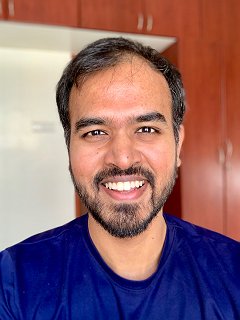
KC Sivaramakrishnan serves as an Adjunct Professor at the Indian Institute of Technology, Madras and CTO of Tarides, bridging academic research and industrial application in programming languages and systems. His dual roles reflect a commitment to advancing both theoretical foundations and practical implementations in computer science. His research spans Functional Programming, Language Runtimes, Concurrency/Parallelism/Distribution, and Weak Memory/Consistency models, with particular focus on the OCaml programming language. Sivaramakrishnan's work addresses fundamental challenges in concurrent and distributed systems through innovative language design and runtime techniques. Analysis of his publication record reveals a consistent trajectory from foundational work on effect handlers and concurrency models (2015-2020) to more recent contributions in verified systems, multicore programming, and distributed data types (2021-2025). His research demonstrates strong continuity in exploring how programming language principles can solve real-world systems challenges. Sivaramakrishnan actively contributes to the academic community through program committee memberships across major PL conferences including POPL, PLDI, ICFP, and SPLASH. His service spans multiple roles from committee member to track chair and diversity co-chair. As CTO of Tarides, he leads industrial efforts in OCaml compiler development and systems programming, maintaining a productive synergy between his academic research and industry leadership. His work with the OCaml community includes significant contributions to multicore support and effect handler implementations.