Ilaria Greco is an Associate Professor at Università del Sannio within the Department of Law, Economics, Management and Quantitative Methods (DEMM) . Her research focuses on Economic and Political Geography , with particular emphasis on tourism development, smart city models, rural regeneration, and maritime trade dynamics. Research Trends : Analysis of Food Festivals (2024) and their role in Irpinia , digital tourism strategies (2021), future energy-territory relationships (2020), smart city-region transitions (2017), maritime geopolitics (2017), film tourism (2016), climate change resilience (2016), Indian economic policies (2015), rural-urban balance (2014), thermal tourism (2014), network geography (2013), and rural hospitality models (2010). Key Collaborations : Frequently co-authors with Angela Cresta , exploring topics like Tourism 2.0 , Resilient Landscapes , and Smart Specialization Strategies .
Hongxin Hu is a Professor and Associate Chair in the Department of Computer Science and Engineering at the University at Buffalo, State University of New York (SUNY). His research spans security, networking, and machine learning, with publications across top conferences including security (S&P, CCS, USENIX Security, and NDSS), networking (SIGCOMM and NSDI), machine learning (NeurIPS, ICML, and EMNLP), and human-computer interaction (CHI and CSCW). His work has been funded by NSF (SaTC, CNS, IIS, OAC, SOC), USDOT, VMware, Amazon, Google, and Dell. Dr. Hu earned his PhD in Computer Science and Engineering from Arizona State University in 2012. His academic journey has led him to become a prominent researcher in cybersecurity with a strong publication record and significant research impact. Dr. Hu's research interests encompass a wide range of topics at the intersection of security, networking, and artificial intelligence. His work focuses on Emerging Network Technologies and Security (5G/Future-G, NFV, SDN, Edge computing), Machine Learning for Security and Privacy , Security and Privacy in IoT and Cyber-Physical Systems , and AI for Social Good (addressing online abuse, unsafe children's games, and cyberbullying). His interdisciplinary approach has enabled him to tackle complex security challenges through innovative solutions that combine networking expertise with machine learning techniques. His recent publications demonstrate a strong trend toward applying large language models and advanced machine learning techniques to security challenges, particularly in content moderation, vulnerability detection, and privacy protection. The research spans multiple domains including voice assistant security, IoT security, network security, and social media safety, showing a consistent pattern of addressing real-world security problems with cutting-edge technical approaches. IEEE Big Data Security Senior Research Award (2025) ACM SACMAT Test-of-Time Award (2024) NSF CAREER Award (2019) Multiple Best Paper Awards from ACM ASIACCS (2022), ACSAC (2020), IEEE ICC (2020), and ACM SIGCSE (2018) Amazon Faculty Research Award (2022) First Place Award in ACM SIGCOMM 2018 Student Research Competition Dr. Hu has successfully advised multiple PhD students, including Nishant Vishwamitra who joined UT San Antonio as a tenure-track Assistant Professor. His research has been generously funded by major agencies and industry partners. As an active member of the academic community, he serves as Associate Editor for IEEE Transactions on Dependable and Secure Computing and Computers & Security, and has held numerous leadership roles in major security conferences including TPC Co-Chair for ASONAM 2025 and IWSPA 2024/2025. Dr. Hu leads a vibrant research group that has produced significant contributions in network security function virtualization, intrusion detection systems, and privacy-preserving technologies. Current projects include developing LLM-assisted vulnerability detection systems, defenses against jailbreak attacks on large language models, and security mechanisms for emerging networking technologies. His team's work on IoT security, voice assistant applications, and online content moderation has received wide recognition and press coverage.
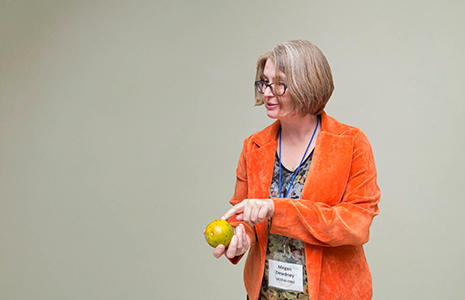
Dr. Megan Dewdney is an Associate Professor and Extension Specialist in the Department of Plant Pathology at the University of Florida's Citrus Research and Education Center. Her extension work focuses on integrated management strategies for citrus canker, citrus greening (huanglongbing), and fungal pathogens, while her research investigates the biology of bacterial and fungal pathogens to develop enhanced disease control methods. She holds a Ph.D. and leads active research programs in citrus pathology. Her primary research interests include: Integrated disease management systems for citrus pathogens Biology and epidemiology of fungal and bacterial diseases in citrus Development of molecular detection tools for plant pathogens Implementation of precision agriculture technologies for disease forecasting Physiological impacts of huanglongbing on citrus trees Analysis of her recent publications reveals strong emphasis on: Advanced detection methods using hyperspectral imaging and machine learning Genomic studies of fungal pathogens like Phyllosticta citricarpa Development of web-based disease advisory systems for growers Physiological management of huanglongbing-affected trees Molecular characterization of citrus pathogens She currently advises doctoral student Eva Mulandesa and collaborates with postdoctoral researcher Pamela Suellen. Her laboratory team includes research technicians, a lab manager, and program support staff focused on citrus pathology research.
Xin Wang is a Professor at Fudan University's School of Computer Science, specifically within the Department of Communication Science and Engineering and affiliated with the State Key Laboratory of ASIC and System in Shanghai, China. With 185 publications spanning two decades (2003-2025), Wang maintains an exceptionally active research profile, particularly evident in recent high-output years including 22 publications in 2019, 19 in 2021, and 13 in 2024. The research portfolio demonstrates deep collaboration networks, most notably with Yang Chen (45 co-authored papers), Yangfan Zhou, and Qingyuan Gong. Wang's research spans multiple critical areas in computer science, with significant contributions to networking systems (particularly CDN optimization, HTTP/3 implementation, and IPv6 infrastructure), software engineering (focusing on work rhythms, testing methodologies, and GUI analysis), mobile applications (including healthcare implementations and accessibility features), and security (especially account security and fraud detection in e-commerce). The interdisciplinary nature of the work is evident through applications in healthcare, e-commerce, campus safety, and IoT systems. Analysis of recent publications (2023-2025) reveals a strong trend toward practical system implementations addressing real-world challenges. The research demonstrates a consistent pattern of moving from theoretical foundations to deployable solutions, with particular emphasis on optimizing performance in networking systems, enhancing security in digital platforms, and improving user experience across diverse application domains. The work frequently incorporates machine learning techniques to solve complex system problems while maintaining practical applicability. While specific grant information isn't detailed in the publication records, the extensive collaboration network spanning multiple institutions in China and internationally suggests substantial research funding support. The consistent publication output across top venues including IEEE/ACM Transactions, INFOCOM, SIGCOMM, and ICSE indicates sustained research productivity and impact.
Jun Yang is the Knut Schmidt Nielsen Distinguished Professor of Computer Science at Duke University's Trinity College of Arts & Sciences, with current appointments since 2014. He's also an Associate of the Duke Initiative for Science & Society. Education: Ph.D. and M.S. from Stanford University (2001), B.A. from University of California, Berkeley (1995) His research focuses on Databases and Data-Intensive Computing , particularly Computational Journalism to preserve public interest journalism through computing. He co-directs the Duke Database Research Group within the Systems and Architecture Group. Recent publications include work on SQL query debugging (Qr-Hint system), relational query education tools, and vaccine misinformation taxonomy. NSF grants (2024-2027, 2022-2026, 2020-2024) support his research, along with funding from Knight Foundation, NIH, Google, HP, and IBM. Scientific Awards: NSF III: Medium Responsive Optimization Grant, NSF III: Medium Ask the Experts Grant, NSF IIS: Small Grant, and multiple industry grants He maintains strong connections with No.7 High School of Chengdu alumni network, having created its web-based alumni system in the 1990s. His work combines technical innovation with societal impact applications.
Leah Shafer is an Associate Professor of Media and Society at Hobart and William Smith Colleges, where she has been a faculty member since 2008. She earned her A.B., M.A., and Ph.D. from Cornell University, establishing a strong academic foundation in media and cultural studies. She is affiliated with the Media and Society Program, contributing to interdisciplinary scholarship and pedagogy. Joined faculty: 2008 Academic rank: Associate Professor Program: Media and Society Her research and teaching focus on critical media analysis, with core interests in television history, advertising, visual culture, digital media, film aesthetics, interactive documentary, and media literacy. She emphasizes historical context and creative production in her pedagogy, designing courses to challenge students’ perceptions of popular culture. Leah Shafer’s recent publications reflect a strong engagement with digital culture, feminist media, and pedagogical innovation. Her work spans experimental documentaries, peer-reviewed journal articles, and book chapters, appearing in outlets such as Film Criticism , Flow , Cinema Journal , and Routledge Handbook of Medicine and Media . Her scholarship often intersects with digital humanities, exploring how new media forms reshape cultural expression and learning. Current project: Co-editing Fifty Years of Women Media Makers: from New Hollywood to YouTube Professional affiliations: Society for Cinema and Media Studies, National Association for Media Literacy Education She is also a practicing filmmaker and media artist, producing experimental documentaries and video essays that have been exhibited at festivals and cultural institutions, including the Finger Lakes Environmental Film Festival and the National Women’s Rights Historical Park. Her creative work often centers on feminist themes and historical memory, particularly around the Seneca Falls Convention.
Professor Tama Leaver is a leading academic in Internet Studies at Curtin University, focusing on children's digital rights, AI ethics, and platform regulation. He holds the position of Professor in the School of Media, Creative Arts and Social Inquiry within the Faculty of Humanities. His research addresses issues such as data privacy, social media governance, and the impact of technologies like AI on youth. Leaver has earned multiple awards, including the Australian Award for Teaching Excellence (2012) and the Humanities Book of the Year (2021). He actively supervises over 15 PhD/Master’s students, mentoring research on topics like virtual influencers, digital childhood, and vaping discourse. His work spans 200+ publications, including co-authored books like *Instagram: Visual Social Media Cultures* (2020) and *Gaming Disability* (2023). He is a former President of the Association of Internet Researchers (AoIR) and contributes to policy discussions through the ARC Centre of Excellence for the Digital Child. Leaver’s research projects include investigations into digital health, gaming cultures, and the regulation of major platforms. He also explores emerging technologies’ societal impacts, such as generative AI’s challenges to childhood and privacy.
Dr. Noam Libeskind is a faculty member and group head of the Cosmography and Large-Scale Structure group at the Leibniz-Institut für Astrophysik Potsdam (AIP). He specializes in mapping the Universe's large-scale structure and using these maps to simulate the local environment. His work bridges observational and theoretical astrophysics, focusing on galaxy formation, the Local Group dynamics, and cosmographic reconstructions. He has held professorial positions, including at the Institute of Two Infinities (Université de Lyon-1) until 2021. Current projects include leading trans-national initiatives on cosmic web impacts (with Purple Mountain Observatory) and gravity tests via Local Group simulations (with Polish Academy of Sciences). Libeskind’s research interests include satellite galaxies, matter distribution reconstructions, and alignments of galaxies relative to their environments. His work has been featured in Scientific American and Sky & Telescope , highlighting contributions such as cosmography of the Local Universe and dark matter studies. Key collaborations span institutions like Hebrew University, Shanghai Astronomical Observatory, and Durham University. He leads projects like CLUES (Constrained Local UniversE Simulation) and HESTIA (High-resolution Environmental Simulations) to model the Local Universe. His team’s efforts have been recognized, including a 2024 municipal award for organizing impactful scientific meetings. Publications span cosmological simulations, galactic dynamics, and observational cosmology, with a focus on advancing understanding of the Milky Way, Andromeda, and their surrounding structures.
Mai Elshehaly is a Lecturer in Computer Science at City, University of London, where she is affiliated with the giCentre in the Department of Computer Science, School of Science and Technology. She focuses on designing, developing, and evaluating visualisation solutions that support data-driven decision-making, particularly for non-technical users in healthcare and public sectors. Her work involves close collaboration with healthcare practitioners, local authorities, and schools to co-design tools grounded in real-world needs. Her research interests center on information visualisation and human-computer interaction , with a strong emphasis on user-centered and co-design methodologies . She investigates how lived experiences of stakeholders can shape visual analytics systems, especially in healthcare quality improvement, population health management, and digital transformation initiatives. Her approach bridges technical innovation with social impact, promoting equitable access to data insights. Her recent publications highlight trends in narrative visualization, integration of lived experience with electronic records (e.g., CLEVER framework), and adaptable dashboards for healthcare (QualDash). These works are published in top venues such as IEEE VIS, IEEE TVCG, and Computer Graphics Forum, reflecting a consistent focus on usability, evaluation, and real-world deployment of visual analytics tools. Department-level achievement award during PhD at Virginia Tech University-level achievement award during PhD at Virginia Tech Mai has secured research funding from the Bradford Institute for Health Research (BIHR), NIHR, and internal university sources including EPSRC doctoral training funds. She has led and contributed to interdisciplinary projects such as the Digital Makers Programme and Connected Bradford, which involve partnerships across academia, healthcare, and local government. While no formal PhD students are listed, she mentors through collaborative research and advisory roles. She is actively involved in applied research through leadership positions: Co-Director of the Digital Makers Programme, Deputy Director of the Workforce Observatory for West Yorkshire, member of the advisory board at the Wolfson Centre for Applied Health Research, and cross-theme visualisation expert at the Yorkshire and Humber Patient Safety Research Centre. These roles underscore her commitment to translating research into practice within health and education systems.
Magdalini Eirinaki is a Professor and Academic Program Coordinator for the MS in Artificial Intelligence at San José State University's Charles W. Davidson College of Engineering. With a career spanning two decades, her work bridges recommender systems , machine learning , and smart city applications . PhD in Computer Science (2006), Athens University of Economics and Business MSc in Advanced Computing (2000), Imperial College London BSc in Computer Science (1998), University of Piraeus Her research focuses on machine learning and recommender systems with extensions to generative AI , privacy-sensitive algorithms , and social network analysis . Recent publications explore federated learning , multi-resolution diffusion models , and autonomous network defense using reinforcement learning. Current projects include NSF-funded CollaborAIte (2024) EU Horizon/Marie Sklodowska-Curie's MUSIT (2024) IBM SkillsBuild Cloud Credits for Sustainability (2024) She has received multiple teaching and mentorship awards including: Newnan Brothers Award (2019) Applied Materials Award (2017) 5-time SJSU Distinguished Faculty Mentor Award Dr. Eirinaki advises students in AI , ML , and smart city projects, with recent graduates presenting at IEEE CAI (2025) and CSU Conference (2025).
Dr. Crystal Fausett is an Assistant Professor in the School of Information at San José State University. Her academic work bridges human factors, cybersecurity, and human-computer interaction, with a strong focus on how individuals and teams interact with technology in high-stakes environments such as healthcare, emergency services, and cyber operations. She teaches courses including ISDA 121 – Human Centered Cybersecurity and ISDA 130 – User Centered Interface Architecture and Prototyping, reflecting her interdisciplinary expertise. Ph.D. in Human Factors, Embry-Riddle Aeronautical University (2024) M.S. in Human Factors, Embry-Riddle Aeronautical University (2022) B.A. in Psychology, San José State University (2020) A.A. in Social and Behavioral Sciences, Santa Barbara City College (2018) Her research interests include human-centered cybersecurity, human-computer interaction, usability and UX design, teamwork and transactive memory systems, training methodologies (particularly simulation-based), and information behavior across diverse user groups such as healthcare providers, cyber defenders, and naval personnel. She applies both qualitative and quantitative methods, including expert interviews, board game simulations, and meta-analytic techniques. The recent publications highlight a strong trend in applying human factors principles to cybersecurity team performance, adaptive training, and healthcare safety. Her work increasingly explores innovative methods such as gamified simulations to study team dynamics and cognitive load in complex operational environments. There is a consistent emphasis on improving system efficiency, safety, and collaboration through human-centered design. Dr. Fausett has no listed scientific awards in the provided text. She has served as an Instructor of Record in Human Factors and Behavioral Neurobiology at Embry-Riddle Aeronautical University (2023–2024) prior to her current role. There is no mention of current grant funding or student advising in the provided materials. Her research often involves collaboration with experts in human factors and healthcare, particularly Dr. Joseph R. Keebler and Dr. E. Salas, suggesting active participation in research teams focused on team performance and safety-critical systems. She is involved in research labs or teams centered on human factors in cybersecurity and healthcare, particularly through collaborative projects involving simulation-based training and team cognition studies. Her use of board games like [d0x3d!] as experimental testbeds indicates innovative lab-based methodologies for studying real-world team interactions in controlled environments.
Dr. Virginie Rolland is a Professor of Quantitative Wildlife Ecology at Arkansas State University , affiliated with the Beck College of Sciences & Mathematics and the Department of Biological Sciences. She holds a PhD in Ecology and Population Dynamics from University Paris VI (2008), an MS in Ecology, Evolution, Biometry from the University of Leicester and University Lyon I (2005), and a BS in Population Biology from University Lyon I (2003). Research Focus : Population dynamics, global change ecology, climate change biology, foraging ecology, and conservation ecology. Key Contributions : Investigates immune responses in reptiles, habitat use in bats and pocket gophers, climate-driven selection pressures in birds, and conservation interventions like predator guards for nest boxes. Collaborative Work : Engages community science for spatiotemporal analysis of host-parasite interactions and songbird nesting parameters. Her recent publications (2022-2025) span wildlife immunology, climate change impacts on avian and bat populations, and habitat conservation strategies. She applies genomic, telemetry, and observational methods across terrestrial and freshwater ecosystems. Contact: vrolland@AState.edu | Office: Lab Science East 314 | Lab Website
Sergey Arkhipov is an Associate Professor in the Department of Mathematics at Aarhus University. His primary research focuses on homotopy theory of DG-categories, homotopy descent, categorical braid group actions, matrix factorizations, derived algebraic geometry, chiral algebras, and semiinfinite cohomology. He has taught undergraduate and Master's courses such as Complex Analysis and Advanced Algebra, organized graduate seminars on DG Categories and Homotopical Algebra, and supervised PhD students. Research Interests Geometric representation theory DG categories Homological algebra Algebraic homotopy theory Algebraic operads Homotopy descent Categorical braid group actions Matrix factorizations Derived algebraic geometry Chiral algebras Semiinfinite cohomology Publications Trends Arkhipov's publications center on advanced topics in category theory, homotopy theory, and geometric representation theory, with a strong emphasis on DG-categories, matrix factorizations, and categorical structures in algebraic geometry. His work often bridges abstract categorical frameworks with concrete applications in algebra and topology.
Dr. Jiangxiao Qiu is an Associate Professor of Landscape Ecology at the University of Florida's School of Forest, Fisheries, and Geomatics Sciences, based at the Fort Lauderdale Research and Education Center. His research integrates landscape ecology, ecosystem services, and sustainability science to address global environmental challenges. He employs interdisciplinary approaches including computational modeling, remote sensing, and field experiments to study human-nature interactions across scales. Research Focus: Dr. Qiu investigates how climate change, land-use intensification, and biological invasions alter ecosystems and biodiversity. Key themes include: Landscape sustainability science and social-ecological systems Ecosystem service tradeoffs in agricultural and urban landscapes Global change impacts on biodiversity-ecosystem function relationships Development of geospatial tools for environmental decision-making Recent publications (2024-2025) demonstrate strong emphasis on: Urban ecosystem services and greenspace multifunctionality Post-disturbance forest recovery using remote sensing Soil nutrient dynamics in managed grasslands Integration of cultural ecosystem services in landscape planning Scalable frameworks for biomass and biodiversity monitoring Dr. Qiu actively recruits graduate students through his Landscape Ecology and Sustainability Science Lab, focusing on transformative solutions for conservation and policy challenges. Current research explores urban-rural sustainability linkages, phosphorus cycling in subtropical systems, and climate-resilient landscape design.
Jeff Lupker serves as an Assistant Professor at Western University's Don Wright Faculty of Music, specializing in the intersection of artificial intelligence and musical creativity. His work develops computational tools that augment human composition through deep learning algorithms and interactive systems, positioning him at the forefront of AI-driven music innovation. Lupker completed his entire academic training at Western University: PhD in Composition (2021) Master of Music in Composition (2016) Bachelor of Music in Theory and Composition (2014) His research program focuses on artificial intelligence applications for musical creation, including deep learning models for algorithmic composition, sentiment analysis of social media as compositional input, and mobile-based spatial audio systems. Lupker investigates how transformer architectures generate musical structures and how real-time web applications enable collaborative performance, emphasizing practical tools that combat writer's block while expanding composers' stylistic range through AI-assisted creativity in electroacoustic and popular music contexts. Analysis of his 2021 publications reveals a cohesive research trajectory leveraging cutting-edge AI methodologies to solve creative challenges in music. The works demonstrate how deep learning transforms composition through systems like Score-Transformer and explore mood-pattern recognition using machine learning, collectively establishing foundational work for human-AI creative collaboration that bridges music theory with big data analytics. As founder of Staccato, Lupker leads the development of an AI co-writing platform that functions as an intelligent creative partner. The system generates lyrical content from keywords and suggests musical continuations, helping composers overcome creative blocks while expanding artistic possibilities across diverse genres through accessible, user-friendly interfaces.