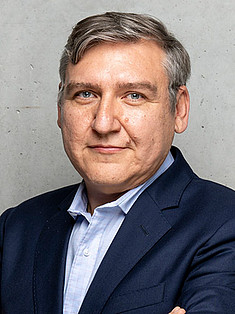
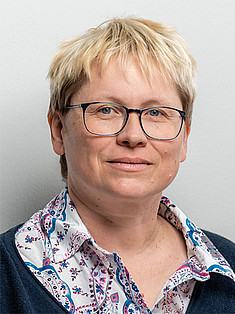
Gerold Winkler is a researcher at the Institute of Hydrobiology and Aquatic Ecosystem Management , part of the Department of Ecosystem Management, Climate and Biodiversity at the University of Natural Resources and Life Sciences, Vienna (BOKU) . With a focus on freshwater ecosystems in Eastern Africa and Europe, his work bridges ecological research with capacity-building initiatives. Projects: FreshNet (2024-2027), SWAQ Uganda (2021-2025), AQUAHUB II (2021-2024) Research interests center on fish ecology , water quality management , and ecosystem-based conservation . His work emphasizes sustainable fisheries, climate adaptation, and the ecological significance of large river systems, particularly the Danube and Eastern African lakes. Knowledge transfer includes leadership in educational programs like the International Joint Master Degree in Limnology & Wetland Management, with publications spanning genetic analysis , habitat modeling , and development policy . Current projects address freshwater conservation in the Lake Victoria basin and aquaculture optimization in Ethiopia.
Rudolf Krska is a full Professor at the University of Natural Resources and Life Sciences, Vienna (BOKU), where he leads the Institute for Bioanalytics and Agro-Metabolomics in Tulln. His joint appointments include Professorships at Queen's University Belfast and Kansas State University. With a career spanning over three decades, he specializes in analytical chemistry, food/feed safety, and mycotoxin research. Research Focus: Krska's work centers on developing cutting-edge analytical methods (LC-MS/MS, infrared spectroscopy) for detecting contaminants in food chains. Key areas include: Mycotoxin control strategies and metabolomics of plant-fungi interactions Immunoassays, reference materials, and proficiency testing Climate change impacts on food contaminants and rapid on-site detection technologies Scientific Output: His recent publications (2024-2025) demonstrate a strong emphasis on spectroscopic mycotoxin detection, climate-related contaminant patterns, and global food safety challenges, particularly in vulnerable regions like Sub-Saharan Africa. Awards & Honors: Nils Foss Excellence Prize (2024), Chemistry Leader Award (2023) 5x Web of Science Highly Cited Researcher (2015-2019) Honorary Professor (China), Royal Irish Academy Membership Golden Ring of Tulln, Fritz-Pregl-Medal, and 20+ other distinctions Leadership & Projects: Krska directs major initiatives including FFoQSI's strategic research and EU projects like MyControl-ET. He founded two spin-offs (Biopure, Quantas Analytics) and oversees BOKU's analytical core facilities. Education & Training: Trained at TU Wien (Dipl.-Ing. 1990, Dr.techn. 1993), he mentors emerging scientists through international collaborations and laboratory management.
Jana Petermann is an Associate Professor at the Paris Lodron University Salzburg within the School of Environment and Biodiversity . Her research focuses on biodiversity, climate change impacts, and ecological interactions in alpine and urban environments. Research Themes: Biodiversity conservation, climate change adaptation, ecological networks, and transdisciplinary environmental solutions. Current Projects: AlpLake-Change, movemont.at, MultiTroph (SP3), AlpsChange, and NPHT monitoring. These projects explore alpine lake ecosystems, landslide geosystem services, trophic interactions in forests, and climate-biodiversity links. Publications Trends: Recent work emphasizes sustainable land use, urban ecology, flood mitigation strategies, and science-policy communication. She has contributed to 75 publications, including peer-reviewed journals and policy reports. Third-Mission Engagement: Active in public outreach (e.g., Biodiversitäts-Hub Österreich) and scientific networks like Scientists4Future Salzburg. Delivered posters and lectures on arthropod dynamics and climate challenges. Service: Participated in editorial roles, appeals committees, and media contributions, such as a Salzburg environmental law statement.
Egon Lüftenegger is a Senior Lecturer at Fachhochschule Salzburg's Department of Information Technologies and Digitalisation. His work bridges academia and industry through innovative process mining and sentiment analysis applications. PhD in Information Systems (TU Eindhoven) Focus on Service-Dominant Logic and Business Process Management Active in Industry 4.0 and Digital Transformation research His research explores sentiment-driven process redesign, technology-enabled social inclusion, and smart production analytics. Publications highlight process mining frameworks , LLM applications in BPM, and service-dominant business models . Current projects involve creating tools like SentiProMoWeb and Cost-Benefit Tracker, with applications in manufacturing, airline services, and education sectors.
FH-Prof. DI Brigitte Jellinek, MSc is a Senior Lecturer and Head of the Academic Area Web & Mobile at Fachhochschule Salzburg GmbH, Department of Creative Technologies. Based at Campus Urstein (Room Urstein-321), she specializes in web development technologies including JavaScript, Ruby on Rails, PostgreSQL, Git, Test Driven Development, and databases. Teaching: Web programming 1 (IL), Backend Development (IL), Multimedia project 2 (PT), Multimediaprojekt 3: Pre-Production (PT), Applied Programming Paradigms (IL), Project 1: Concept & Pitch (PT), Rapid Prototyping (UB), Web Performance Optimisation (IL)
Joachim Klerx is a Researcher specializing in technology-driven strategic analysis. His work focuses on cybersecurity, digital ecosystems, and innovation networks, with affiliations including contributions to the Horizon Scanning Center for cyber-threat assessment. Research Interests: Klerx investigates the intersection of Artificial Intelligence, Big Data, and socioeconomic systems. Key themes include: Digital transformation in security contexts Economic efficiency in open-source ecosystems Risk modeling for emerging technologies His publications emphasize practical frameworks for cyber-defense and organizational foresight. Publication Trends: Recent works (2018-2023) demonstrate a focus on cybersecurity innovation, including hacker community dynamics, command system evolution, and foresight methodologies. Research consistently integrates computational analytics with strategic planning. Professional Activities: He actively presents at international conferences, including topics like: Radicalization analysis through internet memes Supply chain risk assessment Strategic resource analysis for defense systems
Gabriele Kotsis is a Full Professor at the Institute of Telecooperation, Johannes Kepler University Linz, with extensive contributions to Artificial Intelligence research. Her institutional presence spans multiple departments through interdisciplinary projects while maintaining her primary affiliation with JKU's engineering-focused research units. Her research expertise encompasses: Natural Language Processing and Neural Machine Translation systems Reinforcement Learning applications for Smart Grid optimization Mobile Computing and Multimedia Intelligence frameworks Big Data Analytics and Database Systems innovation Human-centered AI development methodologies Recent publications (2024-2025) reveal a strategic focus on practical AI implementations addressing multilingual communication barriers and energy efficiency challenges. Her work consistently bridges theoretical AI advances with real-world applications across multiple domains. Professor Kotsis maintains an active supervision record with thesis guidance and leads multiple funded research initiatives. Her current portfolio includes: 'Enhancing Neural Machine Translation' project (2025-2026) for Southeast Asian languages 'INTES' regulatory compliance ecosystem (2023-2026) 'Human-centered Artificial Intelligence' initiative (2022-2026) Through her leadership in international conferences (iiWAS, MoMM, DEXA) and editorial roles for major proceedings, she maintains significant influence in the global computer science research community while advancing JKU's research profile.
Wieland Schwinger serves as Associate Professor in the Department of Cooperative Information Systems at Johannes Kepler University Linz (JKU), where he leads research at the intersection of information systems and critical infrastructure protection. His work addresses urgent challenges in operational technology monitoring for industrial control systems, energy data governance across European markets, and volunteer coordination during disasters. Current projects include iREDUCE (2025-2026), where he serves as Principal Investigator developing intelligent alarm flood reduction systems for critical infrastructure. His research program centers on three interconnected pillars: semantic relationship awareness frameworks for operational technology monitoring, data governance solutions for fragmented European energy markets, and goal-oriented recommender systems for crisis volunteering. Recent publications demonstrate consistent innovation in translating theoretical advances—particularly in data spaces and semantic modeling—into practical applications for smart cities and critical infrastructure. This work bridges computer science with energy engineering and social computing, yielding deployable solutions for urban microgrids and disaster response systems. Prof. Schwinger's 2024-2025 publications reveal a strategic focus on data accessibility challenges in critical domains, with 60% addressing operational technology monitoring through semantic frameworks and digital shadows. His energy governance research tackles European market fragmentation through comparative analysis of regulatory models, while volunteering systems explore novel data space integrations. These outputs reflect an interdisciplinary methodology combining empirical validation with framework development, consistently targeting real-world implementation in Austrian and European contexts. He received dual recognition in 2025 for sustained scholarly impact: SoSyM Most Influential (theme section) Paper award (September 2025) Ten-year most influential theme section paper award (October 2025) These honors specifically acknowledge his foundational work on model-to-model transformation languages, demonstrating research influence extending over a decade. As an active grant recipient, Prof. Schwinger currently leads the FFG-funded iREDUCE project (€ project value) and contributes to Civolunteer and FFG-KIRAS CERTIFIER initiatives. His project portfolio shows strong continuity in critical infrastructure research since 2021, with increasing leadership responsibilities including Principal Investigator roles. International engagement includes the ASEA-UNINET network for disaster management and European energy governance collaborations, supported by both FFG and EU funding mechanisms like Erasmus+. Research activities occur within JKU's Department of Cooperative Information Systems, where Prof. Schwinger collaborates closely with colleagues including Kapsammer, Retschitzegger, and Pröll. The group maintains strong industry ties through FFG projects with Austrian critical infrastructure operators, focusing on deployable monitoring solutions and data governance frameworks. Students gain hands-on experience with industrial datasets and real-time operational technology environments, preparing them for careers at the technology-policy interface in critical sectors.
Michael Schrefl is a Full Professor at Johannes Kepler University Linz, affiliated with the Institute of Business Informatics - Data & Knowledge Engineering. He serves as Principal Investigator on multiple research projects including AWARE (2024-2026) and AISA (2020-2022), and is actively involved in European research collaborations as both PI and researcher on funded projects. His research interests span across several key areas in modern data science and business informatics: Business Informatics and Digital Transformation Data Science and Knowledge Engineering Database Systems and Data Mining Semantic Technologies and Information Systems Predictive and Prescriptive Analytics Enterprise Computing and Information Systems Professor Schrefl's recent publication activity shows a strong focus on reliability assessment in predictive analytics, conceptual modeling for business intelligence, and applications of data science in Industry 4.0 contexts. His work bridges theoretical foundations with practical applications in enterprise information systems, particularly examining data quality and reliability in predictive models. As an active member of the academic community, Professor Schrefl serves on program committees for major conferences including BI-WEEK, EDOC, and DATA. He has supervised 129 students throughout his career and contributes to educational technology through projects like eTutor++. His research spans multiple fields of science including Knowledge Engineering, IT Security, Web Engineering, and Distributed Systems. Professor Schrefl maintains strong engagement with both academic and public discourse, having given invited talks on AI topics in 2024 and scheduled media appearances including an Ö1 interview on autonomous weapons systems for 2025, demonstrating his commitment to science communication and societal impact of technological developments.
Georg Arbesser-Rastburg is a researcher at the Institute of Human-Centred Computing, Faculty of Computer Science, Graz University of Technology (TU Graz), Austria. He holds a BSc and Dipl.-Ing. in engineering and focuses on applying information technology to water infrastructure challenges and virtual reality-based energy simulation. Research Interests: Water Supply Management under Climate Change Virtual Reality for Urban Energy Data Visualization Serious Games for Water Resource Awareness Optimal Sensor Placement in Water Networks Trading Mechanisms in Digital Economies His recent publications demonstrate a clear trend toward gamified engineering tools, merging virtual reality with hydraulic modeling to address sustainability challenges in urban water systems and energy efficiency. Key projects include EWA (web-based water supply awareness) and VR4UrbanDev (immersive energy data visualization), reflecting interdisciplinary collaboration between computer science and civil engineering. Awards: ÖVGW Studienpreis 2020 for innovative water supply research Arbesser-Rastburg actively secures research funding through projects like GAIA (2024-2026) on green infrastructure impacts and contributes to public discourse through Austrian media coverage of his water management tools. His work emphasizes practical applications for climate adaptation in urban infrastructure.
Patrick Kramml is a Junior Researcher in the Digital Technologies Research Group at the Institute of Creative\Media/Technologies, University of Applied Sciences St. Pölten. He is affiliated with the Department of Media and Digital Technologies and has been a Research Assistant and Tutor since November 2022. His educational background includes a B.Sc. in Media Technology (completed 2022) and an ongoing Master's in Digital Healthcare. His research interests span web and software development (with expertise in React, Vue, Node.js, Next.js, Python, and SwiftUI), AI algorithms , and paramedic technology applications . He integrates his volunteer experience as an emergency paramedic with the Red Cross Lower Austria into his technical work. No recent publications or supervised students are noted in the provided data. Kramml's professional experience includes an internship at BD Austria (2022) and ongoing contributions to academic tutoring in web technologies.
Johann Heinzelreiter serves as an FH-Prof. DI at the University of Applied Sciences Hagenberg, actively contributing to the Assistive Technology Lab and Center of Excellence for Smart Production . His research spans industrial automation, smart factory systems, and cloud computing applications in production environments. His research interests focus on assembly task modeling , low-cost tracking systems for industrial environments, and human-centered workplace design . Heinzelreiter develops practical solutions for real-world manufacturing challenges, particularly in optimizing human-machine collaboration on shop floors through the General Assembly Task Model (GATM) framework. Publication analysis reveals consistent contributions to industrial informatics, with recent work emphasizing smart factory implementation (2019-2020), cloud-based optimization (2014), and digital identity management (2015). His research demonstrates strong industry relevance through COIN Cooperation & Innovation projects. With an h-index of 34, Heinzelreiter has secured significant research funding through multiple COIN projects: Human Centered Workplace (2016-2021) - Co-Investigator Themis - Conserve Your Digital Life (2013-2015) - Principal Investigator BackmeUp - Offline Datensicherung Web 2.0 (2010-2012) - Principal Investigator He collaborates extensively with researchers including Pimminger, Kurschl, and Augstein across production environments and assistive technology domains. His work bridges academic research with practical industrial applications through the Smart Automation and Robotics initiative.
Peter Kulczycki is a researcher at the Research Center Hagenberg Bioinformatics, University of Applied Sciences Hagenberg. He serves as a Researcher specializing in bioinformatics and high-performance computing with expertise in developing computational solutions for biological research challenges. His research interests span multiple domains: Bioinformatics and computational biology High Performance Computing and parallel processing Intelligent scheduling algorithms Resource management systems DNA analysis and primer design Web-based bioinformatics education Dr. Kulczycki's work focuses on bridging computational science and biological research through efficient algorithms and systems for processing complex biological data. He has made significant contributions to scheduling systems that optimize heterogeneous computing resources for bioinformatics applications, with research progression from foundational bioinformatics resources to sophisticated scheduling systems that predict job execution times. His publication record shows consistent focus on computational efficiency in bioinformatics through innovative scheduling approaches, with notable work on heterogeneous multiplatform hardware, DNA primer calculation using GPGPUs, and web-based bioinformatics education frameworks. Dr. Kulczycki served as Principal Investigator for the Bioinformatics Resource Facility Hagenberg project (2009-2012) under the COIN Cooperation & Innovation program. He has been active in academic discourse, delivering invited talks on Evolution and Genetics and the Birth of Life in 2007. His research collaborations include G. Lirk, H. Brandstätter-Müller, B. Parsapour, and A. Hölzlwimmer on various bioinformatics projects.
Manuela Baccarini is a Professor at the University of Vienna and serves as Vice Rector within the Rectorate. She is affiliated with the Department of Microbiology, Immunobiology and Genetics, where her research focuses on RAF kinase signaling, cell proliferation, and molecular mechanisms in cancer and inflammatory responses. Her recent work explores autophagy, lysosomal trafficking, and signal transduction dynamics. Email: manuela.baccarini@univie.ac.at Research Areas: RAF kinase, cell signaling, cancer biology, autophagy, inflammation Recent Research Trends: Her publications from 2018–2025 highlight RAF kinase's role in autophagic lysosome reformation, inflammatory gene regulation via RNA decay, endothelial cell mechanics, and metabolic targeting in tumors. The work spans cancer biology, immunology, and molecular genetics. Teaching: She supervises seminars in the Vienna Biocenter PhD Program and courses on cellular architecture and maintenance.
Bernad Batinic is a Professor at Johannes Kepler University Linz, where he serves as Head of the Department of Work, Organizational, and Media Psychology and Director of the Institute of Psychology. He has held these leadership positions since founding the department in 2005 and becoming Institute Director in 2007, and has been a university professor at JKU Linz since 2004. Batinic completed his psychology education at the University of Giessen (1995), earned his doctorate at the University of Erlangen-Nuremberg in 2001 (summa cum laude, with faculty prize), and habilitated there in 2006. He also served as a visiting professor at the University of Marburg in 2003. His academic career shows continuous progression from research assistant positions to his current leadership roles. His research primarily focuses on the relationship between work and well-being, examining how employment status affects mental health through longitudinal studies with five waves of data collection. Batinic has repeatedly demonstrated the mediating role of Marie Jahoda's latent functions of work in the relationship between employment aspects and well-being. He also investigates media psychology, particularly the use and effects of new technologies, internet-based data collection methods (including web experiments and panel research), personnel development, and opinion leadership/trendsetting phenomena. A pioneer in online research methodology, he conducted one of the first online surveys on Usenet in 1994 and published the first online guide for conducting online surveys in 1995. Analysis of Batinic's recent publications (2020-2025) reveals a strong methodological evolution toward integrating technological approaches, including wearable devices for experience sampling and objective measurement of digital behavior. His work increasingly combines traditional psychological assessment with real-world behavioral data, examining topics like fear of missing out, chatbot interactions, laughter in daily life, and the relationship between job characteristics and physical activity. The research consistently applies longitudinal and meta-analytic approaches to understand the complex relationship between work, technology, and psychological well-being. Bernad Batinic has served in numerous leadership roles at JKU Linz beyond his departmental and institute director positions. He was the spokesperson for the professorial committee of the Faculty of Social and Economic Sciences and remains an active member of various university commissions and bodies, including as department spokesperson, senate member, and member of the study commission for web sciences. Notably, in 2015 he declined an offer for a W3 professorship at the University of Trier that would have included management of the Leibniz Center for Psychological Information and Documentation. He leads a productive research team that has generated numerous publications in high-impact journals including Journal of Occupational and Organizational Psychology, Frontiers in Psychology, and European Journal of Work and Organizational Psychology. His work has practical applications in organizational settings and has informed the development of measurement tools like the New Work Values Scale (NWVS) and the Latent and Manifest Benefits of Work (LAMB) scale. Batinic has also co-founded several companies related to his research, including Globalpark AG (now Questback), tivian GmbH, and respondi AG, where he served in advisory capacities.