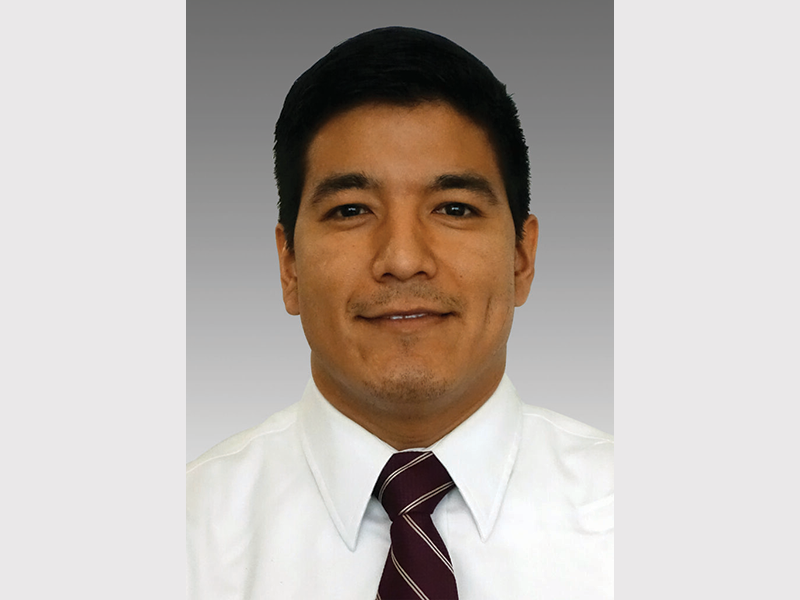
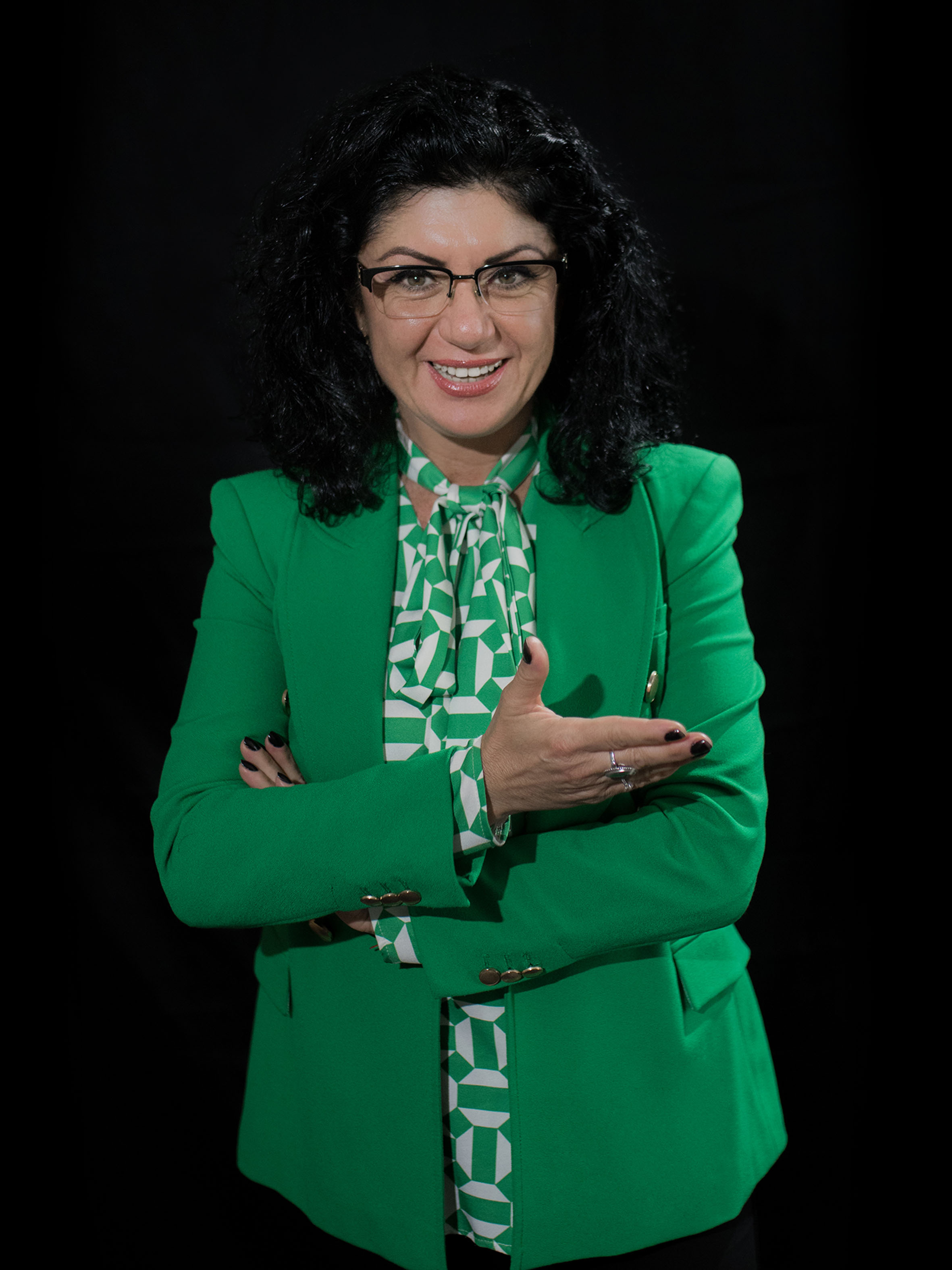
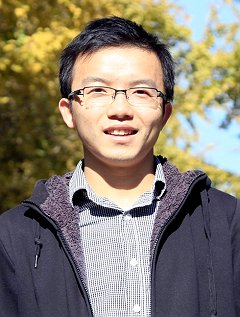
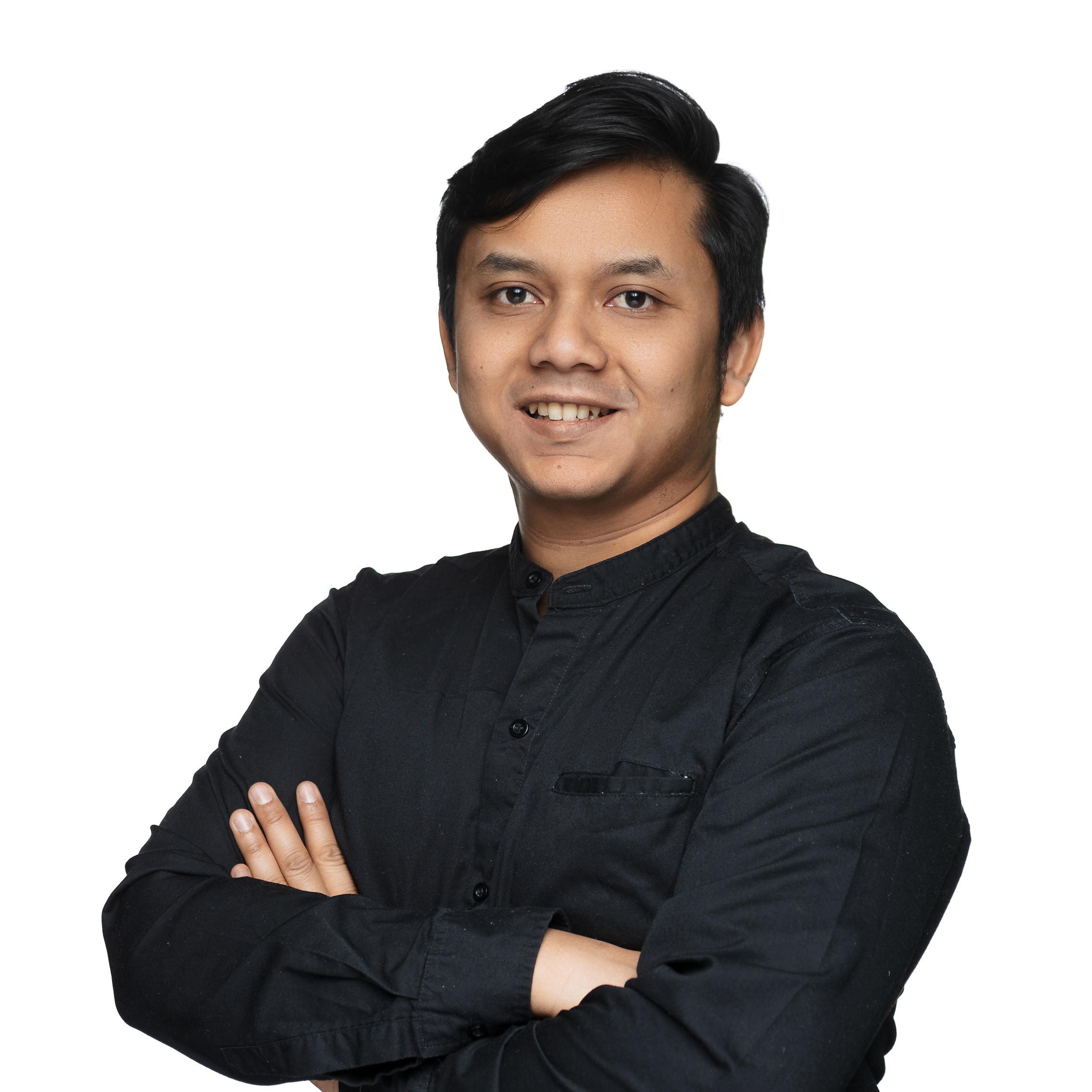
João Miguel Lobo Fernandes is a Full Professor at the Department of Informatics, School of Engineering, University of Minho. He holds a 5-year degree in Informatics Engineering (1991), a Master's in Informatics (1994), and a Ph.D. in Informatics/Computer Engineering (2000) from Universidade do Minho, with a thesis on An object-oriented methodology for embedded systems development . Research interests: Software Modeling, Requirements Engineering, Embedded Software, Software Process, Bibliometrics International collaborations: University of Bristol, Turku Centre for Computer Science (Finland), Aarhus University (Denmark), Universidade Federal de Santa Catarina (Brazil), and others Key projects: iFlow and DIABO logistics platforms (awarded by APLOG) His 160+ peer-reviewed publications focus on software methodologies, embedded systems, and industry collaborations. Recent work includes applications of machine learning in automotive software, feature modeling, and remote work impact studies. He serves on editorial boards for Journal of Information Technology Research and Open Computer Science . 2016 & 2022 Logistics Excellence Awards (APLOG) Organized international events: ACSD, DIPES, GTTSE, PETRI NETS, ICSOB, MOMPES As an academic leader, he directed the 5-year Systems and Informatics Engineering degree (2004-06), Master's in Informatics Engineering (2011-12), and served on Scientific Council of the School of Engineering (2013-16).
Dr. Adrian Rodriguez is a full-time Lecturer in the Walker Department of Mechanical Engineering at The University of Texas at Austin. He also works as an Engineering Content Developer for zyBooks (a Wiley brand), focusing on interactive textbook development. Research Focus Multibody Dynamics and Contact Mechanics Nonlinear Dynamics of Mechanical Systems Electro-Mechanical System Modeling Innovative Engineering Education Methods Accessibility in STEM Materials His publications reveal a strong emphasis on educational technology, with 12/15 articles addressing interactive learning tools, DEI initiatives, and accessibility solutions for EFL and visually impaired students. This aligns with his professional development work in modern teaching practices. Academic Journey B.S. in Mechanical Engineering from UT Austin M.S. and Ph.D. in Mechanical Engineering from UT Arlington Prior teaching roles at University of Texas at Arlington (2014-), Austin Community College (Adjunct Professor), and outreach programs Specialized Expertise Dr. Rodriguez bridges mechanical engineering research (notably in frictional contact dynamics) with educational innovation through his dual roles in academia and zyBooks content development.
Maria Cristina Marinescu is a Professor in the Department of Mathematics and Data Analytics at IQS School of Engineering , with a focus on Applied Data Analytics and Modeling . She has an active research profile in interdisciplinary domains connecting computational methods with public health, social sciences, and medical applications.
Simone Paolo Ponzetto is an Assistant Professor (Juniorprofessor) at the University of Mannheim since 2013, affiliated with the Research Group Data and Web Science. His research focuses on Semantic Web technologies, Natural Language Processing (NLP), and knowledge acquisition, particularly leveraging collaboratively built resources like Wikipedia. Prior to Mannheim, he held postdoctoral roles at Sapienza University of Rome and research positions at the University of Heidelberg and Stuttgart. His work includes pioneering projects like BabelNet, a multilingual semantic network. Ponzetto earned his PhD in Computational Linguistics from the University of Stuttgart, with interdisciplinary contributions to coreference resolution, semantic relatedness, and ontology learning. Research Interests: Unsupervised/weakly-supervised knowledge extraction Multilingual ontology learning and semantic networks Lexical semantics (word sense disambiguation, semantic similarity) Discourse semantics (coreference resolution, coherence modeling) Professional Contributions: Guest editor for a Artificial Intelligence Journal special issue on AI and Wikipedia Area chair for EMNLP-CoNLL 2012 and EACL 2014 Program committee member for ACL, AAAI, and other top conferences Lab/Team: Active in the Research Group Data and Web Science at Mannheim, advancing AI and NLP applications in collaborative knowledge systems.
Dr. Stuart Marshall serves as Associate Dean of Academic Development in the Faculty of Science and Engineering at Victoria University of Wellington - Te Herenga Waka, where he also holds the academic rank of Senior Lecturer. Previously, he served as Head of School for the School of Engineering and Computer Science from 2015-2021 after joining the institution as a Lecturer in 2003. His academic journey includes completing his BSc, MSc, and PhD in Computer Science at Victoria University of Wellington, with his doctoral research focusing on software reuse. Marshall's research interests center on information and data visualization, particularly exploring how visualization can function as collaborative tools in team environments rather than single-user applications. He also investigates explainable AI and mobile user interface design with emphasis on promoting healthy device usage patterns. His work bridges theoretical computer science with practical applications in education and environmental analysis. Analysis of his publication record reveals a consistent focus on visualization techniques, with recent work shifting toward immersive analytics and virtual reality applications for complex data analysis, particularly in ecosystem services. Earlier publications concentrated on mobile learning applications grounded in transactional distance theory, software visualization for large codebases, and graph layout algorithms. Marshall has supervised six PhD students and eight Masters students to completion, with current doctoral supervision spanning immersive environments for reading assistance, medical diagnosis interfaces, and cardiac procedure simulation. His grant portfolio includes multiple ACM ISS 2022 projects with industry partners including Sensor Holdings Limited, Niantic, Autodesk, and Northeastern University, along with an Australian Research Council grant for digital games preservation. Teaching responsibilities encompass foundational programming, safety-critical systems, human-computer interaction, and data visualization across undergraduate and graduate courses. He teaches subjects including SWEN326 (Safety-Critical Systems), CGRA151 (Introduction to Computer Graphics and Games), and DATA301 (Data Science in Practice), with teaching assignments scheduled through 2026.
Andries "Andy" van Dam is a distinguished Dutch-American professor of computer science at Brown University, where he also served as vice-president for research. Born in Groningen, the Netherlands on December 8, 1938, van Dam has been instrumental in shaping computer science education and research for over five decades. He helped establish Brown's computer science program, serving as its first department chair from 1979 to 1985, and was appointed Thomas J. Watson, Jr. University Professor of Technology and Education in 1995. His educational background includes a B.S. with Honors in Engineering Sciences from Swarthmore College (1960) and M.S. and Ph.D. degrees from the University of Pennsylvania (1963, 1966), where he was the second person to receive a PhD in Computer Science. Van Dam's research interests span computer graphics, hypertext systems, virtual reality, and educational technology. He is particularly known for his pioneering work in hypertext systems, having co-developed the first hypertext system with Ted Nelson in the late 1960s. His influential textbook "Computer Graphics: Principles and Practice" is often referred to as the "Bible" of computer graphics. His work has consistently focused on making complex computing concepts accessible through innovative interfaces and educational approaches. His research publications demonstrate a consistent trajectory from foundational work in computer graphics and hypertext to more recent explorations in immersive virtual reality, digital visual literacy, and next-generation educational software. His work bridges theoretical computer science with practical applications in education, medicine, and scientific visualization. Among his notable honors are: IEEE Centennial Medal (1984) Fellow of the Association for Computing Machinery (1994) ACM SIGGRAPH Distinguished Educator Award (2019) Van Dam has mentored numerous students who have gone on to make significant contributions in computer science, including Randy Pausch, Danah boyd, Scott Draves, and Steven K. Feiner. His teaching extends beyond traditional academic settings, as evidenced by his influence on the character of Andy in the film Toy Story, which pays tribute to his pioneering work in computer graphics. He continues to serve on the technical board of Microsoft Research and as chairman of the Rhode Island Governor's Science and Technology Advisory Council. His research lab has been instrumental in developing innovative approaches to human-computer interaction, with particular focus on post-WIMP (Windows, Icons, Menus, Pointer) interfaces, immersive environments, and educational technologies that transform how we learn and interact with digital information.
Daniela Margareta Chiorean serves as University Professor in the Graphics Department at the University of Art and Design Cluj-Napoca, where she has held academic positions since 2000 and currently serves as Prorector responsible for quality assurance (2023-2024). She previously served as Dean of the Faculty of Plastic Arts (2012-2015) and Department Director for Graphics (2015-2023). Concurrently, she maintains an active legal practice as an attorney specializing in civil law and intellectual property at the Cluj Bar Association since 2007. Her educational background includes a PhD in Visual Arts (2007) from UAD Cluj-Napoca with thesis 'Man - Media. Traditional and new media in graphics,' a Master's in Civil Law (2005-2007), Law degree (2001-2005), and dual Master's degrees in Visual Arts (2001-2003). She completed specialized training in intellectual property at WIPO (2002) and cultural management/multimedia in Germany (2002-2003). Chiorean's research bridges graphic design, digital media, and intellectual property law, examining how traditional media interacts with contemporary digital environments. Her work explores symbolic dynamics in advertising, the evolution of typography from Gutenberg to virtual publications, and the legal frameworks governing creative works in digital spaces. She investigates how new technologies transform artistic practices while maintaining connections to historical techniques, with particular focus on remix culture and copyright issues in visual communication. Her publication trends reveal consistent exploration of media transitions, with recent work analyzing digital image processing, urban-nature representations in artificial environments, and comparative studies of display versus print media. These publications demonstrate her interdisciplinary approach connecting artistic practice with scholarly inquiry into media evolution. Premiul UAP România pentru grafică - tineret (2002) Premiul Vespasian Lungu pentru grafică (1997) As a researcher, she has led multiple nationally-funded projects including 'Vector – Design and Book Illustration' (2012) through the National Cultural Fund and 'Center for Promoting Entrepreneurship in Sustainable Development' (2010-2013). She coordinates international collaborations through Erasmus+ and Leonardo da Vinci programs, organizing workshops on infographics, bookbinding, and digital media. Her professional activities span academic leadership, legal practice in intellectual property, and active participation in national and international artistic communities as both creator and evaluator. She coordinates specialized workshops in infographics and bookbinding techniques, and participates annually in the Brâncuși International Workshops for sculpture, painting, and graphics. Her collaborative network extends across European institutions through multiple international partnerships, with recent involvement in Korea's 'O întâlnire și o altă călătorie începe' exhibition (2024).
Professor Richard Bailey is Professor of Environmental Systems at the University of Oxford's School of Geography and the Environment. He serves as a Tutorial Fellow and Dean of St Catherine's College, a Senior Research Fellow at the Institute for New Economic Thinking, and a member of the Oxford Biodiversity Institute. Bailey co-directs the Oxford Luminescence Dating Laboratory and leads the CoHESys-lab research group focused on complex human-environmental systems. Richard's research centers on the dynamics of natural environmental systems and coupled human-environment interactions across various timescales. His work employs mathematical modeling, numerical simulations, and empirical data analysis to understand complex systems, with a strong focus on sustainability applications, particularly in ocean systems. The CoHESys-lab develops models that integrate machine learning methods to explore implementable policies for environmental challenges. His recent publications demonstrate a strong trend toward interdisciplinary research combining environmental science, computational modeling, and sustainability. Bailey's work spans from theoretical explorations of complex systems to applied projects addressing pressing issues like plastic pollution, fisheries management, and climate change impacts on marine ecosystems. His research increasingly incorporates agent-based modeling and machine learning approaches to tackle coupled human-environment challenges. Co-Director of Oxford Martin School Programme on Sustainable Oceans Co-Director of Oxford Luminescence Dating Laboratory Leader of CoHESys-lab research group Professor Bailey currently supervises graduate students Maike Nowatzki (focusing on dunefield morphology using deep learning) and Thomas Youngman (working on macroeconomic modeling for UK climate transition). His recent advisees include Emily Neil (rewilding impacts at Knepp Estate) and Diana Bailey (LM OSL analysis techniques). His research is supported through collaborations with organizations including Ocean Conservancy, Stanford University, George Mason University, and the University of California at Santa Barbara, with computational support from Amazon Web Services. Bailey leads the CoHESys-lab (Complex Human Environmental Systems Simulation Laboratory), which develops sophisticated models for understanding coupled human-environment systems. His OSIRIS framework (Ocean Systems Interactions, Risks, Instabilities and Synergies) represents a significant contribution to analyzing multiple stressors on marine systems. The lab maintains strong collaborations with environmental organizations and academic institutions worldwide to address sustainability challenges through innovative computational approaches.
Assoc. Prof. Boyan Zhekov, PhD is an active faculty member at the University of Library Studies and Information Technologies (UNIBIT) in Sofia, Bulgaria, where he serves in the Department of Computer Science under the Faculty of Information Sciences. He teaches courses including Case Studies in Digital Transformation (SHEB609) and holds academic appointments at Sofia University "St. Kliment Ohridski" and New Bulgarian University as a visiting lecturer. MSc in Information Technologies from Technical University - Sofia Specialized in IT and Economics across UK, France, Netherlands, South Korea, Japan, and Taiwan His research focuses on the intersection of digital governance and emerging technologies, with significant contributions to Internet of Things applications in public administration, smart city ecosystems, and open data frameworks. His work demonstrates a consistent emphasis on practical implementations of ICT solutions for governmental modernization, particularly through EU-funded projects and national initiatives. Current projects examine IoT business models and startup ecosystems within smart city contexts. Prof. Zhekov actively contributes to European research policy as a Horizon 2020 National Contact Point for Future and Emerging Technologies, ICT, and Secure Societies, while serving on the Programme Committee for ICT. His professional engagement extends to leadership roles in Japanese-Bulgarian academic networks including JICA Alumni Bulgaria and Nihon Tomono Kai. Member of Horizon 2020 National Contact Network Board member of Union of Electronics, Electrical Engineering and Communications (SEES) President of JICA Alumni Bulgaria Vice President of JSPS Alumni Bulgaria His advisory work includes technical ICT audits for EU-funded projects under Operational Program RCBIS (2007-2013) and development of sectoral information strategies for regional governance (2014-2020). Recent projects for the Ministry of Education analyze national research infrastructure roadmaps and map Bulgaria's scientific infrastructure landscape.
Yu Jiang is an Associate Professor at the School of Software, Tsinghua University, China. His research focuses on software security with emphasis on fuzz testing, embedded systems, and database security. He leads the Software System Security Assurance Group which has discovered over 1,000 bugs in major system software with 300+ CVEs registered. Dr. Jiang's research interests include Software Engineering , Embedded Systems Security , and Cross-Layer Fuzzing . His work addresses vulnerabilities in operating systems, databases, communication protocols, and IoT firmware through innovative fuzzing frameworks. Key contributions include semantic-aware fuzzing for heterogeneous software stacks and learning-based vulnerability detection for embedded systems. His recent publications demonstrate strong trends in database security (Hulk, PUPPY, THANOS), ransomware defense (Fawkes, Preventing Disruption), and web security (JANUS). Research spans both theoretical advances in fuzzing techniques and practical industrial applications, with significant impact evidenced by numerous distinguished paper awards. Career Award, NSFC: 2026 Distinguished Paper Award, ISSTA: 2025 First Prize for Technical Invention, CCF: 2024 Distinguished Paper Award, USENIX Security: 2024 SIGSOFT Distinguished Paper Award, FSE: 2022 Dr. Jiang has advised over 50 graduate students including 20 PhD candidates. His research is supported by major grants including NSFC projects ($600,000 for Software Trustworthiness Construction and $350,000 for Distributed Database Reliability), Huawei ($80,000 for LLM-Powered Fuzzing), and Tencent ($120,000 for LLM-Powered Unit Testing). The Software System Security Assurance Group maintains strong industry partnerships with Huawei, Alibaba, Tencent, and Webank. The group operates cutting-edge infrastructure for fuzz testing across multiple domains including database systems, operating kernels, blockchain platforms, and industrial control systems. Current projects integrate LLM technologies with traditional fuzzing techniques to enhance vulnerability detection in complex software stacks.
Dr. Faisal Mohd-Yasin is a Senior Lecturer in the School of Engineering and Built Environment at Griffith University, specializing in Electrical and Electronic Engineering. He has been with Griffith University since 2010, initially as a Lecturer (2010-2016) and promoted to Senior Lecturer in 2017. He is also a member of the Queensland Quantum and Advanced Technologies Research Institute (QUATRI) since 2025. His research spans microelectronics, MEMS technology, compound semiconductors, and electronic sensors/instrumentation, with particular expertise in silicon carbide-based devices for harsh environments. Dr. Mohd-Yasin holds dual PhD qualifications: a Doctor of Philosophy (Engineering) from Multimedia University, Cyberjaya, Malaysia (2014) and a PhD in Engineering from Ibaraki University, Hitachi, Japan (2009). His educational background provides a strong foundation for his interdisciplinary research that bridges semiconductor physics, sensor technology, and electronic circuit design. His research interests focus on Microelectromechanical systems (MEMS), compound semiconductors (particularly $$ ext{SiC}$$), electronic sensors, and electronic instrumentation. He has made significant contributions to the development of silicon carbide MEMS devices for harsh environments, piezoelectric energy harvesters, and noise analysis in microelectronic systems. His work has important applications in sustainable cities (SDG 11), health and well-being (SDG 3), and clean energy (SDG 7). Analysis of his recent publications reveals a strong trend toward MEMS sensor technology, particularly silicon carbide-based devices for harsh environments, and noise analysis in piezoelectric sensors. His research also demonstrates a growing interest in engineering education, with several publications on practical electronics teaching methods. The publications span electrical engineering, sensor technology, energy harvesting, and engineering education, reflecting his interdisciplinary approach to research and teaching. Dr. Mohd-Yasin has successfully supervised multiple doctoral and masters students through completion, including Utkarsh Jadli (PhD on Parasitic Capacitances of Power Transistors), Siti Aisyah Zawawi (PhD on MEMS capacitive microphone), Mei Kum Khaw (PhD on magnetically actuated droplets), Abid Iqbal (PhD on AlN thin films), Noraini Marsi (PhD on MEMS pressure sensors), and Kai Meng Mui (Masters on Power management IC). He has also secured numerous research grants totaling over $1.5 million from various sources including Griffith University, Innovative Manufacturing CRC, IRU, and Malaysian research councils. He is actively involved in professional service as a peer reviewer for the IEEE Sensors Conference series (2015-2025), Micro and Nano Engineering Conference series (2009-2018), and the International Conference on Solid-State Sensors, Actuators and Microsystems (2018-2019). He is also a member of IEEE (Institute of Electrical and Electronics Engineers) since 1997. Dr. Mohd-Yasin's research is primarily conducted through the Queensland Quantum and Advanced Technologies Research Institute (QUATRI), where he collaborates with researchers working on advanced semiconductor technologies and quantum applications. His laboratory work focuses on MEMS fabrication, sensor characterization, and circuit design for harsh environment applications.
Ronan Gruenbaum serves as Dean of International Affairs & Program Development at Hult International Business School, leading global partnerships and academic innovation. Previously, he directed the award-winning Bachelor of Business Administration program as Global Director of Undergraduate Learning and Development, and served as Dean of Hult's London undergraduate campus (2016-2022) after joining the institution in 2011 as a full-time professor of marketing technology. His expertise centers on digital transformation in business education, with core research areas including: E-commerce strategy and implementation Social technologies for organizational innovation Hybrid and online learning methodologies Future of work competencies development Business school evolution in digital age Digital marketing ecosystems Analysis of his publications reveals consistent focus on technology's disruptive impact across educational and business landscapes, particularly examining how social media, AI, and Web 2.0 tools necessitate fundamental shifts in teaching methodologies and organizational structures. His work emphasizes practical frameworks for implementing digital solutions while addressing associated risks and measurement challenges. No scientific awards were documented in the source materials. Professional engagement includes extensive conference speaking on educational innovation topics, though specific student advisement records and research grants remain undisclosed. His leadership in developing Hult's undergraduate programs demonstrates applied focus on preparing students for technological disruption in global business environments. Current initiatives indicate strong emphasis on AI integration challenges for business education and strategies for maintaining institutional relevance amid rapid technological change.
Prof. Bettina Valeska Lotsch serves as Director of the Nanochemistry Department at the Max Planck Institute for Solid State Research in Stuttgart and holds honorary professorships at both the University of Stuttgart and Ludwig-Maximilians-Universität München (LMU). She leads a research group focused on the rational synthesis of multifunctional materials with engineered properties, combining solid-state chemistry, molecular chemistry, and nanochemistry approaches. Her research interests span nanochemistry, solid-state chemistry, materials science, energy storage, catalysis, photocatalysis, and the development of two-dimensional materials, porous frameworks, and photonic nanostructures. She investigates structure-property-activity relationships in functional materials with applications in sensing, catalysis, and photo- and electrochemical energy conversion and storage. Her group employs diffraction, spectroscopic, and microscopic techniques to explore these materials. Prof. Lotsch's publication record demonstrates significant contributions to materials chemistry, with over 330 papers, 27,577 citations, and an h-index of 83 (as of February 2025). Her recent work focuses on integrated solar batteries, covalent organic frameworks, metal-organic frameworks, and novel materials for energy applications. The research shows strong emphasis on materials for renewable energy technologies, particularly in the areas of photocatalysis, energy storage, and photoelectrochemical systems. Gottfried Wilhelm Leibniz-Preis (2025) Highly Cited Researcher, Web of Science (2023-2024) Materials Lectureship Award, University of Warwick (2023) ERC Starting Grant (2014) EU-40 Materials Prize, European Materials Research Society (2017) Elected Member of the Heidelberger Akademie der Wissenschaften (2021) Prof. Lotsch leads the SOLBAT initiative funded by the Max Planck Foundation, which focuses on pioneering work in solar batteries and optoionics. She serves on multiple advisory boards including Quantum BW, SFB 1452 CLINT, and the Scientific Advisory Board of ICMol at the University of Valencia. Her department provides extensive research infrastructure including advanced characterization techniques for materials analysis.
Prof. Gerhard Weber holds the Chair in Human-Computer Interaction at Technische Universität Dresden, Germany. Previously, he served as Chair for Human-Centered Interfaces at Christian-Albrechts-Universität zu Kiel (2000–2007) and Professor for Operating Systems and Graphical User Interfaces at Harz University of Applied Sciences (1996–2000). His research focuses on accessible computing, assistive technologies, haptics, and multimodal interaction. Key projects include development of tactile charts (SVGPlott), robotic guidance systems (HapticRein), and indoor navigation solutions for visually impaired users. Current work explores voice interfaces for social robots, autism-inclusive technologies, and accessibility maturity models for higher education institutions. Over 70 publications span conferences like CHI, IEEE, and ACM, emphasizing practical applications in assistive tech. Education & Professional Journey: 2007–Present: Chair in Human-Computer Interaction, TU Dresden 2000–2007: Chair for Human-Centered Interfaces, Kiel University 1996–2000: Professor of Operating Systems and GUIs, Harz University Research Interests: Prof. Weber's work bridges theory and practice in accessibility, emphasizing tactile interfaces, inclusive design, and assistive robotics. Recent projects include: Mosaik : Enabling blind users to create and share graphics via audio-tactile tools Cloud4All : Personalized web accessibility solutions Range-IT : Real-time object detection for navigation aids Advising & Grants: Managed €3.2M in EU and national grants (2011–2020) Supervised 12+ graduate projects on assistive tech Labs & Teams: Leads TU Dresden's Human-Computer Interaction Lab, collaborating with industry partners like Siemens and rehabilitation centers to deploy assistive systems in real-world settings.
Fajar Juang Ekaputra is a Tenure Track Assistant Professor at the Institute of Data, Process, and Knowledge Management (DPKM), WU Vienna and a part-time Postdoctoral Researcher at the Data Science research unit, TU Wien . With a focus on Semantic Web , Knowledge Graphs , and their integration with Machine Learning in Neurosymbolic AI systems, his work spans domains like Cyber-Physical Systems and Materials Engineering . Education: Dr.techn. (2018), TU Wien M.T. (2010) and S.T. (2008), Institute Teknologi Bandung (ITB) Research Interests center on hybrid AI systems combining Semantic Web and Machine Learning , with applications in Cyber-Physical Systems (e.g., smart grids, smart buildings), data privacy in smart cities, and materials engineering . His 102+ publications include frameworks like SWeMLS-KG and SHACL4Protege . Recent Articles (2024) address explainable AI in cyber-physical systems, privacy trust in data infrastructures, and neurosymbolic frameworks . Earlier works (2023–2022) explore ontology-based data management , auditable AI , and hybrid system architectures . Scientific Awards: Best Paper Awards (ICoDSE 2023, ICoDSE 2016) Best Poster Nomination (SEMANTiCS 2019) PhD Scholarship (Austria’s Agency for Education and Internationalisation, 2012) Advising includes supervising PhD students (e.g., Majlinda Llugiqi, Katrin Schreiberhuber) and master’s theses on topics like knowledge graph characteristics and data quality assessment . He leads projects such as FAIR-AI (FFG-funded, 2024–2026) and SENSE (Horizon Europe, 2023–2025).