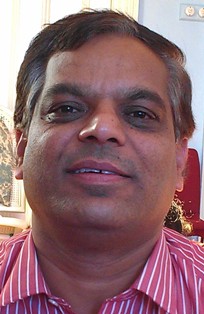
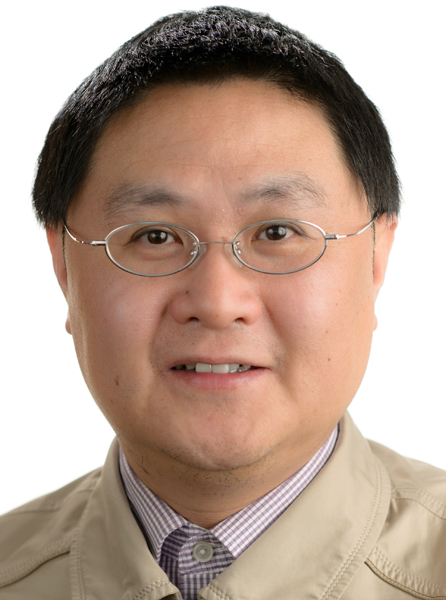
Christoph Koch is a Full Professor in the School of Computer and Communication Sciences at EPFL (Ecole Polytechnique Federale de Lausanne) , Switzerland. He has held academic positions at Cornell University (2007-2010, 2006), Saarland University (2005-2007), and TU Vienna (2001-2005). His research focuses on database systems, logic, programming languages, and data management.
Katja Hose is a Full Professor of Data Management at TU Wien's DBAI research unit, heading the Data Management and Knowledge-Driven AI Lab. She previously held a Poul Due Jensen Foundation Professorship at Aalborg University. Her research focuses on data and knowledge engineering, including graph databases, knowledge graphs, querying, analytics, and machine learning, with interdisciplinary applications in bioscience, healthcare, and environmental assessment. Education: PhD in Computer Science (Ilmenau University of Technology, 2009), Postdoc at Max Planck Institute for Informatics (2009–2012). Academic roles include Program Co-Chair for ISWC 2024 and EDBT 2023, and editorial board membership at VLDBJ and TGDK. She leads projects like TARGET (health virtual twins) and ARMADA (data management). Research Interests: Knowledge Graphs, Semantic Web, Big Data, Machine Learning, Data Integration, and Provenance Systems. Key contributions include SHACL shape extraction, conversational data analytics, and environmental knowledge graphs. Awards include the 2025 Distinguished Meta-Reviewer Award and 2024 Manfred Paul Award. Advising and Grants: Supervised students including E. Pürmayr (Diploma Thesis 2025). Active in EU projects (TARGET, ARMADA) and grant coordination. Labs/Teams: DMKI Lab at TU Wien, collaborating with interdisciplinary teams in healthcare and environmental science.
Huamin Qu is a Chair Professor in the Department of Computer Science and Engineering at the Hong Kong University of Science and Technology (HKUST). He serves as the Founding Dean of the Academy of Interdisciplinary Studies (AIS), Founding Head of the Division of Emerging Interdisciplinary Areas (EMIA), and was the Founding Acting Head of Computational Media and Arts (CMA) at HKUST(GZ). Qu directs the VisLab and coordinates the Human-Computer Interaction (HCI) group. He obtained his BS in Mathematics from Xi'an Jiaotong University and MS/PhD in Computer Science from Stony Brook University. Qu's research integrates Data Visualization , Human-Computer Interaction , and Human-Centered AI , with applications in urban informatics, social networks, and explainable AI. His work focuses on developing interactive systems for big data analytics, visual storytelling, and AI-driven decision support. Research extends to multimodal communication, fintech, and augmented reality applications. His publications emphasize visual analytics for complex datasets (mobility, social media, financial), interaction techniques for immersive environments, and AI-enhanced visualization tools. Recent works explore explainable AI interfaces and large-scale data communication frameworks. IEEE Visualization Academy (2020) IEEE VGTC Technical Achievement Award AI 2000 Most Influential Scholar (2019, 2023, 2024) 21 Best Paper/Honorable Mention awards IBM Faculty Award (2009) APICTA Merit Award (2015) Yelp Dataset Grand Prize (2018) Qu has advised 48 PhD graduates (21 now faculty at institutions like UC Davis, University of Minnesota, Texas A&M) and 30 MPhil students. He secured major grants including RGC theme-based projects (digital citizenship, air pollution), UGC AoE (slope safety), and China's 973 Program. As VisLab director, he leads 20+ researchers in visualization/HCI projects adopted by Microsoft, IBM, Huawei, and Tencent.
Ian Horrocks is a Professor of Computer Science at the University of Oxford and a Fellow of Oriel College. His research focuses on knowledge representation, description logics, automated reasoning, and semantic web technologies. He has held academic positions at the University of Manchester (2003–2007) and served as Chief Scientist at Cerebra Inc. (2001–2006). Horrocks earned his BSc (1st class), MSc, and PhD in Computer Science from the University of Manchester (1981–1997). His work includes foundational contributions to ontology languages (e.g., OWL) and reasoning systems such as HermiT and ELK. He has supervised over twenty doctoral students and postdoctoral researchers. His honors include Fellowships from the Royal Society (2011), ECCAI (2009), and the British Computer Society (2005). He serves as Editor-in-Chief of the Transactions on Graph Data and Knowledge and leads initiatives in semantic web standards and knowledge graph applications. Key Roles: Editor-in-Chief (Journal of Web Semantics), Co-Chair (W3C OWL Working Group) Grants: EPSRC Senior Research Fellowship (2005), numerous international collaborations Labs: Oxford Semantic Technologies, involvement in projects like RDFox and PAGOdA
Dr. Rajkumar Buyya is a Redmond Barry Distinguished Professor at the University of Melbourne and Founder & CEO of Manjrasoft , a spin-off commercializing cloud innovations. He has held visiting roles at Imperial College London , University of Birmingham , and Tsinghua University . Research Interests : His work spans Cloud Computing , Edge Computing , Grid Systems , and Energy-Efficient Computing , focusing on utility-driven resource allocation, simulation tools, and scalable IoT application frameworks. He pioneered the CloudSim toolkit and Aneka Cloud technologies. Scientific Awards : IEEE Fellow (2015), Web of Science Highly Cited Researcher (2016-2021) Khwarizmi International Award (2020), Scopus Researcher of the Year (2017) Frost & Sullivan New Product Innovation Award (2010), IEEE TCSC Medal (2009) Impact : Authored over 850 publications, including the widely adopted textbook Mastering Cloud Computing . Graduated 54 PhD students now in leadership roles at institutions like Newcastle University and companies such as IBM , Google , and Amazon . His research has driven global adoption of cloud/edge technologies in 50+ countries.
Emanuel Sallinger is a Full Professor at TU Wien's Databases and Artificial Intelligence Group and Vice Dean of Academic Affairs for Business Informatics and Data Science. He leads the Knowledge Graph Lab, focusing on scalable knowledge-based systems, reasoning in knowledge graphs, and AI integration. His research spans computational logic, database theory, and blockchain applications. Education: PhD in Computer Science (awarded 'sub auspiciis praesidentis rei publicae'), Master's degrees in Computational Intelligence and Informatics Management, and a Bachelor's in Software and Information Engineering. Research Interests: Knowledge graphs (construction, reasoning, scalability), logic-based systems, AI/ML integration with databases, enterprise architecture modeling, and financial knowledge systems. His work emphasizes practical applications like enterprise modeling, sustainable waste management, and regulatory compliance. Grants & Projects: Lead Vienna Science and Technology Fund (WWTF)-funded Knowledge Graph Lab. Involved in projects like 'Knowledge Graph-driven Tour Management' (sustainability), 'SustainGraph' (waste processing), and 'Enterprise Architecture Knowledge Graphs'. Teaching: Offers courses on Knowledge Graphs, Generative AI, Database Systems, and research methodology. Supervises doctoral and master's students in AI, databases, and knowledge representation. Labs/Teams: Knowledge Graph Lab at TU Wien, collaborating with industry on blockchain-based systems, financial AI, and enterprise architecture frameworks.
Andreas Ekelhart is a Researcher at TU Wien's Department of Information and Software Engineering. His work focuses on cybersecurity, cyber-physical systems, and industrial control systems. He specializes in developing frameworks like SLOGERT for automated log analysis and Kyrstal for attack discovery using knowledge graphs. His research also explores digital twin technology for threat detection and semantic web applications in machine learning systems. Key contributions include the VloGraph framework for distributed security log analysis and the QualSec approach for automated security risk identification in production systems. He collaborates on standards like AutomationML and emphasizes privacy-preserving data analysis through semantic architectures.
Wolfgang Klas is a Professor at the Faculty of Computer Science, leading the Research Group Multimedia Information Systems. His research focuses on multimedia systems, data management, and information retrieval, with significant contributions to multimedia content analysis and database systems. He has been actively involved in multiple research projects, including TP2 PRECIOUS (2013-2016), SciLink (2011-2014), and OptFI (2010-2013). His work intersects with emerging technologies like blockchain, as seen in his public engagements and talks on topics such as 'From Blockchain to Web' and IT4S Forum presentations. His research interests span multimedia systems, database design, and the application of declarative programming for security and data integrity. Recent projects emphasize fake review detection and sentiment analysis using advanced algorithms and neural models. He has collaborated internationally, contributing to workshops like SMAP 2020 and publishing in journals like Algorithms and Applied Sciences . Grants/Projects: TP2 PRECIOUS (2013-2016), SciLink (2011-2014), OptFI (2010-2013) Activities: Speaker at IT4S Forum (2024), Blockchain-related talks (2020–present) Labs/Teams: Research Group Multimedia Information Systems
University of Natural Resources and Life Sciences ViennaAustria
Maria Papathoma-Köhle is an Associate Professor at the Institute of Alpine Natural Hazards , University of Natural Resources and Life Sciences, Vienna. She holds a PhD in Tsunami Vulnerability Assessment from Coventry University (UK) and has held roles as Academic Coordinator of the MSc 'Risk Prevention and Disaster Management' at University of Vienna. Her research focuses on natural hazard vulnerability , particularly wildfire and flood risks in alpine regions, with methodological expertise in indicator-based vulnerability assessment and physical vulnerability indices . Education: PhD in Natural Hazards (Coventry University, UK) MSc in Environmental Management (University of Durham, UK) Geology Degree (University of Athens, Greece) Research: Specializes in wildfire vulnerability indices, flood risk modeling, and climate change adaptation frameworks. Developed the Physical Vulnerability Index (PVI) for buildings and contributed to EU-funded projects like FLOODLABEL and EXTEND. Awards: Elise Richter Scholarship (2016) Back to Research Grant (2012) Young European Scientist Award (2002) Projects: Led FWF-funded research on physical vulnerability indicators and collaborated on EU programs for wildfire preparedness. Current work includes climate change adaptation tools for Austrian infrastructure. Advising: Supervised 6 Master's/PhD students on wildfire and flood vulnerability topics. Publications: Over 106 peer-reviewed works; recent articles focus on wildfire indices, IPCC risk diagrams, and dynamic flooding assessment.
Victor Vianu is a Professor of Computer Science and Engineering at the University of California, San Diego and holds the INRIA International Chair at INRIA-Saclay in Paris. He has maintained continuous faculty status at UC San Diego since 1983 while developing extensive international collaborations, particularly with French research institutions including INRIA, ENST-Paris, ENS-Paris, and the University of Paris. His academic credentials include a Ph.D. in Computer Science from the University of Southern California (1983) and undergraduate studies in Mathematics and Informatics at the University of Bucharest (1974-1977). Professor Vianu's research spans computational logic, database systems and theory, and automatic verification. His work uniquely bridges theoretical foundations with practical applications in XML processing, workflow systems, and data-driven applications. He has made seminal contributions to understanding the theoretical underpinnings of database query languages and their expressive power, particularly in the context of XML technologies and workflow systems. His research demonstrates a consistent trajectory from theoretical computer science to practical database systems applications. His publication record reveals significant contributions to database theory spanning over three decades, with particular emphasis on XML technologies, workflow systems, and formal methods for data-driven applications. His work shows a clear evolution from foundational theoretical work to practical applications in business processes and web technologies. INRIA International Chair (2013) Fellow of the American Association for the Advancement of Science (AAAS) (2013) ACM PODS Alberto O. Mendelzon Test-of-Time Award (2010) Fellow of the Association for Computing Machinery (ACM) (2006) Professor Vianu has held significant leadership roles including Editor-in-Chief of the prestigious Journal of the ACM, numerous program committee chair positions for major database conferences (PODS, ICDT, ASIAN), and General Chair for ACM SIGMOD conferences. He has served on the executive committees of SIGMOD (1998-2000) and PODS (1993-2004), and was a member of the ICDT Council (1997-2007), demonstrating sustained influence in the theoretical database community. His extensive invited talks at major conferences including College de France, ACM PODS, and International Conference on Database Theory highlight his international recognition.
Edgar Weippl is a Professor at the Faculty of Computer Science, University of Vienna, where he serves as Vice Dean and Head of the Research Group Security and Privacy. His work spans cybersecurity, blockchain, and machine learning, with teaching roles in information security and software security courses. Current Positions: Vice Dean (Faculty of Computer Science), Head (Security and Privacy Research Group), Deputy Head (Neuroinformatics & Knowledge Engineering Groups) Research Interests: Cybersecurity, blockchain, IoT security, code obfuscation, privacy technologies, reinforcement learning, and socio-technical systems security Selected Publications: Focus on blockchain privacy, VoWiFi security, code obfuscation, and reinforcement learning applications
Univ.-Prof. Martin Pinzger is a Professor at the Department of Informatics Systems, Alpen-Adria-Universität Klagenfurt. He serves as Head of Department and Member of the Senate, actively contributing to academic governance. Research Focus: Automating Software Engineering Tasks, Mining Software Repositories, Program Analysis, Software Evolution and Visualization Recent Work: Developing tools for API evolution analysis, cybersecurity AI (CAI), robotics benchmarking (RobotPerf), and dependency validation His research combines empirical studies with tool development for software maintenance and security. Current projects address challenges in REST API breaking changes, cloud security certifications, and robotic system performance evaluation. Publications since 2023 demonstrate continued engagement with topics spanning AI-driven code segmentation, microservice API evolution, and cybersecurity tool development. Key trends include cross-disciplinary applications of NLP to software engineering and security-focused tool creation. Contact: martin.pinzger@aau.at
Professor Dong Xu is a Tenured Professor in the Department of Computer Science at the University of Hong Kong (HKU), part of the School of Computing and Data Science. He holds a B.Eng. and Ph.D. from the University of Science and Technology of China (USTC). His career includes tenured roles at Nanyang Technological University and the University of Sydney, alongside postdoctoral research at Columbia University. His research focuses on Artificial Intelligence, Computer Vision, Multimedia, and Machine Learning , with applications in autonomous driving, AR/VR, medical image analysis, and video surveillance. Xu has authored over 150 papers in top journals and conferences, including CVPR, ICCV, and IEEE Transactions. He actively contributes to the academic community as an editorial board member for journals like ACM Computing Surveys and IEEE Transactions, and through leadership roles in conferences such as ACM Multimedia and ICME. Notable awards include Fellowships from IEEE and IAPR, and the IEEE Signal Processing Society Distinguished Lecturer title (2021–2022). Education: B.Eng. (USTC, 2001), Ph.D. (USTC, 2005) Professional Service: Program Coordinator of ACM Multimedia 2024, Guest Editor of over ten special issues.
Manfred Kern serves as Professor and Head of the Department of German Studies at Paris Lodron University Salzburg. With an extensive publication record dating back to 1995 and continuing through 2025, he maintains an active research profile in medieval literature and digital humanities. His leadership role as department head and project manager for significant research initiatives demonstrates his standing within the academic community. Professor Kern's research interests center on medieval literary cultures, particularly through the lens of digital humanities. His work on the Wenceslas Bible represents a significant interdisciplinary contribution, combining traditional philological approaches with cutting-edge computer vision techniques. His recent editorial work on disability representation in art ( Kunst und Gebrechen ) demonstrates expanding scholarly interests at the intersection of cultural history and visual studies. His research consistently bridges historical scholarship with contemporary methodological innovations. Kern's publication trends reveal a strategic evolution from traditional literary studies toward digital humanities applications. His most recent work (2024-2025) shows a strong emphasis on computational analysis of historical manuscripts, particularly the Wenceslas Bible project, while simultaneously developing theoretical frameworks for understanding disability representation in historical art contexts. This dual focus represents a sophisticated integration of technical and humanistic approaches to cultural heritage. As project manager for significant research initiatives including WB-DEA (The Wenceslas Bible - Digital Edition and Analysis, 2022-2024), TALC_ME (Textual and Literary Cultures in Medieval Europe, 2014-2017), and ALIENA (Old literature re-aestheticized in the experience space, 2010-2013), Professor Kern has secured substantial research funding and built collaborative networks across institutions. His organizational role in numerous academic events, including the IZMF lecture series and the In Nomine conference on medieval naming practices, further demonstrates his leadership in the field. Professor Kern actively participates in departmental and university governance, serving on habilitation committees and appointment committees (Berufungskommission). His academic service extends to editorial work and conference organization, reflecting his commitment to scholarly community building. His leadership of the German Studies department at Paris Lodron University Salzburg positions him at the center of academic activity in his field.
Fajar Juang Ekaputra is a Tenure Track Assistant Professor at the Institute of Data, Process, and Knowledge Management (DPKM), WU Vienna and a part-time Postdoctoral Researcher at the Data Science research unit, TU Wien . With a focus on Semantic Web , Knowledge Graphs , and their integration with Machine Learning in Neurosymbolic AI systems, his work spans domains like Cyber-Physical Systems and Materials Engineering . Education: Dr.techn. (2018), TU Wien M.T. (2010) and S.T. (2008), Institute Teknologi Bandung (ITB) Research Interests center on hybrid AI systems combining Semantic Web and Machine Learning , with applications in Cyber-Physical Systems (e.g., smart grids, smart buildings), data privacy in smart cities, and materials engineering . His 102+ publications include frameworks like SWeMLS-KG and SHACL4Protege . Recent Articles (2024) address explainable AI in cyber-physical systems, privacy trust in data infrastructures, and neurosymbolic frameworks . Earlier works (2023–2022) explore ontology-based data management , auditable AI , and hybrid system architectures . Scientific Awards: Best Paper Awards (ICoDSE 2023, ICoDSE 2016) Best Poster Nomination (SEMANTiCS 2019) PhD Scholarship (Austria’s Agency for Education and Internationalisation, 2012) Advising includes supervising PhD students (e.g., Majlinda Llugiqi, Katrin Schreiberhuber) and master’s theses on topics like knowledge graph characteristics and data quality assessment . He leads projects such as FAIR-AI (FFG-funded, 2024–2026) and SENSE (Horizon Europe, 2023–2025).