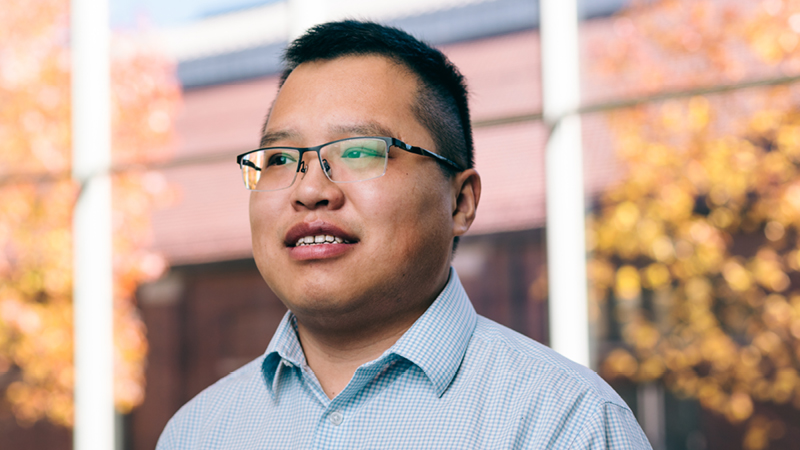
Jianguo Wang is an Assistant Professor in the Department of Computer Science at Purdue University, joining in Spring 2021. His research focuses on database systems for the cloud and large language models, including disaggregated databases and vector databases. He holds a PhD from the University of California, San Diego, and has worked at Zilliz (Milvus) and Amazon Web Services (AWS). Education: PhD in Computer Science (UC San Diego, 2019), MPhil (Hong Kong Polytechnic University), BSc (Zhengzhou University) Research interests include Disaggregated Databases, Vector Databases for Large Language Models, and cloud-native systems. Notable work includes OpenAurora (an open-source Amazon Aurora prototype) and contributions to Milvus. He has received grants like the NSF CAREER Award and honors such as the IEEE TCDE Rising Star Award. Advising a team of students in database systems and teaching courses like CS592 (Disaggregated Database Systems) and CS440 (Large-scale Data Analytics). Serves on program committees for SIGMOD, VLDB, and ICDE.
Eytan Adar is a Professor of Information and Computer Science at the University of Michigan, holding dual appointments in the School of Information and the College of Engineering's Electrical Engineering and Computer Science department. His work sits at the intersection of human-computer interaction and artificial intelligence, focusing on large-scale systems analysis and novel interface design. Adar's research spans multiple domains including social media analysis (Twitter, Reddit), academic citation networks, meme propagation, information extraction, and political networks. His methodological expertise includes data mining, data visualization, and graph-based network analysis. His work often operates at internet scale, examining language, creativity, social network dynamics, and text production. His recent publications reveal a strong focus on AI-human collaboration, with particular attention to generative AI interfaces, visualization techniques for complex data, and ethical considerations in AI systems. His work shows a consistent pattern of bridging theoretical insights with practical system implementations. Best Paper Award at ProtoAI: Model-Informed Prototyping for AI-Powered Interfaces, IUI'21 Honorable Mention Award at CHI'24 for feminist interaction techniques research Best Paper Award at ICWSM'18 for Wikipedia language edition analysis Best Paper Award at ICML 2016 Workshop for neural language model visualization Best Student Paper at WSDM'09 for web dynamics research Best of CHI at CHI 2008 for web revisitation patterns analysis Adar has advised numerous PhD students who have gone on to prominent positions at organizations including Google, Apple, RAND, Northwestern University, and Stanford. His research is generously supported by the NSF, IARPA, NIH, the Education Department, and major technology companies including Adobe, Microsoft, Facebook, Google, and Yahoo. He is also a founder of the International Conference on Web and Social Media (ICWSM) and has served as Co-General Chair for WSDM and Co-Program Chair for UIST.
Frank Li is an Assistant Professor at Georgia Tech, affiliated with the School of Cybersecurity and Privacy and School of Electrical & Computer Engineering . His research focuses on computer security and privacy , particularly internet, network, and web security, with a data-driven approach. Education : PhD in Computer Science from UC Berkeley, BS in Computer Science from MIT (Course 6-3) Experience : Previously a visiting researcher at Facebook, with internships at Google and Microsoft Research Research interests include empirical computer security , internet measurement, password policies, IoT security, browser extensions, and DeFi vulnerabilities. His work combines large-scale data analysis, network traffic studies, and user behavior experiments. His publications highlight trends in IPv6 adoption , security notifications, password masking, third-party web content, and PLC security evaluation. Teaching awards include the Student Recognition of Excellence in Teaching (Annual CIOS Award and Semester Honor Roll) at Georgia Tech. He leads the BEES Lab (Better Empirically Established Security), which investigates security and privacy issues through internet-wide measurements, network traffic analysis, and data mining. Lab members include PhD and MS students in computer science.
Roberto Berjón Gallinas is a Professor at the School of Computer Science, Deusto University. His research focuses on semantic technologies, internet of things, and data integration, with a strong emphasis on mobile applications and open data. He leads two research groups: ICS (Innovación en Ciencias Sociales) MARATON (Mobile applications, internet of things, data processing, semantic technologies, open data) His recent work includes developing smart tracking frameworks for IoT workflows and digital twins, event-driven architectures for IoT systems, and semantic integration solutions for university research. His projects often bridge technical innovation with practical applications in collaborative e-learning and spatial analytics. Key trends in his publications highlight advancements in IoT frameworks , semantic technologies for data integration, and real-time systems using BLE and open data. These works frequently intersect with collaborative e-learning , university transparency , and adaptive mobile platforms .
Sheila McIlraith is a Professor in the Department of Computer Science at the University of Toronto, holding the Canada CIFAR AI Chair at the Vector Institute and serving as Associate Director and Research Lead at the Schwartz Reisman Institute for Technology and Society. Her research spans AI safety, ethics, reinforcement learning, and knowledge representation, with a focus on human-compatible AI and long-term societal impacts. Her career includes six years as a Research Scientist at Stanford University and a year at Xerox PARC. McIlraith’s work has been recognized through ACM and AAAI fellowships, as well as prestigious awards like the SWSA 10-Year Award (2011) and the CAIAC Lifetime Achievement Award (2024). Research Interests: AI Safety and Alignment Human-Compatible AI Reinforcement Learning with Ethical Constraints Semantic Web Services Cognitive Robotics and Diagnostic Systems Probabilistic and Logical Reasoning Recent Contributions: Her work emphasizes ethical AI integration, such as the Embedded Ethics Education Initiative (E3I), and addresses challenges in long-term AI risks, multi-agent systems, and interpretable decision-making frameworks. Awards and Honors: ACM Fellow AAAI Fellow 2023 IJCAI-JAIR Best Paper Prize 2024 CAIAC Lifetime Achievement Award Labs and Teams: McIlraith leads initiatives at the Schwartz Reisman Institute and contributes to the Vector Institute, focusing on societal and ethical dimensions of AI technology.
Christian Grewell is a Clinical Associate Professor of Technology, Operations, and Statistics at the Leonard N. Stern School of Business, New York University, joining in September 2023. His interdisciplinary work bridges technology, business innovation, and real-time human motion systems, with applications across industries. Education: MBA, NYU Stern School of Business BS, NYU College of Arts and Sciences His research interests focus on the business applications of emerging technologies. He explores innovation in Artificial Intelligence, Virtual and Augmented Reality, Blockchain, FinTech, and Machine Learning , with a strong emphasis on product development and sustainable technological solutions. His interdisciplinary approach integrates data visualization, cloud computing, and mobile service management to optimize business processes. Grewell's expertise spans entrepreneurship, start-up development, and tech regulation. His work in information systems and web search technologies supports modern service businesses. He has been featured at events such as the Tribeca Film Festival for his real-time motion capture and networked visualization projects. He was a founding team member and faculty member at NYU Shanghai, contributing to the development of academic programs at the intersection of technology and business.
Janna Parker is a professor in the Department of Marketing at James Madison University, specializing in digital marketing, retailing, and nonprofit marketing. With a career transition from political campaigns, she focuses on social media's role in personal and professional branding. Her research examines work-personal social media boundaries, employer governance policies, and volunteerism in nonprofit contexts. Education: Bachelor's in History (California State University Sacramento), Master's (Cameron University), Doctorate (Louisiana Tech) Teaching Interests: Digital marketing education, social media strategy, nonprofit marketing Her scholarly work spans social media governance, volunteer engagement, and retail dynamics, with recent emphasis on digital marketing pedagogy and cancel culture implications. Parker has contributed to academic journals through empirical studies and conceptual commentaries. Key article trends include: Digital marketing education evolution (2024) Social media governance in corporate and nonprofit contexts (2024) Online teaching satisfaction in higher education (2022) Volunteer brand community dynamics (2020) Consumer behavior frameworks (2019) Her media appearances include expert commentary on holiday retail strategies and social media research, reflecting practical applications of her academic work.
Daniel Abadi is the Darnell-Kanal Professor of Computer Science at the University of Maryland, College Park, with an appointment in the University of Maryland Institute for Advanced Computer Studies. He leads the Data Systems Lab at Maryland (DSLAM) and has made significant contributions to database system architecture and implementation, particularly in scalable and distributed systems. Prof. Abadi's research focuses on database system architecture, especially at the intersection with scalable and distributed systems. He is best-known for the development of the storage and query execution engines of the C-Store (column-oriented database) prototype, which was commercialized by Vertica and eventually acquired by Hewlett-Packard, and for his HadoopDB research on fault tolerant scalable analytical database systems which was commercialized by Hadapt and acquired by Teradata. His current work includes deterministic distributed systems like Calvin and SLOG, which provide strictly serializable, low-latency, geographically replicated database transactions. Analysis of his recent publications reveals a strong focus on modern database challenges including transaction processing, distributed systems architecture, data mesh concepts, schema evolution, and IoT data management. His work consistently addresses the tension between consistency, availability, and performance in distributed database systems, with recent emphasis on moving beyond traditional two-phase commit protocols and exploring novel approaches to data architecture like data mesh. ACM Fellow Sloan Research Fellowship Churchill Scholarship NSF CAREER Award VLDB Best Paper Award Two VLDB Test of Time Awards (for C-Store and HadoopDB) 2008 SIGMOD Jim Gray Doctoral Dissertation Award 2013-2014 Yale Provost's Teaching Prize 2013 VLDB Early Career Researcher Award PhD dissertation advisor for Alexander Thomson and Jose Falerio, whose dissertations won SIGMOD Jim Gray Doctoral Dissertation Awards in 2015 and 2020 respectively Prof. Abadi has advised multiple PhD students, including Alexander Thomson and Jose Falerio, both of whom received the prestigious SIGMOD Jim Gray Doctoral Dissertation Award. His research has been supported by numerous grants including NSF funding for projects like SLOG. He maintains an active presence in the database community through his widely-read blog DBMS Musings and through service on program committees for major conferences including SIGMOD, VLDB, and CIDR. He leads the DSLAM research group at the University of Maryland, which focuses on cutting-edge database system research with strong industry connections and practical impact.
Ruth Mostern is Associate Professor of History at the University of Pittsburgh and Director of the Institute for Spatial History Innovation (ISHI). She is Vice-President and President-Elect (2025-2026) of the World History Association and leads the award-winning World Historical Gazetteer project. Education Ph.D. in History, University of California, Berkeley, 2003 Research Interests Mostern is an interdisciplinary historian specializing in world, Chinese, environmental, and spatial history. She investigates long-term human–environment interactions at continental and millennial scales, focusing on how societies organize space, resources, and risk. Her work integrates GIS, digital gazetteers, and environmental science to reconstruct historical geographies of empire, water management, and ecological change. Current projects include: Place: A Global History – a study of itineraries, gazetteers, and databases as technologies of spatial knowledge. The Medieval Climate Anomaly and the Global Medieval Era – cultural adaptations to climate change c. 950-1250 CE. Research Trends Her recent publications span digital environmental humanities, historical GIS, Song-dynasty political economy, and pre-industrial Asian political ecology. A dominant theme is the coupling of state power with environmental transformation, exemplified by her 2021 book The Yellow River: A Natural and Unnatural History (Yale), winner of the 2023 Joseph Levenson Prize. Awards & Honors Joseph Levenson Prize, Association for Asian Studies, 2023 NEH Digital Humanities Advancement Grant, 2023-2025 Digital Humanities Awards 2021 – Best DH Tool (World Historical Gazetteer) Fudan University Fellowship for Studies of Chinese Civilization, 2019 NEH Humanities Connections Implementation Grant, 2018-2020 Chiang Ching-kuo Foundation Summer Institute Grant, 2015-2016 NSF Collaborative Research Grant, 2013-2015 ACLS Digital Innovation Fellowship, 2011-2012 Advising & Grants Mostern welcomes graduate students interested in environmental, global, Asian, or digital history. She has directed multiple externally funded projects, including the NSF-funded Center for Historical Information and Analysis and NEH-supported initiatives on water in Central Asia and global historical gazetteers. Labs & Teams She directs the Institute for Spatial History Innovation (ISHI) at the University of Pittsburgh, a hub for interdisciplinary research integrating spatial technologies with historical inquiry. ISHI hosts the World Historical Gazetteer , providing open tools and datasets that link knowledge about historical places across world regions.
Fabian Suchanek is a full professor at Institut Polytechnique de Paris, specifically affiliated with Télécom Paris. He leads research in the Data, Intelligence, and Graphs (DIG) team within the Computer Science department. His academic career focuses on bridging artificial intelligence with structured knowledge representations. Suchanek's research interests span artificial intelligence, knowledge bases, and natural language processing, with particular emphasis on knowledge graph construction , rule mining , knowledge-based language models , and explainable AI . His work demonstrates how structured knowledge can enhance machine learning systems, particularly large language models, by providing factual grounding and interpretability. The research group he leads develops practical systems that address real-world knowledge management challenges. His recent publications showcase a strong trajectory in knowledge-intensive AI, with notable contributions to knowledge graph completion, rule mining techniques, and neural approaches to knowledge base validation. The research demonstrates increasing integration between symbolic and neural approaches to AI. Best Student Paper Award at KR 2024 for work on contextual reasoning Best Demo Award of IJCAI 2024 for rule mining in knowledge graphs French Open Research Award for the YAGO project Best Paper Award of ESWC 2021 for Neural Knowledge Base Repairs Suchanek has secured significant research funding, evidenced by his active recruitment of PhD students for knowledge-based language model research. He has held visiting positions, including at Nanyang Technological University (June-September 2023), and is recognized internationally through keynote invitations such as the Singapore ACM SIGKDD Symposium 2023. He has deliberately stepped back from administrative duties at Institut Polytechnique de Paris to focus on research. His laboratory maintains strong industry connections through open-source software projects including the YAGO knowledge base, AMIE for rule mining, STACI for explainable AI, and several other tools that have become standard in knowledge representation research.
Dr. Anna Hopkins is a Senior Lecturer in conservation biology and molecular ecology at Edith Cowan University's School of Science. She is the Course Coordinator for postgraduate Environmental Science programs and has held academic positions since 2016. Her research focuses on soil microbial ecology, forest pathogens, eDNA applications, and climate change impacts. She has taught courses including Plant Pathology, Genetics, and Soil Processes. Education: PhD (University of Tasmania, 2007), Diploma of Modern Languages (UWA, 2002), BSc (Hons) (UWA, 2002) Her research interests include mycorrhizal-plant interactions, soil fungal responses to disturbances, and regenerative agriculture. Notable awards include the 2010 New Zealand Zonta Women in Science Award and the 2017 ECU Athena Swan Award. Recent articles highlight her work on soil microbial dynamics, invasive species management, and eDNA applications in ecology. She has led projects funded by organizations like the Australian Coal Association and WWF Australia, focusing on biodiversity restoration and ecosystem health. Awards: Multiple international and teaching awards, including recognition for poster presentations and research excellence. Advising & Grants: Supervises 5 PhD/MSc students and leads grants totaling over $1M in projects like eDNA tracking and Gilbert’s Potoroo conservation. Professional roles include Deputy Coordinator of the IUFRO Working Party on Forest Nurseries and Vice President of the Australasian Mycological Society.
Alexandra Boldyreva is a Professor at the Georgia Institute of Technology, holding joint appointments in the School of Cybersecurity and Privacy and the School of Computer Science. She serves as Associate Chair for Graduate Studies in the School of Cybersecurity and Privacy and coordinates the Information Security Master’s program in the College of Computing. Her affiliations include the Institute for Information Security & Privacy (IISP), the Algorithms, Combinatorics and Optimization (ACO) program, and the Algorithms and Randomness Center (ARC). She earned her Ph.D. in Computer Science from the University of California, San Diego, and holds bachelor’s and master’s degrees in applied mathematics from St. Petersburg State Technical University, Russia. Her research focuses on cryptography and information security, with notable contributions to encryption methods, authentication protocols, and privacy-preserving systems. Boldyreva’s work emphasizes provable security analysis of protocols like FIDO2 and TLS 1.3, as well as searchable encryption and data privacy techniques. Her recent studies include secure communication channel establishment, leakage quantification in encryption systems, and applications of fuzzy search in encrypted databases. She has received Test of Time Awards for foundational contributions to cryptography. Boldyreva leads initiatives in cybersecurity education and has secured grants for research in secure communication protocols and human-computing approaches to key exchange. Her interdisciplinary collaborations span computer science, mathematics, and privacy engineering.
Zachary Ives is the Adani President's Distinguished Professor and Department Chair of the Computer and Information Science Department at the University of Pennsylvania. He holds affiliations with the ASSET Center for Safe, Explainable and Trustworthy AI, the Warren Center for Network and Data Science, the Center for Neuroengineering and Therapeutics, and serves as a Distinguished Research Fellow at the Annenberg Center for Public Policy. His research focuses on data integration and sharing, data provenance and trustworthiness, and machine learning systems. He develops data science platforms at the intersection of databases, machine learning, and distributed systems, with applications in Web question answering and scientific domains like genetics and neuroscience. His work addresses fundamental challenges in integrating heterogeneous data, ensuring trustworthy results, and facilitating collaborative data science. His recent publications demonstrate a strong focus on data lakes, learned database systems, fine-grained provenance, and question answering systems. These works span top conferences including SIGMOD (where his paper was selected as Best Paper in 2024), VLDB, ACL, and PODS, showing the breadth of his contributions across database systems, natural language processing, and data management. NSF CAREER award recipient Fellow of the ACM Christian R. and Mary F. Lindback Foundation Award for Distinguished Teaching IEEE Technical Committee on Data Engineering Education Award SIGMOD Best Paper Award ICDE 2013 ten-year Most Influential Paper award As Department Chair, Ives has overseen significant departmental growth, hiring 25 new faculty since 2018. He advises numerous PhD students and postdocs, and maintains extensive collaborations across Penn and with external institutions. His research has been funded by NSF, NIH, DARPA, Google, Amazon, and other organizations. He has developed courses including NETS 212 'Scalable and Cloud Computing' and teaches Big Data Analytics. His research group, the Penn Database Group, works on projects including data lake management, data provenance, and collaborative data science platforms. His work with neuroscientists on seizure prediction has received significant attention, including a competition with 504 teams achieving 82% accuracy.
Katja Hose is a Full Professor of Data Management at TU Wien's DBAI research unit, heading the Data Management and Knowledge-Driven AI Lab. She previously held a Poul Due Jensen Foundation Professorship at Aalborg University. Her research focuses on data and knowledge engineering, including graph databases, knowledge graphs, querying, analytics, and machine learning, with interdisciplinary applications in bioscience, healthcare, and environmental assessment. Education: PhD in Computer Science (Ilmenau University of Technology, 2009), Postdoc at Max Planck Institute for Informatics (2009–2012). Academic roles include Program Co-Chair for ISWC 2024 and EDBT 2023, and editorial board membership at VLDBJ and TGDK. She leads projects like TARGET (health virtual twins) and ARMADA (data management). Research Interests: Knowledge Graphs, Semantic Web, Big Data, Machine Learning, Data Integration, and Provenance Systems. Key contributions include SHACL shape extraction, conversational data analytics, and environmental knowledge graphs. Awards include the 2025 Distinguished Meta-Reviewer Award and 2024 Manfred Paul Award. Advising and Grants: Supervised students including E. Pürmayr (Diploma Thesis 2025). Active in EU projects (TARGET, ARMADA) and grant coordination. Labs/Teams: DMKI Lab at TU Wien, collaborating with interdisciplinary teams in healthcare and environmental science.
Dr. Jeewanie Jayasinghe Arachchige is a Lecturer in the Department of Computer Science at Vrije Universiteit Amsterdam, Faculty of Science. She teaches undergraduate courses including Bachelor Project Computer Science, Professional Development, and Software Engineering Processes for the academic year 2024–2025. Her research focuses on process mining , healthcare informatics , and data security . She applies process mining to analyze healthcare pathways and subpopulation treatment variations, develops explainable AI frameworks for predictive analytics, and examines data governance in emerging architectures like Data Lakehouses. Her work intersects legal informatics, particularly formalizing Sri Lankan civil court processes using ontology engineering. Recent publications highlight trends in balancing simplicity and complexity in process modeling, Industry 4.0 healthcare applications, and cybersecurity in model-driven web development. She has contributed to over 20 peer-reviewed articles since 2006, spanning topics from service-oriented architectures to value network analysis. Her teaching and research emphasize practical applications of IT in healthcare, legal systems, and enterprise environments. No ancillary activities are currently recorded.