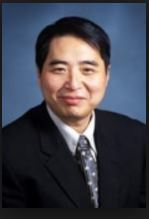
Giuseppe Desolda is an Associate Professor at the Computer Science Department of the University of Bari Aldo Moro , where he has been since July 2, 2022. He leads research at the Interaction, Visualization, Usability & UX (IVU) Lab , focusing on Novel Interaction Techniques , Internet of Things development, and Usable Security . His work includes coordinating the PRIN PNRR DAMOCLES project (2022-2025) on human-centric cybersecurity and leading Work Package 1 of PNRR SERICS. PhD in Computer Science from University of Bari Co-author of over 110 publications Associate Editor for IEEE Access Journal Research interests span Human-Computer Interaction (HCI), End-User Development (EUD) for IoT, and Usable Security systems. His recent work explores AI-driven usability evaluation, voice-based 3D modeling, and GDPR-compliant software frameworks. Article trends show focus on phishing mitigation , smart environment customization , and privacy-by-design methodologies. Publications appear in TOCHI , FGCS , IJHCS , and BIT . Scientific achievements include: Selected for Heidelberg Laureate Forum (2019) LARE spin-off grant (EUR 50,000, 2013) He supervises PhD students Andrea Esposito and Francesco Greco, and has advised multiple funded research projects (PRIN DAMOCLES, DevProDev, PNRR SERICS). Teaching roles include courses on Human-Centered AI, IoT Security, and Web Programming across undergraduate and graduate programs.
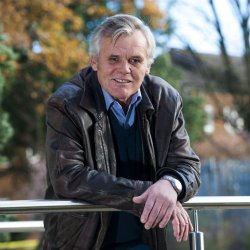
Professor Keith Phalp is the interim Pro-Vice Chancellor for Education and Quality at Bournemouth University. With over 30 years in higher education, he has held roles ranging from lecturer to Executive Dean. His research focuses on software engineering, model-driven development, AI applications, and social computing, particularly digital addiction and online gambling. He leads research and knowledge exchange at the university, with over 200 refereed publications. His work addresses challenges in software project phases, business-software model relationships, and ethical tech design. Recent articles highlight his contributions to safer gambling transparency, social media misinformation intervention design, and fairness in cloud computing. He collaborates extensively on interdisciplinary projects, such as combating digital addiction through peer support groups and enhancing educational tools with AI. Professor Phalp’s leadership spans strategic academic roles, balancing administrative duties with advancing research in socially impactful areas like responsible technology and user behavior analysis.
Dr. Hy Truong Son is an Assistant Professor in the Department of Computer Science at the University of Alabama at Birmingham (UAB), affiliated with the College of Arts and Sciences. He holds a Ph.D. in Computer Science from the University of Chicago and has prior experience as a Lecturer and Postdoctoral Fellow at the Halicioglu Data Science Institute, UC San Diego. His research focuses on AI-driven solutions for science and engineering, particularly deep learning applications in drug discovery, repurposing, and biomedical problem-solving through his HySonLab group. Dr. Son’s educational background includes a Ph.D. from the University of Chicago, emphasizing foundational training in computer science. His postdoctoral work at UC San Diego further solidified his expertise in data science and interdisciplinary AI applications. Research interests span AI for drug discovery, generative AI, multimodal learning, and healthcare technologies. His lab’s work integrates AI with molecular biology, medical imaging, and wearable sensor data to address challenges in precision medicine and environmental science. Notable projects include DrugPipe for drug repurposing and SilVar-Med for explainable medical imaging analysis. His recent publications highlight advancements in generative models, speech synthesis, protein design, and scalable graph neural networks. These works reflect a focus on bridging AI with real-world biomedical and engineering applications. While no awards are explicitly listed, his prolific publication record and active lab indicate significant contributions to the field. He advises students and engineers in his team, fostering collaborative research environments. Ongoing projects include wearable device datasets for mental health and multimodal biomedical knowledge graph development. Dr. Son’s HySonLab group emphasizes translational research, aiming to deploy AI solutions in clinical and scientific settings. Current efforts include optimizing molecular interactions via large language models and enhancing drug discovery pipelines through interdisciplinary computational methods.
Sergio Gómez Jiménez is an Associate Professor in the Department of Computer Engineering and Mathematics at Rovira i Virgili University (URV), Tarragona, Spain. He joined URV in 1995 and has held his current position since 1997. He obtained degrees in Physics (1990) and Mathematics (1995) and a PhD in Physics (1994) from the Universitat de Barcelona. His research focuses on complex networks, including community structure analysis, epidemic spreading, urban congestion, and applications to biology, medicine, and social systems. He has authored over 100 publications in high-impact journals like Nature Methods and Physical Review Letters. He coordinates the interuniversity Master's in Biomedical Data Science and the PhD Program in Bioinformatics. His editorial roles include Associate Editor of Complexity and Review Editor of Frontiers in Physics. Notable awards include the American Physical Society's Outstanding Referee (2015) and the Web Science Trust's Test of Time Award (2024). His work on modeling the spatiotemporal spread of epidemics, such as the 2020 COVID-19 pandemic, has received significant attention. He also contributed to urban traffic congestion analysis and developed algorithms for hierarchical clustering (e.g., MultiDendrograms). Collaborations span institutions like the University of Oxford and CERN, reflecting his interdisciplinary approach to complex systems.
Tara Whalen is an Adjunct Professor at the School of Computer Science, Carleton University. Her research focuses on cybersecurity, privacy engineering, usable security mechanisms, and information control systems. She has contributed to studies on password security, authentication alternatives to CAPTCHA, and mobile device privacy challenges. Her work bridges technical security practices with human factors, emphasizing how security systems interact with end-users. Notable projects include breach alerting services and empirical studies on browser security interfaces. She has published extensively since 2003, with recent work addressing modern challenges in password management and privacy-by-design frameworks. No academic awards or grants are listed, though her publications indicate active collaboration in computer security research. She maintains an affiliation with Carleton's Herzberg Laboratories and can be reached at tjwhalen@gmail.com.
James Tweedley is a Senior Lecturer at Murdoch University, affiliated with the School of Environmental and Conservation Sciences within the College of Environmental and Life Sciences. He is also part of the Centre for Sustainable Aquatic Ecosystems and Harry Butler Institute. His research focuses on aquatic ecosystem health, fisheries management, and restoration strategies, with particular expertise in estuarine ecology and benthic macroinvertebrates. Education: Tweedley holds a BSc (Marine Biology) from the University of Portsmouth (2005), an MRes in Marine Biology from the University of Plymouth (2006), and a PhD in Marine Science from Murdoch University (2011). Research Interests His work spans two core areas: (1) understanding ecological linkages between fish/invertebrate communities and environmental drivers to develop estuarine health indices, and (2) fisheries management including aquaculture-based enhancement, artificial reefs, and socio-economic dimensions of fishing. Recent projects address eutrophication mitigation via mussel habitat restoration, barrier impacts on fish migration, and invasive species effects on ecosystems. Key Contributions Tweedley has pioneered methods for assessing fish communities in hypersaline environments and evaluated artificial reef effectiveness in temperate waters. His work on mass mortality events and tidal exclusion barriers provides critical insights for conservation planning. Awards - Young Tall Poppy and West Australian Young Tall Poppy of the Year (2021) - Recognizing outstanding research and science communication. Grants & Collaboration Funded projects include shellfish reef restoration studies and small-scale fisheries management in Indonesia. Collaborates with institutions like the Australian Institute of Policy and Science and local Indigenous communities for culturally significant estuary monitoring. Labs/Teams Leads the Sustainable Aquatic Ecosystems research group and contributes to the Harry Butler Institute’s coastal resilience initiatives.
Mohammad Mannan is a Professor at the Concordia Institute for Information Systems Engineering, Concordia University. His research focuses on systems security, privacy, mobile security, machine learning applications in security, authentication mechanisms, and trusted computing. He actively supervises students in Information Systems Security (MASc) and Information and Systems Engineering (PhD) programs. Dr. Mannan's work emphasizes real-world security challenges, including vulnerabilities in IoT platforms, privacy issues in mobile apps and websites, and cryptographic protocol weaknesses. He has contributed to developing tools like WARNE for stalkerware detection and LURK-T for TLS delegation improvements. His research bridges theoretical security concepts with practical implementations, addressing threats such as ransomware, phishing, and privacy violations in digital ecosystems. Key areas of exploration include analyzing JavaScript vulnerabilities in real-world applications, evaluating privacy policies of AI chatbots, and mitigating risks in super-apps like WeChat. His publications often highlight the intersection of security and privacy, with a focus on measurable solutions for emerging technologies like smart devices and enterprise security software. Despite no explicitly listed awards or grants, his extensive publication record demonstrates sustained contributions to cybersecurity and privacy research. His advising role reflects a commitment to training the next generation of security professionals in addressing complex modern threats.
Professor Manolis Koubarakis is a faculty member at the Department of Informatics and Telecommunications, National and Kapodistrian University of Athens. His research focuses on geospatial data science, knowledge graphs, entity resolution, and AI applications in Earth observation. He leads projects like ExtremeEarth and Plato, advancing semantic data cube systems and geospatial question answering engines. His work bridges AI and geospatial technologies, with contributions to frameworks like pyJedAI and Strabo 2 for managing big geospatial data. Research Interests include: Geospatial Question Answering Systems Entity Resolution and Entity Linking Ontology-Based Data Access (OBDA) Knowledge Graph Construction and Applications Earth Observation Data Analytics AI for Geoinformatics Notable Projects: ExtremeEarth: Combines Copernicus satellite data with machine learning for environmental analytics. Plato: Semantic data cube system enabling advanced querying of multidimensional datasets. GeoQA2: A geospatial question answering engine evaluated on large benchmarks. JedAI Family: Tools for scalable entity resolution in structured/semi-structured data. His publications span 20+ years, with recent emphasis on: AI-driven Earth observation systems Geospatial RDF benchmarking 3D geospatial interlinking Large language models for legal and health content delivery
Dr. Eoin O'Gorman is a Senior Lecturer in the School of Life Sciences at the University of Essex. His research investigates the impacts of global change across multiple levels of ecological organisation, from individual metabolism to ecosystem processes, with a particular focus on food web dynamics and body size as a functional trait. BSc, University College Cork (2004) PhD, University College Cork (2009) Current research projects include: Warming effects on trophic interactions Anthropogenic stressors in marine and freshwater systems Body size scaling in ecological networks Food web stability under climate change Recent work demonstrates how warming alters plankton body-size distributions (2025), simplifies freshwater food webs through multiple stressors (2025), and reduces trophic diversity in high-latitude ecosystems (2024). His studies span marine, freshwater, and terrestrial habitats, seeking universal responses to environmental change. Current grants include: 2024 WebDNA: Food web reconstruction through environmental DNA analysis (Leverhulme Trust) 2023 Predicting Impacts of Global Environmental Change on Ecological Networks (NERC) 2022 ORBIT: Offshore Renewables and Benthic Communities (NERC) Supervises PhD candidates studying: Zelin Chen: Offshore structures' impacts on North Sea biodiversity Patrick Eskuche Keith: Southern Ocean food web dynamics Anamika Poyil: Environmental biology of marine communities
Dr. Andrew McCarren is an Associate Professor and Head of the School of Computing at Dublin City University (DCU). He holds a PhD and BSc from DCU and is a funded investigator in the Insight Centre for Data Analytics. His research focuses on applying data analytics to Fintech, Agriculture, Health, and Sports Performance. As a former industry professional with 20+ years experience in Agri, Engineering, and Pharmaceuticals, he bridges academic and industrial collaboration. Professional Affiliations: Fellow of Royal Statistical Society and Advance HE Key Roles: PI on SFI/EI projects, Visiting Professor at Princess Nourah bint Abdulrahman University Research spans software engineering (microservices architecture), health informatics (exercise interventions), and agri-tech (automated food processing). Over 100 publications across data science, sports analytics, and engineering.
Bill Chu is a Professor and Managing Director of CyberDNA at the University of North Carolina at Charlotte's College of Computing and Informatics. His research focuses on cybersecurity automation, cyber threat intelligence, application security, and AI-driven cybersecurity solutions. He has contributed to numerous publications on threat detection, vulnerability analysis, and secure software development practices. Chu's work emphasizes practical applications of cybersecurity, including static analysis tools, interactive code annotation for vulnerability detection, and educational tools for secure programming. His research spans collaborations with institutions and industry to bridge gaps in cybersecurity education and practice. Notable contributions include developing frameworks for extracting actionable threat intelligence from social media, automated unit testing for XSS vulnerabilities, and leveraging large language models for vulnerability detection. Chu actively participates in workshops and conferences on cybersecurity and software engineering, contributing to advancements in both theory and application.
Joel E. Cohen is the Abby Rockefeller Mauzé Professor at The Rockefeller University, where he leads the Laboratory of Populations. With over five decades of research experience, Cohen has pioneered innovative mathematical approaches to study biological populations and variability. His work bridges mathematics, biology, and environmental science, fundamentally changing how scientists understand population dynamics and the significance of biological variability. Dr. Cohen's research focuses on developing new mathematical tools to address population problems in demography, epidemiology, and ecology. He has made seminal contributions to the understanding of heavy-tailed distributions that describe extreme events like hurricanes and disease outbreaks, challenging traditional statistical approaches. His laboratory has conducted groundbreaking research on the spatial distribution of human populations in relation to geophysical factors, with unexpected practical applications ranging from soap formulation to semiconductor manufacturing. Cohen has also developed mathematical models for Chagas disease control in rural Argentina and created algorithms to predict international migration patterns. Analysis of Cohen's recent publications reveals a sustained focus on Taylor's law of fluctuation scaling, population dynamics, and ecological statistics. His work consistently demonstrates how abstract mathematical concepts can transform our understanding of biological systems, from cellular processes to global population trends. The research spans theoretical mathematics to practical applications in disease control, conservation biology, and environmental management. Olivia Schieffelin Nordberg Prize for excellence in writing in the population sciences (March 1997) Gheorghe Lazar Prize of Romanian Academy (December 2000) As director of the Laboratory of Populations, Cohen has led research on human population growth, infectious diseases, food webs, and international migration. His methods for assessing the uncertainty of population projections have been applied in court cases for predicting future claimants of asbestos-related diseases. Cohen's laboratory has collaborated with the United Nations Population Division on migration studies and developed mathematical models that account for more than half of the variability in annual migration numbers among 229 countries. Current research directions include understanding how demographic, economic, and cultural changes interact with Earth's physical, chemical, and biological environments. The Laboratory of Populations employs a multidisciplinary approach that combines mathematical modeling, statistical analysis, and field studies to address complex population issues. Their work exemplifies how basic quantitative research on populations frequently yields unexpected practical applications, demonstrating the profound connections between theoretical mathematics and real-world challenges in public health, environmental science, and resource management.
Dr. Saptarshi Sengupta is an Assistant Professor in the Department of Computer Science at San José State University (SJSU), leading the Machine Intelligence and Complex Systems (MICoSys) Lab. He advises the ACM student club at SJSU and holds a 'Alien of Extraordinary Ability' visa (Einstein Visa) from USCIS. His work focuses on resilient cyber-physical systems, risk analysis, and deep learning applications in healthcare and industrial systems. Education: Ph.D. in Electrical Engineering, Vanderbilt University M.S. in Electrical Engineering, Vanderbilt University B.Tech. in Electronics & Communication Engineering, West Bengal University of Technology Research Interests: Cyber-Physical Systems Security Healthcare AI for Cancer and Chronic Disease Prediction Battery Prognostics and Energy Systems Machine Learning for Complex Systems Analysis Key Achievements: Dr. T.M.A. Pai Gold Medal Award for Healthcare AI contributions Recipient of multiple best paper awards at international conferences Author of over 30 peer-reviewed publications Labs & Teams: Leads the MICoSys Lab, developing AI solutions for healthcare diagnostics, industrial prognostics, and smart infrastructure systems. Collaborations include interdisciplinary projects with biomedical and engineering domains.
Dr. Masoud Makrehchi is an Associate Professor in the Department of Electrical, Computer and Software Engineering at Ontario Tech University, part of the Faculty of Engineering and Applied Science. His research focuses on Natural Language Processing, Artificial Intelligence, Machine Learning, and Social Computing, with a strong emphasis on applications in network science and moral AI. He holds a PhD from the University of Waterloo (2007), along with earlier degrees from Shiraz University and Iran University of Science and Technology. Prior to academia, he worked as a Senior Research Scientist at Thomson Reuters (2008–2012) and completed a postdoctoral fellowship at the University of Waterloo (2007–2008). His research expertise includes text mining, social network analysis, and network science, addressing challenges such as signed social network analysis, document classification, and crime trend prediction using social media data. He has received several awards, including the NSERC Postgraduate Scholarship and the SBP Challenge Award (2012). His work spans over 50 peer-reviewed publications in journals like Expert Systems with Applications, Social Network Analysis and Mining, and Web Intelligence, with contributions to conferences such as GECCO and IEEE/ACM. Dr. Makrehchi’s publications highlight innovations in feature selection, text segmentation, and AI-driven frameworks for requirements elicitation. His recent work explores coherence graphs for text segmentation, generative AI in education, and bias detection in medical datasets. He has also contributed to patent applications related to sentiment analysis and text extraction systems.
Dr. Franjo Cecelja is a Reader in the School of Chemistry and Chemical Engineering at the University of Surrey. He holds a Dipl. Eng. from the University of Zagreb, an M.Sc. from Cranfield Institute of Technology, and a Ph.D. from Brunel University. His research focuses on systems engineering for energy and industrial applications, optimization, decision making, and semantic technologies. He has led projects such as the FP7 (Marie Curie LTN) initiative on renewable energy systems engineering (£425k, 2013–2018). His work spans ontology engineering applications in biorefining, waste valorization, and sustainable processing. Notable contributions include semantic frameworks for model and data integration in biorefineries and decision support systems for industrial symbiosis. Education: Ph.D., Brunel University (Optical Sensors for Electric Fields) M.Sc., Cranfield Institute of Technology (Control & Signal Processing) Dipl. Eng., University of Zagreb (Aerospace Technology) His research interests integrate ontology engineering with process systems engineering to address challenges in biorefining, industrial symbiosis, and sustainable resource management. Recent publications emphasize semantic technologies for waste valorization, PFAS treatment, and decision-making frameworks in biorefining. Dr. Cecelja’s FP7 project demonstrated leadership in renewable energy systems, leveraging semantic networking facilities and value chain optimization. His work bridges academic research with industrial applications, emphasizing circular economy principles and model-driven decision support. Labs/Teams: His research is conducted within the University of Surrey’s School of Chemistry and Chemical Engineering facilities, collaborating with interdisciplinary teams on biorefining and process systems engineering.