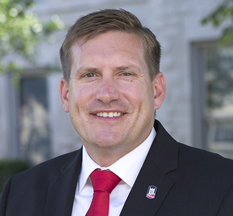
Dr Nguyen Tran is a Researcher at the School of Computer and Mathematical Sciences , part of the Faculty of Sciences, Engineering and Technology at the University of Adelaide . His work focuses on developing software systems that are correct, efficient, and secure, particularly through the application of blockchain and related technologies. Nguyen Tran's research spans four key domains: Software Engineering for large-scale systems, Cryptography & Blockchain for security, Internet of Things for physical-digital integration, Machine Intelligence for automation. He is eligible to co-supervise Masters and PhD students and contributes to the Centre for Research on Engineering Software Technology . His publications highlight advancements in blockchain metadata management, IoT search engines, and decentralized provenance systems.
Olga Obizhaeva is an Assistant Professor of Finance at the Stockholm School of Economics (SSE) and a Researcher at the Swedish House of Finance (SHoF). She holds a PhD from the London School of Economics. Her research focuses on empirical asset pricing, institutional asset management, market microstructure, fintech, and big data applications in finance. Education PhD in Finance, London School of Economics Research Interests Her work examines how institutions and market structures influence financial outcomes, including: Impact of search engine marketing on ETF performance Hedge fund fundraising dynamics and broker intermediation Market microstructure invariance theory and its implications for stock returns Corporate share repurchase strategies and their economic consequences Application of web analytics and big data to financial markets Notable Contributions Her 2022 co-authored book Stock Buyback Motivations and Consequences provides a comprehensive review of corporate repurchase strategies. Recent work explores digital visibility's role in attracting investment flows and the structural determinants of stock return dynamics through the lens of invariance theory. Affiliations Resident Researcher, Swedish House of Finance Member of the SHoF Data Center Academic Advisory Group
Laura Andrea Cecchi is an active researcher specializing in computer science education, logic programming, and ontology engineering. Her work focuses on developing innovative pedagogical approaches for teaching computational thinking at early educational stages, with significant contributions to gender-inclusive STEM education. Research Interests: Her primary research explores: Logic programming curriculum development for primary education Visual tools for ontology engineering and knowledge representation Eye-tracking and HCI applications in programming pedagogy Gender-inclusive strategies for computer science education Automated reasoning in ontology-based systems Publication Trends: Her recent work (2020-2024) shows a strong focus on educational technology and democratizing programming education, while earlier publications (2015-2019) centered on formal methods and ontology engineering. She consistently publishes at premier computer science conferences including ICLP, CLEI, and IJCAI. Collaborations: Frequent collaborations with Jorge Pablo Rodríguez and Verónica Dahl appear across her publication record, particularly in education-focused research.
John Derek Morgan is an Associate Professor in the Department of Earth and Environmental Sciences at the University of West Florida, within the Hal Marcus College of Science and Engineering. He serves as the primary faculty for the online Master of Science in GIS Administration program, contributing significantly to geospatial education and research. His work bridges urban environmental geography, GIS, cartography, and public policy. PhD in Geography, Florida State University MS in Management Information Systems, University of Central Florida BA in Economics (with Computer Science minor), University of Central Florida Dr. Morgan's research centers on the application of advanced geospatial methodologies to urban and environmental challenges. His work spans participatory mapping, crime mapping using time-geographic models, hazard modeling, land use planning, and cartographic visualization. He emphasizes user-centered design in Web GIS and explores how spatial tools can promote safer communities and equitable decision-making. His projects often integrate satellite imagery, social vulnerability indices, and community input to inform resilience and policy. The recent publications reflect a strong trend in applying GIS to social and environmental issues, including disaster response, urban park safety, illegal logging detection using GeoAI, and wildfire monitoring. His work combines technical innovation in geovisualization with real-world applications in public safety, environmental justice, and urban sustainability. Scientific Awards: NSF Doctoral Dissertation Research Grant #0927850 Dr. Morgan advises graduate students in the MS GIS program and has been involved in significant research grants, including the Florida Sea Grant 2024 project focused on training GIS graduates for coastal resilience. His collaborations span interdisciplinary teams, including environmental scientists, urban planners, and computer scientists. He has also contributed foundational content to the UCGIS Geographic Information Science & Technology Body of Knowledge. He leads research initiatives involving Web GIS development, hazard modeling post-hurricanes, and participatory mapping for community engagement. His lab work includes the use of satellite imagery, Bayesian networks for infrastructure failure, and deep learning for environmental monitoring. Future work continues to focus on transboundary viewshed changes, GeoAI applications, and improving spatial tools for public decision-making.
Dr. Kwangmi Kim is a Professor in the Department of Mass Communication at Towson University's College of Fine Arts and Communication. Since joining TU in 2003, she coordinates the Advertising and Public Relations program while teaching courses including Media Planning, Advertising Campaigns, and International Advertising and Public Relations. Her research focuses on international advertising, media globalization, and the intersection of social media with sports communication. Recent work analyzes Twitter usage patterns during major sporting events and develops social media data collection tools. She contributes to academic discourse through publications in journals like International Journal of Advertising , Asian Journal of Communication , and Sex Roles . Dr. Kim serves as Associate Editor of the Asian Journal of Communication since 2008 and previously held leadership roles in the Korean American Communication Association. Her expertise spans political economy of mass communication, gender/race representation in advertising, and digital media analysis.
Padmini Srinivasan is a Professor in the Department of Computer Science at the University of Iowa, affiliated with the College of Engineering. Her work bridges computer science, informatics, and social applications through advanced research in information retrieval, natural language processing, and data mining. Research Interests: Her research focuses on Information Retrieval & NLP , Text and Web Mining , Biomedical Text Mining , Privacy/Security & Censorship , Social Media Analytics (particularly in political and health belief contexts), and Crowdsourcing & Games . She leads the Text Retrieval & Text Mining Group , fostering interdisciplinary research involving machine learning, human computation, and real-world data challenges. Publication Trends: Her recent work appears in top-tier venues such as SIG-IR, KDD, WSDM, ICWSM, EMNLP, JASIST, and PLOS One, reflecting sustained contributions to both foundational and applied aspects of data science. These publications span topics from ranking optimization and query modeling to social dynamics, health informatics, and ethical AI. Scientific Awards: No specific awards were mentioned in the provided text. Advising and Grants: She has advised numerous graduate students including Osama Khalid, Ingroj Shrestha, Asad Mahmood, Jonathan Rusert, and others. While grant details are not listed, her publication record in premier venues suggests consistent external funding and collaborative research activity. Labs and Teams: She leads the Text Retrieval & Text Mining Group , which conducts cutting-edge research in search technologies, text analysis, and social media understanding, often integrating crowdsourcing and game-based methods for data collection and evaluation.
Mary Murray is a Full Professor in the Department of Information Systems at Kennesaw State University's Coles College of Business. Her research focuses on emerging technologies, digital literacy, database systems, and service-oriented architecture, with a strong emphasis on educational technology applications. PhD in Information Systems MBA in Management MS in Computer Information Systems BS in Computer Science New York State Permanent Teacher Certification (Math K-12) Her scholarly work explores the integration of Web 2.0 tools in education, digital literacy challenges, and scholarly networking behaviors. She has presented at major conferences including AERA and the Southern Association for Information Systems. Coles Distinguished Professor Award Nominee Best Paper Award recipient Inducted Member of distinguished academic societies Distinguished Service Award Murray actively engages in research funding initiatives and educational innovation projects, particularly through her presentations on external organizational partnerships and critical thinking development models.
Jason Rhode, Ph.D., is an Associate Professor in the Department of Educational Technology, Research and Assessment at Northern Illinois University (NIU), College of Education. He also serves as the Associate Vice Provost for Teaching, Learning, and Digital Education and leads the Center for Innovative Teaching and Learning (CITL), functioning as the chief online learning officer at NIU. Ph.D., Instructional Design for Online Learning, Capella University, 2008 M.Ed., Curriculum and Instruction, Seattle Pacific University, 2003 B.A., Children's Ministries, North Central University, 2000 His research centers on faculty development, the integration of instructional technology, distance learning administration, and best practices in online teaching. He has extensively studied learning management system (LMS) usage, digital professional development, and institutional strategies for online education quality. His recent publications and presentations reveal a strong focus on data-informed decision-making, LMS evaluation, online course quality frameworks (e.g., OLC Quality Scorecard), and transitioning from Online Program Management (OPM) partnerships. He emphasizes scalable faculty development, self-assessment tools, and leadership in digital learning transformation. OLC Fellow (2023) ACUE Distinguished Teaching Scholar (2021) Multiple Blackboard Catalyst Awards for Exemplary Course Design (2014–2024) Blackboard MVP (2013) Supportive Professional Staff Presidential Award for Excellence (2012) Rhode has led numerous institutional initiatives and serves on key committees related to academic experience, enrollment management, and learning spaces. He mentors staff and contributes to national leadership through the Online Learning Consortium, where he was a board member and IELOL faculty member. His work bridges research, administration, and practical application in advancing digital education. He teaches courses such as ETT 329: Learning in the Digital Age, ETT 510: Instructional Media and Technology, and ETT 535: Distance Education - Design and Delivery. His leadership has fostered collaborations across departments and institutions, promoting teaching excellence and innovation in online and blended learning environments.
Professor Dr. Ursula Gaedke is a leading academic at the University of Potsdam, where she heads the research group Ecology and Ecosystem Modelling within the Institute of Biochemistry and Biology. Her work integrates field observations, laboratory experiments, and mathematical modeling to advance ecological theory and address pressing environmental issues such as biodiversity loss and ecosystem resilience. Her research focuses on plankton communities and food web dynamics, with a strong emphasis on trait-based approaches and seasonal patterns in natural systems like Lake Constance. She leads the DFG Priority Programme DynaTrait and is involved in the DFG Research Training Group BioMove, emphasizing individual-based and adaptive ecological modeling. The recent publications of her group reveal a consistent trend toward understanding how trait dynamics, trade-offs, and trophic interactions shape community stability and biodiversity. Her work increasingly bridges empirical data with theoretical models, especially in the context of seasonal shifts, self-organized pattern formation, and multitrophic interactions. The research spans from microbial plankton to complex food webs, often using long-term datasets and advanced analytical techniques. She supervises a dynamic team of PhD and master’s students, including Lilla Zsuzsanna Kiss, Louica Philipp, Catalina Rios Henriques, Julia Pawlak, and Edvin Löthgren. Former students like Dr. Elias Ehrlich have continued successful research careers. Her leadership in large collaborative projects underscores her central role in theoretical and quantitative ecology in Germany. Prof. Gaedke has been instrumental in building one of the largest theoretical ecology groups in Germany, combining empirical rigor with innovative modeling to explore how ecosystems respond to environmental change.
Alfredo Benso is a Full Professor in the Department of Control and Computer Science (DAUIN) at the Polytechnic University of Turin, where he is also a member of the Interdepartmental Center PolitoBIOMed Lab - Biomedical Engineering Lab. He has been continuously involved in the Doctoral College for Computer and Systems Engineering since 2008, guiding PhD education across numerous cycles. His academic roles span teaching and research leadership in bioinformatics, systems biology, and computer engineering. Research interests: Bioinformatics and computational biology Systems biology and gene regulatory networks Artificial intelligence and machine learning in biomedicine Molecular modeling and multiscale simulation Biological database systems and data integration Health informatics and public health modeling His recent publications reflect a strong trend in applying AI and machine learning to biological and medical challenges, including protein function prediction, Alzheimer’s and Multiple Sclerosis modeling, food fraud detection, and viral genome analysis. These works span journals and conferences in bioinformatics, computational biology, and biomedical engineering, demonstrating interdisciplinary innovation. Scientific Awards: BIOINFORMATICS 2014 BEST PAPER AWARD (INSTICC, United Kingdom) Advising and Grants: He supervises PhD students, including Sofia Ostellino, and leads major research initiatives such as the BIGMECH (2023–2025) and FISHUB (2016–2018) projects. He has served as Scientific Director for collaborative agreements with public administrations and as Principal Investigator on EU, national (PRIN), and regional research grants focused on bioinformatics, space systems, and reliable digital technologies. Labs and Teams: He is a key member of the SBG - System Biology Group (DAUIN) and contributes to PolitoBIOMed Lab, fostering collaborative research in biomedical engineering and computational biology.
Gregory Aarons is a Professor in the Department of Psychiatry at the University of California, San Diego (UCSD), and a faculty member in the UCSD/SDSU Joint Doctoral Program in Clinical Psychology. He serves as Director of the Child and Adolescent Services Research Center (CASRC) and Co-Director of the Center for Organizational Research on Implementation and Leadership (CORIL). His research is supported by the National Institute of Mental Health (NIMH) and the Centers for Disease Control and Prevention (CDC), focusing on the implementation and sustainment of evidence-based practices in mental health, substance use, and HIV services. Dr. Aarons’ research interests center on implementation science, leadership, organizational change, and the development of practical measures for implementation leadership, climate, and citizenship behaviors. He has pioneered frameworks such as the Exploration, Preparation, Implementation, Sustainment (EPIS) model and the Leadership and Organizational Change for Implementation (LOCI) strategy. His work spans diverse settings, including child welfare, education, and global health contexts in Mexico and Kenya. His recent publications reflect a strong trend in multilevel implementation strategies, sustainment of evidence-based practices, and cross-sector collaboration. Themes include organizational leadership, measurement-based care, digital health integration, and adaptation of interventions in low-resource settings. The research emphasizes mixed-methods approaches, validation of implementation measures, and policy-level implementation challenges. Scientific Awards: Web of Science Top 1% of Most Influential Researchers in the Social Sciences (2019–2023) UC San Diego Outstanding Mentor Award - Faculty Mentor Program (2019) Society for Industrial and Organizational Psychology Wiley Award for Excellence in Survey Research (2019) Taylor & Francis Slavin-Patti Award for Outstanding Article Medical University of South Carolina John R. Raymond Mentor Award (2016) Dr. Aarons has been a principal investigator on numerous NIH-funded grants, including studies on statewide implementation of evidence-based practices, leadership development, and cross-agency collaboration. He is a core faculty member of the NIMH/NIDA/VA Implementation Research Institute and mentors early-career researchers through NIH training programs. He has led major capacity-building initiatives and has trained professionals across the U.S. and internationally, including in South Africa and the U.K. He is affiliated with key research centers including the UC San Diego ACTRI Dissemination and Implementation Science Center and the IN STEP Children's Mental Health Research Center. His work is deeply collaborative, involving partnerships across academic, public health, and community service systems to advance scalable and sustainable implementation of mental health interventions.
Oscar Romero Moral is a Professor at the Polytechnic University of Catalonia (UPC), affiliated with the Department of Services and Information Systems Engineering at the Barcelona School of Informatics (FIB). He leads research in the inSSIDE, inLab FIB, and DTIM groups, focusing on data management, data science, and big data technologies. His work emphasizes knowledge graphs, data governance, and machine learning integration with data systems. Affiliations: UPC, inSSIDE, inLab FIB, DTIM Group Research Interests: Data Management, Data Engineering, Big Data, Knowledge Graphs, Data Governance, Machine Learning Integration He has authored over 276 academic contributions, including peer-reviewed articles on federated healthcare data systems, GPU-accelerated workflows, and graph-driven data integration. His recent work addresses challenges in heterogeneous computing, automated data governance, and scalable data architectures. Romero has served on the program committees of major conferences like VLDB, ICDE, and EDBT, and led competitive research projects in data systems and analytics. He collaborates extensively with industry partners and academic institutions, driving innovations in distributed data management and edge computing.
Robert Dell is the Chair Professor in the Department of Industrial and Systems Engineering at the University at Buffalo, School of Engineering and Applied Sciences. He also serves as Managing Director of the Collaborative Institute for Multisource Information Fusion. His research spans optimization, production scheduling, supply chain design, and professional sports analytics. Recent publications highlight his work in military logistics (aircraft maintenance planning, amphibious group routing), integer programming (web session reconstruction, pallet loading), and defense infrastructure optimization. His methodologies integrate machine learning, combinatorial optimization, and geospatial modeling. Scientific achievements include the IFORS Prize Finalist (2012) .
Lieven De Marez is a Professor at Ghent University, affiliated with the Faculty of Engineering and Architecture and the Department of Information Technology. His research spans human-computer interaction, quality of experience (QoE), smart homes, digital education, and social media behavior, reflecting a strong interdisciplinary approach combining technical and social sciences. His research focuses on understanding user interactions with emerging technologies, particularly in educational, healthcare, and domestic environments. Key interests include learning analytics, privacy in social media, VR/AR experiences, and the impact of digital technologies on youth and vulnerable populations. He frequently investigates how users perceive and adapt to new systems, emphasizing user-centered design and ethical implications. The most recent publications highlight a trend toward digital well-being, algorithmic transparency in education, and the integration of AI in health and urban contexts. His work often involves mixed-method studies, longitudinal data analysis, and experimental designs to assess user acceptance, behavior, and experience. Recipient of multiple collaborative research grants (inferred from sustained publication output). Active advisor and collaborator with PhD and postdoctoral researchers (inferred from co-authorship patterns). He has contributed to major projects on mobile TV, smart cities, and digital inclusion, often in collaboration with Flemish and European institutions. His work appears in top journals such as Telematics Informatics , New Media & Society , and IEEE Transactions . Lieven De Marez leads or contributes to interdisciplinary research teams focused on interactive technologies, including work on VR prototyping, personal data stores (Solid), and ambient intelligence in public spaces. His recent involvement in projects like ExperienceDNA and Art and Science Interaction Lab underscores his leadership in experimental and user-centric research infrastructures.
Vladimír Hojdik serves as an Assistant Professor at the Department of Business Economy within the Faculty of Business Management at the University of Economics in Bratislava, a position he has held since 2019. His academic career is complemented by prior professional experience as an administration assistant for retail clients at Finančné centrum, a.s. from 2015 to 2016. Dr. Hojdik's research spans online reputation management, consumer behavior dynamics, sustainable development, and automotive industry analysis. He investigates cognitive load in consumer decision-making, digital reputation measurement methodologies, and eco-innovation integration in business practices, with particular focus on Slovak market dynamics and Visegrad Group (V4) regional cooperation. His work bridges theoretical frameworks with practical applications in electric mobility infrastructure and sustainable consumption patterns. Analysis of his publications reveals consistent thematic evolution toward temporal aspects of consumer decisions and cross-cultural online reputation assessment, particularly within automotive contexts. His 2024 Innovative Marketing article demonstrates methodological rigor in cognitive load measurement, while his 2020 monograph establishes comprehensive reputation evaluation frameworks applicable to eco-innovation ecosystems. Dr. Hojdik has supervised 12 bachelor's theses and 2 master's theses. He actively contributes to major research initiatives including VEGA 1/0582/22 (cross-sectoral entrepreneurship in cultural industries), VEGA 1/0462/23 (circular economy constraints), and VEGA 1/0708/20 (sustainable consumption determinants), where he examines behavioral drivers of product innovation diffusion and online reputation metrics. His international engagement includes Erasmus+ teaching mobilities at Croatia's University of Split in 2023 and 2024, conference leadership at EDAMBA 2021, and service on the Faculty Competition of Student Research Activity commission since 2021, demonstrating active participation in academic community development and cross-border knowledge exchange.