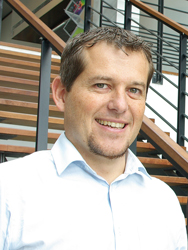
Raphaël Troncy is an Assistant Professor at EURECOM's Data Science Department, specializing in Semantic Web technologies, Knowledge Graphs, and Natural Language Understanding. He teaches courses like 'Human-computer interaction for the Web' and 'Semantic Web technologies.' His research focuses on semantic data integration, knowledge graph applications, and recommender systems. Notable projects include DOREMUS (musical work graph), entity2rec (knowledge graph-based recommendations), and 3cixty (city exploration knowledge bases). He actively contributes to semantic web challenges and conferences, winning multiple awards including the 2018 Best Poster Award at ESWC and 2015 First Prize in the Semantic Web Challenge. Troncy's work spans cultural heritage digitization (e.g., Odeuropa olfactory data modeling), cybersecurity anomaly detection (NORIA-O ontology), and interdisciplinary projects like SILKNOW's silk textile knowledge graph. He leads development of tools like DAGOBAH for semantic table interpretation and KG Explorer for knowledge graph exploration. Education: Not explicitly stated in text Labs/Teams: Active in EURECOM's Data Science group, collaborating on projects involving knowledge graphs, AI, and semantic technologies
Jan Cieciuch is a university professor at the Faculty of Christian Philosophy of the John Paul II Catholic University of Lublin (UKSW). His research focuses on personality psychology, values, developmental processes, and well-being, with a particular emphasis on the interplay between personality traits, values, and psychopathology. He has contributed extensively to cross-cultural studies on value systems, temperament dimensions, and attachment theories. His work integrates theoretical frameworks like the Circumplex of Personality Metatraits and the refinement of diagnostic tools for personality disorders (e.g., PiCD for ICD-11). Key areas of expertise include the validation of psychometric scales (e.g., SIFS-PL, LPFS-SR), the relationship between personality functioning and mental health systems, and the dynamics of value development in adolescents. With 134 publications and an h-index of 26 (Web of Science), his research spans clinical, developmental, and social psychology, emphasizing practical applications in education and healthcare systems. His articles often explore interconnected themes such as the structural foundations of personality disorders, the role of values in perception and behavior, and the cultural context of emotion regulation strategies. He collaborates internationally, contributing to global efforts in standardizing personality assessments and advancing theoretical models in psychological taxonomy.
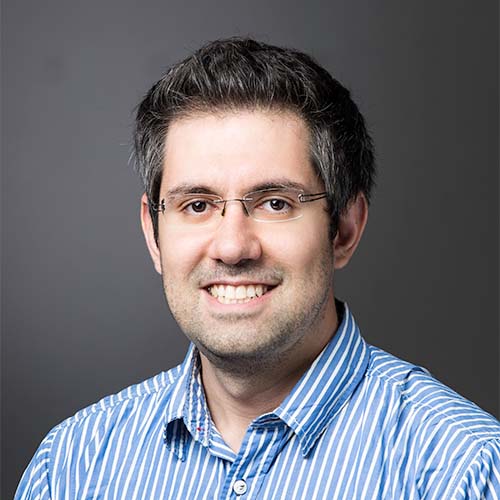
Hongxin Hu is a Professor and Associate Chair in the Department of Computer Science and Engineering at the University at Buffalo, State University of New York (SUNY). His research spans security, networking, and machine learning, with publications across top conferences including security (S&P, CCS, USENIX Security, and NDSS), networking (SIGCOMM and NSDI), machine learning (NeurIPS, ICML, and EMNLP), and human-computer interaction (CHI and CSCW). His work has been funded by NSF (SaTC, CNS, IIS, OAC, SOC), USDOT, VMware, Amazon, Google, and Dell. Dr. Hu earned his PhD in Computer Science and Engineering from Arizona State University in 2012. His academic journey has led him to become a prominent researcher in cybersecurity with a strong publication record and significant research impact. Dr. Hu's research interests encompass a wide range of topics at the intersection of security, networking, and artificial intelligence. His work focuses on Emerging Network Technologies and Security (5G/Future-G, NFV, SDN, Edge computing), Machine Learning for Security and Privacy , Security and Privacy in IoT and Cyber-Physical Systems , and AI for Social Good (addressing online abuse, unsafe children's games, and cyberbullying). His interdisciplinary approach has enabled him to tackle complex security challenges through innovative solutions that combine networking expertise with machine learning techniques. His recent publications demonstrate a strong trend toward applying large language models and advanced machine learning techniques to security challenges, particularly in content moderation, vulnerability detection, and privacy protection. The research spans multiple domains including voice assistant security, IoT security, network security, and social media safety, showing a consistent pattern of addressing real-world security problems with cutting-edge technical approaches. IEEE Big Data Security Senior Research Award (2025) ACM SACMAT Test-of-Time Award (2024) NSF CAREER Award (2019) Multiple Best Paper Awards from ACM ASIACCS (2022), ACSAC (2020), IEEE ICC (2020), and ACM SIGCSE (2018) Amazon Faculty Research Award (2022) First Place Award in ACM SIGCOMM 2018 Student Research Competition Dr. Hu has successfully advised multiple PhD students, including Nishant Vishwamitra who joined UT San Antonio as a tenure-track Assistant Professor. His research has been generously funded by major agencies and industry partners. As an active member of the academic community, he serves as Associate Editor for IEEE Transactions on Dependable and Secure Computing and Computers & Security, and has held numerous leadership roles in major security conferences including TPC Co-Chair for ASONAM 2025 and IWSPA 2024/2025. Dr. Hu leads a vibrant research group that has produced significant contributions in network security function virtualization, intrusion detection systems, and privacy-preserving technologies. Current projects include developing LLM-assisted vulnerability detection systems, defenses against jailbreak attacks on large language models, and security mechanisms for emerging networking technologies. His team's work on IoT security, voice assistant applications, and online content moderation has received wide recognition and press coverage.
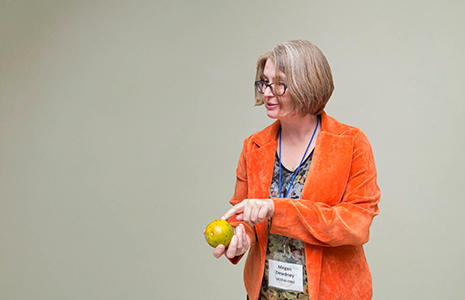
Dr. Megan Dewdney is an Associate Professor and Extension Specialist in the Department of Plant Pathology at the University of Florida's Citrus Research and Education Center. Her extension work focuses on integrated management strategies for citrus canker, citrus greening (huanglongbing), and fungal pathogens, while her research investigates the biology of bacterial and fungal pathogens to develop enhanced disease control methods. She holds a Ph.D. and leads active research programs in citrus pathology. Her primary research interests include: Integrated disease management systems for citrus pathogens Biology and epidemiology of fungal and bacterial diseases in citrus Development of molecular detection tools for plant pathogens Implementation of precision agriculture technologies for disease forecasting Physiological impacts of huanglongbing on citrus trees Analysis of her recent publications reveals strong emphasis on: Advanced detection methods using hyperspectral imaging and machine learning Genomic studies of fungal pathogens like Phyllosticta citricarpa Development of web-based disease advisory systems for growers Physiological management of huanglongbing-affected trees Molecular characterization of citrus pathogens She currently advises doctoral student Eva Mulandesa and collaborates with postdoctoral researcher Pamela Suellen. Her laboratory team includes research technicians, a lab manager, and program support staff focused on citrus pathology research.
Jun Yang is the Knut Schmidt Nielsen Distinguished Professor of Computer Science at Duke University's Trinity College of Arts & Sciences, with current appointments since 2014. He's also an Associate of the Duke Initiative for Science & Society. Education: Ph.D. and M.S. from Stanford University (2001), B.A. from University of California, Berkeley (1995) His research focuses on Databases and Data-Intensive Computing , particularly Computational Journalism to preserve public interest journalism through computing. He co-directs the Duke Database Research Group within the Systems and Architecture Group. Recent publications include work on SQL query debugging (Qr-Hint system), relational query education tools, and vaccine misinformation taxonomy. NSF grants (2024-2027, 2022-2026, 2020-2024) support his research, along with funding from Knight Foundation, NIH, Google, HP, and IBM. Scientific Awards: NSF III: Medium Responsive Optimization Grant, NSF III: Medium Ask the Experts Grant, NSF IIS: Small Grant, and multiple industry grants He maintains strong connections with No.7 High School of Chengdu alumni network, having created its web-based alumni system in the 1990s. His work combines technical innovation with societal impact applications.
Raquel Gómez-Díaz is Professor at the University of Salamanca's Department of Library Science and Documentation within the Faculty of Translation and Documentation. She holds qualifications including a Diploma in Library Science and Documentation, Graduate degree in Documentation, and PhD from the University of Salamanca. She teaches across multiple programs including the Bachelor's in Information and Documentation, Master's in Digital Information Systems, Master's in Textual Heritage and Digital Humanities, and Doctoral program in the Knowledge Society. Her research explores digital reading technologies (devices, applications, social reading), information sources , and library science . Key focus areas include reading behavior analysis, digital literacy development, educational technology implementation, and knowledge dissemination frameworks. Her work bridges library sciences with digital humanities and educational innovation. Publications demonstrate strong emphasis on digital reading ecosystems , educational technology evaluation , and scholarly communication . Research consistently examines technology adoption in educational contexts, digital resource management, and reading community development across academic, public, and youth settings. She has supervised 11 doctoral students to completion with research spanning library science, digital humanities, and educational technology. Since joining the faculty in June 2013, she has completed three recognized research periods (sexenios), the most recent in 2023.
Paul Clarke is a Full Professor of Architectural Design at Ulster University's Belfast School of Architecture and the Built Environment. Based at the Belfast Campus, his research focuses on architectural representation, pedagogy, and design methodologies. He maintains an active research profile with 92 publications and an h-index of 1. His primary research interests encompass: Architectural design processes and representation techniques The role of drawing and sketchbooks in creative practice Innovations in architectural education and studio pedagogy Sustainable design and ecological approaches to the built environment Architectural film, exhibitions, and alternative media representation Urban regeneration and territorial studies Clarke's recent publications demonstrate strong focus on architectural pedagogy, material studies, and design representation. His work frequently explores the intersection of traditional methods (sketchbooks, drawings) with contemporary challenges like sustainability and digital transformation. The articles reveal recurring themes of temporal analysis in design processes, ecological responses in architecture, and critical examinations of architectural education. He has contributed significantly to architectural exhibitions including the Carbon Counts Exhibition at Ulster University and The Secret Laboratory: Notebooks and Narratives Exhibition . His digital works include the Sketchbook Gallery web resource and film productions examining architectural processes.
José Vicente Serrão is an Associate Professor in the Department of History at ISCTE-IUL (Higher Institute of Labor and Business Sciences), Lisbon, and an Integrated Researcher at CIES-Iscte – Center for Research and Studies in Sociology. His research focuses on modern and contemporary history, particularly within the context of the Portuguese and Spanish empires, land and property rights, agrarian transformations, and social resistance. PhD in Modern and Contemporary History, ISCTE-IUL (2000) Bachelor’s in History, Faculty of Arts, University of Lisbon (1981) His primary research interests include colonial history, resistance and rebellion in early modern Iberian empires, land tenure systems, and global historical dynamics. He contributes to the research group Historical Dynamics and Global Integration of the World at CIES-Iscte. His work often adopts a comparative and transnational perspective, linking European, American, African, and Asian contexts. The recent publications of José Vicente Serrão reflect a consistent focus on historical sociology, agrarian change, and imperial governance. His editorial and authorial contributions to journals like Ler História and edited volumes on property rights and rural transitions indicate a strong engagement with structural and institutional dimensions of historical development. The thematic continuity in his work emphasizes land, power, and resistance across the Iberian colonial world. Scientific Awards: No specific awards mentioned in the provided texts. José Vicente Serrão has supervised and coordinated graduate programs, including the PhD in History: Change and Continuity in a Global World, and has served as 1st Year Coordinator for the Bachelor’s in Modern and Contemporary History. He has been involved in multiple research grants, most notably the international project RESISTANCE: Rebellion and Resistance in the Iberian Empires (16th–19th centuries) , which investigates social resistance and inequality across former colonial territories. He has also led the digital initiative Rebellions in the Early Modern Iberian World , a web-based platform for mapping historical resistance. He has organized numerous academic events, including the New Perspectives in Modern History seminar series, workshops on rebellion patterns, and international symposia on consent and colonial rule. These activities highlight his active role in fostering scholarly dialogue and public engagement with historical issues.
Mai Elshehaly is a Lecturer in Computer Science at City, University of London, where she is affiliated with the giCentre in the Department of Computer Science, School of Science and Technology. She focuses on designing, developing, and evaluating visualisation solutions that support data-driven decision-making, particularly for non-technical users in healthcare and public sectors. Her work involves close collaboration with healthcare practitioners, local authorities, and schools to co-design tools grounded in real-world needs. Her research interests center on information visualisation and human-computer interaction , with a strong emphasis on user-centered and co-design methodologies . She investigates how lived experiences of stakeholders can shape visual analytics systems, especially in healthcare quality improvement, population health management, and digital transformation initiatives. Her approach bridges technical innovation with social impact, promoting equitable access to data insights. Her recent publications highlight trends in narrative visualization, integration of lived experience with electronic records (e.g., CLEVER framework), and adaptable dashboards for healthcare (QualDash). These works are published in top venues such as IEEE VIS, IEEE TVCG, and Computer Graphics Forum, reflecting a consistent focus on usability, evaluation, and real-world deployment of visual analytics tools. Department-level achievement award during PhD at Virginia Tech University-level achievement award during PhD at Virginia Tech Mai has secured research funding from the Bradford Institute for Health Research (BIHR), NIHR, and internal university sources including EPSRC doctoral training funds. She has led and contributed to interdisciplinary projects such as the Digital Makers Programme and Connected Bradford, which involve partnerships across academia, healthcare, and local government. While no formal PhD students are listed, she mentors through collaborative research and advisory roles. She is actively involved in applied research through leadership positions: Co-Director of the Digital Makers Programme, Deputy Director of the Workforce Observatory for West Yorkshire, member of the advisory board at the Wolfson Centre for Applied Health Research, and cross-theme visualisation expert at the Yorkshire and Humber Patient Safety Research Centre. These roles underscore her commitment to translating research into practice within health and education systems.
Dr. Crystal Fausett is an Assistant Professor in the School of Information at San José State University. Her academic work bridges human factors, cybersecurity, and human-computer interaction, with a strong focus on how individuals and teams interact with technology in high-stakes environments such as healthcare, emergency services, and cyber operations. She teaches courses including ISDA 121 – Human Centered Cybersecurity and ISDA 130 – User Centered Interface Architecture and Prototyping, reflecting her interdisciplinary expertise. Ph.D. in Human Factors, Embry-Riddle Aeronautical University (2024) M.S. in Human Factors, Embry-Riddle Aeronautical University (2022) B.A. in Psychology, San José State University (2020) A.A. in Social and Behavioral Sciences, Santa Barbara City College (2018) Her research interests include human-centered cybersecurity, human-computer interaction, usability and UX design, teamwork and transactive memory systems, training methodologies (particularly simulation-based), and information behavior across diverse user groups such as healthcare providers, cyber defenders, and naval personnel. She applies both qualitative and quantitative methods, including expert interviews, board game simulations, and meta-analytic techniques. The recent publications highlight a strong trend in applying human factors principles to cybersecurity team performance, adaptive training, and healthcare safety. Her work increasingly explores innovative methods such as gamified simulations to study team dynamics and cognitive load in complex operational environments. There is a consistent emphasis on improving system efficiency, safety, and collaboration through human-centered design. Dr. Fausett has no listed scientific awards in the provided text. She has served as an Instructor of Record in Human Factors and Behavioral Neurobiology at Embry-Riddle Aeronautical University (2023–2024) prior to her current role. There is no mention of current grant funding or student advising in the provided materials. Her research often involves collaboration with experts in human factors and healthcare, particularly Dr. Joseph R. Keebler and Dr. E. Salas, suggesting active participation in research teams focused on team performance and safety-critical systems. She is involved in research labs or teams centered on human factors in cybersecurity and healthcare, particularly through collaborative projects involving simulation-based training and team cognition studies. Her use of board games like [d0x3d!] as experimental testbeds indicates innovative lab-based methodologies for studying real-world team interactions in controlled environments.
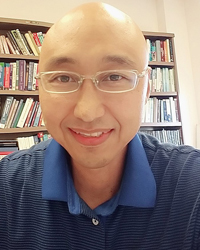
Hadi El-Amine is an Associate Professor at George Mason University's Department of Systems Engineering and Operations Research, focusing on applying operations research to healthcare and public policy challenges. His methodological expertise spans stochastic and robust optimization, probability theory, and resource allocation under uncertainty. PhD in Operations Research from Virginia Tech (2012) MS in Engineering Management and BS in Electrical and Computer Engineering from American University of Beirut, Lebanon His research addresses critical healthcare issues through mathematical modeling, including blood bank safety, pandemic control, organ transplantation logistics, and surgical infection risk assessment. Recent work explores fair clustering algorithms, risk-based quarantine policies, and incentive design for absenteeism reduction. Scientific awards include the 2015 INFORMS Bonder Scholarship and finalist recognitions for the 2015 Pierskalla Award and 2014 Washington DC Student Excellence Competition. Collaborations with the American Red Cross have produced impactful blood screening strategies balancing safety and budget constraints.
Henry Kang is an Associate Professor in the Department of Computer Science at the University of Missouri–St. Louis, College of Arts and Sciences. His expertise spans computer graphics, data visualization, and computational art, with extensive experience in full-stack web development and programming frameworks. Education: Ph.D. in Computer Science, Korea Advanced Institute of Science and Technology (2002) Research Interests: Kang's work focuses on computer graphics, non-photorealistic rendering, and data visualization. Key projects include coherence-enhancing filtering, stereoscopic 3D line drawing, and emotion-driven image recoloring. He integrates machine learning and GPU computing for real-time scene navigation and artistic effects. Publication Trends: His research emphasizes texture filtering, computational art, and perceptual modeling. Recent work includes Gaussian image binarization (2021) and coherence-enhancing GPU filtering (2018), while earlier contributions explore stereoscopic depth perception (2013) and directional stippling (2011). Contact: Email: kangh@umsl.edu Phone: (314) 516-5841 Office: 318 ESH
Dilip Sarkar serves as an Associate Professor in the Department of Computer Science at the College of Arts and Sciences, University of Miami. His academic profile demonstrates a strong research focus across multiple domains of computer science with particular emphasis on theoretical foundations and practical applications. Dr. Sarkar's research interests include: Artificial Intelligence and Cybernetics Parallel Algorithms and Programming Combinatorics Image Processing and Compression Internet of Things Security Machine Learning Applications in Healthcare Quantum Computing Approaches His publication record from 2018-2024 reveals a researcher engaged with cutting-edge computational challenges. Recent work spans quantum tensor networks for time series analysis, security frameworks for single sign-on systems, efficient computation in belief theoretic models, and machine learning applications for traumatic brain injury recovery prediction. His research demonstrates consistent integration of theoretical computer science with practical problem-solving across diverse application domains. As a member of CCS (Center for Computational Science) at the University of Miami, Dr. Sarkar participates in interdisciplinary research initiatives that bridge computational methods with scientific discovery across multiple fields. His technical expertise spans both theoretical frameworks and practical implementations, with notable contributions to image compression techniques, particularly for medical applications, and security protocols for modern web and IoT environments.
Dr. Jiangxiao Qiu is an Associate Professor of Landscape Ecology at the University of Florida's School of Forest, Fisheries, and Geomatics Sciences, based at the Fort Lauderdale Research and Education Center. His research integrates landscape ecology, ecosystem services, and sustainability science to address global environmental challenges. He employs interdisciplinary approaches including computational modeling, remote sensing, and field experiments to study human-nature interactions across scales. Research Focus: Dr. Qiu investigates how climate change, land-use intensification, and biological invasions alter ecosystems and biodiversity. Key themes include: Landscape sustainability science and social-ecological systems Ecosystem service tradeoffs in agricultural and urban landscapes Global change impacts on biodiversity-ecosystem function relationships Development of geospatial tools for environmental decision-making Recent publications (2024-2025) demonstrate strong emphasis on: Urban ecosystem services and greenspace multifunctionality Post-disturbance forest recovery using remote sensing Soil nutrient dynamics in managed grasslands Integration of cultural ecosystem services in landscape planning Scalable frameworks for biomass and biodiversity monitoring Dr. Qiu actively recruits graduate students through his Landscape Ecology and Sustainability Science Lab, focusing on transformative solutions for conservation and policy challenges. Current research explores urban-rural sustainability linkages, phosphorus cycling in subtropical systems, and climate-resilient landscape design.
Jeff Lupker serves as an Assistant Professor at Western University's Don Wright Faculty of Music, specializing in the intersection of artificial intelligence and musical creativity. His work develops computational tools that augment human composition through deep learning algorithms and interactive systems, positioning him at the forefront of AI-driven music innovation. Lupker completed his entire academic training at Western University: PhD in Composition (2021) Master of Music in Composition (2016) Bachelor of Music in Theory and Composition (2014) His research program focuses on artificial intelligence applications for musical creation, including deep learning models for algorithmic composition, sentiment analysis of social media as compositional input, and mobile-based spatial audio systems. Lupker investigates how transformer architectures generate musical structures and how real-time web applications enable collaborative performance, emphasizing practical tools that combat writer's block while expanding composers' stylistic range through AI-assisted creativity in electroacoustic and popular music contexts. Analysis of his 2021 publications reveals a cohesive research trajectory leveraging cutting-edge AI methodologies to solve creative challenges in music. The works demonstrate how deep learning transforms composition through systems like Score-Transformer and explore mood-pattern recognition using machine learning, collectively establishing foundational work for human-AI creative collaboration that bridges music theory with big data analytics. As founder of Staccato, Lupker leads the development of an AI co-writing platform that functions as an intelligent creative partner. The system generates lyrical content from keywords and suggests musical continuations, helping composers overcome creative blocks while expanding artistic possibilities across diverse genres through accessible, user-friendly interfaces.