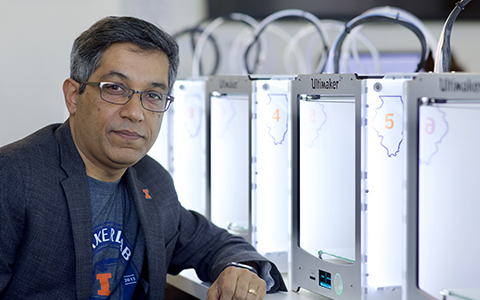
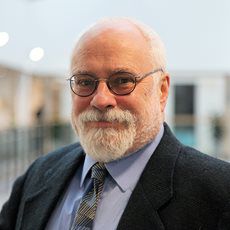
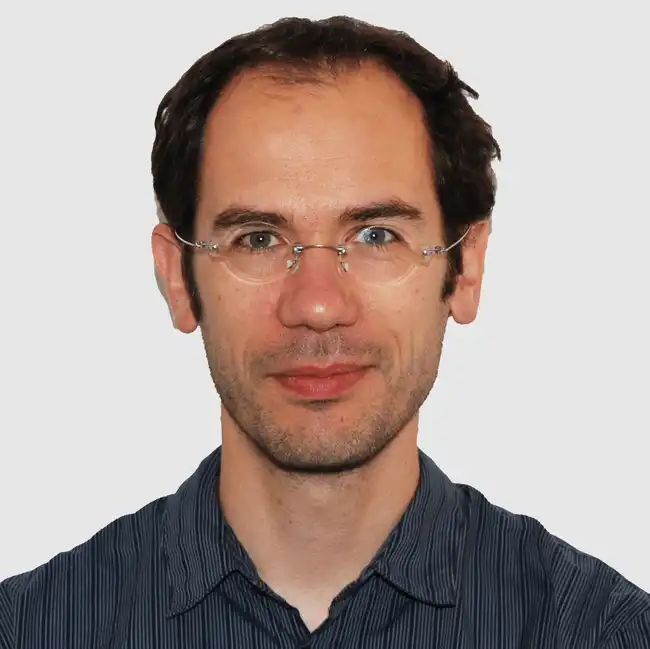
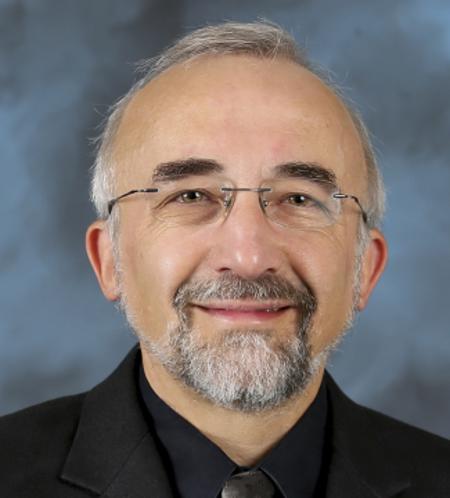
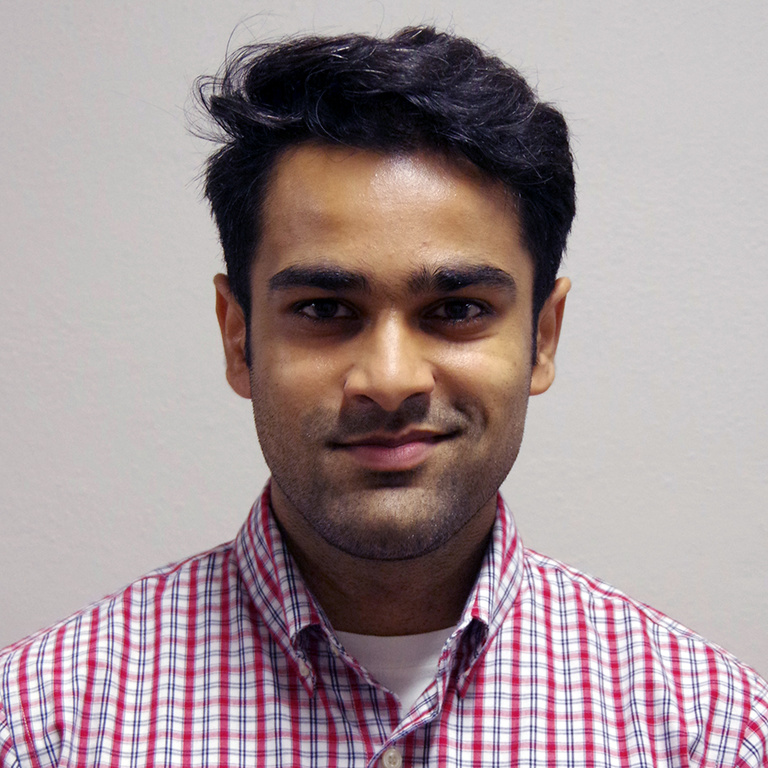
Vishal Sachdev is a Clinical Associate Professor of Business Administration at the University of Illinois at Urbana-Champaign's Gies College of Business. He serves as Director of the MS Analytics program, Director of Illinois MakerLab, and DPI Faculty in Residence. His academic roles span teaching, research, and leadership in educational technology and innovation. Education: B.A. in Mathematics, St. Stephen's College, New Delhi (1993) M.S. in International Business, Indian Institute of Foreign Trade (1996) Ph.D. in Information Systems, University of Texas at Arlington (2007) Research Interests: Dr. Sachdev focuses on technology's role in enabling collective action, cooperative production, and gamification in education. His work explores blockchain-based DAOs, 3D printing in educational settings, and the intersection of Web3 with decentralized business models. He emphasizes scalable peer-learning environments and online/blended education frameworks. Awards: Emerging Award for Excellence in Public Engagement (UIUC) List of Excellent Teachers (UIUC, multiple years) Research Excellence Award (Gies BADM, 2023) Grants & Labs: He leads Illinois MakerLab, a pioneering academic makerspace. Notable grants include Blockchain Analytics (Gies, 2023-2025), US Competitiveness in Web3 (Solana Foundation, 2022-2024), and Autodesk grants for Fusion 360 workshops. His work bridges technology, education, and innovation through applied research. Courses: Teaches courses like Blockchain Analytics, Database Design, and Digital Making Seminar, emphasizing hands-on, industry-relevant learning.
Patrick T. Brandt is a Professor of Political Science, Public Policy, and Political Economy at the University of Texas at Dallas , affiliated with the School of Economic, Political and Policy Sciences . His work integrates advanced statistical methods with political science, focusing on time series analysis, machine learning, and Bayesian modeling to study political dynamics. His research spans international relations , political economy , terrorist targeting , and conflict forecasting . He specializes in developing novel models for event count time series, including the Bayesian Poisson Vector Autoregression and MS-BVAR packages for R. His NSF-funded projects focus on event data generation and real-time conflict forecasting. Recent publications emphasize domain-specific language models (ConfliBERT variants), graph neural networks for conflict prediction, and machine translation challenges in political text analysis. He maintains the OpenEvent Data Repository and develops software like MSBVAR and PESTS for academic use. Scientific Awards : Robert H. Durr Award for Best Methodology Paper, Midwest Political Science Association (2006)
Antti Martikkala is a Postdoctoral Researcher at Tampere University's Department of Automation Technology and Mechanical Engineering. His research focuses on integrating data-driven and model-driven methods for digital-twin engineering, low-cost IoT development, and Industry 4.0 applications. Education: Master of Science (Technology) in Automation Engineering (2012). Research interests include Internet of Things (IoT), Digital Twins, Generative AI in CAD, and Laser-Wire Direct Energy Deposition (LWDED). His recent work explores interoperability of IoT platforms, dynamic route optimization for waste collection, and real-time manufacturing process optimization using AI. Key trends in his publications (2025–2012) span IoT (100% focus), Industry 4.0, CAD, and sustainable manufacturing. Notable collaborations involve A. Daareyni, A. Ylä-Autio, H. Mokhtarian, and I.F. Ituarte. He employs open-source tools and low-cost technologies to democratize IoT systems, with expertise in Arduino-based sensor development, multilayer height detection, and smart textile waste collection optimization.
Tetsuya Sakai is a Professor at the School of Fundamental Science and Engineering within Waseda University's Faculty of Science and Engineering. His work focuses on information access, retrieval, and natural language processing, with a particular emphasis on evaluation frameworks for search systems. Affiliations: Waseda University (Faculty of Science and Engineering, School of Fundamental Science and Engineering) Academic Rank: Professor Research Interests : Dr. Sakai's research spans four key areas: (1) Information Access —designing systems for direct and immediate information delivery, (2) Search Evaluation —developing metrics like Height-Biased Gain and hierarchical intent-based diversity measures, (3) Fairness in IR —pioneering frameworks for group fairness in conversational search, and (4) Statistical Reform —advocating Bayesian methods and robust experimental design. His work also addresses privacy inconsistencies in mobile apps and cognitive biases in LLMs. Scientific Awards : Notable recognitions include induction into the SIGIR Academy (2023) , ACM Distinguished Member (2018) , ACM Senior Member (2016) , and multiple DEIM/FIT/CSS Best Paper Awards . He has received teaching honors like the Waseda Presidential Teaching Award (2016) and WASEDA e-Teaching Award (2018) . Article Trends : Recent publications highlight: Advancements in LLM-assisted relevance assessments and hallucination diagnostics for tool-augmented models Conversational search fairness through multi-level evaluation frameworks and group diversity metrics Innovations in 3D medical reconstruction from clinical data and multimodal uncertainty modeling Statistical rigor via randomization tests , credible intervals , and topic set design Privacy analysis in mobile app descriptions and cognitive bias studies in search interaction
Ibrahim Demir serves as an Adjunct Associate Professor in the Department of Civil and Environmental Engineering at the University of Iowa's College of Engineering, while also holding an Associate Faculty Research Engineer position at IIHR—Hydroscience and Engineering. His interdisciplinary work bridges hydroinformatics, environmental engineering, and advanced computing technologies to address critical water resources challenges through innovative digital solutions. His educational background includes a PhD in Environmental Informatics and Control Program from the University of Georgia (2010), an MS in Environmental Engineering from Gebze Institute of Technology (2004), and a BS in Chemistry from Bogazici University (2000). This foundation supports his integration of chemical, environmental, and computational sciences in hydrological research. Dr. Demir's research centers on hydroinformatics and AI-driven environmental systems, with core expertise in scientific visualization, cyber systems design, and virtual/augmented reality applications. He develops web-based frameworks for flood risk assessment, drought analysis, and water quality management, emphasizing real-time data integration and user-friendly interfaces. Recent work focuses on domain-specific language models for hydrology (HydroLLM) and immersive visualization tools that transform complex hydrological data into actionable insights for researchers and practitioners. Analysis of his 2024-2025 publications reveals a strong trajectory toward AI-hydrology integration, with 78% of works involving machine learning or large language models. Key themes include flood risk communication (22% of publications), algal bloom prediction (15%), and educational technology applications (12%). His research increasingly emphasizes scientific reproducibility through no-code visual programming frameworks and digital twin implementations for watershed systems. Dr. Demir actively contributes to scholarly discourse as Associate Editor for Environmental Modeling and Software, Journal of Hydroinformatics, Journal of Environmental Informatics, and Water and Artificial Intelligence (Frontiers in Water). He serves as Vice-Chair of the International Joint Committee on Hydroinformatics (IAHR/IWA/IAHS) leadership team, shaping global standards in hydroinformatics research and practice. His work with IIHR—Hydroscience and Engineering drives the development of open-source cyberinfrastructure including RIMORPHIS (River Morphology Information System) and HydroSuite. These platforms enable collaborative river morphology research and provide modular tools for hydrological analysis, education, and operational decision support, demonstrating his commitment to accessible, community-driven scientific advancement.
Tae J. Kwon is an Associate Professor in the Department of Civil and Environmental Engineering at the University of Alberta . His research spans Winter Transportation Engineering , Intelligent Transportation Systems (ITS) , Traffic Optimization , and Geospatial Information Science . Developed LoRWIS , a web-based decision support system for road weather sensor optimization Recipient of multiple awards including ITS Canada Excellence in Research and Development Award (2024) , KOFST Scientist of the Year (2024) , and Early Career Research Award (University of Alberta, 3 times) Active in professional committees like the TRB Surface Transportation Weather Research Group (2016–present) Research Highlights : Winter Road Maintenance : Advanced geostatistical and deep learning techniques for road condition monitoring Location Optimization : Pioneered models for RWIS sensor placement using hybrid geostatistical methods Intelligent Transportation Systems : Focused on big data applications for traffic safety and connected vehicles Climate Resilience : Integrated ecological vulnerability into fire hazard modeling Scientific Awards : ITS Canada Excellence in Research (2024) KOFST Scientist of the Year (2024) Donald Stanley Best Paper Award (2023) AKCSE Early Achievement Award (2021) University of Alberta Early Career Research Award (2020) Great Supervisor Award (2019) Teaching & Leadership : Teaches courses like CIV E 419 (Transportation Engineering: Highway Planning and Design) and CIV E 612 (Transportation Planning: Methodology and Techniques) Leads the Geospatial Transportation System & Sensing Solutions Lab (GeoTrans) , mentoring PhD students Juan Cuellar and Jiehao Bi Collaborates with agencies including Alberta Transportation , NSERC , and Iowa DOT
Damian Grela is a Lecturer in the Department of Automation and Computer Science at the Faculty of Electrical and Computer Engineering, Cracow University of Technology. His work spans two distinct research domains: software engineering (focusing on BPEL processes, web services, and fault injection testing) and environmental engineering (specializing in diatomite-based biogennic pollutant removal, rain gardens, and surface water quality monitoring).
Meghan Kelly is an assistant professor in the Department of Geography and the Environment at Syracuse University, where she works at the intersection of cartography, feminist theory, and digital storytelling. Previously a doctoral student and instructor at the University of Wisconsin-Madison, she has also taught at Durham University. Her academic career bridges rigorous scholarly research with professional mapmaking for major publications including the Chicago Tribune, Washington Post, Rolling Stone Magazine, and Science Magazine. Kelly's research centers on the role of power in spatial data, map design, and mapping processes, with particular focus on how alternative perspectives can expand conventional cartographic tools. Her recent work examines satellite data usage through a Black feminist lens, while earlier projects investigated Syrian refugee border crossings using feminist methodologies. She approaches cartography as both science and critical practice, consistently challenging traditional representations of space and power. Her publication history shows a clear trajectory from doctoral research on Syrian refugee experiences toward leadership in feminist geographical practice, with increasing emphasis on collaborative, community-engaged mapping approaches. Kelly's work demonstrates how cartography can serve as a tool for social justice when informed by critical theory and diverse perspectives. University-wide Teaching Fellow Award for classroom innovation (2018) Runner up in Map Book and Atlas Category (2015 WLIA) Student Dynamic Map Award Winner (Group) NACIS Runner-Up, David Woodward Award CaGIS Outstanding Thesis Award (2016) Kelly has developed innovative teaching materials across the cartography curriculum, from introductory GIS courses to advanced web cartography. Her teaching philosophy integrates feminist pedagogies with critical approaches to mapping, emphasizing both technical skills and ethical considerations in spatial representation. She has created comprehensive course materials for Geography 170 (Our Digital Globe), Geography 370 (Introduction to Cartography), and Geography 572 (Graphic Design in Cartography), with particular focus on bridging theory and practice in map design. Her collaborative projects, including the Eritrean Human Trafficking Project and Collectively Mapping Borders initiative, demonstrate her commitment to participatory approaches that center marginalized voices in cartographic production. These projects often involve community engagement and alternative visualization techniques to represent complex spatial experiences that conventional maps might overlook.
David Caron is the Captain Allan Hancock Chair in Marine Science and Professor of Biological Sciences at the University of Southern California (USC), affiliated with the USC Dornsife College of Letters, Arts and Sciences. He co-founded the Center for Integrated Networked Aquatic Platforms (CINAPS) and is part of the Wrigley Institute for Environmental Studies. His research focuses on marine and freshwater microbial ecology, particularly protist trophic relationships and harmful algal blooms. Caron holds a Ph.D. from the MIT-Woods Hole Oceanographic Institution Joint Program in Biological Oceanography (1984), an M.S. (1977) and B.S. (1975) in Oceanography and Microbiology from the University of Rhode Island. Research Interests: His work spans protistan ecology, mixotrophic microalgae physiology, Antarctic protist adaptations, and molecular approaches to microbial ecology. He investigates harmful algal bloom dynamics, protist grazing impacts, and the role of environmental drivers in planktonic communities. His studies often integrate field observations, experimental work, and advanced technologies like robotic sampling platforms. Key Achievements: Caron has authored over 100 peer-reviewed publications and pioneered methods in protistan diversity assessment. He received the AAAS Fellowship (2011), American Academy of Microbiology Fellowship (2007), and the USC Raubenheimer Outstanding Senior Faculty Award (2010–2011). He served as President of the International Society of Protistologists (2004–2005). Grants & Labs: He leads CINAPS, which uses autonomous systems to monitor coastal ecosystems. His lab studies microbial communities in the Southern California Bight, focusing on harmful algal toxins (e.g., domoic acid) and their ecological impacts. Collaborations with engineers and roboticists enhance data collection and environmental modeling efforts.
Professor Mark NK Saunders is a distinguished academic at the University of Birmingham, serving as Professor of Business Research Methods within the Department of Management at Birmingham Business School. He holds visiting professorships at the Universities of Pretoria, Mälardalen, Surrey, and Worcester, reflecting his international academic standing. Education: PhD in Geography (1986) PGCE (1982) MSc in Urban Studies (1981) BA in Geography and Soft Systems (1980) Mark Saunders' research is centered on research methodology, particularly participant selection and methods for understanding organizational relationships. His work extends to human resource aspects of organizational change, with a focus on trust and organizational learning, as well as the success factors of small and medium-sized enterprises (SMEs). He is also deeply engaged in pedagogic practice, textbook writing, and the supervision of doctoral students. His extensive publication record includes over 150 research articles and book chapters, with recent works exploring themes such as social entrepreneurial identities in later life, trust dynamics in consulting, and the impact of generative AI on human resource management. His research is frequently published in top-tier journals like the British Journal of Management , Human Relations , and the International Small Business Journal . Scientific Awards and Fellowships: Fellow of the Academy of Social Sciences (2019) Fellow of the British Academy of Management (2014) British Academy of Management Medal for Leadership Fellow of the First International Network for Trust Fellow of the Chartered Institute of Personnel and Development (2006) Fellow of the Higher Education Academy (2007) Mark Saunders is a dedicated mentor and advisor, actively supervising doctoral students and contributing to doctoral capacity building. He has co-authored and edited over 30 books, including the highly influential Research Methods for Business Students , which is currently in its 9th edition. He holds significant editorial responsibilities as a consulting editor for the International Journal of Management Reviews and as an associate editor (Methodology) for the Human Resource Management Journal . His work is supported by his active involvement in key academic networks, including the British Academy of Management’s Research Methodology Special Interest Group, where he serves as Co-Chair, and the European Foundation for Management Development Doctoral Programmes Conference Committee.
Jamie Callan is a Professor at Carnegie Mellon University's Language Technologies Institute (School of Computer Science), where he leads research in Information Retrieval and Neural Search Architectures . He teaches advanced courses on search engine design and mentors students in multiple programs. Research Focus: Federated retrieval, knowledge graph integration in search, ClueWeb dataset development, and neural approaches to document ranking Leadership: Past SIGIR Treasurer/Chair, Co-founding Editor of Foundations and Trends in IR, former TOIS Editor-in-Chief His recent work explores: Neural Retrieval: Latent vocabulary for sparse systems, hypothetical documents for dense vector retrieval Dataset Innovation: Maintenance and distribution of ClueWeb09, ClueWeb12, and ClueWeb22 datasets Search Efficiency: Selective search architectures with 90% reduced computational costs Scientific Recognition: International ACM SIGIR Conference Leadership Co-founding Editor-in-Chief, Foundations and Trends in IR Former Editor-in-Chief of ACM TOIS Dr. Callan's Lemur Project has produced Indri/Galago search engines and supported TREC evaluations through dataset contributions.
Nicolas Sauger is a University Professor and Director of the Centre de données socio-politiques (CDSP) at Sciences Po since 2017. His work focuses on quantitative methods , data collection projects , and electoral competition structures . He leads initiatives like the probability-based ELIPSS panel and the beQuali qualitative data archive. Research Interests : Political science, survey methodology, comparative electoral systems, and data management. Projects : ELIPSS, beQuali, CoCo Confinement study. Key Themes : Probability panels, repeated comparative surveys, experimental methods, and data reuse. Publications include work on DDI compliance , electoral bias , and open data in social sciences. He has no explicitly listed awards but contributes to journals like Electoral Studies and Party Politics . His email is nicolas.sauger@sciencespo.fr.
Witold "Witek" Nazarewicz is a John A. Hannah Distinguished Professor in the Department of Physics & Astronomy at Michigan State University and serves as the Chief Scientist at the Facility for Rare Isotope Beams (FRIB). He is also a Corporate Fellow Emeritus at Oak Ridge National Laboratory (ORNL) and maintains a professorship at Warsaw University, Poland. Nazarewicz previously held positions as James McConnell Distinguished Professor at the University of Tennessee and served as Scientific Director of ORNL's Holifield Radioactive Ion Beam Facility from 1999-2012. His academic career spans multiple international institutions including Lund University, University of Cologne, Kyoto University, University of Liverpool, and Peking University. Nazarewicz's research focuses on theoretical nuclear physics with particular emphasis on exotic nuclei at the limits of nuclear existence. His work spans quantum many-body problems, physics of open quantum systems, superheavy elements, and nuclear fission. He has pioneered approaches to unify structure and reaction aspects of nuclei based on open quantum system many-body formalism, including the Gamow Shell Model. His research connects nuclear physics with high-performance computing, developing comprehensive descriptions of all nuclei through theoretical and experimental investigations of rare atomic nuclei. An analysis of Nazarewicz's recent publications reveals a strong focus on cutting-edge nuclear structure research, particularly concerning exotic nuclei near the driplines, charge radii measurements, superheavy elements, and the development of advanced computational methods. His work increasingly incorporates machine learning and Bayesian analysis techniques to address nuclear physics challenges. The publications demonstrate his leadership in connecting fundamental nuclear physics with applications in nuclear astrophysics, while also addressing foundational questions about the limits of nuclear existence and the nature of nuclear forces. Fellow of the American Physical Society Fellow of the U.K. Institute of Physics Fellow of the American Association for the Advancement of Science 2008 Carnegie Centenary Professor Honorary Doctorates from University of the West of Scotland (2009) and University of York (2019) 2012 Tom W. Bonner Prize in Nuclear Physics 2012 ORNL Distinguished Scientist 2013 UT-Battelle Corporate Fellow 2017 G.N. Flerov Prize 2025 Marian Smoluchowski Medal Nazarewicz has authored approximately 500 peer-reviewed publications with over 37,000 citations and an h-index of 103 (Web of Science). He has delivered over 220 invited talks at major international conferences and organized approximately 70 scientific meetings. His research has been supported by numerous grants from the Department of Energy, National Science Foundation, and international funding agencies. Nazarewicz plays a leadership role in major nuclear physics initiatives including the UNEDF, NUCLEI, and BAND collaborations, and has contributed to several National Academies reports on nuclear physics. As FRIB Chief Scientist, Nazarewicz leads theoretical efforts at one of the world's premier facilities for rare isotope research. His research group at MSU collaborates extensively with experimentalists worldwide, bridging theoretical predictions with cutting-edge measurements. He directs the FRIB Theory Alliance, fostering international collaboration in nuclear theory, and has established strong connections between nuclear physics and other disciplines including quantum information science and machine learning.
Umar Iqbal is an Assistant Professor in the Department of Computer Science and Engineering at Washington University in St. Louis , where he investigates transparency and control mechanisms in computing systems to enhance user privacy and security. His work intersects computer security, privacy, and technology policy with a focus on web tracking, IoT, and agentic systems. Research Themes : Web security, emerging technology privacy, regulatory compliance under CCPA/GDPR, and tracking mitigation Scientific Awards : Best paper award at ACM Internet Measurement Conference (IMC), 2023 Caspar Bowden Award for Outstanding Research in PET Runner-Up, 2024 Best applied research paper (3rd) at CSAW NYU Tandon, 2020 Collaborations : Regularly works with researchers like Franziska Roesner, Tadayoshi Kohno, and Zubair Shafiq His publication portfolio spans 2016-2025 with impactful work on browser fingerprinting (IEEE Oakland 2021), ad blocking (IEEE Oakland 2020), and LLM platform security (AIES 2024). Current research includes privacy implications of AI systems and regulatory auditing frameworks.
Dr. Sharon O'Rourke is an Assistant Professor and Ad Astra Fellow at the University College Dublin (UCD) School of Biosystems and Food Engineering since 2019. Previously, she held roles at the University of Sydney and UCD's School of Agriculture and Food Science, focusing on soil science and environmental protection. She holds a BAgrSc from UCD and a PhD in Soil Nutrient Management from Queen's University Belfast. Research Interests: Her work centers on sustainable soil management, soil carbon sequestration, and environmental protection. She employs spectral techniques (e.g., mid-infrared, hyperspectral imaging) and modeling to study soil geochemistry, carbon dynamics, and climate change mitigation. Current projects include ClimateCropping (EU-wide soil carbon management), PRISM (in-field soil sensors), and CFunction (carbon-nutrient stoichiometry). Grants & Projects: Key grants include funding from Teagasc, the Department of Agriculture, and the Sustainable Energy Authority of Ireland. Notable projects include proximal soil sensing for carbon monitoring and bio-based product development via pyrolysis. Teaching: She coordinates modules such as 'Carbon & Sustainability,' 'Soil Technology,' and 'Research Skills,' emphasizing agricultural systems and climate-smart practices. Awards: Recognized as an Ad Astra Fellow, highlighting her contributions to innovative soil science research.