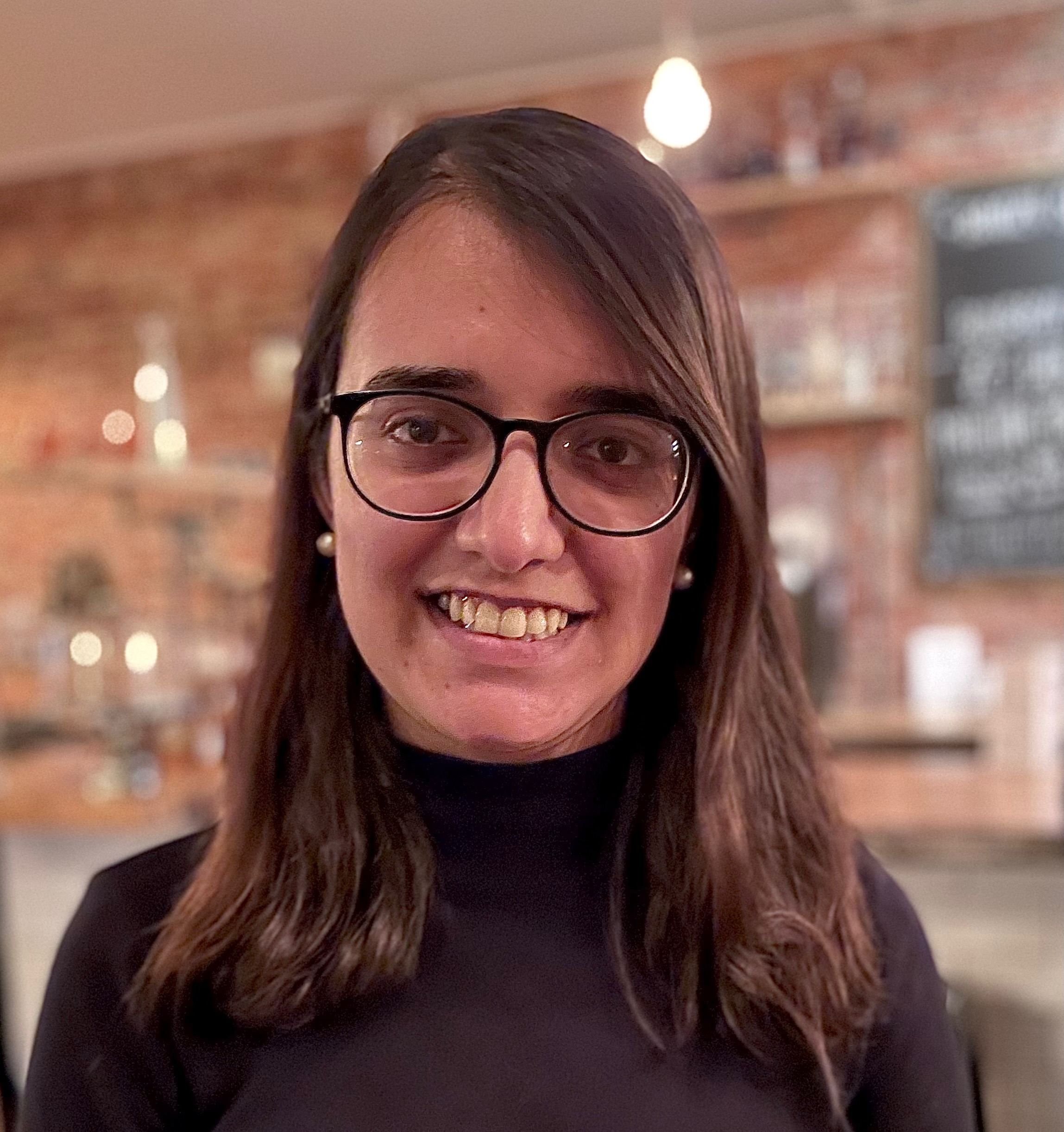
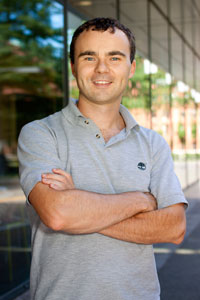
Marko Tanasković (born December 6, 1986) is a researcher at Singidunum University with a PhD in Information Technology and Electrical Engineering from ETH Zurich (2015). His academic background includes master's (ETH Zurich, 2011) and bachelor's (University of Belgrade, 2009) studies in Electrical Engineering. Doctoral studies: Information Technology and Electrical Engineering, ETH Zurich (2011-2015) Master studies: Information Technology and Electrical Engineering, ETH Zurich (2009-2011) Basic studies: Electrical Engineering, University of Belgrade (2005-2009) Tanasković's research focuses on control systems , predictive modeling , and optimization algorithms for mechanical and electrical systems. His work addresses adaptive model predictive control (MPC), sensorless motor positioning, and data-driven approaches for nonlinear systems. Recent publications (2018-2024) demonstrate expertise in: Embedded control systems (rotor polarity detection) Drone forensics and autonomous navigation Industrial automation (LabVIEW applications) Biomedical sensor development ('Smart Anklet') Machine learning optimization (firefly algorithm)
Professor Martin Veidt is a distinguished academic at the University of Queensland, serving as a Professor in the School of Mechanical and Mining Engineering. He is also an Affiliate of the Centre for Advanced Materials Processing and Manufacturing (AMPAM). With an extensive career in applied mechanics, Professor Veidt has established himself as a leading expert in composite materials and non-destructive evaluation techniques. Professor Veidt received his educational qualifications from the Swiss Federal Institute of Technology (ETH) in Zurich, earning his Dipl Masch Ing ETH in 1986 and his Dr sc techn in 1991. His academic journey has led him to become a prominent researcher in materials science and engineering, with a focus on the mechanical behavior of composite structures. Professor Veidt's research interests span a wide range of topics within applied mechanics. His work primarily focuses on through-life support of materials and structures, with special emphasis on composites including fibre-reinforced laminates, sandwich structures, and hybrid metal fibre laminates. His expertise encompasses quality assurance and quantitative non-destructive evaluation using conventional, guided wave and non-linear ultrasonics; stress analysis and damage mechanics; and experimental determination of mechanical characteristics of materials and interfaces. More recently, his research has expanded into areas such as non-linear ultrasonics, ultrasonic manipulation of microbubbles for drug delivery, functional composites, hybrid composite laminates, and light weighting technologies. Analysis of Professor Veidt's recent publications (2021-2025) reveals a strong focus on advanced materials characterization and structural health monitoring. His work spans multiple disciplines including biomechanics (gait analysis, foot plantar pressure), geomechanics (rock crack stress thresholds), tribology (wear behavior of polymer composites), and biomedical engineering (ultrasound-mediated drug delivery). A notable trend is the integration of computational methods with experimental approaches, particularly in the application of finite element simulation to composite materials and the use of artificial neural networks for analyzing complex biomechanical data. His research demonstrates a consistent commitment to solving practical engineering problems through innovative application of ultrasonic and non-destructive evaluation techniques. Professor Veidt maintains an active research program with numerous collaborations across disciplines. His work bridges fundamental mechanics with practical applications in aerospace, biomedical, marine, and civil engineering contexts. Based at the University of Queensland, Professor Veidt is affiliated with the Centre for Advanced Materials Processing and Manufacturing (AMPAM), which provides state-of-the-art facilities for materials research and development. His work likely involves collaboration with researchers across multiple disciplines within the School of Mechanical and Mining Engineering and beyond, contributing to the university's strong reputation in materials science and engineering.
Dr. MARIOROSARIO PRIST serves as a Researcher at the Department of Information Engineering within the Faculty of Engineering at Marche Polytechnic University (UNIVPM) in Ancona, Italy. His institutional affiliation is maintained through the Department of Information Engineering (quota 170) at Via Brecce Bianche, 60131 Ancona, with contact details including phone 071 220 4468 and email m.prist@staff.univpm.it. Dr. PRIST's research spans cutting-edge domains in artificial intelligence applications for industrial systems, with particular emphasis on neural network implementations, digital twin architectures, and Industry 4.0 technologies. His work demonstrates strong focus on lightweight AI frameworks for edge computing , anomaly detection in manufacturing processes , and resource optimization in production environments . The research portfolio reveals consistent innovation in adapting advanced machine learning techniques to practical industrial constraints, especially for small and medium enterprises. Analysis of his publication trends indicates a strategic shift toward implementing AI solutions on resource-constrained devices and bridging edge computing with cloud infrastructure for real-time industrial monitoring. Recent work emphasizes practical applications of Echo State Networks for process control and anomaly detection, while maintaining strong connections to additive manufacturing optimization and safety monitoring systems. His research consistently addresses the challenge of making advanced AI accessible for industrial implementation without requiring extensive computational resources. Dr. PRIST's work demonstrates significant contributions to the integration of cyber-physical systems in manufacturing environments, with particular expertise in translating theoretical AI concepts into practical industrial applications that enhance production efficiency, safety, and sustainability.
David Durand is a Lecturer in Computer Science at the Computer Science Department of the IUT of Amiens (Institute of Technology) within the University of Picardie Jules Verne . He serves as a Deputy Vice-President for Communication, Culture & Scientific Mediation and is a teacher-researcher affiliated with the MIS Laboratory and its SDMA Team . Research Focus: Distributed and communicating objects, middleware, IoT, and data processing in eHealth. His work addresses IoT heterogeneity, communication protocols, and AI-driven data processing architectures for medical applications. Recent projects explore intrusion detection in Medical IoT (MIOTs), AI threat management in healthcare, and movement analysis for Parkinson's disease treatments. His publications span cybersecurity, robotics, and AI in healthcare, with a focus on federated learning and anomaly detection. He actively supervises students in IoT-related topics, including smart homes, logistics, and medical robotics.
Giulia Masi is a Ph.D. candidate in Computer and Systems Engineering at Politecnico di Torino, Department of Control and Computer Science (DAUIN), specializing in data science, computer vision, and AI applications for Parkinson’s disease rehabilitation and remote monitoring. She also serves as an external lecturer and teaching assistant, contributing to Computer Science courses in the Aerospace Engineering program. University: Politecnico di Torino Department: Control and Computer Science (DAUIN) Academic Rank: Lecturer Her research integrates life sciences and technology, focusing on neurodegenerative diseases like Parkinson’s. She employs neurophysiological signals, biosignal processing, and serious games to study emotional and motor symptoms, aiming to reduce clinicians' workload through automation. Giulia’s recent publications highlight trends in RGB-D sensor validation, deep learning for hand tracking, and semi-supervised approaches for Parkinson’s assessment. These works span conferences like IEEE EMBC and journals such as Electronics and Artificial Intelligence in Medicine , emphasizing clinical AI and remote monitoring. She is a member of the SMILIES research group, which focuses on resilient computer architectures and life sciences collaborations. Her educational background includes a Master’s in Biomedical Engineering at Politecnico di Torino (2021), where her thesis automated REM sleep without atonia scoring—a critical task for early Parkinson’s detection. Prior to her Ph.D., she worked as a research fellow in the Neuroscience Department at the University of Turin, analyzing neurophysiological signals for quantitative symptom measurements.
Habiba Farrukh is an Assistant Professor in the Department of Computer Science at the University of California, Irvine , where she directs the Security and Privacy of Emerging Computing Technology (SPECT) Lab . Her research focuses on security & privacy and mobile computing , using system design, machine learning, and human-centered approaches to address threats in emerging computing platforms. Ph.D. in Computer Science from Purdue University (advisor: Dr. Z. Berkay Celik) Research Trends : Her recent work spans XR security (UI attacks, eye gaze privacy), mobile/IoT security (magnetometer side-channels, secure group pairing), online abuse (toxic content against refugees), and wearable privacy . Publications appear at top venues like USENIX Security , IEEE S&P , and ACM CCS . Scientific Awards : Best Poster Runner-Up Award at MobiSys 2025 Outstanding Reviewer Award at VehicleSec 2024 Bilsland Dissertation Fellowship 2021-2022 Teaching : CS190: Introduction to Security & Privacy (Spring 2025) CS204: Usable Security and Privacy (Fall 204) CS295: Security and Privacy of Emerging Computing Platforms (Spring 2024)
Megan O'Brien is a Research Assistant Professor in the Department of Physical Medicine and Rehabilitation at the Feinberg School of Medicine, Northwestern University, based at the Shirley Ryan AbilityLab in Chicago. Her work bridges engineering, biomechanics, and rehabilitation science to develop technology-driven solutions for improving patient outcomes across clinical and home settings. Dr. O'Brien's educational background includes: BS in Engineering from Rose-Hulman Institute of Technology (2009) MS from University of Colorado (2012) PhD from University of Colorado (2014) Postdoctoral Fellowship in Rehabilitation Technology and Outcomes at Shirley Ryan AbilityLab / Northwestern University (2019) Her research leverages sensors and mobile technologies to identify disease-specific biomarkers through interdisciplinary applications of biomechanics , machine learning , and engineering . Key focus areas include: Rehabilitation Engineering Sleep Health Monitoring Pediatric Rehabilitation Technologies Wearable Device Integration Machine Learning for Clinical Outcomes Recent 2025 publications reveal a strong translational emphasis on acute rehabilitation (e.g., stroke sleep interventions), pediatric applications (e.g., wearable-based complication prediction), and systematic reviews of infant assessment tools. These studies demonstrate consistent use of multimodal sensing and real-world data analytics to bridge clinic-to-home care gaps. Dr. O'Brien maintains external professional relationships with Northwestern University regarding royalty payments for inventions, but specific grant details and advisees are not disclosed in the available profile. She operates within the Shirley Ryan AbilityLab ecosystem and the Northwestern University Clinical and Translational Sciences Institute (NUCATS), collaborating with interdisciplinary teams of clinicians, engineers, and data scientists to advance rehabilitation technology implementation.
Hassan Ghasemzadeh is an Associate Professor and Program Director in the College of Health Solutions at Arizona State University (ASU), where he is also on the graduate faculty for biomedical informatics, computer science, computer engineering, and biomedical engineering. Prior to joining ASU, he served as an assistant/associate professor of computer science at Washington State University (2014-2021) and as a postdoctoral research manager at UCLA (2011-2013). Education: PostDoc, Computer Science, University of California Los Angeles PhD, Computer Engineering, University of Texas at Dallas MS, Computer Engineering, University of Tehran BS, Computer Engineering, Sharif University of Technology Dr. Ghasemzadeh's research focuses on digital health, machine learning, and algorithm design, with applications spanning wearable technologies, chronic disease management, and behavioral health. His work bridges computer science with healthcare, developing novel algorithms and systems that use wearable sensors to monitor and improve health outcomes. His research has particular emphasis on diabetes management, Parkinson's disease detection, and stress monitoring through advanced sensor analysis and machine learning techniques. His recent publications demonstrate a strong focus on leveraging large language models, counterfactual reasoning, and advanced deep learning techniques to address challenges in digital health. The research spans multiple domains including glucose prediction, Parkinson's disease assessment, cannabis use monitoring, and activity recognition, showing a consistent thread of applying cutting-edge AI to solve real-world health problems with wearable sensor data. Scientific Awards: 2025 Best Poster Award, ASU College of Health Solutions Faculty Research Day 2024 Research Award, ASU College of Health Solutions 2024 Best Poster Award, ASU College of Health Solutions Faculty Research Day 2018 Early Career Development Award, National Science Foundation (NSF CAREER) 2018 Early Career Award, WSU School of EECS Dr. Ghasemzadeh actively mentors numerous graduate students in the Embedded Machine Intelligence Lab (EMIL), with current PhD students including Eric Junyoung Kim, Ebrahim Farahmad, Saman Khamesian, Shovito Barua Soumma, Pegah Khorasani, and others. His research has been funded by prestigious organizations including the National Science Foundation, with projects often focusing on developing innovative wearable health monitoring systems that have led to commercial applications such as WANDA and Sense4Baby. Dr. Ghasemzadeh leads the Embedded Machine Intelligence Lab (EMIL), which focuses on developing machine learning algorithms for embedded and wearable systems. The lab creates solutions that address real-world health challenges through interdisciplinary research that combines computer science, electrical engineering, and clinical medicine. Current projects include glucose prediction systems, Parkinson's disease detection tools, and personalized hydration monitoring applications.
Dr. Jie Chen is a Professor and Chair of the Department of Mechanical Engineering at Purdue University (Indianapolis campus, with a courtesy appointment in West Lafayette). He holds dual roles in Mechanical Engineering and Orthodontics. His research focuses on dental biomechanics, energy systems, and instrumentation design, with significant contributions to orthodontic load systems and biomedical engineering. Education: B.S. in Mechanical Engineering, Tianjin University (1982) M.S. in Biomedical Engineering, Shanghai Second Medical University (1985) Ph.D. in Mechanical Engineering and Mechanics, Drexel University (1989) Research Interests: Energy efficiency in HVAC systems and electrical demand forecasting Quantification of orthodontic force systems using finite element analysis Biomechanical validation of orthodontic appliances CT-based quantification of dental displacement and root resorption Optical and haptic interfaces for medical and automotive systems His publications span energy optimization, orthodontic biomechanics, and human-machine interaction. Notable works include real-time energy management platforms and finite element modeling for orthodontic simulations. Recent research explores AI-driven visual analytics and autonomous vehicle systems. Grants & Labs: Active in interdisciplinary collaborations at Purdue, with lab work focused on biomechanical testing and smart energy systems. Supervises projects in orthodontic engineering and advanced manufacturing.
Conor J Walsh is the Paul A. Maeder Professor of Engineering and Applied Sciences at Harvard University's John A. Paulson School of Engineering and Applied Sciences (SEAS). He is also an Associate Faculty Member at the Wyss Institute for Biologically Inspired Engineering. His research focuses on soft wearable robotics, biomechanics, and their applications in healthcare and rehabilitation. Walsh leads the Walsh Biodesign Lab, which develops innovative wearable devices for individuals with mobility impairments, including stroke survivors and Parkinson’s patients. His work emphasizes translating engineering solutions into clinical practice through collaborations with clinicians and industry partners. Key research areas include soft robotic exosuits, wearable sensors, and assistive technologies for neuromuscular disorders. His lab has pioneered devices like ankle and back exosuits that improve walking speed and reduce energy expenditure. Notable projects include a soft robotic apparel to alleviate freezing of gait in Parkinson’s patients and a propulsion neuroprosthesis for post-stroke gait training. Walsh's interdisciplinary approach integrates biomechanics, machine learning, and materials science to address complex mobility challenges. Walsh’s lab is located at 150 Western Ave, Allston, MA, with affiliations spanning SEAS, Wyss Institute, and affiliated medical centers. His educational contributions include courses in materials science, robotics, and bioengineering. Despite no explicitly listed awards, his impactful research has been highlighted in prominent news outlets for innovations like the Harvard Move Lab’s wearable exosuits for stroke survivors. Advising and grants are not detailed in the provided text, but his lab’s extensive publications indicate active research funding. The Walsh Biodesign Lab collaborates with industry partners to commercialize technologies, such as the Move Lab’s exosuit for industrial workers. Future work focuses on personalized rehabilitation systems and AI-driven adaptive assistance for neurological disorders.
Matthew J Major, PhD, is an Associate Professor at Northwestern University, holding dual appointments in the McCormick School of Engineering and the Feinberg School of Medicine. He specializes in prosthetics and orthotics, biomechanics, and rehabilitation engineering. His research focuses on integrating engineering principles and statistical models to improve musculoskeletal health outcomes and postural control in individuals with neurological or musculoskeletal impairments. He directs the Prosthetics and Orthotics Rehabilitation Technology Assessment Laboratory (PORTAL) and leads the Masters in Prosthetics and Orthotics Research (MPO-R) program. Education: BS (2002), MS (2004) from University of Illinois Urbana-Champaign; PhD (2010) from University of Salford Manchester. Certifications include Executive Business (2012), Leadership (2015), and Biostatistics (2019) from Northwestern University. Postdoctoral training includes Rehabilitation Engineering at Northwestern and a VA Career Development Award. Research interests include sensorimotor mechanisms of postural control, prosthetic device optimization, and user-centered assistive technology. Recent work explores prosthetic ankle stiffness effects on balance, vacuum-assisted suspension systems, and biomechanical factors influencing bone health in amputees. Publications emphasize biomechanical analysis, prosthetic design, and clinical outcomes. Notable awards include the 2024 John X. Thomas, Jr. Best Teachers Award and ASME Journal of Biomechanical Engineering's 2024 Associate Editor of the Year. Major serves on editorial boards for journals like Journal of Biomechanical Engineering and Journal of Prosthetics and Orthotics . His lab collaborates with the Jesse Brown VA Medical Center and Northwestern's Prosthetics-Orthotics Center. He advises numerous graduate students and has supervised projects on prosthetic knee designs, FEA optimization, and biomechanical modeling of gait dynamics.
Dr. Zia Ush Shamszaman is a Senior Lecturer in Computer Science at Teesside University's School of Computing, Engineering & Digital Technologies (SCEDT). He holds a PhD in Computer Science from the University of Galway and a Master's from Hankuk University of Foreign Studies. His research focuses on Cybersecurity, AI Ethics, IoT Resilience, and Game Theory applications, with a strong emphasis on bridging academic research with industry applications. Teaching responsibilities include postgraduate modules on AI Ethics, Cyber Risk Management, and Ethical Hacking, alongside undergraduate courses in Secure Data Acquisition and Ethical Hacking. He actively supervises five PhD students in cybersecurity and AI, advocating for inclusive technology education and societal impact. Professional memberships include IEEE (Senior Member), Elsevier Advisory Panel, and W3C. He has organized conferences like the International Conference on Suitable Technologies 4.0 and served on program committees for major events. Recognized for exceptional peer reviewing, he has received awards from leading journals like the Journal of Network and Computer Applications and Future Generation Computer Systems. Current projects funded by Innovate UK include CyberPathway (diversity in cybersecurity education), SafeSCMS (AI-driven supply chain security), and Opera-CyberThemis (trustworthy AI frameworks). Past industry roles include technical leadership in Bangladesh's government projects like the Machine Readable Passport system and World Bank-funded Bangladesh Automated Clearing House initiative. Shamszaman's work spans industry collaborations, academic leadership, and community engagement, with recent media contributions on GenAI governance and cyber resilience strategies. His research integrates theoretical advancements with practical solutions for SMEs, healthcare systems, and underserved communities.
Dr. Marion Jokl Ball is a distinguished academic and clinician in Health Informatics, holding the Raj and Indra Nooyi Endowed Distinguished Chair in Bioengineering at The University of Texas at Arlington (UTA), where she serves as Tenured Professor and Executive Director of the Multi-Interprofessional Center for Health Informatics (MICHI). She is also Professor Emerita at Johns Hopkins University School of Nursing and Affiliate Professor at Johns Hopkins School of Medicine. Her career spans over five decades, with leadership roles in IBM Healthcare Informatics, the National Library of Medicine, and numerous national/international health IT organizations. Her education includes an Ed.D. from Temple University (1978), MA (1965) and BA (1961) in Mathematics from the University of Kentucky. She has authored over 230 articles and 25 books, including seminal works like Nursing Informatics: Where Technology and Caring Meet and Healthcare Information Management Systems . Research focuses on health informatics, point-of-care technologies, and interprofessional education reform via the TIGER Initiative. Notable contributions include pioneering standards for trustworthy health web content (Health on the Net) and advancing patient engagement through consumer informatics. Major awards include the Morris F. Collen Lifetime Achievement Award, IMIA Award of Excellence, and recognition as one of HIMSS's Most Influential Women in Health IT. She has received honorary fellowships from the American Academy of Nursing and Medical Library Association. Grants include a $1M Science & Technology Acquisition & Retention (STARS) Award (2020–2022) and CDC-funded health literacy projects. Her leadership extends to boards of IMIA, AMIA, CHIME, and the TIGER Foundation. Current research emphasizes health intelligence systems, precision medicine, and interprofessional training through smart home simulations and global health informatics initiatives.
Ming Shen is an Associate Professor at the Department of Electronic Systems, part of The Technical Faculty of IT and Design at Aalborg University. His research focuses on antennas, millimeter-wave systems, and AI-driven RF sensors with applications in 5G/6G communications, biomedical engineering, and smart systems. His research interests span antenna design (including phased arrays, metamaterials, and compact structures), AI integration in electromagnetic systems, and medical sensor technologies. Recent projects include drone-based electromagnetic signature analysis, vibration energy harvesting for pacemakers, and smart healthcare systems for posture recognition and surgical site infection monitoring. Key projects include DRONES: Drone-Obtained Electromagnetic Signatures (2024–2028), Sensor Intelligence for Healthcare and Sports (2022–2027), and DeepBone (2021–2022), which explored deep learning for surgical infection detection. His work also bridges machine learning and electromagnetic design, with breakthroughs in surrogate modeling and automated antenna optimization. Ming Shen has supervised 6 PhD students and published over 160 peer-reviewed articles. Notable contributions include AI-assisted NLOS sensing, ultra-wideband antenna innovations, and medical applications such as electrical impedance-based bone healing assessment.
B. Wayne Bequette is a Professor of Chemical and Biological Engineering at Rensselaer Polytechnic Institute and Technology Manager for the Northern Regional Center of CESMII. His research focuses on biomedical and chemical process systems modeling, particularly CAR-T cell therapy automation, diabetes technology, and smart manufacturing. Education: B.S. (1980), M.S.E. (1985), Ph.D. (1986) from University of Arkansas and University of Texas His work addresses critical challenges in cell therapy manufacturing (reducing treatment time/cost) and diabetes technology (automated insulin delivery systems). He pioneers human-in-the-loop control frameworks integrating patient monitoring with cyber-physical systems. Recent publications emphasize AI-driven process monitoring (2025) and smart manufacturing pedagogy (2024). Awards include fellowships from IEEE, AIChE, and AIMBE. Teaches flipped-classroom courses in process systems engineering. Scientific Awards IEEE Fellow (2016) AIMBE Fellow (2014) AIChE Fellow (2008)