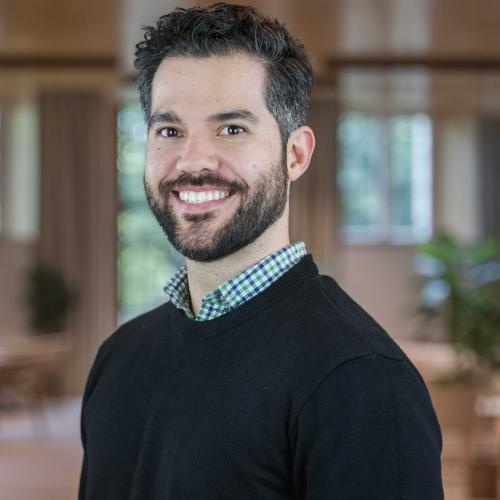
James R. Eagan is an Associate Professor in the Computer Science and Networks Department (Infres) at Télécom Paris , part of the Institut Polytechnique de Paris. He is also a Visiting Professor at the University of Colorado, Boulder for the 2024–25 academic year. His research focuses on making computers more expressive tools for human interaction, emphasizing malleable software, collaborative dynamic media, and multi-surface environments. His work spans Human-Computer Interaction , Data Visualization , and User Interface Programming . A key theme involves adapting software for user-driven customization, exemplified by projects like Webstrates (shareable dynamic media) and SchemeLens (semantic zoom for technical diagrams). He also explores uncertainty in data analytics and gesture-based interfaces for experts. Recent publications from 2020–2024 address Explainable AI (XAI) , Financial Crime Detection , and Interactive Data Analysis . His tools Tarantula and SchemeLens have received acclaim, including the 2015 ACM SIGSOFT Impact Award and Best Paper at UIST 2015. Scientific accolades include: Prix de l’Impact 2015 d’ACM SIGSOFT Best Paper Award at UIST 2015 Honorable Mention at CHI 2017 He teaches courses in Mobile Application Development , Human-Computer Interaction , and Data Visualization . His lab, DIVA (Design, Interaction, Visualization & Applications), operates within the Information Processing and Communication Laboratory (LTCI). He actively recruits PhD candidates and postdocs for research in these domains.
Chao Liu is a Research Scientist at CNRS (French National Center for Scientific Research) since 2008, affiliated with the DEXTER team and the Department of Robotics, LIRMM at University of Montpellier, France. He earned his Ph.D. in Electrical & Electronic Engineering from Nanyang Technological University, Singapore (2006). Current research focuses on surgical robotics , haptics , teleoperation , and nonlinear control theory with applications in computer vision. His work addresses challenges in robotic-assisted telesurgery, including: Stable and transparent human-robot interaction through wave variable compensators and passivity filters Physiological motion compensation using spatio-temporal LSTM and dual Kalman filters EMG-based motion recognition for surgical skill assessment 3D soft-tissue reconstruction with stereo-endoscopes and deep learning Dr. Liu leads European and French projects like: TS2RT (CNRS-funded): Safer teleoperation with motion compensation ROBACUS (ANR-funded): Needle positioning with MPC control HaTUMoCo (CNRS-funded): Haptic teleoperation with uncertainty handling ARAKNES (EU-funded): Microrobotic systems for endoluminal surgery Scientific honors include Senior Member of IEEE and Member of Sigma Xi . He supervises Ph.D. and Master's students working on topics such as concentric tube robot optimization, haptic teleoperation, and EMG-based force estimation. Dr. Liu serves on IEEE Technical Committees for Telerobotics and Haptics , and as Technical Editor of IEEE/ASME Transactions on Mechatronics.
Yannick Benezeth is a Professor of Computer Science at Université de Bourgogne Franche-Comté in Dijon, France, where he teaches courses on databases, optimization, and image/video processing at the IUT de Dijon. He conducts research at the ImViA research laboratory (EA7535), focusing on video health monitoring and video analytics applications. His academic journey includes serving as an Associate Professor from 2011-2024 and earning his Habilitation à Diriger des Recherches (HDR) in 2019. Dr. Benezeth's research interests center on video-based health monitoring systems, particularly remote photoplethysmography (rPPG) for non-contact vital sign measurement. His work spans computer vision , video analytics , and physiological signal processing , with applications in stress detection, abnormal event recognition, and health monitoring. He has developed several publicly available datasets including UBFC-Phys, UBFC-RPPG, and IMVIA-NIR that have become valuable resources for researchers in affective computing and remote physiological monitoring. His publication record demonstrates consistent contributions to top computer vision venues including CVPR, ICPR, and IEEE Transactions. Recent work shows a clear trend toward multimodal approaches combining video analysis with physiological signal processing, particularly in psychophysiological stress studies. The UBFC-Phys dataset published in 2021 represents a significant contribution to affective computing research with over 50 participants and comprehensive physiological measurements. As a research supervisor with HDR qualification, Dr. Benezeth leads projects in the ImViA laboratory focusing on video analytics for healthcare applications. His team has developed innovative methods for background subtraction, abnormal event detection, and skin tissue segmentation that have been adopted by other researchers through his publicly shared code and datasets. Current work appears focused on improving the robustness of video-based physiological measurement under realistic conditions.
Vitor Lima serves as Assistant Professor of Marketing at ESCP Business School's Madrid campus. His academic journey includes a Postdoctoral Fellowship at Schulich School of Business/York University, establishing his international research profile. PhD in Business Administration (Marketing) from IAG/PUC-Rio and Schulich School of Business/York University MSc in Business Administration from FGV/EBAPE MBA in Marketing from FGV BA in Advertising with Branding extension from ESPM Digital Marketing Strategy Executive Certificate from Harvard University Professor Lima's research explores the intersection of emerging technologies and consumer behavior through critical theoretical lenses. His work examines how biohacking, transhumanism, and AI reshape human identity and consumption practices. He investigates consumer experiences with cyborg technologies, self-tracking devices, and human enhancement, often employing enactive and posthumanist frameworks to analyze these phenomena. His research methodology frequently incorporates arts-based and speculative approaches to examine technological futures. His recent publications reveal a strong focus on posthuman consumer identities, with significant contributions to understanding biohacking cultures, NFT implications, and human-robot interactions. The interdisciplinary nature of his work bridges marketing, philosophy of technology, and medical humanities, creating novel theoretical syntheses for analyzing technologically mediated consumption. AMS Mary Kay Doctoral Dissertation Award AMS Review - Sheth Foundation Doctoral Competition for Conceptual Articles (ADCCA) ACR Best Working Paper Award Professor Lima actively engages with media outlets including the BBC, translating complex academic concepts for broader public discourse. His collaborations extend beyond academia into practical applications of marketing theory, particularly regarding digital transformation and emerging technology adoption. His research on biohacking and human enhancement technologies has generated significant cross-disciplinary interest, influencing both academic and industry discussions about the future of consumer experiences.
National School of Arts and Textile IndustriesFrance
Vladan Koncar is a Full Professor and Research Supervisor at École Nationale Supérieure des Arts et Industries Textiles (ENSAIT), where he directs the GEMTEX laboratory and international relations. His research spans smart textiles, e-textiles, wearable sensors, and energy-harvesting systems, with applications in healthcare, military, and environmental monitoring. Research Interests: Koncar's work focuses on three primary themes: (1) Smart textile design for medical/safety applications; (2) Energy harvesting via textile NFC antennas and metamaterials; (3) Standardization of e-textile reliability and testing. His innovations include textile-based ECG monitors, airflow sensors, and photodynamic therapy fabrics. Projects & Grants: He coordinates major EU initiatives (e.g., ETEXWeld, MAPICC 3D) and industrial collaborations with Petit Bateau and @Health. Key projects involve developing instrumented textiles for healthcare, dynamic lighting systems, and filtration monitoring. Honors: Ordre des Palmes Académiques, Chevalier (French Prime Minister Award, 2019) IPC Golden Gnome & Rising Star Awards (2021-2022) Doctor Honoris Causa (Gheorghe Asachi University, 2010) Annual PEDR Award for PhD supervision since 1995 Labs & Teams: Leads the Human Centered Design Group at GEMTEX, specializing in textile-electronics integration. The lab focuses on structural health monitoring, smart composites, and washable e-textile systems.
Alex 'Sandy' Pentland is a Professor of Media Arts and Sciences at the MIT Media Lab, where he helped create and direct both the MIT Media Lab and Media Lab Asia in India. He also serves as a HAI Fellow at Stanford University. Pentland is one of the most-cited computational scientists globally and was named by Forbes as one of the '7 most powerful data scientists in the world.' Pentland's educational background includes undergraduate studies at the University of Michigan and a Ph.D. in artificial intelligence and psychology from MIT. His research spans computational social science, organizational engineering, wearable computing (including Google Glass), image understanding, and modern biometrics. His recent publications reveal a strong focus on the intersection of AI and social systems, with emphasis on human-AI coevolution, data ethics, network science, and the societal implications of digital technologies. His work increasingly addresses critical issues in data privacy, tokenized asset networks, and the social contract in the age of big data, demonstrating his continued leadership in shaping how society understands and manages digital transformation. MIT's Toshiba endowed chair Election to the U.S. Academy of Engineering McKinsey Award from Harvard Business Review 40th Anniversary of the Internet from DARPA Brandeis Award for work in privacy Pentland has advised over 80 PhD students, with nearly half now tenured faculty at leading institutions, a quarter leading industry research groups, and the remainder founding their own companies. His research has attracted significant funding, evidenced by projects like the DARPA Network Challenge where his team won by applying data-driven approaches to crowd coordination. His work on 'reality mining' has led to practical applications in call centers, mental health services, and urban planning. As director of the Human Dynamics group at MIT, Pentland has pioneered sociometric sensors and reality mining techniques. His lab has incubated numerous companies including Ginger.io (mental health services), CogitoCorp.com (AI coaching), Wise Systems (delivery optimization), Sila Money (financial technology), and several others focused on data privacy and AI applications across various sectors.
David Durand is a Lecturer in Computer Science at the Computer Science Department of the IUT of Amiens (Institute of Technology) within the University of Picardie Jules Verne . He serves as a Deputy Vice-President for Communication, Culture & Scientific Mediation and is a teacher-researcher affiliated with the MIS Laboratory and its SDMA Team . Research Focus: Distributed and communicating objects, middleware, IoT, and data processing in eHealth. His work addresses IoT heterogeneity, communication protocols, and AI-driven data processing architectures for medical applications. Recent projects explore intrusion detection in Medical IoT (MIOTs), AI threat management in healthcare, and movement analysis for Parkinson's disease treatments. His publications span cybersecurity, robotics, and AI in healthcare, with a focus on federated learning and anomaly detection. He actively supervises students in IoT-related topics, including smart homes, logistics, and medical robotics.
BOHI Amine is a researcher at CESI (School of Engineering and Digital Tools, Department of Computer Science), with a PhD in Computer Science from the University of Toulon (2017). His academic profile spans disciplines including Machine Learning, Signal and Image Processing, and Biomedical Engineering, with a focus on applications in Digital Health and Human-Robot Interaction. Education : PhD in Computer Science (University of Toulon, 2013-2017); Master 2 in Computer Science (University of Fes, Morocco, 2009-2011); Bachelor’s in Mathematical and Computer Sciences (University of Fes, 2006-2009). His research interests include: Machine Learning and Deep Learning Signal and Image Processing 3D Shape Analysis Computer Vision Digital Health Biomimetic Feature Design BOHI’s publications reflect expertise in facial emotion recognition for elderly care, cortical folding modeling, and soft tissue organ deformation analysis using MRI. He supervises diverse research internships, mentoring students from institutions like Sorbonne Paris Nord, Université de Technologie King Mongkut, and INP Grenoble. Current projects involve developing intelligent solutions for emotional interaction with elderly individuals suffering from neurodegenerative disorders, in collaboration with VyV3 Bourgogne. He also contributes to the design of multimodal datasets and wearable health monitoring systems. BOHI’s technical work includes contributions to maritime surveillance systems (PARE project) and semantic information platforms, demonstrating a capacity to bridge theoretical research with practical applications across domains.
Patrice CLEMENTE serves as a Lecturer at INSA Centre Val de Loire, France, affiliated with the LIFO research laboratory (Laboratoire d'Informatique Fondamentale d'Orléans). His academic work focuses on cybersecurity with emphasis on cloud infrastructure security, biometric authentication systems, and attribute-based access control models. His research trajectory spans two decades, evolving from foundational SELinux policy analysis and honeypot forensics (2004-2012) toward contemporary medical security applications. Recent publications demonstrate specialization in photoplethysmography-based biometric authentication and Internet of Medical Things security architectures, reflecting adaptation to emerging healthcare technology challenges. Methodologically, his work combines systematic literature reviews with practical security framework development. Analysis of his 25 HAL publications reveals consistent contributions to security policy specification, virtualization security, and intrusion detection systems. The 2023-2024 publications indicate a strategic shift toward healthcare security domains while maintaining core expertise in access control and threat modeling. Scientific awards: No specific awards or fellowships were documented in the source material. Advising and grants: The provided information contains no records of supervised students, doctoral committees, or secured research funding. Labs and teams: CLEMENTE operates within LIFO, a joint research unit of the University of Orléans and INSA Centre Val de Loire under CNRS supervision, focusing on fundamental computer science research with security as a primary pillar.
National School of Arts and Textile IndustriesFrance
Kim-Phuc TRAN is an Associate Professor and Research Supervisor at Ecole Nationale Supérieure des Arts et Industries Textiles (ENSAIT), affiliated with the GEMTEX Research Laboratory. He serves as Section CNU 61 and holds leadership roles including Founder member of CybCom (2021-), Member of the Executive Committee of GEMTEX (2020-), and Coordinator of the Cybersecurity axis for GRAISyHM (2020-). His international engagement includes heading the International Chair in Data Science and Explainable Artificial Intelligence at Dong A University & International Research Institute for Artificial Intelligence and Data Science (IAD), Vietnam since 2018. Dr. TRAN's research spans multiple dimensions of Artificial Intelligence with a strong focus on Explainable, Trustworthy, and Transparent AI . His work encompasses Self-Supervised Learning, Anomaly Detection, Federated Learning, and Multimodal Deep Learning. He also investigates Ethical and Human-centered AI through Embedded AI, Wearable AI Devices, and Human-Centered Design to Address Biases. His research extends to Safety and Reliability of AI systems, including Adversarial Machine Learning and Cybersecurity for AI Systems. In Statistical Computing, he focuses on Statistical Process Monitoring and Advanced Control Charts, while his work on Intelligent Decision Support Systems addresses Clinical Decision Support, Supply Chain Optimization, and Predictive Maintenance. His research on Digital Twins spans Healthcare and Smart Manufacturing applications. His publication portfolio shows a strong emphasis on practical AI applications across industries, with particular focus on anomaly detection techniques (appearing in over 40% of his recent publications), industrial applications of AI (35%), and statistical process control methods (25%). His work demonstrates consistent growth in complexity from foundational machine learning approaches to sophisticated multimodal and federated learning systems integrated with domain-specific knowledge. Award for Scientific Excellence (Prime d'Encadrement Doctoral et de Recherche) 2021-2025 from the Ministry of Higher Education, Research and Innovation, France Dr. TRAN has secured substantial research funding as Principal Investigator, including the XAIDS_IChair (500K EUR, 2018-2028), SHSFL (211K EUR, 2020-2024), and EIoTIA (4500 EUR, 2022-2023). He serves as Associate Editor for IEEE Transactions on Intelligent Transportation Systems and Engineering Applications of Artificial Intelligence, demonstrating recognition of his expertise. His leadership extends to coordinating the International semester at ENSAIT and co-creating the International Research Institute for Artificial Intelligence and Data Science. He leads the Human Centered Design Group research team and is actively involved with the GEMTEX research laboratory and Tex-CARE chair. His work bridges academia and industry through multiple collaborative projects with partners like Rosenberger Group, Clear Fashion, and MatchMarket. His current research directions focus on integrating AI with wearable technology, advancing federated learning approaches, and developing trustworthy AI systems for critical applications in healthcare and manufacturing.
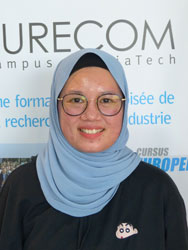
Dr. AZAHARI Afiqah is a researcher at EURECOM's Digital Security department, focusing on blockchain technology, cybersecurity, and military applications. She has published extensively on decentralized systems, digital forensics, and smart supply chain solutions. Her research spans multiple domains including: Blockchain-based attendance systems Military supply chain traceability Digital forensic process modeling Smart library and inventory systems Android malware detection frameworks Recent work emphasizes blockchain integration with biometric authentication, temperature monitoring, and GPS tracking. She has contributed to developing innovative solutions for secure digital environments and knowledge management systems.
Reda BELLAFQIRA is an Enseignant Chercheur (Researcher) at IMT Atlantique's Data Science Department, based in Brest. His work focuses on securing sensitive data processing in distributed systems, combining cryptography with machine learning techniques. Key areas include federated learning, homomorphic encryption, and watermarking for intellectual property protection. He has contributed to privacy-preserving frameworks in healthcare and IoT applications, emphasizing secure collaborative data analysis without compromising confidentiality. Research Interests: Secure federated learning architectures and robustness against adversarial attacks Cryptography applications in AI, including homomorphic encryption for encrypted data processing Watermarking techniques for model integrity and ownership in distributed environments Privacy-preserving methods for healthcare data (e.g., EHRs, genomics) IoT cybersecurity and embedded system security for medical devices Key Contributions: His 2025 work on blockchain-enhanced watermarking for federated learning and 2023 research on automated EHR de-identification exemplify his focus on practical security solutions. Recent trends show increasing emphasis on interdisciplinary approaches merging cryptography with healthcare informatics and IoT systems. Labs/Teams: Active in IMT Atlantique's Data Science Department research groups, collaborating on EU-funded projects related to federated learning in healthcare and secure IoT ecosystems.
Samiha AYED is an Associate Professor at the Université de Technologie de Troyes (UTT), affiliated with the LIST3N laboratory. She holds key administrative roles including Co-Responsable of the FISEA SN engineering branch (Systems Numeriques), and has led the ISI (Computer Science and Information Systems) and CSR (Network Convergence) engineering branches. She is also a member of the UTT Scientific Council and multiple institutional committees. Her research focuses on cybersecurity, IoT, vehicular networks, and AI-driven security solutions. Notable contributions include frameworks for UAV security, blockchain-based trust management in vehicular networks, and federated learning applications for intrusion detection. She has supervised four PhD theses and published extensively in top-tier journals and conferences. Her work addresses critical challenges in secure communication protocols, distributed systems, and medical data protection.
Prof. Jiann-Shiun YUAN is a full Professor and Director of the NSF Multi-functional Integrated System Technology (MIST) Center at the University of Central Florida (UCF). He holds a Ph.D. and M.S. from the University of Florida (1988 and 1984) and has been with UCF since 1990. His research focuses on ultra-low power design, RF circuit reliability for IoT, energy harvesting, and mixed-signal ADC designs using tunnel FET devices. He has authored 300+ papers, three textbooks, and supervised 23 Ph.D. and 32 M.S. students. His work is funded by NSF, industry partners like Intersil and Northrop Grumman, and the state of Florida. Education: M.S. in Engineering, University of Florida, 1984 Ph.D. in Engineering, University of Florida, 1988 Research Interests: Wearable electronics, IoT device reliability, energy autonomy via RF harvesting, and circuit reliability under stress. His work addresses challenges in low-power mixed-signal systems and wireless communication for pervasive IoT applications. Awards: UCF Teaching Awards (1995, 2004, 2010, 2015) UCF Research Award (2003) IEEE Orlando Section Outstanding Engineering Award (2003) Pegasus Professor Award (UCF’s highest honor, 2016) Grants & Labs: Leads the NSF MIST Center and has secured funding from 10+ agencies. Current projects involve supervising 6 Ph.D. and 1 master’s student. Labs/Teams: Directs the MIST Center, a hub for integrated system technology research.
James Eagan is an Associate Professor in the Design, Interaction, Visualization & Applications (DIVA) research group at Télécom Paris , affiliated with the Information Processing and Communication Laboratory (LTCI) and the Computer Sciences and Networks (Infres) department. His work bridges Human-Computer Interaction and Information Visualization , focusing on enhancing software expressiveness for users. James explores software malleability through projects like Webstrates (collaborative dynamic media) and Scotty (runtime toolkit overloading). His research integrates qualitative methods with prototype development to address user needs in code adaptation, data visualization, and small-screen interaction. Recent work includes AI explainability frameworks for financial crime detection and studying cognitive biases in XAI-assisted decision-making. He has received the ACM SIGSOFT 2015 Impact Award for his Tarantula debugging tool. His teaching portfolio spans courses in Human-Computer Interaction , Data Visualization , and Web Technologies at Télécom Paris. James actively recruits PhD and Master’s students for high-quality research in these domains. His office is located at 4.D24 , and he encourages students to contact him at james.eagan@telecom-paris.fr .