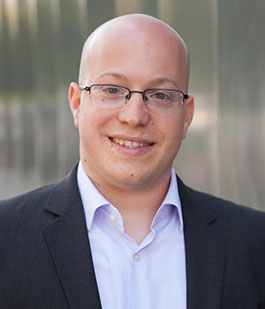
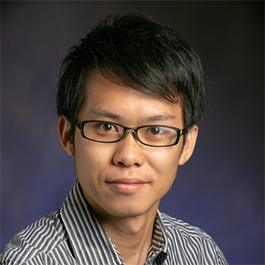
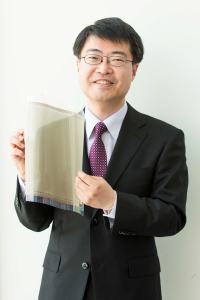
Jonathan Rivnay is a Professor of Biomedical Engineering at Northwestern University , leading the Rivnay Lab in the development of organic bioelectronic materials and devices. His work focuses on bridging biology and electronics through mixed ionic-electronic conductors like conducting polymers, with applications in neural engineering, tissue regeneration, and diagnostics.
Mahsa Shoaran is a Tenure-Track Assistant Professor at EPFL (École Polytechnique Fédérale de Lausanne) jointly appointed at the Center for Neuroprosthetics and the Institute of Electrical Engineering . She is also the founding director of the Integrated Neurotechnologies Laboratory (INL) and contributes to several doctoral programs and teaching missions across EPFL’s School of Engineering (STI). Education: PhD in Electrical Engineering, EPFL (2015) M.Sc. & B.Sc., Sharif University of Technology Postdoctoral Fellow, California Institute of Technology (Caltech) (2015-2017) Former Assistant Professor, School of Electrical and Computer Engineering, Cornell University (2017-2019) Research Focus: Dr. Shoaran’s work sits at the convergence of integrated circuit design , machine learning , and neuroscience . Her group develops ultra-low-power, miniaturized system-on-chips (SoCs) capable of real-time neural recording , pathology detection , and closed-loop therapeutic intervention such as adaptive neurostimulation. Machine-learning algorithms running on-chip enable precise symptom detection in neurological and psychiatric disorders, while advanced circuit techniques guarantee energy efficiency suitable for long-term implantable or wearable neural interfaces. Scientific Awards & Grants: ERC Starting Grant 2021 Google Faculty Research Award in Machine Learning 2019 Swiss NSF Postdoctoral Fellowships NSF Award for Young Professionals – Smart & Connected Health MIT EECS Rising Star 2015 Doctoral Advising & Service: She currently supervises 14 PhD students in the Integrated Neurotechnologies Laboratory. Additionally, she serves on the PhD program committees for Electrical Engineering (EDEE), Microsystems & Microelectronics (EDMI), and contributes to the Neuro-X and SEL teaching programs. She is a Technical Program Committee member for IEEE CICC and serves on the Student Research Preview committee for ISSCC. Laboratory & Collaborative Teams: The Integrated Neurotechnologies Laboratory (INL) at EPFL Campus Biotech in Geneva hosts her interdisciplinary team of circuit designers, machine-learning researchers, and neuroscientists. The lab collaborates closely with clinicians to translate innovations into real-world neuroprosthetic and diagnostic devices.
Juhong Chen serves as an Assistant Professor in the Department of Biological Systems Engineering at Virginia Tech's College of Engineering. With research expertise spanning food safety engineering, biosensors, and bioinstrumentation, Dr. Chen develops cutting-edge technologies for pathogen detection in agricultural and food systems. His work integrates nanomaterials, bacteriophage engineering, CRISPR technology, microfluidics, and artificial intelligence to address critical food safety challenges. Dr. Chen earned his Ph.D. in Food Science from the University of Massachusetts Amherst in 2016 and completed postdoctoral training at both Cornell University and the University of California, Berkeley before joining Virginia Tech in 2019. His educational background includes a B.Eng. in Biological Engineering from East China University of Science and Technology. Research interests focus on developing innovative biosensing approaches to detect biological and chemical contaminants in food systems. Dr. Chen's lab specializes in creating functional antimicrobial surfaces, advanced magnetic nanosensors, engineered bacteriophages, CRISPR-Cas systems, and portable microfluidic chips. His work addresses major challenges in food safety including pathogen detection, antimicrobial resistance monitoring, and food authenticity verification. Analysis of recent publications reveals a strong trend toward CRISPR-based diagnostics, with increasing focus on amplification-free detection methods, portable point-of-care systems, and integration of multiple technologies for enhanced sensitivity and specificity. His research spans food safety, veterinary diagnostics, and medical applications, demonstrating the broad applicability of his biosensing approaches. Scientific recognition includes: Travel grant for Nanoscale Science and Engineering, Agriculture and Food Systems, Gordon Research Conference (2018) Outstanding contribution in reviewing the journal of Biosensors and Bioelectronics (2018) Withycombe-Charalambous Award for Graduate Student Symposium, Agricultural and Food Chemistry, American Chemical Society Dr. Chen has secured significant research funding including a $450,463 USDA NIFA grant for developing CRISPR-equipped engineered phages (CREEPs), a $20,000 Virginia Tech CeZAP grant for viral pathogen detection, and a $740,537 USDA NIFA co-PI grant for digital nanofluidic chip development. He teaches courses in unit operations, biological processing, and food process engineering. The Bioengineering and Biosensing (BeBs) Lab, led by Dr. Chen, focuses on sustainable agriculture and food systems challenges, developing innovative tools including CRISPR, phages, yeasts, and enzymes to improve food production and safety from farm to fork.
Dr. Jan-Kai Chang is a Small Wearables Advisor at a research institute, holding a PhD in electrical engineering from Nanyang Technological University. With over a decade of experience in bioelectronics, his work spans bioresorbable semiconductors, implantable transient electronics, and wearable electronic systems for skin health monitoring. His research interests include: Bioelectronics Wearable Electronics Skin Health Monitoring (hydration, TEWL, UV sensors) Bioresorbable Electronics Implantable Electronics Microfluidics Dr. Chang has published over 13 peer-reviewed papers in high-impact journals including PNAS, Nature Electronics, and Nature Biomedical Engineering. He is the co-founder and Chief Technology Officer of Wearifi Inc, a startup commercializing wearable skincare technologies, and has been instrumental in the development of the Wearifi team's innovations.
Professor Takao Someya serves as Executive Director, Vice President, and Professor at the University of Tokyo, where he leads research in the Department of Electrical and Electronic Engineering within the School of Engineering. He additionally oversees startup initiatives as Director General of the Division of University Corporate Relations. Recognized globally as an inventor of electronic skins (featured in TIME Magazine as one of the best inventions of 2005), Professor Someya is a pioneer in organic and flexible electronics research. He earned his Ph.D. in Engineering from the University of Tokyo and has held prestigious international positions including Global Scholar at Princeton University, GlobalFoundaries Visiting Professor at National University of Singapore, and Hans Fisher Senior Fellow at Technical University of Munich. In 2024, he became the first person from Asia elected as President of the Materials Research Society in the US. Professor Someya's research focuses on developing next-generation wearable technologies using organic electronics for healthcare, biomedical applications, and robotics. His work spans organic transistors, flexible electronics, plastic integrated circuits, large-area sensors, and plastic actuators. His research group has pioneered innovations in electronic skins, ultraflexible photonic devices, and stretchable electronics that bridge the gap between conventional rigid electronics and biological systems. His publication record reveals a clear progression from fundamental research on organic transistors to sophisticated integrated systems for healthcare monitoring and human-machine interfaces, with increasing emphasis on practical biomedical applications in recent years. 65th Fujihara Award (2024) 16th Leo Esaki Prize (2019) Commendation for Science and Technology by the Minister of Education (2019) Clarivate Highly Cited Researcher (2018, 2021, 2022, 2024) IEEE/EDS Paul Rappaport Award (2009, 2010) Young Scientist Award (2005) Professor Someya has mentored numerous successful researchers including Tomoyuki Yokota (now Associate Professor), Tsuyoshi Sekitani, and Martin Kaltenbrunner. His research has been supported by substantial grants including JST ERATO funding for 'Bio-harmonized Electronics' and various industry collaborations. He actively recruits graduate students and postdoctoral fellows through programs like the International Multidisciplinary Engineering (IME) Graduate Program and JSPS fellowships. The Someya Group Organic Transistor Lab maintains active international collaborations and continues to push boundaries in flexible and wearable electronics, with recent projects focusing on ultra-soft electronics for monitoring cardiomyocytes, breathable wearable electronics for long-term health monitoring, and advanced electronic skins with multi-modal sensing capabilities.
Serpil Tekoglu is a Researcher at the Institute of Physical Chemistry, Johannes Kepler University Linz (JKU), specializing in sustainable bioelectronic materials. Her work bridges chemistry, materials science, and medical technology through development of biodegradable conductive polymers and natural biopolymer-based devices. Her research focuses on natural biopolymers for bioelectronics , particularly algal polysaccharides (sacran), DNA-based conductors, and ε-poly-L-lysine copolymers. Key interests include achieving long-term biocompatibility in implantable devices, ultrathin flexible electronics for medical applications, and eco-friendly manufacturing processes. She investigates material degradation pathways, stability mechanisms, and sustainable alternatives to conventional electronics. Analysis of her 2025 publications reveals a cohesive trajectory toward medical-grade biodegradable electronics . Her work consistently integrates natural polymers with conductive elements to solve core challenges in bioelectronic interfaces - particularly stability in physiological environments and environmental sustainability. This spans from fundamental material synthesis (e.g., enzyme entrapment techniques) to functional device fabrication (OECTs, solar cells), with strong emphasis on real-world medical applications like biodegradable rapid tests. Dr. Tekoglu leads the federally funded project BIOCOM - Biocompatible conductive polymers for medical applications (2023-2025) and actively mentors junior researchers. Her 20+ conference activities since 2024 include 6 invited talks at institutions like Universität Ferrara, demonstrating international recognition of her work on sustainable bioelectronics. She operates within JKU's multidisciplinary bioelectronics team, collaborating with physicists, chemists, and medical researchers. Current efforts focus on translating lab innovations to clinical applications, particularly biodegradable diagnostic devices highlighted in Austrian media coverage (May 2025) regarding "the future of rapid tests".
Christofer "Chris" Toumazou is a distinguished British Cypriot electronic engineer serving as the Regius Professor of Engineering at Imperial College London, a prestigious appointment made during the Queen's Diamond Jubilee in 2013. He also holds positions as Chief Scientist of the Institute of Biomedical Engineering and Professor of Circuit Design at Imperial. Beyond academia, Toumazou is an accomplished entrepreneur, having founded Toumaz Holdings Ltd and DNA Electronics Ltd., and co-founding DNAnudge, which developed the groundbreaking CovidNudge point-of-care diagnostic system. With a research portfolio spanning over 800 publications, Toumazou's work primarily focuses on the intersection of semiconductor technology and biomedical applications. His most significant contribution is the development of ISFET (Ion-Sensitive Field-Effect Transistor) technology for DNA detection, which eliminates the need for optical systems in genetic testing and enables miniaturized, lab-free diagnostic devices. This innovation has been applied across various healthcare domains including pandemic response, cancer diagnostics, and personalized medicine. Toumazou's publication record shows consistent high-impact output across biomedical engineering, electrical engineering, and applied physics. His recent work (2020-2022) has particularly emphasized point-of-care diagnostics, personalized healthcare systems integrating genetic information with real-time monitoring, and novel approaches to DNA analysis. His research demonstrates a clear trajectory from fundamental circuit design to practical healthcare applications that address significant clinical needs. Fellow of the Royal Society (FRS) Fellow of the Royal Academy of Engineering (FREng) Fellow of the Academy of Medical Sciences (FMedSci) Fellow of the Institution of Engineering and Technology (FIET) Fellow of the Institute of Electrical and Electronics Engineers (FIEEE) Regius Professor of Engineering at Imperial College London Professor Toumazou maintains an active research program with numerous ongoing projects bridging engineering and medicine. His work continues to focus on developing next-generation diagnostic technologies that integrate semiconductor electronics with biological systems, with particular emphasis on making sophisticated genetic testing accessible at the point of care. Through his academic position and entrepreneurial ventures, he maintains strong connections between fundamental research, commercial development, and clinical implementation of new healthcare technologies.