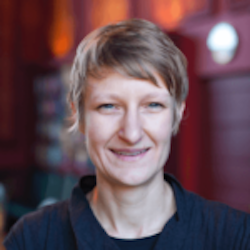
Mª LUISA DEL RÍO GONZÁLEZ is an Associate Professor at the University of León, affiliated with the Faculty of Veterinary Medicine and the Department of Animal Health. Her academic work is rooted in Immunology, with a strong focus on translational research in immune modulation. Her research interests lie in the therapeutic manipulation of the immune system, particularly in the contexts of organ transplantation and cancer. She investigates how molecules from the Immunoglobulin Superfamily and the TNF/TNFR Superfamily mediate communication between T cells, B cells, and dendritic cells to either suppress immune responses in transplantation or enhance them against weakly immunogenic tumor antigens. Her approach is translational, employing pre-clinical disease models to address real-world clinical challenges. She is an active member of the research group Trasplante Inmunobiología del Trasplante , contributing to cutting-edge immunological studies. While no specific publications or awards are listed in the provided text, her ongoing research indicates a strong commitment to advancing immunotherapeutic strategies. She advises students and may be involved in research grants, though specific details are not available. She earned her doctoral degree from the University of León in 2004, with a thesis on iron uptake mechanisms in Haemophilus parasuis , supervised by Dr. Elías Fernando Rodríguez Ferri and Dr. Jesús Navas Méndez.
Stefan Weßel is a Professor of Theoretical Physics (Condensed Matter) at RWTH Aachen University, affiliated with the Department of Physics within the Faculty of Mathematics, Computer Science and Natural Sciences. He has been a faculty member since 2011 and is actively engaged in research and teaching in theoretical and computational condensed matter physics. Education: Ph.D., University of Southern California (1998–2001) Diplom, Ludwig-Maximilians-Universität München (1994–1998) Vordiplom, Technische Universität Dortmund (1991–1994) His research focuses on quantum magnetism, frustrated spin systems, quantum phase transitions, and topological aspects of condensed matter. He employs advanced computational techniques, particularly quantum Monte Carlo simulations, to study strongly correlated electron systems. His work often involves collaboration with international research groups and has appeared in leading journals such as Nature , Nature Communications , and Physical Review Letters . The recent publications reveal a strong trend toward understanding exotic quantum phases, including spin-nematic transitions, topological order, and magnetic analogues of classical phase transitions. His work spans both fundamental theoretical developments and applications to real quantum materials. He has made significant contributions to the understanding of the Shastry-Sutherland model, honeycomb lattice systems, and edge magnetism in nanoribbons. Scientific Awards: No specific awards were mentioned in the provided text. Stefan Weßel has supervised or collaborated with numerous researchers, though formal advisee names are not listed. He is involved in large collaborative projects such as the ALPS (Algorithms and Libraries for Physics Simulations) initiative, contributing to open-source software for strongly correlated systems. He teaches a range of courses including Theoretical Physics, Statistical Physics, and Computational Physics, indicating a strong commitment to education at both undergraduate and graduate levels. He leads a research group focused on computational quantum many-body physics, utilizing high-performance computing to simulate quantum materials. The group's work has implications for the design and understanding of novel quantum states in low-dimensional and frustrated magnetic systems.
Dr. Boyu Kuang is a Research Fellow in Computer Vision and Artificial Intelligence at Cranfield University, affiliated with the Centre for Computational Engineering Sciences. His work bridges academic research with industrial applications in aviation, robotics, and energy systems. Current role: Research Fellow in Computer Vision and AI Key affiliations: Centre for Computational Engineering Sciences Research interests include semantic segmentation , object detection , weakly and self-supervised learning , multi-modal perception , and vision-language foundation models . His methodology emphasizes robust AI systems for low-resource industrial environments , with applications in aviation maintenance , robotics , and energy infrastructure monitoring . He leads the Artificial Intelligence and Machine Learning module at Cranfield. Key activities include the UKRI, ATI, and Airbus-funded ONEHeart project on autonomous systems and intelligent inspection. Collaborations span Stanford University , King’s College London , Civil Aviation University of China , and industry partners like Airbus and Leidos . Publications focus on vision-language models , multi-modal perception , and industrial AI . As an Editorial Board Member for Discover Artificial Intelligence (Springer Nature), he contributes to academic governance. Peer review experience includes 60+ journal manuscripts for venues like IEEE Transactions on Image Processing and Elsevier Neural Networks . Facilities utilized include DARTeC and AIRC .
Xiaoyu Zhang is a Professor at the Center for Intelligent Computing Systems within the Institute of Information Engineering at the Chinese Academy of Sciences in Beijing, China. Having earned a PhD from the Institute of Automation, Chinese Academy of Sciences in 2010, Dr. Zhang has established a distinguished research career spanning over 15 years with over 130 publications. Dr. Zhang's research focuses on cutting-edge areas of computer vision and artificial intelligence, with particular expertise in face recognition systems, deepfake detection, knowledge graph reasoning, and network security. Their work bridges theoretical innovation with practical applications, addressing critical challenges in biometric security, multimedia analysis, and privacy protection. Recent research demonstrates pioneering work in masked face recognition, temporal action localization, and graph-based representation learning. Analysis of Dr. Zhang's publication trends reveals a strong emphasis on face recognition technology (appearing in approximately 40% of recent publications), with significant contributions to deepfake detection and knowledge graph reasoning. The research consistently combines deep learning methodologies with domain-specific innovations, showing evolution from traditional computer vision approaches to sophisticated transformer-based architectures and graph neural networks. Key thematic areas include robustness against adversarial conditions, handling of incomplete or masked data, and cross-domain knowledge transfer. Dr. Zhang has been instrumental in major collaborative projects including the FRCSyn Challenge series, which has become a benchmark for evaluating face recognition systems with synthetic data. Their work has been published in top-tier venues including IEEE Transactions on Pattern Analysis and Machine Intelligence, IEEE Transactions on Image Processing, and the International Journal of Computer Vision. Within the Center for Intelligent Computing Systems, Dr. Zhang leads research initiatives focused on developing next-generation biometric security systems and intelligent multimedia analysis frameworks. The research group maintains strong collaborations with international institutions including ETH Zurich, Imperial College London, and various Chinese universities, fostering a dynamic environment for interdisciplinary research at the intersection of computer vision, machine learning, and security.
Yanbo Zhang is a researcher affiliated with Nanyang Technological University , holding a PhD in Wireless Communication and Sensing (2022). His work spans machine learning , biomedical engineering , and signal processing with applications in healthcare, communication systems, and computer vision. Education: PhD from Nanyang Technological University, Singapore (2022) Research areas include: Machine learning for medical diagnosis (predicting infections, cardiovascular events, and cancer) Advanced analog-digital converter designs for precision electronics Diffusion models and evolutionary algorithms in AI Federated learning for imbalanced data and cybersecurity Recent publications focus on multi-label learning for disease prediction, secure communication architectures , and deep learning applications in medical imaging. Collaborations include institutions in Singapore, China, and international teams.
Dr. Abigail Koay is an Honorary Research Fellow at the University of Queensland's School of Electrical Engineering and Computer Science. Her research focuses on cybersecurity, machine learning applications in industrial systems, and healthcare technology. She has contributed to projects such as real-time cyber-attack detection using weakly supervised learning, supported by UQ Cyber Seed Funding (2021–2022). Her work spans multiple disciplines including: Cybersecurity for Industrial Control Systems (ICS) IoT network anomaly detection using fog-assisted frameworks Machine learning for medical imaging (e.g., glaucoma detection) AI-driven cybersecurity strategies for smart grids Recent publications highlight advancements in: Irregular time series analysis using GNNs Positive-unlabeled learning with random forests Domain generalization in retinal image analysis Dr. Koay has authored/co-authored 15+ peer-reviewed articles across journals like Frontiers of Computer Science , IEEE Access , and conferences including NeurIPS and ISGT Asia. She collaborates with industry partners on projects like Plan2Defend for smart grid security and SDGen for synthetic cybersecurity dataset generation. Her research integrates theoretical machine learning with practical cybersecurity challenges, emphasizing real-world applicability in critical infrastructure and healthcare systems.
Xuan Wang is an Assistant Professor in the Department of Computer Science at Virginia Tech, affiliated with the Sanghani Center for Artificial Intelligence and Data Analytics. She holds a Ph.D. in Computer Science from the University of Illinois at Urbana-Champaign (UIUC), with additional M.S. degrees in Statistics and Biochemistry from UIUC, and a B.S. in Biological Science from Tsinghua University. Her research focuses on Natural Language Processing (NLP), Data Mining, AI for Sciences, and AI for Healthcare, emphasizing applications in complex reasoning with LLMs, multi-modal science foundation models, and healthcare informatics. Her work has been recognized through awards including the Nvidia Academic Grant (2025), Cisco Research Award (2025), and NSF NAIRR Pilot Award (2024-2025). She has organized workshops at ACL, VL/HCC, and ICDM, and serves on program committees for top conferences like NeurIPS, EMNLP, and KDD. Xuan's research spans scientific text mining (e.g., knowledge extraction from biomedical literature), multi-agent LLM systems for clinical triage, and foundational models for multi-omics data analysis. Her lab actively collaborates with institutions like Children’s National Hospital and the Fralin Biomedical Research Institute, with funding from NSF, CCI, and industry partners. Education: Ph.D. in Computer Science, UIUC (2022) M.S. in Statistics, UIUC (2017) M.S. in Biochemistry, UIUC (2015) B.S. in Biological Science, Tsinghua University (2013) Grants & Awards: NVIDIA Academic Grant (2025) – Small LLM Agent Systems Cisco Research Award (2025) – Complex Reasoning with LLMs NSF NAIRR Pilot (2024-2025) – Multi-omics Analysis Lab & Teams: Wang Lab focuses on AI-driven biomedical research, including single-cell omics analysis, brain signal interpretation, and LLM-based scientific discovery. Collaborations include the Virginia Tech Presidential Postdoctoral Fellowship program and industry initiatives like the Amazon + VT Center for Efficient ML.
Henrik Kalisch is a Professor of Applied Mathematics at the Department of Mathematics, University of Bergen, where he also serves as Deputy Head of Department. His research focuses on mathematical modeling of nearshore processes, wave breaking, surfzone circulation, and wave hazards in coastal zones. Dr. Kalisch received his Ph.D. in 2001 from the University of Texas at Austin. His academic career has established him as a leading researcher in fluid mechanics, partial differential equations, and numerical analysis, with over one hundred scientific publications to his name. Professor Kalisch's research spans several key areas in applied mathematics and fluid dynamics. His work on surface water waves investigates fluid particle motion, wave breaking mechanisms, wave shoaling processes, and the influence of vorticity on wave dynamics. In the domain of wave-ice interaction , he studies moving loads on ice sheets, marginal ice zone dynamics, and interactions with internal waves. His contributions to hyperbolic conservation laws include work on singular solutions and their physical interpretation, while his research on mathematical properties of model equations examines existence, uniqueness, and stability of traveling waves and soliton interactions. His research has practical applications in wave energy devices, tidal energy, carbon storage, and ice road safety. His recent publications reveal a strong focus on developing and analyzing mathematical models for wave phenomena, particularly Boussinesq-type models, KdV equations, and their variants. The research shows increasing integration of computational methods with theoretical analysis, and growing attention to practical applications in coastal engineering and polar science. There's also a notable trend toward interdisciplinary collaboration, particularly with oceanographers and engineers working on real-world wave problems. Professor Kalisch serves as co-editor-in-chief for "Water Waves: An interdisciplinary journal," published by Birkhäuser-Springer-Nature, demonstrating his leadership in the field. Methods for real-time wave forecasting and phase control of wave energy converters (Bergen Universitetsfond, 2021-2022) MegaRoller (European Commission Horizon 2020 grant) Norwegian Research Network in Mathematical Models in Geophysical Flows (Research Council of Norway, 2016-2019) Internal Waves in the Marginal Ice Zone (Hydralab grant from European Commission) Nonlinear PDE in Spaces of Analytic Functions (Research Council of Norway, 2012-2017) Wavemaker (Research Council of Norway, 2006-2010) Professor Kalisch has supervised numerous graduate students, including current PhD candidates Enrique Martinez, Olufemi Ige, and Anders Norevik, as well as several Master's students. His former PhD students include Maria Bjørnestad (2021), Evgueni Dinvay (2019), Vincent Teyekpiti (2018), and others who have gone on to careers in academia, industry, and research institutions worldwide. He has chaired curriculum committees and developed courses in applied mathematics, fluid mechanics, and numerics at both undergraduate and graduate levels. His research group at the University of Bergen includes postdoctoral researchers like Bashar Khorbatly, adjunct professors like Francesco Lagona, PhD students, and Master's students working collaboratively on various aspects of wave dynamics and mathematical modeling.
Sourya Roy is an Assistant Professor in the Department of Computer Science at the University of Iowa. Prior to his academic career, he worked as a Data Scientist at Foursquare. He earned his PhD in Computer Science from the University of California, Riverside in 2022, advised by Silas Richelson and Amey Bhangale. Education: PhD in Computer Science (University of California, Riverside, 2022) His research spans theoretical and applied domains, focusing on pseudorandomness, coding theory, and cryptography in theoretical computer science, while also contributing to computer vision and machine learning applications. Recent publications emphasize expander graph theory, coding algorithms, and spatio-temporal modeling. Dr. Roy is actively seeking PhD students to collaborate on theoretical computer science projects. His publications highlight expertise in pseudorandomness, expander graphs, and scalable unsupervised learning techniques. Key conferences include FOCS, ECCV, and IEEE Transactions on Information Theory.
Dr. Tryphon Lambrou is a Senior Lecturer in Computing Science at the School of Natural and Computing Sciences, University of Aberdeen, where he joined in January 2022. He previously served as a Senior Lecturer at the School of Computer Science, University of Lincoln, and holds an Honorary Lecturer position at the Department of Medical Physics & Bioengineering, University College London. He has held leadership roles including Interim Vice-Dean for the Joint Institute of Data Sciences and Artificial Intelligence (June 2022–January 2023) and Programme Director at the University of Lincoln. Senior Lecturer, University of Aberdeen (2022–present) Senior Lecturer, University of Lincoln (prior to 2022) Honorary Lecturer, UCL Medical Physics & Bioengineering External Examiner, MSc AI & Data Science, University of Hull Dr. Lambrou's research spans artificial intelligence, machine learning, and computer vision with strong applications in medical imaging and diagnostics. His work focuses on brain tumor segmentation, fetal ultrasound analysis, radiomics, and physiological monitoring using thermal imaging and robotics. He has made significant contributions to multimodal MRI analysis, automated biometry, and deep learning architectures such as MDA-Unet. His recent publications (2022–2024) emphasize deep learning for medical segmentation, out-of-distribution detection in gastrointestinal imaging, and weakly supervised pre-training in neuroimaging. Earlier works (2000–2018) highlight arterial blood flow modeling, PET-CT motion correction, and fetal heart segmentation, demonstrating a long-standing expertise in biomedical signal and image processing. Member, IEEE Professional Member, ACM Full Member, Institute of Physics and Engineering in Medicine (IPEM) Dr. Lambrou actively supervises PhD students in Computing Science and has led research degrees (PGR) at Lincoln. His research has been funded through EPSRC and MRC via the Interdisciplinary Research Consortium. He has contributed to major conferences and journals in medical imaging, AI, and biomedical engineering. He is affiliated with the Centre for Medical Image Computing (CMIC) at UCL and has collaborated extensively on projects bridging computer science and clinical applications, particularly in oncology, neurology, and obstetrics.
Jyoti Joshi Dhall is a Senior Lecturer in the Department of Human Centred Computing at Monash University, where she conducts interdisciplinary research at the intersection of artificial intelligence, behavioral analytics, and digital health. Her work contributes to UN Sustainable Development Goals, particularly in health and well-being. Her research focuses on affective computing , multimodal behavior analytics , and human-centered AI , with applications in mental and physical health monitoring. She employs advanced machine learning techniques to analyze behavioral signals such as facial expressions, speech, and body movements for detecting conditions like pain, apathy, and depression. Recent publications show a strong trend in applying deep learning models—such as LSTM-DNN and anomaly detection networks—to clinical and assistive technologies. Her work appears in top-tier venues including IEEE conferences and the ACM Handbook series, reflecting impactful contributions to multimodal user interfaces and emotion-aware systems. She has collaborated with international researchers and her work has been cited in Scopus and referenced in patents. Although no specific awards are listed, her research has attracted attention from news outlets and academic platforms like Mendeley. Jyoti Joshi Dhall advises students and likely supervises research projects in human-centered computing, though specific advisees are not listed. Her research is supported by institutional and possibly external grants, given the scope and publication record. She is part of a broader research network focused on AI for healthcare, contributing to both theoretical and applied advancements in the field. She is affiliated with a research team or lab working on multimodal interaction and affective computing, though the specific lab name is not mentioned in the provided text.
HONTANI Hidekata is a Professor at Nagoya Institute of Technology's Department of Information Engineering, Media Informatics Field, and Graduate School of Engineering, Media Informatics Program. He is also affiliated with the Advanced Medical Physics and IT Research Center and the Center for Research and Development in Higher Engineering-Education. His career includes academic roles at institutions like Yamagata University and The University of Tokyo. Doctorate in Engineering from The University of Tokyo (2000) Professional memberships in IEEE, SICE, IEICE, and IPSJ Research focuses on Medical Image Processing and Computational Anatomy , with recent advancements in deep learning applications for pathology image analysis, TMS electromagnetic modeling, and spatiotemporal cancer dynamics. He pioneered techniques for counterfactual image generation in lymphoma pathology and adaptive sparse regularization for signal processing. Notable trends in his publications (2017-2024) include AI-driven histopathology , generative models for medical imaging, and tumor microenvironment analysis using multi-scale MRI-pathology fusion. His work bridges machine learning , computational anatomy , and clinical applications . Scientific Awards : Multiple Japan Society of Medical Imaging and Information Sciences awards (2017-2024), Cum Laude Poster Award at SPIE Medical Imaging (2018) Grants : Principal Investigator for JSPS KAKENHI projects on lymphoma subtyping (2022-2025), 3D tumor modeling (2018-2021), and computational anatomy (2014-2019) He leads the Advanced Medical Physics and IT Research Center and contributes to academic societies as a committee member in organizations including IEICE and Japan Society of Medical Imaging and Information Sciences.
Nikos Komodakis is a Professor in the Computer Science Department at the University of Crete, Greece, where he develops efficient, scalable and mathematically well-grounded algorithms for analyzing visual data including static natural images, video, and medical image data. His research spans deep learning, computer vision, machine learning, and artificial intelligence with significant contributions to self-supervised learning, few-shot learning, and knowledge distillation techniques. His work demonstrates a strong theoretical foundation combined with practical applications, particularly in medical imaging. Komodakis has published extensively in top-tier computer vision venues including CVPR, ICCV, ECCV, and IEEE Transactions on Image Processing. His recent publications (2022-2025) show a growing emphasis on medical image analysis applications while maintaining strong contributions to fundamental computer vision problems. Notable contributions include novel approaches for unsupervised representation learning that surpass state-of-the-art methods, effective techniques for knowledge distillation (such as the QUEST framework), and innovative frameworks for few-shot visual learning. Komodakis serves on the editorial boards of prestigious journals including the International Journal of Computer Vision, Computer Vision and Image Understanding Journal, and Computational Intelligence Journal. He has been a frequent area chair for major computer vision conferences including CVPR, ICCV, ECCV, and BMVC. Spyros Gidaris received the Ponts Foundation Best Thesis Prize and the University Paris-Est Best Thesis prize under Komodakis' supervision Sergey Zagoruyko received the AFRIF 2018 Thesis Prize for his PhD work supervised by Komodakis His research group has developed influential techniques including Online Bag-of-Visual-Words Generation for Unsupervised Representation Learning, which surpassed previous state-of-the-art methods. The group maintains active GitHub repositories for many of their publications, demonstrating commitment to reproducible research. Current research directions include advancing medical image analysis through deep learning, improving self-supervised learning frameworks, and developing more efficient neural network architectures.
Carola-Bibiane Schönlieb is a Professor of Applied Mathematics and head of the Cambridge Image Analysis (CIA) group at the Department of Applied Mathematics and Theoretical Physics, University of Cambridge. She concurrently serves as co-director of the Cambridge Mathematics of Information in Healthcare (CMIH) Hub, leading interdisciplinary initiatives at the intersection of mathematics, healthcare, and data science. Her research centers on variational methods, partial differential equations, and machine learning for image analysis, processing, and inverse problems. She maintains active collaborations with clinicians, biologists, physicists, chemical engineers, plant scientists, artists, and art conservators, driving innovations in biomedical imaging, image sensing, and digital art restoration. This interdisciplinary approach bridges theoretical mathematics with real-world applications across healthcare and cultural heritage domains. Analysis of her recent publications reveals a dominant focus on deep learning applications for medical imaging challenges, particularly in cardiology, oncology, and neuroimaging. Her work consistently addresses inverse problems in reconstruction and segmentation while emphasizing robustness against artifacts, model efficiency, and integration of physical constraints. A clear trend emerges toward foundation models and transfer learning techniques specifically adapted for medical image analysis with limited annotated data. Prof. Schönlieb leads the Cambridge Image Analysis research group and co-directs the CMIH Hub, which unites mathematicians, computer scientists, and clinicians to translate advanced data science into clinical practice through collaborative healthcare innovation.
Jeroen van der Laak is a Visiting Professor at Linköping University's Faculty of Medicine, affiliated with the Department of Health, Medicine and Care (HMV) and the Department of Diagnostics and Specialist Medicine (DISP). He is a key member of the Computational Pathology Group and contributes to the Wallenberg Centre for Molecular Medicine (WCMM), focusing on advancing digital pathology through artificial intelligence and deep learning methodologies. Dr. van der Laak's research centers on computational pathology, with specific expertise in developing deep learning algorithms to improve cancer diagnostics and prognosis. His work spans multiple domains including histopathological image analysis, tumor detection, biomarker identification, and computer-aided diagnosis systems. He investigates how machine learning techniques can enhance pathologist efficiency while reducing observer bias and identifying novel prognostic indicators for personalized cancer treatment. His research addresses critical challenges in computational pathology, including the need for high-quality, large-scale histopathological datasets and clinical validation of AI models. Analysis of Dr. van der Laak's recent publications reveals a strong focus on applying deep learning to diverse pathology challenges across multiple organ systems. His work demonstrates expertise in whole-slide image analysis, tumor segmentation, cancer grading, and biomarker discovery. Notably, his research spans breast cancer, prostate cancer, colorectal cancer, kidney transplant pathology, and gynecological pathology, showing both depth in specific applications and breadth across medical specialties. Key themes include attention-based image compression, human-in-the-loop refinement of AI models, and automated lesion scoring systems. Dr. van der Laak actively collaborates with international pathologists and participates in major European initiatives like the BIGPICTURE project, which aims to build an EU-scale digital pathology repository. His research emphasizes clinical validation of AI models to ensure safety and utility in routine practice, with contributions to consensus studies including recommendations for diagnosing serous tubal intraepithelial carcinoma (STIC) and standardization of molecular pathology education. As part of the Computational Pathology Group, Dr. van der Laak contributes to developing, validating, and deploying novel medical image analysis methods based on deep learning technology, with a focus on computer-aided diagnosis systems that directly support pathologists in their daily work while identifying potential new biomarkers for individualized treatment approaches.