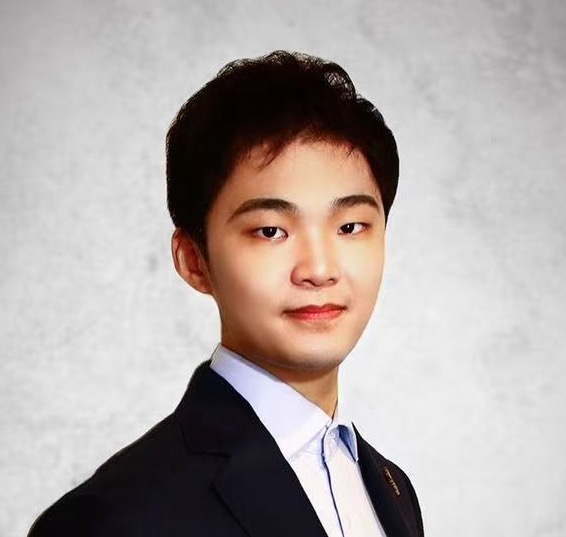
Dr. Scarlett Raine is a Lecturer in the School of Electrical Engineering and Robotics at Queensland University of Technology (QUT), where she serves as a Chief Investigator at the QUT Centre for Robotics and an Associate Investigator at the QUT Centre for Data Science and QUT Centre for Environment and Society. Her work focuses on applying Artificial Intelligence to automate underwater image analysis for marine ecosystem monitoring.
Associate Professor Wenhua Zhao is a globally recognized expert in offshore hydrodynamics and renewable energy technologies at The University of Queensland , School of Civil Engineering. With over 110 publications and 30 million AUD in secured research funding, his work bridges theoretical and practical advancements in marine engineering. Research focuses on Clean Energy , Artificial Intelligence , and Climate Change , specifically floating wind energy, floating solar, offshore aquaculture, and green hydrogen production. His 15 most recent articles (2024-2025) emphasize wave-structure interactions, gap resonance dynamics, and AI-driven wave prediction, published in top journals like Journal of Fluid Mechanics and Ocean Engineering . Scientific awards include the prestigious ARC Future Fellowship (2024-2028) and DECRA Fellowship (2019-2022) , recognizing his contributions to academia and industry. He teaches the 'Design of Offshore Energy Systems' course , training hundreds of students in coastal and ocean engineering, and serves as Deputy Editor for Ocean Engineering and Associate Editor for ASME's Journal of OMAE . Available for research supervision, Zhao actively collaborates with editorial boards of Applied Ocean Research and other Q1 journals.
Professor Daniel Catchpoole serves as Deputy Head of School (Research) at the School of Computer Science, University of Technology Sydney (UTS), holding dual appointments at UTS and The Children's Hospital at Westmead. With over 20 years of research experience, he bridges computational sciences and pediatric cancer research through the Biomedical Data Science Lab in the Australian Artificial Intelligence Institute. His work integrates data analytics, artificial intelligence, and software development with molecular cancer biology to transform pediatric cancer treatment pathways. PhD in Cancer Cell Biology, University of New South Wales (1991-1995) Founding Fellow, Royal College of Pathologists Australasia (2010-present) Head, Children's Hospital at Westmead Tumour Bank (2001-present) Professor Catchpoole's research focuses on translational applications of genomics in childhood cancers, particularly acute lymphoblastic leukemia and neuroblastoma. His work combines high-throughput genomic technologies with advanced computational analysis to develop systems biology approaches for cancer patient assessment. Recent projects explore virtual reality applications for complex genomic data visualization and copper chelation therapies to enhance neuroblastoma immunotherapy. His research has received significant funding from Cancer Institute NSW, Sony Foundation, ARC, and NHMRC. His publication record spans biomedical data science, cancer genomics, and virtual reality applications in oncology. Recent work demonstrates leadership in 3D latent diffusion models for tumor segmentation, biobank economics, and innovative immunotherapies. His research consistently addresses the critical need for actionable knowledge from complex multidimensional biomedical data. Editorial Board Member, Cancers (2023) Associate Editor, Innovations in Digital Health, Diagnostics and Biomarkers (2019) Founding member and first President, Australasian Biospecimens Network Association Professor Catchpoole has supervised 17 Honours students (including 6 First Class Honours), 3 MSc students, and 12 PhD candidates across multiple institutions, with 6 current PhD students. His collaborative research bridges UTS's Faculty of Engineering and IT with The Children's Cancer Research Unit at The Children's Hospital at Westmead. Significant research funding includes Cancer Institute NSW grants, Sony Foundation VR projects, and ARC Discovery Projects focused on genomic data analysis and clinical decision support systems. His leadership extends to building frameworks for translational research, managing biobanks and clinical data linkages, and navigating governance requirements for cancer research. The Tumour Bank at Kids Research, CCRU, represents his long-standing commitment to pediatric cancer infrastructure development.
Dr Vu Minh Hieu Phan is a Research Fellow at the Australian Institute for Machine Learning , University of Adelaide. His work focuses on foundational models, multimodal learning, and medical image analysis, leveraging deep learning and large language models. Research Interests : Medical Image Analysis, Vision-Language Models, Generative AI, Semantic Segmentation, Continual Learning, Knowledge Distillation. Key Venues : CVPR, ACL, EMNLP, IJCAI, MICCAI, NeurIPS, TPAMI, and IJCV. Notable Contributions include advancements in multimodal learning for medical imaging, explainable AI frameworks, and efficient knowledge distillation techniques. He serves as a reviewer for top-tier journals and conferences. Email : vu.minhhieu.phan@adelaide.edu.au
Prof. Jian Zhang is a Professor in the School of Electrical and Data Engineering at the University of Technology Sydney (UTS), specializing in computer vision, pattern recognition, and multimedia signal processing. He leads the Multimedia Data Analytics Lab at the Global Big Data Technologies Centre, focusing on agri-food sector applications such as livestock monitoring and AI-driven solutions for agricultural efficiency. Education : PhD, School of Information Technology and Electrical Engineering, University of New South Wales, 1999 MSc, The Flinders University of South Australia, 1994 BSc, East China Normal University, 1982 Research Interests : His work spans 2D/3D computer vision, large-scale image/video analytics, and cross-disciplinary projects in agriculture and remote sensing. He has pioneered AI systems for livestock counting, poultry welfare monitoring, and fish quality assessment, funded by organizations like Meat & Livestock Australia and Australian Eggs. Grants & Projects : Current projects include AI-based hen health monitoring ($5M+ funding since 2011) Collaborations with industry partners like Sydney Fish Market and Fremantle Port Students & Academic Leadership : Supervised 19 PhD graduates and 5 research fellows Recruiting new PhD candidates in computer vision and data analytics Labs & Teams : Director of the Multimedia Data Analytics Lab, collaborating with global experts through UTS's Distinguished Visiting Scholars program.
Tongtong Wu is a Research Fellow in the Department of Data Science & AI at Monash University, actively contributing to cutting-edge research in artificial intelligence and natural language processing. She collaborates with leading researchers such as Gholamreza Haffari and Yuefeng Li on projects involving knowledge extraction, continual learning, and generative modeling. Education: Ph.D. in Artificial Intelligence, Southeast University (Jiangsu, China), awarded December 20, 2023. Thesis: Structured Knowledge Extraction with Limited Data . Her research focuses on developing advanced AI models for structured knowledge extraction, with emphasis on generative event extraction, weakly supervised learning, and continual adaptation of language models. She leverages deep learning and probabilistic methods to improve model robustness and generalization in low-data regimes. The recent publications demonstrate a strong trend toward integrating external knowledge into generative frameworks and advancing weakly supervised techniques for real-world NLP tasks. Her work spans event detection, topic modeling, and socio-cultural norm discovery, often using pretrained language models and mutual information-based regularization. Scientific Awards: No awards listed in the provided text. She is currently a Chief Investigator on the active project Lifelong Version-controlled Code Generation (2025–2026), indicating involvement in grant-funded research. While there is no mention of formal student supervision, her collaborative output suggests integration within a vibrant research team. She is affiliated with a research network focused on AI and data science at Monash, contributing to both journal articles and top-tier conference proceedings.
Dr. Weihao Li is a Research Fellow at The Australian National University's School of Computing, specializing in computer vision and machine learning. His research focuses on object detection, image segmentation, open-set recognition, and point cloud segmentation. He holds a Dr. rer. nat. (PhD equivalent) and is registered to supervise research students. His research interests revolve around advancing techniques for dynamic instance segmentation, open-set learning, and 3D point cloud analysis. Notable projects include the ANU bushfire smoke dataset and contributions to generalized semantic segmentation and anomaly recognition. His work emphasizes data augmentation strategies and weakly-supervised learning methods. Key technical areas include synthetic dynamic instance copy-paste for video segmentation, curved geometric networks for anomaly detection, and cross-modal fusion in building facade analysis. He collaborates on computing-for-social-good initiatives, such as environmental monitoring via hyperspectral imaging. Dr. Li's publications span 2016–2024, with a focus on advancing computer vision through innovative architectures and methodologies. His recent work explores open-set recognition, few-shot learning with reinforced attention, and geometric prior-based segmentation techniques.
Ibrahim RADWAN is an Associate Professor in Machine Learning/AI and Robotics at the University of Canberra. His research focuses on advancing AI techniques in areas such as human pose estimation, affective computing, and healthcare technology. He leads projects addressing challenges in robotics, autonomous systems, and human behavior analysis. RADWAN’s work bridges theory and application, contributing to fields like sports science, medical diagnostics, and security through innovative machine learning approaches. Research Projects: Assistive Technologies for Young People Safety on Two-Wheelers AI-Based Methods for Driver Sentiment and Mood Prediction Robotics Applications in Organic Waste Management Research Interests: RADWAN’s expertise spans human pose reconstruction , nonverbal behavior analysis , and EEG-based healthcare diagnostics . He pioneers methods for real-world applications such as: 6G Extended Reality systems using wearable sensors Multimodal deception detection via motion analysis Affective computing for mood and emotion inference Publications: His recent work emphasizes trends in spatiotemporal data analysis, few-shot learning, and synthetic data applications in healthcare and robotics. Key contributions include novel architectures like CrossFormer for 3D pose estimation and Resanet for dense prediction tasks. Advising & Grants: RADWAN supervises PhD students and has secured grants for projects integrating AI with robotics and medical technology. His team collaborates on interdisciplinary challenges, including railway safety and surgical instrument tracking. Labs/Teams: Part of the AI and Robotics research group at the University of Canberra, contributing to cutting-edge solutions in autonomous systems and human-centered AI.
Dr. Xiaohan Yu is a Lecturer in Artificial Intelligence at Macquarie University's School of Computing, joining in December 2023. Previously, he completed his doctoral studies at Griffith University and served as a Research Fellow at the ARC Research Hub for Driving Farming Productivity. His research focuses on Ultra-Fine-Grained Visual Categorization (Ultra-FGVC), Smart Farming, and Automated Crop Cultivar Identification, with over 70 publications in top-tier venues like ICCV, CVPR, and IEEE Transactions. He holds editorial roles at Pattern Recognition and SN Computer Science , and received the APRS Early Career Award (2022) and ACM MM 2024 Outstanding Area Chair distinction. Education: Completed doctoral studies in Artificial Intelligence at Griffith University, Australia. Research Interests: Ultra-Fine-Grained Visual Categorization (Ultra-FGVC) Smart Farming and Agricultural Robotics Computer Vision Applications in Healthcare (e.g., trachoma detection) Deep Learning, Continual Learning, and Domain Adaptation Key Contributions: Pioneered Ultra-FGVC research, developed frameworks like Mix-ViT and CLE-ViT, and contributed to benchmarking multi-object tracking in farming. His work bridges pattern recognition with real-world applications in agriculture and healthcare. Scientific Awards: Australian Pattern Recognition Society (APRS) Early Career Researcher Award 2022 ACM Multimedia 2024 Outstanding Area Chair Award Advising & Grants: Actively involved in editorial roles (Area Chair for ACM MM, IJCNN) and grant-funded research through ARC hubs. His work is supported by collaborations in agriculture and AI-driven solutions for crop cultivar identification. Labs & Affiliations: Member of Macquarie's Smart Green Cities Research Centre and Frontier AI Research Centre , advancing interdisciplinary AI applications.
Professor Dinesh Kumar is a faculty member in the School of Engineering at RMIT University, specializing in Biomedical Engineering and Artificial Intelligence. He holds the role of Chair of the IEEE Biosignals and Biorobotics Conference since 2009, demonstrating leadership in interdisciplinary research. His research focuses on biomedical signal processing, medical imaging, and AI-driven diagnostics, with applications in neurology, cardiology, and telemedicine. Professor Kumar oversees projects addressing challenges like Parkinson’s disease diagnosis, cardiac arrhythmia classification, and wound assessment using advanced computational methods. His work bridges clinical and engineering domains, emphasizing practical solutions for healthcare challenges. Recent contributions include developing algorithms for ECG analysis, facial expression recognition for neurological disorders, and chatbot-based vocal screening systems. Despite no explicit mention of awards, his extensive publication record and conference leadership highlight significant scholarly impact. Professor Kumar collaborates with industry and academic partners to advance technologies such as thermal imaging for ulcers, deep learning for medical image segmentation, and wearable sensors for gait analysis. His research often involves interdisciplinary teams, reflecting a commitment to translating technical innovations into real-world healthcare tools.
Associate Professor Wayne Wobcke is a faculty member in the School of Computer Science and Engineering at the University of New South Wales (UNSW), where he has been employed since 2002. His academic career includes previous positions at the University of Sydney until 1998, British Telecom Labs in the UK for three years, and the University of Melbourne for one year. He holds a PhD in Computer Science from the University of Essex (1989), an MSc from the University of Queensland (1985), and a BSc (Hons) in Mathematics/Computer Science from the University of Queensland (1984). Dr. Wobcke's research spans both theoretical and practical aspects of artificial intelligence and data science. His work encompasses intelligent agents, data mining, agent-based modeling, dialogue management, personal assistants, recommender systems, and computational social science. He has collaborated extensively with industry through three Cooperative Research Centres (Smart Internet Technology CRC, Smart Services CRC, and Data to Decisions CRC), where he served as a Programme Manager and Project Leader for over 10 years. Notable achievements include developing a voice-controlled mobile application for email and calendar interaction (a precursor to Apple's Siri) and deploying a people-to-people recommender system for online dating on one of Australia's largest dating sites. His recent research focuses on data science in humanitarian contexts and machine learning applications in official statistics, conducted in collaboration with BPS (Statistics Indonesia) and STIS (Politeknik Statistika, Indonesia). His publication record shows a consistent trajectory of impactful research, with recent work concentrating on poverty targeting, domain adaptation, natural language processing for recommender systems, and political opinion mining. Scientific Awards: Best Paper Nomination, 11th Workshop on Argument Mining (2024) UNSW Arc Postgraduate Research Supervisor Award (2017, 2018) AAAI Deployed AI Application Award, Twenty-Sixth Annual Conference on Innovative Applications of Artificial Intelligence (2014) Best application paper runner up, 17th Pacific-Asia Conference on Knowledge Discovery and Data Mining (2013) Dr. Wobcke has successfully supervised numerous research students, with Irwan Rahadi currently working on 'Causal Modelling and Machine Learning for Official Statistics'. His grant portfolio includes significant funding from the Australian Research Council and various Cooperative Research Centres, totaling over $3.7 million since 2003. He teaches COMP9414 Artificial Intelligence and COMP9727 Recommender Systems at UNSW.
Dr. Yangyang Shu serves as an Associate Lecturer in the School of Systems and Computing at the University of New South Wales (UNSW) Canberra campus. Previously, he held a Research Fellow position at the Australian Institute for Machine Learning (AIML) at the University of Adelaide, where he contributed to the Centre for Augmented Reasoning (CAR) project. His academic foundation includes a Ph.D. in Computer Science from the University of Technology Sydney. His research spans cutting-edge areas in artificial intelligence, with core expertise in Machine Learning and Computer Vision . Key focus areas include: Low-supervised paradigms (Weakly/Semi-/Self-Supervised Learning) Rationale-Guided Machine Learning systems Generative AI applications Machine Learning in Music and affective computing Fine-grained visual recognition in data-scarce environments Dr. Shu's publication record demonstrates consistent contributions to top-tier venues including CVPR, ECCV, IEEE Transactions on Multimedia, and Pattern Recognition. His work bridges theoretical advances in learning with practical applications in photo aesthetic assessment, semantic segmentation, and emotion recognition, showing particular strength in developing methods for low-data regimes and leveraging privileged information. He maintains active research collaborations through the School of Systems and Computing at UNSW Canberra, building on prior affiliations with AIML and the Centre for Augmented Reasoning. His current teaching responsibilities include ZEIT 2103 (Data Structures and Representation) for Semester 1, 2025.
Dr. Jia Liu serves as a Research Fellow at the Australian National University's Research School of Biology (Division of Ecology and Evolution) and concurrently holds a Technical Officer position in the Research School of Earth Sciences. Holding a PhD in Statistics, Dr. Liu conducts interdisciplinary research spanning statistical methodology, earth sciences, and computer vision applications. Education: PhD in Statistics Research focuses on Bayesian statistics, spatial data analysis, image analysis, geostatistics, and experimental design. Dr. Liu applies these methods to paleomagnetism, atmospheric science, and computer vision, with recent emphasis on uncertainty quantification and deep learning architectures for complex data analysis. Publication trends reveal dual trajectories: earth sciences applications (2020-2022) featuring directional statistics for paleomagnetic data and cloud physics modeling, alongside computer vision advancements (2021-2025) in 3D reconstruction, object detection, and segmentation. Core methodological contributions include novel approaches for spatiotemporal survey design and aleatoric uncertainty modeling. Awards: No major scientific awards documented Student advising activities and research grant funding details are not publicly available. The researcher maintains affiliations across multiple ANU schools but specific laboratory or team memberships were not specified in source materials.
Dr Zheyuan Liu is a Research Fellow at the Australian Institute for Machine Learning within the Faculty of Sciences, Engineering and Technology at The University of Adelaide. His research focuses on machine learning, computer vision, and multimodal learning, particularly in areas like federated learning, semantic segmentation, and vision-language models. His research interests include: Federated fine-tuning of large language models Text-to-video generation with diffusion models Weakly supervised semantic segmentation techniques Multimodal image retrieval systems Audio-visual source localization Recent publications demonstrate expertise in cross-domain adaptation, contrastive learning, and re-ranking methods. He is eligible to supervise Masters and PhD students.
Dr. Atefeh Zamani is a Lecturer at the School of Mathematics and Statistics , University of New South Wales (UNSW), Sydney. She holds a Master of Data Science from the University of Melbourne (2023) and a Ph.D. in Mathematical Statistics from Shiraz University, Iran (2011). Her academic career spans institutions across Australia and Iran, with research contributions in time series and functional data analysis. Education: Ph.D., Mathematical Statistics (Probability Theory), Shiraz University (2011) M.Sc., Mathematical Statistics, Shiraz University (2005) B.Sc., Mathematical Statistics, Shiraz University (2003) Master of Data Science, University of Melbourne (2023) Her research interests include: Time Series Analysis Functional Data Analysis Statistical Inference for complex processes Data Science applications in health and environmental studies The articles highlight her expertise in: Functional autoregressive models and their seasonal extensions Integer-valued time series and their innovations Portmanteau tests for model diagnostics Covariance operator convergence in periodic processes Machine learning applications for health risk prediction Stress-strength reliability analysis Teaching includes courses like MATH5845 Time Series, MATH5855 Multivariate Analysis, and ZZSC5806 Regression Analysis for Data Scientists. She supervises Master’s projects in time series and data science, including outlier detection and Bayesian spectral analysis. Contact: Email: atefeh.zamani@unsw.edu.au Location: Room 2071, Anita B. Lawrence Centre, UNSW Sydney