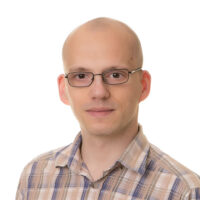
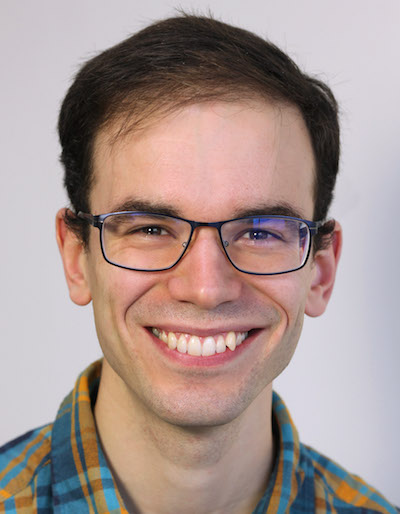
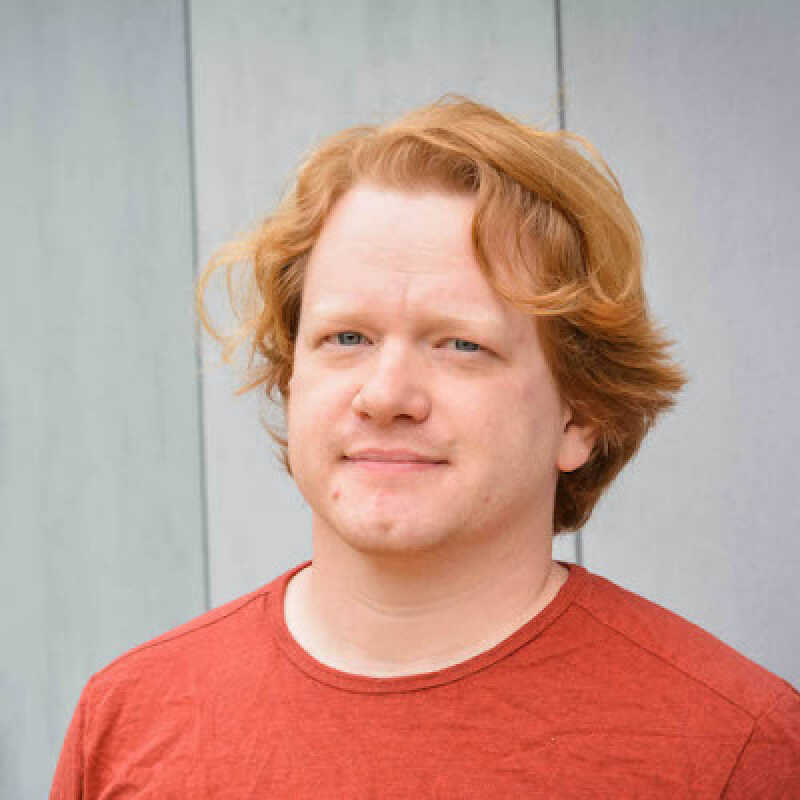
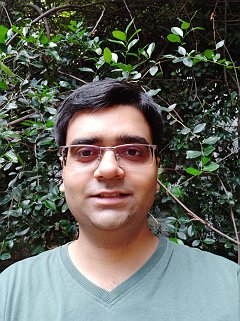
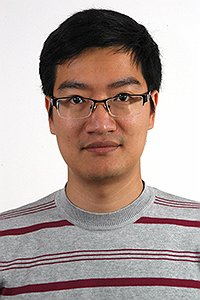
Jelle Hellings is an Assistant Professor in the Department of Computing and Software at McMaster University , Canada. His research focuses on high-performance large-scale data management systems with a strong theoretical and algorithmic component, including resilient systems (blockchains) , graph databases , and external-memory algorithms . He previously worked as a Postdoc Scholar at the University of California, Davis and earned his PhD from Hasselt University in Belgium. Education: Doctor of Sciences in Computer Science (2018), Hasselt University Master of Science in Computer Science and Engineering (2011), Eindhoven University of Technology His research interests include scalable resilient systems with Byzantine fault tolerance, database theory, graph query languages, constraints on graph data, and external-memory algorithms for large graph datasets. He has authored numerous high-impact publications on blockchain-based resilient systems, query optimization in graph databases, and theoretical advancements in relation algebra expressiveness. Hellings actively contributes to academic service through program committee memberships and tutorial organization, and he currently teaches courses on future resilient databases and foundational computer science topics.
Alexander Summers is an Associate Professor at the Department of Computer Science , University of British Columbia . He joined UBC in March 2020 after serving as a Senior Researcher (Oberassistent) at ETH Zurich from 2014-2020. His research bridges Programming Languages , Formal Methods , and Software Engineering , with a focus on automated verification tools for heap-based and concurrent programs. MSc Joint Mathematics and Computer Science, Imperial College London (2004) PhD Computer Science, Imperial College London (2009) Postdoc, ETH Zurich (2009-2014) Summers leads the Prusti Project , developing deductive verification tools for Rust, and contributes to the Viper Project for intermediate verification languages. His work addresses challenges in: Memory safety and concurrency verification Ownership models and aliasing control Automated reasoning with SMT solvers Resource-oriented programming specifications Debugging verification condition quantifiers Formal validation of verification infrastructure His research has been recognized with a Amazon Research Award and ACM SIGPLAN Distinguished Paper Awards . He teaches courses like Advanced Software Engineering and Program Verifiers and Program Verification , and supervises graduate students in formal verification and Rust-related research.
Dr. John Wickerson is an Associate Professor in the Circuits and Systems group at the Department of Electrical and Electronic Engineering, Imperial College London. His research focuses on improving the reliability of high-performance computing through formal methods, with contributions to high-level synthesis, memory models, and concurrency verification. He holds leadership roles including Course Director for the Electrical and Information Engineering degree and Deputy Tutor for PhD students. Research Interests: Formal Verification of Hardware/Software Systems High-Level Synthesis (HLS) and FPGA Compilation Weak Memory Models and Concurrency Semantics Fuzz Testing for Hardware Tools Compiler Optimization and Correctness Digit Elision and Arbitrary-Precision Arithmetic Notable Achievements: Best Paper Award at EuroSys 2024 (database isolation validation) Pioneered formal methods for HLS tools (e.g., QuteFuzz, C4) Co-developed the C4 C compiler concurrency checker Published over 60 peer-reviewed papers across top venues (ASPLOS, PLDI, FPGA) Lab/Team: Part of the Circuits and Systems group at Imperial College, collaborating with industry partners like Kaihong Yann and ARM.
Mark Batty is a Professor in the School of Computing at the University of Kent, specializing in formal methods for concurrent systems. His work bridges hardware-software interfaces, focusing on memory models for C/C++, OpenCL, and architectures including x86, ARM, POWER, and GPUs. As a member of the Programming Languages and Systems Research Group, he develops mathematical specifications and verification tools for real-world concurrency challenges. His research centers on empirical testing of hardware/compiler behavior, formal modeling of system components, and verification of fine-grained concurrent algorithms. Key contributions address relaxed memory semantics, transactional memory, and compositional reasoning for concurrent data structures. His work combines theoretical rigor with practical tool development to ensure correctness in complex concurrent environments. Analysis of his 2015-2025 publications reveals consistent focus on memory consistency models, formal verification of weak memory concurrency, and compiler optimizations. Dominant themes include C/C++11 standards, GPU concurrency semantics, and mechanized verification techniques. His research demonstrates strong industry relevance through collaborations with hardware vendors and contributions to language standards. Mark Batty has received significant recognition: John C. Reynolds Doctoral Dissertation Award (2015) from ACM SIGPLAN CPHC and BCS Distinguished Dissertation Award (2015) Lloyds Register Foundation and Royal Academy of Engineering Research Fellowship (2016) He actively leads major research initiatives and mentors next-generation researchers: Current Funding: EPSRC Standard Grant 'Verifiably Correct transactional memory' (2018), VeTTS Grant 'Specification and verification of C++ data structure libraries' (2018), EPSRC First Grant 'Compositional, dependency-aware C++ concurrency' (2018) PhD Recruitment: Actively seeking candidates for UKRI-funded studentship in Verified Trustworthy Software Systems Batty drives community engagement through Kent Concurrency Workshop (2016) and South of England Programming Language Seminars, fostering national collaboration in programming languages research. His leadership in organizing Royal Society discussions underscores his influence in trustworthy systems verification.
Ori Lahav is a faculty member in the School of Computer Science at Tel Aviv University. His research is generously supported by an ERC Starting Grant and an ISF Grant. He actively supervises PhD and MSc students, and seeks highly motivated candidates for postdoc, PhD, and MSc positions in programming language theory, concurrency, and formal methods. Dr. Lahav completed his PhD at Tel Aviv University under the supervision of Arnon Avron. In 2014, he was a postdoctoral researcher at Tel Aviv University hosted by Mooly Sagiv. From 2014 to September 2017, he was a postdoctoral researcher at MPI-SWS in Germany hosted by Viktor Vafeiadis and Derek Dreyer. His primary research areas focus on programming languages and verification, with specialization in concurrency and relaxed memory models. He also has significant interests in proof-theory, semantics of non-classical logics, and automated reasoning. His work bridges theoretical foundations with practical applications in programming language design and implementation. Dr. Lahav's publication record shows a consistent trajectory of high-impact research in top-tier conferences including PLDI, POPL, OOPSLA, and ESOP. His recent work (2023-2025) demonstrates continued leadership in memory models, concurrency semantics, and verification techniques. His research spans both theoretical contributions in denotational semantics and practical tools for verification. Best Paper Award DISC 2024 Best Student Paper Award DISC 2024 Distinguished Artifact Award ESOP 2022 Distinguished Paper Award OOPSLA 2021 Kleene Award for Best Student Paper LICS 2013 Dr. Lahav actively advises students including Yoav Ben Shimon, Yotam Dvir, Amir Karniel, and Roy Margalit (PhD students), Yuval Katsman Ezra (MSc student), and has alumni including Ori Saporta (MSc) and Abhishek Kr Singh (postdoc, now Assistant Professor at IIIT Hyderabad). He has organized significant events including VMCAI 2024 and Dagstuhl Seminars on persistent programming. His teaching portfolio includes courses on Shared Memory Concurrency Semantics, Programming Language Foundations, and Software Foundations in Coq.
Dr. Kirsten Winter is an Honorary Senior Fellow at the University of Queensland's School of Electrical Engineering and Computer Science. Her research focuses on formal verification, concurrent programming, and weak memory models. She has contributed significantly to areas such as model checking, railway interlocking systems, and behavior trees. Her work spans theoretical foundations (e.g., linearizability, concurrency semantics) and practical applications in security and embedded systems. Recent projects include the Program Analysis Cell and BASIL: Boogie Analysis for Secure Information-Flow Logics. Winter has collaborated extensively with researchers like Graeme Smith and Robert Colvin. Her most recent publications address speculative execution vulnerabilities and compositional reasoning in weak memory architectures.
Umang Mathur is an Assistant Professor at the National University of Singapore's School of Computing, where he leads the FOCS Lab and is affiliated with PLSE@NUS. His research focuses on Formal Methods , Concurrency , and Decidability in Programming Languages and Software Engineering . PhD in Computer Science from the University of Illinois at Urbana-Champaign (advisor: Prof. Mahesh Viswanathan) Former Research Scientist at Facebook Inc. and Research Fellow at the Simons Institute Recipient of Google PhD Fellowship, 2024 CPP Distinguished Paper Award, 2023 ACM SIGPLAN Award, and ASPLOS 2022 Best Paper Award His recent work explores algorithmic techniques for detecting concurrency bugs , decidable program verification , and synthesis , with a focus on weak memory models, predictive monitoring, and automata-theoretic approaches. Articles span topics like causal concurrency, tree clock data structures, and probabilistic counting algorithms, reflecting interdisciplinary intersections of logic and systems research. Scientific Awards Google PhD Fellowship 2024 CPP Distinguished Paper 2023 ACM SIGPLAN Distinguished Paper 2022 ASPLOS Best Paper 2018 ESEC/FSE Distinguished Paper He advises PhD students in Formal Methods and supervises teams in the FOCS Lab. Teaching includes advanced modules on Automata Theory, Logic, and Verification at NUS.
Kartik Nagar is an Assistant Professor at the Department of Computer Science and Engineering, IIT Madras . He specializes in developing verification and analysis techniques to enhance the reliability, security, and efficiency of computer systems, focusing on concurrent and distributed systems, computer architecture, and real-time systems.
Bengt Jonsson is a Professor at the Division of Computer Systems, Department of Information Technology, Uppsala University. His research focuses on formal methods, real-time and distributed systems, semantics and verification of concurrent systems, and IoT security. Current Projects: UPMARC (Software Technology for Multicore Programming), aSSIsT (Secure Software for IoT), and Designed for UPDATE (Safe Embedded Software Updates) Past Projects: CoDeR-MP (Multicore Real-Time Applications), ProFun (Wireless Sensor Networks), CONNECT (Networked Component Synthesis) His work includes automated verification, model checking, and symbolic execution for concurrent systems. Recent publications address dynamic partial order reduction, IoT protocol testing, and lock-free data structures. Scientific Awards : CAV Award 2017 He advises PhD students and teaches courses like Model-Based Development of Embedded Systems and graduate-level symbolic execution. Personal interests include piano playing and orienteering.
Stephen Siegel is an Associate Professor at the University of Delaware with a joint appointment in the Department of Computer and Information Sciences and the Department of Mathematical Sciences . Holding a PhD in Mathematics from the University of Chicago (1993), he transitioned from finite group theory research to formal methods in computer science, focusing on verification of parallel and scientific software. His research centers on the Verified Software Laboratory (VSL) and the CIVL Model Checker for HPC program verification. Recent work includes formal verification of PETSc components at CAV 2025 and collective contract frameworks for message-passing programs. Research Interests Formal methods for software verification Parallel and HPC software reliability Model checking techniques Application of mathematical logic to computing Academic Service Highlights Program Committee & Publication Chair, CAV 2025 Co-organizer, International Workshop on Verification of Scientific Software (VSS 2025) Chair, VerifyThis competition (2023) Editorial service at IEEE Transactions on Software Engineering (2015-2019) Teaching Portfolio CISC 404/604: Logic in Computer Science CISC 414/614: Formal Methods in Software Engineering CISC 372: Parallel Computing (MPI/OpenMP/CUDA instruction) Advanced Topics courses: Model Checking, Abstract Interpretation
Andreas Pavlogiannis is an Associate Professor in the Department of Computer Science at Aarhus University. His research focuses on formal methods , algorithmic verification , automata theory , concurrency , static and dynamic program analysis , network diffusion , evolutionary graph theory , and evolutionary game theory . Teaching courses: Programming Languages (Bachelor) , Algorithmic Model Checking (Master) , and Program Analysis (Master) Service: Program committee member for POPL, ESOP, AAAI, IJCAI, CONCUR, OOPSLA, and organizer of CONFEST'25 His research has been supported by the Austrian Science Fund (FWF), VILLUM Foundation, Stibo Foundation, and Danish Council for Independent Research (DFF). He is actively recruiting PhD and PostDoc researchers. Recent publications span quantum computing , concurrent systems , evolutionary dynamics , and network science , with particular emphasis on symbolic algorithms , dynamic analysis , and graph-based models .
Michael D. Bond is a Professor in the Department of Computer Science & Engineering at Ohio State University's College of Engineering. He leads the Programming Languages and Software Systems (PLaSS) Research Group, which focuses on designing program analyses and software and hardware systems that enhance computing reliability, scalability, and security. His academic service includes general chair for PLDI 2027, program committee membership for multiple top conferences, and committee roles in SIGPLAN Research Highlights (2024-2027). Professor Bond's research spans programming languages, systems, and security, with particular expertise in memory management, concurrency, hardware transactional memory, information flow control, and predictive race detection. His work bridges theoretical foundations with practical implementations, as evidenced by numerous open-source projects accompanying his publications. The PLaSS group has made significant contributions to understanding and improving memory models, developing efficient garbage collection techniques for modern architectures, and creating novel approaches to secure programming in languages like Rust. Analysis of his recent publications reveals a clear trajectory toward addressing security and reliability challenges in modern computing systems, particularly through language-based approaches. His work increasingly focuses on Rust programming language security mechanisms, memory disaggregation for datacenters, and advanced techniques for detecting and preventing concurrency bugs. The research demonstrates strong continuity in exploring memory models and concurrency while adapting to emerging hardware trends and security challenges. Outstanding Teaching Award, Department of Computer Science and Engineering, Ohio State University (2018) Lumley Research Award, College of Engineering, Ohio State University (2016) OOPSLA 2015 Distinguished Paper and Artifact Awards NSF CAREER Award ACM SIGPLAN Outstanding Doctoral Dissertation Award Intel PhD Fellowship Professor Bond actively mentors several PhD students including Chujun Geng, Vincent Beardsley, Chris Xiong, Victor Chen, and Noah Charlton, with external co-advisee Zixian Cai at Australian National University. His research is currently supported by multiple NSF grants including SaTC-2348754 (2024-2027), CyberCorps-2336531 (2024-2029), and CSR-2106117 (2021-2025), reflecting sustained funding for his work in information flow control, security, and systems research. The PLaSS Research Group maintains a strong presence in both academic and industrial communities, with graduated PhD students securing positions at major technology companies like Google, Amazon Web Services, and Huawei, as well as academic positions at institutions like UIUC and IIT Kanpur. The group's work combines theoretical rigor with practical implementation, consistently producing open-source artifacts that enable reproducibility and further research in the systems and programming languages community.
Azalea Raad is a Reader (Associate Professor) in the Department of Computing at Imperial College London, leading the Veritas Lab. She holds a PhD in Computer Science from Imperial College London and is a UKRI Future Leader Fellow since 2021. Her research focuses on programming languages, formal verification, and persistent memory systems, particularly addressing challenges in weak memory models, concurrency, and software correctness. Affiliations: Co-director of the UK Research Institute on Verified, Trustworthy Software Systems Adjunct roles at Facebook (2020–2022) and Bloomberg (2022–present) Education: MEng from Imperial College London PhD in Computer Science from Imperial College London Research Interests: Azalea’s work bridges theoretical foundations and practical system implementation, emphasizing: Formal semantics of persistent and weak memory systems Verification frameworks for concurrent and persistent programs Bug detection in libraries and binaries Transactional memory and system validation Publications: Her recent work explores compositional bug detection, persistent programming principles, and scalable non-termination analysis. Key contributions include frameworks like IsaBIL and Memento, and foundational papers on RDMA robustness and C/C++ memory model extensions. Awards: UKRI Future Leader Fellowship (2021–present). Research recognized through collaborations with industry (e.g., Intel PMDK validation). Labs/Teams: Leads the Veritas Lab, advancing formal methods for trustworthy software systems.
Robbert Krebbers is an associate professor at the Department of Software Science at Radboud University Nijmegen, Netherlands. He is a leading researcher in program verification, specializing in separation logic and the Coq proof assistant. Krebbers is a core contributor to the Iris framework, a higher-order concurrent separation logic framework implemented in Coq. His research spans theoretical foundations of programming languages and practical applications to real-world languages including C, Rust, and Scala. His research interests focus on scaling program verification techniques to challenging programming paradigms like concurrency, higher-order functions, and modules. Krebbers' work bridges formal methods with practical language implementation, particularly in verifying memory safety and concurrency properties. He has made significant contributions to Rust verification through the RustBelt project and has pioneered techniques for verifying concurrent data structures and message-passing systems. Krebbers' recent publications demonstrate a strong trend toward verifying complex concurrency patterns, developing automated proof techniques, and applying separation logic to practical programming language features. His work frequently appears in top-tier programming languages conferences including POPL, PLDI, and ICFP, with several papers receiving distinguished paper awards. The research spans from foundational logic development to practical verification tools for real-world programming languages. As a principal investigator in the Iris project, Krebbers has secured significant research funding including the ERC Consolidator Grant for the RustBelt project. His work has influenced both academic research and industrial practice, particularly in the Rust programming language ecosystem. The Iris framework he helped develop has been adopted by numerous verification projects worldwide. Krebbers has advised PhD students including Ike Mulder (focusing on proof automation for concurrent separation logic) and Jules Jacobs (working on guarantees by construction). He has been actively involved in the programming languages research community, serving on program committees for major conferences and organizing workshops on formal methods and verification. He leads research in the Department of Software Science at Radboud University, where his group focuses on developing foundational techniques for program verification. The group collaborates closely with the Logic and Semantics Group and Foundations of Programming Group across institutions, contributing to a vibrant research ecosystem around formal methods and programming languages.
Tuan Phong Ngo is a Researcher in Computer Science at Uppsala University , Sweden, affiliated with the Department of Information Technology under the Disciplinary Domain of Science and Technology . He specializes in formal methods and software verification.