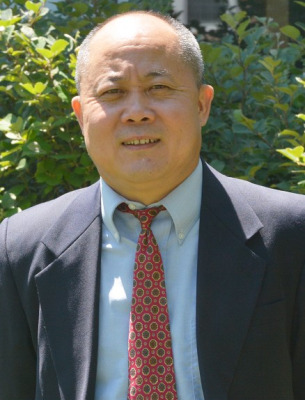
Dr. Hong Yu is an Associate Professor in the Engineering Technology department at Fitchburg State University's School of Business and Technology. Specializing in wireless communication protocols, neural networks, and embedded systems, their research spans earthquake nowcasting, IoT applications, and industrial sensor development. Current projects include 5G network optimization and FPGA-based measurement systems. PhD in Electrical & Electronics Engineering from The Catholic University of America Active in NSF-funded initiatives like the Microcontroller Training System project Professional affiliations include IEEE Senior Membership and leadership roles in multiple IEEE chapters Teaches courses in microprocessor systems, digital electronics, and mobile application development Research focuses on merging biological neural network principles with technological applications, while maintaining expertise in analog electronics and environmental monitoring. Recent publications emphasize wireless protocol design (2021), color sensing automation (2021), and cross-platform smart home development (2020), showing consistent innovation across 5G networking, semiconductor design, and seismic analysis. Professional contributions include serving as Vice Chairperson in IEEE ROBOT Chapter (Worcester County) and IEEE AESS Chapter (Baltimore), plus judging robotics competitions like FIRST LEGO League.
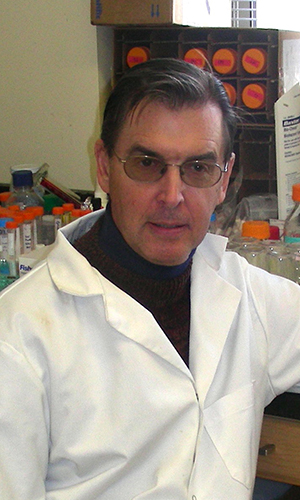
David Atienza Alonso is a Full Professor in the Department of Electrical and Electronics Engineering at the School of Engineering, École Polytechnique Fédérale de Lausanne (EPFL), Switzerland. He leads the Embedded Systems Laboratory (ESL) and serves as Associate Vice President for Centers and Platforms, overseeing major research infrastructure. His work spans embedded systems, IoT, edge AI, and sustainable computing. His research interests focus on system-level design for high-performance and low-power computing systems. Key areas include thermal-aware design of multi-processor systems-on-chip (MPSoC), energy-efficient embedded machine learning, wireless body sensor networks, and electronic design automation (EDA). His lab develops novel methodologies for hardware-software co-design, memory optimization, and edge computing architectures. The analysis of his recent publications reveals a strong trajectory in intelligent, energy-efficient computing systems. His work integrates machine learning with traditional EDA techniques for data center optimization, applies ultra-low power heterogeneous architectures to healthcare wearables, and advances thermal modeling for 3D ICs. Themes of sustainability, real-time processing, and edge intelligence are consistent across his research. Dr. Atienza has received numerous accolades, including: ERC Consolidator Grant (2016) DAC Under-40 Innovators Award (2018) IEEE TCCPS Mid-Career Award (2018) ACM SIGDA Outstanding New Faculty Award (2012) ICCAD 10-Year Most Influential Paper Award (2020) Best paper awards at top-tier conferences He has advised over 40 PhD students, many of whom have gone on to successful academic and industry careers. His research has been supported by major grants, including the ERC grant, and he has co-authored over 450 publications and 14 licensed patents. He plays a significant leadership role in the academic community, having served as Editor-in-Chief of IEEE Transactions on CAD, President of IEEE CEDA (2018–2019), and currently as Chair of the European Design Automation Association (EDAA). He is a Fellow of both IEEE and ACM. His laboratory, the Embedded Systems Laboratory (ESL), is a leading center for research in embedded and cyber-physical systems, fostering interdisciplinary collaboration and innovation in sustainable computing technologies.
Dr. Daniel Alpay is a Professor and holder of the Foster G. and Mary McGaw Professorship in Mathematical Sciences at Chapman University. He is affiliated with both Schmid College of Science and Technology and Fowler School of Engineering, contributing to mathematical research and its applications in electrical engineering. His expertise spans Schur Analysis, Slice-Hyperholomorphic Functions, Signal Processing, Linear Systems, Wavelet Filters, and White Noise Space. Dr. Alpay earned his PhD and MSc in Theoretical Mathematics from the Weizmann Institute of Science (Israel) under Prof. Harry Dym (1986, 1980-1986) and an Electrical Engineering degree from École Nationale Supérieure des Télécommunications (France, 1975-1978). His research focuses on infinite-dimensional analysis, hypercomplex structures, and interdisciplinary applications in signal processing and electrical engineering. His recent publications (2024) demonstrate a strong emphasis on Schur Analysis, hyperholomorphic functions, and their applications in stochastic processes, interpolation theory, and superoscillations. These works bridge pure mathematics with engineering, particularly in wavelet filters and linear systems. Dr. Alpay serves as Editor-in-Chief for the journal Complex Analysis and Operator Theory , reflecting his leadership in advancing mathematical research. His work continues to explore connections between abstract mathematical theories and practical engineering problems.
Luc Brun is a Professor at ENSICAEN (Engineering school of University of Caen Normandy ), affiliated with the Image team at GREYC research laboratory. His research spans multiple domains in Computer Science with focus on Image Processing , Graph Theory , and Machine Learning . Key research areas: Color image quantization, Combinatorial pyramids, Graph edit distance, Graph kernels, Chemoinformatics, Sleep stage classification Academic contributions: 15+ years of teaching in ENSICAEN's Image major, supervision of 13 PhD students His recent publications focus on graph neural networks for biomedical applications (2024-2025), with innovative approaches to SPD matrix processing and graph pooling . Earlier work established foundational methods in color image segmentation (2000-2003) and combinatorial map representations (1999-2003). Scientific awards and honors: Co-inventor of audio fingerprinting technology (2006 patent) Key contributor to combinatorial pyramid frameworks Developer of segmentation software DesCartes Active participant in IAPR-TC15 committee Supervised researchers now hold positions across academia (Assistant Professor at University of Salerno, Post-doc at Baclesse Hospital) and industry (Research Engineer at NeuroRx, Ingénieur at IT Link). Current projects include differentiable graph edit distance and time-frequency EEG analysis for sleep monitoring.
Prof. Dr. Andreas Rieder is a Professor at the Institute for Applied and Numerical Mathematics of Karlsruher Institut für Technologie (KIT). He leads projects C1 and C2 within the CRC 1173 Wave Phenomena - Analysis and Numerics and serves on the advisory panel of the journal Inverse Problems . His office is located at Kollegiengebäude Mathematik (20.30) 3.040, Karlsruhe. Research Interests Inverse and Ill-posed Problems Numerical Analysis for Imaging Wavelet Methods in Signal Processing Partial Differential Equations His recent work focuses on: Full Waveform Inversion in visco-acoustic/viscoelastic regimes Generalized Radon Transforms for Seismic Imaging Microlocal Analysis of Migration Formulas Inexact Newton Regularization Techniques Tangential Cone Conditions for Wave Operators Key affiliations: Member of CRC 1173 Wave Phenomena Leader of Research Group 3: Scientific Computing Contributor to interdisciplinary projects with geophysics and medical imaging
Yuting Wang is a Tenure-Track Associate Professor at Shanghai Jiao Tong University , specifically affiliated with the John Hopcroft Center for Computer Science. Their research focuses on Formal Verification , Programming Languages , and Logical Frameworks , with significant contributions to verified compilation of system software. Core developer of the Abella theorem prover for higher-order reasoning Lead developer of Stack-Aware CompCert extensions Committee member for conferences like C++ (CPP), Programming Language Foundations in Software Engineering (PLDI), and Practical Aspects of Declarative Languages (PADL) Current research includes verifying compilers for concurrent systems, designing secure programming languages, and developing compositional verification frameworks. Collaborations with institutions like Yale University and the University of Minnesota under notable advisors Zhong Shao and Gopalan Nadathur have produced 15+ peer-reviewed publications. Their work on CompCertOC demonstrates verified compositional compilation for multi-threaded programs, while their contributions to the Abella system enhance schematic polymorphism and higher-order abstract syntax support. Yuting Wang actively advises a team of 5 current Ph.D. and M.S. students, with alumni placed at organizations like Tencent and AMD. They maintain a public ORCID profile and welcome prospective students interested in formal methods and systems verification.
François Roueff is a Professor at Télécom Paris, Institut Polytechnique de Paris, and deputy director of the Hadamard doctoral school of mathematics. He works within the Signal, Statistics and Learning (S2A) team at the Information Processing and Communication Laboratory (LTCI). Research interests: statistical signal processing, time series analysis, stochastic processes, wavelet analysis, and machine learning. Students: Supervised 14 PhD theses, including work on topics like quantum key distribution, Hawkes processes, and Markov models. Contact: roueff@telecom-paris.fr Recent publications focus on Hilbert space-valued time series, tensor factorization with missing data, and locally stationary Hawkes processes. His work spans theoretical statistics, applied signal processing, and interdisciplinary applications in geophysics and astrophysics.
Andrea Bernardini is an Associate Professor in the Department of Computer Science at the University of Udine, Italy. With a research career spanning over 15 years, Bernardini has established himself as a prominent researcher in cybersecurity, machine learning, and medical applications of AI. His work bridges theoretical computer science with practical applications in healthcare, IoT security, and wireless sensing technologies. Dr. Bernardini's research focuses on applying artificial intelligence techniques to solve complex problems in cybersecurity and medical diagnostics. His work spans several key areas including IoT security, where he develops methods for analyzing vulnerable internet-connected devices; medical AI, where he applies deep learning to diagnose conditions like sleep apnea and Parkinson's disease; and wireless sensing technologies that use Wi-Fi signals for person identification and monitoring. His approach often combines multiple technical domains to create innovative solutions for real-world problems. His recent publications demonstrate a strong trend toward interdisciplinary research that combines cybersecurity with healthcare applications. Bernardini's work on 5G network security, Wi-Fi based person identification, and EEG analysis for Parkinson's disease diagnosis shows his ability to bridge multiple technical domains. His research often involves collaboration with medical professionals and industry partners to ensure practical applicability of theoretical advances. Dr. Bernardini has been actively involved in several significant research projects focused on cybersecurity frameworks for emerging technologies. His work with the ITASEC and SERICS conferences indicates strong engagement with the European cybersecurity research community. Recent projects include developing meta-search engines for IoT device posture analysis and ontological approaches to 5G service cybersecurity, addressing critical infrastructure protection needs.
Manila Kodali is a Doctoral Researcher at Aalto University's Department of Information and Communications Engineering. Her research focuses on speech communication technology and machine learning applications in speech signal analysis. Aalto University (School of Electrical Engineering) Department of Information and Communications Engineering Kodali's research explores the intersection of speech communication, machine learning, and biomedical signal processing. Key areas include: Vocal intensity classification SPL prediction from speech Neurodegenerative disease detection Wavelet scattering networks Dysarthria severity classification Her recent publications demonstrate expertise in applying advanced signal processing techniques and deep learning models to speech analysis: ICASSP’25 (3 papers) Speech Communication (2 papers) Interspeech 2024 Interspeech 2023 (2 papers) Computer Speech and Language
Dr. Upanshu Sharma is a Lecturer at the School of Mathematics & Statistics , UNSW Sydney since 2023. His research spans partial differential equations , probability theory , and computational statistical mechanics , focusing on coarse-graining of stochastic dynamics, large deviations, and molecular dynamics sampling algorithms. 2023–Present: Lecturer, School of Mathematics & Statistics, UNSW Sydney 2021–2022: Humboldt Research Fellow, Computational Statistical and Biological Physics Group (FU Berlin) & Stochastics and Applications Group (BTU Cottbus-Senftenberg) 2019–2020: PostDoc, Institute of Mathematics (FU Berlin) 2017–2019: PostDoc, CERMICS (École des Ponts ParisTech) Education: PhD in Mathematics (2017), CASA (TU Eindhoven) Research Themes: Dr. Sharma's work bridges mathematical modeling and physical applications through rigorous analysis of stochastic systems. Key areas include variational structures for non-equilibrium systems, quantitative coarse-graining in multi-scale dynamics, and sampling algorithms for molecular simulations. Publication Trends: Recent articles (2024–2022) emphasize Markov chain analysis , non-equilibrium thermodynamics , and Hamiltonian stochastic systems , with sub-field coverage in error quantification, parallel computing, and hyperbolic PDEs. Scientific Recognition: Humboldt Research Fellowship (2021–2022)
Hannah Markgraf is a researcher at the Chair of Cyber-Physical Systems ( School of Informatics , Technical University of Munich ), focusing on safe reinforcement learning applications in power systems. She holds an M.Sc. in Automation & Control and a B.Sc. in Mechanical Engineering from RWTH Aachen University . Research Focus : Safe multi-agent reinforcement learning, smart grid control, energy management systems. Teaching : Lectures/seminars on safe reinforcement learning, machine learning for power systems, and forecasting renewable energy generation. Publications : Key contributions in safe RL for power systems (CommonPower framework), demand response, and grid optimization.
Clyde Lettsome, Ph.D. , is a Lecturer in Physics at Spelman College since 2012. A licensed Professional Engineer (PE) in Florida, Georgia, and South Carolina, he specializes in digital signal processing, digital communications, and computer design with over 16 years of experience in technical, business, educational, and research domains. Education : Ph.D. in Electrical and Computer Engineering from Georgia Institute of Technology; M.S. in Engineering Management and Electrical Engineering from Florida Institute of Technology; B.S. in Electrical Engineering from Florida Institute of Technology. Research Interests : Dr. Lettsome focuses on digital signal/image processing, wavelets and filter banks, image interpolation, edge detection, and digital communications. His work explores adaptive filter bank systems for applications like pavement crack detection and phase diversity techniques for image reconstruction. Scientific Awards : Recipient of 3 National Science Foundation (NSF) education-related fellowships Outstanding Graduate Student Instructor at Georgia Institute of Technology (2004) Professional Activities : He serves as a technical reviewer for IEEE Signal Processing in Education workshops and as a panelist for NCEES Fundamentals of Engineering and Software Engineering Licensure Exams. He also operates C.A. Lettsome Services, LLC , a minority-owned engineering solutions firm specializing in MEP engineering, circuit design, and software development.
Prof. Francesca Tittarelli is a Full Professor at the Polytechnic University of Marche, affiliated with the Department of Materials, Environmental and Urban Science Engineering (SIMAU) within the School of Engineering. Her research focuses on sustainable construction materials, particularly alkali-activated systems, waste valorization in cementitious composites, and structural health monitoring. Recent publications highlight her work on: Development of sustainable alkali-activated mortars using copper mine tailings and metakaolin (2025) Creation of multifunctional finishes for indoor air quality improvement (2025) Comparative analysis of textile-reinforced mortars with different binder systems (2024) Implementation of AI-enabled monitoring platforms for concrete structures (2024) Characterization of construction and demolition waste (2024) Development of waste-valorized nanowebs for water purification (2024) The research demonstrates consistent focus on: Environmental sustainability in material science Waste-to-resource strategies Smart sensing materials Cultural heritage preservation Climate-resilient construction techniques Energy-efficient building solutions
Dr. Mona Diab is the Director of the Language Technologies Institute (LTI) at Carnegie Mellon University and a Full Professor in the School of Computer Science. She is a globally recognized leader in computational linguistics and natural language processing (NLP), with significant contributions to Arabic NLP, responsible AI, and cross-lingual systems. Trustworthy NLP and Responsible AI Controllable Natural Language Generation Culturally aware generative AI modeling Cross-lingual/multilingual processing (low-resource contexts) Computational social science and health analytics Her recent research focuses on cultural alignment in LLMs, embedding compression via wavelet transforms, and automating AI documentation through CARDGEN . Publications demonstrate her expertise in bias mitigation, conversational AI, and scientific content democratization. ACL Fellow King Salman Global Arabic Academy award recipient Elected member of CRA board (2025) Dr. Diab leads the R3LIT Lab at CMU and has mentored numerous students across her academic career at CMU, George Washington University, and industry roles at Amazon AWS and Meta.
Scott Schaefer is a Professor and Department Head of the Department of Computer Science & Engineering at Texas A&M University, holding the Lynn '84 and Bill Crane '83 Department Head Chair. He leads research in computer graphics, geometric modeling, and computational geometry, with significant contributions to mesh processing, parameterization, and barycentric coordinates. Education: B.S. in Computer Science and Mathematics from Trinity University (2000) M.S. in Computer Science from Rice University (2003) Ph.D. in Computer Science from Rice University (2006) Dr. Schaefer's research focuses on geometric modeling, computer graphics, and computational geometry. His work primarily addresses mesh processing, surface parameterization, barycentric coordinates, and curve design. He has developed innovative techniques for mesh denoising, point cloud processing, texture filtering, and bijective parameterization. His research often combines theoretical foundations with practical applications in computer graphics and visualization. His work has significant implications for 3D modeling, animation, and geometric data processing. His recent publications demonstrate a strong focus on geometric processing using optimization techniques like L0 minimization, advanced parameterization methods, and novel barycentric coordinate systems. His work spans from theoretical foundations of geometric representations to practical applications in mesh processing and texture mapping. A consistent theme is developing mathematically sound methods that preserve geometric features while optimizing for computational efficiency. Scientific Awards: Best Paper Award at SGP for "A Family of Barycentric Coordinates for Co-Dimension 1 Manifolds with Simplicial Facets" Third Best Paper Award for "Isometry-Aware Preconditioning for Mesh Parameterization" Best Paper Award for "Wavelet Rasterization" NSF CAREER Award TEES Research Impact Award Associate of Former Students Distinguished Achievement Award in Teaching SEC Academic Leadership Development Program Fellow Dr. Schaefer has advised numerous graduate students including Anshul Mendiratta (current), and former students such as Zhipei Yan (Nvidia), Jason Smith (Schlumberger), Lei He (Microsoft), Josiah Manson (Activision Research), Eric Landreneau (Blizzard Entertainment), Mayank Singh (University of Wisconsin La Crosse), and Kuiyu Li (Intel). His research has been supported by significant grants including the NSF CAREER Award, which represents the National Science Foundation's most prestigious award in support of early-career faculty. While specific lab information isn't detailed in the provided text, Dr. Schaefer appears to lead a research group focused on geometric modeling and computer graphics at Texas A&M University, with collaborations across institutions as evidenced by his co-authored publications with researchers from various organizations.