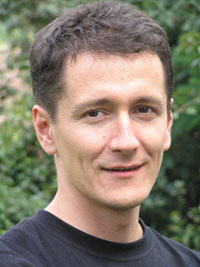
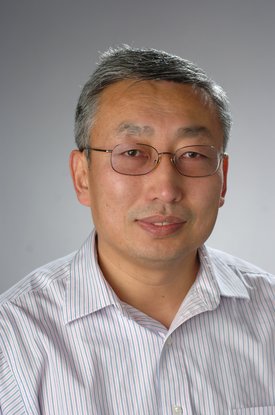
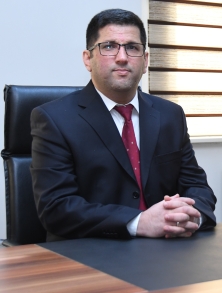
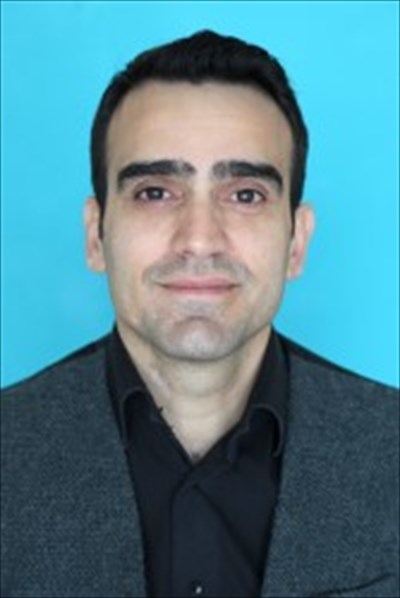
Dr. Vladan Velisavljevic is a Professor in Signal Processing and Electronic Engineering at the University of Bedfordshire and serves as the Director of the Institute for Research in Engineering and Sustainable Environment (IRESE) . He joined the university as a Senior Lecturer in 2011, became Reader in Visual Systems Engineering in 2015, and was promoted to Professor in 2023. He also heads the Centre for Sensing, Signals and Wireless Technology (SSWT) since 2014. BSc and MSc from University of Belgrade (1998, 2000) Master and PhD from EPFL, Switzerland (2001, 2005) His research spans image/video processing , wavelet theory , machine learning for signal sensing , and camera systems . Recent projects include Innovate UK-funded initiatives on off-grid renewable energy systems , smart traffic sensors , and fault detection in electric pumps . His publications focus on light field geometry , multi-view video coding , and directional wavelet transforms . Scientific Awards : Outstanding Area Chair Award (IEEE ICME 2019) Senior Member of IEEE (since 2012) Fellow of UK Higher Education Academy (since 2013) He supervises PhD students in areas like plenoptic imaging , antenna design , and vehicle classification , while also serving as an External Examiner at De Montfort University and Loughborough University in London.
Dong Hyun Jeong is an Associate Professor in the Department of Computer Science at the University of the District of Columbia. His academic journey began with a Ph.D. in Computer Science from the University of North Carolina at Charlotte (2010), preceded by an M.S. and B.Eng. from Hallym University, South Korea (2001, 1999). Ph.D. in Computer Science, May 2010, University of North Carolina at Charlotte M.S. in Computer Science, August 2001, Hallym University B.Eng. in Computer Engineering, August 1999, Hallym University Jeong’s research focuses on Visual Analytics , Human-Computer Interaction (HCI) , and Big Data Analytics , with applications in cybersecurity, genomic data analysis, and climate modeling. His work integrates machine learning , cloud computing , and wavelet transforms to address challenges in network intrusion detection, rainfall prediction, and financial risk analysis. His publications highlight a trend toward interactive visual analytics tools like iPCA (Principal Component Analysis-based systems) and GVis (genomic data visualization). These projects emphasize user-driven analysis , uncertainty quantification , and cross-domain collaboration with institutions like UNC Charlotte and NIFA-funded teams. Service Excellence Award, University of the District of Columbia (2017) Teaching Excellence Award (2016) Exemplary Contribution Award (2011) Best Paper Award, Hawaii International Conference on System Sciences (2010) 2nd Best Graduate Student Poster Award, Applied Visualization Conference (2005) Jeong has secured grants from the U.S. Army Research Office , National Science Foundation (NSF) , and Korean Science and Engineering Foundation (KOSEF) , focusing on cloud-based intrusion detection , climate change computational infrastructure , and cybersecurity workforce development . He also leads the GVis and iPCA projects, which address scalable genomic visualization and PCA-based interactive analysis, respectively.
Dr. Kamran Shaukat is a Senior Lecturer at Torrens University Australia's Faculty of Business and Design, where he serves as a Senior Learning Facilitator and researcher in the Centre for Artificial Intelligence Research and Optimisation (AIRO). With over 13 years of academic experience, he specializes in artificial intelligence applications across cybersecurity, medical informatics, and educational data mining domains. His research interests focus on Artificial Intelligence , Cyber Security , Health Informatics , Machine Learning , and Medical Imaging . Key research areas include developing anomaly detection frameworks for Industrial IoT, explainable AI for cardiovascular risk assessment, and deep learning approaches for neurological disorder diagnosis. Analysis of his recent publications reveals a strong trend toward applied AI in healthcare (Alzheimer's detection, skin cancer diagnostics, intradialytic hypotension prediction) and cybersecurity innovation (anomaly detection, malware classification, imbalanced data handling). His work consistently bridges theoretical machine learning with practical implementations in critical infrastructure and medical systems. Award highlights include: Recognition in the top 2% of researchers globally (Stanford University ranking) Dr. Shaukat actively supervises PhD students with current projects focusing on pattern recognition applications in cyber security, medical informatics, medical imaging, and educational data mining. His research contributes to UN Sustainable Development Goals through AI-driven solutions for health and security challenges. He maintains active collaborations across international research networks as evidenced by his co-authorship patterns and citation metrics.
Kelly O Brien is an Assistant Lecturer in the Department of Information Technology at the Faculty of Applied Sciences and Technology. Her research focuses on computer vision, neural networks, and deep learning applications in manufacturing and healthcare. Her work contributes to UN Sustainable Development Goals related to quality education and industry innovation. Research interests include object detection, neural network optimization, and quality control systems. Her recent work explores deep learning efficiency with EEG data, illumination effects on industrial vision systems, and CNN applications in medical devices. No scientific awards explicitly mentioned. No student advisees listed in provided data. Labs/teams: No specific labs or teams detailed in the text.
Dr. Liam Brown is the Vice-President of Research, Development, and Innovation at Midwest Research, Development and Innovation. His work spans multiple disciplines, with a primary focus on Machine Learning , Deep Learning , and Computer Science . He contributes to fields such as Process Planning , Enterprise Performance Optimization , and Neural Networks .
Lehel Csató is a Professor at the Faculty of Mathematics and Informatics of Babeș-Bolyai University in Cluj-Napoca, Romania. His academic journey includes a PhD from Aston University and a postdoctoral position at the Max Planck Institute for Biological Cybernetics. He specializes in Machine Learning, Probabilistic Robotics, and Nonparametric Bayesian Methods, with a focus on Gaussian Processes and their applications in data analysis and robotics. Teaching includes courses in Logic and Functional Programming (Hungarian), Numerical Modelling in Data Analysis (English), and Artificial Intelligence (Hungarian). His research emphasizes sparse Gaussian Process approximations and their use in reinforcement learning, robotics, and medical image analysis. He contributed to the development of the Sparse Online Gaussian Process toolbox. Publications span topics from deep learning architectures to optimization techniques in neural networks. He has organized the ClujUAV drone navigation competition and collaborated on interdisciplinary projects involving robotics, vision, and medical data analysis.
Lixin Shen is a Professor in the Department of Mathematics at Syracuse University, part of the College of Arts and Sciences. His research focuses on applied and computational harmonic analysis, optimization, imaging science, and information processing. Shen holds a Ph.D. in Mathematics from Sun Yat-Sen University (1996), an M.Sc. from Peking University (1990), and a B.Sc. from Peking University (1987). Education: Ph.D., Mathematics, Sun Yat-Sen University, 1996 M.Sc., Mathematics, Peking University, 1990 B.Sc., Mathematics, Peking University, 1987 Research Interests: Shen’s work emphasizes sparse optimization, image and signal processing, computational mathematics, and their applications. Notable areas include wavelet analysis, tensor decomposition, and robust algorithms for noise removal and high-resolution imaging. Grants & Awards: NSF Grant: Collaborative Research: Sparse Machine Learning and Sparse Optimization (2022–2025) Excellence in Graduate Education Faculty Recognition Award, Syracuse University (2024) Air Force Summer Faculty Fellowship (2024, 2023, 2021, 2020) Service & Leadership: Chair of Graduate Committee, Mathematics Department (2024–2025) Editor, Frontiers in Applied Mathematics and Statistics Organizer, SIAM Conferences on Optimization and Imaging (2023–2020) Teaching: Recent courses include Numerical Linear Algebra, Numerical Methods with Programming, Sparse Optimization, and Partial Differential Equations.
Markus Hegland is a Professor and Head of the Centre for Mathematics and its Applications (CMA) at the Australian National University (ANU). He holds a PhD from ETH Zurich (1988) and has been affiliated with ANU since 1992, focusing on High-Performance Computing (HPC) and numerical analysis. As a Hans Fischer Senior Fellow at TUM-IAS, his research emphasizes high-dimensional problems, ill-posed systems, and data mining applications. His work bridges computational mathematics with practical domains like systems biology and spectral enhancement. Research interests include sparse grid techniques, regularization methods, and algorithm development for HPC. Notable contributions include the OPTICOM method for stable sparse grid solutions and convergence theory for variable Hilbert scales regularization. He has led projects on fault-tolerant HPC algorithms and collaborated with Fujitsu on HPC applications. Publications span numerical analysis, bioinformatics, and computational physics. His work on the chemical master equation and gyrokinetics showcases interdisciplinary impact. Currently, he explores resilient grid-based solvers and machine learning integration with HPC frameworks. No awards are explicitly listed, but his senior fellowship underscores recognition in his field. Grants and collaborations include ARC-funded research in bioinformatics and HPC resilience. His work on digital twins and algorithm optimization reflects broader interests in advanced computational modeling. He is actively involved in teaching and supervising in computational mathematics and data science at ANU.
Professor Yi-Bing Lin is a distinguished faculty member in the Department of Computer Science at National Yang Ming Chiao Tung University, Taiwan, where he leads pioneering research in Internet of Things (IoT) systems and applications. His work primarily focuses on developing the IoTtalk platform and its numerous derivatives across various domains including smart agriculture, smart homes, environmental monitoring, and creative applications. His research interests span Internet of Things, Edge Computing, Smart Agriculture, Sensor Networks, AI Integration, Wireless Networking, and Smart Home Systems. Professor Lin has developed the IoTtalk framework that enables rapid development of IoT applications with numerous specialized implementations including VoiceTalk, SensorTalk, AgriTalk, and many others that address specific domain challenges. His work emphasizes practical implementations with real-world impact, particularly in precision agriculture where his team has developed systems for orchid disease detection, rice blast monitoring, turmeric farming, and watermelon ripeness prediction. Analysis of his recent publications (2023-2025) reveals a strong trend toward integrating AI with IoT systems, particularly for agricultural applications and smart environments. His work increasingly incorporates advanced techniques like continuous wavelet transform, deep learning, and computer vision to solve practical problems in precision farming and environmental monitoring. The publications also show growing interest in creative applications of IoT technology for performing arts, interactive experiences, and educational contexts. Professor Lin has received recognition through consistent high-volume publication output in top-tier venues including IEEE Internet of Things Journal, IEEE Access, and Sensors. His collaborative network is extensive, with frequent co-authorship with researchers like Yun-Wei Lin, Wen-Liang Chen, and Min-Zheng Shieh. His advising has produced numerous researchers who continue to work in IoT and related fields, with many former students maintaining collaborative relationships. Professor Lin's research has been supported by multiple grants enabling the development of practical IoT systems with real-world implementations. His lab has developed numerous specialized IoT applications through the IoTtalk framework, creating a cohesive research ecosystem. Current work shows expansion into new application domains including interactive miniature worlds, simultaneous performance across locations using IoT-based motion capture, and IoT-based musical instruments like piano playing robots and violin robots, demonstrating the versatility of his research approach.
Xiao Wu is a researcher affiliated with multiple academic institutions, including Southwest Jiaotong University (School of Information Science and Technology), University of Michigan (Department of Electrical Engineering and Computer Science), and Chinese Academy of Sciences (Institute of Computing Technology). His work spans diverse areas such as machine learning, computer vision, remote sensing, and medical image analysis. Research interests include transformer architectures , deep learning for time series and image processing , multi-agent control systems , and industrial optimization . Recent publications focus on novel neural network designs for applications in drilling process optimization, brain-computer interfaces, and multispectral/hyperspectral image fusion. His work integrates advanced algorithms like tensor decomposition , multiscale temporal convolution , and adaptive recalibration modules to address challenges in engineering and biomedical domains. Collaborations involve institutions like Harvard University, Jiangnan University, and Hong Kong Polytechnic University.
Faruk KÜRKER is an Assistant Professor in the Department of Electrical and Electronics Engineering at Adiyaman University's Faculty of Engineering since 2013. He holds a PhD from Harran University (2017) and has experience across multiple institutions including Gaziantep University and Adıyaman University Vocational Schools. His expertise focuses on electrical engineering with emphasis on power quality, harmonics, solar cell simulation, and renewable energy systems. Education: Bachelor's in Electrical and Electronics Engineering (Gaziantep University, 2000) Master's in Computer Engineering (Çukurova University, 2010) PhD in Electrical and Electronics Engineering (Harran University, 2017) Research Interests: His work addresses critical challenges in power systems, including harmonic analysis, reactive power compensation, solar cell design, and energy efficiency. He employs advanced simulation tools like Silvaco Atlas for photovoltaic studies and explores biomedical signal processing applications. Recent Work Trends: Recent publications (2022-2024) highlight advancements in power quality analysis of LED systems, harmonic mitigation strategies for nonlinear loads, and the impact of reactive power compensation on harmonic distortion. Earlier work (2011-2015) demonstrates pioneering contributions to heterojunction solar cell design using microfabrication techniques. Professional Experience: Served as Department Chair at Adiyaman University (2020-2022) and held administrative roles in vocational schools. Engaged in teaching advanced courses like Electrical Energy Quality and High Voltage Techniques.
Hermina Alajbegović is an Associate Professor at the Department of Mathematics and Informatics, Faculty of Mechanical Engineering, University of Zenica. She holds a Ph.D. in Mathematics from the University of Sarajevo, focusing on crystallographic groups and subgroup growth. Her career includes roles as an assistant (2003–2008) and postgraduate studies in Algebra (2003–2008). She has authored over 20 publications, spanning graph theory, cryptography, and mathematical software applications like Mathematica and GAP. Education: B.Sc. in Mathematics & Computer Science (2003), M.Sc. in Algebra (2008), Ph.D. in Mathematics (2016). Research interests include algebraic structures, graph theory applications, and mathematical software tools. Notable works involve quasi-regular graph constructions, divisor problem asymptotics, and zeta function analyses in crystallographic groups. She has developed educational tools like web applications for modular arithmetic and interactive e-learning modules using PowerPoint for quiz design. Her publications reflect a blend of theoretical mathematics and practical applications, with recent focus on graph theory and subgroup growth analysis. She actively contributes to academic software integration and problem-solving methodologies in mathematics education.
Fatih Ayhan is an Associate Professor at the Faculty of Economics and Administrative Sciences, Department of Economic Development and International Economics, at Bandirma Onyedi Eylul University. His research focuses on international economics, environmental economics, energy economics, and macroeconomic policies . He has held significant administrative roles including Department Head, Vice Dean, and coordinator for Erasmus and Mevlana exchange programs. His academic contributions include over 40 peer-reviewed articles, 12 book chapters, and editorial roles in journals like Journal of Empirical Economics and Social Sciences . Notable awards include Best Work and Best Presentation at international conferences. He advises PhD and master's students on topics like technological change impacts, economic growth determinants, and environmental policy linkages. His teaching spans International Economics , Macroeconomic Analysis , and EU Economy across undergraduate, graduate, and doctoral levels. Research highlights include analyses of energy transition strategies, climate policy effectiveness, and asymmetric relationships between economic factors and environmental degradation. His work bridges theoretical frameworks with empirical evidence, emphasizing policy applications in emerging and developed economies. Administrative Roles: Department Head (Bandirma Onyedi Eylul University), Erasmus Coordinator, Vice Dean Editorial Work: Journal of Empirical Economics and Social Sciences , Management and Economics Research Grants & Projects: Organized international conferences on modern society transformations and global economic challenges Lab/Teams: Active in interdisciplinary research groups focusing on sustainability, energy economics, and macroeconomic modeling
Assoc. Prof. Dr. BURAK ERKUT is the Chair of the Department of Business Administration at Eastern Mediterranean University (EMU), Faculty of Business & Economics. He holds a PhD in Economics and Business Administration from Dresden University of Technology (2018), an MS in Economics from Leipzig University (2014), and a BS in Economics and Management Science from Leipzig University (2012). His research focuses on entrepreneurship, environmental economics, innovation, and econometric analysis of regional development. Key research interests include sustainable management practices, renewable energy policy, corporate entrepreneurship, and the intersection of technology and economic systems. He has supervised numerous PhD and Master’s theses on topics like entrepreneurial activity in Turkey, artisan entrepreneurship in Cyprus, and digital innovation trends. Prof. Erkut’s publications highlight empirical analyses of ecological footprints, financial integration in Asia, and gender dimensions in creative industries. His work often employs panel data and wavelet coherence methods to explore complex economic relationships. He currently advises ongoing PhD research on mining economies’ sustainability and dark tourism in Maraş. Academically, he contributes to EMU’s Nicosia programs in Business Management and Financial Economics. His professional activities include editorial roles and participation in international conferences on entrepreneurship and sustainable development.
Elena Hadzieva, PhD, is a Full Professor and currently serves as Dean of the Faculty of Information Systems, Visualization, Multimedia and Animation at the University of Information Science and Technology ‘St. Paul the Apostle’ in Ohrid, North Macedonia. She holds a PhD in Mathematics from the University ‘Ss. Cyril and Methodius’ (Skopje) with a thesis on Iterated Function Systems. Her academic journey includes roles from Assistant Professor (2004) to Associate Professor (2015) before attaining Full Professor status in 2020. Education: PhD in Mathematics (2009), University ‘Ss. Cyril and Methodius’, Skopje MSc in Mathematics (2004), University ‘Ss. Cyril and Methodius’, Skopje BSc in Mathematics (1999), University ‘Ss. Cyril and Methodius’, Skopje Research focuses on Fractal Geometry, Dynamical Systems, and Educational Mathematics, with contributions to software applications for fractal modeling and interdisciplinary STEM education. Recent work addresses medical imaging challenges, pandemic-era online teaching, and analog circuit design. Her articles reflect multidisciplinary engagement: combining fractal analysis with medical diagnostics (e.g., melanoma detection), developing educational tools for 3D fractals, and analyzing pandemic-era pedagogical innovations. She also contributes to electrical engineering through low-power amplifier designs and fault-tolerant systems. Professional roles include Membership in the American Mathematical Society (AMS), Macedonian Mathematical Society, and leadership in CEEPUS networks (e.g., Active Methods in Teaching Mathematics). She serves as National Contact Point for SEFI’s Mathematics Working Group and Editor of the journal Numerus. Her administrative leadership includes coordinating national STEM education initiatives and managing interdisciplinary academic programs. She has pioneered software tools for fractal visualization and contributed to defense technology via IR imaging research.