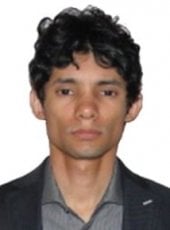
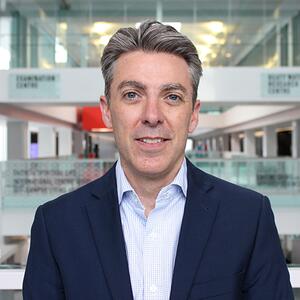
ARNALTES GOMEZ SANTIAGO is a Full Professor at the Department of Electrical Engineering, Universidad Carlos III de Madrid. His research focuses on Power Systems Control, Renewable Energy Integration, HVDC Systems, and Grid-Forming Converters. He leads projects funded by institutions like Red Eléctrica de España and the Community of Madrid. His work addresses challenges in offshore wind farm integration, energy storage systems, and converter-based grid stability. He has authored over 50 publications, including studies on grid-forming control strategies, low-frequency oscillation damping, and battery degradation modeling. He holds 4 patents related to power system control and renewable energy. Recent projects include contributions to digital power networks, green hydrogen integration, and black-start capabilities for renewable plants. His research emphasizes practical applications, such as HVDC interconnections and smart grid technologies.
Simon Puglisi is a Professor at the University of Helsinki's Department of Computer Science, within the Faculty of Science. His research focuses on algorithms, bioinformatics, data compression, and string processing, with notable contributions to genomic data analysis and efficient indexing techniques. He holds the Alberto Apostolico Best Paper Award (2021) and leads the WILL # CHAIR # BOSSA project (2025–2029). His work includes scalable k-mer indexing tools like Themisto and advancements in Lempel-Ziv compression and suffix tree algorithms. He frequently collaborates internationally, participates in editorial roles for journals like the ACM Journal of Experimental Algorithmics , and contributes to conferences such as the International Symposium on Combinatorial Pattern Matching. Research Interests: Algorithm design for string processing and bioinformatics Efficient data structures for genomic data Compression techniques (e.g., Lempel-Ziv, Burrows-Wheeler) Dynamic and space-efficient algorithms Grants & Projects: WILL # CHAIR # BOSSA (2025–2029) Ongoing collaborations with institutions like the University of Melbourne and King's College London
Radu Timofte is an academic researcher specializing in computer vision and image processing. He completed his PhD in 2013 at Katholieke Universiteit Leuven, Belgium, with a thesis on sparse and collaborative representations for computer vision. His work focuses on advancing techniques such as image super-resolution, denoising, object detection, and deep learning-based image restoration. He has collaborated extensively with institutions like ETH Zurich and co-authored seminal papers in top-tier journals and conferences. His research bridges theoretical advancements with practical applications in areas like medical imaging, aerial scene analysis, and real-time visual tracking. Timofte’s contributions include developing efficient deep learning architectures for tasks like lightweight object detection (e.g., CH-YOLO-Lite), diffusion models for image-to-image translation (DiffI2I), and calibration-free raw image denoising. He has also contributed to the development of video restoration transformers (VRT) and frameworks for unsupervised real-time video enhancement. His work often emphasizes practicality and efficiency, addressing challenges such as small object detection in aerial imagery and underwater image super-resolution. Timofte’s collaborations span academia and industry, with notable co-authors including Luc Van Gool (ETH Zurich) and Kai Zhang (Nanjing University of Science and Technology). His research has been published in venues like IEEE Transactions on Pattern Analysis and Machine Intelligence, CVPR, ECCV, and the International Journal of Computer Vision.
Kenan Li, Ph.D., is an Associate Professor in the Department of Epidemiology and Biostatistics at Saint Louis University’s College for Public Health and Social Justice. He joined SLU in August 2022 and teaches courses such as Statistical Learning, R for Spatial Analysis, and Environmental Determinants of Health. His research bridges data science, GIS, and public health, focusing on spatial computation, environmental exposures, and community resilience. Ph.D. in Environmental Sciences, Louisiana State University M.S. in Environmental Sciences, Louisiana State University B.S. in Environmental Sciences and Applied Mathematics, Nankai University, China Dr. Li’s research interests lie at the intersection of spatial computation, environmental health, and community resilience . He develops geo-AI frameworks , integrated geo-cyber-infrastructures , and biostatistics algorithms using big data, deep learning, and sensor data. His work emphasizes understanding human-environment interactions, urban sustainability, and health disparities. His recent publications from 2023 to 2015 reveal a strong trend in spatial modeling of population dynamics , machine learning for environmental exposure analysis , and resilience assessment in vulnerable coastal regions. He has pioneered methods like Dynamic Time Warping Self-Organizing Maps and Wavelet-based Shapelet Discovery to extract meaningful patterns from high-frequency sensor data. His scientific awards include the Taylor Geospatial Institute Seed Grant (2023) , the Saint Louis University 2023 Health Research Grant , and selection for the Scholarly Undergraduate Research Grants and Experiences . He has secured funding from NSF, NIH, USC Keck School of Medicine, and the US Army Corps of Engineers. Dr. Li has advised and collaborated on numerous research projects, particularly in interdisciplinary teams studying the Mississippi River Delta and urban health interventions. He has been involved in NIH/NIBIB-funded projects and led research on emergency management of trail systems in Los Angeles County. He is actively involved in building research labs and teams focused on spatial data science and public health analytics , having previously worked at USC’s Spatial Sciences Institute and Population and Public Health Sciences Department.
Martin Holler is a Professor at the Institute of Mathematics and Scientific Computing at the University of Graz, Austria, where he leads the research group Applied Mathematics and Machine Learning . His work bridges theoretical mathematics with practical applications in imaging and machine learning. Research Focus: His primary research areas include the mathematics of data science, variational methods in imaging, dynamic and multi-modality inverse problems, and biomedical imaging. He has made significant contributions to model-based regularization techniques, particularly with Total Generalized Variation (TGV) approaches for image and video reconstruction. Publication Trends: Over the past decade, Holler's research has evolved from traditional variational methods for image reconstruction toward increasingly sophisticated machine learning approaches. His recent work (2021-2023) focuses on integrating deep learning with variational methods, particularly for motion separation in medical imaging and learning-informed parameter identification in partial differential equations. His publications demonstrate a consistent thread of applying rigorous mathematical frameworks to solve practical problems in medical imaging and computer vision. Mathematics of data science and machine learning Generative models in machine learning Variational methods in imaging Dynamic and multi-modality inverse problems Model-based regularization Biomedical imaging Image and video decompression Technical Leadership: Holler has developed several open-source software packages implementing advanced reconstruction algorithms, particularly for multi-modal imaging problems. His GitHub repositories show active maintenance and development of these tools, which have been cited in the medical imaging community.
Paavo Alku is a Professor of Speech Communication Technology at Aalto University's Department of Information and Communications Engineering. With academic credentials from Helsinki University of Technology (M.Sc. 1986, Lic.Tech. 1988, Dr.Sc.Tech. 1992), he has held academic positions at Asian Institute of Technology (1993) and University of Turku (1994-1999). Current research focuses on speech production analysis, parametric speech synthesis, and speech-based biomarkers for health monitoring Actively develops machine learning models for voice disorder detection and Parkinson's disease classification Principal investigator for projects including SymptoSonic (2024-2025) and HEART (2020-2024) His recent publications emphasize: Wavelet scattering for neurological speech analysis Fisher vector representations in voice disorder classification Machine learning approaches to vocal intensity categorization Respiratory aerosol emission during speech production Formant tracking through hybrid neural network/LP methods Awarded: IEEE Fellow (2020) Academy Professor (2015-2019) Multiple best student paper awards at ICASSP and Interspeech
Dr. Giang Tran is an Associate Professor in the Department of Applied Mathematics at the University of Waterloo, where she leads research in sparse modeling and computational mathematics. She holds a PhD from UCLA and previously served as a Bing Instructor at the University of Texas at Austin. Her research explores sparse optimization techniques with applications in medical imaging, dynamical systems, and data science. Recent publications focus on developing novel algorithms for sparse random feature expansions and dynamical system identification. She mentors numerous graduate and undergraduate researchers through projects on neural networks, transformers, and epidemic forecasting. Awards include the NSERC Discovery Grant and SIAM Student Paper Prize. Dr. Tran teaches advanced courses in numerical methods and functional analysis, contributing to curriculum development in computational mathematics.
Dr. Richard Jiang is a Senior Lecturer (Associate Professor) at Lancaster University's School of Computing and Communications. His research focuses on Artificial Intelligence, Neurocomputing, Quantum AI, Privacy Computing, and Medical Computing. He has pioneered secure pattern recognition in encrypted domains and quantum neuromorphic computing. With over £1M in research grants from EPSRC and others, he has authored 100+ publications and supervised over 20 PhD students. Dr. Jiang's work includes the Face2Brain method for neurodegenerative assessment and explainable models for brain aging analysis. He contributes actively to academic committees, editorial boards, and conferences like the World Conference on eXplainable AI. His research spans ethical AI frameworks, quantum algorithms for medical imaging, and privacy-preserving biometric systems.
Ronald Coifman is the Sterling Professor of Mathematics and Professor of Computer Science at Yale University. His research focuses on nonlinear analysis, scattering theory, complex analysis, numerical analysis, and their applications in data science, signal processing, and biomedical imaging. He holds the National Medal of Science and is a member of the National Academy of Sciences and the American Academy of Arts and Sciences. Coifman's work bridges pure mathematics and applied sciences, emphasizing harmonic analysis, manifold learning, and data-driven modeling. His contributions include foundational advancements in wavelet theory, diffusion maps, and nonlinear dimensionality reduction techniques. Key innovations include the development of empirical intrinsic geometry for analyzing complex systems and the use of Wasserstein distances in high-dimensional data analysis. His academic portfolio includes over 250 publications since the 1960s, spanning topics from theoretical mathematics to practical medical diagnostics. Notable applications include methods for stroke detection, medical imaging analysis, and anomaly detection in dynamic systems. Coifman collaborates across disciplines, integrating computational methods with domain-specific challenges in biology, chemistry, and engineering. Education: Ph.D. in Mathematics from the University of Geneva (1965) Awards: National Medal of Science (2001), Member of NAS (1993), Member of AAAS (2006) Key Projects: Development of diffusion maps, manifold learning algorithms, and empirical geometry frameworks Coifman's current research explores the intersection of machine learning and mathematical analysis, with recent focus on intrinsic data organization, emergent dynamical models, and scalable computational methods for large datasets.
Tayfun Günel is a Professor in the Department of Electronics and Communication Engineering at Istanbul Technical University (ITU) , Faculty of Electrical and Electronics Engineering. He holds a PhD (1993), MSc (1988), and BSc (1986), all from ITU. His research spans microwave circuits, radar systems, antennas, and optimization using genetic algorithms and soft computing. His research interests include Microwave Circuits , Radar and Antennas , Optimization , and Genetic Algorithms . His work focuses on impedance matching, microstrip antennas, noise modeling, and metamaterial-based microwave components. He has taught courses such as Electromagnetic Fields, Radar Systems, and Satellite Communication Systems. The recent publications reflect a strong trend in microwave circuit design , antenna miniaturization , and the application of evolutionary algorithms (genetic algorithms, PSO) and machine learning (neural networks, SVR) in electromagnetic design and optimization. There is a consistent focus on practical microwave components like transmission lines, patches, and amplifiers, often using nanomaterials (e.g., carbon nanotubes) and metamaterials . His work bridges theoretical modeling with computational optimization for real-world RF and radar applications. Email: gunelmur@itu.edu.tr Professor Günel has supervised 2 completed PhD theses, 2 ongoing PhD theses, 23 completed master's theses, and 1 ongoing master's thesis, demonstrating a significant contribution to student mentoring. There are no specific grants or funding sources mentioned in the provided text. He is affiliated with research in microwave systems and antenna design , likely operating within the broader research ecosystem of the Electronics and Communication Engineering Department at ITU, which includes labs such as the Microwave Systems and Antennas Laboratory and the Radar and Microwave Technologies Research Laboratory.
Koushik Maharatna is a Professor in the Digital Health and Biomedical Engineering department at the University of Southampton. His research spans biomedical signal processing, digital health, and embedded systems, with a focus on neurological and cardiovascular disorders. Active in EU Horizon Europe and FP7 projects Member of the Institute for Life Sciences and Centre for Internet of Things and Pervasive Systems Specializes in EEG analysis, arrhythmia detection, and autism spectrum disorder diagnostics His recent publications highlight applications of phase-space reconstruction, machine learning, and wavelet transforms in medical diagnostics. Collaborations include researchers across Europe and Malaysia, with emphasis on interdisciplinary digital health solutions. Current research projects funded by UKRI, EPSRC, and European Union grants include PUREMIND and ETHEREAL, focusing on mental health prevention and energy-harvesting electronics. He supervises PhD students in Human Development & Health and Electronics & Electrical Engineering.
Dr. Barry Cardiff is an Assistant Professor in the School of Electrical and Electronic Engineering at University College Dublin (UCD), where he has been a member of academic staff since September 2013. His career spans both industry and academia, with significant experience at Nokia Mobile Phone (UK) Ltd and Silicon & Software Systems (S3 group) before returning to complete his PhD at UCD. Education: B.Eng (1992), M.Eng.Sc. (1995), PhD (2011) from University College Dublin Professional Experience: Design Engineer at Nokia (1993-2001), Systems Architect at S3 group (2001-2007, 2011-2013) Current Position: Assistant Professor at UCD School of Electrical and Electronic Engineering Dr. Cardiff's research focuses on Digital Signal Processing applications in communication systems, with particular emphasis on theoretical analysis and practical implementation. His work bridges traditional communication theory with emerging biomedical applications, especially in wearable IoT sensors. He has made significant contributions to power/complexity reduction techniques in circuit design, specifically DSP algorithms for digitally assisted analog circuits. His research program addresses critical challenges in biomedical signal processing, sensor fusion, and efficient data transmission for healthcare applications. His recent publications demonstrate a strong trend toward biomedical applications of signal processing techniques, with a focus on ECG analysis, atrial fibrillation detection, and respiratory rate estimation using multimodal sensor fusion. The research shows a clear progression from traditional communication systems toward healthcare applications, with an emphasis on edge computing solutions that reduce power consumption in wearable devices. IEEE BioCas best paper award (2024) IEEE senior member since 2019 Active reviewer for multiple IEEE journals including Transactions on Biomedical Circuits and Systems, Circuits and Systems, and VLSI Systems Dr. Cardiff has supervised numerous research projects and has been instrumental in developing curriculum for digital communications, signal processing, and wireless systems. His teaching philosophy emphasizes open, friendly, and hands-on approaches that encourage independent thinking. He coordinates multiple modules including Communication Theory, Digital Electronics, DSP Technology, and Wireless Systems, demonstrating his commitment to both theoretical foundations and practical applications of electrical engineering principles. His research group works at the intersection of signal processing, machine learning, and biomedical engineering, developing innovative solutions for wearable healthcare monitoring. Current projects focus on event-driven processing architectures, decentralized classification systems, and signal quality-aware fusion techniques that enable robust performance in noisy real-world environments.
Flavio Bezerra Costa serves as an Assistant Professor in the Department of Electrical and Computer Engineering at Michigan Technological University's College of Engineering. His research focuses on critical areas of modern power systems, including smart grid technologies, renewable energy integration, power system protection, and advanced applications of signal processing and artificial intelligence in electrical power networks. Dr. Costa's research interests span a comprehensive range of power system topics with particular emphasis on Smart Grid technologies, Integration of Renewable Energy Systems, Power System Protection, Control, and Monitoring, Power Quality analysis, Power Systems and Power Electronics, AC/DC Microgrids, High-Voltage Direct Current (HVDC) Electric Power Transmission Systems, and the application of Signal Processing and Artificial Intelligence (including Machine Learning) in power systems. His work bridges traditional power engineering with modern computational techniques to address contemporary grid challenges. Analysis of Dr. Costa's recent publications reveals a consistent focus on wavelet transform applications for power system protection and monitoring, particularly in the areas of fault detection, classification, and location. His research demonstrates strong integration of machine learning techniques with traditional power system protection methods, with significant contributions to transformer protection, transmission line fault analysis, and microgrid stability. The work shows an evolving trajectory from fundamental wavelet-based protection techniques toward more sophisticated AI-enhanced approaches for modern power grid challenges. Dr. Costa maintains an active research program with numerous publications in top-tier IEEE journals and conferences, demonstrating his significant contributions to the field of power systems engineering and protection.
Joshua Marshall is a Professor of Electrical & Computer Engineering at Queen’s University, Canada, and Director of the Offroad Robotics research group. He holds a PhD from the University of Toronto and has cross-appointments in Mechanical & Materials Engineering and the Robert M. Buchan Department of Mining. His expertise spans field robotics, autonomous systems, control engineering, and harsh-environment applications in mining, space, and marine domains. He led the Ingenuity Labs Research Institute (2018–2024) and served as a Visiting Professor at Örebro University (2016–17). Dr. Marshall’s work focuses on autonomous vehicle navigation, robotic excavation, and spatiotemporal mapping. He has received the 2025 OPEA Engineering Medal and has commercialized technologies through partnerships with companies like Epiroc and RockMass Technologies. Education: PhD, Electrical & Computer Engineering, University of Toronto (2005) MSc(Eng), Mechanical Engineering, Queen’s University (2001) BSc (Hons), Engineering, (details not specified) Research Interests: Autonomous robotics in mining, space, and marine environments Data-driven control systems and model predictive control Proprioceptive sensing and terrain classification Multi-robot coordination and task planning Underground navigation and SLAM Professional Activities: Senior Member, IEEE Editorial roles: International Journal of Robotics Research , IEEE Transactions on Mechatronics Co-founded the NSERC Canadian Robotics Network (NCRN) Contributions to the IEEE Medal for Environmental & Safety Technologies Committee Labs/Teams: Offroad Robotics Group (Queen’s University) Ingenuity Labs Research Institute (founding Director) Advisor to Queen’s AutoDrive Challenge II Team and aQuatonomous ASV Design Club
Basile de Loynes is a Lecturer at the French National School of Statistics and Information Analysis (ENSAI), holding a permanent academic position since at least 2016. He maintains a dual affiliation as a CREST (Center for Research in Economics and Statistics) Affiliated Member, contributing to interdisciplinary economic-statistical research. His academic trajectory includes a postdoctoral position at the University of Neuchâtel (2012), followed by temporary lecturer roles at the University of Burgundy (2013-2014) and University of Strasbourg (2014-2016). His research centers on advanced probability theory with specific expertise in stochastic processes on non-Euclidean structures. Key areas include: Random walks on algebraic structures (groups, groupoids, tilings, graphs) Poisson-Martin boundary theory and potential analysis Long memory processes and invariance principles Graph signal processing with Fourier/wavelet methods His publication record shows consistent output in top-tier journals since 2012, with recent work (2021-2023) focusing on graph-based signal denoising and differential privacy applications. Analysis of his 10 most recent publications reveals a strong methodological thread connecting classical probability theory with modern graph-based signal processing. Approximately 60% of his work since 2016 involves graph-structured stochastic models, demonstrating an evolving research trajectory from theoretical random walk properties toward applied graph signal analysis. The recurring subfields across publications include Markov additive processes, spectral graph theory, and wavelet transforms on non-Euclidean domains. His academic service includes developing comprehensive teaching materials for core probability and measure theory courses at ENSAI, with publicly available lecture notes and examinations dating back to 2016.