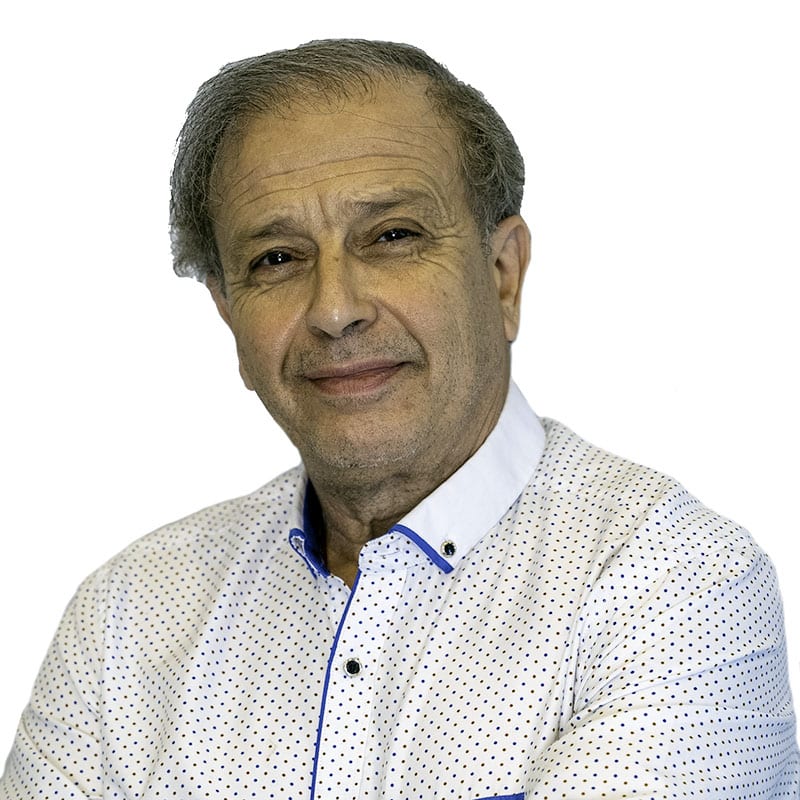
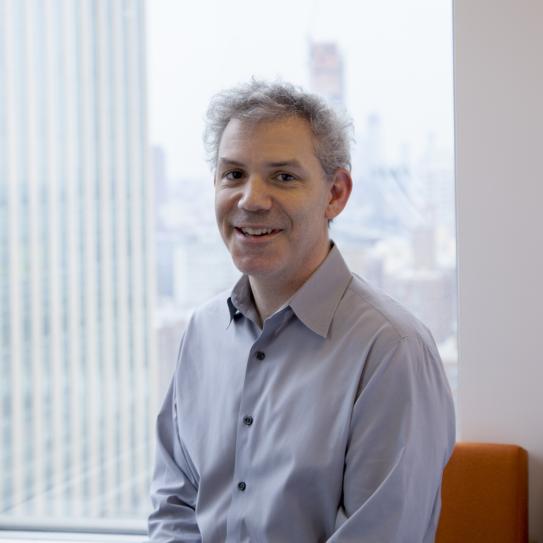
Hamid Krim is a Professor in the Department of Electrical and Computer Engineering at North Carolina State University. He leads the Vision, Information and Statistical Signal Theories and Applications (VISSTA) group, focusing on statistical signal/image analysis, data science, and machine learning. His prior roles include Research Scientist at MIT’s Laboratory for Information and Decision Systems and Member of Technical Staff at AT&T Bell Labs. He holds a Ph.D. in Electrical Engineering from Northeastern University, and degrees from the University of Washington and University of Southern California. Education: Ph.D., Electrical Engineering, Northeastern University (MA), 1990s Master's, Electrical Engineering, University of Washington Bachelor's, Electrical Engineering, University of Southern California and University of Washington Research Interests: Machine Learning, AI, Signal Processing, Communications, and Control Systems . His work bridges formal mathematical frameworks with applied problems, emphasizing generative AI, adversarial robustness, and subspace-driven data analysis. Recent innovations include Volterra neural networks and expansive synthesis techniques for data generation. Awards & Recognition: 2000 NSF CAREER Award 2008 IEEE Fellow 2019 IEEE SPS Sustained Impact Paper Award Multiple extended research invitations at top institutions globally Grants & Advising: Leads the VISSTA Lab, collaborating on projects like medical algorithm development (e.g., lung wheeze analysis) and hurricane activity prediction. His work spans interdisciplinary applications in healthcare, robotics, and defense systems. Labs & Teams: Director of the VISSTA Lab, fostering research in signal theory and machine intelligence. Collaborates with academia and industry on cutting-edge AI and sensor fusion technologies.
Emine Ayaz is a Professor at Istanbul Technical University's Department of Electrical Engineering. Her research spans fault detection in electric motors, signal processing, and nuclear power plant monitoring, with recent work integrating deep learning (e.g., dual RNN architectures) and medical applications (e.g., parasitology, plant-based wound healing). Key Collaborations : International partnerships in motor diagnostics and nuclear engineering. Projects : Led grants on high-voltage training and predictive maintenance for TEİAŞ and industrial processes. Research Trends : Recent publications emphasize neural networks for motor fault classification, coherence analysis for insulation diagnostics, and interdisciplinary work in plant biotechnology and parasitology. Labs & Teams : Involved in projects analyzing vibration signals, wavelet transforms, and sensor fusion for industrial and nuclear systems.
Daniel Sage is a Lecturer and Scientific Advisor at École polytechnique fédérale de Lausanne (EPFL) , affiliated with the Biomedical Imaging Laboratory (LIB) under the College of Engineering (STI) and School of Life Sciences (SV) . He specializes in bioimage informatics , structured-illumination microscopy , and deep learning applications for biomedical imaging. His work spans algorithm development for single-molecule localization microscopy (SMLM) , fluorescence imaging , and 3D reconstruction . His research group has developed open-source tools like FlexSIM for light inhomogeneity correction, DeepImageJ for integrating deep learning in ImageJ, and Steer'n'Detect for orientation-accurate template detection. His publications focus on correcting multiple-blinking artifacts in PALM, optimal transport metrics for SMLM evaluation, and contextual feature analysis for xenograft cell classification. He mentors PhD students and contributes to interdisciplinary education through courses such as Bioimage Informatics and Fundamentals of Image Analysis , emphasizing practical software solutions and Java programming for bioimage processing. His collaborations include institutions like Howard Hughes Medical Institute and Centre National de la Recherche Scientifique (CNRS) .
Dr. Guangliang Cheng is an Associate Professor in the Department of Computer Science at the University of Liverpool. His research focuses on deep learning, computer vision, and perception algorithms with applications in remote sensing, medical imaging, and autonomous systems. Prior to his current role, he served as a vice research director in the Autonomous Driving Group at SenseTime and completed postdoctoral research at the Aerospace Information Research Institute, Chinese Academy of Sciences. Ph.D. in Pattern Recognition from the National Laboratory of Pattern Recognition (NLPR), Institute of Automation, Chinese Academy of Sciences (CASIA) Postdoctoral Researcher at Aerospace Information Research Institute, Chinese Academy of Sciences (2017–2019) Dr. Cheng’s research integrates computer vision and deep learning to address challenges in semantic segmentation, domain adaptation, and robust detection. Recent work explores wavelet-based multimodal fusion for remote sensing and attention-guided architectures for medical imaging. His 2025 publications span journals like GIScience & Remote Sensing and Knowledge-Based Systems , emphasizing scalable solutions for geospatial and biomedical applications. In 2025, Dr. Cheng’s article trends highlight remote sensing semantic segmentation, cross-domain medical imaging, and drone-based fire detection. His collaborations span institutions such as SenseTime, Chinese Academy of Sciences, and University of Liverpool teams, focusing on frequency-domain fusion, attention mechanisms, and GPU optimization. As a supervisor, Dr. Cheng seeks highly motivated PhD students to join projects supported by scholarships including the Centres for Doctoral Training (CDT) and Duncan Norman Scholarship. He serves as Module Co-ordinator for COMP338: Computer Vision (2024–2025) and actively reviews for top-tier journals and conferences.
Xiaofeng Liu is an Assistant Professor at Yale University School of Medicine in the Departments of Radiology & Biomedical Imaging and Biomedical Informatics & Data Science. He is also an Associate Member at the Broad Institute of MIT and Harvard. Previously, he held faculty positions at Harvard Medical School and research roles at Massachusetts General Hospital and Beth Israel Deaconess Medical Center. PhD in Mechatronics from University of Chinese Academy of Sciences Dual Bachelor's degrees in Automation (Wang-Daheng Elite Class) and Communication from University of Science and Technology of China His research integrates trustworthy AI, medical imaging, and data science to improve diagnosis, prognosis, and treatment monitoring for neurological disorders, cancer, and cardiovascular diseases. Key focus areas include domain adaptation techniques, diffusion models, and interpretable AI systems. Led special issues in IEEE Transactions on Pattern Analysis and Medical Image Analysis Developed novel frameworks like Ordinal UDA and Memory-Consistent Adaptation Scientific accolades include the Trailblazer R21 Award (NIBIB), OpenAI Research Award, and National Artificial Intelligence Research Resource Pilot Award. He serves as Associate Editor for IEEE Transactions on Neural Networks and Learning Systems and actively contributes to MICCAI and NIH review panels. His lab at Yale (XLiu Lab) investigates neural basis of intelligence to inspire AI development, with applications in brain tumor segmentation, cardiac imaging, and cross-modal medical diagnostics.
Professor David Taubman is a distinguished academic serving as Professor and Deputy Head of School (Research) at the School of Electrical Engineering and Telecommunications (EE&T) at the University of New South Wales (UNSW) in Sydney, Australia. He is also co-director of Kakadu Software Pty. Ltd. and its affiliates Kakadu R&D and Kakadu GPU. With a career spanning over three decades, Professor Taubman has made significant contributions to the field of image and video compression, most notably as the author of the EBCOT coding algorithm adopted in the JPEG2000 international standard. Professor Taubman earned his B.Sc. in Mathematics and Computer Science (1986) and B.E. (Medal) in Electrical Engineering (1988) from the University of Sydney, followed by an M.Sc. (1992) and Ph.D. (1994) in Electrical Engineering from the University of California at Berkeley. His professional journey includes engineering work at the Electricity Commission of N.S.W. (1988-1990), research positions at Hewlett-Packard Laboratories in Palo Alto (1994-1998), and an academic career at UNSW where he progressed from Senior Lecturer (1998-2003) to Associate Professor (2004-2009) and finally to Professor (2009-present). He has held various leadership roles including Head of the EE&T Telecommunications Research Group (2003-2014), Head of the EE&T Signal Processing Research Group (2014-present), Director of Research for the School of EE&T (2011-2016), and Deputy Head of School (Research) since 2017. Professor Taubman's research interests center on image and video compression, with particular expertise in JPEG2000 standards and implementations. His work spans signal processing, wavelet transforms, scalable video coding, motion modeling, and multimedia systems. He has pioneered numerous compression algorithms and frameworks, including the EBCOT coding algorithm that became central to the JPEG2000 standard. His recent research focuses on efficient motion modeling with cuboidal partitioning, learned lifting-based transform structures, and high-throughput implementations of JPEG2000 for video applications. His work bridges theoretical foundations with practical implementations, as evidenced by the commercially successful Kakadu Software tools that have garnered around 500 commercial licensees. Analysis of Professor Taubman's recent publications reveals a consistent focus on advancing compression technologies with particular emphasis on scalability, efficiency, and adaptability. His work spans traditional image compression (JPEG2000 extensions), video coding (cuboid-based partitioning for UHD/360-degree video), and emerging applications (nanopore sequencing data compression). A notable trend is the integration of machine learning techniques with traditional compression frameworks, as seen in his work on learned lifting-based transform structures. His research maintains strong connections to real-world applications across diverse domains including medical imaging, astronomical data processing, and genomic sequencing. IEEE Fellow Engineers Australia Fellow (by invitation) Professor Taubman has served as Associate Editor for the IEEE Transactions on Image Processing for two four-year appointments (2003-2005 and 2010-2013). He has been actively involved in numerous research grants focused on image and video compression technologies, particularly those related to the JPEG2000 standard and its extensions. His work has received significant industry support, reflected in his consultancy with various U.S., Japanese, and Australian corporations. He has also contributed to international standards development as a member of Standards Australia Technical Committee MS-065 (mirroring ISO TC42 on Digital Photography) and as a constitutional member of Standards Australia Technical Committee IT-029 (Coded Representation of Picture, Audio and Multimedia/Hypermedia Information). Professor Taubman co-directs Kakadu Software Pty. Ltd. and its research affiliates Kakadu R&D and Kakadu GPU, which have developed the commercially successful Kakadu Software tools for JPEG2000. His research group at UNSW focuses on advanced image and video compression techniques, with particular expertise in wavelet-based methods, scalable coding, and motion modeling. The group maintains strong industry connections and has contributed significantly to the development and standardization of image compression technologies worldwide.
Ivan Selesnick is a Professor of Electrical and Computer Engineering at the NYU Tandon School of Engineering, with joint appointments in Biomedical Engineering and Radiology. He holds affiliations with the Center for Advanced Technology in Telecommunications (CATT) and leads the Selesnick Lab. His research focuses on signal and image processing, sparse signal models, wavelet analysis, and biomedical applications. He received his degrees from Rice University (BS, MEE, PhD in EE) and has been recognized with prestigious awards including the Alexander von Humboldt Fellowship (1997), NSF Career Award (1999), and IEEE Fellow (2016). Education: BS, MEE, and PhD in Electrical Engineering from Rice University (1990, 1991, 1996). He joined NYU Tandon in 1997 and served as a visiting professor at the University of Erlangen-Nuremberg in 1997. Research Interests: Signal Processing, Sparse Signal Models, Wavelet Analysis, Biomedical Signal Processing, and Optimization Techniques. His work emphasizes applications in medicine, imaging, and engineering systems. Awards: In addition to his fellowships, he received the Jacobs Excellence in Education Award (2003) and the Budd Award for Best Engineering Thesis (1996). He has held editorial roles at IEEE Transactions on Image Processing, Signal Processing Letters, and Computational Imaging. Teaching: Courses include Signals, Systems, and Transforms (EE 3054), Digital Signal Processing I/II (EL 6113/EL 7133), Wavelets and Filter Banks (EL 7163), and Biomedical Signal Processing (EL 9133). Labs and Affiliations: Director of the Selesnick Lab, involved in NYU Tandon Future Labs (business incubators) and CATT (telecommunications research). His research spans biomedical sensing, radar signal processing, and algorithm development for medical diagnostics.
Dr. Pradip Sharma is an Associate Professor of Cybersecurity & AI at the University of Aberdeen, UK, within the School of Natural and Computing Sciences, Department of Computing Science. He is a globally recognized academic and researcher with expertise in Cybersecurity, Artificial Intelligence, Blockchain, and Edge Computing. His research interests span multiple domains including Cybersecurity, Blockchain, Edge Computing, Software-defined Networking, and IoT Security. Dr. Sharma's work focuses on developing innovative solutions for security challenges in emerging technologies, with particular emphasis on privacy-aware AI systems, secure data sharing frameworks, and intelligent network security mechanisms. His interdisciplinary approach bridges theoretical foundations with practical implementations across healthcare, smart mobility, and consumer electronics domains. Senior Fellowship Advance HE (SFHEA) IEEE Senior Member (SMIEEE) Dr. Sharma actively supervises doctoral researchers and is accepting new PhD students in Computing Science. His funded research portfolio exceeds £1M from sources including EPSRC, Innovate UK, and international agencies. Current projects include 'Secure, Privacy-aware, and Trusted Data Share in Smart Mobility' (EPSRC, £200K), 'ZECURE Data Exchange Platform' (Innovate UK, £236K), and 'Quantum-resistant Cybersecurity' (Royal Embassy of Saudi Arabia, £73K). He also serves as an editor for leading journals and is a regular keynote speaker at international conferences.
H. Jane Bae is an Assistant Professor of Aerospace at the California Institute of Technology (Caltech), affiliated with the Division of Engineering and Applied Science. Her research focuses on turbulence modeling, particularly developing high-fidelity computational methods to simulate high-Reynolds-number flows for applications in aircraft design, wind farms, and atmospheric predictions. She integrates machine learning, information theory, and numerical techniques to enhance turbulence modeling efficiency. Education: B.S. in Aerospace Engineering from Caltech (2011), Ph.D. in Mechanical Engineering from Stanford University (2018). She joined Caltech in 2021. Research interests include near-wall turbulence dynamics, resolvent analysis, sparse identification of nonlinear dynamics, and reinforcement learning for wall models in LES. Her work addresses computational cost reduction and model accuracy in complex flow simulations. Awards: 2023 Outstanding Referee Award from Physical Review. Teaching includes courses on fluid mechanics (Ae/APh/CE/ME 101 abc) and turbulence (Ae 239 ab). Her lab combines turbulence theory, high-performance computing, and data-driven methods to study unsteady flows over complex surfaces. Notable contributions include machine learning-based wall models and resolvent analysis frameworks for non-stationary flows.
Amir Farokh Payam is a Senior Lecturer in Electronics and Software at the School of Engineering, Ulster University, UK since 2019. He holds a PhD in Electronics Engineering-Nanotechnology and has previously worked at Instituto de Ciencia de Materiales de Madrid (2012–2015), Durham University (2016–2018), and University of Bristol (2018–2019). Education: B.Sc. and M.Sc. in Electrical and Electronics Engineering, PhD in Electronics Engineering-Nanotechnology His research focuses on dynamic Atomic Force Microscopy (AFM) , NEMS/MEMS , Surface Science , and Applied Nonlinear Control . Recent work explores nonlinear harmonics in AFM, solid-liquid interfacial dynamics, and single-cell biomechanical profiling. He leads projects on quantum sensor fabrication and cancer cell viscoelasticity analysis. Key trends in his 15 most recent publications (2025–2023) include advancements in nanoscale imaging , multifrequency AFM , viscoelastic material analysis , and biomedical applications such as viral protein sensing and corneal cell profiling. Collaborative projects span institutions in Ireland, Spain, and the UK. Scientific Awards: Editor's Highlights in Journal of Applied Physics (2018) and Nanotechnology (2015) Best Innovative Idea, Second International R&D Award of Iran (2012) Distinct Graduate Student, University of Tehran Visiting Study Scholarship, Instituto de Microelectronica de Madrid (2010) M.Sc. First Class Student (top among 15) He serves as Unit Director for Mechatronics II and Electronics II modules and supervises BEng/MEng research projects. Active research grants include Royal Society funding (2024–2026) for cancer cell biomechanics and an ongoing 2022–2026 project on solid-liquid interface dynamics.
Wenzhong Li is a Professor at the School of Computer Science, Nanjing University, where he leads research at the State Key Laboratory for Novel Software and Technology. His academic career spans over 15 years with significant contributions to AI-empowered distributed systems, big data mining, and networking applications. He teaches Computer Networks and guides graduate students in Distributed Computing Research. Professor Li's research focuses on cutting-edge areas including AI-Empowered Distributed Systems and Applications (MultiModal Large Models, Embodied Intelligence, Edge Computing), Big Data Mining (Time Series Analysis, Graph Computing, Social Networks Analysis), and AI-Based Distributed Resource Scheduling. His work bridges theoretical foundations with practical implementations in real-world systems. His recent publications demonstrate a strong trend toward integrating deep learning with graph theory and time series analysis, with applications in human activity recognition, network optimization, and multimodal systems. The research spans multiple disciplines including artificial intelligence, computer vision, networking, and data mining, with a particular emphasis on practical implementations for real-world problems. Best Paper Runner Up at KSEM 2023 for 'Learning-based Dichotomy Graph Sketch for Summarizing Graph Streams with High Accuracy' Best Paper Award at APNet 2018 for 'Toward Effective and Fair RDMA Resource Sharing' Professor Li has advised numerous PhD and Master's students who have gone on to prominent positions at institutions like Nanjing University, Huawei, Alibaba, Microsoft, and various international universities. His research is supported by substantial grants from the National Natural Science Foundation of China, Natural Science Foundation of Jiangsu Province, National Power Grid, and other major funding bodies, totaling multiple multi-year projects with significant budgets. He leads the AINet Group and is affiliated with the Sino-German Institute of Social Computing and MobileCloud research initiatives. His DISLAB provides the organizational framework for his research team, which includes dozens of graduate students and collaborators working on cutting-edge problems in AI, networking, and distributed systems.
Scott T. M. Dawson is an Assistant Professor in the Mechanical, Materials, and Aerospace Engineering Department at Illinois Institute of Technology (Illinois Tech). He holds positions in the Armour College of Engineering and leads research at the intersection of fluid mechanics, dynamical systems, control theory, and data science. His work focuses on extracting dynamic models from large datasets to analyze and control turbulent flows and unsteady aerodynamic systems. Education includes a Ph.D. and M.A. from Princeton University (2017, 2013), and B.Eng. and B.S. degrees from Monash University (2010, 2009). Prior to Illinois Tech, he was a postdoctoral scholar at Caltech’s Graduate Aerospace Laboratories under Prof. Beverley McKeon. Research interests emphasize reduced-order modeling, data-driven techniques for fluid flows, and flow control applications. His group’s work is supported by NSF, AFOSR, and DOE grants. Recent projects include sparsity-promoting methods for flow analysis, wavelet-based resolvent analysis, and neural network-driven flow control systems. Publications span over 60 peer-reviewed articles, with a focus on turbulence modeling, transient flow dynamics, and machine learning integration in fluid mechanics. Key contributions include novel algorithms for isolating amplification mechanisms in wall-bounded flows and robust neural network frameworks for closed-loop flow stabilization. Grants and collaborations include multi-year NSF CAREER funding for automated distillation of coherent flow structures. Ongoing efforts explore time-localized spectral methods, nonlinear dimensionality reduction, and hydrogen decarbonization in vehicular systems.
Navid Bayati is an Associate Professor at the University of Southern Denmark, affiliated with the Institute of Mechanical and Electrical Engineering and the Centre for Industrial Electronics. He leads the Control and Protection of Smart Grids (CAP-SG) group and focuses on renewable/hybrid power systems, microgrid protection, and grid code compliance. Education: Ph.D. in Power Systems & Microgrid Protection (2020, Aalborg University); M.Sc. in Power Systems (2017, Amirkabir University of Technology) His research spans renewable energy integration , transient analysis , grid interconnection , and digital twin applications . Recent work includes machine learning for carbon emission prediction, fault localization in DC microgrids, and supercapacitor resilience in hybrid systems. Collaborations include projects like IEA Wind Task 50 and RePoSys , addressing grid renovation, life cycle assessment, and digital twin resilience. His teaching portfolio covers power electronics , energy management , and microgrid control .
Sandra Keiper is a Lecturer at the Institute of Mathematics within Faculty II - Mathematics and Natural Sciences at Technical University of Berlin. She has held academic positions since at least 2011, including roles as Tutor, Assistant, and Lecturer, with teaching responsibilities in Analysis, Linear Algebra, and Partial Differential Equations for both mathematicians and engineers. Research interests include: Compressed Sensing and Sparse Signal Recovery Numerical Linear Algebra with applications to high-dimensional data Wavelet and curvelet transforms for geometric multiscale analysis Approximation theory for finite-valued and cartoon-like functions Deep learning and graph approximation techniques Professional activities : Active in teaching since 2011 (Analysis I-III, Functional Analysis, Integral Transforms) Supervising theses since 2015 on topics like Compressed Sensing and Deep Learning Invited lectures at Caltech, ETH Zurich, and Alan Turing Institute Research stays at Hausdorff Institute, ETH Zurich, and Duke University
Govind Sharma is a Professor in the Department of Electrical Engineering at the Indian Institute of Technology Kanpur. He holds a PhD from the University of Southern California, Los Angeles, and completed both his M.Tech. (1984) and B.Tech. (1979) in Electrical Engineering from IIT Kanpur. His research interests span multiple areas of signal processing and communications, with a focus on: Signal Processing Communication Systems Video signal processing Medical image processing Professor Sharma has published numerous research papers in prestigious journals and conferences. His work primarily focuses on signal processing techniques, including time delay estimation in acoustic channels, direction of arrival estimation, adaptive filtering algorithms, wavelet transforms, and spectrum estimation. His research has contributed significantly to both theoretical foundations and practical applications in these fields, with publications spanning from 1986 to 2011. He can be reached at his office in ACES-205A, Department of Electrical Engineering, Indian Institute of Technology, Kanpur, UP, India-208016, or by phone at 0512-259-7922.