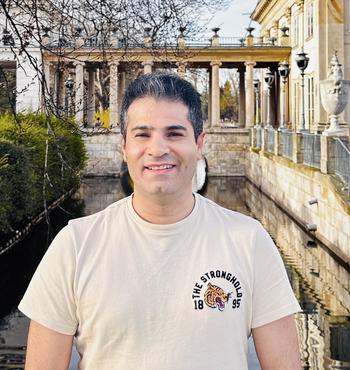
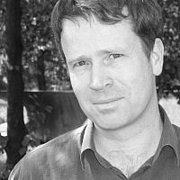
Sandra Keiper is a Lecturer at the Institute of Mathematics within Faculty II - Mathematics and Natural Sciences at Technical University of Berlin. She has held academic positions since at least 2011, including roles as Tutor, Assistant, and Lecturer, with teaching responsibilities in Analysis, Linear Algebra, and Partial Differential Equations for both mathematicians and engineers. Research interests include: Compressed Sensing and Sparse Signal Recovery Numerical Linear Algebra with applications to high-dimensional data Wavelet and curvelet transforms for geometric multiscale analysis Approximation theory for finite-valued and cartoon-like functions Deep learning and graph approximation techniques Professional activities : Active in teaching since 2011 (Analysis I-III, Functional Analysis, Integral Transforms) Supervising theses since 2015 on topics like Compressed Sensing and Deep Learning Invited lectures at Caltech, ETH Zurich, and Alan Turing Institute Research stays at Hausdorff Institute, ETH Zurich, and Duke University
Radu Timofte is an academic researcher specializing in computer vision and image processing. He completed his PhD in 2013 at Katholieke Universiteit Leuven, Belgium, with a thesis on sparse and collaborative representations for computer vision. His work focuses on advancing techniques such as image super-resolution, denoising, object detection, and deep learning-based image restoration. He has collaborated extensively with institutions like ETH Zurich and co-authored seminal papers in top-tier journals and conferences. His research bridges theoretical advancements with practical applications in areas like medical imaging, aerial scene analysis, and real-time visual tracking. Timofte’s contributions include developing efficient deep learning architectures for tasks like lightweight object detection (e.g., CH-YOLO-Lite), diffusion models for image-to-image translation (DiffI2I), and calibration-free raw image denoising. He has also contributed to the development of video restoration transformers (VRT) and frameworks for unsupervised real-time video enhancement. His work often emphasizes practicality and efficiency, addressing challenges such as small object detection in aerial imagery and underwater image super-resolution. Timofte’s collaborations span academia and industry, with notable co-authors including Luc Van Gool (ETH Zurich) and Kai Zhang (Nanjing University of Science and Technology). His research has been published in venues like IEEE Transactions on Pattern Analysis and Machine Intelligence, CVPR, ECCV, and the International Journal of Computer Vision.
Dr. Sinno Jialin Pan is a leading researcher in machine learning and artificial intelligence at Nanyang Technological University, Singapore. His work focuses on domain adaptation, sentiment analysis, and efficient neural network optimization. Key research areas: Machine Learning, Domain Adaptation, Reinforcement Learning, Sentiment Analysis Recent publications demonstrate expertise in time-series classification (2025) using hierarchical domain adaptation, LLM efficiency (2025) through expert pruning, and graph generation (2024) via spectral diffusion. His work spans both theoretical advancements and practical applications in neural architecture optimization and adversarial learning. Scientific contributions include: 2025: Virtual-label hierarchical domain adaptation 2024: Spectral diffusion for graph generation 2024: Multilingual jailbreak analysis in LLMs Current trends show increasing focus on large language model optimization and robust neural architectures , with applications in fault diagnosis, recommender systems, and misinformation detection.
Currently a Research Fellow at Harvard University & MIT , Fangneng Zhan specializes in Neural Rendering and Generative AI . His research focuses on developing evolutive rendering frameworks, 3D-aware generative models, and multimodal synthesis techniques. Previously, he was a postdoctoral researcher at the Max Planck Institute for Informatics under Prof. Christian Theobalt. He earned his Ph.D. in Computer Science & Engineering from Nanyang Technological University, Singapore and a Bachelor's in Communication Engineering from the University of Electronic Science and Technology of China . His work spans 3D reconstruction, robotics applications , and lighting estimation , with significant contributions to SIGGRAPH , NeurIPS , and CVPR conferences. Recent research highlights include evolutive gauge transformations for neural fields, generalizable 3D style transfer via Gaussian splatting, and multimodal synthesis frameworks leveraging pre-trained models like CLIP and Stable Diffusion. He has co-authored Top50 Popular Paper in TPAMI 2023 and organized workshops at CVPR 2024 on generative models. Scientific Awards: Top50 Popular Paper, IEEE Transactions on Pattern Analysis and Machine Intelligence (TPAMI) 2023 Collaborative Network: Mentored students at institutions like Harvard, NTU, and ETH Zurich. His projects include datasets for lighting estimation and real-time scene text detection systems.
Detlev Marpe is a leading researcher at the Fraunhofer Heinrich Hertz Institute (HHI), serving as Head of the Video Coding & Analytics Department and Head of the Image & Video Coding Group. His work focuses on advancing video compression standards, including HEVC (H.265) and its extensions. He has contributed significantly to tools like entropy coding, transform coding, and scalable video coding. His research emphasizes efficient compression techniques, such as adaptive context models and wavelet-based methods, with applications in multimedia communication and low-delay video encoding. Affiliations: Fraunhofer Institute for Telecommunications HHI, Berlin, Germany Roles: Department Head, Research Group Leader, and Adjunct Lecturer at TU Berlin (2013/14) Research Interests: Video coding standards (HEVC, H.264/AVC), entropy coding (CABAC), wavelet-based compression, scalable video coding (SVC), multiview video coding (MVC), and rate-distortion optimization. His work bridges theoretical advancements with practical implementations, addressing challenges in compression efficiency, scalability, and real-time applications. Publications & Awards: Over 200 publications in top-tier journals and conferences, including IEEE Transactions and SPIE. Notable awards include the Chester Sall Best Paper Award and multiple Best Paper Awards from IEEE journals. His contributions to video coding standards have been adopted in global specifications like MPEG and ITU-T. Grants & Labs: Involved in major research projects on HEVC extensions, 3D video coding, and low-delay applications. Collaborates with industry partners and academic institutions globally. His team at HHI develops reference software and test models for emerging standards.
Shlomo Dubnov is a Professor in the Department of Music at the University of California, San Diego. With an h-index of 36 and over 4,803 citations, his research spans the intersection of music, audio processing, and machine learning, making significant contributions to music information retrieval, sound synthesis, and speech recognition technologies. Dr. Dubnov's primary research interests focus on Music Technology and Audio Signal Processing , with particular expertise in: Machine learning applications for music and audio analysis Sound texture synthesis and modeling Music improvisation systems and computational creativity Audio adversarial examples and security Pitch tracking in noisy environments Multimodal learning for audio-text alignment His recent work demonstrates a strong trend toward applying transformer architectures and contrastive learning techniques to audio processing tasks, with publications in top conferences like IEEE International Conference on Acoustics, Speech, and Language Processing. Dr. Dubnov's research bridges theoretical music concepts with practical audio engineering applications, creating innovative solutions for music generation, analysis, and security. Dr. Dubnov has established productive collaborations with researchers across disciplines, particularly with: G. Assayag (102 Publications • 2,475 Citations) - music technology and improvisation systems Taylor Berg-Kirkpatrick (31 Publications • 1,459 Citations) - machine learning applications K. Chen (18 Publications • 1,150 Citations) - audio transformer models Cheng-i Wang (21 Publications • 305 Citations) - music information retrieval His work is supported by grants focused on advancing the state-of-the-art in music technology, audio processing, and machine learning applications for creative domains. Dr. Dubnov leads research in the Music Technology laboratory at UC San Diego, where his team develops innovative systems for music analysis, synthesis, and human-computer interaction in musical contexts. The lab focuses on creating intelligent systems that can understand, generate, and interact with musical content in real-time applications.
Xiao Bi, M.Sc. , is a Tutor and researcher at the Professorship for Environmental Sensors and Modeling at the Technical University of Munich (TUM) . He is based in room N1506B and contributes to atmospheric pollution research through instrument development, data analysis, and teaching in environmental sensing. Research Focus : Development of NO 2 and air pollutant sensors using CAPS technology, analysis of ground-based and satellite data during the COVID-19 pandemic, and implementation of in-situ and mobile measurement systems in Munich. Teaching Role : Tutor for Lab Courses on Innovative Atmospheric Sensing Devices, Advanced Seminars in Environmental Sensing, and Joint Practical Courses on Electromagnetic Sensors and Measurement Systems. His publications (2018–2022) highlight trends in atmospheric pollution monitoring , sensor technology for greenhouse gases, and machine learning applications in artificial olfaction. Notable collaborations include work with Prof. Jia Chen and Frank Keutsch . Xiao Bi has been recognized with the Hans Fischer Fellowship , underscoring his contributions to urban environmental research and sensor innovation.
Bin Dong is a Professor at the Beijing International Center for Mathematical Research (BICMR) and Deputy Director of the Center for Machine Learning Research (CMLR) at Peking University. He holds a Ph.D. in Mathematics from UCLA (2009), M.Sc. from National University of Singapore (2005), and B.S. from Peking University (2003). Current affiliations: BICMR (2023–present), CMLR (2022–present) Prior: Associate Professor at Peking University (2014–2022), Assistant Professor at University of Arizona (2011–2014), SEW Assistant Professor at UCSD (2009–2011) Research focuses on biomedical imaging (reconstruction/analysis, clinical decision-making), machine learning (PDE-Net, ODE-Net architectures), and AI for Mathematics (AI4M) (formal mathematics digitalization via Lean, AI-assisted theorem proving). Teaching includes Mathematical Image Processing and Learning by Research at Peking University. Key scientific awards: Wang Xuan Outstanding Young Scholar Award (2023) New Cornerstone Investigator (2023) Qiu Shi Outstanding Young Scholar Award (2014) Silver Medal, New World Mathematics Award (2007) Organized multiple workshops including the One World Seminar Series on Mathematics of Machine Learning and co-developed AI tools like Brainiac Buddy for education.
Ali Hassan is a researcher affiliated with the National University of Sciences and Technology (NUST), School of Electrical Engineering and Computer Science, Department of Computer and Software Engineering. His work spans multiple domains in computer science, engineering, and applied mathematics, focusing on areas such as machine learning, IoT, energy systems, and medical informatics. His research explores: Reinforcement learning applications for battlefield information systems IoT antenna design and performance evaluation Optimization of second-life battery systems in electric vehicles Transformers for real-time vehicle collision avoidance Image hashing techniques using visual attention models Neural network-based phasor estimation for power grids Biomedical sensor systems for non-invasive health monitoring Mathematical modeling of viral dynamics Recent publications demonstrate his emphasis on interdisciplinary approaches combining AI, signal processing, and sustainability. He has collaborated with institutions across Pakistan, France, Saudi Arabia, and the USA, with a focus on practical implementations in cybersecurity, energy optimization, and healthcare technology.
Gerlind Plonka is a Professor of Applied Mathematics at the University of Göttingen, specifically within the Institute for Numerical and Applied Mathematics (NAM). Her research focuses on Numerical Fourier Analysis Wavelet Theory Regularization and Nonlinear Diffusion Methods Fast Algorithms and Numerical Stability Signal and Image Processing Applications Her recent publications emphasize structured subsampling in Fourier domains, Prony-type methods for exponential sum recovery, and deep learning integration in medical imaging. She supervises active PhD candidates including Benjamin Kocurov, Anahita Riahi, Yannick Nicola Riebe, and Janina Schmidt, with a legacy of advising over 50 graduates across diverse topics like Sparse FFT Algorithms Phase Retrieval Constraints Wavelet-Based Image Compression Nonlinear Diffusion Filters High-Dimensional Data Approximation
Majid Taie Semiromi is a Postdoctoral Researcher at the Hydrogeology Group, Institute of Geological Sciences, Department of Geosciences, The Free University of Berlin. His work integrates groundwater modeling, climate change impacts, and data-driven algorithms in hydrogeological simulation. Ph.D. in Civil Engineering-Geohydrology (University of Kassel, Germany, 2018) M.Sc. in Watershed Management Engineering (Tarbiat Modares University, Iran, 2010) B.Sc. in Range and Watershed Management Engineering (Gorgan University, Iran, 2007) His research focuses on groundwater modeling, surface-groundwater interactions, isotope hydrology, and the application of machine learning to forecast climate change impacts on water resources. He has led projects on drought monitoring and developed hybrid models for hydrological analysis. Scientific awards include DFG funding (2020–2023), DAAD scholarship (2014–2018), and a 2015 fellowship for drought workshops in China. He has advised M.Sc. and Ph.D. students on topics like kettle hole impacts, groundwater drought indices, and climate change in Iranian basins.
Jianwu Dang is a faculty member at Lanzhou Jiaotong University's School of Electronic and Information Engineering , with affiliations to the Gansu Provincial Engineering Research Center for Artificial Intelligence and Graphic and Image Processing . His academic career spans multiple institutions including a PhD from Southwest Jiaotong University in 1996. Research Interests : Focused on Medical Image Processing , Remote Sensing , and Wireless Sensor Networks , his work bridges Artificial Intelligence and Transportation Engineering , particularly in railway systems. Publications : Recent articles address Edge Computing coalition structures (2023), Extended Reality in education (2023), and Deep Learning for remote sensing (2022). Collaborations : Frequently co-authors with Yangping Wang and Zhanjun Hao , contributing to journals like IEEE Internet of Things Journal and conferences such as APSIPA .
Fadi A. Aloul is an academic at the American University of Sharjah, UAE , with a focus on computer science and cybersecurity. His research spans Boolean satisfiability Machine learning applications IoT and mobile security Chaotic system modeling He has collaborated extensively on FPGA implementations, intrusion detection, and health monitoring systems. Research Trends : Recent work emphasizes machine learning for cybersecurity (e.g., Android malware detection, IoMT threat mitigation) and FPGA-based chaotic models for medical/disease simulation. Earlier studies highlight symmetry-breaking algorithms in satisfiability problems and mobile health applications. Collaborations : Co-authored with Imran A. Zualkernan Assim Sagahyroon Ahmed S. Elwakil Wassim El-Hajj across institutions in UAE, USA, and Egypt.
Prof. Haye Hinrichsen holds a C3 professorship at the University of Würzburg within the Chair of Theoretical Physics III . His academic journey includes roles as Acting Professor at the University of Wuppertal (2001), Senior Assistant at Duisburg-Essen (2000), and postdoctoral research at institutions like the Weizmann Institute of Science (1995–1997). He earned his PhD in 1993 from the University of Bonn under Prof. V. Rittenberg, focusing on quantum groups. His research interests span quantum information theory , exactly solvable systems , statistical physics far from equilibrium , reaction-diffusion processes , and non-equilibrium phase transitions . Notable achievements include the 2007 Award for Good Teaching and contributions to understanding entropy-based tuning systems in music. His recent work explores topics like causal set propagators in anti-de Sitter spacetime, eigenmodes on hyperbolic lattices, and renormalization techniques in quantum field theories. He has also applied physics principles to music acoustics, developing adaptive tuning schemes using entropy maximization. Key Research Themes: Quantum gravity, non-equilibrium dynamics, topological complexity, and interdisciplinary applications in music. Teaching: Courses include Theoretical Physics I, Computational Physics, and General Relativity. Lab/Affiliation: Chair of Theoretical Physics III at Hubland South, Building M1.
Mirco Stern is a researcher at the Institute of Information Management (IPD Böhm) at Karlsruhe Institute of Technology. His work focuses on sensor networks, database systems, and service composition technologies. Key research areas include distributed query processing, data quality guarantees, and optimization of join operations in resource-constrained environments. Role : Researcher, Institute of Information Management Location : Karlsruhe, Germany Research trends highlight his expertise in sensor network optimization (join processing, wavelet transforms) and service composition (semantic matchmaking, automated integration). Publications span ACM SIGMOD, VLDB, and ECOWS conferences, emphasizing algorithm design and system efficiency.