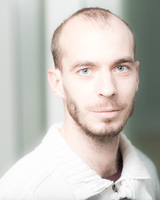
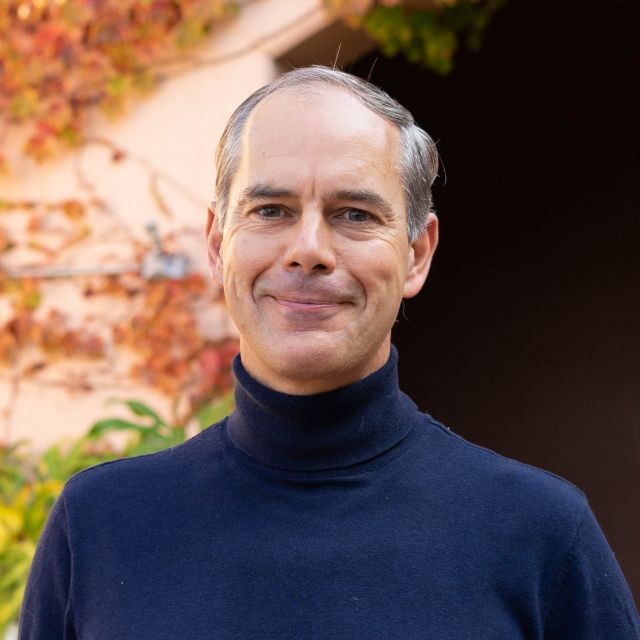
Fabrice LEMOULT is an Associate Professor at Institut Langevin , ESPCI Paris - PSL University. His research focuses on experimental wave physics in complex media, particularly metamaterials, acoustics, and soft matter mechanics. Research Highlights : Wavefront shaping, Dirac cone manipulation, time-reversal applications, and subwavelength acoustic/elastic wave control. Key Collaborations : Mathias Fink, Geoffroy Lerosey, Sébastien Popoff, Claire Prada. Recent Work Trends : Studies on elastic wave dynamics in soft materials (2024), acoustic metasurfaces for noise isolation (2024), and microwave metamaterials for topological effects (2024). Earlier works explore superlensing (2015), phononic crystals (2016), and nonreciprocal wave propagation (2017). Advising & Outreach : Mentored 11 doctoral/postdoctoral researchers, including Samuel Croquette and Simon Yves. Advocates for frugal science and public engagement via platforms like @FabLemoult on scicomm.xyz .
Alexandre Aubry is a Research Director at CNRS affiliated with the Institut Langevin in Paris. His work focuses on imaging through complex media using wave physics principles, with applications in ultrasonic imaging, optical microscopy, seismic imaging, and radar technology . He leads projects supported by the ERC Consolidator Grant REMINISCENCE and ANR COPPOLA , and has co-founded the biomedical imaging company OWLO . Education: Habilitation à Diriger des Recherches, Université Paris Sciences & Lettres (2022) Post-Doc under John Pendry, Imperial College London (2008-2010) PhD under Arnaud Derode, Université Pierre et Marie Curie (2008) Engineer's Degree, ESPCI ParisTech (2005) Research Highlights: He developed 3D ultrasound matrix imaging to overcome wavefront distortions in biomedical applications, and pioneered passive seismic matrix imaging for volcanic structure mapping. His theoretical contributions include distortion matrix formalism for aberration correction and multiple scattering analysis in heterogeneous media. Scientific Awards: ERC Consolidator Grant REMINISCENCE ANR COPPOLA grant Research Team: Currently supervising 9 active PhD students and 5 postdoctoral researchers , with a track record of mentoring 12 former team members including prominent researchers like François Legrand and Laura Cobus.
Dirk Bouwmeester is a Professor in the Department of Physics at the University of California Santa Barbara (UCSB). He leads the Bouwmeester Lab, focusing on quantum optomechanics, cavity quantum electrodynamics, and topological field structures. His work bridges quantum information science and fundamental physics, exploring decoherence mechanisms in macroscopic superposition states and topological phenomena in electromagnetism, gravity, and magnetohydrodynamics. Research Interests: His lab investigates three primary projects: Quantum optomechanical systems for studying macroscopic superposition states and decoherence, using silicon nitride/diamond membranes and optical cavities. Topological field structures in electromagnetism and gravity, including optical vortices, knotted magnetic configurations, and gravitational analogs. Photonic quantum information processing with quantum dots and microcavities, targeting single photon sources, entanglement, and quantum gates. Publications highlight interdisciplinary trends in quantum optics , topological physics , and quantum information , with applications in cavity-QED, magnetohydrodynamics, and photonic devices. Labs & Collaborations: The Bouwmeester Lab leverages UCSB’s nanofabrication facilities and collaborates with the University of Leiden’s plasma laboratory. Projects often involve theoretical modeling, experimental optomechanical platforms, and computational simulations.
Prof. Dr. Markus Lippitz serves as Chair of Experimental Physics III at the University of Bayreuth within the Faculty of Mathematics, Physics and Computer Science. His research group at the Physics Institute focuses on cutting-edge investigations at the intersection of light and matter at the nanoscale, with particular emphasis on plasmonic phenomena and quantum optical effects. Dr. Lippitz's primary research interests encompass Nanooptics , Plasmonics , and Ultrafast Spectroscopy , with significant contributions to Single Molecule Spectroscopy and Nonlinear Optics at the nanoscale. His work explores how light interacts with metallic nanostructures to create enhanced electromagnetic fields, enabling novel applications in sensing, quantum information processing, and nanophotonic circuitry. The research combines advanced experimental techniques with theoretical modeling to understand fundamental light-matter interactions in complex nanoscale systems. Analysis of his recent publications (2018-2025) reveals a consistent focus on plasmonic waveguides, quantum emitter-plasmon coupling, and nonlinear optical phenomena at the single molecule level. His group has pioneered methods for studying two-dimensional electronic spectroscopy of single molecules, developed high-Q plasmonic resonators, and investigated the coupling of quantum dots to plasmonic structures. This work demonstrates a clear trajectory toward developing practical nanophotonic devices based on fundamental quantum optical principles. Dr. Lippitz maintains an active research laboratory equipped with state-of-the-art optical instrumentation for ultrafast spectroscopy, single molecule detection, and nanoscale optical characterization. His team collaborates extensively with research groups across Europe and has established productive partnerships with institutions including the Max Planck Society and various international universities.
Jung Hwan Kim is a Professor in the Department of Energy Resources and Geosystems Engineering at Sejong University. He holds a Ph.D. in Chemical Physics from the University of Maryland at College Park (2001), M.S. (1992) and B.S. (1990) in Physics from Yonsei University. His academic career includes positions as Assistant Research Scientist (2004-2010) and Research Associate (2001-2004) at the University of Maryland/Laboratory for Physical Sciences before joining Sejong University in 2010. Education: Ph.D., University of Maryland at College Park (Chemical Physics, 2001) M.S., Yonsei University (Physics, 1992) B.S., Yonsei University (Physics, 1990) His research focuses on compound semiconductor photovoltaic cells , energy-efficient photonic devices , and high-speed semiconductor devices . Recent work spans battery recycling (closed-loop cathode resynthesis), electrochemical energy systems (CO2 reduction, fuel cells), and advanced photovoltaic device engineering. Articles show trends in semiconductor heterostructures , electrochemical modeling , and sustainable energy materials . Scientific contributions include: Developing heterojunction photovoltaic cells with quantum well structures in GaP 60 GHz optical gain cutoff frequency and 20dB up-conversion gain in phototransistors Monolithic distributed traveling wave photodetectors integrated with polymer waveguides Leading Li-ion battery recycling technologies Developing prototype fuel cell systems He has received multiple Research Excellence Awards (2011-2024) and the Sejong Merit Award (2015). His Electrochemical Energy Conversion & Storage Lab at Sejong University advances energy system technologies, with significant contributions to UN Sustainable Development Goals 7 (Affordable and Clean Energy) and 13 (Climate Action).
Ragnar Seton is a Postdoctoral Fellow in the Photonic Sensing Group at UiT The Arctic University of Norway, Department of Physics and Technology. His work focuses on photonic technologies for environmental and biomedical applications. Research Interests: Ragnar specializes in on-chip laser absorption spectroscopy , with applications spanning isotope analysis, CO2 monitoring, and biomedical sensing. His research bridges photonics , environmental science , and healthcare technology . Recent Publications: His work includes advancing nanophotonic waveguides for isotope-specific CO2 detection (2024) and developing transcutaneous blood gas monitoring systems (2023). Trends in his 2024-2025 articles emphasize climate science and medical diagnostics . Labs & Teams: Ragnar works in the Ultrasound, Microwaves and Optics group (Room 3.065, Tromso) and collaborates with international researchers on photonic sensing solutions.
Per Lundgren is a Professor at the Electronics Material and Systems department of Chalmers University of Technology. His research focuses on energy storage technologies, carbon-based composites, and nanoelectromechanical systems (NEMS), with applications in microtechnology, millimeter-wave engineering, and sustainable materials. His recent work includes advancements in supercapacitor design using lignin-cellulose composites, plasma-treated carbon fibers, and hybrid electrode materials. He has contributed to high-frequency gap waveguide fabrication and waste heat energy harvesting systems. Notable Projects : Artificial Intelligence for Nanoparticle Emission Analysis (2018) Smart-MEMPHIS: Piezoelectric Energy Harvesting with Supercapacitors (2014-2018) CarPolCap: Hybrid CNT/CNF Electroactive Polymers (2012-2015) Lundgren also emphasizes educational innovation, particularly in adaptive teaching methods and interactive learning tools for semiconductor physics courses.
Weinan Feng is an Assistant Professor at the Faculty of Science and Engineering, specializing in photonics and nanotechnology. His research focuses on advanced photodetector design, nanoparticle manipulation, and optical field confinement. Photonic nanojet elongation via multilayer dielectric microcylinders All-dielectric bowtie core capillaries for bidirectional transport Inverse design of optical absorbers using machine learning High-birefringence nanosized optical fibers His recent work includes developing non-metallic nanoprobes for wavelength-insensitive light field generation and ultra-thin silicon photodetectors with enhanced near-infrared absorption. Applications span biochemical sensing, photonic integrated circuits, and metasurface design.
Стефан Кирilов Къртунов is a Professor in the Management Department at Technical University of Gabrovo, Bulgaria. With a career spanning over three decades, he has established himself as a prominent figure in mechatronics, micro-nano systems technology, and manufacturing engineering. His work bridges theoretical knowledge with practical applications, focusing on innovative educational approaches and technological advancements in engineering disciplines. Professor Kъртунов's research interests encompass a wide spectrum of engineering fields, with particular emphasis on mechatronics systems, micro and nano technology, production technologies, and educational methodologies for engineering students. His work demonstrates a consistent focus on practical applications of theoretical concepts, especially in the areas of manufacturing processes, quality control, and system integration. He has developed specialized training modules for polymer and hybrid nanocomposites, silicon structures, and optical components that have advanced both educational practices and industrial applications. Analysis of his recent publications reveals a strong trend toward interdisciplinary research that combines mechanical engineering with electronics, materials science, and environmental applications. His work shows increasing focus on sustainable technologies, educational innovation in engineering training, and the integration of modern manufacturing techniques with traditional engineering principles. The recurring themes across his publications include technological optimization, precision manufacturing, and the development of educational frameworks that prepare students for contemporary engineering challenges. Professor Kъртунов has successfully supervised six PhD students through completion, demonstrating his commitment to academic mentorship and the development of the next generation of engineers. His extensive project portfolio includes 15 significant research initiatives, ranging from internal university projects to international collaborations with institutions in Germany, Austria, Romania, and Ukraine. These projects have focused on areas such as mechatronic systems, micro-nano technology, production optimization, and waste treatment technologies. He has contributed significantly to the academic community through his leadership in developing automated design systems like PROTECH and MICROSIS, which have advanced the field of micro-mechanical component design and manufacturing. His work continues to influence both academic research and practical industrial applications in Bulgaria and beyond.
Arnulf Johannes Snedker-Nielsen serves as an Instructor in the Department of Mathematical Sciences at the University of Copenhagen's Faculty of Science and concurrently holds a PhD fellow position at the Niels Bohr Institute specializing in Quantum Information Science & Technology. His work focuses on silicon-based quantum photonics platforms for scalable quantum technologies. His research centers on silicon T-centers as a scalable solution for single-photon generation and quantum memory systems, involving hands-on design, nanofabrication, and optical characterization. This interdisciplinary work bridges mathematical sciences with quantum physics to develop practical quantum computing components, particularly emphasizing solid-state quantum emitters and integrated photonic circuits. Recent publications demonstrate a clear trajectory toward hybrid quantum photonic systems, with emphasis on heterogeneous material integration for enhanced quantum information processing capabilities. His 2024 work on GaAs-silicon nitride waveguide coupling exemplifies efforts to merge disparate photonic platforms for optimal quantum light generation and transmission. He maintains active collaborations across international research networks under supervisor Stefano Paesani, with geographic partnership patterns visible through institutional mapping tools indicating multi-country research engagement.
Dr. Gabriel Zieger serves as Group Leader (Arbeitsgruppenleiter) in the Photonics and Quantum Detection Department at the Leibniz Institute of Photonic Technology (Leibniz-IPHT) in Jena, Germany, where he heads the IR Radiation Detection working group. His research spans advanced materials engineering with particular focus on nanoporous platinum structures, thermoelectric materials, and infrared detection systems. With continuous publication output from 2017 through 2025, Dr. Zieger maintains an active research program within this photonics research institute. Dr. Zieger's research interests center around the development and characterization of novel photonic materials, particularly platinum-based nanostructures for infrared applications. His work explores electrochemical fabrication methods for nanoporous materials, optical properties of nanoscale structures, and energy conversion technologies. He investigates how material composition and nanostructure affect optical absorption, electrical conductivity, and thermoelectric performance across various applications from security imaging to wearable energy harvesting systems. His research bridges fundamental materials science with practical device engineering for photonics applications. Analysis of Dr. Zieger's publication record reveals consistent focus on material engineering for photonics applications, with particular emphasis on platinum-based nanostructures for infrared detection. His work demonstrates progression from fundamental studies of nanoporous platinum growth mechanisms toward increasingly applied research in thermoelectric devices and security imaging systems. The interdisciplinary nature of his publications spans materials science, optics, electrochemistry, and device engineering, showing collaboration across multiple research groups at Leibniz-IPHT. Recent publications indicate growing emphasis on practical applications including textile-based energy generation and terahertz security cameras. As Arbeitsgruppenleiter, Dr. Zieger leads the IR Radiation Detection research group, which appears to focus on developing advanced materials for infrared sensor applications. His laboratory work involves electrochemical deposition techniques, materials characterization using electron microscopy and spectroscopy, and device testing for optical and thermoelectric properties. The group maintains strong collaborative ties within Leibniz-IPHT, particularly with researchers working on nanomaterials, sensor development, and photonic devices.
Peter Moar is an Adjunct Professor in Engineering at La Trobe University with over 25 years of international experience in technology design, research, and consulting across telecommunications, automotive, aerospace, and nanotechnology sectors. His career spans from establishing global startups to optimizing operations for Fortune 500 companies, with a focus on bringing complex products from design to mass manufacture. His educational background includes: Bachelor of Engineering (Honors) PhD from La Trobe University Moar possesses extensive expertise in Aerospace Engineering , Astronomical and Space Instrumentation , Automation and Control Engineering , and Photonics and Electro-Optical Engineering . His research focuses on Industrie 4.0 applications in automotive, aerospace, and telecommunications sectors, with a notable 17-year collaboration with the German Aerospace Centre (DLR) on the FIREBIRD micro satellite missions for global bushfire monitoring. His recent publications demonstrate a shift from foundational optical fiber research to cutting-edge space applications, particularly in machine learning for orbital deployment systems and Earth observation technologies. Professional leadership includes: Chair of Engineers Australia National Committee for Space Engineering (since January 2023) Co-chair of same committee (October 2017 - January 2023) Moar has developed industry-focused educational programs including 'Work Integrated Learning (Engineering)' (March 2016) and secured mission-critical capabilities for the DLR's Earth Sensing Imaging Spectrometer (DESIS) global space instrumentation mission. His funded research includes the 'Heavy Vehicle Turntable Use on Building Construction Sites' project with The Australian Turntable Co. Pty Ltd (2019-2020), demonstrating his strong industry connections and practical application focus.
Jie Qiao serves as an Associate Professor at the Chester F. Carlson Center for Imaging Science within the College of Science at Rochester Institute of Technology (RIT), where she directs the Advanced Optical Fabrication, Instrumentation & Metrology Laboratory focused on cutting-edge photonics research. Her academic credentials include a Ph.D. in Electrical and Computer Engineering from The University of Texas at Austin, an M.S. in Precision Instruments and Fine Mechanics from Tsinghua University, and an MBA in entrepreneurship, strategy, finance, and marketing from the University of Rochester's Simon Graduate School of Business. Dr. Qiao's research spans femtosecond laser micromachining of transparent and metal materials, wavefront sensing, and spatial-temporal laser beam control. Her work drives innovations in optics structuring, photonic circuits, waveguide lasers, and micro-bonding for opto-mechanics and bio-implants, supported by expertise in ultrafast laser fabrication and optical metrology. She has secured research funding from the National Science Foundation, NASA, and private industry while mentoring graduate students and postdoctoral researchers. Dr. Qiao also founded and chairs the Women in Science, Technology, Engineering, and Entrepreneurship Connect initiative, and serves as Chair/co-Chair for major conferences including Photonics West LAMOM and CLEO Applications and Technology.
Gail Blaustein serves as Professor and Chair of the Department of Chemistry and Biochemistry at Benedictine College in Atchison, Kansas, teaching undergraduate courses including General Chemistry I/II, Computational Chemistry, and Physical Chemistry I/II with integrated laboratory components. Her academic credentials are: Doctorate in Chemistry, Tulane University (2010). Dissertation: "Charge and Energy Transport in One-Dimensional Nanomaterials". Bachelor of Science in Materials and Metallurgical Engineering with Mathematics Minor, South Dakota School of Mines (1999). Dr. Blaustein's research program addresses critical challenges in nanomaterial safety and molecular photophysics . She develops computational models for lyophobic colloids to predict nanoparticle behavior in environmental matrices while investigating conformational dynamics in heterocyclophanes like diphenylaminopyridinophane to decode fluorescence quenching mechanisms. Her dual focus bridges environmental risk assessment and fundamental photophysical principles. Analysis of her 14 publications (2007-2016) reveals three interconnected research trajectories: Environmental Nanoscience : DLVO theory applications, silver nanomaterial dissolution kinetics, and nanoparticle colloidal stability in soil matrices. Bioinorganic Charge Transport : Counterion-mediated charge separation/recombination dynamics in DNA hairpin structures. Nanophotonics : Guided optical modes in dielectric nanoparticle arrays for photonic circuit applications. Professional engagement includes leadership roles in the American Chemical Society and Iota Sigma Pi, NSF fellowship panel service (2012-2014), and judging at the Intel International Science and Engineering Fair (2012). While grant funding and student mentorship details are absent from source materials, her sustained publication record and society memberships indicate an active research profile.
Gautam Vemuri serves as Professor in the Department of Physics at Indiana University, where his research focuses on laser physics and nonlinear optics with emphasis on semiconductor laser dynamics and quantum optical phenomena in waveguide arrays. His academic credentials include: Ph.D. in Physics from Georgia Institute of Technology (1990) M.S. in Physics from Brown University (1986) B.Sc. (Honors) in Physics from Delhi University, India (1984) Dr. Vemuri's research spans Atomic, Molecular and Optical Physics, investigating statistical properties of lasers and quantum effects in evanescently coupled systems. His work addresses semiconductor laser instability from optical feedback and explores phenomena including Anderson localization, Bloch oscillations, and PT-symmetry in finite lattices, with applications in optical communications and quantum physics testing. Analysis of his 2004-2013 publications reveals consistent focus on semiconductor laser dynamics under filtered optical feedback and quantum effects in waveguide arrays, with recurring themes of nonlinear dynamics, disorder effects, and symmetry properties across optical physics and condensed matter disciplines. He directs the Optical Physics Lab equipped with state-of-the-art instrumentation including argon-pumped Ti:Sapphire lasers, ultra-stable diode lasers, Erbium-doped fiber lasers, high-finesse optical cavities, and advanced data acquisition systems for experimental research. No public information is available regarding Dr. Vemuri's student advising activities or research grant funding.