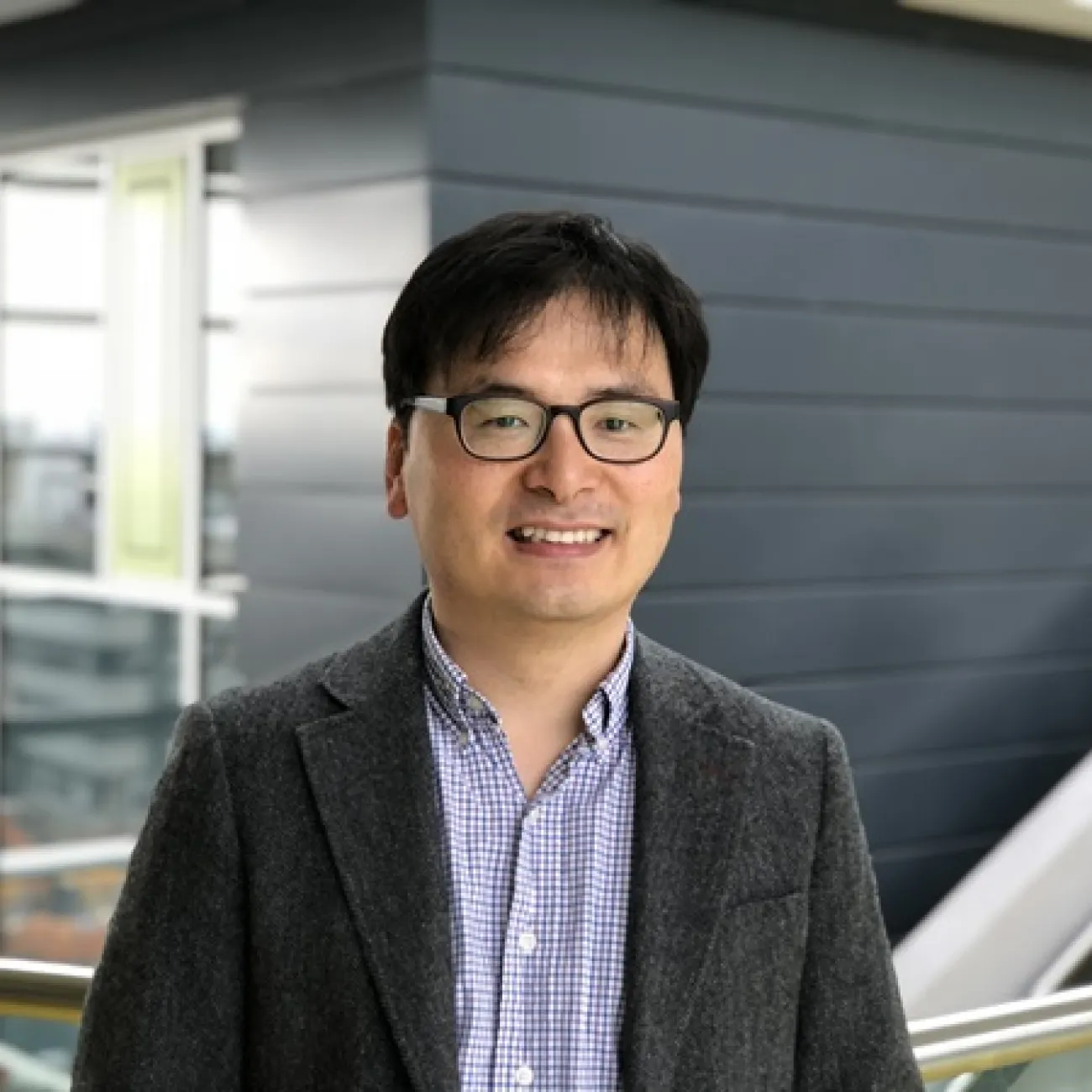
Dr. Yongmin Jung is a Principal Research Fellow at the Optoelectronics Research Centre (ORC), University of Southampton, specializing in advanced fiber optic technologies. With over 20 years of experience, he leads research on multicore and multimode fiber technology, achieving several world-first innovations including the first multimode erbium-doped fiber amplifier. His research focuses on developing energy-efficient optical amplifiers for telecommunications networks using Space Division Multiplexing technology. This work addresses power consumption challenges in long-haul transmission systems while reducing cost per bit and increasing capacity. Current projects include Power Efficient Multicore Fiber Amplifiers and Smart Fibre-Optic High Power Photonics. He teaches MSc courses on fiber components and optical amplifiers in the Advanced Telecoms program. EU Horizon Prize for Breaking the Optical Communications Barrier (2016) Dean's Award (2015) Guinness World Record (2014) As Principal Research Fellow, Jung mentors PhD students and coordinates international research collaborations. His work contributes to next-generation optical communication systems with applications in telecommunications infrastructure.
Dr. Jonathan Hu is a Professor in the Department of Electrical and Computer Engineering at Baylor University's School of Engineering and Computer Science. He holds a PhD from the University of Maryland Baltimore County (2008) and completed a postdoctoral fellowship at Princeton University (2009–2011). He is an active researcher in optics and photonics, leading the Photonics Research Laboratory and advising both graduate and undergraduate research assistants. Research Interests: Nanophotonics and metamaterials for photovoltaic and biomedical applications Mid-IR supercontinuum generation using chalcogenide photonic crystal fibers 2D materials such as graphene and their alignment via magnetic fields Coherent optical communication and quantum optical Fredkin gates Numerical simulation of electromagnetic problems and leaky mode analysis His recent publications (2019–2024) demonstrate a strong focus on quantum plasmonics, specialty optical fibers, optofluidics, and nonlinear optical phenomena, with high-impact work in journals like Science Advances , ACS Photonics , and Advanced Materials . The research shows a clear trend toward integrating photonics with 2D materials and quantum systems, with applications in sensing, communication, and materials characterization. Scientific Awards and Recognition: 35 Baylor faculty named among top 2% most cited researchers (2023) Editor’s Pick, Journal of Applied Physics (2018) Top three downloads in OSA journals for three consecutive months (2009) NSF Graduate Research Fellowship (awarded to advisee) Chinese Government Award for Outstanding Self-Financed Students Abroad (awarded to advisee) Second Place in FiO + LS Student Competition (awarded to advisee) Advising and Grants: Dr. Hu actively mentors students at all levels, with current graduate research assistants including Wei Zhang, Zhihao Hu, and Sterling Walzel. His lab is supported by external funding, though specific grants are not detailed in the text. He has advised PhD students such as Joshua Young, Chao Niu, and Chengli Wei, many of whom have gone on to successful academic and industry careers. His teaching includes core courses like EGR 1302, ELC 2320, and ELC 4320, as well as advanced topics in computational photonics and integrated photonics. Labs and Teams: He leads the Photonics Research Laboratory at Baylor University, located at the BRIC facility. He is also involved with the Baylor University Optica Student Chapter, promoting optics outreach and networking among students and researchers.
Herb Winful is a Professor of Optics at the University of Michigan's College of Engineering, Department of Electrical and Computer Engineering. He specializes in nonlinear optics, laser physics, quantum tunneling , and photonics , with a focus on phenomena like superluminal group velocities, frequency comb generation, and light storage via stimulated Brillouin scattering. Research areas span quantum tunneling times , nonlinear photonic materials , and coherent beam combining in fiber laser arrays. His work includes frequency comb spectroscopy using quantum-well diode lasers, ultrafast erbium fiber lasers , and negative group delay engineering in birefringent waveguides. The article list reveals expertise in supercontinuum generation , evanescent wave dynamics , photonic crystals , and nonlinear pulse manipulation . Key subfields include stimulated Brillouin/Raman scattering , parabolic similaritons , and time-domain modeling of optical systems. Award-winning scientific contributions include resolving the Hartman effect paradox and optimizing fiber laser arrays for high-power applications. His research bridges theoretical insights with practical innovations in optical engineering and quantum optics .
Roozbeh Tabrizian is an Associate Professor in the Department of Electrical & Computer Engineering at the University of Florida, holding the Nelms Rising Star Endowed Professorship. His research focuses on RF micro- and nano-electro-mechanical systems (RF N/MEMS), nonlinear and nonreciprocal systems, and ferroelectric materials for sensing and information processing. He has received prestigious awards including the NSF CAREER Award (2018) and DARPA Young Faculty Award (2019). Education: PhD in Electrical Engineering from Georgia Tech (2013), BS from Sharif University of Technology (2007). Research interests include developing temperature-stable acoustic resonators, ferroelectric transducers, and novel materials for high-frequency applications. His work bridges nanotechnology, materials science, and MEMS to create innovative devices for communication and sensing. Key scientific awards include the HWCOE Innovation Award (2025), DARPA Director’s Fellowship (2021), and multiple best paper awards at international conferences. His grants include the NSF CAREER Award supporting nano-acoustic waveguide research. He advises on advanced MEMS fabrication techniques and collaborates on CMOS-compatible resonators. His lab develops nanoelectromechanical tags for anti-counterfeiting and high-precision frequency control systems.
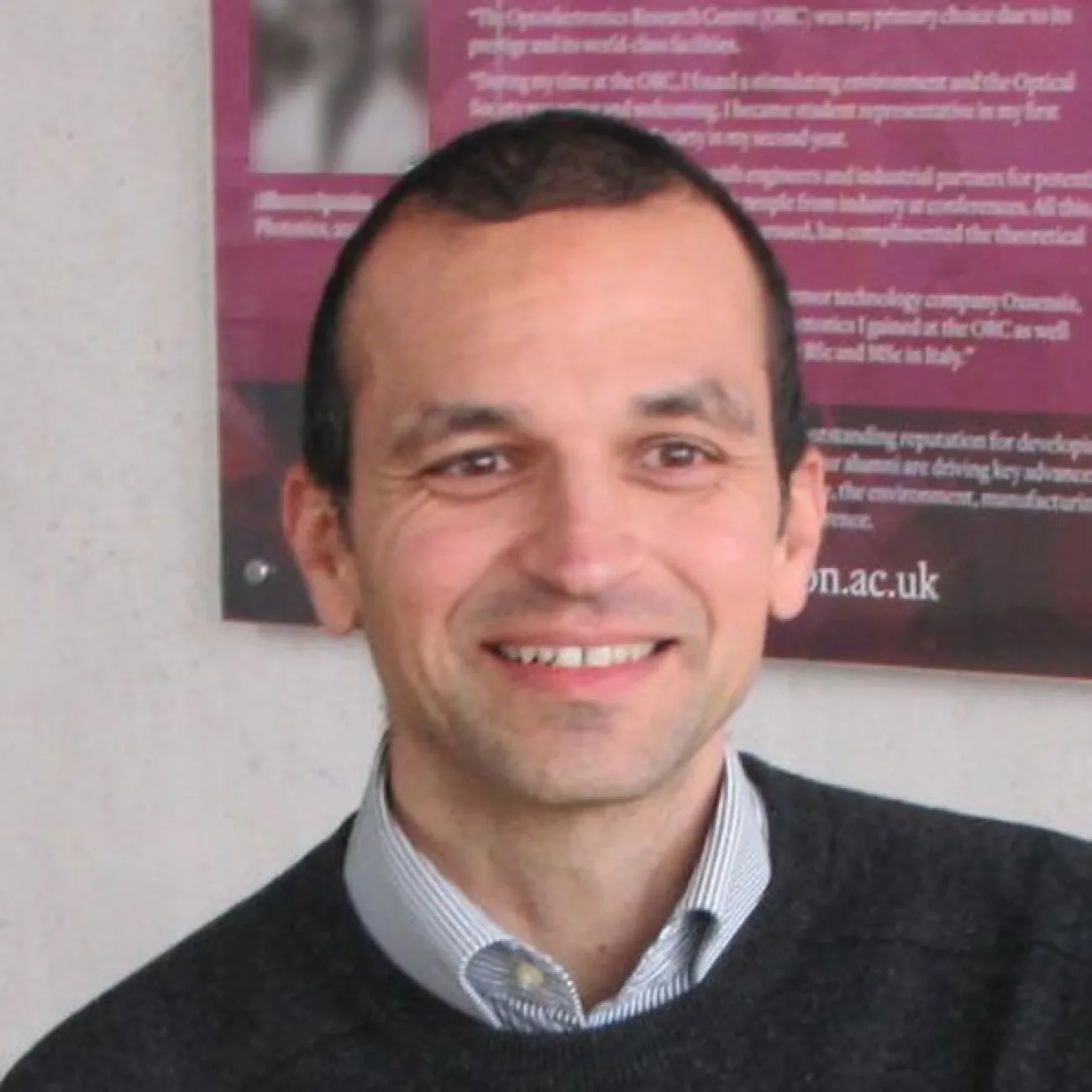
Professor Periklis Petropoulos is a Deputy Director at the Optoelectronic Research Centre (ORC), University of Southampton . His research focuses on Optical Communications , All-Optical Signal Processing , and Novel Fibre and Waveguide Technologies . He leads the Optical Fibre Communications Research Group and serves as Editor-in-Chief of IET Optoelectronics . Education: BSc in Electrical Engineering and Information Technology from University of Patras MSc in Communications Engineering from University of Manchester Institute of Science and Technology PhD in Optical Telecommunications from University of Southampton's ORC His work spans nonlinear photonics , integrated photonic circuits , and next-generation fiber communication systems . Current projects include EPSRC Programme Grant Airguide Photonics and the UK's National Dark Fibre Facility . Research themes include silicon nitride photonics , power-efficient multicore fiber amplifiers , and all-optical signal processing . His supervised projects demonstrate intermodal four-wave mixing for broadband wavelength conversion, energy-efficient fiber components , and hybrid optical transmission systems (including Power Over Fiber and Radio Over Fiber). He has secured over £33M in research funding from EPSRC , European Union , and industry partners. External roles include: Editor-in-Chief of IET Optoelectronics (2019–present) Speaker at international conferences (2022–2024) on topics like grating couplers , silicon nitride integration , and SDM amplifiers He leads Telecommunications Systems Lab and has published >570 papers across leading journals and conferences like ECOC and OFC . He has supervised 17 PhD students to completion.
Pasquale Scarlino is a Tenure Track Assistant Professor in the Institute of Physics at École Polytechnique Fédérale de Lausanne (EPFL), where he founded and leads the Hybrid Quantum Circuits (HQC) Laboratory. He holds a dual appointment with the School of Basic Sciences (SB) and the Physics Section (SB-SPH), conducting research at the intersection of semiconductor and superconducting quantum technologies. His laboratory develops hybrid quantum hardware for advanced quantum information processing. His educational background includes a Master's degree in Physics from the University of Salento (Italy, 2011), where he was a student of Scuola Superiore ISUFI, followed by a Ph.D. from TU Delft (2016) in the Spin Qubits group of Prof. L.M.K. Vandersypen at the Kavli Institute of Nanoscience-Qutech. His doctoral work focused on Si/SiGe spin qubits in collaboration with the M. Eriksson Group at Wisconsin University. Scarlino's research centers on experimental quantum physics using hybrid superconductor/semiconductor devices with electrostatically defined quantum dots coupled to high-impedance microwave resonators. He investigates light-matter interactions in unconventional regimes, quantum transport in low-dimensional systems, and spin/charge qubit implementations. His work aims to merge semiconductor and superconducting platforms to expand quantum information capabilities, with applications in quantum computing, quantum optics, and analog quantum simulation. Early career achievements include establishing the first coherent interface between superconducting and semiconducting quantum systems using high-impedance resonators. His publication record shows strong focus on microwave photon-mediated interactions between quantum systems, with recent work exploring quantum acoustics, topological band engineering, and criticality-enhanced sensing. The articles demonstrate increasing specialization in hybrid quantum hardware, with a shift toward germanium-based systems and advanced resonator designs in the latest publications. Scarlino has advised eleven Ph.D. students at EPFL and teaches courses including General Physics (Electromagnetism), Solid State Systems for Quantum Information, and Introduction to Quantum Science and Technology. His teaching emphasizes experimental quantum hardware approaches and critical assessment of quantum computing platforms. The Hybrid Quantum Circuits Laboratory operates within EPFL's Institute of Physics, utilizing state-of-the-art nanofabrication facilities and cryogenic measurement setups. The team collaborates extensively with leading quantum research groups worldwide, maintaining strong ties with previous institutions including ETH Zurich, TU Delft, and Microsoft Station Q Copenhagen.
Nicola Calabretta is a Full Professor in Electro-Optical Communication Systems and Senior Research Fellow at Eindhoven University of Technology (TU/e). His work focuses on smart optical networks, high-speed electronics, FPGA implementations for scheduling algorithms, and photonic integrated circuits. He holds a PhD from TU/e (2004) and previously conducted research at DTU Fotonik and the Sant'Anna School of Advanced Studies. His expertise spans optical signal processing, multi-level modulation formats, and applications in data center and metro networks. Key research areas include optical switching architectures (e.g., SOA-based switches), WDM systems, and low-latency interconnect networks. He has led projects like ADAPTOR (resource optimization), SmartTWO (future telecom technologies), and 5G-MOBIX (cross-border mobility). His courses include 'Optical Fibre Communication Technology' and 'Optical Interconnection Networks.' Collaborations involve institutions globally, with recent work emphasizing photonic integration for neural networks, ultra-fast switching, and edge computing. His contributions align with UN SDGs through sustainable telecom infrastructure advancements.
Mustapha C.E. Yagoub is a Full Professor at the School of Electrical Engineering and Computer Science, University of Ottawa, with over 500 publications in RF/microwave CAD, RFID systems, neural networks, and applied electromagnetics. He leads research in the ELEMENT Laboratory and RFM Research Group , focusing on wireless communication systems and nonlinear device modeling. PhD in Electronics (Institut National Polytechnique de Toulouse, 1994) Magister in Telecommunications (École Nationale Polytechnique d'Alger, 1987) Dipl.-Ing. in Electronics (École Nationale Polytechnique d'Alger, 1979) His research bridges Microwave Circuit Design with Artificial Intelligence , including applications in Energy Conservation and Telecommunication Systems . Key trends in his publications include hybrid modeling techniques combining Neural Networks with Computational Electromagnetics for optimizing Antenna Design and RF Components . He is a Senior Member of IEEE and licensed with the Professional Engineers of Ontario and Ordre des Ingénieurs du Québec . His lab teams focus on High-Tc Superconducting Devices and Directional Antenna Optimization for RFID networks.
John D. Cressler is a Regents Professor and Schlumberger Chair in Electronics at the Georgia Institute of Technology's School of Electrical and Computer Engineering. He earned his B.S. in Physics from Georgia Tech (1984) and Ph.D. in Applied Physics from Columbia University (1990). After pioneering SiGe research at IBM (1984-1992), he joined academia at Auburn University before moving to Georgia Tech in 2002. His research specializes in silicon-germanium heterojunction technology, with focuses on: RF/microwave/mm-wave circuits Radiation effects in electronics Cryogenic semiconductor behavior Device reliability physics Compact modeling for SiGe devices His 700+ publications demonstrate consistent innovation in SiGe HBT design, radiation-hardened circuits, and millimeter-wave systems. Recent work emphasizes radiation tolerance for space applications, high-frequency circuit optimization, and novel fabrication techniques. Major Awards: IEEE Fellow (2001) IEEE Leon K. Kirchmayer Graduate Teaching Award (2011) ONR Young Investigator Award (1994) IEEE Third Millennium Medal (2000) He leads Georgia Tech's SiGe research group with extensive industry collaborations and teaches courses including ECE 3040 (Microelectronic Circuits), ECE 6444 (SiGe Devices), and interdisciplinary courses on science/religion dialogue.
Audrius Dubietis serves as Professor and Lead research scientist at Vilnius University's Laser Research Center (LRC), Faculty of Physics. He currently directs the Excellence Center of Advanced Light Technologies, a major national initiative funded by the Ministry of Education, Science and Sports of Lithuania with a 5.5 million Euro budget (2023-2027), and leads the FEMTOLAMA project on high repetition rate femtosecond laser-matter interactions. Dubietis specializes in ultrafast nonlinear optics, with research spanning laser-matter interaction, femtosecond filamentation, and supercontinuum generation in solid-state media. His pioneering work on table-top optical parametric chirped pulse amplifiers has advanced the field over three decades. His theoretical framework for understanding light bullets in Kerr media (Physical Review Letters 112, 193901, 2014) represents a significant contribution to nonlinear optics. Current research focuses on high repetition rate supercontinuum generation using burst-mode femtosecond lasers, with particular emphasis on comparative studies across crystalline materials to optimize performance for specific applications. Analysis of his recent publication record reveals a strategic shift toward practical applications of supercontinuum sources, with increasing attention to thermal management in high repetition rate systems and development of robust, turnkey solutions for industrial and scientific use. His work bridges fundamental nonlinear optics with practical engineering considerations. National Science Prize (2004, 2019) Vilnius University Rectors prize for the best publication in physical sciences (2014) Vilnius University Rectors prize for scientific achievements (2009, 2018) Dubietis has supervised eight doctoral students through completion, with research spanning spatiotemporal light bullets, parametric interactions for ultrashort pulse generation, and supercontinuum generation in novel materials. His research program maintains strong international collaboration, particularly with Ecole Polytechnique (France), and includes significant funding from the Lithuanian Science Council. He serves on the editorial board of the Lithuanian Journal of Physics and was Lead guest editor for the Journal of the Optical Society of America B feature issue on Supercontinuum generation (2019). As a member of the Lithuanian Academy of Sciences since 2019, Dubietis plays a pivotal role in advancing laser science in Lithuania. He teaches core courses in Laser Physics (undergraduate), Nonlinear Optics (graduate), and Modern Optics and Spectroscopy (PhD program), while maintaining active engagement with the public through popular science lectures and his Lithuanian-language book 'Nuostabusis švytėjimas: padangių fizika be formulių' (2014).
Prof. Serkan Simsek is a Professor at the Department of Electronics and Communications Engineering, Faculty of Electrical and Electronics Engineering, Istanbul Technical University. He holds a PhD in Telecommunication Engineering from the same institution. His academic roles include serving as Vice Dean (2020-2023) and Program Coordinator of the ITU-NJIT Joint Degree Program. His research focuses on Optics, Photonics, Electromagnetics, and Microwave/Antenna Technologies. Education: PhD in Telecommunication Engineering (Istanbul Technical University, 2008), MSc in Electronics Engineering (Istanbul Technical University, 2003), and BSc in Electrical-Electronic Engineering (Istanbul University, 2001). Research interests span antenna design, electromagnetic bandgap structures, microwave imaging, and slow-wave structures. Notable projects include developing breast cancer imaging systems and optimizing antenna performance using metamaterials. He has been awarded the Leopold B. Felsen Award for Excellence in Electromagnetics (2009). His 14 advisees include students working on topics like 5G amplifiers, low-profile antennas, and ultrawideband arrays. Prof. Simsek contributes to academic administration and has coordinated multiple international joint degree programs. His lab focuses on advanced antenna systems and microwave engineering applications.
Emil Björnson is a Professor of Wireless Communications and Head of the Communication Systems Department at KTH Royal Institute of Technology since 2024. He received his Master of Science in Engineering Mathematics from Lund University (2007) and PhD in Telecommunications from KTH (2011). After postdoctoral work at SUPELEC, France (2012-2014), he held faculty positions at Linköping University (2014-2021) before returning to KTH in 2020. Research Focus: MIMO communications, reconfigurable intelligent surfaces, radio resource allocation, machine learning for communications, and energy efficiency Editorial Roles: Editor for multiple IEEE transactions and magazines His research has significantly advanced wireless communication technologies, particularly in Massive MIMO and cell-free systems. He has authored four textbooks, including Massive MIMO Networks (2017) and Introduction to Multiple Antenna Communications and Reconfigurable Surfaces (2024). Scientific awards include: IEEE Fellow Clarivate Highly Cited Researcher Wallenberg Academy Fellow Digital Futures Fellow Multiple IEEE and EURASIP awards (2014-2024)
Mathias FINK is a Professor at ESPCI Paris on the Georges Charpak chair. His research focuses on fundamental wave physics in complex media with major applications in medical imaging, telecommunications, and geophysics. He pioneered time-reversal mirrors for wave focusing and co-founded 6 technology companies. Key Institutions: ESPCI Paris, Collège de France Research Themes: Wave physics, time-reversal techniques, matrix imaging, metasurface design His work spans multi-echo wave systems , ultrasonic therapeutic devices , and adaptive electromagnetic communication systems . Recent publications emphasize 3D matrix imaging in biological tissues and space-time interface dynamics . Scientific recognition includes: First academic elected at Collège de France (2008) Over 400 peer-reviewed publications 70+ patents and 6 start-ups Collaborations extend to Institut des Hautes Études Scientifiques , Langevin Institute , and Hong Kong University of Science and Technology . His team's volcanic imaging work with seismic noise has revolutionized subterranean mapping.
Professor Stylianos P. Tsitsos is a distinguished academic at the Technological Educational Institute of Serres, Greece, where he serves in the Department of Informatics and Communications within the School of Technological Applications. With a career spanning over two decades in academia and industry, he has established himself as an expert in microwave engineering and telecommunications. His educational background includes a first-class Honors degree in Electrical Engineering from Democritus University of Thrace (1989), a Master's in Telecommunications and Digital Electronics from UMIST, UK (1991), and a PhD in Microwave Engineering from UMIST (1994). His research interests focus on Wireless Radiocommunications, Microwave Engineering, Telecommunication Networks, Numerical Methods in Microwave Devices, and Telecommunications Systems Simulation. Professor Tsitsos' publication record demonstrates consistent contributions to microwave filter design and analysis, with particular emphasis on ceramic monoblock filters for PCS and UMTS mobile communication systems. His work shows a progression from fundamental electromagnetic analysis techniques to practical filter design applications, reflecting both theoretical depth and engineering relevance in the telecommunications field. As a dedicated researcher, he has led multiple significant projects including the ARCHIMEDES II program focused on developing new methods for microwave filter analysis and design, and has collaborated with international organizations including TDK Corporation (Japan) and EPSRC (UK). Throughout his academic career, Professor Tsitsos has held significant administrative responsibilities, serving as Department Head from 2006-2010 and as Acting Director of the School of Technological Applications from 2009-2010, demonstrating his commitment to educational leadership alongside his research activities.
Francesco Prudenzano is a Full Professor at the Department of Electrical and Information Engineering (DEI), Polytechnic University of Bari, Italy. He leads research in photonics, microwave engineering, and electromagnetic compatibility, with a focus on mid-infrared optical fiber devices, laser design, and microwave antennas. His work spans theoretical modeling, fabrication, and application development in advanced photonic systems. University: Polytechnic University of Bari Department: Electrical and Information Engineering Research Group: MOE Group (Microwave and Optical Engineering) Research Interests: Prudenzano's research explores the design and optimization of optical fiber devices, microwave sensors, and electromagnetic systems. Key areas include mid-infrared laser development, additive manufacturing of antennas, and photonic sensors for composite materials. His work bridges material science, photonics, and electromagnetics to solve practical engineering challenges. Recent Publications (2024-2025): His articles highlight advancements in fluoride and chalcogenide fiber optics, Q-switched lasers, and 5G antenna technologies. Topics span mid-IR amplification, supercontinuum generation, and microwave applicators for medical use, reflecting his interdisciplinary approach. Laboratories: Research is conducted at the Electromagnetic Fields and Telecommunications laboratories in Bari and the "Polo Magna Grecia" facility in Taranto, focusing on device prototyping and electromagnetic modeling.