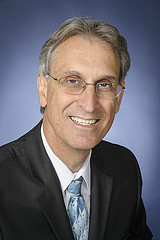
Tomohiro Suzuki is an Associate Professor at KU Leuven and Ghent University (UGent) , affiliated with the Department of Civil Engineering under the Faculty of Engineering Science (KU Leuven) and Faculty of Engineering and Architecture (UGent) . With 25 years of expertise in coastal engineering, he specializes in wave overtopping , wave-structure interactions , and Nature-Based Solutions for coastal management. Key research areas: Numerical Modeling (DualSPHysics, SWASH), Wave-Current-Vegetation Interaction , Coastal Flood Resilience Teaching roles: Project Hydraulic Engineering 3 , Hydraulic Structures , Hydrodynamics His recent projects include: INTEGRATOR (2024–2026): Integrated coastal hydrodynamics modeling Numerical Coastal Basin (2021–2025): Virtual testing for floating structures Wind Generation System (2025–2028): Fan Array Wind Tunnel for Coastal & Ocean Basin Publications focus on 3D wave-vegetation dynamics , SPH-based coastal simulations , and shallow foreshore resilience against extreme waves. No scientific awards are explicitly mentioned.
Thomas Lykke Andersen is an Associate Professor and Head of the Ocean and Coastal Engineering Research Group at Aalborg University's Department of the Built Environment within the Faculty of Engineering and Science. His work focuses on coastal engineering, wave energy systems, and physical modeling of marine structures. Key projects include the RESCUER initiative enhancing coastal resilience and leadership in the WaveLab facility. Research interests span breakwater design, wave-structure interactions, and hydraulic engineering. Notable contributions include advancements in wave separation algorithms (NL-SORS), stability analysis of rock armor systems, and offshore wind turbine foundation dynamics. His lab conducts large-scale physical experiments addressing coastal protection challenges. Publications emphasize wave dynamics, overtopping prediction, and innovative coastal infrastructure. Supervision includes one documented PhD student. Media engagements highlight contributions to coastal engineering solutions and university teaching methodologies during the pandemic.
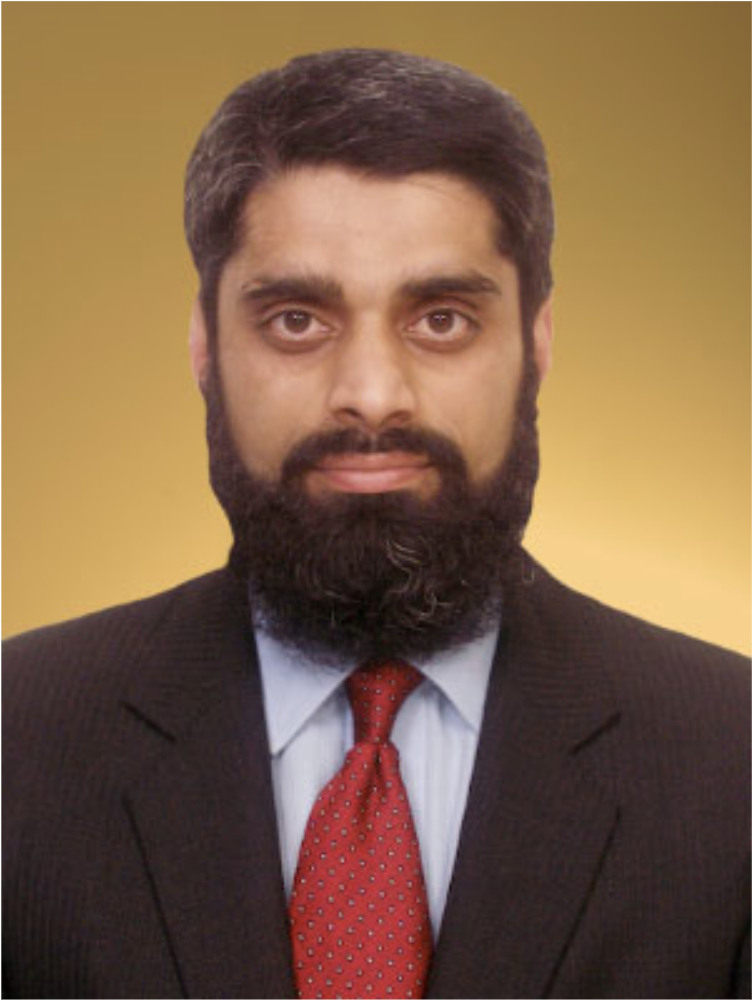
Dr. Muhammad Salman is an Associate Professor in the Department of Mechanical Engineering at Kennesaw State University (KSU), where he has served since 2012 after the merger of Southern Polytechnic State University into KSU. He holds a PhD in Mechanical Engineering from Georgia Institute of Technology (2012), an M.S. from Georgia Tech (2008), and prior degrees from the University of Engineering and Technology in Lahore, Pakistan, including a B.S. (1998) and M.S. (2003). He also completed M.S.-level courses in Mechatronics Engineering at TUHH, Germany (2005). His research focuses on biomechanics, particularly in dynamics and vibrations of human musculoskeletal systems, with an emphasis on non-invasive measurement techniques like surface wave and shear wave methods to assess muscle/tendon stiffness. He has developed cost-effective devices for stiffness quantification and published extensively in journals such as Journal of Biomechanics and Acoustical Society of America . Dr. Salman has received notable recognition, including the PhD Fulbright Scholarship (2006) , and has secured grants totaling over $500,000, including an NSF CAREER Award (though not funded) and OVPR grants for tendon stiffness research. His work involves collaborations with students on projects like motorcycle stability systems, muscle fatigue analysis, and biomedical sensor development. He teaches courses in dynamics, vibrations, thermodynamics, and design, and has mentored numerous undergraduates and graduates in research through programs like NCUR and GURC. His lab emphasizes experimental research, with a focus on biomechanical applications of vibration analysis and sensor technology. Recent projects include developing low-cost stiffness measurement tools and studying tendon behavior under fatigue. He actively participates in conferences such as ASME IMECE and the American Society of Biomechanics, showcasing innovations in both mechanical engineering and biomedical research.
Professor Deborah Greaves is a leading academic in Ocean Engineering at the University of Plymouth, where she holds the position of Professor in the School of Engineering, Computing and Mathematics. She is Director of the Supergen Offshore Renewable Energy (ORE) Hub and the Coastal, Ocean and Sediment Transport (COAST) Laboratory, and served as Head of School from 2017 to 2022. Her work is central to advancing offshore renewable energy in the UK and globally. Her research focuses on offshore and marine renewable energy, particularly wave and tidal technologies, wave-structure interactions, and the integration of physical and numerical modelling. She leads major collaborative projects including the Collaborative Computational Project in Wave Structure Interaction (CCP-WSI) and PRIMaRE, and has secured significant funding from EPSRC, EU Interreg, H2020, and InnovateUK. Her research supports the UN Sustainable Development Goals, especially those related to affordable and clean energy and climate action. The 15 most recent articles reflect a strong trend toward interdisciplinary research, combining engineering innovation with environmental sustainability, policy development, and public engagement. Her work spans fundamental hydrodynamics, technology development, commercialization challenges, and societal impact, with increasing emphasis on decarbonisation, net zero strategies, and inclusivity in engineering. Officer of the Order of the British Empire (OBE), 2018 Fellow of the Royal Academy of Engineering (FREng) Fellow of the Institution of Civil Engineers (FICE) Deborah leads a large team of researchers and PhD students, securing over £20 million in research funding. She is deeply involved in mentoring and outreach, particularly in promoting gender diversity in engineering through initiatives like WISE and Supergen ORE’s EDI programs. She has advised numerous PhD students and leads multidisciplinary teams across academia and industry. She directs the COAST Engineering Research Group and the COAST Laboratory, a state-of-the-art facility with wave basins and flumes for testing marine renewable technologies. She also leads the Supergen ORE Hub, a national consortium uniting universities and industry, and is instrumental in the development of the new Engineering and Design Facility at Plymouth, fostering interdisciplinary collaboration between engineering, computing, and design.
Pieter Rauwoens is a Professor at the Department of Civil Engineering within the Faculty of Engineering Technology at KU Leuven. His work focuses on coastal engineering, hydraulics, and sustainable material applications, particularly in dune dynamics and nature-based coastal defense systems. He leads multiple long-term projects and serves as promotor for interdisciplinary research initiatives. Coastal & Ocean Basin (COB) wind tunnel system development Sustainable sand management for hybrid dune-dike systems Vegatation impact on coastal dune stability Supplementary cementitious materials from recycled aggregates His research integrates field monitoring, numerical simulations, and laboratory experiments to address coastal resilience challenges under climate change. Key methodologies include CFD modeling, sediment transport analysis, and material reactivity studies. Current research trends emphasize: Hybrid blue-grey coastal defense systems Mechanochemical activation of recycled materials Wave-structure interactions around monopiles Aeolian transport dynamics in vegetated dunes Sustainable sediment management Climate adaptation infrastructure
Wenbo Duan is a Senior Lecturer and MSc Programme Leader in Mechanical Engineering at the University of Hertfordshire. He holds a PhD from the University of Manchester (2010) and previously served at Brunel University London as a Research Fellow, Senior Research Fellow, and Technical Advisor. His research focuses on advanced non-destructive testing techniques, including ultrasonic and guided wave methods, finite/spectral element modeling, and acoustic communication in industrial pipelines. He specializes in numerical simulations of wave propagation in complex media, defect detection, and signal processing innovations. Education: PhD in Mechanical Engineering, University of Manchester (2010) MSc in Engineering BSc (Distinguished) in Engineering Research Interests: Ultrasonic Non-Destructive Testing (NDT) Guided Wave Defect Detection Piezoelectric-Structure Coupling Acoustic Communication in Pipes Multiphysics Spectral Element Modeling Fluid-Structure Interaction Analysis Key Projects (2021–2025): "Noise Cancelling for Powered Air Purifying Respirators" (PI) "Guided Wave Inspection in Fluid-Filled Wells" (PI) "Assessing the Impact of Strain on Temperature Readings" (Co-Investigator) Advisees & Grants: No specific advisees listed. Active in securing research funding for NDT and acoustics-related projects. Labs & Teams: Involved in the Centre for Engineering Research at the University of Hertfordshire, focusing on computational mechanics and industrial applications.
Mauro Bonfanti is a Fixed-term Assistant Professor at the Department of Mechanical and Aerospace Engineering (DIMEAS) at Politecnico di Torino, Italy. His academic work focuses on wave energy conversion systems, mechatronics, and applied mechanics within the field of industrial and information engineering. Dr. Bonfanti's primary research interests include wave energy conversion systems, system identification, optimal control, mechatronics, and renewable energy systems. His work centers on developing advanced control strategies for wave energy converters, with particular emphasis on improving energy extraction efficiency through innovative mechanical designs and control algorithms. He has made significant contributions to the understanding of wave-structure interactions, hydrodynamic modeling of floating bodies, and optimization of wave energy converter systems under various sea conditions. His research bridges theoretical modeling with practical implementation, often involving high-fidelity numerical simulations validated through experimental testing. His publication record demonstrates a strong focus on advancing wave energy conversion technology, with particular emphasis on control systems, hydrodynamic modeling, and optimization techniques. The research shows progression from fundamental modeling approaches to increasingly sophisticated control strategies and system integration. Recent work has expanded to include hybrid renewable energy systems that combine wave and wind energy technologies. Dr. Bonfanti serves as a Scientific Responsible for several research projects including OCEANGLIDE, AQUALEV, and WISE, which focus on innovative wave energy conversion technologies. He holds multiple patents related to wave energy conversion systems, including the WISE (Water-air Injectable Swath Elevator) and AQUALEV magnetic support systems. He actively supervises PhD students including Alessandro Brusasco, Matteo Mastorakis, Francesco Balestrieri, and Domenico Edoardo Sfasciamuro, guiding research in sustainable materials, mechanical engineering, and wave energy conversion systems. His teaching responsibilities include courses on System Identification and Optimal Control of Wave Energy Conversion Systems, as well as Mechatronics across multiple academic years. Dr. Bonfanti is a member of the Mechatronics and Servosystems research group at DIMEAS, where he collaborates on projects related to marine renewable energy systems and advanced control technologies.
Herbert Steinrück is an Associate Professor at Vienna University of Technology (TU Wien) since 1997, with multiple affiliations across the university's engineering departments. His primary appointments include the Institute of Fluid Mechanics and Heat Transfer (E307), Institute for Analysis and Scientific Computing (E322), and Institute of Engineering Design and Product Development (E101). He leads research in the Computational Fluid Mechanics research area (E322-02). Steinrück completed his Dipl.-Ing. in Mathematics at TU Wien in 1983, followed by his Dr. techn. degree between 1983-1985. He served as a Research Assistant from 1983-1989 at the Institute of Fluid Mechanics and Heat Transfer, then worked as a University Assistant from 1992-1997 before achieving Habilitation in 1991. His international experience includes a Visiting Scientist position at IBM Thomas Watson Research Center in 1989-1990. His research focuses on Computational Fluid Dynamics, Wave Dynamics, and Combustion Engineering . Steinrück's work spans rotary and gravity waves in cylindrical containers, flame propagation in confined spaces, dust explosions, and flow-induced vibrations. His approach combines experimental validation with asymptotic analysis and numerical simulation, particularly examining stability characteristics and excitation mechanisms in complex fluid systems. Recent work shows increasing focus on multiphysics problems involving fluid-structure interaction. Analysis of his 15 most recent publications reveals consistent work in wave dynamics (particularly rotary waves in cylindrical containers), with expanding applications to combustion phenomena and structural interactions. His research demonstrates strong continuity in fundamental fluid mechanics while adapting to address practical engineering challenges in compressor design, explosion safety, and aeroelasticity. Steinrück has mentored numerous graduate students through thesis supervision, with documented advisees working on topics including hydroelastic gear lubrication, circulating condensate films, dental air turbines, and flow-induced vibrations in U-beams. His collaborative work extends to conference organization, including editing proceedings for the EFRC Conference series.
Pierrick Lotton serves as a CNRS Research Director at Le Mans University's Institute of Acoustics (LAUM), a joint research unit between CNRS and the university. He leads critical work within LAUM's Transducers team, focusing on fundamental and applied research in electroacoustics and thermoacoustics. His institutional affiliation places him at France's premier acoustics research laboratory, which maintains extensive facilities for acoustic measurements, ultrasonic experimentation, and transducer development across multiple specialized domains including materials science, opto-acoustics, and bioacoustics. Lotton's research program centers on two interconnected pillars: electroacoustics and thermoacoustics. His electroacoustic investigations pioneer advanced modeling, development, and characterization of audio transducers with particular emphasis on nonlinear behaviors in loudspeakers and electric guitar pickups. Simultaneously, his thermoacoustic research explores acoustic refrigeration systems, complex couplings between acoustic and thermal energy fields, and transient nonlinear phenomena. This dual focus enables innovative cross-pollination between audio engineering and thermal physics, driving advancements in both fundamental understanding and practical applications of acoustic energy conversion. Analysis of his 2019-2024 publications reveals a consistent trajectory in transducer physics, particularly MEMS-based piezoelectric speakers, voice coil dynamics in magnetic environments, and digital acoustic projection systems. His work demonstrates exceptional methodological diversity spanning analytical modeling, experimental validation, and educational innovation. Notable contributions include the ASKNOWN project's open-access acoustics courseware and breakthroughs in understanding transducer nonlinearities for both consumer audio and specialized applications like fish sound localization. No major scientific awards were documented in the available institutional materials, though his sustained publication record in high-impact journals and presentations at European Acoustics Association forums indicate significant peer recognition. His collaborative research network spans France, Germany, Italy, and the Czech Republic, reflecting strong international engagement. Lotton's academic supervision activities aren't explicitly detailed, but his educational initiatives like the ASKNOWN project demonstrate commitment to pedagogy. His research is supported through LAUM's institutional framework and collaborative projects including European initiatives and ANR-funded programs. Current work appears concentrated on advancing MEMS transducer technology, refining thermoacoustic cooling systems, and developing next-generation educational resources for acoustics. As a core contributor to LAUM's Transducers team, Lotton operates within one of Europe's leading acoustics laboratories. His current projects align with LAUM's strategic focus on transducer innovation and thermoacoustic applications, positioning him at the forefront of both theoretical acoustics research and practical engineering solutions. The laboratory's comprehensive infrastructure supports his work from fundamental wave propagation studies to applied device development.
Professor Shiqiang Yan is an ocean engineering expert at City St George's, University of London , with over 25 years of academic experience. He obtained his PhD in Hydraulics (2007) from City University London, following MSc (2004) and BEng (1999) from Dalian Maritime University. His career includes Postdoctoral Research Fellow (2007-2012) and Lecturer (2012–present) positions at City University. Specializes in Wave-Structure Interaction and Extreme Sea Condition Modeling Developed QALE-FEM and ISPH-GNN hybrid numerical methods Research spans Wave Energy , Offshore Wind , and Marine Pollution Control His 15 most recent publications (2021-2025) demonstrate expertise in Wave-Structure Interaction (40% of articles), Hybrid Modeling (30%), and Renewable Energy Systems (25%). Key subfields include Wave-WEC Coupling , Ice Floe Dynamics , and Multi-Scale Hydrodynamic Modeling . He has advised PhD student Hao Yang (2013–present) on submerged oil spill research. Professional memberships include the International Society of Ocean & Polar Engineering (2013–present).
Univ.-Prof. Dr.-Ing. habil. Sven Klinkel is a Professor at RWTH Aachen University , affiliated with the College of Civil Engineering and the Department of Structural Mechanics and Structural Dynamics . He holds leadership roles as Chair of the Senior Council, Faculty Council, and Doctoral Committee. Current research focuses on structural engineering , computational mechanics , and seismic analysis . Key projects include carbon-reinforced concrete structures , isogeometric analysis , and digital fabrication . Recent publications address nonlinear systems , topology optimization , and naturally shaped timber . Contact: dekanat@fb3.rwth-aachen.de
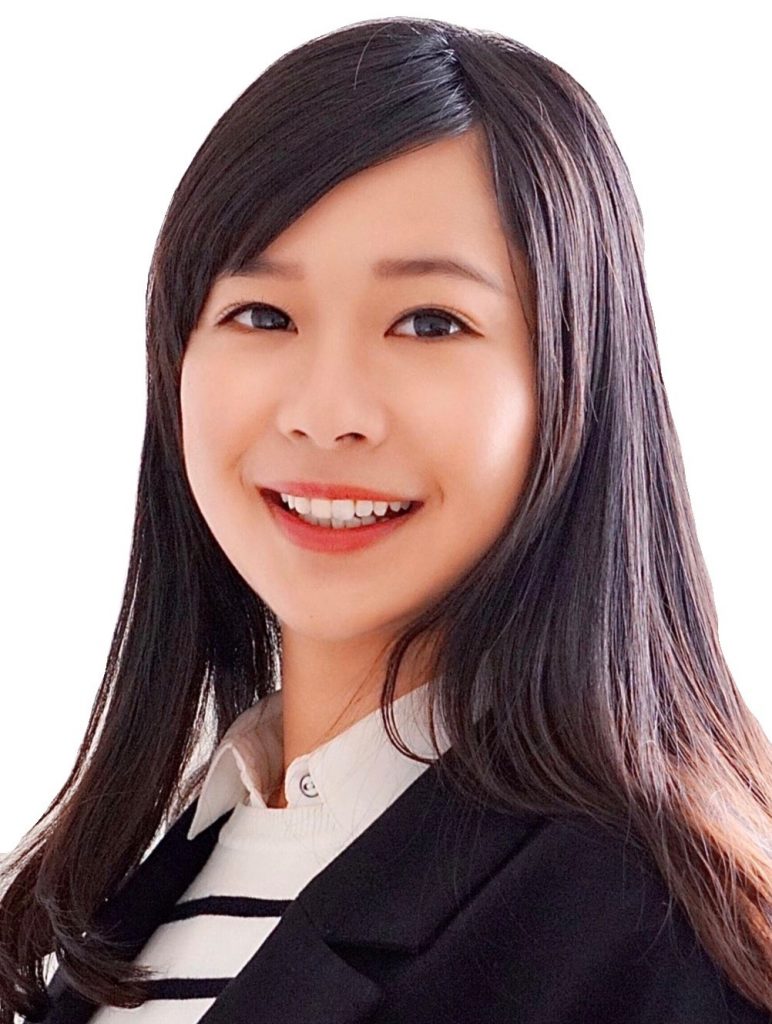
Dr. Li Yuzhu is an Assistant Professor in the Department of Civil and Environmental Engineering at the National University of Singapore (NUS). Her expertise lies in coastal engineering with a focus on computational fluid dynamics (CFD), fluid-structure interaction, and sediment transport. She has held prestigious fellowships including the Humboldt Research Fellowship and Marie-Curie & H.C. Ørsted Postdoc Fellowship. She completed a PhD in Offshore Engineering from the University of Stavanger (2019), an M.Eng in Ocean and Naval Architecture from Memorial University (2016), and dual bachelor's degrees in Ocean Engineering and English Literature from Chinese institutions (2013). Her research addresses critical challenges in coastal resilience, including wave-structure interactions, scour prevention, and turbulence modelling. She serves as Associate Editor for the Journal of Ocean Engineering and Marine Energy and chairs the Technical Committee on Climate Change at the Institution of Engineers, Singapore. Recent work focuses on biofilm-encrusted microplastics, tsunami-induced scour, and energy harvesting via elastic structures. Her publications span 20+ peer-reviewed articles in top journals like Coastal Engineering and Journal of Fluid Mechanics.
Shahram Pezeshk is the Chair and Emison Professor of Civil Engineering at The University of Memphis, affiliated with the Herff College of Engineering. His research focuses on engineering seismology, earthquake engineering, ground motion prediction, and structural optimization. He holds prestigious awards including the 2014 Herff College Outstanding Research Award and the Emison Professorship. Education: B.S., Civil Engineering, University of Illinois, Urbana-Champaign (1982) M.S., Civil Engineering, University of California, Berkeley (1983) Ph.D., Civil Engineering, University of Illinois, Urbana-Champaign (1989) Research Interests: Dr. Pezeshk's work spans engineering seismology and seismic hazard analysis, including ground motion prediction equations (GMPEs) used in USGS hazard maps. He also explores structural optimization and probabilistic seismic design. His research has been applied to projects like the 2014 NSHMs and LNG tank station hazard analysis. Grants & Awards: Recipient of multiple research awards from the Herff College and University of Memphis Featured Engineer (2002) and Don P. Smith Professorship (1999-2002) Listed in Who's Who in Science and Engineering Advising & Teams: Dr. Pezeshk supervises a diverse research team, including doctoral students (e.g., Nima Nazemi, Niloufar Alidadi) and postdoctoral researchers (e.g., Behrooz Tavakoli). His lab focuses on seismic hazard assessment, ground motion modeling, and structural resilience.
Adi Kurniawan is a Research Fellow at the University of Western Australia (UWA) in the School of Earth and Oceans, affiliated with the Marine Energy Research Australia (MERA) and the Great Southern Marine Research Facility (GSMRF). His research focuses on wave energy conversion, wave-structure interactions, and multi-objective optimization. He holds a PhD in Marine Technology from NTNU and has held roles at Aalborg University and the University of Plymouth. Kurniawan co-authored Ocean Waves and Oscillating Systems and contributes to industry standards (Standards Australia Committee EL-066) and journal editing (Journal of Offshore Mechanics and Arctic Engineering). Research Interests: Wave energy converter (WEC) design and optimization Nonlinear wave dynamics and numerical modeling Multi-objective optimization of wave farms Parametric resonance mitigation in WECs Teaching: Previously taught OCEN4007 Renewable Ocean Energy. Active in the Oceans Graduate School, covering oceanography, hydrodynamics, and marine geoscience. Collaborations: Works with industry on sponsored projects, including wave energy device modeling and power prediction. Part of the UN SDGs contributing to sustainable energy solutions (SDG 7, 13, 14). Grants: Lead investigator on projects like 'Advancing ocean renewable energy systems through physics and machine learning' and 'WaveX Albany', totaling over $2M in funding. Projects emphasize scalability, cost reduction, and environmental impact assessments. Labs/Teams: Based at the GSMRF in Albany, collaborating with international partners on WEC testing and deployment strategies.
Christine Baker is an Assistant Professor in Civil & Environmental Engineering at Stanford University , part of the School of Engineering . She leads the Environmental Fluid Mechanics Lab , focusing on coastal processes, wave dynamics, and climate change impacts. Her research explores nearshore currents, sediment transport, and coastal hazards like rip currents, using tools such as LiDAR, 3D modeling, and a custom wave tank (11m x 5m) to simulate multidirectional waves. Her work addresses how rising sea levels and extreme storms reshape coastlines, emphasizing interdisciplinary approaches to coastal ecosystems, public health, and infrastructure resilience. She collaborates with federal agencies like the Army Corps of Engineers to improve predictive models for coastal management. Dr. Baker prioritizes equitable student admission and fosters a lab environment centered on mental health and diversity. Key research themes include surfzone eddies, rip current dynamics, and dune erosion during storms. Her studies integrate field measurements (e.g., LiDAR for dune evolution) with experimental and numerical models to enhance understanding of coastal processes. Labs/Teams: Environmental Fluid Mechanics Lab (wave tank experiments) Future Work: Interdisciplinary projects on coastal ecosystems and public health impacts