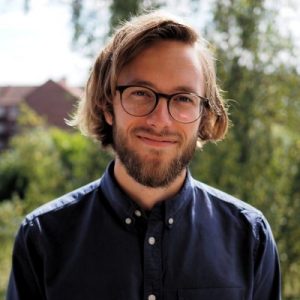
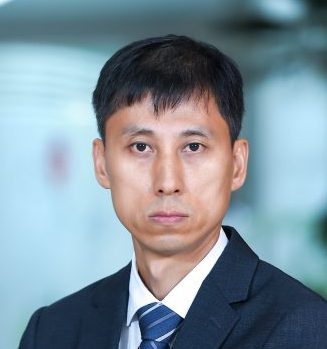
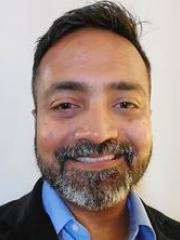
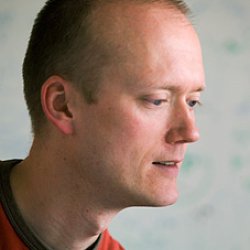
Ayhan Demircan is an Adjunct Professor at the Leibniz School of Optics and Photonics in Leibniz University Hannover. He leads the Micro and Nano Photonics task group and contributes to institutions including the Institute of Quantum Optics , Ultrafast Laser Laboratory , and Hannover Centre for Optical Technologies (HOT) . His work spans photonics, quantum optics, and nonlinear dynamics, with applications in terahertz technology, soliton physics, and optical modeling. Research Interests: Photonics, quantum optics, terahertz radiation, soliton dynamics, nanophotonics, and computational modeling of optical systems. Key Institutions: Leibniz School of Optics and Photonics, Institute of Quantum Optics, HOT, and PhoenixD Cluster of Excellence. Technical Expertise: Develops Python-based tools for nonlinear Schrödinger equations, optical parametric oscillators, and ultrafast laser systems. Contact: demircan@iqo.uni-hannover.de
Jonas L. Juul is an Assistant Professor in the Computer Science Department at the IT University of Copenhagen . With a background in network science and complex systems, he employs statistical methods, mathematical modeling, and computer simulations to study social networks, spreading processes, and human behavior. Focus areas include: information diffusion in social networks Disease spread mitigation in human populations Interdisciplinary collaboration with medical doctors, economists, and computer scientists Recent research highlights include improving statistical models for pandemic forecasting through the InForM project funded by the Novo Nordisk Foundation , and groundbreaking work on contact tracing optimization and information cascade dynamics. Notable recognitions: 2025 H.C. Ørsted Research Talent Prize 2024 Novo Nordisk Foundation Data Science Emerging Investigator Grant 2025 Young Academy membership He has contributed to mathematical modeling efforts during Denmark's COVID-19 reopening in 2020 and maintains active collaborations with institutions including Cornell University , Technical University of Denmark , and Niels Bohr Institute .
Dr. Tae Yeon Kim is an Associate Professor in the Department of Civil and Environmental Engineering at Khalifa University . He holds affiliations with the Center for Cyber-Physical Systems (C2PS) , Emirates Nuclear Technology Center (ENTC) , and the Advanced Digital & Additive Manufacturing (ADAM) Group . His academic journey includes postdoctoral/research roles at McGill University and University of Washington , along with industrial experience at Samsung Electronics . PhD, Civil and Environmental Engineering, Duke University (2007) MSc, Mathematics, Yonsei University (2001) BSc, Mathematics, Hannam University (1998) Dr. Kim specializes in computational mechanics and additive manufacturing of cementitious materials , focusing on: Non-destructive evaluation of cementitious materials and composites Finite element/meshfree methods for solid/fluid mechanics Durability/strength of micro/nano-reinforced concrete Thermo-mechanical tire-pavement interactions 3D printing applications in extreme UAE climate conditions His funded research includes projects on: Nonlinear solitary wave sensors for concrete strength assessment Temperature-dependent skid resistance modeling for UAE asphalt pavements Optimization of micro/nano reinforcements in cementitious materials 3D printed concrete infrastructure design
Professor Anand Veeraragavan is a leading expert in hypersonics and combustion at the University of Queensland's School of Mechanical and Mining Engineering. As Centre Director of the Centre for Hypersonics and Associate Editor of the AIAA Journal of Spacecraft and Rockets, he drives international research initiatives and technical standards. B.Tech (IIT-Madras), MS/PhD (University of Maryland) Co-Director, Centre for Hypersonics Mid-Career Advance Queensland Research Fellow (2017-2020) His research spans supersonic combustion of hydrocarbons, hypersonic aerothermodynamics , advanced optical diagnostics (PLIF, FLDI), and microcombustion power systems . Current projects focus on Boundary Layer Transition (BOLT II) simulations and scramjet cavity optimization for supersonic combustion. Recent publications emphasize fuel injection dynamics in hypersonic flows, cavity flameholding mechanisms, and thermal management for scramjets. His team develops 3D numerical models and experimental diagnostics for shock-turbulence interactions. Best Thesis Award, University of Maryland (2009) Associate Editor, AIAA Journal of Spacecraft and Rockets (2021-present) Advance Queensland Mid-Career Fellowship (2017-2020) Supervising PhD researchers on topics including cavity flame holders, hypersonic boundary layer transition, and turbulent transport mechanisms. Collaborations with UQ's Centre for Hypersonics, MIT, and GE Energy inform his work.
Prof. Dr. Jürgen Schnack is a theoretical physicist at the Faculty of Physics, Bielefeld University , where he has served since 2007. His academic career includes leadership roles as Vice Dean (2015-2017) and Dean (2017-2019) of the Faculty of Physics. He is a member of the German Physical Society (DPG) , American Physical Society (APS) , and other academic societies. Education: PhD in Physics (1996, Technical University of Darmstadt & GSI), Habilitation (2001, University of Osnabrück) Research: Focus on quantum spin systems, magnetic molecules, frustration effects, and carbon nanomembranes. His work explores decoherence, thermodynamics in non-equilibrium systems, and magnetocaloric effects. Grants: Recipient of projects from the German Research Foundation (FOR 2692, others) and the European Union (e.g., molecule-based magneto/electro/mechano-calorics). Awards: 2002 Hans Mühlenhoff Prize for habilitation; 2006 Fellow of the International Center for Transdisciplinary Sciences, International University Bremen. Advising: Chaired a PhD program with 11 students (2001-2006). Publications: Over 100 peer-reviewed articles in journals like Physical Review Letters , Journal of the American Chemical Society , and Inorganic Chemistry , focusing on frustrated quantum magnets, spin dynamics, and molecular magnetism. Labs/Teams: Leads the Condensed Matter Theory Working Group at Bielefeld University and collaborates with international institutions like Ames Laboratory and INT Seattle.
Professor S. Jon Chapman is a faculty member at the Mathematical Institute, University of Oxford, holding the position of Professor of Mathematics and its Applications. He is affiliated with the Oxford Centre for Industrial and Applied Mathematics research group. His educational background includes a DPhil, MA, and BA. Research interests span diverse areas of applied mathematics and scientific modeling: Industrial mathematics and mathematical modeling Partial differential equations and asymptotic methods Fluid dynamics and turbulence theory Biophysical applications including tumor growth and tissue modeling Electromagnetic scattering and superconductivity Materials science and energy systems Publication analysis reveals two primary trends: Recent work (2025) focuses on electrochemical systems (battery modeling, gas-induced bulging) and biological applications (organoid models). Earlier influential publications established expertise in pattern formation, fluid dynamics (ship waves, spiral waves), and transport phenomena in biological systems. Mathematical techniques consistently feature multiscale analysis, asymptotic methods, and nonlinear modeling. Awards and honors recognizing scholarly contributions: Naylor Prize (2015) Julian Cole Prize (2002) Whitehead Prize (1998) Richard C. DiPrima Prize (1994) Johnson Mathematical Prize (1992) No information is available regarding student advising, grants, or laboratory affiliations.
Eline Le Breton is a researcher in geophysics and tectonics with affiliations to Universität Potsdam and earlier institutions like Université de Rennes 1. Her work focuses on lithospheric deformation, plate kinematics, and seismic hazard assessment across diverse regions including the Mediterranean, Andes, and Atlantic Ocean. Research interests include: Crust-mantle decoupling during subduction Extensional tectonics at oceanic transform faults 3D seismic tomography of back-arc basins Lithospheric heterogeneity in collision zones Tectono-sedimentary evolution of Tethyan margins Her recent publications analyze Adriatic plate motion, Alpine lithospheric structure, and Andean shortening mechanisms. She employs field studies, seismic inversion, and geodynamic modeling to investigate fault reactivation and mantle processes. Collaborations span international institutions, including participation in the DFG Priority Program "Mountain Building Processes in Four Dimensions (MB-4D)."
Associate Professor Rebecca Burton is a cardiac electrophysiologist in the Department of Pharmacology at the University of Oxford's Medical Sciences Division. Since completing her DPhil in 2006, she has led research on cardiac arrhythmias with focus on lysosomal calcium signaling and hydroxychloroquine's effects on heart rhythm. Her group of approximately 10 researchers employs novel imaging methods and traditional pharmacology techniques to study cardiac function. Her research interests center on cardiac arrhythmia mechanisms, particularly the role of lysosomal calcium stores in atrial fibrillation. She investigates cAMP-Ca 2+ cross talk in atrial nanodomains, IP3 receptor signaling , and acidic organelle function in cardiomyocytes. Her work bridges basic science with translational applications through collaborations with clinicians across disciplines. Her 15 most recent publications (2022-2025) demonstrate consistent focus on lysosomal calcium signaling in cardiac rhythm regulation, with particular emphasis on atrial-specific mechanisms. Key themes include compartmentalized cAMP signaling, NAADP-mediated calcium release, and the role of endolysosomal networks in atrial fibrillation pathophysiology. Scientific recognition includes: Winston Churchill Medal for contributions to Science and Technology (2015-2016) Sir Henry Dale Fellowship supporting her ambitious interdisciplinary research Beyond research, Burton serves in teaching roles including examination setting and marking, provides pastoral care at her college, and actively engages in public outreach through events like the Science Museum Lates. She has advocated for improved career pathways for early-career researchers and greater equality of opportunity in academia. Her laboratory specializes in advanced cardiac optical mapping, lysosomal calcium imaging, and multi-disciplinary approaches to studying the neuro-cardiac axis, with particular focus on how sympathetic neuronal activity affects cardiac conduction and arrhythmia susceptibility.
Dr. Lauren Stewart serves as Associate Professor and Director of the Structural Engineering and Materials Laboratory (SEML) at Georgia Tech's School of Civil and Environmental Engineering. She holds the Williams Family Professorship and serves as Associate Chair for Graduate Programs. Her leadership encompasses a 18,000-square-foot facility housing blast, shock, and impact research capabilities with specialized equipment including servo-controlled hydraulic actuators and overhead cranes. Education: B.S. in Structural Engineering, University of California, San Diego (2004) Ph.D. in Structural Engineering, University of California, San Diego (2010) Dr. Stewart's research pioneers experimental methods for structural response to extreme hazards, with national recognition as one of the top blast researchers in the US. Her work spans blast engineering (steel columns, CLT panels, UHPC systems), mechanical shock (ROOSTER apparatus development), seismic resilience , and infrastructure durability (ASR mitigation, concrete preservation). Current projects address ballistic timber applications, UHPC retrofits, and blast-resistant construction with military relevance. Her interdisciplinary approach integrates computational mechanics with large-scale physical testing. Her research portfolio demonstrates consistent focus on protective structures and infrastructure resilience, with recent publications emphasizing timber-based ballistic systems, ASR damage detection, and UHPC applications. The work bridges military needs (CLT for temporary construction) and civilian infrastructure challenges (bridge deck longevity). Scientific Awards: National Defense Science and Engineering Graduate Fellow 2017 Rising Star in Structural Engineering CEE Excellence in Research Program Development Award (2017) NSF/NDSEG Fellowship mentor for students Dr. Stewart actively mentors military-affiliated scholars, with advisees including LTC Kate Sanborn (first woman to lead USACE Hawaii District) and LTC Marc Sanborn. Her research program has secured over $773k in recent grants including Wood Innovations Grants ($200k+) for CLT military applications and GDOT contracts for concrete durability. She directs the CEE London program taking students to structural landmarks in London, Edinburgh, and Paris. As SEML Director, she oversees Georgia Tech's blast testing capabilities including the Blast, Shock, and Impact Laboratory. Her team collaborates with USACE, ERDC, West Point, and ARL on force protection research, with recent projects focused on rapid-deployment timber structures and high-g shock measurement systems.
Dr Richard Collins is a Senior Lecturer in Water Engineering at the University of Sheffield , affiliated with the School of Mechanical, Aerospace and Civil Engineering. His research focuses on hydraulic transients , pipeline integrity , and smart water infrastructure . Graduated with an Aerospace Engineering degree (2005) and PhD in Materials and Mechanical Engineering (2009) Current research explores pressure transients , leak detection , and autonomous robotic systems for pipeline inspection Projects include fatigue analysis , biofilm mobilisation , and ultrasound-based pipe assessment His publications emphasize cast iron pipe fatigue , acoustic leak detection , and transient-induced contamination . Funded by RCUK and Datatecnics , his work bridges mechanical engineering and civil infrastructure challenges.
Professor Kirill V Horoshenkov (FREng) is a leading academic at the University of Sheffield , holding a Personal Chair in Acoustics within the School of Mechanical, Aerospace and Civil Engineering . With a MEng in Electro-Acoustics and Ultrasonic Engineering from Moscow University and a PhD in Computational and Experimental Acoustics from the University of Bradford, he transitioned to Sheffield in 2013 after a distinguished career at Bradford. Acoustic sensors for water infrastructure Physical acoustics and wave propagation Acoustic material characterization Pipe condition monitoring systems Research Focus : Horoshenkov's work bridges acoustic engineering with water industry applications , developing innovative solutions for pipeline diagnostics and monitoring. His team has pioneered acoustic vector receivers , MEMS hydrophones , and Bayesian acoustic models for material analysis. Notable projects include the Pipebots Programme Grant and EPSRC Acoustics Network . Scientific Leadership : A Fellow of the Royal Academy of Engineering, he serves as Editor-in-Chief of the Nature Portfolio Journal npj Acoustics . His research has yielded 12 patents and over 200 publications , including commercialization through spin-offs like Acoutechs Limited (licensed to Armacell) and Acoustic Sensing Technology Limited .
Dr. Ravindra Jayaratne is a Reader in Coastal Engineering at the University of East London , affiliated with the School of Architecture, Computing and Engineering and Department of Engineering & Construction . With over 20 years of research experience, he specializes in modelling sediment transport processes , tsunamis , storm surges , extreme waves , and glacier lake outburst floods (GLOF) . Qualifications: Doctor of Engineering (Civil Engineering), Master of Engineering (Civil Engineering), BSc, PG Cert Administrative Roles: BSc Civil Engineering Programme Leader (2011-2017), REF2021 Impact Champion, Link Tutor for multiple countries Collaborations: Academic and engineering partners in Japan, UK, Canada, Mexico, Iran, Sri Lanka, Vietnam, Indonesia Research Interests focus on coastal engineering , wave hydrodynamics , wave-structure interaction , and disaster prevention mechanisms . His work integrates field data from post-disaster surveys in Thailand, Sri Lanka, Tanzania, Japan, and the UK with numerical and laboratory models to develop both soft engineering solutions (management strategies, education) and hard engineering solutions (predictive tools, design guidelines) for coastal resilience. Recent Publications (2025-2018) examine: Flood risk and microplastic pollution in Indonesia and the Thames Scour mechanisms around coastal structures under extreme waves Community engagement in disaster preparedness across Japan and England Beach morphological changes and sediment transport dynamics Coastal structure stability against tsunami impacts Scientific Recognition includes: Fellow of the Higher Education Academy (FHEA) Over £182,000 in external grants from NERC, GCRF, JSPS, Waseda University, and others £103,500 in internal grants at UEL 100+ peer-reviewed publications and editorial roles Academic Leadership involves: Supervising 2 PhD students and mentoring 3 civil engineering projects Contributing to REF2014 and REF2021 submissions Leading the "Flood Risk Modelling and Mapping" research team since 2017 External examiner roles at University of Plymouth Associate Editor at Coastal Engineering Journal , Taylor & Francis
Associate Professor Sudhir Gai serves as an Honorary Associate Professor at UNSW Canberra within the School of Engineering & Technology. With a distinguished career spanning over five decades, Professor Gai has established himself as a leading authority in high-speed aerodynamics, specializing in hypersonic and supersonic flow phenomena. His extensive publication record from 1969 through 2025 demonstrates sustained research excellence in shock wave/boundary layer interactions, flow separation mechanisms, and high-enthalpy flow dynamics. Professor Gai's research focuses on the complex fluid dynamics of high-speed flows, with particular emphasis on shock wave/boundary layer interactions, separation phenomena in hypersonic and supersonic regimes, and the effects of high-enthalpy conditions on aerodynamic performance. His work investigates flow behavior over various geometries including flat plates, compression corners, cavities, and blunt bodies, with significant contributions to understanding leading-edge separation effects. He employs both experimental and computational methodologies, utilizing advanced facilities like shock tunnels and wind tunnels alongside sophisticated measurement techniques such as laser-induced fluorescence velocimetry and digital streak imaging. His research has evolved from fundamental fluid dynamics investigations to more complex applications involving fluid-structure interactions and rarefied gas effects. Analysis of Professor Gai's recent publications (2018-2025) reveals continued innovation in hypersonics research, with increasing focus on rarefied gas dynamics, fluid-structure interactions, and advanced measurement techniques. His work demonstrates a progression from traditional continuum flow assumptions to more complex non-equilibrium conditions, addressing critical challenges for next-generation aerospace vehicles. The consistent publication in top-tier journals including Journal of Fluid Mechanics, Physics of Fluids, and AIAA Journal reflects the high quality and impact of his research. Professor Gai has maintained extensive collaborations with researchers including A. Khraibut, D. Exposito, A.J. Neely, S. O'Byrne, V. Sridhar, and H. Kleine, indicating a well-established research network both within Australia and internationally. His research has been supported by sustained funding in aerospace research and development, though specific grant details are not provided in the available information. Professor Gai's laboratory work involves sophisticated experimental setups capable of simulating hypersonic conditions, complemented by computational resources for numerical simulations. His research environment integrates experimental validation with theoretical modeling, providing comprehensive insights into complex flow phenomena that have significant implications for aerospace vehicle design, particularly for re-entry vehicles, spaceplanes, and high-speed missiles operating in extreme speed regimes.
Dr. Mohammad Hassan Kayhani is an Associate Professor in the Faculty of Mechanical Engineering at Shahrood University of Technology, Iran. He holds a Ph.D. in Heat and Fluids and has established himself as a leading researcher in heat transfer, combustion, and fluid dynamics. With over 2000 citations on Google Scholar (h-index 41) and 1500+ citations on Scopus (h-index 74), his work has significantly impacted the fields of viscoelastic flow, porous media, and multiphase systems. Dr. Kayhani's research interests span a wide range of topics in thermal and fluid sciences. He specializes in heat transfer phenomena, combustion processes, two-phase flow dynamics, viscoelastic fluid behavior, and transport in porous media. His work often combines experimental, numerical, and theoretical approaches to address complex problems in energy systems, oil recovery, and thermal management. Notably, he has made significant contributions to understanding droplet dynamics, viscous fingering instabilities, and film cooling techniques for gas turbine applications. Analysis of Dr. Kayhani's recent publications reveals a strong focus on advanced fluid dynamics phenomena, particularly involving non-Newtonian and viscoelastic fluids. His work bridges fundamental fluid mechanics with practical applications in energy systems, oil recovery, and thermal management. A significant portion of his research investigates multiphase flow behavior, interfacial phenomena, and instability mechanisms in various engineering contexts. Dr. Kayhani has successfully supervised numerous graduate students, with 84 theses listed under his guidance. His students have pursued research in diverse areas including combustion, heat transfer, fluid dynamics, and energy systems. While specific grant information isn't provided in the available text, his extensive publication record and thesis supervision suggest successful research funding. His laboratory work appears to focus on experimental fluid dynamics, heat transfer measurements, and computational modeling of complex flow phenomena. The research involves advanced techniques such as lattice Boltzmann methods, experimental flow visualization, and thermal measurements in various engineering systems.
Dr. Luke Myers is an Associate Professor in the Energy and Climate Change Division at the University of Southampton, balancing his career between education, research, and enterprise. His primary research focuses on offshore renewable energy, particularly free-stream tidal turbines that function analogously to wind turbines but underwater. As an educator, he leads the first-year Thermofluids module across multiple international campuses and serves as an undergraduate lead and exchange coordinator for Civil Engineering. Education Background: PhD in Renewable Energy Systems Myers' research explores critical aspects of tidal energy technologies, including: Blade winglet design optimization Turbulence effects on turbine performance Array positioning strategies in marine environments Fluid-structure interaction in submerged turbines Micro-renewables applications like micro-wind turbines His publications demonstrate expertise in marine energy systems, with recent works analyzing turbulence manipulation in testing facilities and tidal turbine array optimization. His research has been supported by EPSRC, Royal Society, and Highways England. Scientific achievements include: 2008 keynote presentation on tidal turbine wake dynamics Contributions to international marine energy standards Development of turbulence control devices for hydrodynamic testing As an academic leader, he: Served as Director of Programmes for Civil Engineering (2014-2018) Led successful re-accreditation of Civil Engineering degree programmes Mentors PhD students like Vaishnavi Thavarajah Collaborates with institutions including Harbin University (China) Myers remains actively engaged in research groups like the Southampton Marine and Maritime Institute and Nature-Based Ocean Solutions, advancing maritime decarbonization through tidal energy innovations.