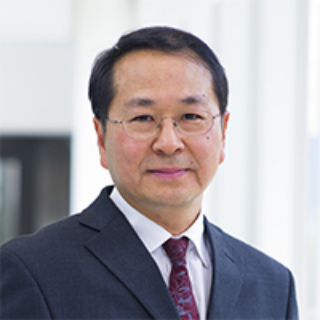
Hongyu Liu is a Chair Professor of Applied Mathematics at the Department of Mathematics, City University of Hong Kong. His research spans inverse problems, wave propagation, mathematical materials science, and game theory. He has authored books on spectral theory, inverse scattering, and numerical methods. Education: Not explicitly stated in text but inferred through academic rank and publications. Research Interests include: Inverse Problems and Imaging, Wave Propagation, Analysis and PDEs, Mathematical Materials Science, Scattering Theory, Game Theory, and Mathematical Biology. His work frequently addresses plasmon resonances, cloaking, and scattering theory applications. Publications focus on inverse scattering, mean field games, and elastic systems, with contributions to journals like Inverse Problems and SIAM Journal on Applied Mathematics. He is also an editor for Communications on Analysis and Computation . Advising and grants are not detailed here, but his research group's activities imply significant contributions to collaborative projects.
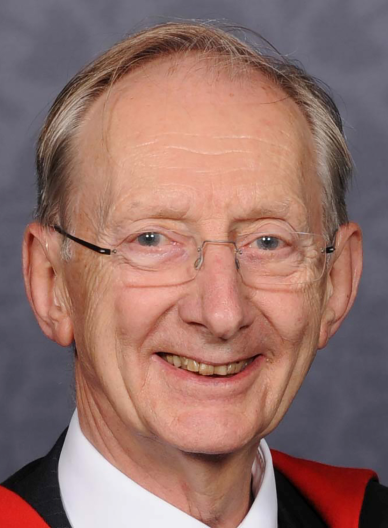
Professor John B. Pendry serves as Chair Professor of Theoretical Solid State Physics at Imperial College London's Faculty of Natural Sciences and holds a Senior Fellowship at the Hong Kong Institute for Advanced Study (City University of Hong Kong). Elected Fellow of the Royal Society in 1984, he has held significant leadership roles including Head of Physics Department (1998–2001) and Principal of the Faculty of Physical Sciences (2001–2002). His career spans foundational work at Cavendish Laboratory, Bell Laboratories, and Daresbury Laboratory before his decades-long tenure at Imperial. His educational background includes: B.A. in Physics, University of Cambridge (1965) Ph.D. in Solid State Theory, University of Cambridge (1969) Pendry's research revolutionized electromagnetic theory through metamaterials and transformation optics. His discovery of negative refractive index materials enabled unprecedented control of electromagnetic waves, leading to practical applications like super-resolution lenses overcoming diffraction limits and radar-frequency invisibility cloaks. Current work extends metamaterial concepts to time-structured materials, exploring energy non-conservation phenomena and Hawking-like radiation effects. His theoretical frameworks bridge condensed matter physics, nanotechnology, and electromagnetism, with applications spanning optics, acoustics, and quantum phenomena. Analysis of his seminal publications reveals consistent innovation in microstructure-driven material properties. Starting with plasmonic structures in the 1990s, his work evolved to transformation optics in the 2000s, establishing fundamental principles for manipulating electromagnetic fields through engineered microarchitectures. These publications form the bedrock of modern metamaterial science, enabling technologies from medical imaging to stealth systems. His exceptional contributions are recognized through: Royal Medal of the Royal Society (2006) Kavli Prize (2014) Dan David Prize (2016) Kyoto Prize (2024) Knighthood for services to science (2004) As a research leader, Pendry secured multiple EPSRC Senior Research Fellowships (1997–1998, 2003–2009) and directed major collaborations including the Duke University team that experimentally validated his cloaking theories. His work attracts substantial funding from UK research councils and international bodies, driving experimental implementations of theoretical concepts. While specific advisees aren't documented in source materials, his mentorship shaped generations of physicists through Imperial College's condensed matter programs. Pendry co-founded and advises Imperial's Centre for Plasmonics and Metamaterials, maintaining active collaboration with experimental teams at Imperial, Duke University, and nanoGUNE research center in San Sebastian (where he serves as Chairman). His theoretical frameworks directly enable cutting-edge experimental work in plasmonic waveguides, singular electromagnetic structures, and time-varying metamaterials.
Professor Shuang Zhang is Chair of Photonics and Head of the Department of Physics at The University of Hong Kong (HKU), with joint affiliation to the Department of Electrical and Electronic Engineering. He has held academic positions at the University of Birmingham (2010-2020) and research roles at University of Illinois and UC Berkeley. PhD in Electrical Engineering (2005, University of New Mexico) MSc in Physics (1999, Northeastern University) BSc in Physics (1996, Jilin University) Research Focus: A pioneer in photonic metamaterials and topological photonics, his work bridges Nanophotonics , Metasurfaces , and Quantum Optics . Key contributions include: Topological boundary effects in photonic systems Non-Hermitian physics of evanescent waves Programmable electromagnetic wave control Landmark studies on chiral zero modes and Berry dipole crystals Awards & Recognition: IUPAP Young Scientist Prize in Optics (2010) Royal Society Wolfson Research Merit Award (2016) Fellow of OSA (2016) and APS (2022) Clarivate Analytics Highly Cited Researcher (2018-2021) Academic Leadership: Serves as Co-Executive Editor-in-Chief for Light: Science & Applications and Divisional Associate Editor for Physical Review Letters . Supervises PhD students in topics spanning photonic crystals, topological photonics, and metamaterials.
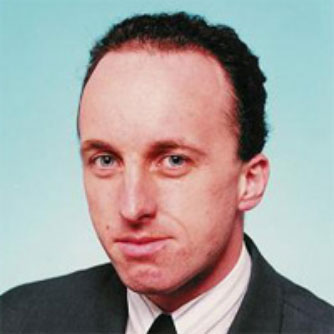
Prof. Ya Yan LU is a Professor at City University of Hong Kong specializing in computational photonics and wave propagation phenomena. His research develops numerical methods for optical structures including waveguides, photonic crystals, and diffraction gratings, with applications in integrated optical circuits. Research Focus: Prof. Lu's work spans: Optical waveguide analysis and design Photonic crystal modeling Nonlinear optics simulations Boundary integral methods for wave propagation Stability analysis of computational techniques High-efficiency algorithms for electromagnetic simulations Teaching: Courses include: Elementary Numerical Methods (MA3513) Numerical Methods for Differential Equations (MA3514) Introduction to Dynamical Systems (MA4528) Computational Linear Algebra (MA6606) Mathematical Methods for EM/Optical Waves (MA6618)
Yifan (Evan) Peng is an Assistant Professor at the University of Hong Kong, jointly affiliated with the Departments of Electrical & Electronic Engineering and Computer Science. He leads the WeLight Lab, focusing on interdisciplinary research at the intersection of Optics, Graphics, Vision, and Artificial Intelligence. His work emphasizes computational imaging systems, holography, and human-centered visual technologies. Education: PhD in Computer Science from the Imager Lab, University of British Columbia Postdoctoral Research Scholar at Stanford University's Computational Imaging Lab Visiting Student Researcher at KAUST's Visual Computing Center and Stanford MS & BS in Optical Science and Engineering from Zhejiang University Research Interests: His research explores computational optics, holographic displays, VR/AR/MR systems, and low-level vision techniques. Recent efforts include developing snapshot hyperspectral imaging systems, lighting-robust machine vision, and neural rendering frameworks for dynamic scenes. He investigates hardware-software co-design in imaging systems and explores applications in medical imaging and mixed reality. Publications: Recent work focuses on advancing holographic display technologies, neural rendering, and hybrid optical-computational imaging systems. Key contributions include metasurface-based AR displays, speckle reduction techniques, and learned optical systems for hyperspectral imaging. His research bridges physical optics with digital algorithms to achieve high-quality imaging and display solutions. Grants & Advising: Hosts visiting scholars and collaborates with industry partners like Ford, Sony, and Intel. Openings exist for PhD students, postdocs, and research assistants in computational imaging and optics. Labs & Teams: Leads the WeLight Lab at HKU, collaborating with global institutions on projects like neural holography and diffractive optics. Active in conferences like SIGGRAPH, CVPR, and ISMAR as program committee member.
Professor Li CHENG is Chair Professor of Mechanical Engineering at The Hong Kong Polytechnic University and serves as Associate Dean (Research) of the Faculty of Engineering. He is also Director of the Consortium for Sound and Vibration Research and holds membership in several interdisciplinary research institutes including RIAIoT, RI-IWEAR, and RISports. Professor Cheng received his BSc degree from Xi'an Jiaotong University and PhD from the Institut National des Sciences Appliquées de Lyon (INSA-Lyon), France. After completing post-doctoral research at University of Sherbrooke, he joined Laval University, Canada in 1992, rising to Full Professor before moving to PolyU in 2000. He was promoted to Chair Professor in 2005 and served as Head of Department from 2011 to 2014. Professor Cheng's research spans fundamental science and engineering applications in vibroacoustics and noise control. His work has laid the foundation for vibroacoustic modeling of complex structures and pioneered studies in micro-perforation sound absorption. He is a world-leading authority in acoustic/sonic black hole research and has made significant contributions to acoustic/elastic/mechanical metamaterials for wave manipulation. His research interests include: Vibroacoustics and Wave Mechanics with particular focus on Noise/Vibration Control Acoustic/Elastic/Mechanic Wave Manipulation Structural Health Monitoring Fluid-structure-sound Interaction Smart structures Professor Cheng's recent publications demonstrate a continued focus on innovative solutions for vibration and noise control, with particular emphasis on acoustic black holes, metamaterials, and structural health monitoring. His work bridges fundamental physics with practical engineering applications, often resulting in technologies that are adopted by industry partners. Professor Cheng's scientific achievements have been recognized with numerous prestigious awards: Fellow of the Royal Society of Canada (Academy of Science) Fellow of the Canadian Academy of Engineering Distinguished Fellow of the International Institute of Acoustics and Vibration Fellow of the Acoustical Society of America Fellow of the Acoustical Society of China China's top ten advances in metamaterials (Technological Innovation) Poly(U) Award Appreciation of Research Achievement Throughout his 40-year academic career, Professor Cheng has secured approximately HK$150 million in government and industrial research funding. He has supervised numerous PhD and Master's students, though specific names are not provided in the available information. Professor Cheng leads the Sound and Vibration Research Consortium at PolyU, which has been active for two decades with the goal of making influential contributions to basic science related to sound and vibration. Professor Cheng holds leadership positions in major professional organizations and editorial boards, including serving as President-elect of the International Institute of Noise Control Engineering. His research has had significant industrial impact, with theories and design guidelines adopted by companies such as Aérospatiale, Renault RVI, Air Canada, Bombardier, China Academy of Space Technology, and Midea Group.
Robert Conte is a Researcher at Université Paris-Saclay, holding the position of Directeur de recherche associé at the Centre Borelli (UMR 9010) under École normale supérieure Paris-Saclay. Additionally, he serves as an Honorary Professor in the Department of Mathematics at the University of Hong Kong. His past affiliations include the Centre de recherches mathématiques de l'université de Montréal (2004–2022) and Service de physique de l'état condensé at CEA-Saclay (1967–2006). Conte's research focuses on nonlinear systems, integrable systems, and differential equations. He is renowned for his work on Painlevé equations, soliton theory, and meromorphic solutions to nonlinear partial differential equations. His contributions include seminal books such as The Painlevé Handbook (second edition, 2020), which provides a comprehensive guide to Painlevé analysis and its applications. His recent work explores topics like dynamical systems linked to cosmological scenarios, meromorphic traveling waves in complex Ginzburg-Landau equations, and exact solutions to boundary layer ordinary differential equations. Conte has collaborated extensively on projects involving nonlinear diffusion, fluid dynamics, and geometric analysis, with a strong emphasis on analytical methods and integrability. Conte’s research has been featured in leading journals, and he has presented at numerous international conferences. His work bridges mathematical physics, nonlinear dynamics, and applied mathematics, with applications ranging from fluid dynamics to cosmology.
Dr. Kai Ming Lee is a Lecturer at the Department of Physics within the Faculty of Science at The University of Hong Kong. His research focuses on Quantum Field Theories and Leaky Systems, with significant contributions to computational physics and theoretical optics. Education: B.Sc. from The University of Hong Kong, Ph.D. from Caltech Contact: Room 415A, Chong Yuet Ming Physics Building, kmlee1@hku.hk Dr. Lee's research addresses fundamental problems in theoretical physics, including cellular automaton applications to computational challenges and morphology-dependent resonances in dielectric systems. His publications span journals like International Journal of Modern Physics C and Physical Review E , reflecting interdisciplinary work at the intersection of physics and mathematics. He has served on the Faculty of Science Board at HKU since 2000, with ongoing appointments through 2024. Dr. Lee contributes to academic governance and has participated in knowledge exchange activities, including a 2018 public lecture series on gravitational physics. Teaching: Courses include PHYS1650 'Nature of the Universe' and CCST9056 'The Force is with You: How Things Work'
Prof. Jonathan J. Wylie serves as a Professor at City University of Hong Kong, holding a PhD from King's College, University of Cambridge, UK. His academic trajectory includes a Junior Research Fellowship at King's College, followed by research appointments at Cornell University, Woods Hole Oceanographic Institution, and the University of Toronto prior to his current position. His research expertise spans fluid mechanics , granular materials , suspension mechanics , and mathematical modeling of geophysical systems , with seminal contributions to viscous thread dynamics and coupled partial differential equations. His interdisciplinary work bridges industrial applications with fundamental physics. Analysis of his recent publications reveals dominant research threads in granular flow intermittency , thermal effects in viscous filaments , and mathematical neuroscience . His methodology consistently combines asymptotic analysis with computational modeling to address complex multiphysics problems, demonstrating strong cross-disciplinary collaboration between physics, engineering, and life sciences. His distinguished scientific recognition includes: Junior Research Fellowship from King's College, Cambridge Wylie has secured major research funding from the National Science Foundation (USA), Australian Research Council, and Hong Kong's Research Grant Council. As associate editor of the IMA Journal of Applied Mathematics , he actively shapes scholarly discourse. His extensive publication record in high-impact journals like Journal of Fluid Mechanics and Physical Review E demonstrates sustained research productivity without explicit mention of advisees in available materials. While specific laboratory facilities aren't documented, his international collaborations with institutions across North America, Europe, and Asia indicate participation in global research networks addressing industrially relevant fluid dynamics challenges.