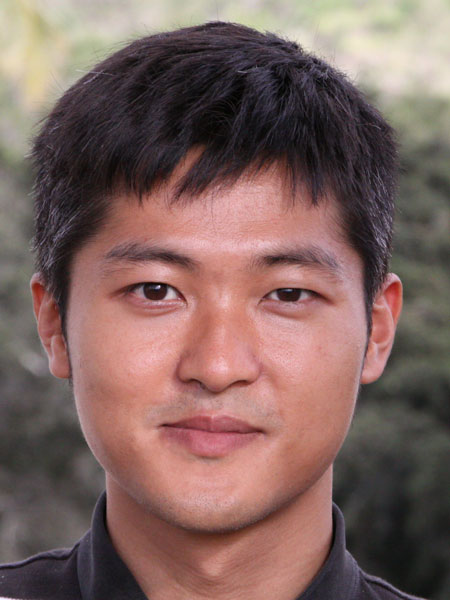
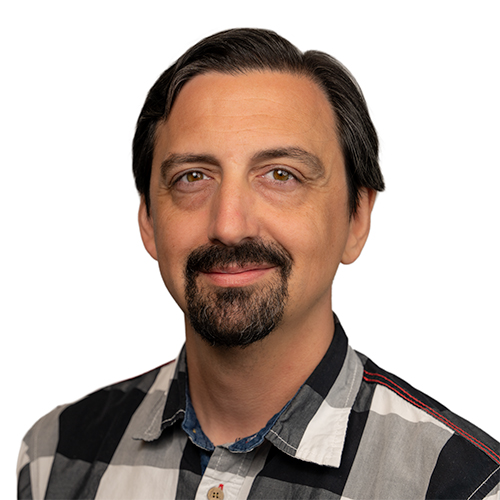
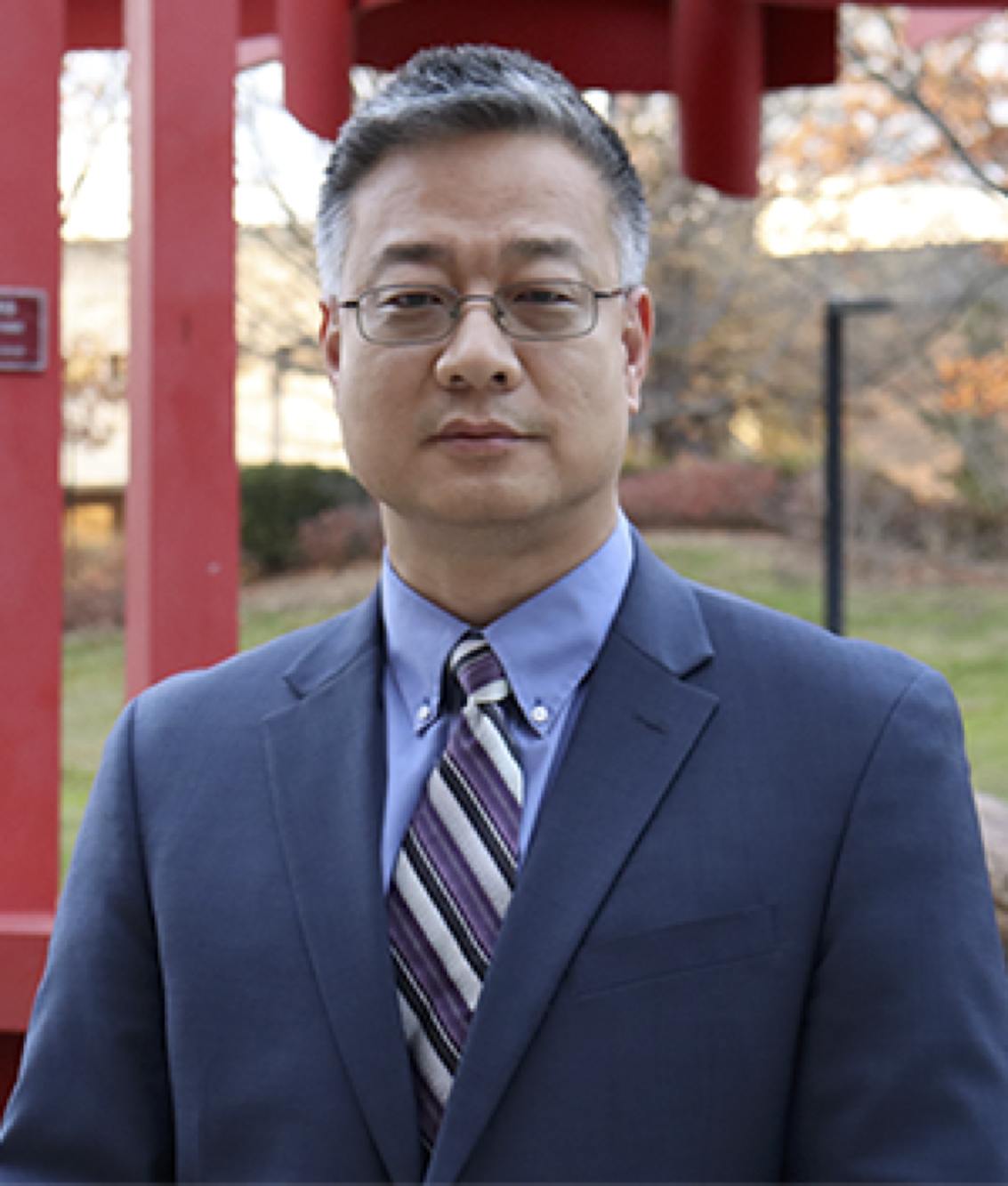
Dr. Rosario Marretta is Associate Professor in Fluid Dynamics at University of Palermo's Polytechnic School. Specializes in Computational Fluid Dynamics (CFD) and aircraft accident investigation techniques. Research includes aeroacoustic modeling, hydrodynamic analysis for marine applications, and experimental aerodynamics. Developed novel aircraft investigation methodologies documented in monograph on Alitalia Flight AZ112. Teaches aerodynamics and CFD courses for aerospace and mechanical engineering students. Supervises graduate research on aerodynamic interactions, shock control systems, and CFD applications in motorsports. Office hours held Mondays and Wednesdays with appointment scheduling available.
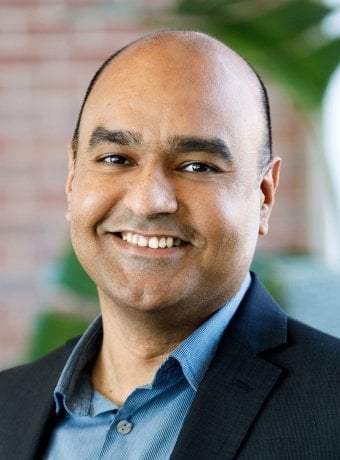
Bhisham Sharma is Associate Professor of Mechanical and Aerospace Engineering at Michigan Technological University, specializing in structural acoustics and advanced materials. Holding a Ph.D. in Aeronautics and Astronautics from Purdue University, he leads research at the intersection of structural mechanics, dynamics, and acoustics to develop safer, quieter engineering structures. Research programs focus on: Acoustic metamaterials and phononic crystals Additive manufacturing of functional materials Wave propagation in complex media Multiphysics modeling of material systems His publications demonstrate consistent innovation in acoustic material design, particularly through additive manufacturing techniques. Recent work explores triply periodic minimal surface structures, sustainable nanocellulose aerogels, and bio-inspired material systems for noise control applications. Current research translates fundamental discoveries into solutions for aerospace, automotive, and energy industries.
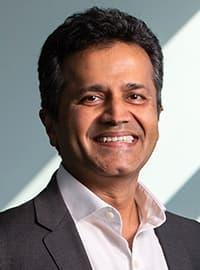
Farrukh Alvi is the Sr. Associate Provost for Strategic Initiatives and Innovation, Don Fuqua Eminent Scholar & Professor of Mechanical Engineering at the Florida A&M University-Florida State University (FAMU-FSU) College of Engineering. He serves as Director of the Institute for Strategic Partnerships, Innovation, Research, & Education (InSPIRE) and leads the FCAAP ME - Mechanical Engineering program in Aero-Propulsion, Mechatronics, and Energy. His roles include overseeing research and graduate studies, as well as directing major initiatives like the Florida Center for Advanced Aero-Propulsion (FCAAP) and the FAA Center of Excellence in Commercial Space Transportation (FAA COE CST). Dr. Alvi holds a Ph.D. in Mechanical Engineering from Pennsylvania State University (1992) and a B.S. in Nuclear Engineering from UC Berkeley (1987). His research focuses on active-adaptive flow control, experimental fluid-gas dynamics, and optical diagnostics. Notable achievements include developing microfluidic actuators (with ten patents) and securing over $25 million in external funding for research and STEM education. His work addresses noise reduction, flow efficiency in high-speed systems, and control technologies for aircraft, automobiles, and turbomachinery. Over 50 PhD/MS students, postdoctoral researchers, and scientists have been mentored under his supervision, resulting in over 200 publications. He is a Fellow of ASME and an Associate Fellow of AIAA. Key grants and partnerships include support from AFOSR, NASA, NSF, ONR, DARPA, and industry collaborators like Boeing and Northrop Grumman. His leadership extends to founding interdisciplinary research centers and advancing STEM education through collaborative initiatives.
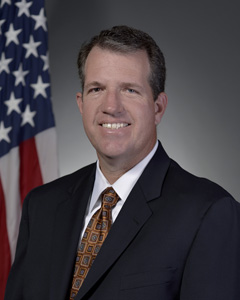
John Schmisseur is the Associate Dean and Executive Director at the University of Tennessee Space Institute (UTSI), holding the rank of B.H. Goethert Professor. He specializes in hypersonic aerodynamics, aerothermodynamics, and boundary layer transition phenomena. Schmisseur earned his B.S., M.S., and Ph.D. in Aerospace Engineering from the University of Texas at Austin (1990, 1992) and Purdue University (1997), respectively. His research focuses on experimental and computational analysis of high-speed flows, including shock wave interactions and flow control mechanisms. Professional service includes roles as Deputy Director of the AIAA Aerospace Sciences Group, NATO RTO task group leadership, and membership on the editorial board of Progress in Aerospace Sciences . He has led major programs such as the $60M HIFiRE initiative and the National Hypersonic Science Centers, securing international collaboration and foundational research funding. Notable awards include AFRL Fellow (2013) and AIAA Fellow (2012). His management expertise spans over $100M in Air Force research portfolios, overseeing 135+ projects and fostering collaboration between academia and defense agencies. He has mentored numerous researchers and program managers, significantly increasing women-led projects in his domain. Key contributions include advancing hypersonic flight data through HIFiRE, defining national research strategies, and pioneering laser-based diagnostic techniques for high-speed flows. Current leadership focuses on integrating basic research with advanced aerospace technologies.
Anna Tasolamprou is an Assistant Professor of Physics at the National and Kapodistrian University of Athens. Her research investigates wave propagation in complex media including metamaterials, photonic crystals, and 2D materials across microwave to optical frequencies. Research explores: Electromagnetic metasurfaces for terahertz applications Exotic wave phenomena in periodic and random media Topological photonics in composite materials Liquid crystal-based tunable photonic devices She leads the research program 'Advanced control of topological electromagnetic waves in composite materials' funded by ELIDEK. International collaborations include Ames Laboratory (US DOE) and theoretical/experimental groups in photonics.
Egor Manuylovich is a Research Fellow (Marie Curie) and Research Associate at the Aston Institute of Photonic Technologies (AiPT), part of the College of Engineering and Physical Sciences at Aston University. His research focuses on advanced photonics and fiber optics, with significant contributions to neuromorphic computing, optical amplification, and plasmonic sensors. Key research areas include temporal up-sampling in neuromorphic systems, high-power bismuth-doped fiber amplifiers, and acousto-optic modulation in all-fiber systems. His work bridges theoretical photonics with practical applications in telecommunications and sensor technologies. Recent publications highlight advancements in optical neuromorphic computing architectures and record-breaking power conversion efficiencies in fiber amplifiers. Notable contributions also include plasmonic sensor designs using semiconductor nanoparticles and studies on ultrafast laser pulse propagation in diverse media. He holds the prestigious Marie Curie Research Fellowship, underscoring his role in international collaborative research. His work has been recognized through citations and media mentions, with over 40 peer-reviewed outputs since 2013.
Dr. Daisuke Takagi is an Associate Professor in the Department of Mathematics at the University of Hawaiʻi at Mānoa, specializing in fluid mechanics and biological physics. He joined the university in 2013 after earning his Ph.D. from the University of Cambridge (2010), advised by Herbert Huppert FRS and Jim McElwaine. His research focuses on fluid dynamics in biological systems, including microswimmer locomotion, hydrodynamic sensing, and granular flows. Research Interests: Fluid Mechanics Biological Physics Low Reynolds Number Flows Bio-inspired Robotics Predator-Prey Dynamics Thin Film and Surface Wave Dynamics Research Trends: Takagi's work bridges theoretical fluid mechanics and biological systems, with recent focus on microscale propulsion (copepods, snails, bacteria), ecological escape mechanisms, and bio-inspired engineering. His 2023-2025 publications emphasize optimal fluid transport systems and adaptive behavior in confined environments. Awards & Grants: No specific honors listed in text, though his work suggests sustained research activity in biomathematics and fluid dynamics. Advising & Collaborations: No advisees listed; however, his research involves interdisciplinary projects with marine biology and robotics teams. Office: Keller 406.
Francesco Papoff is a Senior Lecturer in Physics at the University of Strathclyde specializing in nanophotonics and quantum optics. His research explores quantum correlations in lasers, photon statistics, and coherent light-matter interactions at the nanoscale. Recent work (2021-2025) investigates lasing thresholds from quantum emitters to macroscopic devices, photon squeezing in nanolasers, and quantum bistability phenomena. Papoff develops theoretical models bridging quantum optics and laser physics to explain coherence emergence across device scales. He examines fundamental limits of light manipulation using plasmonic nanostructures and metamaterials, with applications in quantum sensing and information processing. Earlier research (2015-2019) focused on nonlinear multiphoton processes and UV plasmonics.
Dr. Jacob Adams is a Professor in the Department of Electrical and Computer Engineering at North Carolina State University. He holds B.S. and M.S. degrees from Ohio State University and a Ph.D. from the University of Illinois at Urbana-Champaign. Prior to joining NC State in 2013, he was an Intelligence Community Postdoctoral Research Associate at the University of Illinois. His research focuses on electrically small and reconfigurable antennas, characteristic mode theory, time-varying antennas, and microfluidics/additive manufacturing applications in RF systems. He leads investigations into antenna design optimization, RF transmitter efficiency, and novel materials for electromagnetic applications. Dr. Adams' publications demonstrate consistent focus on advancing antenna technology through innovations in materials, manufacturing techniques, and electromagnetic theory. His recent work explores spectral efficiency limits, power optimization in transmitters, and novel lens designs for improved RF performance. DARPA Young Faculty Award (2016) ARO Young Investigator Award (2017) William F. Lane Outstanding Teaching Award (2022) NSF Graduate Research Fellowship He actively recruits graduate students for research in antenna design and RF systems. As a Senior Member of IEEE, he serves as Associate Editor for IEEE Transactions on Antennas and Propagation. His laboratory at the Monteith Research Center investigates cutting-edge solutions for next-generation wireless communication systems.
Dr. Frank Li serves as Professor and Director of the Rayen School of Engineering at Youngstown State University, holding a concurrent position as Chair of the Department of Electrical and Computer Engineering. His academic leadership spans multiple institutional roles including department chair since 2019. His educational background includes: Ph.D. in Electrical Engineering (2005, Case Western Reserve University) M.S. in Electrical Engineering (1999, Youngstown State University) B.S. in Electrical Engineering (1995, Ohio State University) Research focuses on RF engineering, autonomous power conversions, and applied magnetic fields with significant contributions to microelectronics security, wireless sensor networks, and structural health monitoring. His work bridges theoretical advancements with practical applications in battery technology, antenna design, and semiconductor verification. Recent publications demonstrate strong emphasis on terahertz antenna fabrication, trusted microelectronics, and novel sensor development. Key scientific recognitions include: Youngstown State University Distinguished Chairperson (2023) NASA Glenn Summer Faculty Fellowship (2016, 2017) As an educator, Dr. Li has mentored over ten graduate students and developed innovative low-cost laboratory systems for engineering education. His externally funded research includes collaborations with NASA and MIT's Francis Bitter Magnetic Laboratory where he served as visiting scientist (2014-2015). Current work involves advanced manufacturing techniques for RF components and security verification of integrated circuits.
Alessio Moreschini is a Research Associate at the Department of Electrical and Electronic Engineering, Imperial College London, within the Faculty of Engineering. He holds a dual Ph.D. in Automatica (University of Rome "La Sapienza") and Systems and Control (Université Paris-Saclay), both awarded in 2021. His research focuses on nonlinear systems and control theory, with expertise in passivity-based control, sampled-data systems, and model order reduction. Moreschini is affiliated with the Control and Power Research Group at Imperial College. He previously served as a Postdoctoral Fellow at the University of Rome from 2021–2022. His academic roles include Associate Editorships for Automatica and the EUCA Conference Editorial Board, as well as membership in the IEEE CSS Technical Committee on Nonlinear Systems and Control, and the IFAC Technical Committee on Nonlinear Control Systems. Research interests span advanced control methodologies, including passivity theory, model reduction techniques, and their applications to electrical networks and robotics. His recent work emphasizes data-driven approaches, nonlinear system interpolation, and stabilization strategies for sampled-data systems.
Demetrios Christodoulides is a Professor at the University of Southern California (USC), holding dual appointments in the Department of Electrical and Computer Engineering and the Department of Physics and Astronomy within the USC Dornsife College of Letters, Arts and Sciences. His research focuses on nonlinear optics, topological photonics, and the thermodynamic behavior of light in complex systems. He explores phenomena such as solitons, thermalization in multimode optical fibers, and non-Hermitian systems, with applications to advanced photonics and quantum technologies. Key areas: Nonlinear dynamics, photon thermodynamics, topological insulators, ultrafast optics, and optical lattice engineering. Notable contributions include pioneering work on spatiotemporal wave packets, Joule-Thomson photon-gas expansion, and Floquet topological phases. His work bridges theoretical and experimental photonics, with implications for optical communication, quantum information, and light manipulation. Recent studies investigate thermalization in multimode systems, non-Hermitian skin effects, and Lagrangian-based light guidance.
Koen Buisman is an Associate Professor in microwave and millimeter-wave electronics at the University of Surrey's Advanced Technology Institute (ATI), part of the School of Computer Science and Electronic Engineering. He leads the Nonlinear Microwave Measurement and Modeling Laboratories (n3m labs). Previously, he held roles at Delft University of Technology (2004–2014) and Chalmers University of Technology (2014–2020), where he worked as an Assistant Professor in the Microwave Electronics Laboratory. His research focuses on nonlinear device characterization, multi-physics measurements, and technology optimization for high-frequency electronics. Dr. Buisman earned his PhD from Delft University of Technology in 2011. His work emphasizes practical applications of advanced measurement techniques, including load-pull emulation, thermal analysis, and millimeter-wave system design. He has contributed to advancements in power amplifier efficiency, MIMO testbed calibration, and adaptive antenna systems. His recent publications explore topics such as W-band receiver design, temperature-dependent amplifier characterization, and nonlinear distortion mitigation in millimeter-wave communications. His research bridges theoretical models with experimental validation, leveraging cutting-edge tools like the Chalmers mm-wave MIMO testbed (MATE) and electrothermal simulation frameworks. Dr. Buisman’s n3m labs specialize in developing measurement methodologies for nonlinear devices and multi-physical phenomena, supporting innovations in 5G and beyond-5G technologies. His work is published in top-tier journals like IEEE Transactions on Microwave Theory and Techniques and IEEE Transactions on Antennas and Propagation.
Clive Parini is a Professor of Antenna Engineering at Queen Mary University of London, affiliated with the School of Electronic Engineering and Computer Science and leading the Antennas & Electromagnetics Research Group. He holds a BSc(Eng) and PhD from Queen Mary College, University of London. His career includes significant contributions to antenna design, measurement techniques, and metamaterials. He has authored over 300 papers and co-authored the book 'Principles of Planan Near-Field Antenna Measurements' (2008). His research focuses on microwave/millimeter-wave antennas, compact test ranges, array design, and body-centric communications. Prof. Parini has received notable awards, including the IEE Measurements Prize (1990) and BAE Systems Bronze Award (2002). He is a Fellow of the IET and Royal Academy of Engineering. His leadership roles include Director of Research for the School of Electronic Engineering & Computer Science and past Chair of the IET Antennas & Propagation Professional Network. Research highlights include metamaterials for antennas, on-body communication systems, and high-frequency imaging. His work bridges academic and industrial applications, with contributions to 5G, satellite antennas, and compact test range technologies. Recent articles emphasize advanced measurement techniques, compressive sensing, and drone-based systems for antenna testing. Teaching spans undergraduate and postgraduate levels, covering satellite systems, microwave electronics, and research techniques. His work integrates computational electromagnetics, antenna diagnostics, and emerging 5G/6G challenges, ensuring his research remains impactful across academia and industry.
Carlos António Cardoso Fernandes is a Full Professor at the Department of Electrical and Computer Engineering (DEEC) at Instituto Superior Técnico (IST), University of Lisbon, and a Senior Researcher at the Instituto de Telecomunicações (IT). He is the Thematic Line Coordinator for Wireless Technologies and leads the Antennas and Propagation Group. His research focuses on millimeter-wave antennas, metamaterials, medical microwave imaging, and satellite systems, with applications in IoT, body-area networks, and environmental monitoring. Education and Career: PhD in Electrical and Computer Engineering, IST (1990) Agregação (Habilitation), IST (2002) Full Professor since 2006 Past Vice-President of DEEC (2003–2004) Past Board Member of IT (2009–2024) Research Interests: Millimeter-wave antennas for 5G/6G and satellite communications Metamaterials for lens antennas and superlensing Medical microwave imaging for cancer screening RFID/UWB antennas for IoT and localization Radiowave propagation in complex environments Publications & Impact: Over 400 peer-reviewed papers (including 100+ journal articles), 6,000+ citations, and an h-index of 44. Key contributions include patents on antennas for medical imaging and satellite systems, and leadership in EU/ESA projects like ISTSat-1 (CubeSat mission). Awards & Recognition: Lifetime Achievement Award by PTSpace (2024) Prémio UTL/Santander Totta (2011) Top 2% Most-Cited Scientists (Stanford University, 2023/2024) Correspondent Member, Lisbon Academy of Sciences Students & Mentorship: Supervisor of 12 PhD and nearly 50 MSc students, with topics ranging from antenna design to medical imaging systems.