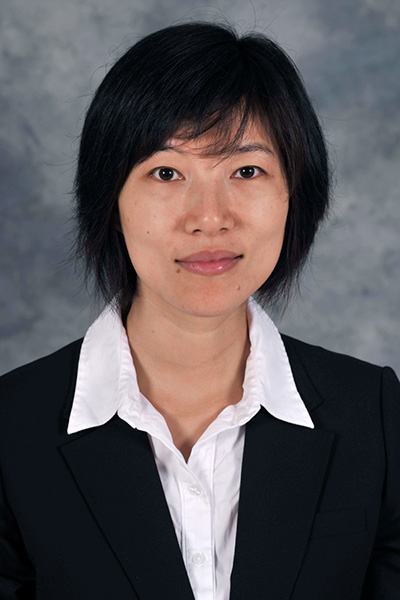
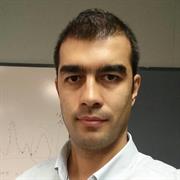
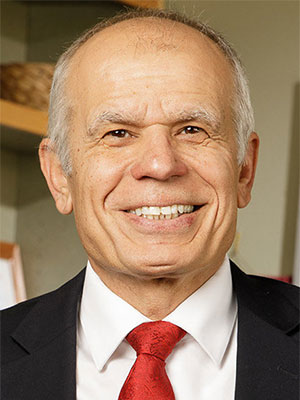
Yanjun Yan is a Professor in the School of Engineering and Technology at Western Carolina University's College of Engineering and Technology. She joined the university in 2013 after earning her Ph.D. in Electrical Engineering from Syracuse University. Her research focuses on statistical signal processing, swarm robotics, and engineering education innovation. Dr. Yan is dedicated to advancing hands-on learning through lab kits and project-based curricula, particularly in circuits, programming, and renewable energy systems. She actively explores interdisciplinary collaborations, including global sustainability initiatives and service-learning projects bridging engineering and arts disciplines. Her work emphasizes practical applications of AI, robotics, and sustainable technologies. Education: Ph.D., Electrical Engineering, Syracuse University Research interests include optimizing energy systems (e.g., wave energy, nuclear integration), developing swarm intelligence algorithms, and improving student engagement through innovative pedagogies. She has pioneered initiatives like the BYOE lab kit program and the Fulbright-supported project-based learning course in Bulgaria. Her research also addresses challenges in global education, including pandemic adaptation and interdisciplinary teamwork. Publications highlight trends in renewable energy economics, chatbot-assisted learning, and AI-driven waste sorting. Dr. Yan’s work bridges theoretical advancements with real-world applications, fostering both academic and practical impact.
Privatdozent (Senior Lecturer) Alexander Wilkie is affiliated with the Faculty of Informatics at the Technische Universität Wien , specifically the Institute of Computer Graphics and Algorithms. His research focuses on photorealistic rendering, color science, and optical phenomena. Photorealistic Image Synthesis Bidirectional Reflectance Distribution Function (BRDF) Chromatic Adaptation Spectral Rendering Fluorescence Modeling His work explores layered materials, atmospheric effects, and gemstone simulations, with significant contributions to physically based rendering algorithms. Students under his supervision include Andreas Weidlich and Harald Grasberger. Wilkie has collaborated on projects funded by the Austrian Science Fund (FWF) from 2005–2007.
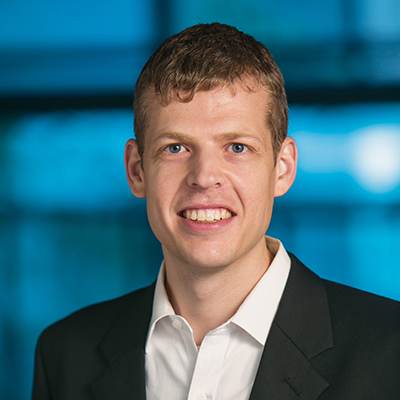
Jordan R. Raney is an Associate Professor in the Department of Mechanical Engineering & Applied Mechanics at the University of Pennsylvania's School of Engineering and Applied Science. He leads the Architected Materials Laboratory, focusing on advanced manufacturing, nonlinear mechanics, and smart materials. His work integrates 3D printing, mechanical metamaterials, and autonomous systems to design materials with programmable behaviors. Research Thrusts: Geometric Control of Nonlinear Behavior : Studies wave propagation, phase transitions, and energy absorption in metamaterials. 3D-Printable Composites : Develops sustainable composites like amylopectin-based materials and fiber-reinforced systems. Mechanical Logic & Autonomous Materials : Creates systems that perform decision-making via material properties, eliminating traditional electronics. Funding: Supported by NSF, Army Research Office, Air Force Office of Scientific Research, and DARPA. His lab's innovations span robotics, aerospace, and biomedical applications. Teaching: Courses include MEAM/MSE 507: Fundamentals of Materials , MEAM 321: Vibrations of Mechanical Systems , and MEAM 211: Engineering Mechanics: Dynamics . Lab & Team: The Architected Materials Lab includes PhD students, master’s candidates, and undergraduates. Notable alumni have joined industry leaders like Intel and Lam Research.
Aritra Mukherjee is a Research Fellow at the Norwegian University of Science and Technology (NTNU), affiliated with the Department of Energy and Process Engineering and the Department of Language and Literature. His work integrates computational physics, fluid dynamics, and thermal engineering to address complex multiphase flow phenomena and environmental modeling challenges. His research focuses on multiphase flow dynamics, phase-change processes, and high-performance computational methods such as the lattice Boltzmann method. He also explores applications in wildfire prediction, thermal hydraulics, and nanostructured surface characterization. His contributions span both fundamental fluid mechanics and applied environmental science. Key research themes include low Mach number modeling for multicomponent flows, GPU-accelerated simulation frameworks, and dual-phase-lag heat conduction analysis. His work bridges mesoscopic fluid dynamics with large-scale environmental systems, emphasizing algorithmic innovation for multiphase systems. Notable outreach includes a 2024 presentation at the International Conference on Numerical Methods in Multiphase Flows in Reykjavik, Iceland. His lab affiliations include the Strømningstekniske laboratorier (Fluid Mechanics Laboratory) at NTNU.
Mehmet Can is a Researcher at Istanbul Technical University's Department of Electronics and Communication Engineering. His research spans telecommunications and geotechnical engineering, focusing on wireless communication systems, Non-Orthogonal and Rate-Splitting Multiple Access (NOMA/RSMA), satellite networks, and soil mechanics. Current affiliations: Istanbul Technical University Research areas: Telecommunications, Geotechnical Engineering, Machine Learning His work in telecommunications emphasizes RSMA-based uplink/downlink systems, antenna design, and satellite network optimization. In geotechnical engineering, he investigates constitutive modeling of unsaturated soils, cyclic soil response, and machine learning applications for foundation capacity prediction. Articles highlight collaborations with institutions in Turkey and Finland. Scientific awards: None explicitly mentioned.
Dr. Robert R Attaran is an Associate Professor of Medicine (Cardiovascular Medicine) at Yale University School of Medicine, serving as Director of the Interventional Cardiology and Endovascular Fellowship Programs. He completed his medical training at the University of Sheffield (MBBS 2000), followed by residency and fellowship training at the University of Arizona and Yale University. His clinical expertise spans interventional cardiology, peripheral arterial/venous disease treatments, and endovascular interventions. He actively contributes to national/international research on cardiovascular therapies and holds leadership roles in professional organizations like the Society for Cardiac Angiography and Intervention (SCAI) and American Venous Forum (AVF). Research Interests: Dr. Attaran focuses on advancing treatments for peripheral vascular diseases through clinical trials and device development. Key areas include venous stenosis management, venous pressure measurement technologies, hydration effects on vascular anatomy, and diabetes impact on revascularization outcomes. His work bridges interventional cardiology with vascular surgery, emphasizing translational research to clinical practice. Professional Contributions: Serves on the American College of Cardiology's National Cardiovascular Data Registry (NCDR), chairs SCAI's Chronic Disease Guidelines Committee, and participates in the American Board of Venous and Lymphatic Medicine. He has authored over 50 peer-reviewed publications and frequently presents at major cardiology/vascular conferences. Labs/Teams: Associated with the VAMOS Lab (Vascular and Medical Outcomes Studies) at Yale, focusing on translational research in vascular medicine. Collaborates extensively with interventional radiology and vascular surgery teams.
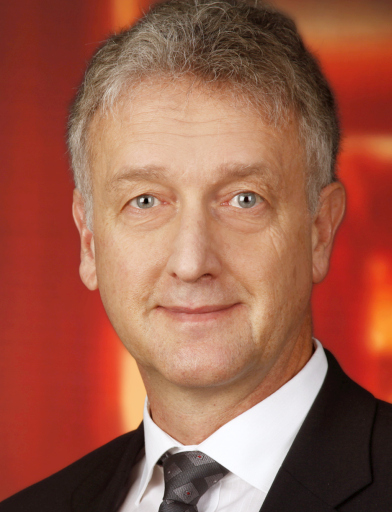
Dieter W. Fellner is a distinguished Professor of Computer Science at Technical University of Darmstadt, Germany, where he serves as Director of the Fraunhofer Institute of Computer Graphics (IGD). He also holds a concurrent position as Professor of Computer Science and Founding Director of the Institute of Computer Graphics and Knowledge Visualization at Graz University of Technology, Austria. With a career spanning over three decades, Fellner has established himself as a leading figure in computer graphics, digital libraries, and related fields. Education: Diploma in Technical Mathematics, Graz (1981) Doktorate (Ph.D.) in Technical Mathematics, Graz (1984) Habilitation, Graz (1988) Professor Fellner's research spans multiple domains within computer science, with a primary focus on computer graphics and its applications. His work encompasses computational geometry, 3D modeling and rendering, virtual and augmented reality, and digital libraries with emphasis on cultural heritage preservation. He has made significant contributions to algorithms for integrating modeling and rendering processes, efficient visualization techniques, and generative modeling approaches. His research extends to practical applications in internet-based multimedia systems, where he coordinated a strategic initiative funded by the German Research Foundation that supported approximately 50 researchers across 21 groups from 1997 to 2005. An analysis of Professor Fellner's publication record reveals a consistent trajectory of innovation in computer graphics and digital document systems. His early work focused on foundational graphics algorithms and videotex systems, evolving toward more complex 3D document modeling, visualization techniques, and digital library architectures. A notable trend is his interdisciplinary approach, bridging computer graphics with applications in cultural heritage, bioinformatics, and brain-computer interfaces. His research demonstrates a progression from theoretical algorithms to practical implementations addressing real-world challenges in information visualization and knowledge management. Scientific Awards: Fellow of the Eurographics Association (2000) Member of the IST Advisory Group for the European Commission (ISTAG) (2007) Best Technical Paper Award (Günther Enderle Award) at Eurographics'98 Conference Honorary Doctorate from the University of Rostock (2019) Throughout his career, Professor Fellner has supervised numerous students and researchers, though specific names are not documented in the available sources. His leadership extends to significant grant activities, most notably coordinating the German Research Foundation's strategic initiative on distributed processing and mediation of digital documents from 1997 to 2005. This major project provided funding for approximately 50 researchers annually across 21 research groups, demonstrating his capacity to lead large-scale collaborative research efforts. He has also served on editorial boards of leading journals and program committees of international conferences, shaping the direction of research in his fields of expertise. Professor Fellner directs the Fraunhofer Institute of Computer Graphics (IGD) in Darmstadt, a prominent research institution focused on applied computer graphics. He also founded and chairs the Institute of Computer Graphics and Knowledge Visualization at Graz University of Technology. These institutions serve as hubs for interdisciplinary research, bringing together computer scientists, domain experts, and industry partners to advance the state of the art in visualization, digital libraries, and knowledge management systems. The teams under his leadership have produced influential work in 3D document processing, cultural heritage digitization, and advanced visualization techniques.
Craig Epifanio is an Associate Professor at Texas A&M University, specializing in mesoscale atmospheric dynamics. His research focuses on topographic wave instabilities, severe storm dynamics, and computational fluid dynamics methods. He holds a Ph.D. in Atmospheric Science from the University of Washington and a B.S. in Physics from Williams College. Epifanio’s work emphasizes understanding turbulence generation in mountain waves and the environmental factors influencing tornadogenesis in supercells. His computational expertise includes Newton-Krylov solvers and surface stress modeling over complex terrain. He has advised students like K.C. Viner and T. Qian on projects ranging from wave stability analysis to sea breeze dynamics. His research has been presented at major conferences such as the 14th Conference on Mesoscale Processes and the 12th Conference on Mountain Meteorology. Key themes in his publications include vortex dynamics, numerical modeling challenges, and topographic effects on atmospheric circulations. Epifanio’s contributions span theoretical frameworks and applied computational methods, bridging fundamental fluid dynamics with practical meteorological applications.
Dr. Julie Currie is a Lecturer in the School of Science at RMIT University, specializing in Geospatial Science and Ionospheric Physics. Her research focuses on space weather, ionospheric modeling, and plasma dynamics, with applications to GNSS positioning and satellite drag prediction. She leads the RMIT University’s practical space weather prediction laboratory and supervises postgraduate research on data assimilation in thermosphere-ionosphere models and neural network-based ionospheric forecasting. Her teaching interests span Space Science, Magnetosphere dynamics, and radiowave propagation. Recent research highlights include analyzing ionospheric effects of volcanic eruptions (e.g., Hunga Tonga), geomagnetic storm impacts, and developing novel indices for quantifying equatorial plasma bubble occurrences. She collaborates widely, using COSMIC satellite data and incoherent scatter radar observations to advance understanding of upper atmospheric phenomena. Key contributions include improving GNSS accuracy through ionospheric corrections, mitigating lunar dust contamination for spacesuit design, and modeling geomagnetically induced currents threatening power grids. Her work bridges theoretical physics, applied geomatic engineering, and practical space weather forecasting infrastructure.
Dr. Haydar Demirhan is a Senior Lecturer of Analytics in the School of Science (Mathematical Sciences) at RMIT University. He previously held academic positions at Hacettepe University in Turkey, including Assistant Professor and Docent. His research focuses on Bayesian inference, fuzzy regression, artificial intelligence, categorical data analysis, and environmental informatics. Demirhan has led multiple industry projects, including collaborations with DSTG, Essendon Football Club, and Cabrini Health. He serves as an Area Editor for Scientific Reports (Springer Nature) and Information Processing in Agriculture . Notable awards include RMIT's 2023 HDR Supervision Award and 2022 Teaching Award. His teaching includes courses on Bayesian statistics, time series analysis, and biometrics. Research highlights include developing fuzzy regression models, analyzing vaccination effectiveness, and modeling climate change impacts on agriculture. He has supervised over 8 PhD/MSc students and authored 80+ peer-reviewed articles. Demirhan’s work spans statistical methodologies in health, ecology, and energy sectors.
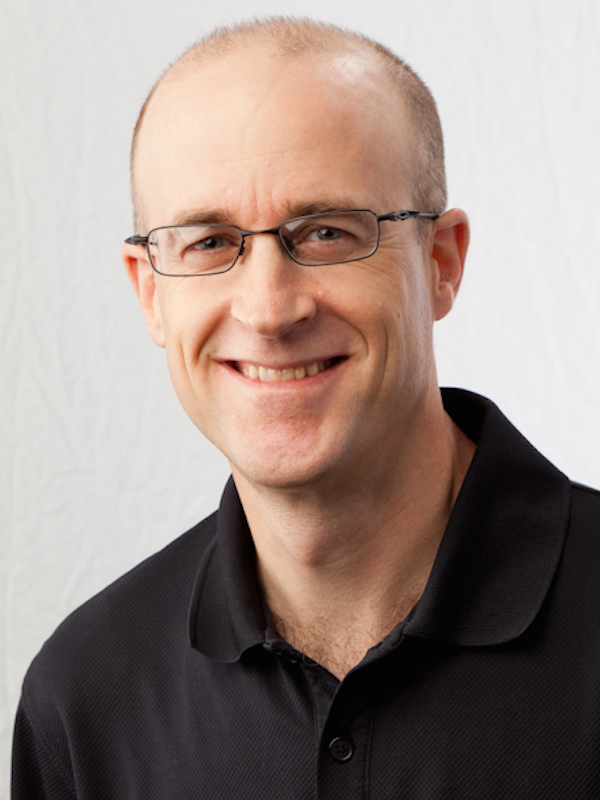
Klaus Thoeni is an Associate Professor in Civil Engineering and Associate Dean Research (Industry Engagement) at the University of Newcastle's School of Engineering. With over 15 years of expertise, he specializes in advanced numerical methods including Boundary/Discrete/Finite Element Methods applied to rock mechanics, geomechanics, mining engineering, and underground excavations. His research focuses on: Computational geomechanics and granular mechanics Rockfall protection systems and slope stability Photogrammetry and 3D monitoring Particle-based modeling of geomaterials He currently teaches courses such as ENGG1002 (Introduction to Engineering Computations) and CIVL2050 (Engineering Computations and Probability), and supervises final-year projects. Recent articles demonstrate strong focus on: Rock slope monitoring and hazard assessment DEM-BEM coupling techniques Industrial safety in mining operations Uncertainty quantification in granular systems Awards and honors include: Industry Engagement Excellence Award (2021) Excellence Award for Research Supervision (2020) Outstanding Research Award (2017) IACMAG Excellent Paper Award (2014) Amann Award (2003) He leads industry-funded projects and contributes to the open-source discrete element software YADE. His team develops photogrammetric monitoring systems for geotechnical applications, with focus on mining and infrastructure safety.
Prof. HongKun Zhang is a Professor in the Department of Mathematics and Statistics at the University of Massachusetts Amherst. Her research focuses on hyperbolic dynamical systems, chaotic billiards, and stochastic processes, with recent emphasis on machine learning applications in dynamical systems, financial mathematics, and graph neural networks. She has organized numerous conferences and holds significant grants, including NSF awards and Simons Foundation support. Key research areas include: Machine Learning of Dynamical Systems Chaotic Billiards and Ergodic Theory Graph Neural Networks Financial Mathematics Notable awards/grants: NSF Grant (DMS-2220211) for anomaly detection in human dynamics (2023–2026) Simons Foundation Collaboration Grant (2020) NSF CAREER Award (2012–2017) Her work bridges pure mathematics with applications in finance, physics, and machine learning, with recent publications in Chaos , Physical Review E , and Neural Networks .
Dr. Luigi Ferraioli is a Researcher at ETH Zurich's Institute of Geophysics, under the Professorship for Seismology and Geodynamics. His work focuses on advanced instrumentation for space-based gravitational wave detection, precision measurement systems, and cosmic ray studies. Key contributions include the LISA Pathfinder mission analysis, seismic sensor design, and data-driven approaches to gravitational wave astronomy. Research interests span seismology, geodynamics, and interdisciplinary applications of space technology. He has extensively contributed to LISA Pathfinder mission analysis, exploring noise mitigation, magnetic force characterization, and sensor calibration. His work bridges theoretical astrophysics with practical engineering solutions for space missions. Publications highlight expertise in gravitational wave detection, precision actuator systems, and machine learning applications for astrophysical data analysis. Current projects involve advancing instrumentation for future missions like LISA and asteroid geophysical exploration.
Christos Christodoulou is a Professor and Director of COSMIAC (Aerospace Research Center) at the University of New Mexico’s School of Engineering. He leads the Department of Electrical and Computer Engineering and previously served as Department Chair (1999-2005) and Dean of the School of Engineering (2017-2023). His research focuses on antennas, high-power microwaves, wireless communications, and machine learning applications in electromagnetics. Education: PhD in Electrical Engineering (North Carolina State University, 1985), MS in Electrical Engineering (North Carolina State University, 1981), and BS in Physics and Mathematics (American University in Cairo, 1979). Research interests include cognitive radio antennas, reconfigurable systems, and electromagnetic shielding. He has published over 600 papers, 18 book chapters, and 9 books. Awards include IEEE Fellow and Distinguished Lecturer (2007-2010). He advises students in doctoral and master’s programs, with over 40 PhD and 75 MS graduates. His work at COSMIAC emphasizes aerospace research, including antenna array design and millimeter-wave technologies.
Dr. Sam Smith is a Reader in Anthropology at the School of Law and Social Sciences, Oxford Brookes University. His research focuses on the Terminal Pleistocene and Early Holocene archaeology of South West Asia, with particular emphasis on the emergence of sedentary, food-producing societies and chipped stone tool analysis. University: Oxford Brookes University School: School of Law and Social Sciences Academic Rank: Professor (mapped from 'Reader') Sam specializes in typological, technological, and use wear analysis of stone tool assemblages, with fieldwork experience in the UK, Middle East, and Sub-Saharan Africa. He collaborates with geographers, hydrologists, and meteorologists to explore human-climate interactions in semi-arid regions. His projects include the Barqa Epipalaeolithic initiative and sedaDNA, Environmental Changes and Demography in Oman , funded by the Society of Antiquities of London (£14,907). Recent publications highlight his interdisciplinary work spanning Climate Science , Archaeology , and Ontology , with a focus on the Southern Levant Neolithic, atmospheric dynamics, and occupational data standards. He has supervised research students Sophie Edwards and Jon Gorrie. Sam's work integrates human origins , palaeoenvironmental reconstruction , and multidisciplinary methodologies , reflecting his leadership in the Human Origins and Palaeo Environments (HOPE) group and contributions to understanding early human societies in Jordan's Wadi Faynan.