Dr. Sarah Bentley is an Assistant Professor at Northumbria University, part of the Faculty of Engineering and Environment. She holds a PhD in Mathematics from the University of Reading (2019) and a MMath from Durham University (2013). Her research focuses on space physics, space weather forecasting, and the application of machine learning to understand magnetospheric dynamics. She investigates ultra-low frequency (ULF) waves and their role in energizing Earth’s radiation belts, with a particular interest in developing predictive models for space weather impacts. Joined Northumbria as a Vice-Chancellor's Fellow in 2020. Current projects include STFC-funded research on solar and space physics, emphasizing radial diffusion and wave-particle interactions. Her work bridges computational methods and physical phenomena, leveraging AI to analyze large datasets from spacecraft observations. She supervises PhD students in topics like graph neural networks for magnetic field characterization and machine learning-driven space weather forecasting. Key contributions include probabilistic models for ULF wave prediction, radial diffusion benchmarking, and causal network analysis for space weather variables. She actively engages in EDI initiatives, advocating for neurodivergent inclusivity in academic environments.
Dr. Faheem Khan is a Reader in Electronic Engineering at the University of Huddersfield's School of Computing and Engineering, and Course Leader for the MSc in Electronic and Automotive Engineering. With over 20 years of academic and research experience across institutions in the UK, Oman, UAE, and India, he has contributed significantly to wireless communications and signal processing. His career includes postdoctoral research at the University of Edinburgh, where he managed EU and EPSRC projects. Education: PhD, Electrical and Electronic Engineering, Queen’s University Belfast (2012) MSc, Communication and Radar Engineering, Indian Institute of Technology Delhi (India) BSc, Electronics Engineering, Aligarh Muslim University (India) Research Interests: Focuses on 6G Communications, Full-duplex Systems, IoT Networks, and Cognitive Radio. His work integrates machine learning, MIMO systems, and spectrum sharing to advance wireless technologies. He leads projects funded by Innovate UK (e.g., RF transceiver design for deep space) and EU Horizon grants (e.g., AI-driven spectrum sharing in 6G). Grants & Contributions: Principal Investigator of £0.5M Innovate UK AKTP grant for RF transceiver design Co-investigator in EU Horizon projects (e.g., EVOLVE, MOTOR5G) totaling €4M Authored successful EPSRC proposals like MANGO (Non-orthogonal access in 5G) Awards: Fellow of the Higher Education Academy (FHEA) Over 600 citations and an h-index of 18 Teaching & Supervision: Leads modules like Analogue System Integration and supervises PhD students in wireless systems and IoT. Collaborations: International partnerships include National Sun Yat-sen University (Taiwan) for AI-driven spectrum sharing and European institutions for 6G research.
Alexander Korobkin is a Professor of Applied Mathematics at the University of East Anglia, leading the Fluids & Structures Group within the School of Engineering, Mathematics and Physics. He is also affiliated with the Sustainable Energy research cluster. His work focuses on unsteady hydrodynamics and hydroelasticity, particularly interactions between fluids and rigid/elastic bodies. Key research areas include asymptotic analysis, boundary-value problems, and numerical methods for fluid-structure interaction. He has been involved in significant collaborative projects such as the Mathematics of Sea Ice (MoSI-UK) initiative and studies on energy-efficient naval operations in Arctic environments. His research has been supported by institutions like the Isaac Newton Institute for Mathematical Sciences and the Office of Naval Research Global. Recent studies explore nonlinear ice-liquid interactions, elastic shell water entry, and eigenmodes in hydroelastic systems. His work often integrates advanced numerical methods with theoretical frameworks to address real-world challenges in maritime engineering and environmental fluid dynamics. Collaborations span global institutions, reflecting his expertise in multiphase flows, flexural-gravity waves, and extreme fluid impact phenomena. He actively supervises PhD students in applied mathematics and related fields, offering guidance beyond formal program structures. His Fluids & Structures Group contributes to interdisciplinary projects, emphasizing both fundamental science and practical applications in sustainable energy and marine technology.
Mario Krenn is a Full Professor (W3) of "Machine Learning in Science" at the University of Tübingen since June 2025, leading the Artificial Scientist Lab. His research bridges artificial intelligence , quantum physics , and experimental design , focusing on developing AI systems that act as "artificial muses" to inspire novel scientific discoveries. ERC Starting Grant recipient (2024) for ArtDisQ project Developed PyTheus, a framework for AI-driven quantum experiment design Created XLuminA, a JAX-based simulator for microscopy and photonics Co-inventor of SELFIES, a robust molecular string representation His work has led to experimental implementations of AI-designed quantum protocols (e.g., entanglement without pre-existing resources) and gravitational wave detector concepts. He explores scientific understanding in human-AI collaboration, nonlocal interference phenomena, and the philosophical implications of AI-generated discoveries. Recent projects include predicting research trends via knowledge graphs and developing virtual reality tools to visualize AI-conceived quantum experiments. Scientific awards include the ERC Starting Grant 2024 and International Quantum Technology Emerging Researcher Award (Highly Commended) 2020 . He serves on the editorial board of Machine Learning: Science and Technology and actively promotes open science through GitHub repositories and community-driven initiatives.
Paolo Stegagno is an Associate Professor in the Department of Electrical, Computer, and Biomedical Engineering at the University of Rhode Island. His research focuses on advanced robotics, including multi-robot systems, mobile robotics, aerial robotics, and human-robot interaction. He leads projects in adaptive control, fault detection, and cooperative systems, with applications in underwater vehicles, swarm robotics, and soft robotics. Education : Ph.D., Systems Engineering, Sapienza Università di Roma (2012) M.S., Electronic Engineering, Sapienza Università di Roma (2008) B.S., Electronic Engineering, Sapienza Università di Roma (2005) Research Interests : Dr. Stegagno explores cutting-edge topics such as distributed control algorithms for multi-agent systems, adaptive learning for uncertain environments, and fault-tolerant robotics. His work combines theoretical advancements in control theory with practical implementations in aerial, underwater, and soft robots. Recent projects include cooperative transportation systems, swarm localization, and human-in-the-loop control for safer and more efficient robotic operations. Grants & Collaborations : PI: NSF RII Track-2 FEC grant on computational methods for predicting harmful cyanobacterial blooms using autonomous robotics (2023) Co-PI: Vision-based bridge damage detection using UAVs (2022) Co-PI: NSF Collaborative Research on distributed multi-agent control (2020) Labs & Teams : Leads the URI Robotics Lab, focusing on hardware-in-the-loop simulations, aerial robotics, and cooperative systems. Active collaborations with Dartmouth College and the University of Maine on environmental monitoring and structural inspection projects.
Professor Georgios E. Stavroulakis is a distinguished academic at the Technical University of Crete, where he serves as Professor in the Department of Production Engineering and Management within the School of Production Engineering and Management. He is also the Head of the Institute of Computational Mechanics and Optimization (Co.Mec.O) at the university. Additionally, he holds the position of Honorary Professor at the Department of Civil Engineering at the Jordan University of Science and Technology, and has qualifications as Privatdozent for Mechanics at the Carolo Wilhelmina Technical University in Braunschweig, Germany. His educational background includes: Diploma of Civil Engineering with highest honours (9.20/10) from Aristotle University of Thessaloniki, Greece (1985) PhD with honours from Department of Civil Engineering, Aristotle University of Thessaloniki, Greece (1991) Habilitation and venia legendi for mechanics from Carolo Wilhelmina Technical University, Braunschweig, Germany (2000) Professor Stavroulakis has made significant contributions to the fields of Computational Mechanics, Optimization, and Structural Analysis. His research focuses on nonsmooth and nonconvex mechanics problems, optimal design of materials and structures, solution of inverse problems, design of smart structures, and application of soft computing methods (neuro-fuzzy systems) in mechanics. His scholarly output demonstrates a clear trend toward integrating machine learning techniques with traditional computational mechanics approaches, particularly through physics-informed neural networks and data-driven computational homogenization, while maintaining strong work on masonry structures, smart materials, and vibration control. His notable recognitions include: Co-Editor of the Book Series on Stability, Vibration and Control of Systems (World Scientific Publishers) Member of the Editorial Board for Journal of Global Optimization Member of the Advisory Board for Book Series Nonconvex Optimization and Its Applications Elected member of the executive board of the Hellenic Society of Theoretical & Applied Mechanics Former president of the Greek Association of Computational Mechanics As an educator, Professor Stavroulakis has taught undergraduate and postgraduate courses at the Technical University of Crete since 2006, covering mechanics, optimization, and computational methods. He has supervised numerous students and organized major academic conferences including the 9th GRACM International Congress on Mechanics (2018) and the 10th HSTAM International Congress on Mechanics (2013). His laboratory, Co.Mec.O, serves as a research hub for computational mechanics and optimization at the Technical University of Crete, developing theory, algorithms, and software for structural analysis and computational mechanics problems.
Robert Nichols is a Research Professor (Not-In-Residence) at the University of Alabama at Birmingham (UAB), affiliated with the School of Engineering. His research focuses on advanced computational fluid dynamics (CFD), turbulence modeling, and high-speed flow simulations. He has contributed extensively to the development and validation of flow solvers like Kestrel, Firebolt, and COFFE, with applications in aerodynamics, propulsion, and aerospace systems. His work emphasizes boundary layer transition models, turbulence closure schemes, and high-fidelity numerical methods for complex flow phenomena. Nichols has collaborated with organizations such as the DoD HPCMP and NASA, addressing challenges in high-lift systems, weapons bay flows, and engine-airframe integration. His publications span over three decades, reflecting expertise in both fundamental and applied fluid dynamics research. Education and professional background details are not explicitly provided in the text, but his long-standing contributions to CFD tool development suggest a strong academic and industrial background in mechanical or aerospace engineering. His research also involves unstructured mesh techniques, sliding interfaces, and thermochemical modeling for high-enthalpy flows. Despite no explicitly listed awards, his prolific publication record underscores his influence in the field. Nichols’ advising and grant activities are not detailed here, though his role as a Research Professor likely involves guiding research projects and teams. His work is centered at UAB’s Education & Engineering Complex, contributing to both academic and defense-related computational fluid dynamics advancements.
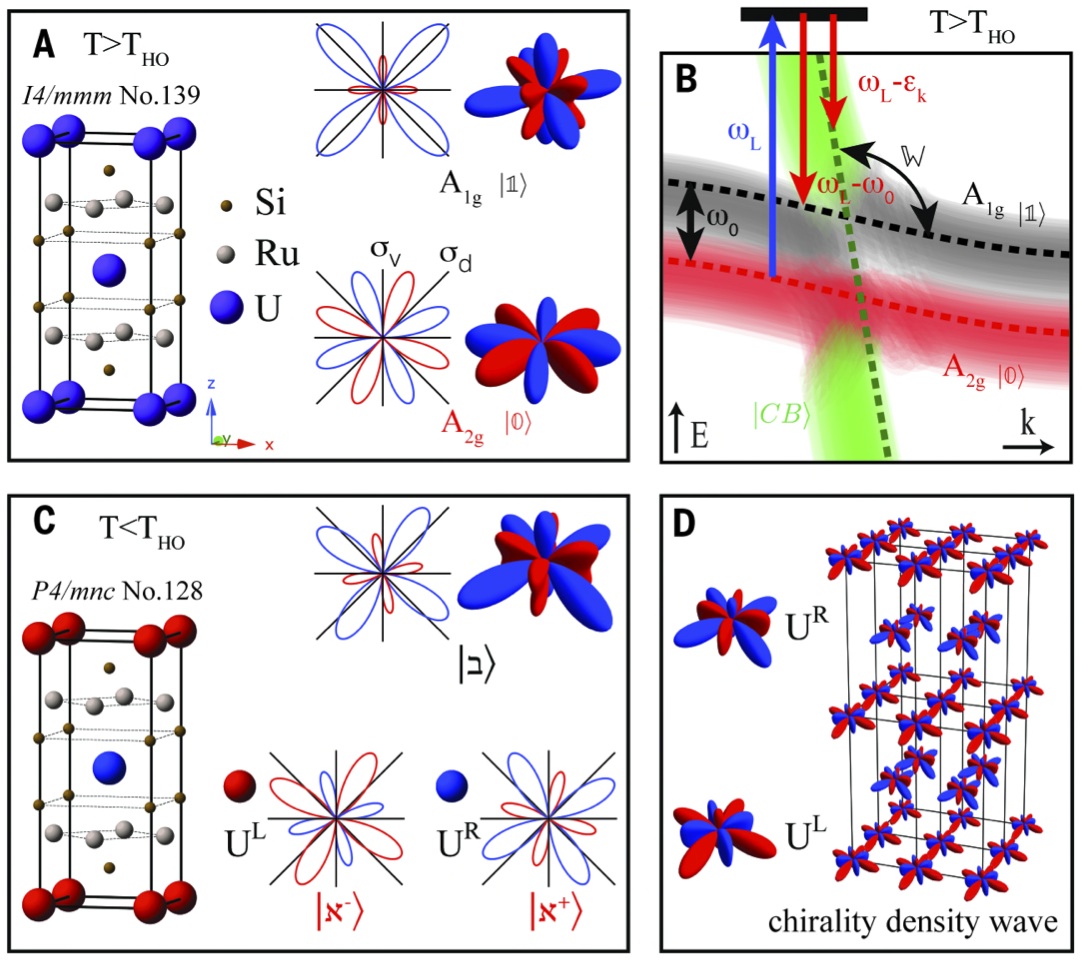
Kristjan Haule is a Distinguished Professor of Physics in the Department of Physics and Astronomy at Rutgers University, part of the School of Arts and Sciences. His research focuses on condensed matter theory, electronic structure theory, and algorithm development combining Dynamical Mean-Field Theory (DMFT) and Density Functional Theory (DFT). He specializes in studying correlated electron systems, strong correlations in materials, and their applications to energy and environmental challenges. Haule has held academic positions at Rutgers since 2005, progressing from Assistant Professor (2005) to Associate Professor (2009), University Professor (2012), and Distinguished Professor (2020). Education: B.Sc. (1997) and Ph.D. (2002) in Physics from the University of Ljubljana (Slovenia) and Karlsruhe University (Germany). Research highlights include predicting the hexadecapole order in URu 2 Si 2 and developing the eDMFT computational framework. His work bridges computational methods with experimental validations, such as collaborations with Girsh Blumberg on Raman spectroscopy. Key awards include the Blavatnik Award for Young Scientists (2013), Simons Fellowship (2020), and NSF CAREER Award (2008). He teaches advanced courses like Computational Physics and Many-Body Physics, and leads research groups exploring quantum materials. His lab focuses on predictive electronic structure methods and their application to novel superconductors and correlated systems.
Evangelos Markakis is an Assistant Professor at the Department of Information & Communication Systems Engineering (Hellenic Mediterranean University) with over 20 years of experience in Cybersecurity, Distributed Systems, and Fog Computing . His career spans roles in the Research & Development of Telecommunications Systems Laboratory 'PASIPHAE', 'Pagni' Hospital (Network Architect), and Horizon 2020 projects as Dissemination Manager (FORTIKA) and Technical Manager (EMYNOS). He holds a PhD in P2P Constellations in Broadband Networks (University of the Aegean) and has contributed to 60+ publications (H-index 11). BSc (2003): Applied Informatics & Multimedia, Technological Educational Institute of Crete MSc (2005): Data Communication Systems, Brunel University PhD (2014): P2P Constellations in Broadband Networks, University of the Aegean His research focuses on Secure Network Virtualization (SDN/NFV), Quantum-Resistant Cryptography , and AI-Driven Cybersecurity . Recent work explores 6G Network Security , UAV Communication Protection , and Privacy-Preserving Healthcare Systems . Key project involvements include: H2020-FORTIKA (GA740690): Dissemination Manager H2020-SMILE (GA740931): Researcher H2020-SPHINX: Security Architect Scientific contributions: Editor of IET Book on 'Cloud and Fog Computing in 5G Mobile Networks' Workshop Co-Chair: IEEE SDN-NFV Conference Initiator of CYBERSEC4HEALTH Workshop (EU TDS-02-2018 Projects) Active in IEEE and IEEE ComSoc He has led work packages in 20+ EU/Greek research projects, with expertise in IoT Security Frameworks , Federated Learning , and Quantum Communication Analysis .
Masoud Masoumi serves as Adjunct Professor in Mechanical Engineering at the Albert Nerken School of Engineering, The Cooper Union. His research integrates mechanical engineering principles with machine learning applications, focusing on renewable energy systems, structural analysis, and wave propagation phenomena. Key research domains include: Machine learning applications for wave energy conversion and offshore wind farms Computational modeling of ultrasonic wave propagation in structures Stress prediction in mechanical components using convolutional neural networks Fluid dynamics in biomass energy systems Development of wave energy converters for marine applications Masoumi's extensive publication record demonstrates consistent innovation in applying computational methods to renewable energy challenges, particularly in optimizing wave energy systems and developing predictive maintenance frameworks for offshore infrastructure. Recent work emphasizes data-driven approaches for ocean energy harvesting and structural health monitoring.
Aly Mousaad Aly is an Associate Professor in the Department of Civil and Environmental Engineering at Louisiana State University (LSU), where he has worked since 2019. Previously, he served as Assistant Professor at LSU from 2013-2019, Research Fellow at Western University (2012-2013), and Assistant Professor at Alexandria University (2010-2012). He earned his Ph.D. in Mechanical Engineering from Politecnico di Milano (2009), M.Sc. in Mechanical Engineering from Alexandria University (2005), and B.Sc. in Mechanical Engineering (2001). Research Interests include: Experimental and Computational Wind Engineering Structural Dynamics and Control under Wind/Earthquake Loads Smart Dampers (MR Dampers, TMDs) Coastal Protection and Sustainable Infrastructure Machine Learning for Natural Hazard Mitigation CFD Simulations and Open-Jet Facility Testing Recent Publications demonstrate expertise in wind-induced structural behavior, smart damper optimization, and multi-hazard resilience. His work spans computational efficiency in CFD modeling, aerodynamic mitigation for solar installations, and probabilistic approaches to structural control. Students and Alumni highlight his mentorship in wind engineering and structural control. Current and former advisees have pursued roles in AECOM, Brown & Brown Insurance, and academic institutions like University of Illinois Urbana-Champaign. Notable student achievements include LSU Discover Scholar Awards and LCOPRI ASCE Scholarship . WISE Research Group at LSU focuses on windstorm impact mitigation through interdisciplinary collaboration, integrating wind tunnel testing, CFD simulations, and machine learning. The group's capabilities include the LSU WISE Open-Jet Facility , advancing large-scale wind testing for solar panels and building designs.
Prof. Paolo Carloni is Director of the Computational Biomedicine group (INM-9) at the Institute of Neuroscience and Medicine (INM), Research Center Jülich. He holds a Professorship and has over 30 years of expertise in developing multiscale molecular simulation methods to study biomolecular systems. His research focuses on structure-function relationships of enzymes, neuroreceptors, and drug resistance mechanisms, leveraging high performance computing and machine learning. Research Interests: Multiscale simulation techniques (quantum to coarse-grained) Neurobiological processes and signaling cascades Drug design targeting neuroreceptors and RNA-binding proteins Metadynamics and free-energy calculations Exascale computing for biomolecular applications Recent Work: His publications emphasize computational drug discovery, ligand-receptor interactions, and understanding protein mutations linked to neurodegenerative diseases. He leads projects on exascale algorithm optimization and FAIR data principles in simulations. Awards: While no specific awards are listed, his Google Scholar h-index of 67 reflects significant academic impact. Lab & Collaborations: Active in the INM-9 lab, collaborating with Jülich Supercomputing Centre (JSC) and Helmholtz Association initiatives. His team focuses on computational tools like MiMiC and QM/MM simulations.
Aime LAY EKUAKILLE is an Associate Professor at the University of Salento's Department of Innovation Engineering, part of the Ecotekne Center in Lecce, Italy. His expertise spans instrumentation and measurement systems for biomedical, environmental, industrial, nanotechnology, machine learning, and photovoltaic panel aging applications. He is involved in interdisciplinary projects, such as smart sensors for telemedicine, energy-efficient robotic systems, and geothermal probe design. His research integrates advanced signal processing (e.g., wavelet transforms, machine learning algorithms) with sensor technology to address challenges in healthcare, environmental monitoring, and renewable energy. He has contributed to hardware-software solutions like solar-powered spectrophotometers and anti-theft systems for photovoltaic plants. Collaborations include international initiatives in nanotechnology, wearable devices, and IoT-based tele-rehabilitation. Key projects include: Development of a robotic arm for ball bearing sorting using size measurements and RFID. Designing a distributed edge computing architecture for leak detection in waterworks. Optimizing fertilizer dosing in smart fertigation pipelines through modeling and control. Investigating the magnetic behavior of nanosized contrast agents for medical imaging. He has presented at conferences such as IEEE MeMeA (2020), I2MTC (2020), and EnvImeko (2019, 2017). His work is supported by grants like the Ministry of Health's GR-2016-02361306 and Guangdong Province's 2019B010150002.
Pablo Ordejón is a CSIC Research Professor, Group Leader, and Director at the Catalan Institute of Nanoscience and Nanotechnology (ICN2). He earned his physics degree (1987) and PhD in science (1992) from Universidad Autónoma de Madrid. His career includes postdoctoral work at the University of Illinois at Urbana-Champaign (1992–1995) and roles at Universidad de Oviedo (1995–1999) and the CSIC’s Institut de Ciència de Materials de Barcelona. Since 2007, he leads ICN2’s Theory and Simulation Group. He has published over 225 articles, with 34k+ citations (h-index 63). Roles: CSIC Research Professor, ICN2 Director (since 2012), Group Leader Affiliations: ICN2, CSIC, Editorial Boards of Physica Status Solidi (since 2004) and Nanomaterials (since 2018) Research focuses on electronic structure calculations, large-scale atomistic simulations (e.g., SIESTA method), and materials properties at the atomic level. Key interests include nanoscale devices, 2D materials, and collaborations with industry. Awards include the Narcís Monturiol Medal (2018) and American Physical Society Fellowship (2005). His work spans computational methods, thermal transport in 2D materials, and corrosion inhibition. Recent articles address AI-driven materials discovery, charge density waves, and quantum transport phenomena. He co-founded SIMUNE, a spinoff for simulation technologies. Grants and advisory roles include ANEP’s Condensed Matter Physics panel (2003–2006) and the Spanish Supercomputing Network’s Physics and Engineering Panel (2005–2011).
Rafael Asorey-Cacheda is an active researcher in wireless communication and IoT technologies, with a focus on nanocommunication networks, error correction schemes, and environmental monitoring systems. His work spans collaborations with institutions and researchers like Antonio-Javier García-Sánchez and Joan García-Haro, resulting in publications in IEEE journals and conferences since 2001.