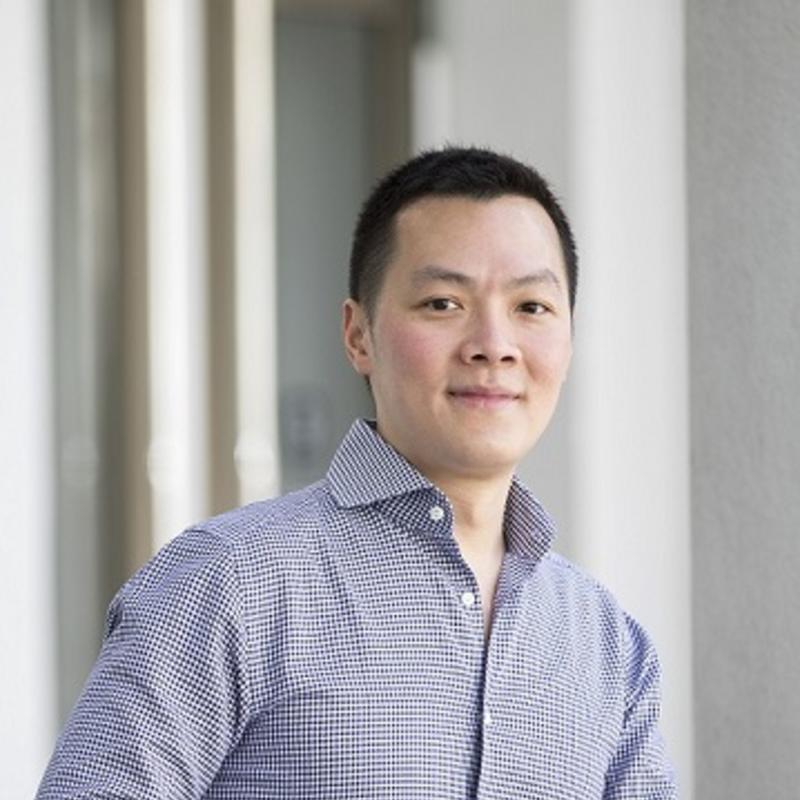
Yonglei Fan is a Visiting Professor at Queen Mary University of London's School of Electronic Engineering and Computer Science. His research focuses on interdisciplinary applications of sensor technologies, machine learning, and spatial analytics. Key areas include indoor positioning systems, human activity recognition, environmental monitoring, and public health analysis. He has contributed to studies on smart city infrastructure, pollution impact assessment, and energy resource forecasting. Research interests span technical innovations in sensor fusion (IMU/UWB/FMCW radar), Bayesian-based navigation algorithms, and environmental health studies using big data. His work integrates IoT and behavioral data to address challenges in urban sustainability, healthcare monitoring, and energy systems. Notable projects include analyzing dockless bike-sharing systems for urban mobility insights, developing contactless health monitoring systems, and evaluating indoor positioning technologies through competitive benchmarks. His research often combines experimental methods with advanced computational models to solve real-world problems in smart cities and environmental science.
Donald Lee is an Associate Professor in the Department of Biostatistics and Bioinformatics at Emory University. His research focuses on integrating machine learning and statistical methods to address challenges in healthcare analytics, survival analysis, and operations research. He specializes in developing predictive models for real-time clinical monitoring, healthcare resource optimization, and understanding cyclic patterns in customer or patient data. Key research themes include: Dynamic survival analysis using boosted nonparametric hazards Machine learning applications in ICU mortality prediction and invasive ventilation risk assessment Time-series analysis of clinical and customer data streams Cyclical arrival rate modeling and distributional forecasting His work bridges methodological advancements with practical healthcare systems optimization, particularly in emergency department operations and nursing productivity evaluation. He has developed open-source tools like BoXHED for scalable survival analysis, demonstrating commitment to reproducible research. Current projects involve refining real-time prediction systems using language models and exploring distributional forecasts beyond point estimates. While no specific awards are listed, his contributions to healthcare analytics demonstrate impactful interdisciplinary research.
Assoc. Prof. Lan Boon Leong is an Associate Professor at the Malaysia School of Engineering, Monash University. His research focuses on Biomedical Engineering, Quantum Physics, and Nonlinear Dynamics. He has received prestigious awards including the TWAS-UNESCO Associateship and teaching accolades such as the Vice-Chancellor’s Distinguished Teaching Award. His work addresses critical transitions in disease states (e.g., cardiac arrhythmia), quantum system approximations, and noise-enhanced balance mechanisms. Education: PhD in Physics (Georgia Institute of Technology, 1990), Master’s in Physics (Georgia Tech, 1989), BA in Physics and Mathematics (Hanover College, 1986). Research interests include biomedical engineering applications like lung cancer imaging and prostate cancer detection, alongside quantum dynamics and complex systems analysis. Key projects include investigations into voltage control in renewable energy grids and UAV swarm communication reliability. His teaching commitment includes the PHS1002 Physics for Engineering course. Recent publications span topics like UAV communication reliability, seizure classification via EEG, and cardiac alternans control. Media coverage includes features in NST, Phys.org, and The Star regarding cardiac arrhythmia research.
Dr. Mohd-Zulhilmi Paiz Ismadi is a Senior Lecturer at Monash University's School of Engineering, specializing in Mechanical Engineering. He holds a PhD in Fluid Mechanics of Bioreactors from Monash University (2013) and a BEng (Hons) in Mechanical Engineering (2009). His research bridges academia and industry, focusing on imaging techniques, stratified flow behavior, and non-destructive assessment. He has secured over RM2 million in grants and collaborates with multinational organizations. Dr. Ismadi teaches courses such as MEC2402 Engineering Design I and MEC4407 Design Project. His industrial expertise includes engineering consultancy for government/private sectors and development of machine learning-driven data interpretation systems. He serves as Head of Panel at Malaysia's Engineering Accreditation Council (EAC) and contributes to youth development via the Ministry of Youth and Sports. Research highlights include wind turbine performance optimization, crack segmentation using deep learning, and acoustic-enhanced water treatment. He has published 24+ articles and received the 2019 PVC Excellence in Education Award. Current projects involve Bayesian Monte Carlo methods for pipe damage assessment and single-pixel imaging via generative adversarial networks. Dr. Ismadi's work aligns with UN SDGs related to affordable energy and sustainable cities. He actively peer-reviews for journals like Measurement and IEEE Sensors Journal , and chairs accreditation panels for engineering programs.
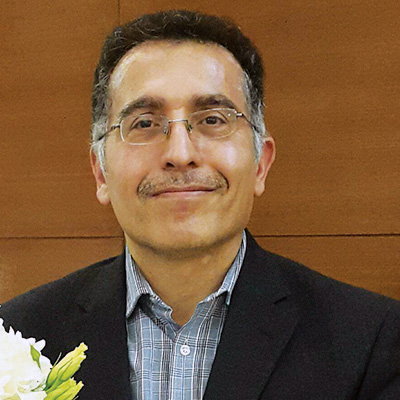
Seyed Mehdi Zahrai is an Adjunct Professor in the Department of Civil Engineering at the University of Ottawa. He holds a PhD in Structural Engineering from the University of Ottawa (1997), an MSc from the University of Tehran (Iran), and a BSc from Amirkabir University of Technology (Iran). His primary roles include academic research, professional engineering consulting, and leadership in educational administration. Dr. Zahrai has been a faculty member at the University of Tehran since 2014, serving as a Professor there and Deputy Director for Educational Affairs (2008–2014). Education: PhD (U Ottawa, 1997), MSc (U Tehran, 199?), BSc (Amirkabir U, 199?) His research focuses on seismic control systems, structural health monitoring, steel and concrete materials science, and sustainable construction. Key areas include damper systems (viscoelastic, magnetorheological), vibration mitigation, and retrofitting techniques for buildings and bridges. He has pioneered methods for shifting plastic hinges in connections and integrating AI into structural diagnostics. Research Themes: Passive/Active Control, Seismic Retrofits, Steel Connections, Concrete Materials With over 450 publications and 10 books, his work bridges theoretical and applied engineering. Recent studies explore time-delay compensation in fuzzy control systems and additive manufacturing for structural reinforcement. Key Projects: NSERC Postdoctoral Fellowship (NRC Canada, 1997–1999), Startup Firm Consulting, Multi-University Collaborations He has received the Governor General Gold Medal nomination and led international editorial boards. His advisory roles include directing large-scale construction projects in Iran and Canada, emphasizing practical seismic resilience strategies. Awards: NSERC Postdoc Fellowship, 2012 & 2018 Sabbaticals at Canadian Universities As an educator, he has supervised 180+ graduate students and developed curricula for civil engineering programs. His startup firms focus on applying academic research to real-world infrastructure challenges.
Javier Amezcua is a researcher specializing in data assimilation, numerical weather prediction, and atmospheric dynamics, affiliated with the University of Maryland. He holds a PhD in Atmospheric Sciences from the University of Maryland (2012), focusing on sequential data assimilation and numerical weather forecasting. His work bridges advanced statistical methods with meteorological modeling, particularly in ensemble Kalman filters, model error estimation, and tropical climate dynamics. Research interests include: Development of ensemble-based data assimilation techniques for improving weather and climate models Integration of observational data (e.g., infrasound, satellite) to enhance atmospheric wind field estimation Study of model error dynamics and their impact on forecast accuracy Applications in renewable energy, such as wind resource prediction and statistical-dynamical downscaling Notable contributions include advancements in ensemble transform filters, weak-constraint 4D ensemble variational methods, and the implicit equal-weights particle filter. Collaborations span institutions like the University of Reading, the Norwegian Meteorological Institute, and the European Centre for Medium-Range Weather Forecasts. His thesis explored sequential data assimilation methodologies, including the Ensemble Transform Kalman-Bucy Filter and the effects of time-stepping schemes in atmospheric models. Ongoing work emphasizes interdisciplinary applications of data assimilation in epidemiology and hydrology.
Pengtao Sun is a Professor in the Department of Mathematical Sciences at the University of Nevada, Las Vegas (UNLV). His research focuses on computational mathematics, numerical solutions of partial differential equations, and scientific computing, with applications in fluid-structure interaction, fuel cell dynamics, and clean energy technologies. Supported by NSF since 2009, his work emphasizes advanced numerical methods like the finite element method, finite volume method, and domain decomposition techniques. He has contributed to modeling fluid-structure interactions using ALE and fictitious domain methods, as well as studies on lithium batteries and PEM fuel cells. His research also explores energy-preserving algorithms and machine learning approaches for complex systems. Dr. Sun’s expertise includes anisotropic/isotropic adaptive finite element methods, phase field methods, and the development of efficient solvers for multiphysics problems. His recent work addresses challenges in deterministic lateral displacement problems and thermal management of energy systems. He collaborates with the Center for Applied Math & Statistics (CAMS) at UNLV and has published extensively on topics like blood pressure prediction via fluid-structure interaction modeling and mesh-free neural network methods. His research portfolio reflects a blend of theoretical advancements and practical applications, bridging computational mathematics with engineering and environmental science. While no awards are explicitly listed, his sustained NSF funding underscores the significance of his work in advancing numerical methodologies for complex physical systems.
Dr. Zhijing Liao is a Research Fellow at The University of Manchester, specializing in control systems and renewable energy. His research focuses on optimal control theory, model predictive control, and wave prediction techniques applied to offshore renewable energy systems. He has contributed to significant projects such as the Wave Energy Scotland Control Systems Project and the EPSRC-funded System-level Co-design Project for Wave Energy Converters. He holds a Doctor of Engineering from Queen Mary University of London (2017–2021), a Bachelor of Engineering from Politecnico Di Torino (2016–2017), and another Bachelor of Engineering from Beijing Institute Of Technology (2013–2017). His expertise spans control theory, wave energy systems, and offshore engineering. Research interests include advancing control strategies for wave energy converters (WECs), hybrid offshore platforms integrating wind and wave energy, and optimizing energy capture through predictive and nonlinear control methods. His work addresses challenges in real-time control, multi-mode motion systems, and multi-float configurations to enhance energy efficiency and system robustness. Recent work emphasizes sea-state-dependent control strategies, hardware-in-the-loop testing, and model predictive control frameworks tailored for nonlinear dynamics. Collaborations focus on validating control models through wave basin and tank testing, with applications to large-scale WEC demonstrators like the M4 system. Liao’s contributions aim to advance sustainable energy solutions aligned with UN Sustainable Development Goals, particularly in renewable energy deployment and climate action.
Jiarui "Gary" Lei is an Assistant Professor in the Department of Civil and Environmental Engineering at the National University of Singapore (NUS). Before joining NUS in 2021, he served as a Visiting Lecturer at the University of Massachusetts Lowell (2020–2021) and a Postdoctoral Associate at MIT (2019–2021). He holds a Ph.D. from MIT's Civil and Environmental Engineering program (2019), alongside B.S. degrees from the University of Michigan-Ann Arbor (Civil and Environmental Engineering, 2014) and Shanghai Jiao Tong University (Mechanical Engineering, 2014). His research focuses on environmental fluid mechanics, flow-vegetation interaction, and nature-based solutions for coastal protection. Key areas include wave attenuation over aquatic vegetation, hybrid coastal protection systems, and machine learning for underwater flow prediction. His work bridges academic contributions with practical applications in environmental sustainability and coastal community resilience. Teaching responsibilities include courses such as CE2134 Fluid Mechanics, CE5308A/QA Coastal Processes and Protection, and CE5317B/QB Nature-based Solutions to Coastal Protection. His awards include the James B. Angell Scholar (2014) and multiple honors from the University of Michigan. Lei’s research has explored topics like sediment accretion in seagrass meadows, turbulence effects on sediment resuspension, and kelp-based coastal protection. His interdisciplinary approach integrates experimental, analytical, and computational methods to address coastal challenges, with publications in journals like Science of The Total Environment and Journal of Fluid Mechanics .
Jorge Romeu is a Part-Time Lecturer with over 40 years of experience in teaching, research, and consulting in reliability, quality, and industrial statistics. He holds affiliations with Syracuse University (SU) as a Research Professor for sixteen years and has served as a Fulbright Scholar in multiple countries including Mexico, Dominican Republic, Ecuador, and Colombia. His expertise spans statistical education, international collaboration, and applied industrial statistics. Emeritus status from SUNY (retired 1998) Former Research Professor at SU Current affiliation: Part-Time Lecturer at SU His research focuses on statistical methodologies in engineering, international education initiatives, and historical demographic studies. He has pioneered statistical education programs for engineers and developed cross-border academic partnerships. His publications highlight contributions to statistical modeling in public health (Covid-19 analysis), engineering education reforms, and innovative applications of operations research techniques. Recent work emphasizes data-driven approaches to complex systems analysis. Awards: Chartered Statistician Fellow (RSS), Senior ASQ Member, Fulbright Scholar Active in professional service roles, Romeu has advised numerous institutions on quality management systems and led international educational exchanges through Fulbright programs. His current projects involve advancing statistical literacy among engineering students and promoting inter-American academic collaboration.
Shan Zhong is a Professor in the School of Mechanical, Aerospace and Civil Engineering at The University of Manchester. She holds a BEng and MEng from Tsinghua University and a PhD from the University of Cambridge. As the Head of the Aerodynamics Research Group, her work focuses on experimental fluid mechanics, flow control, and biofluid dynamics. Her research spans aerodynamics, turbulence, and low-Reynolds-number propulsion, aiming to enhance aerodynamic efficiency in turbomachinery and transportation systems. Supported by grants from EPSRC, Royal Society, and industry partners like Airbus and BAE Systems, her contributions include over 140 publications and the supervision of 23 PhD students. Research interests include boundary layer transition, flow separation control, fluid mixing enhancement, and bio-inspired surface patterns. Prof. Zhong is a Fellow of the Royal Aeronautical Society and leads the Laser Processing Research Centre. Her work aligns with UN Sustainable Development Goals related to clean energy and industrial innovation. Education: BEng/MEng (Tsinghua University), PhD (University of Cambridge) Affiliations: Aerodynamics Research Group, Laser Processing Research Centre Grants: EPSRC, Royal Society, Leverhulme Trust, Airbus, BAE Systems Her research employs advanced techniques like PIV and synthetic jet actuators to study complex fluid phenomena. Current projects explore flow control strategies for reducing drag and improving propulsion efficiency in aerospace and land-based systems.
Edgar Choueiri is a tenured Professor of Mechanical and Aerospace Engineering at Princeton University, Director of the Electric Propulsion and Plasma Dynamics Laboratory (EPPDyL), and Director of the 3D Audio and Applied Acoustics (3D3A) Lab. He holds affiliations with the Astrophysical Sciences Department and Program in Plasma Physics. He earned his Ph.D. from Princeton University in 1991. His research spans advanced spacecraft propulsion, plasma dynamics, and 3D audio technologies. Key areas include magnetoplasmadynamic thrusters, lithium-fed propulsion systems, and spatial audio innovations like the BACCH 3D Sound technology. He has led over 40 research projects funded by NASA, AFOSR, and private entities, with two space experiments on the Space Shuttle and APEX spacecraft. Choueiri has authored over 220 publications and patents, advised over 100 students (10 PhD graduates), and developed novel courses in astronautics and plasma propulsion. His honors include a knighthood from Lebanon and leadership roles in the Electric Rocket Propulsion Society and AIAA’s Electric Propulsion Technical Committee. Education: Ph.D. in Mechanical and Aerospace Engineering, Princeton University (1991) Notable Projects: 3D3A Lab’s BACCH Sound, high-power lithium MPD thrusters for Mars missions Grants: Over $50M in funding from NASA, AFOSR, and NSF Awards: Knight of the Cedar (Lebanon), Lebanese Academy of Sciences President (2008) His labs focus on plasma thruster development, acoustic innovations, and space propulsion systems for future missions.
Ruben Doste is a Researcher in the Department of Computer Science at the University of Oxford. His work focuses on computational modeling for cardiac electrophysiology, digital twin development, and arrhythmia mechanisms. Supervised by Alfonso Bueno-Orovio, his research emphasizes patient-specific models, in silico clinical trials, and integrating medical imaging (ECG/MRI) with computational simulations. Key research areas include ventricular arrhythmia mechanisms, cardiac digital twins, and therapeutic evaluation through multiscale models. Develops open-source tools like MonoAlg3D for scalable cardiac simulations on GPU clusters. Explores sex-specific differences and drug responses in hypertrophic cardiomyopathy using computational frameworks. Recent work highlights the impact of scar heterogeneity, Purkinje network dynamics, and ischaemia on arrhythmogenesis. His pipeline for generating patient-specific ventricular models enables large-scale in silico trials. Collaborative efforts integrate experimental data with simulations to personalize therapy predictions. Notable contributions include analyzing ECG dynamics under anatomical variability, evaluating ranolazine's effects on arrhythmic substrates, and refining T wave pseudonormalisation mechanisms in stress testing scenarios. These studies bridge computational biology with clinical cardiology to advance precision medicine applications.
Feng Gu is a Professor of Computer Science at The College of Staten Island, CUNY, and a doctoral faculty member at The Graduate Center, CUNY. He holds a BS in Mechanical Engineering from China University of Mining and Technology, MS in Information Systems from Beijing Institute of Machinery, and MS/PhD in Computer Science from Georgia State University. His research focuses on Modeling and Simulation , Complex Systems , High Performance Computing , and Bioinformatics . Notable contributions include work on wildfire spread simulation, particle filters, and machine learning applications in healthcare and genomics. Recent grants include a $563,411 NSF grant for crime analysis and a $40,000 CUNY-IRG grant for obesity modeling. He has received awards such as the TMS/DEVS 2018 Best Paper Award and the 2018 Emerald Literati Award. His work bridges computational methods with real-world challenges in environmental science, cybersecurity, and social policy. Professional activities include serving as a reviewer for journals like IEEE Transactions and conferences like Winter Simulation Conference . He has organized sessions at events such as the International Conference on Cloud Computing and Big Data Analysis (ICCCBDA).
Nathaniel Morgan serves as an Adjunct Professor affiliated with a Mechanical Engineering department. He is currently a researcher at Los Alamos National Laboratory's X-Computational Physics Division, where he has worked since 2010. His career at LANL spans multiple divisions including Applied Physics (2005-2010), Theoretical Division (2003), and Engineering Sciences and Applications Division (2001-2002). Dr. Morgan received his academic training in Mechanical Engineering: Ph.D., Mechanical Engineering, Georgia Institute of Technology, 2005 M.S., Mechanical Engineering, Georgia Institute of Technology, 2003 B.S., Mechanical Engineering, University of Arizona, 2000 His research focuses on computational physics and engineering, specializing in developing advanced numerical methods for simulating complex physical phenomena. Dr. Morgan's work centers on creating transformative numerical approaches suitable for predictive simulations of multidimensional high-speed flows with shocks, contact discontinuities, disparate materials, complex strength models, and diverse equations of state. He has made significant contributions to high-order discontinuous Galerkin methods for simulating large deformation flows and developing explicit gas and solid dynamics codes optimized for heterogeneous supercomputing architectures including GPUs. Analysis of Dr. Morgan's recent publications reveals a strong focus on Lagrangian hydrodynamic methods, particularly discontinuous Galerkin approaches. His work spans computational physics, fluid dynamics, and high-performance computing, with applications in gas and solid dynamics. Key themes include mesh motion stability, multi-material flow simulation, and optimization of numerical methods for modern supercomputing architectures. His research demonstrates a consistent trajectory toward higher-order, more accurate simulation methods for complex physical systems. Dr. Morgan collaborates extensively with researchers at Los Alamos National Laboratory and likely supervises graduate students through his adjunct professorship, though specific advisees are not listed in the available information. His work appears to be supported by LANL resources and potentially external grants related to computational physics and high-performance computing. As a member of LANL's X-Computational Physics Division, Dr. Morgan contributes to advanced computational research teams focusing on hydrodynamics, material science simulations, and high-performance computing applications. His work supports LANL's mission in computational physics and national security-related research.