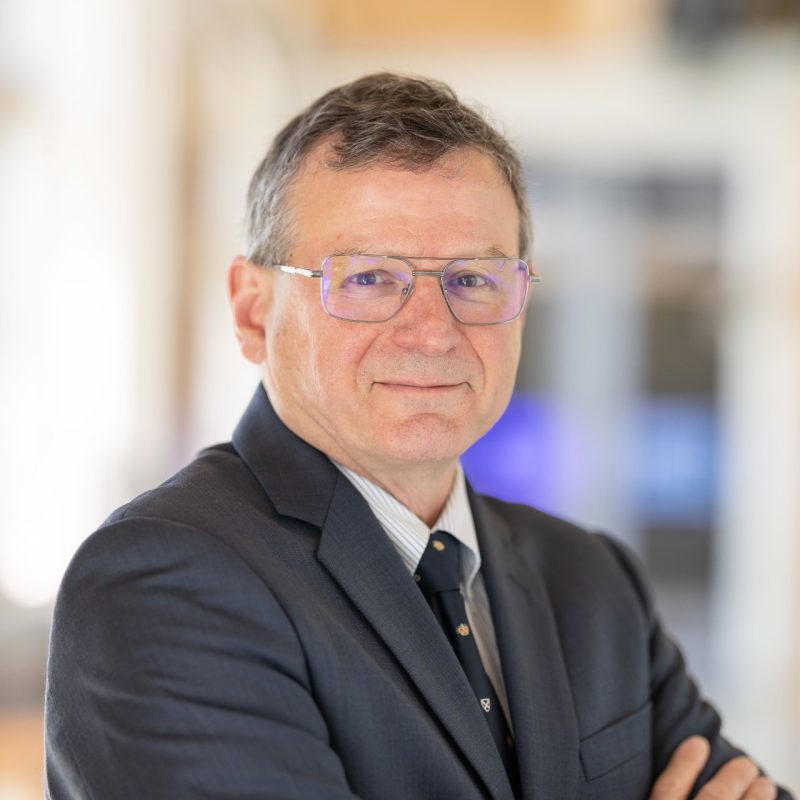
Professor Shiqiang Yan is an ocean engineering expert at City St George's, University of London , with over 25 years of academic experience. He obtained his PhD in Hydraulics (2007) from City University London, following MSc (2004) and BEng (1999) from Dalian Maritime University. His career includes Postdoctoral Research Fellow (2007-2012) and Lecturer (2012–present) positions at City University. Specializes in Wave-Structure Interaction and Extreme Sea Condition Modeling Developed QALE-FEM and ISPH-GNN hybrid numerical methods Research spans Wave Energy , Offshore Wind , and Marine Pollution Control His 15 most recent publications (2021-2025) demonstrate expertise in Wave-Structure Interaction (40% of articles), Hybrid Modeling (30%), and Renewable Energy Systems (25%). Key subfields include Wave-WEC Coupling , Ice Floe Dynamics , and Multi-Scale Hydrodynamic Modeling . He has advised PhD student Hao Yang (2013–present) on submerged oil spill research. Professional memberships include the International Society of Ocean & Polar Engineering (2013–present).
Huadong Yao is an Assistant Professor at the Department of Marine Engineering, Chalmers University of Technology. His research spans renewable energy , fluid-structure interaction (FSI) , and transportation systems , with a focus on offshore wind farms, wave energy, and aero/hydroacoustics. Multi-University Collaboration : Guest professorships at international institutions Leadership Roles : Coordinator of Horizon 2020 projects (e.g., IVANHOE) and guest editor for journals Key Organizations : Member of AIAA, SAE International, RINA, ICNMT, and ICES Working Group on Offshore Renewable Energy His research integrates CFD and FSI coding (OpenFOAM, in-house codes) with turbulence modeling (LES, SNGR) to address problems in marine hydrodynamics (e.g., rim-driven thrusters, wind-powered ship propulsion) and terrestrial transportation (high-speed train aerodynamics, urban air mobility). Recent work explores biomechanics (whiplash injury hydrodynamics) and battery cooling systems for electric vehicles. Current projects focus on: Optimization of wave energy converter farms (hexagon layouts, mooring fatigue) Hubless rim-driven thruster design (gap geometry, concave cavities) Hydrographic impacts of offshore wind turbines on marine environments Urban air mobility (UAM) aerodynamics Multidisciplinary Design Optimization (MDO) using machine learning He collaborates with institutions like AIAA, SAE, and ICES, and has received funding from Horizon 2020 and Swedish national agencies.
Giovanni Russo is a Full Professor of Numerical Analysis at the Department of Mathematics and Computer Science, University of Catania, Italy . He coordinates the PhD program in Pure and Applied Mathematics and has been a visiting scholar at institutions including Courant Institute, University of California, Los Angeles, University of Michigan, and University of Bordeaux. His career spans over four decades across academia and research institutions. Education: PhD in Physics (1986, University of Catania), Laurea in Nuclear Engineering (1982, Politecnico di Milano). Research Interests: Russo specializes in Computational Fluid Dynamics , Numerical Methods for Conservation Laws , and Kinetic Equations . His work includes asymptotic preserving schemes , IMEX methods , semi-Lagrangian schemes , and high-order numerical techniques for PDEs with applications to fluid dynamics, plasma physics, and multiscale modeling. Scientific Trends: Recent publications focus on modeling epidemic dynamics , kinetic equations for inert mixtures , semi-Lagrangian methods , and uncertainty quantification in quantum systems. These works reflect his expertise in high-order numerical schemes , multiscale analysis , and applied mathematical modeling . Scientific Awards: CNR-NATO Fellowship (1987) Advising and Grants: Russo has supervised nine PhD students and served as Principal Investigator (PI) for major projects including MOSCOVID (modeling COVID-19) and ModCompShock (Horizon 2020 Marie Curie project). He has also organized international conferences like the 18th European Conference on Mathematics for Industry with 370 participants. Labs and Teams: Russo collaborates with research groups at the University of Catania and has been a visiting researcher at Courant Institute, University of Michigan, and GSSI L’Aquila. He contributes to journals as an editor and reviewer, including SIAM Journal of Numerical Analysis and Journal of Computational Physics .
Dr Matthias Kramer is a Senior Lecturer at the UNSW Canberra , School of Engineering and Information Technology. He has previously worked at the University of Queensland and the University of Stuttgart. His research focuses on open-channel hydrodynamics with an emphasis on multiphase flows, hydraulic structures, and measurement instrumentation. Education: PhD from University of Stuttgart (2015) on 'Air demand of impulse turbines in counter pressure operation' His research interests include open-channel flow dynamics, multiphase flow analysis, and the development of innovative flow measurement technologies . He has extensively published on topics such as air-water flow properties , turbulent free-surface flows , and plastic pollution transport in fluvial systems. His recent publications demonstrate a focus on environmental engineering , with strong emphasis on fluid dynamics , instrumentation , and hydrological systems . These works include studies on air-water flow measurement , plastic transport modeling , and hydraulic structure design . Dr Kramer has received multiple scientific awards including: UNSW Rector Funded Visiting Fellowship Research Infrastructure Scheme (Combined open-channel/wave flume) Substantial merit-based startup grant (UNSW Canberra) Establishment award (UNSW Canberra) DFG research fellowship on 'Air-water mass transfer at hydraulic structures' He currently supervises PhD candidate Hanwen Cui (joint with Dr Stefan Felder) and Masters student Reilly Cox (UNSW Sydney). Dr Kramer is involved in hydro-environmental research infrastructure at UNSW and serves on the Editorial Panel of ICE Water Management .
Dr. Anna Cai is a Lecturer in the Department of Applied Mathematics within the School of Mathematics & Statistics at the University of New South Wales (UNSW), a position she has held since 2011. Prior to this, she served as a postdoctoral researcher and lecturer at the University of California, Irvine from 2007 to 2011. Her educational background: Ph.D., The University of Melbourne, 2008 B.Sc. (First Class Honours), The University of Melbourne, 2004 Dr. Cai's research centers on Mathematical Biology , with specialization in cell migration dynamics , developmental pattern formation , and robustness in biological systems . She employs multi-scale mathematical modeling and stochastic analysis to investigate phenomena ranging from wound healing to zebrafish hindbrain development. Her work bridges theoretical mathematics with experimental biology to decode fundamental mechanisms governing cellular behavior and morphogenesis. Analysis of her 11 publications (2006-2015) reveals an evolutionary trajectory from foundational work on cell migration mechanics to sophisticated studies of developmental robustness. Early research established mathematical frameworks for wound-healing assays and immune cell dynamics, while later work pioneered noise-driven pattern formation models in zebrafish. A unifying thread is her focus on how biological systems maintain precision despite environmental fluctuations. Administrative responsibilities include: Applied representative on the postgraduate review committee UNSW study abroad and exchange course authority Current teaching assignments: MATH2121: Theory and Applications of Differential Equations MATH2018: Engineering Mathematics 2D Prior courses taught: MATH3041: Mathematical Modeling for Real World Systems MATH6781: Biomathematics
Dr. Istvan Ballai is a Senior Lecturer in Applied Mathematics at the School of Mathematical and Physical Sciences , University of Sheffield. His research focuses on MHD waves in solar and interplanetary plasmas , particularly their role in energy transport, plasma heating, and diagnostics. University : University of Sheffield Email : i.ballai@sheffield.ac.uk His work encompasses linear and nonlinear wave phenomena in partially ionized plasmas, with applications to solar corona heating and wave-based plasma diagnostics. Recent publications highlight advancements in modeling Alfvén waves , solar vortices , and photospheric flux tubes . Articles span 2025–2022 , emphasizing numerical simulations and observational analysis of wave propagation, energy concentration, and instability dynamics. Dr. Ballai has received grants from Leverhulme , Royal Society , Nuffield , and STFC , and contributes to teaching in Differential and Difference Equations , Complex Analysis , and Numerical Methods .
Gregg Trahey is the Robert Plonsey Distinguished Professor of Biomedical Engineering at Duke University, with additional appointments in Radiology. He leads pioneering research in medical ultrasound imaging and serves as a Bass Fellow, reflecting his significant contributions to both research and education. B.S. from University of Michigan, Ann Arbor (1975) M.S. from University of Michigan, Ann Arbor (1979) Ph.D. from Duke University (1985) Dr. Trahey's research focuses on medical ultrasound, image guided surgery, adaptive imaging, imaging of tissue's mechanical properties, and radiation force imaging . His laboratory develops and evaluates novel ultrasonic imaging methods with current projects involving high resolution imaging of the breast and mechanical characterization of both breast and cardiovascular systems. They conduct comprehensive testing through phantom models, animal trials, ex vivo experiments, and human clinical trials, with current clinical applications focusing on vascular plaque imaging and breast lesion characterization. Analysis of Dr. Trahey's recent publications (2022-2025) reveals a strong emphasis on spatial coherence techniques, adaptive ultrasound imaging systems, and quantitative tissue characterization. His work bridges engineering innovation with clinical applications, particularly in cardiac and breast imaging, with key themes including clutter reduction, real-time adaptive systems, and mechanical property assessment of tissues. Fellow, Institute of Electrical and Electronics Engineers (IEEE), 2022 MERIT Award, National Institutes of Health, 2009 Fellows, American Institute for Medical and Biological Engineering, 1999 Dr. Trahey has taught courses including MEDPHY 738: Radiology in Practice, ECE 392: Projects in Electrical and Computer Engineering, and BME 848L: Radiology in Practice. His research is supported by significant funding, particularly from the National Institutes of Health as evidenced by his prestigious MERIT Award, which provides extended grant support to researchers with exceptional performance. Dr. Trahey leads an active research laboratory that conducts comprehensive studies from phantom development through clinical trials. His team collaborates extensively with clinicians for translational research applications, particularly in cardiology and radiology. Current projects focus on high-resolution imaging techniques, mechanical tissue characterization, and development of novel ultrasound methods for improved diagnostic capabilities while maintaining patient safety.
Murat Monkul is a Professor in the Department of Civil Engineering at Yeditepe University's Faculty of Engineering. With expertise in geotechnical engineering and soil mechanics, his research focuses on liquefaction behavior of sands and silty soils, seismic stability, and sustainable soil utilization. PhD, MS, and BS degrees in Civil Engineering Specializes in cyclic/monotonic loading effects on soils Developed automated testing systems for soil stability Investigates lunar soil simulants for space applications His recent work explores microplastic contamination effects on soils, advanced liquefaction criteria using CPT data, and innovative soil stabilization methods. Notable projects include EU-funded research on silt characteristics and USD40,000 FHWA corrosion study.
Philippe Tassin is a Professor of Physics at Chalmers University, specializing in electromagnetic structured media and computational electrodynamics. He teaches optics, quantum mechanics, and computer science courses, earning recognition through the Golden Chalk award and Chalmers' Pedagogical Prize. M.Sc. and Ph.D. (summa cum laude) from Free University of Brussels Postdoctoral work at Iowa State University and Ames Laboratory (US DOE national lab) His research spans metamaterials, plasmonics, and nanophotonics, with significant contributions to inverse design methodologies using machine learning. He has authored influential papers in Science , Nature Photonics , and Physical Review Letters , and frequently presents at international conferences. Recent publications highlight advancements in liquid metal composites for electromagnetic absorption, AI-driven metasurface design, and adaptive meshing for photonic simulations. His work integrates computational physics with experimental validation across multiple electromagnetic domains. KAW Fellowship Swedish Research Council Grant IEEE & SPIE Fellowships BAEF Alumni Award Frans Van Cauwelaert Award (Royal Flemish Academy) As editor of Photonics and Nanostructures , member of the Young Academy of Sweden, and vice-chair of IEEE Photonics Sweden Chapter, he actively contributes to academic leadership and public science communication.
Amit Kumar Agarwal is a Professor in the Department of Physics at the Indian Institute of Technology Kanpur. He specializes in condensed matter theory with research interests spanning topological materials, collective excitations, and nanoscale device modeling. His educational background includes a PhD from IISc Bangalore on transport in quantum systems, an MS from IISc, and a B.Sc. in Physics Honors from Delhi University. Research Focus: Prof. Agarwal investigates electronic structures of topological materials, surface states using ARPES, magneto-transport phenomena, superconductivity, plasmonic excitations (EELS), charge density waves, and nanoscale device physics including negative capacitance FETs and ferroelectric devices. His work bridges fundamental quantum phenomena with potential technological applications in nanoelectronics and photonics. Publication Trends: Recent articles (2018-2020) demonstrate a focus on Dirac/Weyl semimetals, plasmonic behavior in 2D materials, and topological quantum phenomena. His research consistently combines theoretical modeling with experimental validation techniques like EELS and transport measurements. Awards & Honors: N. S. Satya Murthy Memorial Award in Physics (2016) P. K. Kelkar Research Fellowship (2017-2020) ICTP Junior Associate (2016-2021) NASI-Young Scientist Platinum Jubilee Award (2013) INSPIRE Faculty Fellowship (2012-2017) Marie Curie Postdoctoral Fellowship (2009-2012) Kumari L. A. Meera Memorial Medal for best PhD thesis (2010-2011) He leads the Theory and Simulation Lab at IIT Kanpur's Old Core Labs Building and maintains active collaborations with international research groups in Italy and beyond.
Kegang Ling is an Associate Professor in the Department of Energy and Petroleum Engineering at the University of North Dakota (UND) College of Engineering & Mines. He is also the Undergraduate Program Director for Petroleum Engineering, teaching courses like Reservoir Rock Properties and Natural Gas Engineering. With over 25 years of industry experience, his work bridges academia and practical applications in unconventional reservoirs. Ph.D., Petroleum Engineering, Texas A&M University (2010) M.S., Petroleum Engineering, University of Louisiana at Lafayette (2006) B.S., Geology, China University of Petroleum at Beijing (1995) His research focuses on CO2/H2 storage, natural gas engineering, and production optimization. Recent work applies discrete element modeling to rock properties and machine learning to EOR screening. He leads projects on fly ash utilization for drilling fluids and leakage detection in pipelines, emphasizing sustainability and efficiency. The last five years of publications show expertise in unconventional reservoir geomechanics, CO2 storage, and solvent-based EOR. Collaborations with SPE conferences and NSF-funded projects highlight interdisciplinary and applied trends. Keywords span Petroleum Engineering , Rock Mechanics , and Machine Learning , with subfields like huff-n-puff EOR and wellbore flow assurance . Scientific Awards & Funding: SPE Faculty Enhancement Travel Grant (2013, 2014) NSF Grant ($585,405): Nano-scale hydrocarbon thermodynamics NDIC Grants ($6.7M total): CO2 EOR, geomechanics, drilling fluids Research North Dakota Grant ($178,000): Cell mechanics for cancer diagnosis He has advised 5 graduate students (Ph.D./M.S.) and contributed to 130+ publications. Current funding includes projects on produced water treatment and molecular thermodynamics in nano-scale pores.
Rafael Sebastian is a Full Professor at Universitat de Valencia and General Director for Science and Research of the Generalitat Valenciana. He leads the Computational Multiscale Simulation Lab (CoMMLab) and collaborates with institutions like Oxford University and Yale University. Department of Computer Science, Universitat de Valencia CoMMLab Founder Spanish Network of Excellence in Cardiac Modeling His research focuses on multi-scale computational models and artificial intelligence for patient-specific cardiac simulations , aiming to improve arrhythmia risk stratification and therapy planning . Key topics include cardiac conduction system modeling , scar-related ventricular tachycardia , and machine learning pipelines for clinical applications. Recent publications emphasize automata-based simulations for atrial arrhythmias, machine learning in arrhythmia localization, and 3D geometric characterization of aortic diseases. Trends show integration of computational modeling with clinical data and medical imaging . Scientific Awards: Best Poster Award, Functional Imaging and Modeling of the Heart (2021) Cum Laude Award, SPIE Medical Imaging (2009) Student Presentation Award (2011) He has supervised 7 PhD/Master students and led grants exceeding €1 million, including projects like iSARC-GENETICS and iCardioTwins , focusing on digital twin technology and cardiac disease stratification .
Prof. Dr. Igor Lesanovsky is a leading researcher in quantum physics at the University of Tübingen, where he heads the Arbeitsgruppe (Research Group) Lesanovsky within the Institute of Theoretical Physics, part of the Faculty of Mathematics and Natural Sciences. His research focuses on quantum many-body systems, particularly utilizing Rydberg atoms for quantum simulation, quantum information processing, and exploring non-equilibrium phenomena. His research interests span quantum many-body physics, Rydberg atom systems, quantum simulation techniques, non-equilibrium quantum dynamics, quantum thermodynamics, and quantum soft-matter physics. His group investigates how highly excited Rydberg atoms can be used to simulate complex quantum processes, study phase transitions, and develop applications for quantum information processing. They're particularly interested in emergent phenomena such as time-crystals, quantum glassiness, and non-ergodic behavior in quantum systems. The publication record shows a consistent stream of high-impact research, primarily in Physical Review Letters, Physical Review A, and other top physics journals. The research trends indicate a strong focus on quantum simulation with Rydberg systems, quantum non-equilibrium dynamics, quantum information applications, and increasingly on the intersection of quantum physics with machine learning. Recent work explores quantum neural networks, quantum measurement theory, and the application of large-deviation methods to quantum trajectory ensembles. Prof. Lesanovsky's research is supported by multiple prestigious projects including the BMBF Quantum Technology project 'Neural quantum networks on NISQ quantum computers', the DFG Excellence Cluster 'Machine Learning: New Perspectives for Science', DFG Research Units on long-range interacting quantum spin systems and quantum thermalization, the EU EIC Pathfinder Project 'Brisk Rydberg Ions for Scalable Quantum Processors', the QuantERA Project CoQuaDis, and The Center for Integrated Quantum Science and Technology (IQST). The group maintains strong connections with experimental teams, particularly in the areas of quantum simulation of interacting many-body systems and the development of matter wave interferometers and collectively enhanced electric field sensors. They collaborate extensively across Germany and internationally, with publications showing co-authorship with researchers from multiple institutions worldwide.
Danesh Tafti is the William S. Cross Professor and Associate Department Head for Graduate Studies in the Department of Mechanical Engineering at Virginia Tech. He holds a PhD from Pennsylvania State University (1989) and has held roles at institutions including the University of Illinois at Urbana-Champaign and West Virginia Institute of Technology. His research focuses on computational fluid dynamics (CFD) and heat transfer, with applications in gas turbines, biomedical systems, and renewable energy. Key research areas include turbulence modeling, fluid-structure interaction, and biofluid mechanics, leveraging high-performance computing. His work spans aerodynamics of flapping flight, cardiovascular flows, and particle-laden flows. Tafti leads the High Performance Computational Fluid-Thermal Science and Engineering Lab, developing tools like GenIDLEST software for complex fluid-thermal systems analysis. Education: PhD (Penn State, 1989), MS (Texas Tech, 1983), BE (Bombay University, 1980) Awards: ASME Fellow (2014), Virginia Tech Dean’s Research Award (2012) Labs: High Performance Computational Fluid-Thermal Science and Engineering Lab Publications emphasize CFD advancements, machine learning integration, and multiphase flow modeling. Tafti’s work bridges computational methods with real-world applications in energy systems, aerospace, and biomedicine.
J. Michael Ruohoniemi is a Professor in the Bradley Department of Electrical and Computer Engineering at Virginia Tech. His research focuses on space physics, ionospheric dynamics, and HF radar technology. He leads the Virginia Tech SuperDARN group, managing radar sites like Blackstone and Fort Hays to study magnetosphere-ionosphere coupling. His work contributes to understanding space weather phenomena like geomagnetic storms and traveling ionospheric disturbances. Education: Ph.D., University of Western Ontario (1986); B.S., University of King's College and Dalhousie University (1981). Research Interests: Ionospheric physics, HF radar development, magnetosphere-ionosphere coupling, space weather monitoring, and MSTID dynamics. His group collaborates internationally via the SuperDARN network funded by NSF. Recent Research Trends: Recent articles emphasize MSTID analysis, solar flare impacts, geomagnetic storm effects, and machine learning applications. Key topics include ionospheric conductivity, Joule heating, and global circulation models. Affiliations: Virginia Tech SuperDARN Group, HamSCI collaboration, and international radar networks. Operates radar sites in North America and Antarctica.