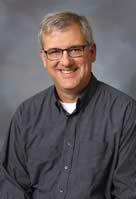
Eileen Martin is an Associate Professor in the Department of Geophysics and Applied Math and Statistics at the Colorado School of Mines. Her research focuses on near-surface geophysics, environmental monitoring, and the application of distributed acoustic sensing (DAS) technology. She leads projects involving fiber-optic sensing for permafrost degradation, urban seismic monitoring, and mining safety. Martin has developed open-source tools like DASCore and contributes to scalable computational methods for geophysical data analysis. Education: PhD (2018) in Computational and Mathematical Engineering from Stanford University; MS (2017) in Geophysics from Stanford; BS (2012) in Mathematics and Physics from UT Austin. Research interests include fiber-optic sensing systems, seismic imaging, data-intensive computing, and applications in environmental science. Her work bridges geophysics with computational methods, emphasizing real-world deployment in challenging environments like arctic permafrost sites and underground mines. Her recent work explores DAS for glacier monitoring, mine seismicity detection, and urban infrastructure assessment. Collaborative projects include Arctic permafrost monitoring and developing public datasets for geoscience research (PubDAS repository). Grants and lab activities include NSF CAREER funding for scalable computational seismology and partnerships with industry on fiber-optic monitoring solutions.
Ue-Li Pen is a Professor at the Canadian Institute for Theoretical Astrophysics (CITA), which is part of the Faculty of Arts & Science at the University of Toronto. His research focuses on theoretical astrophysics where basic physical effects can be isolated from astronomical complexities. His research interests include n-body and hydro simulations, origin of galaxy spin, dark energy studies through 21cm cosmology, baryon acoustic oscillations (BAO), absorber acceleration, and research on Fast Radio Bursts (FRBs) and pulsars related to gravitational waves, wave optics, and lensing. Current projects involve the non-linear dynamics of the cosmic neutrino background, 21cm intensity mapping, pulsar VLBI scintillometry, and the Canadian Hydrogen Intensity Mapping Experiment (CHIME). Analysis of recent publications shows Pen's work spans multiple cutting-edge areas in astrophysics, particularly focused on radio astronomy techniques, gravitational wave detection methods, black hole imaging, and cosmological measurements using 21cm radiation. His research often involves innovative applications of wave optics and interferometry to solve astrophysical problems. Professor Pen maintains an active research program with numerous recent publications in top astrophysics journals, demonstrating his continued leadership in the field of theoretical astrophysics and cosmology.
Prof. C. Armando Duarte is the Nathan M. Newmark Distinguished Professor in Civil and Environmental Engineering at the University of Illinois at Urbana-Champaign (UIUC). He holds affiliations with the Computational Science and Engineering Program and the National Center for Supercomputing Applications (NCSA). His research focuses on computational mechanics, particularly the Generalized Finite Element Method (GFEM/XFEM), multiscale modeling, fracture mechanics, and hydraulic fracturing. He has authored/co-authored over 100 publications and co-edited books on computational methods. Education: Ph.D. (1996) and M.Sc. (1991) in Engineering Mechanics from the University of Texas at Austin and Federal University of Santa Catarina, respectively, and a B.Sc. in Mechanical Engineering from the Federal University of Pernambuco. Professional Roles: Professor at UIUC since 2015, previously at the University of Alberta and visiting roles at institutions in Brazil, Portugal, and the Netherlands. He serves on editorial boards of computational mechanics journals and chairs committees for professional societies like USACM and ASCE. Research Interests: Multiscale problems, computational fracture mechanics, meshfree methods, and multiphysics simulations. His work emphasizes 3D fracture analysis, hydraulic fracturing, and thermal gradient modeling. Awards: Recognitions include the Nathan Newmark Professorship, USACM Fellowship, and multiple best paper awards. His work has been cited over 9,000 times, with papers featured in top journals like Computer Methods in Applied Mechanics and Engineering . Teaching: Renowned for excellence in courses like Finite Element Methods, Structural Analysis, and Computational Plates and Shells. His teaching accolades span over two decades at UIUC.
Professor Chuanzeng Zhang is a renowned academic currently serving as Professor (C4) and Chair of Structural Mechanics at the Department of Civil Engineering, University of Siegen, Germany. He has held leadership roles including Head of the Department of Civil Engineering (2015–present) and Director of the Institute of Structural Engineering (2007–2010). With a habilitation from Technical University Darmstadt and a PhD from Northwestern University, his research spans acoustic wave propagation, computational mechanics, and multifunctional materials. Education : PhD (Dr.-Ing.) from Northwestern University (USA), Habilitation from Technical University Darmstadt (Germany), Diploma (Dipl.-Ing.) from Technical University Darmstadt. Key Roles : Guest Professor at multiple Chinese institutions (Harbin Institute of Technology, Tongji University), Vice-President of the International Chinese Association for Computational Mechanics. Research interests include: Mechanics of smart materials and structures Wave propagation in phononic crystals Fracture mechanics in composite materials Computational methods for anisotropic solids Surface and interface effects in nanomaterials Multifunctional and functionally graded materials Recent Publications : His work focuses on advanced computational methods for wave propagation, fracture analysis, and smart materials, with applications in phononic crystals, piezoelectric composites, and functionally graded structures. Honors & Awards : 2015: Du Qinghua Medal for Computational Methods 2015: Member of European Academy of Sciences and Arts 2015: Honorary Doctorate from Slovak University of Technology 2014: Member of European Academy of Sciences Leadership & Collaborations : Led Senate Commissions, Research Advisory Committees, and DVM Working Groups. Maintains strong academic ties with institutions in China and Germany.
Emmanuel Fonseca is an Assistant Professor in the Department of Physics and Astronomy at West Virginia University (WVU), joining in Fall 2021. Previously, he was a postdoctoral researcher at McGill University (2016–2021) and completed his Ph.D. in Astronomy at the University of British Columbia (2016). His research focuses on radio astronomy, particularly pulsars and fast radio bursts (FRBs), leveraging facilities like CHIME, the Green Bank Telescope, and NANOGrav. He specializes in using pulsars as laboratories for testing fundamental physics and detecting gravitational waves via pulsar timing arrays. Education: Ph.D. in Astronomy, University of British Columbia (2016) M.Sc. in Astronomy, University of British Columbia (2012) B.Sc. in Physics and Astronomy, Pennsylvania State University (2010) Research Interests: Emmanuel’s work spans three key areas: Compact Objects: Investigating neutron stars and extreme environments using pulsar binaries and relativistic dynamics. CHIME Pulsar/FRB Science: Developing instrumentation and analyzing data from the Canadian Hydrogen Intensity Mapping Experiment to study FRBs and pulsars. Gravitational Waves: Contributing to NANOGrav’s efforts to detect nanohertz gravitational waves via millisecond pulsar timing arrays. Collaborations: He is a core member of NANOGrav and instrumental in maintaining CHIME’s pulsar and FRB backend systems. His work bridges hardware/software development with observational astronomy. Labs/Teams: Involved with the CHIME/FRB Collaboration and the NANOGrav Collaboration, advancing both observational infrastructure and theoretical astrophysics.
John Dolbow is a Professor in the Thomas Lord Department of Mechanical Engineering and Materials Science at Duke University, with secondary appointments in Civil and Environmental Engineering and Mathematics. He is a Bass Fellow and holds leadership roles as Associate Vice President for Research & Innovation since 2024. Education: B.S.M.E. (University of New Hampshire, 1995), M.S. (Northwestern, 1998), Ph.D. (Northwestern, 1999) Research Focus: Computational fracture mechanics, phase-field modeling, hydrogels, and multiphysics problems in geomechanics and biomedical engineering His recent work advances phase-field methods for fracture nucleation, hydraulic fracturing in geothermal systems, and laser lithotripsy simulations. Dolbow leads Duke's Computational Mechanics Laboratory, integrating civil, mechanical, and materials science approaches. Key contributions include: Erratum corrections for computational mechanics frameworks Nitsche-stabilized methods for interface constraints Phase-field models for surfactant-driven particle raft fracture Multi-resolution approaches for hydraulic fracture simulation Embedded FEM techniques for moving boundary problems Scientific Recognition: R. H. Gallagher Young Investigator Award (2005) Robert J. Melosh Medal for Finite Element Analysis (1999) DOE Computational Science Graduate Fellowship (1997) DOE CSGF Steering Committee Chair
Charles Gillan is a Senior Lecturer at Queen's University Belfast's School of Electronics, Electrical Engineering and Computer Science, affiliated with the High Performance and Distributed Computing department and the Institute of Electronics, Communications & Information Technology. His research bridges HPC systems, AI applications in healthcare, and computational physics. Key projects include managing ICU patient care via neural networks, exascale-ready mathematical packages, and edge computing architectures. Research interests focus on high-performance computing (HPC), quantum computing, real-time data analytics, and electron-molecule scattering simulations. Notable contributions include developing microserver architectures for edge analytics and advancing AI-driven clinical decision support systems. Gillan has collaborated on interdisciplinary projects like food authenticity testing using spectroscopy and improving ventilator management in intensive care units. Publications span AI in healthcare, HPC system design, and computational methods for physics problems. He has secured funding for initiatives such as the KTP partnership with Foods Connected Ltd and the HANDHELD olfactory detection project. Gillan's work emphasizes practical applications of advanced computing across healthcare, engineering, and cybersecurity domains.
Vishnu S Nair serves as Assistant Professor (Grade I) in the School of Earth, Environmental and Sustainability Sciences at IISER Thiruvananthapuram since January 2024, following postdoctoral positions at IRD-France (2022-2023) and UC Berkeley (2019-2021). His research bridges tropical meteorology and climate science with practical applications for monsoon forecasting and climate adaptation. Education PhD in Meteorology & Oceanography, ESSO-INCOIS/Andhra University (2011-2017) Dr. Nair's research centers on monsoon low-pressure systems, investigating their historical variability, climate change impacts, and connections to extreme rainfall events. He develops advanced tracking algorithms and dynamical downscaling techniques to improve climate projections for vulnerable regions like South Asia and Pacific Islands. His work integrates observational analysis, climate modeling, and real-time forecasting systems to address critical questions about monsoon dynamics under global warming. His 14 publications (2014-2023) reveal consistent focus on monsoon system behavior, with recent work emphasizing future projections of low-pressure systems and observed increases in extreme rainfall rates. Key methodologies include high-resolution modeling, global dataset creation, and teleconnection analysis between monsoons and phenomena like ENSO and IOD. Scientific Recognition Gold Medal for Best PhD Thesis, Andhra University (2018) Junior Research Fellowship with Lectureship, CSIR-UGC (2011) CLIPSSA Postdoctoral Fellowship at IRD-France (2022-2023) Monsoon Mission Postdoctoral Fellowship at UC Berkeley (2019-2021) Dr. Nair actively recruits PhD candidates (requiring CSIR-JRF/GATE fellowships) and offers winter/summer internships in tropical meteorology. His research is supported by international projects including CLIPSSA for Pacific Island climate adaptation and India's Monsoon Mission for forecasting improvements. He contributes to global monsoon datasets used by meteorologists worldwide and serves as referee for leading journals like Geophysical Research Letters . He leads the Monsoon Dynamics Research Group at IISER-TVM, collaborating with institutions including Météo-France, UC Berkeley, and Indian climate research centers. Current initiatives focus on dynamical downscaling for island-scale climate projections and real-time tracking systems for monsoon low-pressure systems.
Joseph Meadows is an Associate Professor in the Department of Mechanical Engineering at Virginia Tech's College of Engineering. His research focuses on combustion, heat transfer, and computational fluid dynamics, with applications in rotating detonation engines and thermoacoustic instability mitigation. He leads the Advanced Propulsion and Power Laboratory. Education: Ph.D., M.S., and B.S. in Mechanical Engineering from the University of Alabama and University of Memphis. Professional History: Associate Professor since 2025, Assistant Professor (2017–2025), and Combustion Design Engineer at Siemens Energy Inc. (2014–2017). His work bridges experimental and computational domains, emphasizing dynamic injector response , fuel inhomogeneity , and mesoscale wood combustion modeling . Recent publications highlight 2D/3D CFD comparisons and acoustic diagnostics in high-temperature environments. While no explicit awards are listed, his research impacts gas turbine design and clean energy systems.
Shunxiang Cao is an Assistant Professor at Tsinghua Shenzhen International Graduate School in China, where he has worked since July 2022. He earned his Ph.D. in Aerospace Engineering from Virginia Tech (United States) between August 2014 and August 2020 and completed his B.S. in Aerospace Engineering at Beihang University (China) from September 2010 to May 2014. Prior to his current role, he served as a Postdoctoral Scholar at the California Institute of Technology (United States) from November 2019 to May 2022. Teaches courses such as Advanced Numerical Analysis, Numerical Methods for PDEs, and Fluid-Structure Interaction simulations. Research Interests include fluid-structure interaction, computational fluid dynamics, shock/bubble dynamics, material failure analysis, embedded-boundary methods, resolvent-based optimization, Kalman inversion, high-intensity focused ultrasound, and digital twin technology. His work focuses on numerical modeling, optimization, and fluid-solid coupling mechanisms in diverse applications like underwater propulsion, energy storage membranes, and medical acoustics. Scientific Awards include the USNCCM16 Conference Award (2021), Graduate Fellowship at Virginia Tech (2014-2015), Merit Undergraduate Student in Beijing (2014), and Singapore Technology Engineering Fellowship (2010-2013).
Dr. Danielle Verdon-Kidd is an Associate Professor in Earth Sciences at the University of Newcastle, specializing in climate variability and extreme event analysis. Her research integrates palaeoclimatology, hydrology, and climatology to understand and mitigate climate-driven risks. She has held roles in the School of Environmental and Life Sciences since 2003, after completing her PhD in Civil Surveying & Environmental Engineering and Bachelor of Engineering (Environmental Eng) at the University of Newcastle. Education: PhD (Civil Surveying & Environmental Engineering), University of Newcastle Bachelor of Engineering (Environmental Eng), University of Newcastle Research Interests: Her work focuses on climate extremes (droughts, bushfires, tropical cyclones), palaeoclimate reconstructions, and interdisciplinary approaches to risk assessment. She emphasizes leveraging long-term data (e.g., tree rings, coral records) to inform water management, infrastructure planning, and community resilience. Key projects include collaborations with governments and industries to develop tools like CoastAdapt for coastal risk management. Publications & Awards: Over 100+ publications, including peer-reviewed journal articles and conference contributions. Notable awards include the Women in Research Fellowship (2018) and Envisage Program mentorship (2019). Advising & Partnerships: Supervises undergraduate and graduate students, fostering the next generation of climate researchers. Collaborates with federal/state agencies (e.g., NSW Department of Planning), water authorities, and international partners (e.g., University of Melbourne, Hydro Tasmania) to bridge scientific research and practical applications. Labs & Teams: Leads projects in palaeoclimate reconstruction, stochastic modeling, and climate adaptation. Active in interdisciplinary teams addressing climate change impacts on agriculture, biodiversity, and urban planning.
Professor Gert Brodin is a faculty member at the Department of Physics, Umeå universitet, serving as Deputy Head of Department and Assistant Head of Department. His research focuses on plasma theory, particularly in regimes where quantum mechanics and quantum electrodynamics (QED) intersect with plasma dynamics. Key areas include quantum plasmas in high-density environments, relativistic plasmas under ultrastrong electromagnetic fields, and nonlinear wave phenomena. He leads the Plasma Theory research group, exploring topics such as pair production in vacuum/plasma, QED effects in high-intensity laser interactions, and relativistic kinetic theory for spin-1/2 particles. His work employs advanced methods like von Neumann equations for density matrices, Wigner transformations, and the Dirac-Heisenberg-Wigner formalism. Recent publications address semiclassical theories in strong-field plasmas, relativistic Landau quantization, and radiation reaction effects. Brodin has collaborated extensively with researchers such as Haidar Al-Naseri and Jens Zamanian, advancing theoretical frameworks for quantum plasma dynamics. His research group’s projects include studying plasma behavior at the Schwinger limit, electron-acoustic wave damping via multi-plasmon resonances, and ultrafast electron hole dynamics. Brodin holds a Docent qualification and has contributed to influential journals like Physical Review E , Physics of Plasmas , and Reviews of Modern Plasma Physics .
James E. Aguirre is an Associate Professor in the Department of Physics and Astronomy at the University of Pennsylvania. His research focuses on understanding galaxy formation, cosmology, and large-scale structure through advanced instrumentation and observational techniques. He leads projects such as HERA (Hydrogen Epoch of Reionization Array) and TIM (Terahertz Intensity Mapper), dedicated to studying the early universe and distant star-forming galaxies. Aguirre’s work involves cutting-edge millimeter-wave and radio instrumentation design, including Z-Spec, PAPER, and MUSTANG. He has contributed to significant discoveries, such as detecting massive water reservoirs around quasars and determining distances to gravitationally lensed galaxies. Supported by NSF grants, his research bridges observational astronomy with cosmological theory. Education: Ph.D. in Astrophysics (thesis work on TopHat balloon-borne telescope). Teaching: ASTR011 Introduction to Astrophysics I. Current Projects: HERA, TIM, Simons Observatory, and PAPER. Grants: NSF Grant No. 0807990 and others. His research group collaborates on instrumentation like the Bolocam Galactic Plane Survey and explores techniques for mitigating calibration errors and improving signal analysis in radio interferometry. Aguirre’s efforts advance both observational methods and our understanding of cosmic evolution from the epoch of reionization to present-day galaxy formation.
Robert D Nevels is a Professor in the Department of Electrical & Computer Engineering at Texas A&M University. He holds the rank of Fellow in both the Institute of Electrical and Electronics Engineers (IEEE) and the Electromagnetics Academy (EM). His research focuses on analytical and numerical electromagnetics, nanophotonics, electromagnetic scattering, and antenna design. He has served as President of the IEEE Antennas and Propagation Society (AP-S) in 2010 and has been a member of its Administrative Committee during 1998-2001 and 2011-2014. His teaching excellence has been recognized through multiple awards, including the Region 5 Outstanding Educator Award and the University-level Distinguished Teaching Award from the Association of Former Students. Dr. Nevels earned his Ph.D. in Electrical Engineering from the University of Mississippi, followed by an M.S. from Georgia Institute of Technology and a B.S. from the University of Kentucky. His research interests emphasize advanced computational methods for electromagnetics, including FDTD techniques for nonlinear optics and propagator methods for wave analysis. His work spans theoretical foundations (e.g., Coulomb gauge formulations) and practical applications (e.g., antenna design for high-power systems). Key honors include: Eugene E.Webb'43 Faculty Fellow (Texas A&M) Twice recipient of the Outstanding Professor Award from IEEE Texas A&M Student Chapter Amoco Foundation Award for Distinguished Teaching Nevels has collaborated on grants related to electromagnetic scattering, plasma-based devices, and terahertz technology. His lab focuses on numerical methods and experimental validation of electromagnetic phenomena.
Dr. Brian Schmit is a Professor and Hammes Family Chair in the Joint Department of Biomedical Engineering at Marquette University and Medical College of Wisconsin (MCW). He serves as Associate Dean of Research for the department, Professor in the MCW Department of Physical Medicine & Rehabilitation, and Professor and Director of the MCW Clinical & Translational Science Institute. His work integrates engineering principles with clinical applications to advance neurorehabilitation. Dr. Schmit received his educational training at prestigious institutions: Ph.D. in Biomedical Engineering from Case Western Reserve University (1995) M.S. in Biomedical Engineering from Case Western Reserve University (1992) B.S. in Biomedical Engineering from Marquette University (1988) Dr. Schmit's research focuses on Spinal Cord Injury, Neurorehabilitation, Human Neurophysiology, and Biomechanics . His work explores neural control of movement, develops rehabilitation technologies, and examines biomechanical aspects of gait and balance in patients with spinal cord injury, stroke, and multiple sclerosis. He integrates advanced technologies such as virtual reality, neuroimaging, and electrophysiological techniques to develop innovative rehabilitation approaches. His laboratory environment fosters collaboration between engineers, clinicians, and scientists to translate research findings into clinical practice. Analysis of Dr. Schmit's recent publications reveals a strong emphasis on neurorehabilitation technologies , particularly virtual reality applications for hand dexterity recovery after cervical myelopathy surgery. His work prominently features balance and gait analysis in multiple sclerosis and spinal cord injury populations, with studies examining whole body angular momentum and reactive balance adaptations. Significant research efforts focus on stroke rehabilitation , investigating cortical activity during finger movements and muscle oxygenation in chronic stroke survivors. His scholarly output demonstrates a consistent trajectory toward developing evidence-based, technology-enhanced rehabilitation protocols with strong clinical translation potential. Dr. Schmit has secured substantial research funding: National Institutes of Health grant as Principal Investigator for "High-Intensity, dynamic-stability gait training in people with multiple sclerosis" (September 2022–June 2027) Advancing a Healthier Wisconsin Endowment grant as Principal Investigator for "Virtual reality training paradigm to rehabilitate hand dexterity in degenerative cervical myelopathy" (July 1, 2022–June 30, 2024) National Institutes of Health grant as Co-PI for "High-density surface EMG based CMAP scan for motor unit number estimation" (July 1, 2021—September 30, 2022) National Institutes of Health grant as Co-Investigator for "Locomotion Recovery and Compensation Post-Stroke" (June 2021–May 2026) Dr. Schmit directs the Integrative Neural Engineering & Rehabilitation Laboratory (INERL) , which focuses on understanding neural control of movement and developing engineering solutions for neurorehabilitation. He also serves as Co-Director of the Falk Center for Neurorehabilitation Engineering Research , where interdisciplinary teams work to advance rehabilitation technologies and protocols. His leadership extends to teaching courses such as BIEN 3300 Signals & Systems for Biomedical Engineering, BIEN 6610 Rehabilitative Biosystems, and BIEN 6931 Topics in Biomedical Engineering.