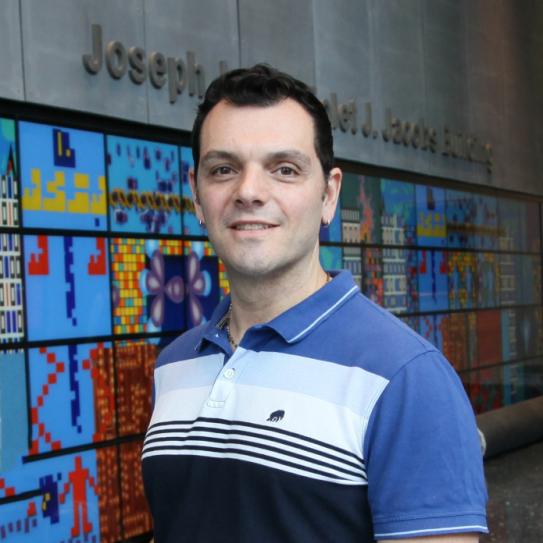
John Di Bartolo is an Industry Professor and Department Chair of Applied Physics at New York University Tandon School of Engineering , with a career spanning computational physics, sports biomechanics, and educational software development. His work bridges theoretical physics with practical applications in technology and pedagogy. Bachelor of Arts in Mathematics, Boston College (1991) Master of Science in Physics, Boston College (1993) Doctor of Philosophy in Physics, University of Virginia (1997) Research interests include Type-II superconductors , physics of sports , and innovative educational software like Physics of Sports 3.0 and Quantum Sandbox . He has pioneered computational methods in teaching and developed interactive tools for optics and quantum mechanics. His publications span from superconductivity studies in Physical Review B to cutting-edge educational software. Notable awards include the 2013 Distinguished Teacher Award . He has presented at conferences including AAPT Summer Meetings and NYU-Poly Research Expo, and featured in media outlets like WIRED Magazine and Science Channel.
Frans N. van de Vosse is a full Professor at the Department of Biomedical Engineering , Eindhoven University of Technology. He leads the Cardiovascular Biomechanics research group, focusing on computational and experimental analysis of cardiovascular systems, medical devices, and clinical applications. Academic Background: MSc in Applied Physics (1982), PhD in Numerical Carotid Artery Flow Analysis (1987) from TU/e Professional Affiliations: Full Professor (since 2001), Lecturer in Fluid Mechanics (1987–2001) Research Interests span cardiovascular biomechanics, including Blood in Motion , Heart at Work , and Vessels under Stress . His work emphasizes computational models, experimental techniques, and medical devices for clinical diagnosis and intervention. Key Article Trends include fetal hemodynamics, virtual patient cohorts for coronary disease, abdominal aortic aneurysm progression, and fluid-structure interaction studies in heart valves. Many publications align with UN Sustainable Development Goals related to health and well-being. Media and Public Engagement highlights his contributions to artificial womb technology discussions and clinical device validation studies. His research has been featured in Professional Commentary and PR Activities in cardiovascular engineering.
Peter D. Dragic is an Associate Professor in the Department of Electrical and Computer Engineering at the University of Illinois at Urbana-Champaign (UIUC). His research focuses on interdisciplinary advancements in optical fiber technology, materials science, and laser systems. Dr. Dragic leads efforts to overcome nonlinear limitations in optical fibers by integrating materials science innovations with waveguide engineering, targeting applications like high-power lasers, distributed sensing, and coherent LIDAR systems. Education & Affiliations: PhD in Optical Engineering (assumed based on academic rank) Director of the Micro & Nanotechnology Lab at UIUC Collaborations with Clemson University’s COMSET center Research Interests: Design of novel optical fibers using fluorosilicate, aluminosilicate, and crystalline materials Reducing quantum defects in fiber lasers to mitigate thermal effects Development of hypersonic acoustic wave-engineered fibers for Brillouin scattering suppression Laser-based remote sensing and LiDAR systems Key Achievements: Optica Fellow recognition (2020s) Over 50 peer-reviewed publications, including high-impact studies in Optics Letters and Nature Photonics Development of sapphire-derived all-glass fibers and fluorosilicate Yb-doped fibers Grants & Funding: Air Force Office of Scientific Research (FA9550-16-1-0383) U.S. Department of Defense DE JTO (N00014-17-1-2546)
Professor Evangelos Boulougouris is Head of the Department of Naval Architecture, Ocean and Marine Engineering at the University of Strathclyde, where he also serves as Chair of the Maritime Safety Research Centre. He is a chartered professional engineer with over 28 years of internationally recognized research in maritime safety, design for safety, and holistic ship design. His work spans damage stability, autonomous vessels, alternative fuels, and ship survivability, with strong impact on international regulations through roles in IMO, ITTC, SNAME, and RINA. Research Interests: His primary research focuses on safety of marine operations, including damage and intact stability in waves, collision avoidance, ship evacuation, crashworthiness, and the integration of alternative fuels like ammonia and hydrogen. He leads cutting-edge work in multi-objective ship design optimization, risk modeling, and decarbonization strategies for advanced marine vehicles. The recent 15 publications highlight a strong trend toward digitalization and sustainability in shipping, combining machine learning for propeller optimization, CFD simulations for catamaran performance, real-time decision support in emergencies, and hybrid propulsion systems for zero-emission vessels. His work increasingly emphasizes climate resilience, port risk under extreme weather, and energy management in CTVs, aligning with global SDGs. Scientific Awards: 2020 Denny Medal SNAME ABS Captain Joseph H. Linnard Prize (2023) Safety 2020 Best Paper Award (2022) Honorable Mention for Vice Admiral E. L. Cochrane Award (2022) EU CHAMPIONS of Transport Research (HOLISHIP, TRA 2014) Greek Technical Innovation Award, Lloyd’s List (2009) 1st Prize, International SAFER SHIP Competition (1999) Advising and Grants: He actively supervises PhD students and has led numerous EU and UK-funded projects such as SEASTARS, SAFARI, EcoShipYard, and Digital Shipwright. As Principal Investigator and Co-I, he secures substantial research funding, coordinates knowledge exchange (KE) initiatives, and leads training programs across Europe. Labs and Teams: He leads the Maritime Safety Research Centre at Strathclyde, fostering interdisciplinary collaboration on ship safety, stability, and sustainable design. His team works closely with industry partners RCG and DNV, and engages in international networks through STAB, ITTC, and IMO committees.
Dr. Adelina Ilie is a Research Professor in the Department of Physics at the University of Bath, where she leads research in Nanoscience and Nanotechnology through multiple interdisciplinary centers including the Centre for Nanoscience and Nanotechnology, Condensed Matter Physics CDT, Centre for Therapeutic Innovation, Condensed Matter and Quantum Materials group, and NanoBioElectronics research. Her research spans fundamental to applied studies of functional nanomaterials with designed atomic-scale behavior. Specializing in graphene and related 2D materials as well as 2D molecular networks, her group employs advanced scanning probe microscopy techniques under ultra-high vacuum and cryogenic conditions to engineer quantum properties for novel applications in nanoelectronics, spintronics, and biomedical sensing. Her recent publications reveal strong trends in quantum materials engineering, particularly in superlattice structures, hybrid 2D systems, and bio-nano interfaces. The research demonstrates sophisticated manipulation of electronic, optical, and thermal properties at the atomic scale, with increasing focus on biomedical applications in recent years. Dr. Ilie actively supervises doctoral students and has served as external examiner for PhD theses at prestigious institutions including University of Cambridge (2024, 2021), University of Oxford (2018), and University of Southampton (2011). Her research is supported by significant grants from EPSRC, MRC, Sir Halley Stewart Foundation, and University of Bath. Her laboratory maintains state-of-the-art facilities for atomically-resolved scanning probe microscopy (STM and AFM) in ultra-high vacuum and cryogenic environments, complemented by chemical vapor deposition systems for nanomaterial fabrication. She maintains active collaborations across Bath's departments of Pharmacy & Pharmacology, Chemistry, and Biology & Biochemistry, as well as with international research institutes specializing in nanoscience.
Jim Chen is a Professor at the Department of Marine and Environmental Sciences and holds an affiliation with the College of Engineering's Civil and Environmental Engineering at Northeastern University. His research focuses on coastal engineering and science, emphasizing numerical modeling to address coastal resiliency and sustainability, particularly in the context of hurricanes and sea-level rise. Education details are not explicitly provided in the text, but his expertise includes advanced modeling techniques applied to coastal systems. His work integrates field observations with computational methods, such as deep learning and physics-informed neural networks, to analyze wave dynamics, sediment transport, and vegetation effects on coastal processes. Key research areas include hurricane impact analysis on wetlands and engineered infrastructure, living shoreline restoration effectiveness, and the morphological evolution of coastal systems. His studies often involve rapid deployment of sensors during storms (e.g., Hurricane Laura) to monitor wave, current, and sediment dynamics, contributing to disaster preparedness and mitigation strategies. Notable collaborations include projects with the Shinnecock Indian Nation, Gandys Beach (New Jersey), and Chesapeake Bay, focusing on sustainable coastal management. His work bridges engineering and environmental science to enhance coastal resilience in vulnerable regions.
Prof. Joachim Schöberl is a faculty member at TU Wien's Faculty of Mathematics and Geoinformation, leading the Scientific Computing and Modelling research group. His academic career includes roles as a university professor (Univ.Prof.) with engineering and technical doctorates (Dipl.-Ing., Dr.techn.). Research focuses on advanced numerical methods, including finite element methods, computational fluid dynamics, and partial differential equations. He has pioneered high-order schemes for fluid-structure interaction, shell mechanics, and electromagnetic simulations. Notable contributions include the NGSolve finite element library and innovative approaches to curvature approximation in discrete geometry. Recent work emphasizes nonlinear elasticity modeling, fractional diffusion problems, and shape optimization for biomembranes. His team collaborates on projects like metascreen upscaling, micromorphic continuum models, and eddy current simulations in laminated materials. Prof. Schöberl advises PhD students researching mixed finite element methods, fractional operators, and computational mechanics. His lab develops open-source tools for high-performance scientific computing.
Professor Weimin Huang is a full Professor in the Faculty of Engineering and Applied Science at Memorial University of Newfoundland, where he has served since 2010 and became a full professor in 2019. He held the position of Department Deputy Head from 2020 to 2023. Education: BSc in Radio Physics (Radio Wave Propagation and Antennas), Wuhan University, 1995 MSc in Radio Physics (Radio Wave Propagation and Antennas), Wuhan University, 1997 PhD in Space Physics, Wuhan University, 2001 MEng in Electrical and Computer Engineering, Memorial University of Newfoundland, 2004 Postdoctoral Fellowship in Electrical and Computer Engineering, Memorial University of Newfoundland, 2007 Research Focus: Huang specializes in radar-based ocean remote sensing , with core expertise in high-frequency ground wave radar (HF radar) , GNSS Reflectometry , and synthetic aperture radar (SAR) . His work targets ocean surface parameter mapping including wind speed, oil spills, ship detection, and sea ice monitoring through advanced digital image processing and applied electromagnetics . Recent innovations integrate deep learning (CNNs, physics-informed models) with radar data for enhanced environmental monitoring. Publication Trends: His 2025 publications reveal a strong shift toward AI-driven solutions in remote sensing, with 5 high-impact papers in IEEE TGRS and Remote Sensing focusing on wind speed estimation (using GNSS-R and wavelet-CNN hybrids), oil spill mapping via SAR, ship detection with HF radar, and climate change analysis. These works demonstrate cross-disciplinary integration of machine learning with geophysical remote sensing. Scientific Awards: No awards were documented in the source material. Advising & Collaboration: With 358 co-authors including Bahram Salehi and Biyang Wen, Huang maintains a robust global research network. While specific student supervision isn't listed, his leadership role and publication volume indicate active graduate mentoring. The text mentions no grant details. Research Infrastructure: His work operates within Memorial University's engineering faculty, leveraging radar facilities for ocean sensing. Collaborations span institutions including Wuhan University and SUNY, suggesting participation in international radar remote sensing consortia focused on maritime applications.
Eirik Valseth is an Associate Professor of Scientific Computing at the Norwegian University of Life Sciences (NMBU), Department of Data Science. He holds concurrent roles as a research associate at the Oden Institute, University of Texas at Austin, and an affiliated researcher at Simula Research Laboratory (Department of Numerical Analysis and Scientific Computing). His expertise lies in advanced finite element methods for PDEs with applications in flood modeling and hydropower systems. Current Affiliation: NMBU (Norwegian University of Life Sciences) Secondary Affiliations: Oden Institute (UT Austin), Simula Research Laboratory Research interests span numerical methods for challenging PDE systems, including: Stabilized finite element formulations Hurricane storm surge and riverine flood modeling Hydropower infrastructure analysis Computational mechanics and applied mathematics His recent publications (2024–2025) emphasize flood risk assessment (compound flooding, dam breaks, dredging impacts), advanced numerical methods (isogeometric analysis, stochastic finite elements, graph-grammar algorithms), and environmental applications (pollution transport, pathogen distribution, mosquito population dynamics after hurricanes). Key trends include cross-disciplinary integration of physics-aware machine learning and robust hydrodynamic simulation tools. Valseth's work extends to software development (e.g., WAVEx for spectral wave models, SWEMniCS for coastal circulation) and large-scale modeling frameworks like the ADCIRC unstructured mesh model for US coasts. Collaborative projects involve institutions such as University of Texas at Austin, Simula, and NOAA.
Matt Reynolds is a Professor in the Department of Electrical and Computer Engineering at the University of Washington, with an adjunct appointment at the Paul G. Allen School of Computer Science & Engineering. His research bridges wireless systems, RFID, and millimeter-wave imaging with commercial applications through multiple technology spin-offs. Education: Ph.D., MIT Media Lab, 2003 (Motorola Fellow) S.B. and M.Eng., Electrical Engineering and Computer Science, MIT Research Interests: Dr. Reynolds pioneers millimeter-wave sensing and imaging , RFID systems , and energy-efficient wireless communication , focusing on ubiquitous computing and embedded sensor networks . His work transforms theoretical physics of sensing into practical home monitoring and industrial applications, emphasizing real-world deployment of wireless systems. Scientific Awards: Six Best Paper Awards 2024 UW ECE Outstanding Teaching Award 2018 ACM Ubicomp 10-Year Impact Award 2019 ACM Ubicomp 10-Year Impact Award Technology Ventures: As co-founder of ThingMagic Inc (acquired by Trimble Navigation), Zensi (acquired by Belkin), SNUPI Inc (acquired by Sears), and current millimeter-wave imaging firm ThruWave Inc, he drives commercialization of research in home sensing and wireless power systems.
Prof. Dr. Nadine Buczek serves as Professor of Renewable Energies, Nanotechnology and Photonics at the Department of Applied Natural Sciences, Lübeck University of Applied Sciences (TH Lübeck), a position she has held since 2017. She leads the Energy Materials Laboratory and maintains active affiliations with the Climate and Environmental Protection Group, Materials for Storage and Renewable Energy Systems, and Photovoltaics Group. Her research centers on physical principles of renewable energy systems and photonics, with core expertise in solar technology, thermoelectrics, and nanoscale material engineering. She investigates spin wave phenomena in disordered magnetic materials and develops advanced fabrication techniques for silicon nanowires and superlattices using metal-assisted chemical etching, with applications in sustainable energy conversion and storage. Analysis of her 15 most recent publications (2012-2022) reveals consistent focus on condensed matter physics and nanomaterial engineering. Key trends include theoretical modeling of spin dynamics in alloys, structural characterization of etched semiconductor nanostructures, and optimization of nanofabrication processes for renewable energy applications. Her work bridges experimental nanotechnology with computational physics, primarily targeting semiconductor-based energy solutions. The Energy Materials Laboratory under her direction drives interdisciplinary research in photovoltaics and thermoelectric materials, collaborating closely with the Materials for Storage and Renewable Energy Systems group. Current projects emphasize scalable nanofabrication methods and fundamental studies of charge transport in nanostructured materials to advance next-generation renewable energy technologies.
Mariana Dalarsson is an Associate Professor in Electromagnetic Theory at the Division of Electromagnetic Engineering and Fusion Science (EMF) within the School of Electrical and Computer Engineering (EECS) at KTH Royal Institute of Technology. She holds an MSc (2010), PhD (2016), and Docent (2019) from KTH, where she is recognized as the (shared) second youngest woman ever to receive a PhD degree from the institution. Her research spans electromagnetic scattering and absorption, inverse problems, electromagnetics of stratified media, double-negative metamaterials, electromagnetics in medicine, antenna theory, and mathematical physics. She has authored approximately 102 peer-reviewed publications, including 51 journal papers, with recent work focusing on gold nanoparticles for biomedical applications, waveguide theory for artificial materials, and plasmonics. Analysis of her recent publications reveals a strong focus on graded metamaterials, electromagnetic wave propagation in complex media, and biomedical applications of electromagnetic theory. Her work bridges fundamental electromagnetic theory with practical applications in medical technology, particularly in the areas of nanoparticle-based treatments and diagnostic systems. Honorary Grant ("Honnörsstipendiet") for best graduate of her program (2011) L'Oréal-Unesco For Women in Science Sweden Prize (2020) Göran Gustafsson Prize for Young Researchers at UU/KTH (2024) Teaching Assistant of the Year from Engineering Physics students (2015) Mariana is highly active in teaching, serving as course responsible and examiner for EI1222 Electromagnetic Theory, EI2405 Classical Electrodynamics, and FEI3304 Integral Equation Methods in Electromagnetics. She also co-teaches several other courses and regularly supervises multiple BSc/MSc theses annually. Her research is primarily funded through her own project grants from the Swedish Research Council, including "Waveguide theory for artificial materials and plasmonics" (2019) and "Gold nanoparticles for high-frequency deep brain stimulation" (2023).
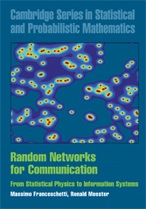
Massimo Franceschetti is a Professor in the Department of Electrical and Computer Engineering at the University of California, San Diego (UCSD), with faculty affiliation at Calit2. His research spans mathematical engineering, focusing on control, communication, computation, and sensing, particularly in complex networks and systems. He integrates tools from statistical physics, wave propagation, and information theory to analyze and design networked systems. Born in Naples, Italy, he studied at the University of Naples Federico II and the University of Edinburgh (European exchange program), graduating in 1997. He earned his M.Sc. (1999) and PhD (2003) from Caltech, where he received the Walker von Brimer Award and the C.H. Wiltz Prize for outstanding research and thesis. After postdoctoral work at UC Berkeley (2003-2004), he joined UCSD as faculty and held visiting positions at Vrije Universiteit Amsterdam, EPFL (Switzerland), and the University of Trento (Italy). He became an IEEE Fellow in 2018 and was nominated a Guggenheim Fellow in 2019. His research includes networked control systems , stochastic geometry , electromagnetic information theory , and social dynamical systems . Recent work explores non-invasive emotional contagion in social networks, quantum limits on information entropy, and the physics of wave propagation. His publications bridge information theory , machine learning , and network science , often applying percolation theory and random walks to explain scaling laws and wireless signal behavior. Scientific accolades include the S.A. Schelkunoff Transactions Prize , IEEE Communications Society Best Tutorial Paper Award , and the IEEE Ruberti Young Researcher Prize . He co-authored two books: Random Networks for Communication (2007) and Wave Theory of Information (2018). His students have pursued careers in academia (e.g., IIT-Bombay, Notre Dame) and industry (e.g., Google, IBM, Tesla). He teaches courses on network science , information theory , and control systems , emphasizing data-driven analysis and the physical foundations of communication. His group’s work impacts cyber-physical systems , quantum network coding , and epidemic modeling on networks .
Hans Petter Hildre is Head of Department at the Department of Ocean Operations and Civil Engineering , part of the Faculty of Engineering at the Norwegian University of Science and Technology (NTNU). His work focuses on maritime engineering, digital twin technology, and marine operations. Research interests include: Digital Twin Applications in Maritime Industry Offshore Operations and Wind Turbine Installation Marine Robotics and Autonomous Systems Wave Field Estimation and Environmental Load Analysis Human-Machine Interaction in Maritime Contexts Co-simulation and Real-time Monitoring Recent publications highlight trends in: Wave shielding effects for offshore vessels Knowledge transfer from automotive/aviation to maritime Crane path planning using digital twins Visual attention zone recognition systems Hydrodynamic modeling and sensitivity analysis Smart city-maritime integration Scientific collaborations span institutions including: European Commission (Future Skills Reports) Royal Institution of Naval Architects The American Society of Mechanical Engineers (ASME) IEEE Transactions on multiple domains Springer Publishing
Elisa Capello is a Full Professor of Flight Mechanics at Politecnico di Torino, Department of Mechanical and Aerospace Engineering (DIMEAS). She serves as Contact person for internationalization of innovation and technology transfer, Member of the Interdepartmental Center PIC4SeR (PoliTO Interdepartmental Center for Service Robotics), and Deputy Coordinator of the Doctoral College in Aerospace Engineering. With over 100 publications, her work spans aerospace engineering, control systems, and robotics. Her research focuses on flexible spacecraft, flight control systems, robotic systems, and unmanned aerial vehicles. She designs guidance, control and navigation systems for aircraft and spacecraft, develops control systems for wind turbines and wind farms, studies flight mechanics of fixed and rotary wing aircraft, tests unmanned aerial systems, and plans mission control for autonomous systems. Her work bridges theoretical control systems with practical aerospace applications, with strong emphasis on experimental validation. Her recent publications demonstrate a strong focus on advanced control techniques for aerospace applications, particularly in UAV control, spacecraft formation flying, and robotic systems. There's a clear trend toward integrating machine learning with traditional control methods, as seen in transformer-based MPC and multimodal learning approaches. Her work spans theoretical development, simulation, and experimental validation across multiple platforms. Member of the Editorial Board of IEEE Control Systems Society (2019-) Member of the Scientific Committee - IEEE Technical Committee Aerospace Control (2016-) International FAI Judge for Helicopter Championship (2009-2015) Professor Capello supervises numerous PhD students working on topics including autonomous aerial vehicles, path planning, risk analysis, spacecraft dynamics, and control. She leads multiple research projects including CREATEFORUAS (2019-2022), Assessment of drag free control systems for L3 gravity wave observatory (2018-2019), and Guidance, Navigation and Control algorithms for in-Orbit servicing (2020-2021). Her international collaborations include institutions in the USA, Japan, and Germany. She is actively involved with the Flight Dynamics, Control and Simulation research group at DIMEAS and the DRAFT (DRones Autonomous Flight Team) at PoliTo, where she mentors students in developing autonomous flight capabilities for various applications.