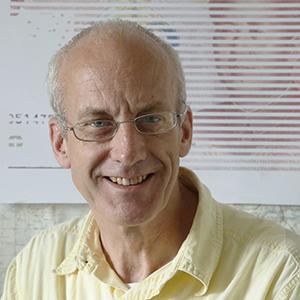
Chris Chesterfield is a Professor of Practice at Monash University's Monash Sustainable Development Institute (MSDI), specializing in water governance, urban planning, and sustainable development. He joined Monash in 2014 as part of the executive team at the Cooperative Research Centre for Water Sensitive Cities, leading strategic research on water system transformations. His work focuses on developing tools like the Water Sensitive Cities Index, adopted globally to drive policy and practice changes. He has held senior roles at Melbourne Water and the Office of Living Victoria, contributing to Melbourne's leadership in water-sensitive urban design. Chris chairs key committees including the Victorian Environmental Water Holder and the Birrarung Council (Yarra River advisory body). He leads projects on integrated water management and urban sustainability, collaborating with government agencies and international stakeholders. His research emphasizes governance frameworks for water-sensitive cities, policy reforms, and nature-based solutions. Chris has contributed to over 20 research outputs since 2002, with recent work focusing on urban water governance, river management, and policy integration. He actively advises government bodies such as the Victorian Planning Authority and Infrastructure Victoria, shaping legislative reforms and urban development strategies.
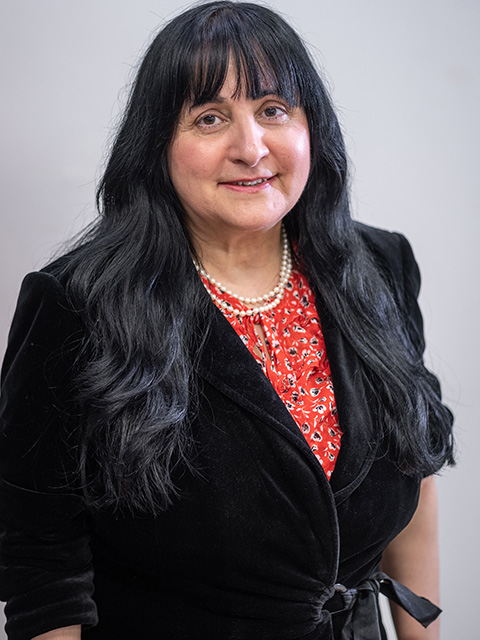
Prof. Antje Stokman is a Professor of Landscape Architecture and Landscape Planning at HafenCity University Hamburg. Her department researches and designs landscape-, nature-, and water-related transformation processes, with teaching and research focused on the design and collaborative creation of urban landscapes in their dynamic interactions between natural and human habitats. Her research interests include: Landscape Architecture and Urban Design Climate-Adapted Urban Landscapes Blue-Green Infrastructure Water-sensitive Urban Design Linear Infrastructure Landscapes Urban Transformation Processes Prof. Stokman has led several significant research projects including the LILAS research network (Linear Infrastructure Landscapes as Open Spaces for the City in Climate Change), the City on the Blue Belt project, and the Blue-Green Infrastructure Dialogue Process. Her recent publications focus on transforming urban linear infrastructure landscapes and developing water development corridors along federal waterways as open space potential for urban green-blue infrastructure. Scientific awards: City of Hamburg's Teaching Prize (Hamburg Teaching Award) Prof. Stokman supervises doctoral projects including Katarina Bajc's work on "Perception and Design of Ecological Processes in Landscape Architecture" and Anne Kittel's research on "The Transformation of Metropolitan Landscapes." She has received research funding from various sources including the Federal Environment Agency, BMUV, BMBF, and EU Horizon 2020. She co-leads the Blue-Green Infrastructure Lab (BGI-Lab) with Prof. Wolfgang Dickhaut, which focuses on interdisciplinary research at the intersection of environmentally sound urban planning and landscape architecture.
Jim Hall is a Professor of Climate and Environmental Risk at the University of Oxford's School of Geography and the Environment, and serves as Director of Research there. He is also a Visiting Fellow at Linacre College and holds leadership roles including Chair of the Science Advisory Committee at IIASA, and Expert Advisor to the UK's National Infrastructure Commission. His work focuses on systemic risk analysis, infrastructure resilience, and policy implications of climate change adaptation. Prof Hall has pioneered methodologies like the National Infrastructure Systems Model (NISMOD) and chairs the Data and Analytics Facility for National Infrastructure (DAFNI). His research spans flood risk management, energy systems decarbonization, and transboundary water resource conflicts in regions such as the Eastern Nile Basin and the Caribbean. Key research areas include robust decision making under uncertainty, info-gap theory applications, and integrated assessments of human-environmental systems. He has contributed to major international assessments, including the IPCC's Fourth Assessment Report, and developed frameworks for multi-hazard stress testing of infrastructure networks. Scientific Awards: George Stephenson Medal (2001), Prince Sultan Prize for Water (2018), Royal Academy of Engineering Fellowship (2010) His advising and grants work includes mentoring a DPhil student Erin Canning and leading projects like MARIUS and ENHANCE. He has also developed innovative modeling tools for coastal erosion prediction and probabilistic assessments of global shipping fuel transitions. Prof Hall’s research groups actively engage in interdisciplinary projects, including the Oxford Martin Programme on Resource Stewardship and the UK Infrastructure Transitions Research Consortium. His work emphasizes bridging scientific analysis with actionable policy solutions for climate adaptation.
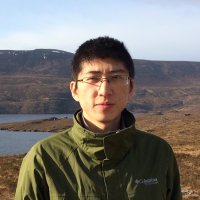
Prof. Dr. Jing Wang is a Full Professor at the Department of Civil, Environmental and Geomatic Engineering at ETH Zürich. His research focuses on air pollution control, nanoparticle transport, and environmental health and safety (EHS) impacts of nanomaterials. He has held roles including Assistant Professor at ETH Zürich (2010–present), Research Assistant Professor at the University of Minnesota (2007–2010), and postdoctoral associate in Particle Technology (2005–2007). Education: Bachelor’s in Engineering (2000) – Tsinghua University, Beijing Master’s in Computer Sciences (2003) – University of Minnesota PhD in Aerospace Engineering (2005) – University of Minnesota Research Interests: Air/water filtration technologies Nanoparticle emission reduction and measurement Multiphase flow mechanics Environmental impacts of nanomaterials Collaborations: Industrial partnerships include 3M, BASF, Boeing, Intel, Samsung, and others in nanoparticle measurement and filtration solutions. Honors: 2011 Smoluchowski Award (Association for Aerosol Research) 2006 ‘Best Dissertation’ Award (University of Minnesota) 2004 Doctoral Dissertation Fellowship Teaching: Courses include Air Pollution Control, Environmental Engineering Seminars, and Excursions for Environmental Engineers. Labs/Teams: Leads the Particle Technology Lab and collaborates with the Institute of Environmental Engineering at ETH Zürich.
Anna Grigolon is an Assistant Professor at the University of Twente , Netherlands, affiliated with the Transport Engineering and Management Research Group . Her research focuses on sustainable urban mobility , user-centric transport solutions , and travel behavior analysis using tools like discrete choice modeling , spatial analysis , and social psychology theories . Research Interests : Sustainable Urban Mobility Accessibility Modeling Travel Behavior Discrete Choice and Latent Class Modeling Spatial Analysis and GIS Shared Micromobility and Mobility Hubs Equity in Transport Planning Article Trends : Anna’s recent work (2025–2024) emphasizes mobility justice , 15-minute city transitions, and equity in transport access , particularly for marginalized communities like São Paulo favelas. She integrates digital tools (e.g., serious games, kiosks) and space-time metrics to evaluate mobility solutions. Projects : She currently leads the SmartHubs project and contributes to DREAMS and R-map , focusing on smart, equitable mobility systems in Europe and Saudi Arabia.
Alberto Salvo is an Associate Professor at the National University of Singapore (NUS), holding a PhD from the London School of Economics. His research spans environmental economics, industrial organisation, and applied microeconomics, with a focus on urban pollution, consumer behavior, and climate action. Environmental Economics & Policy (Undergraduate) Economics of the Environment (PhD) Advanced Industrial Organisation (PhD) His work examines air pollution impacts on health and productivity, fuel switching dynamics in megacities, and behavioral responses to environmental stress. Recent publications analyze particulate pollution in China, temperature effects in tropical cities, and plastic waste patterns linked to food delivery. Notable awards include the JAERE Best Paper Award (2020), Robert Mundell Prize (2010), and Antitrust Policy Award (2007). His collaborations span institutions in Brazil, China, and Singapore.
Associate Professor Paola Leardini holds dual roles as Director (Research) and Associate Professor at the University of Queensland's School of Architecture, Design and Planning, within the Faculty of Engineering, Architecture and Information Technology. Her work bridges design and performance in built environments, focusing on net-zero targets, urban resilience, and circular economy strategies in construction. She is a key researcher in the Centre for Future Building Structures and advises on Queensland’s social/affordable housing through the Design Excellence Panel. Leardini earned a PhD in building energy efficiency and environmental quality from Politecnico di Milano, supervised by Prof. P. Ole Fanger. Her educational journey includes studies in Milan, Berlin, Leicester, and Copenhagen. Research highlights include eco-retrofitting of historical districts (e.g., Milan’s Quartiere Mazzini), Passive House adaptations for subtropical climates, and timber construction innovations with the ARC Advance Timber Hub. She co-founded Passive House Institute New Zealand (PHINZ) and collaborates globally on projects like water-sensitive cities and flood-resilient urban design. Her recent publications emphasize timber’s role in sustainable construction, circular economy frameworks, and climate-responsive building systems. Advising includes leading an ARC Linkage project on adaptable housing while fostering industry partnerships through projects like Norman Creek Catchment flood resilience studies. She actively contributes to labs/teams advancing timber use and urban resilience, aligning with UQ's mission for future-ready built environments.
Maria Monica Wihardja serves as a Visiting Fellow and Co-coordinator of the Media, Technology and Society Programme at ISEAS–Yusof Ishak Institute while holding an Adjunct Assistant Professor position at the National University of Singapore. Her career bridges academic research and high-impact policy engagement, including former roles as World Bank Economist in the Poverty and Equity Global Practice and senior advisor to Indonesia's Presidential Executive Office on strategic economic reforms. Her educational background features: PhD in Regional Science, Cornell University MPhil in Economics, Cambridge University BA in Applied Mathematics-Economics, Brown University Wihardja's research integrates economic analysis with sociotechnical systems, focusing on digital transformation's impact on labor markets, food security, and democratic processes. She examines how technological disruption creates both opportunities for inclusion and risks of inequality, particularly through studies of platform economies, electoral disinformation, and sustainable agro-food systems. Her methodology combines quantitative econometrics with policy-oriented field research, often leveraging large-scale datasets from government and private sector partnerships. Analysis of her recent publications reveals three dominant research trajectories: (1) Digital economy effects on labor market polarization and inclusion, (2) Food system resilience through agricultural modernization, and (3) Geopolitical dimensions of supply chain reconfiguration. These intersect with her policy engagement in ASEAN economic integration frameworks and Indonesia's G20 presidency initiatives. Her scientific recognition includes: Nikkei Asian Scholar 2023 award Wihardja actively shapes regional discourse through editorial roles at East Asia Forum and Center for Indonesian Policy Studies. Her grant-funded work frequently involves World Bank partnerships and Indonesian government collaborations, particularly on stunting prevention and food policy reforms. Current projects examine deepfake impacts on electoral integrity and sustainable financing mechanisms for green transitions. She leads the Media, Technology and Society Programme at ISEAS, coordinating interdisciplinary research on digital governance and Southeast Asian technology policy. The programme partners with regional think tanks, government agencies, and private sector stakeholders to develop evidence-based policy responses to technological disruption.
Dr. Michael Richter serves as a Researcher at HafenCity University Hamburg within the Department of Environmentally Sound Urban and Infrastructure Planning, Faculty of Urban Planning. Since 2014, he has been actively engaged in climate adaptation research, building upon his earlier work with the 'plan B:altic' research group (2009-2014) focused on Baltic coastal urban regions. His professional trajectory combines academic research with practical implementation of nature-based urban solutions. Dr. Richter holds a degree in Geoecology from the Technical University Bergakademie Freiberg (2003-2008). His educational background laid the foundation for his interdisciplinary approach to urban climate challenges, integrating ecological principles with urban planning practices. This cross-disciplinary perspective informs his current research on sustainable urban infrastructure. His research centers on developing climate-resilient urban environments through innovative nature-based solutions. Dr. Richter specializes in sponge city concepts and blue-green infrastructure , particularly examining how building greening systems and urban vegetation can mitigate heat islands, manage stormwater, and enhance biodiversity. His work bridges theoretical research with practical implementation through direct collaboration with Hamburg's urban planning authorities and international research networks. He has made significant contributions to understanding the hydrological performance of green infrastructure through long-term monitoring of real-world implementations. Dr. Richter's publication record demonstrates a consistent focus on empirical research of climate adaptation solutions. His recent work emphasizes performance evaluation of blue-green infrastructure in urban settings, particularly examining street trees and green roofs as integrated components of urban water management systems. This research provides critical data on long-term functionality, helping to refine implementation strategies and inform policy decisions. Editorial Board Member, Journal Water (MDPI) for Urban Water Management section Member, German Green Roof Association (Bundesverband GebäudeGrün e.V.) Member, German Water Association (DWA) Member, German Association for Geoeecology (Verband für Geoökologie in Deutschland) As an academic supervisor, Dr. Richter has mentored over 20 bachelor's and master's students, focusing on practical urban planning challenges related to climate adaptation. His research is supported through multiple projects including the BlueGreenStreets initiative and Hamburg's Green Roof Strategy development. He maintains strong connections between academic research and professional practice through active participation in professional organizations and direct collaboration with city planners. Dr. Richter's work with the City Science Lab and BIMLab at HCU demonstrates his commitment to interdisciplinary collaboration. His research on rainwater-sensitive urban design directly addresses Hamburg's climate adaptation challenges while contributing to international knowledge on sponge city implementation. Through his involvement in the RES:Z research program (Resource-Efficient City Quarters for the Future), he helps shape sustainable urban development practices that balance ecological, social, and technical considerations.
George R. Frantz is an Associate Professor of the Practice in the Department of City and Regional Planning at Cornell University's College of Architecture, Art, and Planning. He also serves as the Interim Director of Undergraduate Studies and teaches field workshop courses focused on land use, environmental planning, and urban design. His work bridges academic instruction with real-world community planning across diverse regions including New Orleans, the Catskill Mountains, and Shanghai. Education: B.S. in Landscape Architecture, Cornell University (1980) M.R.P., Cornell University (1991) Frantz’s research and professional practice emphasize sustainability, urban design, and comprehensive land-use planning with a focus on protecting agricultural and environmentally sensitive lands. His work integrates participatory and collaborative planning models, especially in community-based development and international contexts. He has led initiatives in China and studied the impact of natural gas drilling on farmland in Pennsylvania, demonstrating a strong commitment to planning equity and justice. His selected publications reflect interdisciplinary engagement in landscape architecture, environmental planning, and cultural preservation. Themes across his work include community empowerment, sustainable development, and proactive conservation strategies. He has presented at national and international conferences on topics ranging from water resource protection to cultural heritage planning. Selected Scientific Awards: Faculty Fellow-in-Service, Cornell (2011–12) New York Upstate Chapter American Society of Landscape Architects Community Achievement Award (2005) Frantz has secured institutional recognition for his engaged teaching and community collaborations. He has advised on multiple community projects through student workshops and has co-authored impactful studies on farmland protection and cultural resources. His international workshop in Shanghai emphasizes cross-cultural planning with underserved communities, reflecting a deep commitment to equitable development practices. He is actively involved in the Engaged Faculty Network and has contributed to building pathways for collaborative instruction and community-engaged design. His lab-like teaching model centers on field workshops where students engage directly with communities to develop land use plans, conservation strategies, and urban design solutions.
Professor Mahroo Eftekhari is a Professor in Building Services Engineering at Loughborough University, leading the Low Energy Building Services Engineering MSc programme. Her research focuses on energy-efficient building systems, thermal comfort, HVAC optimization, and renewable integration. She has pioneered control systems for airports and buildings, including MPC-based strategies to reduce energy use while enhancing occupant well-being. Notable contributions include the development of BISPA (Building & Industrial Services Pipework Academy), a national center for BIM and pipework training. Education: Holds qualifications including CEng (Chartered Engineer), DPhil (Doctor of Philosophy), FCIBSE (Fellow of Chartered Institution of Building Services Engineers), and SFHEA (Senior Fellow of the Higher Education Academy). Her academic career is marked by collaborations with Tata Steel, Mitsubishi R&D, and Vexo, yielding applied research in sustainable building technologies. Research Interests: Indoor Air Quality, Thermal Comfort Modeling, Zero Energy Buildings, Digital Twins, and Advanced Control Systems. She has developed innovative solutions like AI-driven thermal management for Building Energy Management Systems (BEMS) and interfaces to synchronize airport operations with energy systems. Awards & Grants: Secured funding from diverse bodies for projects such as adaptive thermal comfort models, BISPA infrastructure, and energy-efficient HVAC strategies. Her work emphasizes practical applications, including reducing CO₂ emissions via airport terminal optimization and improving renewable energy use in buildings. Lab & Teams: Leads the Building Energy Research Group, managing projects in closed-loop heating systems, IEQ monitoring, and hydronic system efficiency. The Civil Engineering labs house interactive BIM rigs launched with institutional and industry support.
Jack Puleo is a Professor and Chair in the Department of Civil and Environmental Engineering at the University of Delaware (UD), and a core faculty member of the Center for Applied Coastal Research (CACR). He holds a Ph.D. from the University of Florida, a Master’s from Oregon State University, and a Bachelor’s from Humboldt State University. His research focuses on coastal hydrodynamics, sediment transport, and nature-based solutions for coastal resilience. He has served as Associate Chair and Director of CACR, and was a Fulbright Scholar and Visiting Professor at Plymouth University (2011-2012). Research Interests: Small-scale hydrodynamic processes and sediment transport in coastal zones Remote sensing and sensor networks for coastal monitoring Nature-based solutions for coastal protection Munitions mobility in nearshore environments Climate change impacts on coastal flooding Awards and Honors: NSF CAREER Award (2007) ASCE Teaching Awards University of Delaware Teaching Awards (twice) Chi Epsilon Advising Award ASBPA Robert G. Dean Award German DAAD Scholarship Labs and Collaborations: Core member of the Center for Applied Coastal Research (CACR), collaborating on projects such as UXO mobility studies, coastal flooding modeling, and military infrastructure resilience. Active in interdisciplinary work with the Naval Research Laboratory and joint bases like Langley-Eustis.
Li Song is a Professor and holds the Lesch Centennial Chair & Lloyd G. and Joyce Austin Presidential Professor at the University of Oklahoma's Aerospace & Mechanical Engineering Department. He leads the Building Energy Efficiency Lab and serves as AME Associate Director for Research. His expertise spans building energy systems, HVAC optimization, and fault detection technologies. Education: Ph.D. (Thermal/Fluid Science, 2004) from University of Nebraska-Lincoln; M.S. (Thermal/Fluid Science, 1996) from Harbin Institute of Technology; B.S. (Thermal Energy Systems, 1993) from Shengyang University of Civil Engineering and Architecture. Research focuses on energy-efficient HVAC systems, fault detection algorithms, and building performance analytics. Notable contributions include the ULEM-FDD system for high-performance buildings and virtual sensor technologies for airflow/water flow measurement. Awards include the ConocoPhillips Energy Prize (2011 finalist) and Bes-Tech Innovation Award (2006). Publications emphasize HVAC control strategies, energy modeling, and IoT-enabled diagnostics. Courses taught include Thermodynamics, Energy Efficient Building Systems Design, and HVAC Systems Engineering.
Dr. Miguel Rico-Ramirez serves as Associate Professor of Radar Hydrology and Hydroinformatics at the University of Bristol's School of Civil, Aerospace and Design Engineering. His research integrates advanced radar technology with hydrological modeling to address critical water resource challenges including flood forecasting, drought management, and precipitation measurement across diverse global contexts from South Korea to Mexico City. Education: Bachelor of Engineering (Eng.) Master of Engineering (M.Eng.) Ph.D. in Engineering, University of Bristol His research program focuses on radar-based precipitation estimation, hydroinformatics, and flood prediction systems. He pioneers deep learning applications for rainfall nowcasting and develops innovative methods for uncertainty quantification in hydrological modeling. Current work emphasizes cosmic-ray neutron sensor validation, satellite-based flood mapping, and seasonal forecast applications for reservoir operations, with strong emphasis on translating research into operational water management solutions. Recent publications (2023-2025) reveal three dominant research thrusts: (1) deep learning frameworks for spatiotemporal rainfall prediction, (2) global validation of precipitation and soil moisture datasets using novel sensor networks, and (3) operational implementation of seasonal forecasts for drought mitigation in South Korea. His work consistently bridges radar meteorology with practical hydrological applications across urban and data-scarce environments. Scientific Awards: No specific awards documented in source materials Dr. Rico-Ramirez supervises postgraduate researchers in radar hydrology and hydroinformatics, with projects spanning flood early warning systems, precipitation nowcasting, and climate adaptation strategies. His research receives funding for international collaborations focused on water security challenges, particularly in drought-prone regions and data-scarce basins like the Nile Delta. Current grants support development of integrated forecasting systems combining global datasets with machine learning for extreme event management. He leads the Radar Hydrology research group within Bristol's Water and Environmental Engineering division, collaborating closely with Professor Dawei Han on hydroinformatics and Dr. Rafael Rosolem on water-climate interactions. The team maintains active partnerships with meteorological agencies and water authorities globally, particularly in flood forecasting system implementation across South Korea and Mexico.
Dr Ting Sun is an Associate Professor in Climate & Meteorological Hazard Risks at University College London , Department of Risk and Disaster Reduction. He earned his BEng (2009) and PhD in Hydrology (2013) from Tsinghua University , followed by a visiting period at Princeton University (2011–2012). After postdoctoral appointments at Tsinghua and the University of Reading , he held a NERC Independent Research Fellowship at Reading (2017–2022) before joining UCL in May 2022. Education PhD in Hydrology, Tsinghua University, 2013 BEng in Hydraulic Engineering, Tsinghua University, 2009 Visiting PhD Student, Princeton University, 2011–2012 Research Interests Dr Sun’s work converges on urban climate modelling across scales —from neighbourhood blocks to global grids—focusing on the impacts of weather and climate extremes such as heat waves and extreme rainfall in cities. He is the lead developer of the Surface Urban Energy and Water balance Scheme (SUEWS) and its Python wrapper SuPy , developed in collaboration with Prof Sue Grimmond’s micromet group. He also contributes as a core member of the Urban Multi-scale Environmental Predictor (UMEP) development team. His multidisciplinary expertise integrates hydro-climate dynamics, computational modelling, machine learning, built-environment processes, and public-health linkages . Research Trends from Recent Publications Across the 15 most recent articles, a clear trajectory emerges from high-resolution urban-process modelling toward integrated socio-environmental assessments . Studies published in 2024–2025 couple atmospheric models (WRF-SUEWS) with global building-morphology datasets (GLAMOUR) to quantify how cities alter rainfall patterns, temperature sensitivity, and heat-related mortality. Earlier works progressively refined SUEWS’s physical parameterisations and Python accessibility, while recent outputs leverage deep-learning remote-sensing tools (SHAFTS) and hybrid hydrological-neural architectures to deliver actionable insights for urban planning and climate adaptation. Scientific Awards & Fellowships NERC Independent Research Fellowship , University of Reading, 2017–2022 HEA Fellowship , University College London, 2023 Professional Service & Editorial Roles Topic Editor , Geoscientific Model Development (from 2025) Editorial Board Member , Scientific Data (from 2024) Peer review and consultancy for journals, conferences, and policy bodies Supervision of taught-course projects and research degrees External examining and mentoring Labs, Teams & Collaborations Dr Sun leads and collaborates within the UCL Department of Risk and Disaster Reduction , working closely with the micromet group at the University of Reading (Prof Sue Grimmond) on SUEWS/SuPy development. He is an active member of the UMEP consortium and maintains extensive international collaborations spanning Tsinghua University, Princeton, and numerous European research centres, underpinning a vibrant, interdisciplinary research network focused on urban climate resilience.