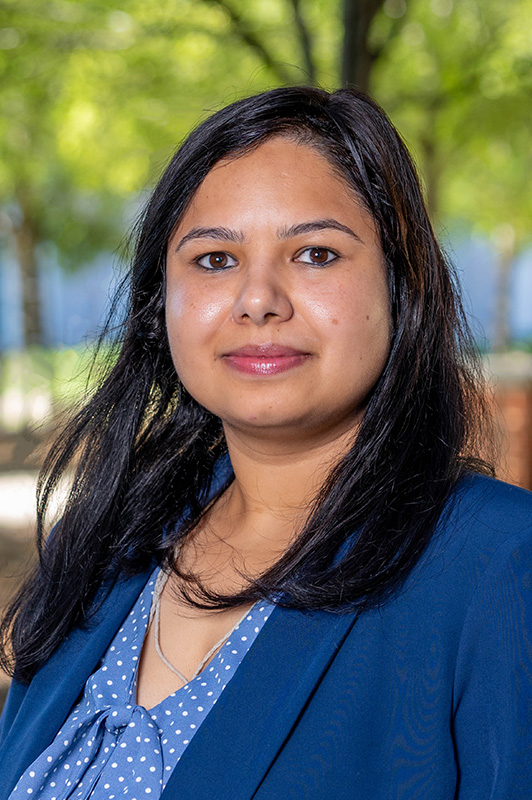
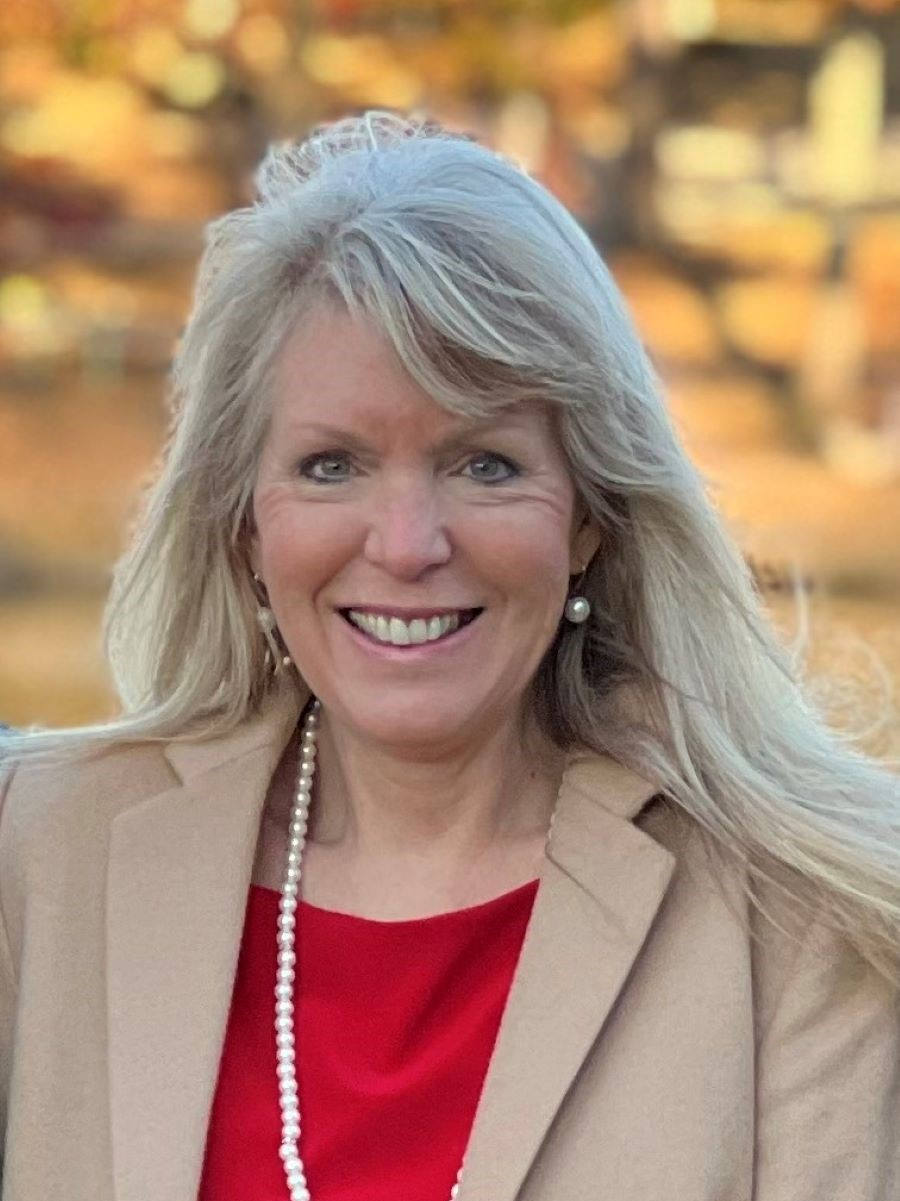
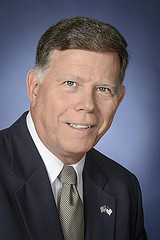
Neha Sharma is an Assistant Professor in the Department of Civil and Environmental Engineering at Auburn University. Her research focuses on nutrient recovery, electrochemical resource recovery, water reuse, trace metal cycling, and pollutant fate and removal.
Massachusetts Institute of TechnologyUnited States
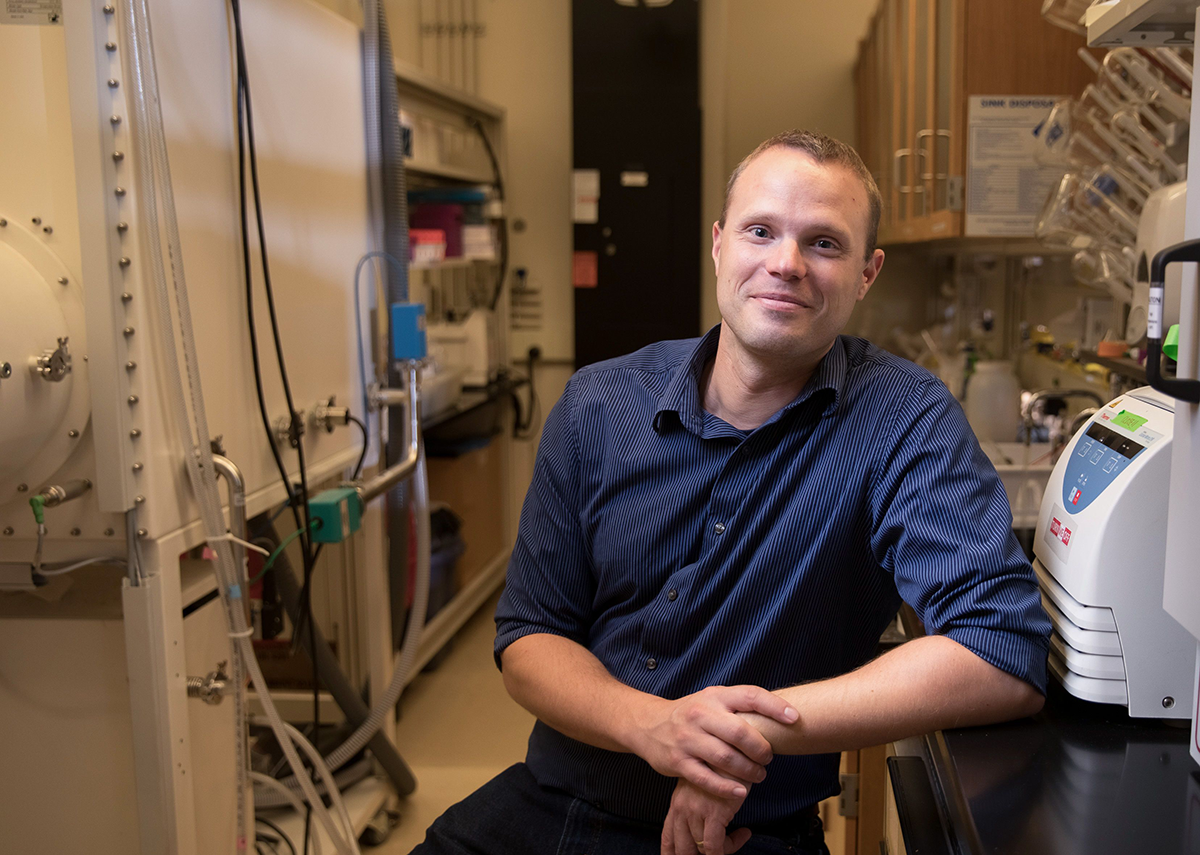
Bradley D. Olsen is a full professor in the Department of Chemical Engineering at the Massachusetts Institute of Technology (MIT), where he leads research at the intersection of polymer science, soft matter physics, and bioengineering. His work focuses on designing materials for critical applications in biotechnology, hemostasis, and sustainable polymer development while advancing fundamental understanding of polymer network mechanics and self-assembly. Education: Ph.D. in Chemical Engineering, University of California Berkeley (2007) S.B. in Chemical Engineering, Massachusetts Institute of Technology (2003) Olsen's research spans protein-based materials, block copolymer phase behavior, and mechanochemical hydrogels. He has pioneered methods for quantifying polymer network topology, developing hemostatic nanoparticles, and creating bio-inspired materials for selective biomolecular transport and medical applications. His recent publications emphasize data-driven approaches to polymer characterization and educational outreach in materials science. Scientific Awards: American Physical Society (APS) Fellow (2023) Fulbright Amazonia Scholar (2023) Alexander and I. Michael Kasser Chair in Chemical Engineering (2021) ACS Macro Letters Young Investigator Award (2021) MIT Committed to Caring Honor (2019) AIChE Owens Corning Early Career Award (2019) APS Dillon Medal (2018) Kavli Emerging Leader in Chemistry (2017) ACS Polymer Division Fellow (2016) Camille Dreyfus-Teacher Scholar (2015) Alfred P. Sloan Research Fellow (2014) NSF Career Grant (2013) NIH Postdoctoral Fellowship (2008-2009) Hertz Fellow (2003-2007) Barry M. Goldwater Scholarship (2002) Olsen has received significant grant support including NSF Career (2013) and AFOSR (2012) awards. His teaching activities include innovative international outreach like the 2025 soccer-themed science camp in Brazil. The Olsen Group at MIT explores advanced materials with applications ranging from trauma care to sustainable polymers.
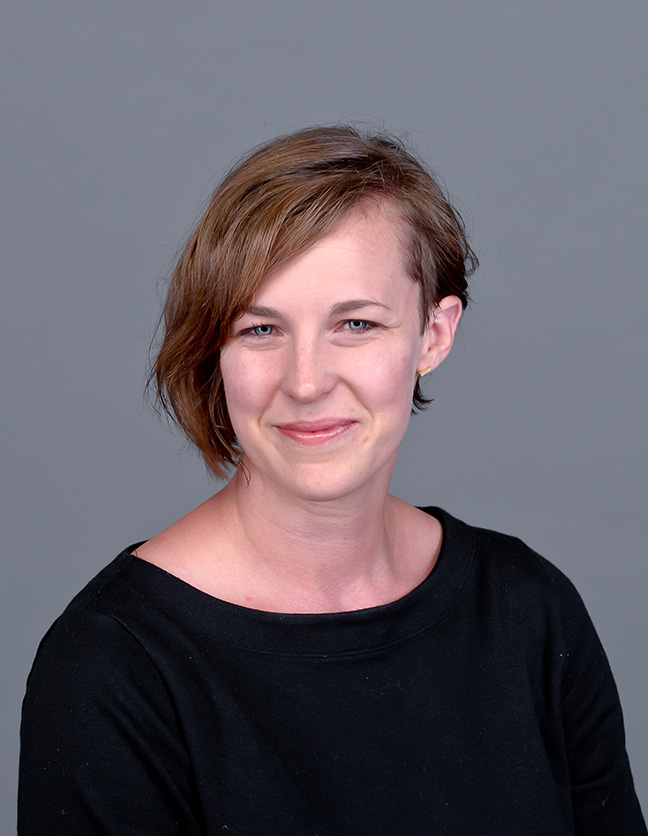
Lisa Walcott is an Associate Professor of Art at Hope College, where she has been a faculty member since 2018. She teaches sculpture courses, the capstone course for art majors, and a First-Year Seminar on artistic processes. Her studio practice focuses on kinetic sculptures and installations that explore themes of home, the everyday, and the feminine experience. MFA in Sculpture from Cranbrook Academy of Art (2010) B.A. from Trinity Christian College (2005) Walcott’s research intersects sculpture, installation art, and kinetic design, often recontextualizing domestic objects to investigate themes of interdependence, repair, and the unseen forces in everyday life. Her work frequently involves mechanical components and materials like wax, motors, and household items to create immersive, motion-driven installations. Her recent artworks, such as Making a Mountain (2024) and A Soft Punch to the Gut (2024), exemplify her focus on transforming utilitarian structures into emotive, kinetic pieces. These works, alongside digital collages like The Way I Figure It (2023), reveal a trajectory toward blending physical materials with conceptual frameworks to explore domestic ingenuity and tension. Walcott actively mentors students through faculty research collaborations and founded the Hope College Art Club. She exhibits nationally at institutions like the Eli and Edythe Broad Art Museum and The Sculpture Center, with solo exhibitions at venues including Manifest Gallery (Cincinnati) and the Urban Institute for Contemporary Art. Her studio practice integrates material investigations and workshops to refine techniques, which she translates into both pedagogy and art. Notable solo exhibitions include Swarm (2013) at the Broad Art Museum and Tight Spots (2021) at Saugatuck Center for the Arts.
University of Illinois Urbana-ChampaignUnited States
Dr. Jeremy Guest is the Levenick Professor in Civil and Environmental Engineering (and courtesy appointment in Chemical & Biomolecular Engineering) at the University of Illinois Urbana-Champaign (UIUC). He serves as Associate Director for Research at the Institute for Sustainability, Energy, and Environment (iSEE) and leads the Center for Advanced Bioenergy and Bioproducts Innovation (CABBI). His research focuses on advancing circular bioeconomies through sustainable sanitation systems, resource recovery from wastewater, and biofuel/bioproduct development from lignocellulosic biomass. Guest's work emphasizes Quantitative Sustainable Design (QSD) methodologies to bridge engineering innovation with policy and investment decisions. Education: PhD in Environmental Engineering (University of Michigan, 2012); MS (Virginia Tech, 2007); BS (Bucknell University, 2005). Research interests include wastewater treatment innovation, nutrient recovery, bioenergy systems design, and sustainable agriculture practices. Key contributions include the EcoRecover phosphorus recovery process, the QSDsan modeling platform, and leadership in CABBI's $262.5M DOE-funded initiative. Guest has secured funding from NSF, US EPA, USDA, and the Bill & Melinda Gates Foundation. Recognitions include the NSF CAREER Award, 2021 James J. Morgan Early Career Award, and the Paul L. Busch Award. He advises over 15 graduate students and leads multiple high-impact projects like the NEWgenerator sanitation system and oilcane biorefinery integration. Lab/Group: Guest Research Group focuses on experimental, computational, and policy-oriented research to solve global sustainability challenges. Current projects address algae-based wastewater treatment, fecal sludge management in low-income regions, and precision fermentation systems development.
James Tinjum is a Professor in the Department of Civil & Environmental Engineering at the University of Wisconsin-Madison, College of Engineering. His interdisciplinary expertise spans geotechnical, geological, environmental, transportation, and sustainable energy engineering. Education PhD 2006, University of Wisconsin-Madison MS 1995, University of Wisconsin-Madison BS 1993, University of Wisconsin-Madison Research Interests Professor Tinjum’s research integrates energy geotechnics with environmental sustainability. He investigates wind energy site design, district-scale geothermal heating/cooling systems, beneficial reuse of industrial byproducts (e.g., coal-combustion residuals, cement kiln dust), life-cycle environmental analysis, and remediation of contaminated sites. Additional focus areas include thermal conduction in unsaturated soils, landfill liner performance, and PFAS management in Wisconsin. Recent Research Directions His 2020–2024 publications reveal a strong emphasis on geothermal system performance , wind-turbine foundation–soil interaction , and emerging contaminant transport (PFAS, chromium). Fiber-optic distributed temperature sensing (FO-DTS) is a recurring enabling technology, applied to both geothermal borefields and landfill covers. Life-cycle assessment methodologies are consistently employed to quantify environmental benefits of renewable energy and waste-reuse strategies. Scientific Awards 2018 Fellow, American Society of Civil Engineers (ASCE) 2003 ASCE Zone III Practitioner Advisor of the Year 2002 ASCE Wisconsin Section Outstanding Young Engineer Teaching & Mentoring Professor Tinjum teaches core geotechnical courses (Soil Mechanics, Foundation Systems) alongside specialized offerings in wind-energy balance-of-plant design and sustainable systems engineering capstone. He supervises numerous master’s and doctoral students through GLE 790/890 research credits each semester. Labs & Teams He directs field-scale instrumentation campaigns at two wind-turbine sites and multiple campus/district geothermal installations, leveraging fiber-optic sensing networks and thermal response testing to advance energy geotechnics.
Valerie Thomas is the Anderson Interface Chair of Natural Systems at Georgia Tech, holding joint appointments in the H. Milton Stewart School of Industrial and Systems Engineering and the School of Public Policy. Her research focuses on energy systems, sustainability, industrial ecology, and science and technology policy. She earned a B.A. in Physics from Swarthmore College and a Ph.D. in Theoretical Physics from Cornell University, followed by postdoctoral research at Carnegie Mellon and Princeton Universities. Her work addresses low-carbon transportation, environmental impacts of food systems, and energy development in Africa. Key research areas include life cycle assessment, climate policy, and technology assessment. Thomas has contributed to over 80 technical publications and serves on advisory boards for the U.S. EPA and USDA/DOE. Education: Ph.D. in Physics, Cornell University; B.A. in Physics, Swarthmore College Awards: AAAS and APS Fellowships, Georgia Tech’s 1934 Outstanding Interdisciplinary Award Her teaching spans energy policy, lifecycle analysis, and engineering economics. She leads interdisciplinary teams at the Climate and Energy Policy Laboratory and the Technology Policy and Assessment Center, advancing sustainable systems engineering and policy solutions.
Amy Childress is Dean's Professor of Civil and Environmental Engineering at the University of Southern California's Viterbi School of Engineering. She serves as director of the Civil and Environmental Engineering Department's environmental engineering program and leads the Center for Water Reuse (ReWater). Dr. Childress has been with USC since summer 2013 and previously served as professor and chair of the Civil and Environmental Engineering Department at the University of Nevada, Reno. Dr. Childress earned her educational degrees from the following institutions: Bachelor's Degree in Civil Engineering from the University of Maryland College Park Master's Degree in Civil Engineering from the University of California - Los Angeles Doctoral Degree in Civil Engineering from the University of California - Los Angeles For over 20 years, Professor Childress' research has focused on membrane processes for addressing global water scarcity challenges. Her current research interests include membrane contactor processes for innovative solutions to contaminant and energy challenges; pressure-driven membrane processes as industry standards for desalination and water reuse; membrane bioreactor technology; and colloidal and interfacial aspects of membrane processes. She emphasizes process sustainability through reduction of discharge by-products, limiting chemical and material consumption, and minimizing energy, carbon, and infrastructure footprints of treatment systems. Her work explores the water-energy nexus to develop holistic solutions for finite water and energy resources. Professor Childress' recent publications demonstrate a consistent focus on advancing membrane technologies for water treatment and desalination. Her research spans fundamental studies of membrane properties and performance to applied research on system integration and optimization. Key themes include improving membrane wetting resistance, developing mathematical models for water blending, understanding morphological changes in membranes, exploring power density limitations in osmotic processes, and investigating long-term operational effects on membrane performance. Her work consistently addresses the technical challenges of water scarcity while considering sustainability and energy efficiency. Her scientific achievements have been recognized with numerous awards and honors: National Science Foundation CAREER Award (2001) NAE Frontiers of Engineering Invited speaker (2007) AEESP President (2008) Multiple fellowships and scholarships from UCLA, AWRA, ACS, and water districts UNR Student Chapter of AWRA Excellence in Teaching Honorable Mention Award (2001) Clair A. Hill Scholarship (1995) Larson Aquatic Research Support (LARS) Scholarship (1996) Professor Childress has directed research projects funded by numerous prestigious organizations including the U.S. Bureau of Reclamation, NSF, NASA, Office of Naval Research, U.S. Department of Energy, California Energy Commission, California Department of Water Resources, the U.S. EPA, and SERDP, as well as local and private agencies. She leads a productive research group that has generated numerous peer-reviewed publications, proceeding papers, and patents. Her leadership extends to service on the AEESP Foundation Board of Directors and previously as AEESP President. She also serves on the Advisory Board of Desalination journal. Dr. Childress leads the Childress Research Group at USC, which focuses on fundamental and applied aspects of membrane processes for water treatment and desalination. The group maintains laboratory facilities in Biegler Hall (BHE) at USC and conducts both experimental and modeling research to advance water treatment technologies. Their work addresses critical challenges in southern California and around the world related to wastewater reclamation and seawater desalination.
Nancy G. Love is the Borchardt and Glysson Collegiate Professor and JoAnn Silverstein Distinguished University Professor of Environmental Engineering at the University of Michigan, affiliated with the Department of Civil and Environmental Engineering and the African Studies Center. Her research focuses on water infrastructure, public health, and environmental systems, emphasizing interdisciplinary approaches to address challenges in both domestic and global contexts. Education: Ph.D. (1994) in Environmental Systems Engineering from Clemson University; MS (1986) and BS (1984) in Civil Engineering from the University of Illinois. Research interests include water quality, pathogen fate and transport, sustainable resource recovery (e.g., urine-derived fertilizers), and infrastructure resilience in shrinking cities. She leads the Love Research Group, which integrates chemical, biological, and computational methods to develop technologies for contaminant removal, resource recovery, and public health protection. Her work addresses pressing issues like drinking water equity in Detroit, Legionella outbreaks in Flint, and global sanitation in Ethiopia. She advocates for transdisciplinary collaboration and community-informed solutions to environmental challenges. Awards include prestigious professorships at the University of Michigan. She serves on editorial boards (e.g., ACS ES&T Engineering) and contributes to policy initiatives on water infrastructure and environmental justice. Labs/Teams: Love Research Group; Collaborations span academia, industry, and NGOs, including projects on urine diversion, sensor-mediated wastewater treatment, and civic engagement in infrastructure decisions.
Zackary Johnson , the Juli Plant Grainger Associate Professor of Biological Oceanography and Marine Biotechnology at Duke University, leads interdisciplinary research at the intersection of marine microbiology and biogeochemical innovation. Affiliated with the Nicholas School of the Environment and based at the Duke Marine Laboratory , his work spans microbial ecology, algal biotechnology, and climate mitigation strategies. Education: Ph.D. in Marine Science (Duke University, 2004), B.S. in Biology (MIT, 1994) Research Interests focus on marine microbial communities, particularly the model phytoplankton Prochlorococcus , algal cultivation for sustainable bioproducts, and the ecological impacts of ocean acidification. His lab investigates microbial interactions across diverse environments—from coastal estuaries to open-ocean gyres—and develops technologies for carbon-negative aquaculture systems. Publications highlight expertise in microbial biogeography, algal biofuels, and climate-resilient marine food webs. Recent work explores drone-based ocean color sensing, Gulf Stream eddy microbiomes, and the role of Labyrinthulomycetes protists in carbon export. Scientific Awards: Juli Plant Grainger Associate Professorship DOE and NSF-funded projects Grants include high-profile initiatives like the Marine Algae Industrialization Consortium (MAGIC) and REU Site program for coastal research training. His lab maintains a dedicated research site for studying microbial dynamics and sustainable algal cultivation.
Dr. Kalyan R. Piratla is a Professor in the Department of Civil Engineering at Clemson University's College of Engineering, Computing and Applied Sciences. His research focuses on underground construction, infrastructure resilience, and sustainable water systems. He leads the Center for Research in Underground Infrastructure Systems Engineering (CRUISE), which develops decision-making models to enhance the sustainability and resilience of underground infrastructure systems. Ph.D. in Construction Management, Arizona State University (2012) Masters in Civil Engineering, Indian Institute of Technology Madras (2008) Bachelors in Civil Engineering, Indian Institute of Technology Madras (2007) Dr. Piratla's research integrates interdisciplinary approaches across water supply systems , power systems engineering , wireless sensing technologies , and graph theory . His work emphasizes: Seismic resilience metrics for pipeline systems Decentralized water reuse planning Vibration-based infrastructure monitoring Interdependencies among lifeline infrastructures Transportation project delivery optimization Research trends include: Application of machine learning to pipeline leakage detection Advanced seismic vulnerability assessment Life cycle cost analysis of water reuse systems Integration of geotechnical and structural monitoring Scientific Awards S.E. Liles, Jr. Distinguished Professor Dr. Piratla actively supervises graduate research and offers assistantships for PhD students. His work benefits water utilities, construction contractors, and emergency response agencies through innovative monitoring techniques and resilience enhancement frameworks . His CRUISE research group explores: Interdependencies among critical infrastructure systems Transportation project delivery efficiency Collaborations spanning power systems and wireless sensing
Richard G. Luthy is the Silas H. Palmer Professor of Civil and Environmental Engineering at Stanford University, with a courtesy appointment in Oceans. He directs the NSF Engineering Research Center ReNUWIt, focusing on sustainable urban water infrastructure. His research emphasizes water reuse, stormwater management, and contaminant mitigation in engineered systems. He holds a Ph.D. from UC Berkeley, and has authored over 300 publications. Awards include the Rudolf Hering Medal and membership in the National Academy of Engineering. He teaches courses on water quality, treatment processes, and California water policy. Education: B.S. Chemical Engineering (UC Berkeley, 1967), M.S. Ocean Engineering (UH, 1969), M.S. and Ph.D. Civil Engineering (UC Berkeley, 1974/1976), Hon. Sci. D. (Clarkson U., 2005). Research Interests: Urban water challenges, persistent contaminants, stormwater treatment, and sustainable infrastructure. His work integrates systems-level analysis for water reuse and climate-resilient solutions. Awards: Rudolf Hering Medal (ASCE, 2022), Perry L. McCarty AEESP Award (2023), and leadership roles in the National Research Council and AEESP. Labs/Teams: Luthy Group (Stanford), ReNUWIt Consortium. Current advisees include Nora AlMaqsseed and Jessica MacDonald. He collaborates on projects like activated carbon sediment remediation and stormwater control measure design.
Dr. Patrick J. McNamara is an Associate Professor in the Department of Civil, Construction and Environmental Engineering at Marquette University's College of Engineering. He directs the McNamara Research Group, which focuses on understanding how chemicals from consumer products impact public health and the environment once they pass through water treatment systems. His research bridges environmental engineering and microbiology to address critical water quality challenges facing modern infrastructure. Dr. McNamara's educational background includes: Ph.D., 2012, Civil Engineering, University of Minnesota, Twin Cities M.S., 2008, Environmental and Water Resources Engineering, University of Texas at Austin B.S., 2006, Civil Engineering (Minor - Spanish for the Business Professions), Marquette University His research program investigates how consumer product chemicals impact engineering treatment processes that rely on healthy bacteria to treat water. The McNamara Research Group develops non-traditional treatment processes to remove these chemicals from water and mitigate their environmental effects. His work spans antibiotic resistance in water systems, micropollutant removal technologies, pyrolysis of biosolids, PFAS contamination, and electrochemical treatment processes. Specific areas include the impact of corrosion inhibitors on antibiotic resistance, removal of chemicals via drinking water treatment, environmental antibiotic resistant bacteria, beneficial biosolids reuse, and pyrolysis applications. Dr. McNamara's publication record demonstrates a strong focus on emerging water quality challenges, particularly the intersection of chemical contaminants and antibiotic resistance. His recent work examines corrosion inhibitors' impact on antibiotic resistance in drinking water, PFAS mitigation through advanced treatment processes, and environmental drivers of antibiotic resistance in stormwater systems. His research combines fundamental microbiology with practical engineering solutions to address complex water quality issues. Dr. McNamara has received numerous honors and awards: 2022 OCOE Outstanding Researcher Award from Marquette University Marquette University's Campus 2020 KEEN Rising Star Faculty Scholar Award from Provost Office (2019) Central States Water Environment Association Bill Boyle Outstanding Educator Award (2018) Way Klingler Young Scholar Award (Marquette University, 2018) Excellence in Review Award – Environmental Science & Technology (2017) Dr. McNamara has secured significant research funding as Principal Investigator on multiple projects, including NSF grants focused on mitigating antibiotic resistance in drinking water and studying the environmental impacts of quaternary ammonium compounds. His current research portfolio includes projects on PFAS removal through novel electrocoagulation-peroxidation processes, designing green stormwater infrastructure to combat antibiotic resistance, and removing contaminants from greywater using electrocoagulation technology in collaboration with industry partners like Kohler Company. The McNamara Research Group at Marquette University maintains strong collaborations with researchers across multiple institutions and works closely with water utilities and industry partners to translate research findings into practical solutions for water treatment challenges. Their work addresses critical infrastructure needs while protecting environmental and public health through innovative engineering approaches.
John Stolz is Professor of Environmental Microbiology and Director of Environmental and Energy Engineering at Duquesne University's School of Science and Engineering. His NASA-trained research examines microbial metal reduction, modern stromatolite ecosystems, and shale gas extraction impacts. His lab investigates arsenic/selenium biotransformation pathways, microbial communities in Shark Bay stromatolites, and environmental impacts of unconventional energy development. Recognized with multiple excellence awards including the Nobel J. Dick Endowed Chair. Over 150 publications explore microbial respiration mechanisms, biogeochemical cycling, and environmental bioremediation. Current grants support water quality testing near shale gas operations.
Susan D. Richardson is the Arthur Sease Williams Professor of Chemistry in the Department of Chemistry and Biochemistry at the University of South Carolina, affiliated with the McCausland College of Arts and Sciences. Her research focuses on improving drinking water safety through environmental analytical chemistry, particularly studying disinfection by-products (DBPs), emerging contaminants like PFAS, and advanced analytical methods such as mass spectrometry. She leads a lab equipped with six mass spectrometers and collaborates on projects involving water reuse, toxicology, and environmental policy. Education: B.S. in Chemistry & Mathematics from Georgia College & State University (1984); Ph.D. in Physical Organic Chemistry from Emory University (1989). Research Interests: Environmental analytical chemistry and drinking water safety Disinfection by-products (DBPs) formation and toxicity Emerging contaminants (PFAS, microplastics, algal toxins) Development of novel analytical methods (e.g., Total Organic Fluorine, VASE-GC-MS) Impact of wastewater reuse and hydraulic fracturing on water quality Article Trends: Recent work emphasizes high-molecular-weight DBPs, iodinated DBPs from cooking practices, and global PFAS hotspots. Innovative methods like tandem mass spectrometry and TOF analysis dominate her approaches. Awards: National Academy of Engineering (2024) Multiple Analytical Scientist Power List recognitions (2023–2019) Walter J. Weber Jr. AEESP Frontier in Research Award (2021) Fellowships from AAAS (2019) and ACS (2016) Advising & Grants: Richardson’s lab supports interdisciplinary collaborations, with funding from agencies like the National Science Foundation and industry partnerships. She mentors students in environmental chemistry and toxicology, emphasizing real-world applications of research. Labs/Teams: Her research group operates in state-of-the-art facilities (GSRC 209/237/238), focusing on cutting-edge technologies for contaminant detection and mitigation.
Dr. Larry Moore is a Professor of Civil Engineering at the University of Memphis, specializing in environmental engineering with a focus on wastewater treatment optimization, water quality modeling, and energy conservation in water treatment plants. He holds a B.S. from the University of South Alabama (1973) and M.S./Ph.D. in Environmental Engineering from Mississippi State University (1974/1983). His career spans over 33 years of teaching and applied research, addressing wastewater challenges for over 200 industries in Tennessee through the UT Center for Industrial Services. Research interests include water quality modeling of streams (e.g., Loosahatchie River studies), optimization of municipal/industrial wastewater treatment plants, and energy efficiency improvements in water treatment facilities. Collaborative projects with the Tennessee Department of Environment and Conservation and the U.S. Department of Energy have driven energy savings in over 24 treatment plants. Dr. Moore has served as President of the Kentucky-Tennessee Water Environment Association (KTWEA) and received the prestigious Leary Jones Award (2009) for his contributions to the wastewater profession, inducting him into the KTWEA Hall of Fame. Teaching responsibilities include advanced graduate courses such as Biological Wastewater Treatment, Water Quality Modeling, and Solid Waste Management. Awards include multiple 'Superior Performance in University Research' recognitions (1985-1989) and the 1990 Civil Engineering Outstanding Research award. He actively mentors graduate students in applied wastewater research and has advised numerous M.S. and Ph.D. candidates focusing on treatment plant optimization and emerging technologies. Professional Affiliations: Life Member of Water Environment Federation, KTWEA Pretreatment Certification Committee (since 2000), Tennessee Water and Wastewater Operator Certification Board (since 2007) Key Projects: Operational guidance for Memphis' Maxson WWTP, energy conservation studies across 24 plants, and aeration system design improvements Community Impact: Operator training programs, NPDES permit compliance support, and industrial wastewater problem resolution