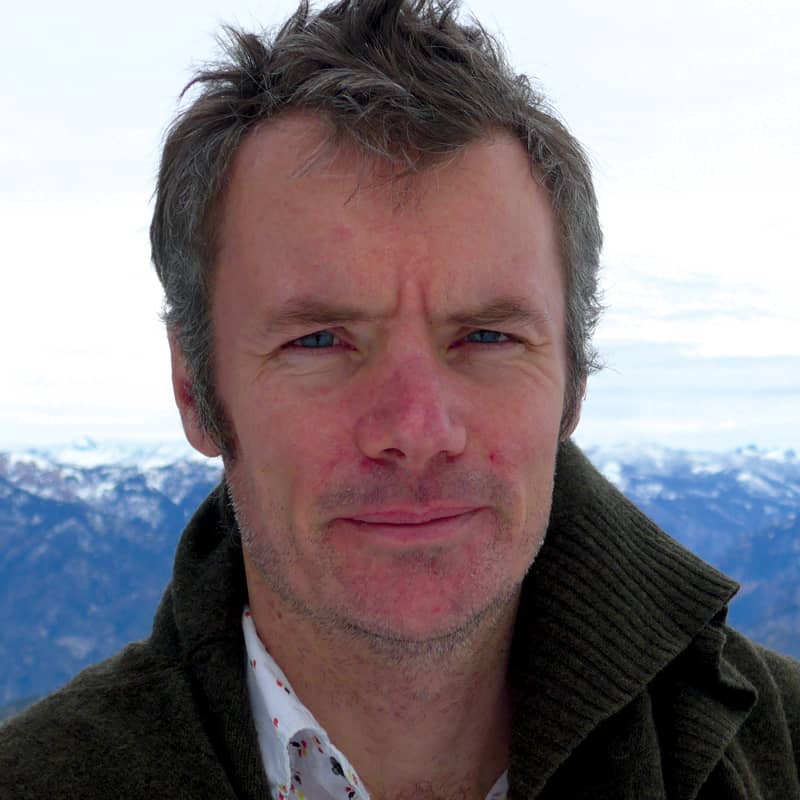
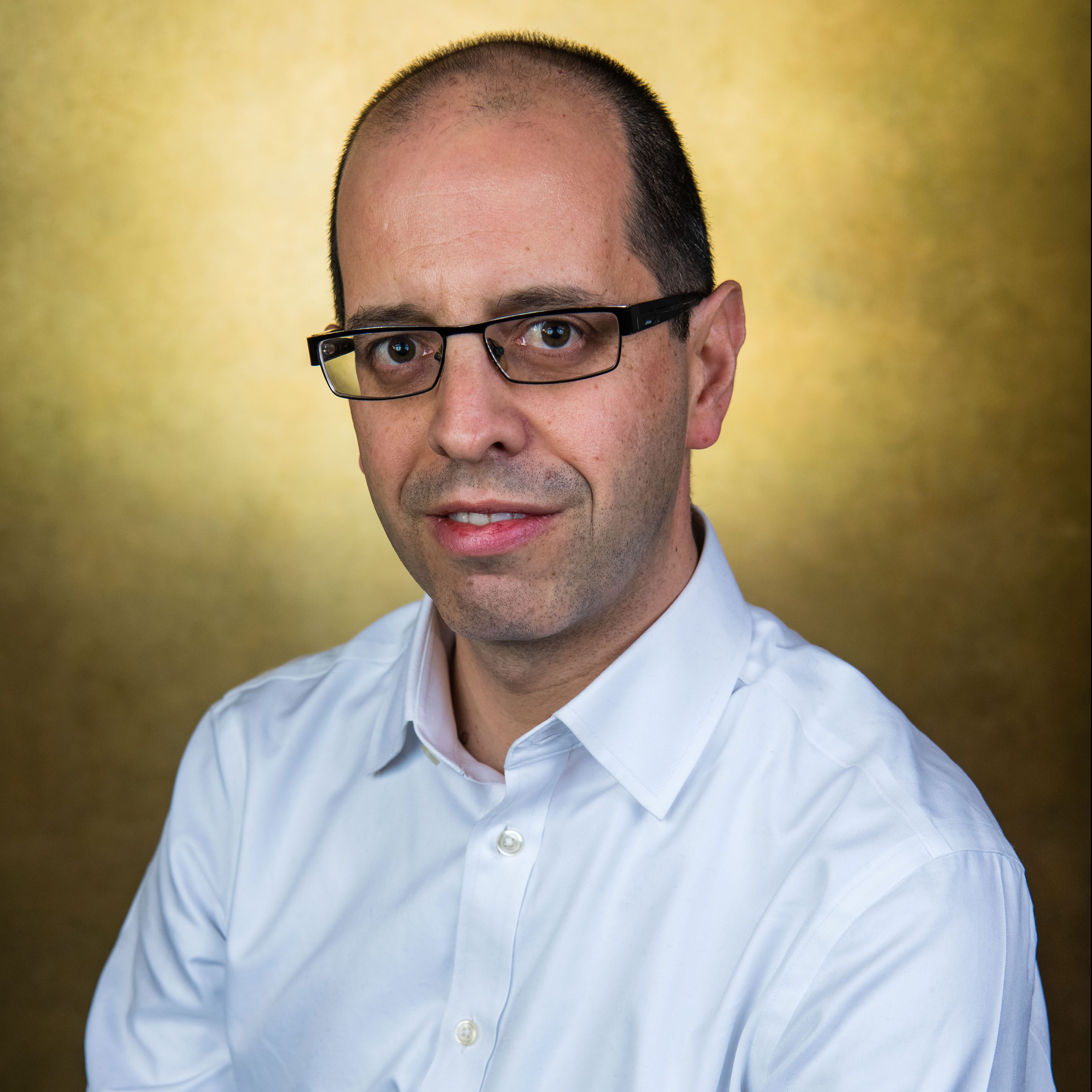
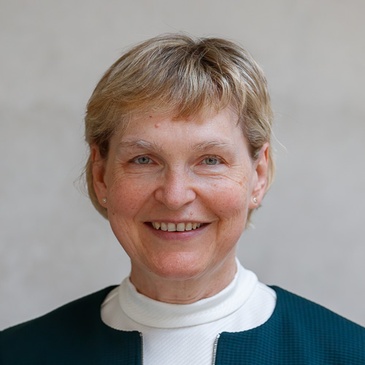
Dr. Jonathan Davies is an Associate Professor at the University of British Columbia's Faculty of Forestry, with dual affiliations in the Department of Botany and Department of Forest and Conservation Sciences. His research focuses on phylogenetic ecology, integrating evolutionary biology with ecological systems to address biodiversity conservation and climate change challenges. Academic Rank: Associate Professor Departments: Botany; Forest and Conservation Sciences Research Center: Biodiversity Research Center Email: j.davies@ubc.ca Research Interests : At the intersection of ecology and evolution, Davies' work explores phylogenetic approaches to conservation science, climate change biology, and disease ecology. His lab investigates: Climate change impacts on biodiversity and disease emergence Phylogenetic dilution effects in forest pest dynamics Evolutionary patterns in plant-herbivore interactions Statistical methods for phylogenetic analysis Global biodiversity patterns and diversification rates Eco-phylogenetics of protected area effectiveness
Professor Michael Schnegg is a Full Professor (W3) at the Institute of Social & Cultural Anthropology at the University of Hamburg, where he has been teaching and conducting research since 2010. His work bridges anthropology and philosophy, with a focus on understanding rural life in an increasingly urbanized and warming world. Schnegg leads the research group on Phenomenological Anthropology and collaborates extensively on climate change research, particularly in Namibia and other parts of Southern Africa. Michael Schnegg's academic journey began at the University of Cologne, where he studied Anthropology, Economics, Sociology and History from 1992-1997. He earned his Magister Artium in 1997 with a thesis titled "Soziale Struktur und Alltagsleben in virtuellen Gemeinschaften" (Social structure and daily life in virtual communities). He completed his doctoral studies in 2003 with a dissertation "Das Fiesta Netzwerk: Soziale Organisation einer mexikanischen Gemeinde, 1679-2001" (The Fiesta Network: Social organization of a Mexican community, 1679-2001). Before joining the University of Hamburg as a full professor, Schnegg served as an assistant professor at both the University of Hamburg (2007) and the University of Cologne (2009). Professor Schnegg's research centers on phenomenological anthropology, exploring how people experience climate change, emotions, and temporalities in their everyday lives. His groundbreaking work combines anthropological fieldwork with philosophical inquiry, particularly through collaborations with philosophers to develop the field of phenomenological anthropology. This has resulted in the establishment of the 'Hamburg Symposium on Philosophy and Anthropology' with Thiemo Breyer from Cologne, where they have discussed critical phenomenology (2023), experience (2024), and atmospheres (2025). Schnegg's ethnographic work primarily focuses on rural communities in Namibia, examining how people perceive and respond to climate change through multiple knowledge systems. His recent publications reveal a strong focus on the phenomenological dimensions of climate change, particularly how rural communities in Namibia experience and interpret environmental changes. Schnegg's work innovatively combines traditional anthropological methods with philosophical frameworks to explore concepts like atmospheres, boredom, and temporal experience in relation to climate change. His research demonstrates how emotional experiences like "rural boredom" are not merely individual feelings but collective atmospheres that reflect blocked promises and socio-economic conditions. His interdisciplinary approach bridges anthropology, philosophy, and climate science to develop new theoretical frameworks for understanding human-environment relationships in the Anthropocene. Paul-Lazarsfeld-Visiting-Professor at the Department of Methods in the Social Sciences, University of Vienna (2015) Professor Schnegg has secured significant research funding for multiple projects including the DFG-funded "Different ways of knowing the weather in Namibia" (2019-2023) and "Social Constructions of Climate Futures" (2019-2026), which he leads with Michael Brüggemann and Simone Rödder. His NORFACE/BMBF project "Artisanal Gold Mining, Mobility and Ideas of Sustainable Futures in Ghana" (2018-2022) and the long-term DFG project "Local institutions in globalized societies" (2010-2019) demonstrate his commitment to understanding how local communities navigate global challenges. Schnegg has also collaborated on the NSF project "The effect of social networks on inequality" and has organized numerous workshops and conferences, including the "Hamburg Symposium on Philosophy and Anthropology" series. While the available information doesn't detail specific labs or research teams led by Professor Schnegg, his extensive collaborative work suggests he maintains strong research networks both within the University of Hamburg and internationally, particularly with colleagues in Namibia, Germany, and other parts of Africa and Europe. His work with the 'Hamburg Symposium on Philosophy and Anthropology' indicates an active interdisciplinary research community focused on developing phenomenological approaches to anthropological questions.
Anders Forsman is a Professor in the Department of Biology and Environmental Science at Linnaeus University's Faculty of Health and Life Sciences. He serves as the subject coordinator for doctoral education in Ecology, demonstrating his leadership role in academic training. His research spans evolutionary ecology, population dynamics, and conservation biology with a focus on understanding how evolutionary processes contribute to biodiversity across various taxa including insects, fish, amphibians, and mammals. Forsman's research interests center on evolutionary processes that generate diversity in form, color, function, and behavior among living organisms. He investigates how individual variation in functionally important traits affects ecological success of populations and species in changing environments. His work combines behavioral studies, experiments, genetic markers, and theoretical modeling to address fundamental biological questions with applications for conservation biology and sustainable resource management. His research has significant implications for developing more sustainable agricultural, fishing, and forestry practices in the face of climate change. Analysis of Forsman's recent publications reveals a strong focus on climate change impacts across multiple ecosystems. His work spans terrestrial systems (oak forests, moth populations), freshwater environments (riverine fish, pike ecology), and marine contexts (Baltic Sea microbiomes). A recurring theme is examining how biodiversity responds to environmental stressors, with particular attention to spatial patterns, adaptive capacity, and conservation implications. His methodological approach integrates field observations, experimental manipulations, and molecular techniques to provide comprehensive insights into ecological and evolutionary processes. Forsman leads multiple research initiatives including the Evolutionary Ecology group, Fish Ecology research focusing on Baltic coastal predatory fish, and the Linnaeus University Centre for Ecology and Evolution in Microbial model Systems (EEMiS). His current projects address critical environmental challenges such as climate change impacts on coastal ecosystems, adaptation of forest ecosystems to changing conditions, and effects of river fragmentation on fish populations. His collaborative approach is evident in numerous co-authored publications across diverse ecological topics, demonstrating his ability to bridge disciplinary boundaries to address complex environmental questions.
Minwoo Ahn is a Postdoctoral Research Associate with Climate Assessment for the Southwest and the College of Architecture, Planning & Landscape Architecture at the University of Arizona. His academic journey includes a PhD in Government and Public Policy from the University of Arizona with a focus on collaborative governance and water management, followed by a postdoctoral position at Arizona State University's Center for Behavior, Institutions, and the Environment. His research interests span environmental policy, water policy, climate behavior, and heat governance. As a core member of the Heat Resilience Initiative, he examines heat equity issues including public health impacts of extreme heat and develops frameworks to manage and mitigate these impacts. His methodological approach combines game experiments, survey experiments, text analysis, and interview techniques to address complex environmental challenges. American and Korean comparative perspectives deeply inform his work on public administration and government trust. His recent publications reveal a strong focus on collaborative governance systems, climate resilience strategies, and the social dimensions of environmental policy. His research demonstrates increasing attention to extreme heat governance, with multiple 2024-2025 publications addressing heat health disparities and resilience frameworks. His scholarly contributions appear in policy-oriented journals including International Journal of the Commons, Ecology and Society, Humanities and Social Science Communications, Public Management Review, and Journal of Political Science Education. As an active public intellectual, Ahn maintains a Substack presence where he discusses climate policy, administrative theory, and comparative governance approaches. His recent posts (as of April 2025) address heat governance challenges, reflections on public administration, and the importance of visible public services in building government trust.
Gordana Medunić is a Full Professor at the Department of Geology, Faculty of Science, University of Zagreb. She actively teaches courses across undergraduate, graduate, and doctoral programs, including topics in geochemical methods, environmental geology, and sediment analysis. Her research focuses on environmental geochemistry, particularly the impacts of coal mining and industrial activities on soil and water systems. Key areas include pollutant mobility, biogeochemical remediation, and trace element interactions in ecosystems. Geochemical Processes in Sedimentary Rocks Environmental Pollution Assessment Biogeochemical Remediation Techniques Rare Earth Element Distribution Recent publications highlight her work on coal sludge contamination, methane production from biomass, and selenium bioremediation. These studies employ geochemical analysis, microbial communities, and synthetic materials for environmental recovery. Her projects include collaborations on global sustainability initiatives like the Phosphorus Negotiation Game (P-Game) and fieldwork in Raša Bay, North Adriatic. She contributes to understanding long-term effects of industrial waste on ecosystems and developing remediation strategies. Teaching roles involve courses such as Geochemical Methods of Environmental Investigation and Geological Aspects of Waste Management , emphasizing practical applications in environmental protection and resource management.
Professor Natascha Kljun is a leading academic at Lund University , affiliated with the Centre for Environmental and Climate Science (CEC) and the Department of Physical Geography and Ecosystem Science. She serves as Assistant Director and Manager at CEC, and is a Principal Investigator for the BECC: Biodiversity and Ecosystem services in a Changing Climate initiative. Kljun coordinates the MERGE: ModElling the Regional and Global Earth system project and contributes to the LTH Profile Area: Aerosols and LU Profile Area: Nature-based future solutions . Her research focuses on boundary layer meteorology , land-surface-atmosphere interactions , and footprint modelling to determine the upwind surface area of influence for atmospheric flux measurements. She developed the widely used Flux Footprint Prediction (FFP) model, which scales crosswind distribution and improves greenhouse gas budgeting. Her work addresses vegetation-atmosphere carbon and water vapour exchange and upscaling local flux measurements to regional scales, considering heterogeneous surfaces and complex terrain. Current projects include CLIMB-FOREST (European Commission Horizon Europe) and JACOBIAn (atmospheric CO2 and black carbon transport modelling). Kljun is a Web of Science Highly Cited Researcher (top 1% in 2024 and 2025), and her work contributes to UN Sustainable Development Goals 13 (Climate Action), 15 (Life on Land), and 11 (Sustainable Cities). Her recent publications include studies on post-wildfire soil respiration and carbon emissions from Nordic boreal forests.
Professor Vigdis Vandvik at the University of Bergen (Department of Biological Sciences) is a leading community ecologist studying global change impacts on plants, biodiversity, and ecosystem functions. Her research spans three key areas: local-regional process interactions, environmental change scaling from individuals to ecosystems, and human land-use impacts. She directs the Between The Fjords Lab using macroecological experiments across Norway's Vestland Climate Grid and global networks. Key research systems: Alpine, grassland, heathland ecosystems Methodological focus: Experimental macroecology, field-lab integration Policy engagement: IPBES assessments, Norwegian Council on Ethics Her 15 most recent articles reveal trends in climate-vegetation interactions, functional trait analysis, and nature-climate policy linkages. Studies range from Arctic nutrient dynamics to alpine grazing mitigation and heathland carbon fluxes, emphasizing cross-scale ecological modeling and experimental frameworks. Current PhD/MSc projects include climate budget integration (ECOBUDGETS), mycorrhizal responses (FUNDER/DURIN), range expansion impacts (RangeX), and carbon flux dynamics (ThreeD/INCLINE). She actively promotes open science through GBIF ambassadorship and FAIR data initiatives. Labs/teams: Between The Fjords Lab, CeSAM Centre for Sustainable Area Management, Ecological and Environmental Change Research Group, bioCEED Center of Excellence in Biology Education. International collaborations span Norway, Europe, US, Uganda, Nepal, China, and Peru.
Prof. Dr. Martin Schneider serves as Professor of Moral Theology and Social Ethics at the Catholic University of Eichstätt-Ingolstadt (KU), where he teaches within the School of Transformation and Sustainability. His academic profile combines theological scholarship with practical engagement in contemporary ethical challenges, particularly those related to crisis management, resilience, and social transformation. Based at Ulmer Hof Building (Room UH-003), he maintains an active presence in both academic and public discourse through publications, interviews, and collaborative research initiatives. Dr. Schneider's research focuses on the ethical dimensions of resilience, examining how individuals and societies navigate crises through moral reasoning and transformative action. His work bridges theological ethics with interdisciplinary perspectives from sociology, psychology, and environmental studies. Key areas include spatial justice, sustainable development, Christian social ethics, and the relationship between crisis management and socio-ecological transformation. He emphasizes the importance of enduring ambivalence while seeking better arguments in ethical discourse, bringing Christian conceptions of human dignity and advocacy for the disadvantaged into contemporary ethical debates. Analysis of his recent publications reveals a consistent scholarly trajectory examining resilience ethics across multiple contexts - from the coronavirus pandemic to climate change and housing justice. His work demonstrates how theological ethics can contribute to practical solutions for contemporary social challenges, particularly through his involvement with the Bavarian Research Consortium ForChange. This interdisciplinary collaboration investigates what enables individuals, systems, and societies to withstand profound upheavals while remaining adaptable and transformative. As a public intellectual, Dr. Schneider regularly contributes to media discussions through interviews with Vatican Radio, podcast appearances, and articles in both academic journals and public-facing publications like Gemeinde creativ and the Munich Church Newspaper. His current research includes completing a habilitation project on the 'Ethics of Resilience' and participating in the 'Future Shapers: Transformative Forces in Regions' project, which examines transformative strategies in rural areas and small towns.
Torsten Wik is a Professor in Control Engineering at Chalmers University of Technology. He leads the Control Engineering research group and focuses on process control with theoretical and applied methodologies. Institution: Chalmers University of Technology Department: Control Engineering His research spans optimal control, model reduction, and systems with model uncertainties. Applications include energy-saving systems, environmental improvement, biological systems (water purification, recirculating fish farms, LED greenhouse lighting), and battery estimation/modeling/control. Recent work emphasizes battery degradation diagnosis, state estimation, fast charging, and reconfigurable systems. Key methodologies include physics-informed frameworks, machine learning integration, entropy-based predictive algorithms, and hypergraph modeling. Applications extend to electric vehicles, photovoltaic systems, fuel cells, and biofilm reactors. Publications highlight collaborations across engineering domains, focusing on control theory, electrochemical modeling, and real-time optimization. His work bridges theoretical advancements with industrial applications in energy systems, transportation, and sustainable agriculture.
Professor Damien Maher is an Associate Dean (Research) at the Faculty of Science and Engineering, Southern Cross University , and a Professor of Earth Sciences. His research focuses on coastal carbon and nutrient cycling, blue carbon, greenhouse gas accounting, and novel sensor development for environmental monitoring. Expertise in groundwater-surface water exchange and biogeochemical processes Collaborates with industry and government for applied climate solutions Awarded over $5 million in research funding Author of more than 130 publications Research Trends : Recent articles highlight advancements in carbon cycling in tidal wetlands, microbial methane dynamics in wetlands, climate-driven mangrove dieback, and low-cost sensor innovations for air and water quality. Key themes include groundwater carbon fluxes, blue carbon accounting, and coastal acidification. Scientific Recognition : 2022 Inspiring Researcher Award, Southern Cross University 2017 Cronin Award, Coastal and Estuarine Research Federation Leadership : Serves as Associate Editor for Geochimica et Cosmochimica Acta and on editorial boards for Oceans and Journal of Marine Science and Engineering . Supervises postgraduate students and contributes to higher-degree research programs.
Gunnar Elgered is a Professor at Chalmers University of Technology, specializing in space geodesy and atmospheric research. His work is centered at the Onsala Space Observatory, where he utilizes radio telescopes and Global Navigation Satellite Systems (GNSS) for geodetic and atmospheric studies. Previously serving as department head from 2000 to May 2017, he continues active research and teaching in engineering measurements with innovative examination methods. His research focuses on: Space geodesy using GNSS and VLBI techniques Atmospheric water vapor monitoring via microwave radiometers Climate research through long-term GNSS data analysis Tropospheric delay modeling for weather forecasting improvement Development of error correction models for geodetic applications Recent publications (2023–2025) demonstrate sustained leadership in atmospheric parameter assessment using co-located instrumentation at Onsala. His work shows increasing emphasis on climate model evaluation, with key contributions to GNSS interferometric reflectometry for sea level monitoring and tropospheric error modeling. The research integrates multiple geodetic techniques to address atmospheric variability and climate change impacts. Professor Elgered actively contributes to international geodetic infrastructure through the International VLBI Service (IVS), particularly via Onsala Space Observatory's Analysis Center activities. His projects focus on enhancing geodetic observing systems for climate monitoring, including the VGOS (VLBI Global Observing System) and co-location of geodetic techniques.
Davood Pourkargar is an Assistant Professor in the Tim Taylor Department of Chemical Engineering at Kansas State University. He is also a Graduate Faculty Member at the Food Science Institute and a Faculty Researcher at the Johnson Cancer Research Center. His work focuses on integrating data with first-principle models to understand complex systems across multiple scales. Ph.D. in Chemical Engineering from Pennsylvania State University (2015) M.S. in Process Simulation and Control from Sharif University of Technology (2010) B.S. in Chemical Engineering from Sharif University of Technology (2008) His research interests span computational multiscale modeling, digital twin development, applied artificial intelligence, and optimization-based control of complex process networks. Dr. Pourkargar's work integrates process systems engineering with artificial intelligence to address challenging problems in chemical, biological, energy, and food systems. He develops intelligent frameworks for controlling complex process networks, designing cyber-physical architectures for smart manufacturing, and advancing system identification using machine learning and process data analytics. A significant aspect of his research involves physics-informed machine learning applied to cancer dynamics modeling and drug distribution in the human body. Dr. Pourkargar's publication record shows a strong focus on predictive modeling and control of chemical processes, particularly ammonia synthesis systems, polysilicon reactor systems, and food extrusion processes. His recent work increasingly incorporates machine learning techniques, especially transformer architectures and physics-informed approaches, applied to both traditional chemical processes and emerging areas like organ-on-a-chip systems for drug discovery. 2024 Carl R. Ice College of Engineering Outstanding Assistant Professor Award NSF EPSCoR Research Fellowship 2023 Kansas EPSCoR First Award AFOSR Faculty Fellowship Big XII Faculty Fellowship Robert F. Smith School Distinguished Junior Researcher Award from Cornell University (2017) O. Hugo Schuck Best Paper Award (2014) Dr. Pourkargar has successfully mentored numerous graduate students through their master's and doctoral research, with several receiving departmental and college-level awards. His research has been supported by significant grants from the National Science Foundation, Kansas EPSCoR, and K-State's Global Food Systems initiative. His lab has presented extensively at major conferences including AIChE Annual Meetings and American Control Conferences. The Intelligent Systems and Process Systems Laboratory (ISPSL) led by Dr. Pourkargar operates computational and experimental facilities in Durland Hall. The lab is expanding into robotic additive manufacturing and autonomous biomanufacturing, supported by research infrastructure grants. The group maintains active collaborations with the Johnson Cancer Research Center and the Terasaki Institute for Biomedical Innovation.
Daniel Barreto is a Professor at Edinburgh Napier University , specializing in Discrete Element Method (DEM) simulations and soil mechanics . His research emphasizes particle shape and size distribution effects on granular material behavior, with applications in permeability estimation, liquefaction mitigation, and nature-inspired ground engineering. Education : PhD in Soil Mechanics (Imperial College London, 2010), MSc in Soil Mechanics and Engineering Seismology (Imperial, 2005), Civil Engineering (Universidad de los Andes, 2003). Research : Focuses on DEM, grading entropy theory, and particle-scale interactions in sand-rubber mixtures, with implications for seismic isolation and sustainable soil stabilization. Awards : Royal Academy of Engineering Leverhulme Trust Fellowship COST Action Chair for Open Network on DEM Simulations (ON-DEM) Emeritus Member of Royal Society of Edinburgh Young Academy of Scotland Publications : Pioneering studies on DEM-based critical state behavior, particle breakage quantification, and permeability models for granular soils, with a 2023 Transportation Geotechnics paper on hydraulic radius applications. Collaborations : Leads ON-DEM, a global network advancing open-source DEM tools, and contributes to interdisciplinary projects involving synthetic root mimics and microbial soil interactions.
Dr. Christine von Bloh is a Researcher at the Potsdam Institute for Climate Impact Research (PIK) in the Department Earth System Analysis, serving as Equal Opportunities Officer and coordinator of the PIK PhD Programme. She chairs the Leibniz Association's Equal Opportunities and Diversity Working Group (AKCD) and serves as deputy speaker for the Alliance of EOOs in Non-University Research Organisations (AGbaF). Her educational background includes: 1983: German university entrance qualification (Abitur) 1983-1984: Internship at Central Institute for Physics of the Earth Potsdam 1984-1990: Diploma in Geophysics from Technical University Mountain Academy Freiberg 1997-1999: Environmental protection studies at University Koblenz-Landau 2004-2008: PhD in Astrophysics from Potsdam University Her research bridges astrobiology and Earth system science , focusing on exoplanet habitability, Earth's long-term biosphere evolution, and biogeochemical cycles. She develops thermal evolution models for terrestrial planets and investigates volatile exchange between planetary reservoirs using dynamic Earth system models. Analysis of her publication record reveals consistent emphasis on habitable zone dynamics across stellar evolution phases, biosphere longevity under climate change, and geosphere-biosphere feedback mechanisms. Her work integrates astrophysics, geophysics, and climate science to address fundamental questions about planetary habitability across cosmic timescales. Dr. von Bloh actively mentors early-career scientists through PIK's doctoral program and leads institutional initiatives for gender equality in research. As part of PIK's Earth System Analysis department, she contributes to planetary boundaries research and climate impact assessments within interdisciplinary teams studying Earth's safe operating space.
Michael Lemmon is a Professor in the Department of Electrical Engineering at the University of Notre Dame's College of Engineering. He has been a faculty member at Notre Dame since 1990, contributing significantly to the field of networked control systems and related applications. Education: Ph.D., Electrical Engineering, Carnegie Mellon University, 1990 M.S., Electrical Engineering, Carnegie Mellon University, 1990 B.S., Mathematics, Stanford University, 1979 Professor Lemmon's research focuses on understanding the interrelationship among communication, computation, and control in large-scale sensor-actuator networks. He is particularly known for his pioneering work on event-triggered control systems and for deploying one of the first municipal scale sensor-actuator networks for wastewater management. His current research explores deep learning applications for adaptive control of complex dynamical systems. His work spans theoretical foundations of networked control systems to practical applications in critical infrastructure including smart grids, power systems, and water management systems. Analysis of Professor Lemmon's recent publications reveals a strong focus on event-triggered and self-triggered control methodologies for networked systems. His work bridges theoretical control theory with practical applications in power systems and sensor networks. Key themes include communication efficiency in control systems, stability analysis of networked systems, and the application of these principles to real-world infrastructure challenges. Current Research Projects: "Using Data Science to Protect Tap Water Quality" (Lucy Family Institute, 2022-2023) - Using data science to identify homes at risk for unhealthy tap water and develop mitigation strategies "CPS: SMALL: Learning How to Control - A Meta-Learning Approach for the Adaptive Control of Cyber-Physical Systems" (NSF, 2023-2026) - Developing machine learning algorithms for adaptive control of IoT-enabled manufacturing systems Professor Lemmon teaches several courses including Systems Theory and Applications (EE 30122), Advanced Control (EE 60655), and Introduction to Deep Learning (EE 60572). His teaching spans both undergraduate and graduate levels, with a focus on control systems theory and emerging applications of machine learning in control engineering.