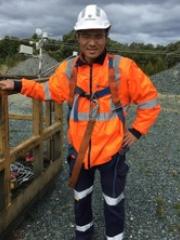
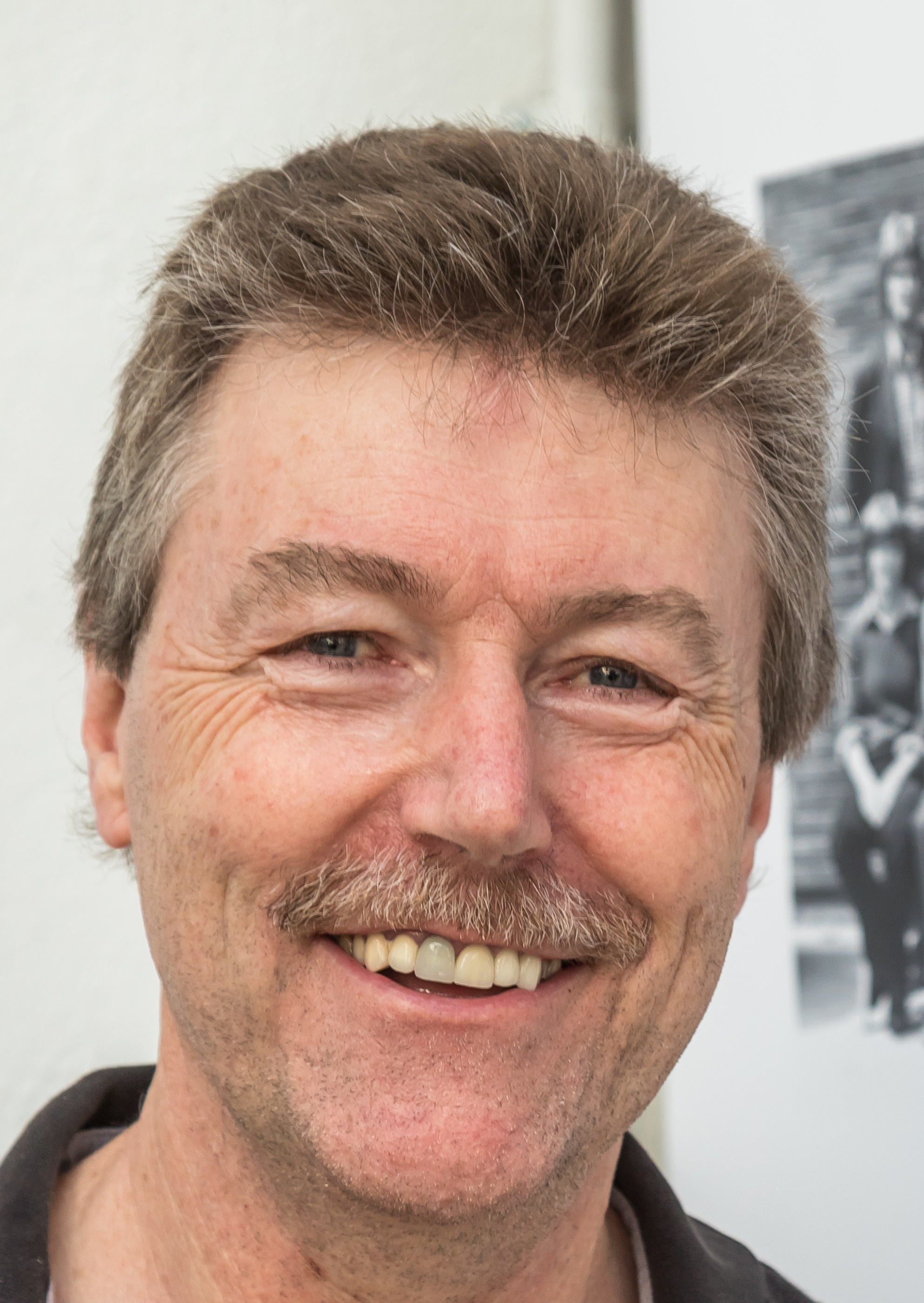
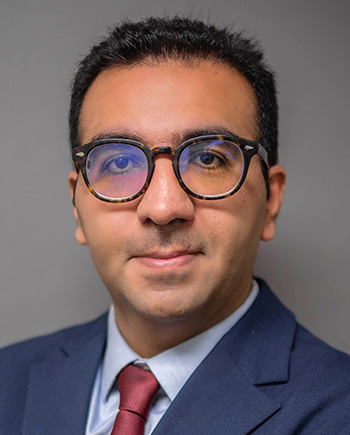
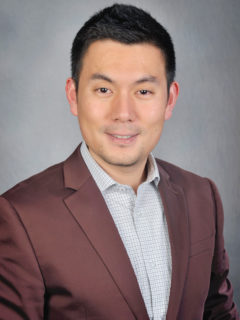
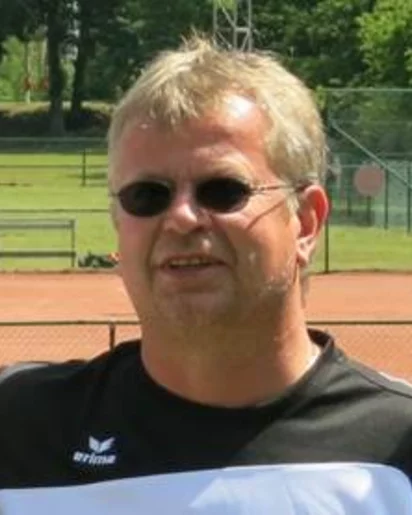
Robert M. Holt is a Professor in the Department of Geology and Geological Engineering at the University of Mississippi. His research focuses on geological CO2 sequestration, fluid transport in porous media, and hydrogeological characterization for nuclear waste disposal. Holt investigates how fluid behavior in heterogeneous geological formations impacts environmental processes ranging from carbon storage to groundwater contamination. His work examines the fundamental physics governing multiphase flow through porous and fractured geological media, with applications to contaminant transport, energy resources, and waste isolation. Holt has developed experimental methods for visualizing and modeling fluid behavior in heterogeneous subsurface environments, improving understanding of capillary processes and flow dynamics. Holt's research includes field studies of evaporite karst systems, geochemical assessments of aquifer systems, and investigations of hydraulic properties in low-permeability mudrocks. His work on CO2 injection monitoring has contributed to safer implementation of carbon sequestration technologies.
Dr. Chenming Zhang is an Advanced Queensland Industry Research Fellow at the School of Civil Engineering, The University of Queensland. His research focuses on hydrological processes in coastal and terrestrial groundwater systems, with particular emphasis on evaporation-driven mass and heat transport in soils and tailings, and hydrogeochemical dynamics in aquifers and mine waste systems. Specializes in IoT-based environmental monitoring Develops numerical models for coastal aquifer dynamics Conducts field and laboratory experiments on tailings behavior Research interests span coastal hydrology, groundwater modeling, mine waste management, and environmental monitoring. He works on contamination transport, aquifer protection, and climate impacts on water systems. Recent publications analyze: Iron curtain formation in subterranean estuaries Sea water intrusion mechanisms Salinity dynamics in tidal wetlands Smart sewer monitoring systems Scientific awards include the prestigious Advanced Queensland Industry Research Fellowship. He supervises multiple PhD projects on mine waste hydrology and coastal aquifer management, with notable collaboration on: Evolution Mining's gold tailings projects ARC Discovery Projects on coastal processes Grange Resources' PAF cell instrumentation His work combines field measurements, laboratory testing, and computational modeling to address critical environmental challenges in mining and coastal zones.
Natalie Byrd is a Researcher in the Department of Earth and Environmental Sciences, focusing on biogeochemical processes in low-level nuclear waste disposal. Her work aligns with UN Sustainable Development Goals related to environmental protection. She holds a Bachelor of Science in Environmental Science from The University of Manchester (2013–2017). Her research expertise spans biogeochemistry, nuclear waste management, geochemistry, and geomicrobiology, with a focus on microbial interactions in contaminated environments and cementitious systems. Key areas include anaerobic biodegradation of organic compounds, metal fate in alkaline conditions, and radionuclide behavior in subsurface environments. Her articles explore topics like microbial impacts on colloid-radionuclide interactions, citric acid degradation in waste environments, and cement integrity under biogeochemical processes. These studies highlight advancements in understanding waste disposal dynamics and environmental remediation strategies. Natalie's work contributes to sustainable waste management solutions, with implications for nuclear energy infrastructure safety and long-term environmental stewardship.
Prof. Kahraman Ünlü is a Professor of Environmental Engineering at Middle East Technical University (METU), Ankara, Turkey. He holds academic positions since 1992, advancing to full Professor in 2000. His research focuses on mathematical modeling of environmental systems, contaminated site remediation, and solid/hazardous waste management. He has led over 20 research projects and advised numerous students in environmental engineering. His work integrates GIS, system simulation, and decision support systems for landfill design and environmental risk assessment. Education: Ph.D. (1989, UC Davis), M.S. (1984, Iowa State), B.S. (1977, Ankara University). Professional memberships include the American Geophysical Union and Turkish National Committee on Solid Wastes. Research Interests: Mathematical modeling of subsurface systems Risk assessment and contaminated site remediation Waste disposal and landfill design Groundwater pollution fate and transport Awards: NATO Graduate Scholarship (1982–1985), International Visiting Scholars Award (Queen’s University, 2007). Over 70 publications in peer-reviewed journals and conference proceedings. Directed 20+ thesis students and led projects on landfill design, groundwater modeling, and environmental emergency plans in Turkey and Cyprus. Grants and Projects: Includes $414,000 for contaminated site management systems, $150,000 for risk-based soil standards, and collaborations with international institutions like JICA and the EU.
Derek Elsworth is the G. Albert Shoemaker Chair and Professor of Energy and Mineral Engineering and Geosciences at Pennsylvania State University. He is a co-founder of the Center for Geomechanics, Geofluids, and Geohazards, where he leads research in computational mechanics, rock mechanics, and fluid flow in fractured systems. His work spans multiple energy-related applications including geothermal energy, CO 2 sequestration, and unconventional hydrocarbon extraction. Professor Elsworth's research focuses on the mechanical and transport characteristics of fractured rocks, with applications spanning multiple domains. His work in computational geomechanics addresses challenges in geothermal energy development , CO 2 geological sequestration , and unconventional hydrocarbon extraction . He investigates fundamental processes including fracture mechanics, permeability evolution, and fault reactivation under various stress and fluid pressure conditions. His laboratory and field studies often integrate advanced computational modeling with experimental approaches to understand complex coupled thermo-hydro-mechanical-chemical (THMC) processes in subsurface systems. Analysis of Professor Elsworth's recent publications reveals a strong focus on cutting-edge challenges in subsurface energy systems. His work increasingly incorporates machine learning and advanced imaging techniques to address complex problems in rock mechanics and fluid flow. Key themes include fracture behavior in shale systems, fault stability during fluid injection operations, and the development of novel characterization methods for subsurface reservoirs. His research bridges fundamental science with practical applications for sustainable energy development. Professor Elsworth has developed and taught numerous courses including Fluid Mechanics (EME 303), Geothermal Energy Engineering, and Computational Geomechanics. He has also led short courses internationally on reservoir geomechanics. His research is supported through multiple projects including studies on volcano dynamics, enhanced geothermal systems, and in situ testing methodologies. As co-founder of the Center for Geomechanics, Geofluids, and Geohazards, he oversees a collaborative research environment focused on subsurface processes relevant to energy and environmental challenges.
Dr. Oliver Plümper is an active researcher at Utrecht University's Faculty of Geosciences, specifically within the Earth Sciences department and the Structural Geology & Electron Microscopy group. His work spans multiple disciplines at the intersection of geology, chemistry, physics, and materials science, with a particular focus on understanding processes occurring at the nanoscale that influence large-scale geological phenomena. Plümper's research interests center around fluid-rock/mineral interaction, nano(geo)sciences, mineral physics, and rock deformation. He employs a multi-faceted approach that combines natural observations, experimental techniques, micro and nano-analytics, and numerical modeling to address fundamental questions in Earth sciences. His work particularly emphasizes how nanoscale processes in the Earth's interior can influence large-scale geological structures and phenomena, including mountain building, earthquake generation, and the carbon cycle. His current research portfolio includes several major projects: the ERC Starting grant 'nanoEARTH' investigating mineral-water interactions deep within the Earth; the Dutch Research Council Vidi project 'RELEASE' studying carbon cycling in subduction zones; the EU INFRAIA project 'EXCITE NETWORK' as co-Principal Investigator supporting access to advanced imaging facilities; the UIO-UU project 'serpAI' using artificial intelligence to study mantle rock alteration; and the UU-NIOZ project 'I-NANO' examining iron nanoparticles' effects on ocean biogeochemistry. These projects collectively demonstrate his focus on understanding how nanoscale processes influence planetary-scale phenomena. Plümper is a strong advocate for open science and transdisciplinary research, leading a diverse team of scientists from earth sciences, chemical engineering, mathematics, physics, and chemistry. He actively contributes to the Utrecht University Electron Microscopy Center and is involved in multiple initiatives promoting open access to analytical facilities. His collaborative approach is evident in his extensive publication record across high-impact journals including Nature Geoscience, PNAS, and Geology, with research spanning from fundamental mineral physics to applications in geothermal energy, raw material extraction, and carbon storage.
Oliver G. Ernst is a Professor of Numerical Analysis at Technische Universität Chemnitz . His research focuses on Numerical Analysis , Uncertainty Quantification , and Inverse Problems , with applications in Thermo-Hydro-Mechanical (THM) processes , Electromagnetics , and Stochastic Partial Differential Equations . He is associated with the Numerical Analysis group at TU Chemnitz. Key Research Areas : Efficient numerical methods for PDEs Krylov subspace techniques Stochastic finite element methods Multi-physics modeling Geoscientific applications Recent Publications (2025-2010): THM simulations under uncertainty Neural network PDE solvers Bayesian inversion frameworks Rational Krylov algorithms Deflated restarting strategies Collaborations : TU Bergakademie Freiberg University of Manchester Technical University of Munich University of Maryland University of Geneva Software Development : Contributor to OpenGeoSys platform Developer of FEMALY MATLAB library Academic Recognition : h-index 32, i10-index 66, with over 4423 citations since 2020.
Dr. Siavash Zamiran is a Senior Lecturer in the Department of Civil and Environmental Engineering at the University of Houston's Cullen College of Engineering, where he teaches courses including Geotechnical Engineering, Statics, and Mechanics of Solids. He holds a Ph.D. in Civil Engineering-Geotechnical from Southern Illinois University (2017), an M.S. from Azad University, Iran (2012), and a B.S. from the same institution (2009). His professional experience includes previous academic appointments as Adjunct Lecturer at Missouri University of Science and Technology, St. Louis University, and Southern Illinois University Edwardsville. Research interests focus on geotechnical systems under extreme conditions, with particular emphasis on: Probabilistic seismic hazard analysis and infrastructure resilience Soil-pipe interaction mechanics for buried energy infrastructure Computational geomechanics using FLAC/FLAC3D for subsurface modeling Wellbore stability and reservoir geomechanics in shale formations Ground subsidence mechanisms in mining environments Publication analysis reveals consistent contributions in geotechnical earthquake engineering, petroleum geomechanics, and mining-related ground movements, with recent work emphasizing LNG site safety, pipeline integrity, and advanced numerical modeling validation techniques. Research Leadership: Leads undergraduate researchers investigating seismic hazards at LNG sites and soil-pipe interaction dynamics. Current projects include probabilistic seismic hazard analysis for energy infrastructure and computational modeling of pipeline behavior under ground movement stresses. Awards and Honors: ASCE Edmund Friedman Young Engineer Award (2019) ASCE St. Louis Section Young Engineer Award (2018) ADSC Endowed Scholarship (2016) GeoConfluence Research Scholarship (2016) Itasca Education Partnership Award (2014-2016) Multiple SIU academic excellence awards (2015)
Zong Liu serves as an Assistant Professor and Extension Specialist at Texas A&M University within the College of Agriculture and Life Sciences, affiliated with the WMHS Program. His research addresses critical agricultural waste management challenges, particularly in dairy operations and water resource protection. His primary research domains include: Agricultural Engineering Manure Management Systems Water Quality Monitoring Dairy Production Technology Environmental Pathogen Control Machine Learning Applications Dr. Liu develops engineering solutions for pathogen reduction, nutrient recovery, and sustainable disposal methods, with recent work expanding into virtual reality educational tools and emergency response protocols for dairy crises. His publications demonstrate consistent integration of computational methods with practical agricultural engineering. Analysis of his 2015-2025 publications reveals dominant focus areas: dairy manure treatment (60% of works), pathogen reduction technologies (40%), and emerging applications of machine learning (15%). The research trajectory shows progression from fundamental laboratory studies (2015-2017) toward integrated field solutions and crisis management systems (2020-2025), with increasing interdisciplinary collaboration across environmental science, data analytics, and extension education domains.
Hyung-Mok Kim is a Professor at Sejong University's Department of Energy Resources and Geosystems Engineering, where he has been employed since September 2012. He holds a Ph.D. from the University of Tokyo (2002), an M.S. from Seoul National University (1999), and a B.S. from Seoul National University (1997). Prior to joining Sejong University, he worked at the Korea Institute of Geoscience and Mineral Resources (KIGAM) from 2006 to 2012 and Obayashi Corporation from 2003 to 2006. His research focuses on coupled Thermal-Hydraulic-Mechanical (THM) processes in geological systems, with applications including: Stability analysis of granular geomaterials under fluid flow Cement grout injection mechanics in rock joints Underground fluid injection impacts (including CO₂ sequestration and induced seismicity) Mechanical behavior of hydrate-bearing sediments Compressed air energy storage (CAES) in rock caverns Recent publications (2022-2025) demonstrate strong emphasis on energy storage solutions (hydrogen, CAES), waste disposal safety , and advanced computational geotechnics , utilizing numerical modeling and experimental validation across subsurface engineering challenges.
Prof. Florian Wellmann is a University Professor at RWTH Aachen University's Chair of Numerical Geosciences, Geothermal Energy and Reservoir Geophysics within the Faculty of Georesources and Materials Engineering. His research focuses on integrating machine learning with geoscience applications, particularly in geothermal energy, structural modeling, and uncertainty quantification. He leads the CG³ research group, developing open-source tools like GemPy and GemGIS for 3D geological modeling. Notably, he received a KI-Campus fellowship for advancing AI in geoscience education. His work includes projects such as the Horizon Europe GeoHEAT initiative, exploring geothermal systems and repurposing idle wells for energy. Education details are not explicitly provided, but his academic roles indicate expertise in numerical geosciences and geothermal engineering. Research interests span physics-based machine learning, subsurface characterization, and probabilistic modeling. His fellowship highlights contributions to digital education, blending AI with geological curricula. Recent publications emphasize sensitivity analysis, fault modeling, and geothermal reservoir optimization. Prof. Wellmann's awards include the KI-Campus fellowship (2021). His grants and advising efforts are reflected in collaborative projects like GeoHEAT and software development. Labs/teams include the CG³ group at RWTH Aachen, equipped with advanced geophysical instruments for field and lab analysis.
Prof. Craig T. Simmons is a globally recognized academic and leader in Earth Sciences and Groundwater at the University of Newcastle. He currently serves as Pro Vice-Chancellor of the College of Engineering, Science and Environment, overseeing five schools: Architecture and Built Environment; Engineering; Environmental and Life Sciences; Information and Physical Sciences; and Psychological Sciences. Former roles include Executive Director of Mathematics, Physics, Chemistry, and Earth Sciences at the Australian Research Council (ARC), and Pro Vice-Chancellor (Strategic Research Projects) at Flinders University. Founder and Director of the ARC National Centre for Groundwater Research and Training. His research focuses on groundwater science, policy reform, and climate resilience, addressing challenges like water security, coal seam gas impacts, and nuclear waste disposal. He co-authored the IPCC Sixth Assessment Report and led the UN's World Water Development Report on groundwater visibility. Key awards include Fellowships from the Australian Academy of Science, Australian Academy of Technology and Engineering, and American Geophysical Union, alongside the IAH Presidents’ Award (2022) and Anton Hales Medal (Earth Sciences). Prof. Simmons advocates for proactive science education and community collaboration, emphasizing the role of engineering and geosciences in global sustainability. His work integrates research, policy, and education to address water-energy-food nexus challenges and regional transformation toward green technologies. Notable contributions include developing mathematical models for groundwater dynamics, advancing managed aquifer recharge guidelines, and promoting interdisciplinary approaches to hydrogeology. His leadership bridges academic research with practical solutions for climate adaptation and sustainable resource management.
Wilfried Pfingsten is a Senior Scientist at the Paul Scherrer Institute (PSI) within the Laboratory for Waste Management, part of the Center for Nuclear Engineering and Sciences. He holds an adjunct Lecturer role at ETH Zurich's Department of Environmental Systems Science (2010–2020). His research focuses on nuclear waste management, reactive transport modeling, and geochemical processes in subsurface systems. Pfingsten leads projects such as MODATS (monitoring data management) and contributes to global initiatives like EURAD and SITEX.Network. Education: PhD (Dr.-Ing.) in Civil Engineering from Leibniz University Hannover (1990), with earlier roles as a Research Scientist at the Institute of Water Resources Management (1987–1991) and Laserzentrum Hannover (1987). Research Interests: Machine learning applications in geochemical modeling, parameter uncertainty quantification, and digital twins for nuclear waste disposal. He has authored over 50 peer-reviewed papers and delivered presentations at major conferences including EURAD Annual Events and the International Conference on Nuclear Engineering. Professional Contributions: Member of PSI’s Research Committee (2003–2013), CCEM Research Committee (2006–2017), and emergency staff (2010–2024). Active in civil society engagement through UMAN project dialogues on nuclear waste uncertainties.
Laurence Stamford is a Senior Lecturer in Sustainable Chemical Engineering at The University of Manchester, affiliated with the College of Engineering. His research focuses on applying life cycle thinking to evaluate environmental, economic, and social impacts of technological systems across energy (nuclear, renewable), food, and bio-process sectors. He leads and collaborates on projects funded by UK research councils and the EU, including repurposing fossil fuel infrastructure for geothermal energy and assessing radioactive waste management technologies. Education: PhD (2012) in Life Cycle Sustainability Assessment from The University of Manchester; MA (2006) in Biological Sciences from the University of Oxford (Lady Margaret Hall). Research Interests: Sustainable development frameworks, life cycle assessment methodologies, circular economy applications, and policy-relevant sustainability assessments. Recent work emphasizes decarbonizing shipping, nuclear decommissioning strategies, and geothermal energy utilization from repurposed oil wells. Key Projects: EMBRACE: Sustainable repurposing of conveyor belts PRE-DISposal management of radioactive waste LIFT: Life Cycle Assessment of elevator drives Media Engagement: Commented on energy policy, fracking debates, and hydrogen vs. heat pumps for BBC and industry publications. Advising: Supervises 11 PhD students, including projects on nuclear decommissioning life cycle assessment and sustainable energy futures.
Professor Rebecca Lunn is a distinguished academic in the Department of Civil and Environmental Engineering at the University of Strathclyde, holding the position of Professor within the Faculty of Engineering. Her research leadership spans geotechnical engineering, hydrogeology, and rock mechanics with significant contributions to sustainable ground engineering solutions. Her educational foundation includes a Master in Science in Engineering Hydrogeology and a Doctor of Engineering (PhD) in Civil Engineering from Newcastle University, complemented by a Bachelor of Arts in Mathematics from the University of Cambridge. This multidisciplinary background underpins her innovative research approach. Lunn's research focuses on cutting-edge ground engineering technologies, including bio-mediated mineral precipitation for soil stabilization, advanced grouting techniques using colloidal silica and detectable cementitious materials, and fault permeability analysis for nuclear waste disposal and carbon sequestration applications. Her work integrates field trials, laboratory experiments, and computational modeling to address critical environmental challenges in subsurface engineering. Recent publications (2024-2025) demonstrate a clear trend toward biogeochemical ground improvement and automated inspection technologies , with significant emphasis on microbial soil stabilization, groundwater geochemistry fingerprinting, and nuclear infrastructure monitoring. These works bridge geotechnical engineering with environmental sustainability and digital innovation. Her exceptional contributions have been recognized through prestigious honors: Election as Fellow of the Royal Academy of Engineering (2018) Member of the British Empire (MBE) for services to Engineering (2017) Outstanding Woman of Scotland award (2015) Fellowships of the Royal Society of Edinburgh and Institution of Civil Engineers (2014) Aberconway medallist from the Geological Society of London (2011) As Principal Investigator on major EPSRC-funded projects including the SATURN Centre for Doctoral Training in Nuclear Energy and MACO2 carbon capture initiative, Lunn has secured substantial research funding while mentoring the next generation of engineers. Her professional leadership includes chairing the Grout Group and speaking at international forums like the IGNITE Annual Event, where she advances sustainable engineering practices. Lunn actively leads research teams at Strathclyde utilizing specialized equipment for soil/rock mechanics testing and groundwater analysis. Current efforts focus on developing low-carbon ground engineering technologies, hydrogen storage solutions, and novel inspection methods for nuclear infrastructure, with direct applications to radioactive waste disposal and sustainable urban development.