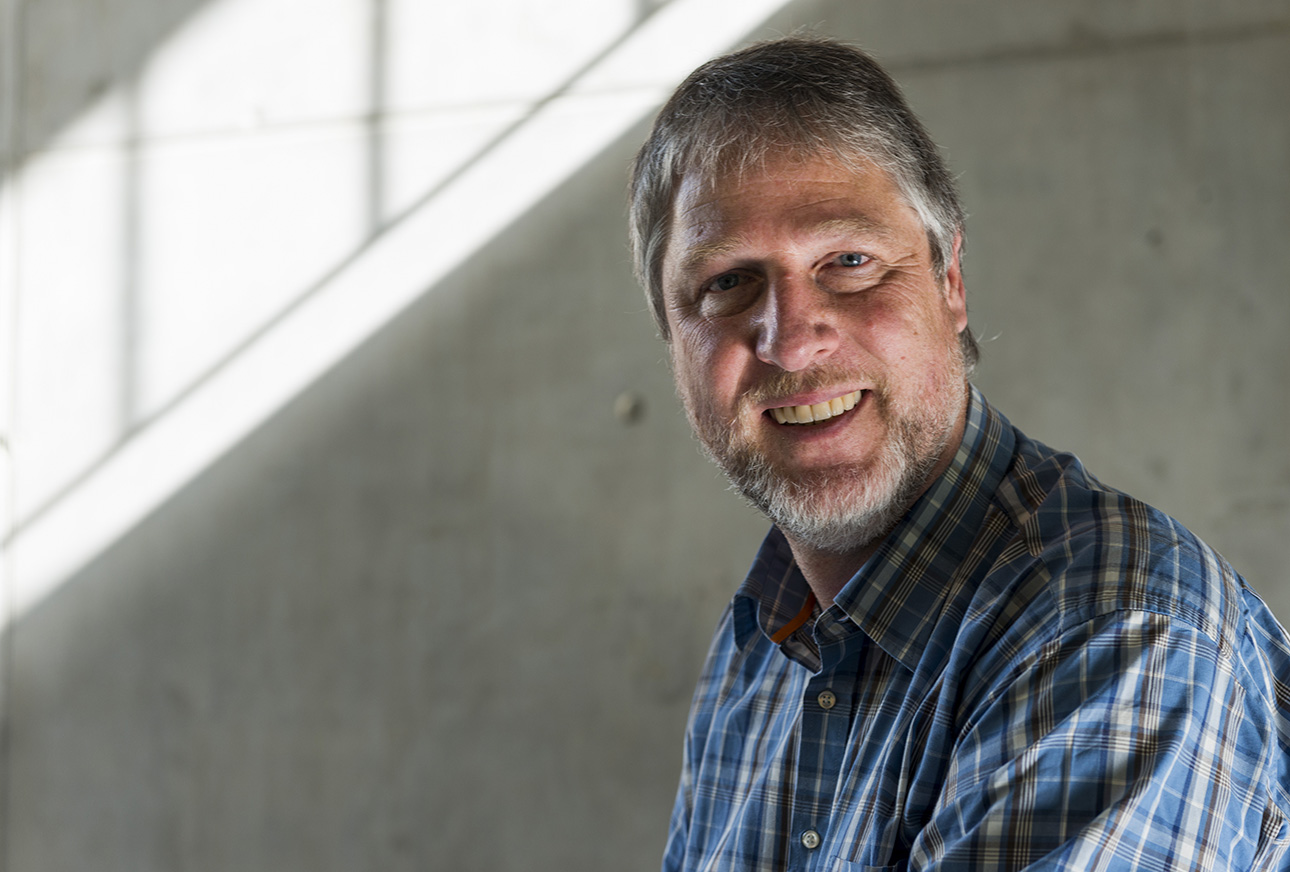
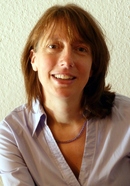
Sharese King is the Neubauer Family Assistant Professor of Linguistics at the University of Chicago, where she has taught since 2018. She earned her Ph.D. and Master's in Linguistics from Stanford University, focusing on language variation across African American communities. Her research bridges sociolinguistics, critical race theory, and phonetics to examine how African American speech is constructed, racialized, and socially evaluated. Education: Ph.D., Linguistics, Stanford University (2018) M.A., Linguistics, Stanford University Research Interests: Sociolinguistics Language Variation & Change African American Language Critical Race Theory Phonetic and experimental analysis Dialect and judicial systems Notable Contributions: Interdisciplinary studies on raciolinguistics and courtroom bias Analysis of /s/ articulation in intersectional contexts Reconceptualization of AAVE as AAL to emphasize linguistic diversity Fieldwork in Bakersfield, Rochester, and Chicago Publications in American Speech , Journal of Sociolinguistics , Language , and Nature Scientific Awards: Provost's Postdoctoral Fellowship Neubauer Family Assistant Professorship Labs & Projects: Co-founder of the Chicagoland Language Project
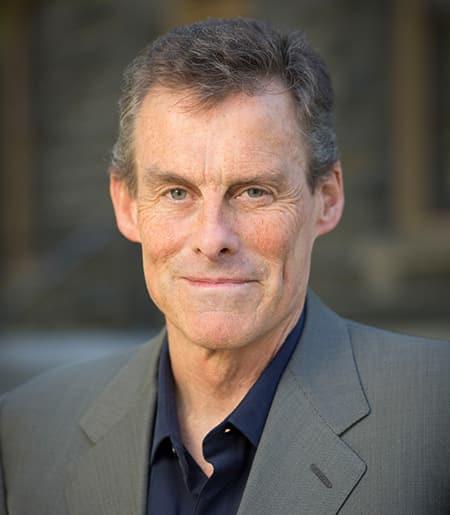
Professor Bernd Möbius is a leading academic in Phonetics and Phonology at the Department of Language Science and Technology, Saarland University. His research bridges phonetic theory with speech technology applications, focusing on text-to-speech systems, prosody modeling, and computational simulations of speech processes. Current research projects: DFG SFB 1102, C1: Information density and phonetic structure predictability DFG SFB 1102, C4: Slavic intercomprehension and surprisal theory (INCOMSLAV) Research Themes: Key areas include text-to-speech synthesis, speech prosody analysis, experimental methods in speech production/perception, information density in phonetics, and cross-linguistic studies of Slavic-Germanic languages. Scientific Contributions: Recent work explores Parkinson-induced dysarthria detection, breath noise acoustics, surprisal-driven speech behaviors, multilingual BERT models for idiomaticity, and perceptual consequences of acoustic adjustments.
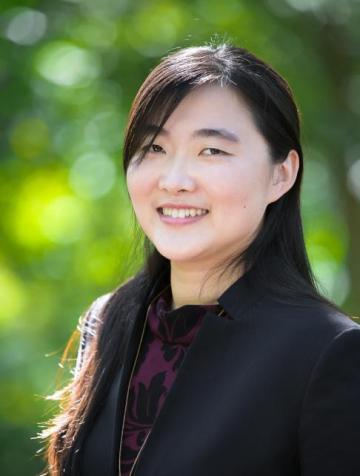
Maria Gouskova is a Professor of Linguistics at the Department of Linguistics, New York University (NYU). She is affiliated with the College of Arts and Science and holds editorial roles as an Associate Editor of Language and board member of NLLT and Phonology . Her research focuses on phonology, morphology, and lexicon, with a particular emphasis on morphophonological interactions, sublexicons, and phonotactic constraints. She earned her Ph.D. in Linguistics from the University of Massachusetts, Amherst (2003) and a B.A. in English Linguistics and German Language/Literature from Eastern Michigan University (1998). Her work bridges theoretical phonology and experimental methods, addressing questions such as how phonological patterns interact with morphology, the role of sublexical phonotactics in grammatical processes, and the learnability of complex segmental inventories. Recent research includes studies on Russian diminutive affixes, gradient phonological constraints, and the phonological properties of compounds. Her publications span topics like allomorphy, lexical phonology, and the typology of morpheme structure constraints. She frequently collaborates on projects investigating the interplay between syntax, phonology, and morphology, as seen in studies of Russian prepositions and compound stress patterns. Her contributions to phonological theory include advancing models of sublexicon theory and nonlocal constraint induction.
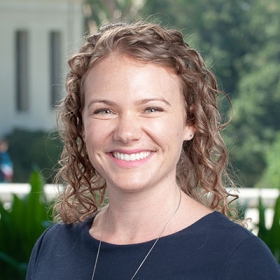
Meredith Tamminga is an Associate Professor of Linguistics at the University of Pennsylvania, where she directs the Language Variation and Cognition Lab . Her work bridges sociolinguistics , psycholinguistics , and theoretical linguistics , focusing on how linguistic variability is represented in mental grammar and how social context influences speech perception and production. She co-leads the Philadelphia Signs Project , exploring sign language sociolinguistics with collaborators at Penn and Gallaudet University. PhD in Linguistics (2014), University of Pennsylvania BA in Linguistics (2009), McGill University Her research integrates experimental methods with naturalistic speech analysis to study individual and group-level language change. Keywords include phonetics-phonology mapping , intraspeaker variation , and quantitative modeling . Notable grants include NSF awards and SAS Dean’s Mentorship Award . Key affiliations include MindCORE , Penn’s hub for integrative mind sciences, and collaborative ties to the Phonetics Lab , Child Language Lab , and Cultural Evolution of Language Lab . Her lab emphasizes cross-departmental research and welcomes undergraduate RAs and PhD students.
John B. Whitman is a Professor of Linguistics at Cornell University's College of Arts and Sciences. His research focuses on language variation, syntax, historical linguistics, and East Asian languages, particularly Japanese and Korean. He explores typological universals, syntactic variation, and diachronic developments, contributing to debates on configurationality and structural universals. Whitman has published extensively on topics ranging from Japanese historical phonology to comparative syntax across East Asian languages. His work often integrates cross-linguistic analysis with neuroscientific insights, as seen in studies on semantic number processing. He has received grants for projects including language revitalization initiatives and syntactic research, and he teaches courses on Japanese language history and language endangerment. Whitman collaborates with interdisciplinary teams and actively engages in linguistic fieldwork and historical text analysis, maintaining affiliations with the East Asia Program and research labs at Cornell. Research interests include syntactic variation, historical syntax, and the interaction between language structure and diachronic change. His recent work examines the evolution of verbal conjugations in Japanese/Korean and the typological implications of syntactic reanalysis. Whitman's publications also address methodological questions in glossing practices and comparative lexicography, bridging historical linguistics with modern computational analysis. Grants and projects include funding from the New Frontier Grants for collaborative research on language documentation and historical syntax. He advises graduate students in the linguistics program and contributes to Cornell's language revitalization efforts, such as Cayuga language preservation initiatives. Whitman's work frequently intersects with cognitive science, as seen in neuroimaging studies of linguistic structures.
Adam McCollum is an Associate Professor in the Department of Linguistics at Rutgers, The State University of New Jersey. His research focuses on phonology, laboratory phonology, and the phonology-phonetics interface, with a particular emphasis on vowel harmony systems in Turkic, Central Asian, and West African languages. He conducts fieldwork and language documentation, contributing to the understanding of gradient phonological processes and their computational underpinnings. Recent work includes studies on vowel harmony decay mechanisms, non-iterative phonological processes, and the interaction between phonetics and phonology. His collaborations address topics such as weak determinism in feature spreading and the typology of labial harmony systems. He actively participates in academic events, such as an invited talk at Tu+9 (Cornell University) in 2024 and presentations at AMP 2023. McCollum’s research spans multiple subfields including feature geometry, phonological theory, and historical linguistics. His publications explore both synchronic phonological patterns and diachronic processes, with a focus on underdocumented languages. He maintains an active research program integrating experimental methods with theoretical analysis.
Ben Eischens is an Assistant Professor in the Department of Linguistics at UCLA. His work focuses on the intersection of phonology and phonetics, particularly in San Martín Peras Mixtec, an Otomanguean language spoken in Oaxaca, Mexico and diaspora communities. He holds a Ph.D. from UC Santa Cruz (2022) and collaborates extensively with Indigenous communities on language documentation and description. His research explores tone systems, laryngeal features, speech rate effects, and negative nominal structures, emphasizing empirical fieldwork and community partnerships. Recent work includes studies on vowel reduction, polar question formation, and the phonetic grounding of phonological theories. Eischens has presented at major conferences such as the International Congress of Phonetic Sciences (ICPhS), Annual Meeting on Phonology (AMP), and workshops on Languages of the Americas. His publications appear in journals like the International Journal of American Linguistics and Phonological Data & Analysis. He teaches courses in linguistic theory and field methods at UCLA, maintaining active research partnerships with San Martín Peras Mixtec community members. His work bridges theoretical linguistics with applied documentation, prioritizing Indigenous language revitalization efforts.
Jianjing Kuang is an Associate Professor of Linguistics at the University of Pennsylvania, affiliated with the School of Arts and Sciences. As Director of the Penn Phonetics Laboratory, they lead research in phonetics, laboratory phonology, and tonal language studies. Kuang holds a Ph.D. from UCLA (2013) and specializes in the interplay between production and perception in speech, particularly focusing on tonal systems, prosody, and cross-linguistic fieldwork. Their work integrates behavioral experiments, corpus studies, and computational modeling to explore phonological contrasts, voice quality, and sound change. Key affiliations include MindCORE and the Center for East Asian Studies. Research interests include multidimensional cues in tone processing, glottal articulations, mapping production-perception relationships, and prosodic sentence processing. Kuang has conducted fieldwork on languages such as Yi, Q’anjob’al, and Mandarin. Their studies address topics like tonal splitting in Yi, cue-changing in Korean stops, and prosodic patterns in Mayan languages. Recent work explores voice quality’s role in pitch perception and prosodic boundary detection. Awards and grants are not explicitly listed, but Kuang’s extensive publications (over 50 peer-reviewed papers) reflect sustained academic impact. They advise graduate students in phonetics and phonology, with active collaborations in computational linguistics and speech technology. The Penn Phonetics Laboratory, under Kuang’s direction, emphasizes interdisciplinary research bridging experimental and theoretical phonetics.
Mariška Bolyanatz Brown is an Assistant Professor in the Department of Spanish and French Studies at Occidental College (Oxy), appointed in 2017. She holds a B.A. from Gordon College, an M.A. from the University of Illinois at Chicago, and a Ph.D. from UCLA. Her research focuses on socially conditioned variation in speech production and perception in Spanish, particularly examining the sociolinguistic implications of phonetic features in Chilean and Salvadoran Spanish. She teaches courses such as Introduction to Linguistics, Spanish in the United States, and Spanish Sociolinguistics, emphasizing inclusive pedagogy and data analysis skills. Education: B.A., Gordon College, Massachusetts M.A., University of Illinois, Chicago Ph.D., University of California, Los Angeles (UCLA) Research Interests: Sociolinguistics, Phonetics, Spanish Language Variation, Linguistic Discrimination, Heritage Language Maintenance, and the social meanings of phonetic variation in Spanish. Her work analyzes acoustic and morpho-phonological patterns to explore how speech features correlate with socioeconomic identity and intergroup perception. Publications: Dr. Bolyanatz Brown has published widely on topics such as coda /s/ weakening in Chilean Spanish, cross-dialectal acoustic differences in /s/, and sociophonetic perception of intervocalic /k/ voicing. Her research bridges laboratory-based phonetic analysis with sociolinguistic theory, contributing to debates on sound change and language variation. Teaching Philosophy: Her courses foster critical engagement with language use, encouraging students to connect linguistic patterns to broader societal issues such as racism and education policy. She emphasizes fieldwork and data collection, as seen in her Spanish in the United States course, where students conduct community-based research in Los Angeles. Labs/Teams: No specific lab is mentioned, though her research involves collaborative fieldwork and acoustic analysis projects with colleagues like Brandon Rogers and Franny Brogan.
Jiwon Yun is an Associate Professor in the Department of Linguistics at Stony Brook University. She holds a Ph.D. in Linguistics from Cornell University (2013) and a B.S.E. in Computer Science & Engineering from Seoul National University (cum laude with honors). Her research focuses on speech prosody, syntax-semantics interfaces, and computational modeling of sentence processing, with special attention to East Asian languages like Korean, Mandarin, and Japanese. Dr. Yun teaches undergraduate and graduate courses in computational linguistics, semantics, pragmatics, and experimental phonetics. Her work bridges theoretical linguistics and experimental methods, examining how prosody interacts with syntactic and semantic structures. Recent publications investigate prosodic disambiguation of syntactic ambiguities, computational models of relative clause processing, and intonation patterns in Korean and Mandarin. She has developed tools for automated speech corpus analysis and maintains a Hangul-Yale Romanization Converter for linguistic research. Her research has been published in journals like Humanities and Social Sciences Communications , Linguistic Inquiry , and Journal of East Asian Linguistics . Teaching responsibilities include courses such as LIN 335 (Computational Linguistics) and LIN 627 (Computational Semantics).
Dr Aaron D. Hornkohl is an Associate Professor in Hebrew and Bye-Fellow at Girton College, University of Cambridge. He serves as Director of Studies in Asian and Middle Eastern Studies at Girton and Homerton Colleges. His academic background includes a BA from Biola University, MA from The Hebrew University of Jerusalem, and PhD (2012) on the linguistic analysis of the Book of Jeremiah. His research focuses on ancient Hebrew philology, linguistic periodization, and exegesis, with a particular interest in the diachronic development of Hebrew and textual criticism of biblical manuscripts. Teaching responsibilities include courses on ancient and modern Hebrew literature, language history, and Middle Eastern culture. He co-organizes initiatives like the Sutton Trust Summer School and leads AHRC-funded research on critical editions of Hebrew texts, including the Kaufmann MS of the Mishna. Recent publications explore Tiberian reading traditions, Masoretic vocalization, and linguistic features in Qumran manuscripts. Research projects include Grammar of Biblical Hebrew Books (2024) and Studies in the Masoretic Tradition (2022). His work bridges linguistic analysis with historical context, addressing questions of language evolution and textual authenticity in Hebrew biblical and rabbinic corpora.
Jonathan David Bobaljik is a leading linguist whose research spans formal syntax, phonology, and the documentation of endangered languages, particularly Itelmen. He is actively involved in multiple international research collaborations and regularly presents at major linguistic conferences across Europe and North America. His work is published in top journals such as Natural Language and Linguistic Theory and Language . His research interests lie at the intersection of theoretical and descriptive linguistics. He investigates universal patterns in morphology and syntax, including suppletion, vowel harmony, ergativity, and control structures, often using data from understudied languages like Itelmen. His work combines rigorous formal analysis with deep empirical grounding in language documentation. The recent publications reflect a strong trend toward integrating typological diversity with formal theory. Key areas include morphosyntactic universals (e.g., suppletion in pronouns), information structure in verb-final languages, and the phonology of ejective consonants. There is also a growing emphasis on sociolinguistic and community-based aspects, as seen in collaborative work on language revitalization and the social life of the Itelmen language. He has received recognition through numerous scholarly publications and invited talks, though specific awards are not listed in the provided text. His collaborative projects suggest active grant involvement, particularly in language documentation and cross-linguistic typology. Bobaljik plays a central role in the Itelmen documentation and revitalization project, contributing to the creation of a dictionary app, the publication of historical manuscripts, and public exhibits on Siberian Indigenous knowledge. He collaborates with a team including David Koester, Chikako Ono, Tatiana Degai, and Maria Pupynina.
Emily A. Gasser is an Associate Professor in the Linguistics Department at Swarthmore College , specializing in Austronesian languages , Wallacea & northwest New Guinea , and language documentation . Her research spans phonology, morphology, typology , and language contact , with a focus on endangered languages and computational phylogenetics . She is currently on sabbatical for the 2025-26 academic year, conducting fieldwork in Manokwari, writing a Wamesa grammar, and developing new courses. Research Interests include: Language documentation and fieldwork in Austronesian and Papuan-speaking regions Phonological variation and vowel harmony systems Typological surveys of adnominal possession and morphological structures Interaction between prosodic features in media speech and socio-phonetics Computational tools for historical linguistics and classifier system analysis Recent publications focus on vowel harmony , prosodic perception , and possessive constructions across Wallacea and Northwest New Guinea. She edits volumes on Austronesian-Papuan language contact and contributes to open-access research initiatives.
Bistra Andreeva is a full Professor of Phonetics and Phonology at Saarland University, Department of Language Science and Technology. She is also a principal investigator of the DFG-funded project “Judeo-Spanish in Bulgaria: a contact language between archaism and innovation” (2022-2025) and leads or co-leads several other externally funded projects on prosody, information structure, and language contact. She teaches and has taught at Saarland University, Sofia University “St. Kliment Ohridski”, and other European universities. Education & Academic Background Habilitation (kumulative Habilitationsschrift): “Contrastive Prosody: Bulgarian vs. German”, Saarland University, 2016. PhD (Dr. phil.): “Zur Phonetik und Phonologie der Intonation der Sofioter-Varietät des Bulgarischen”, Saarland University, 2007. Research Interests Andreeva’s research focuses on the phonetics and phonology of intonation and rhythm, cross-language and individual differences in the production and perception of syllabic prominence, the relation between intonation and information structure, minority languages (especially Judeo-Spanish in Bulgaria), and the interaction between information density and prosodic structure. Her methodological expertise includes experimental phonetics, corpus-based studies, and acoustic analysis. Major Projects SFB 1102 C1: “Information Density and the Predictability of Phonetic Structure” (DFG, 2014-2026) JuSpa: “Judeo-Spanish in Bulgaria: a contact language between archaism and innovation” (DFG, 2022-2025) Prosodic aspects of Bulgarian compared to other languages with lexical stress (Bulgarian National Science Fund, 2019-2024) Prosodic manifestations of focus in French and English from a Bulgarian point of view (DAAD & Sofia University, 2021-2023) Scientific Awards & Recognition While no major named prizes are listed, Andreeva’s work has been continuously supported by competitive grants from the German Research Foundation (DFG), DAAD, and Bulgarian National Science Fund. Her publications appear in top-tier journals and conference proceedings (Journal of the Acoustical Society of America, Interspeech, Speech Prosody, International Congress of Phonetic Sciences). Teaching & Supervision She offers a broad spectrum of courses including Experimental Phonetics, Prosody, Phonetics & Phonology of Slavic Languages, Introduction to Instrumental Phonetics, and seminars on language contact. She has supervised numerous BA, MA, and PhD theses and regularly teaches at the PhD School of Sofia University. Labs & Teams She is affiliated with the Phonetics Laboratory at Saarland University and collaborates closely with the Institute for Bulgarian Language (Bulgarian Academy of Sciences), working in interdisciplinary teams involving phoneticians, computational linguists, and field linguists.
Prof. Marianne Pouplier is a Professor at the Institute of Phonetics and Speech Processing (IPS) at Ludwig Maximilian University of Munich. Her research focuses on speech production mechanisms, particularly coarticulation, phonetic universals, and language-specific variations. She investigates articulatory timing, speech errors, and cross-linguistic differences in consonant clusters using advanced methodologies like real-time MRI and electromagnetic articulography. Her work bridges theoretical models (e.g., Articulatory Phonology) with empirical data, emphasizing the interplay between phonological representation and motor execution. Key contributions include studies on nasal coarticulation, larynx dynamics, and the role of articulatory effort in speech production. Selected publications highlight her expertise in analyzing speech motor control through interdisciplinary approaches. She collaborates internationally, contributing to projects like the Bavarian Archive for Speech Signals (BAS). No awards or grants are explicitly listed, but her extensive publication record underscores her scholarly impact.